Dr.Zulcaif Ahmad
CONTENTS
• Pharmacokinetics
• Absorption
• Distribution
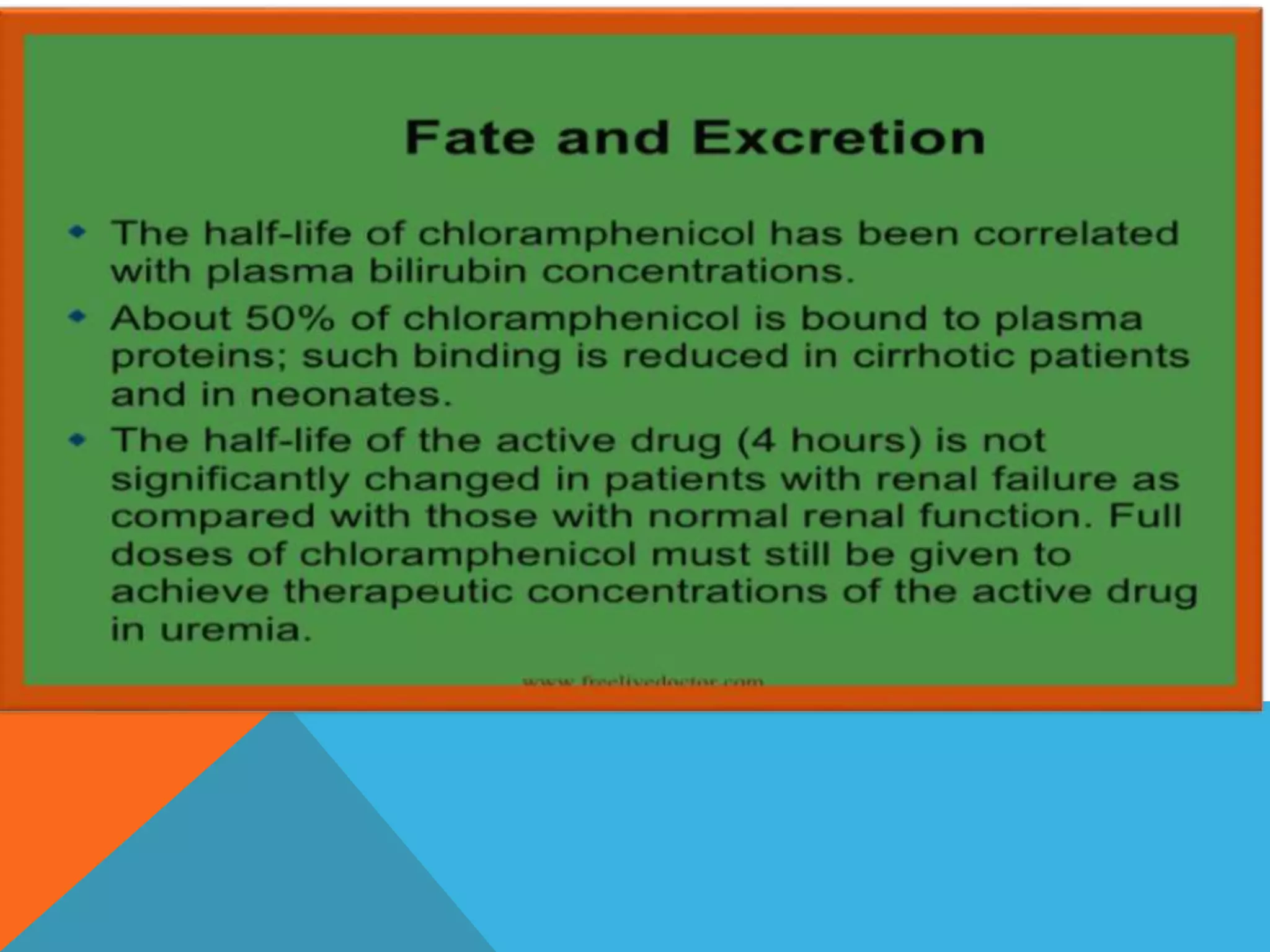
• Fate and excretion
INTRODUCTION
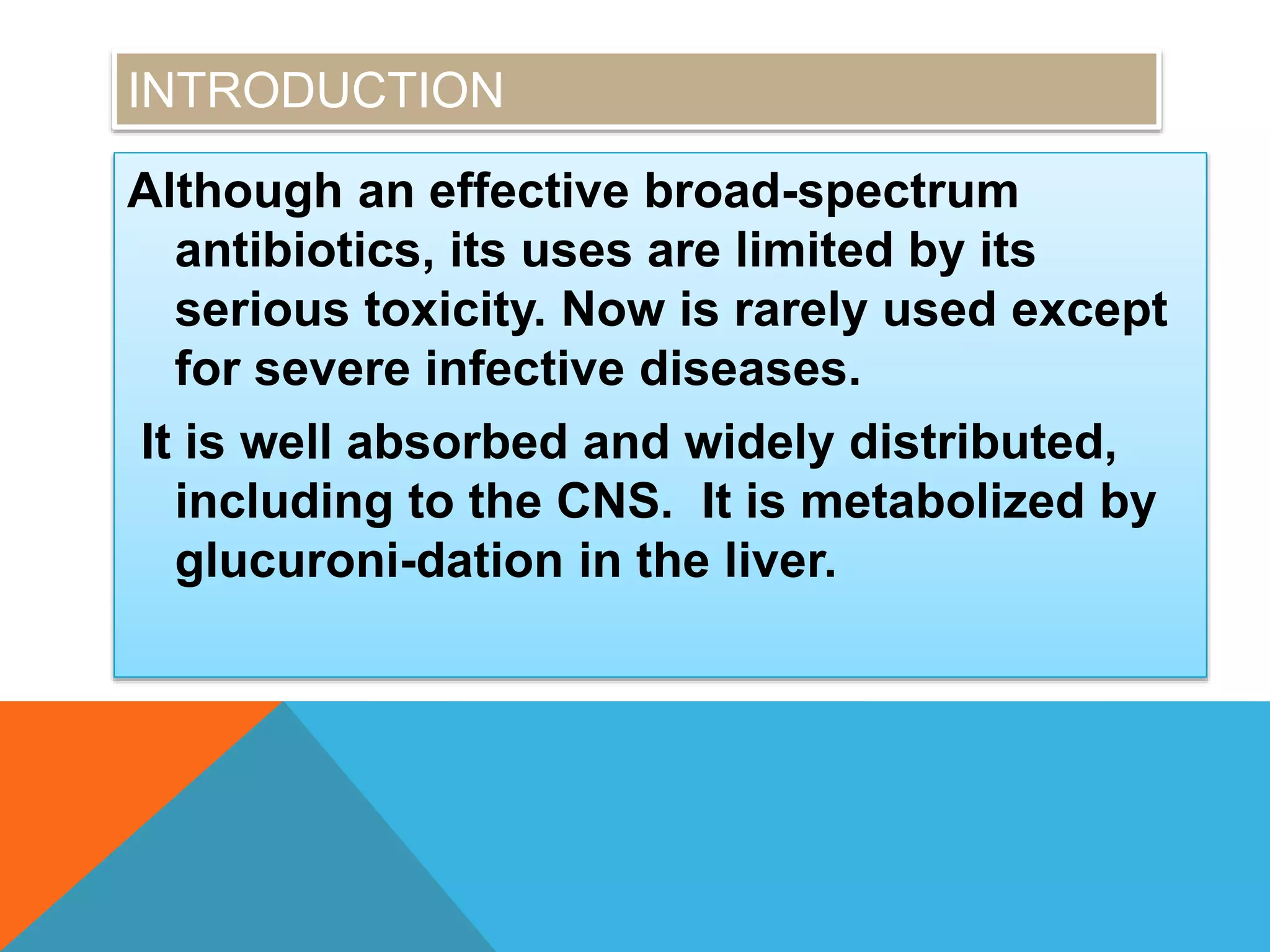
Although an effective broad-spectrum
antibiotics, its uses are limited by its
serious toxicity. Now is rarely used except
for severe infective diseases.
It is well absorbed and widely distributed,
including to the CNS. It is metabolized by
glucuroni-dation in the liver.
PHARMACOLOGIC EFFECTS
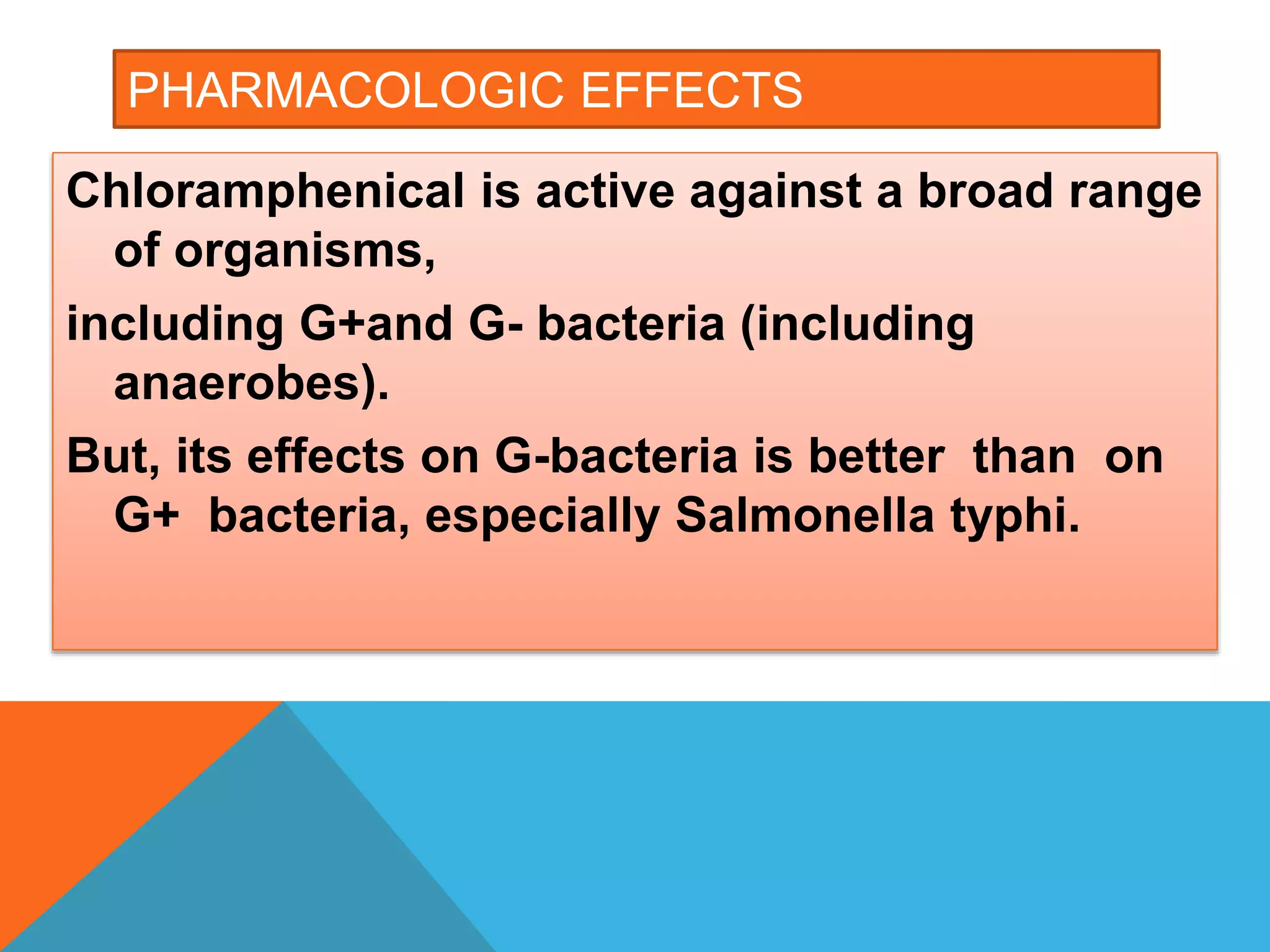
Chloramphenical is active against a broad range
of organisms,
including G+and G- bacteria (including
anaerobes).
But, its effects on G-bacteria is better than on
G+ bacteria, especially Salmonella typhi.
ABSORPTION
Absorbed from the GIT tract.
Peak con. Of 10 to 13ug/ml occurs with in 2 to 3 hr
after the administration of 1g dose .
The hydrolysis of cholremphenicol succinate is
due to the esterases enzyme present in kidney,
liver and lungs.
Poor renal function in the neonates and other
state of renal insufficiency result in increased
plasma conc. Of chloremphinicol succinate
CHLORAMPHENICOL
Mechanisms of action
Mechanisms of resistance
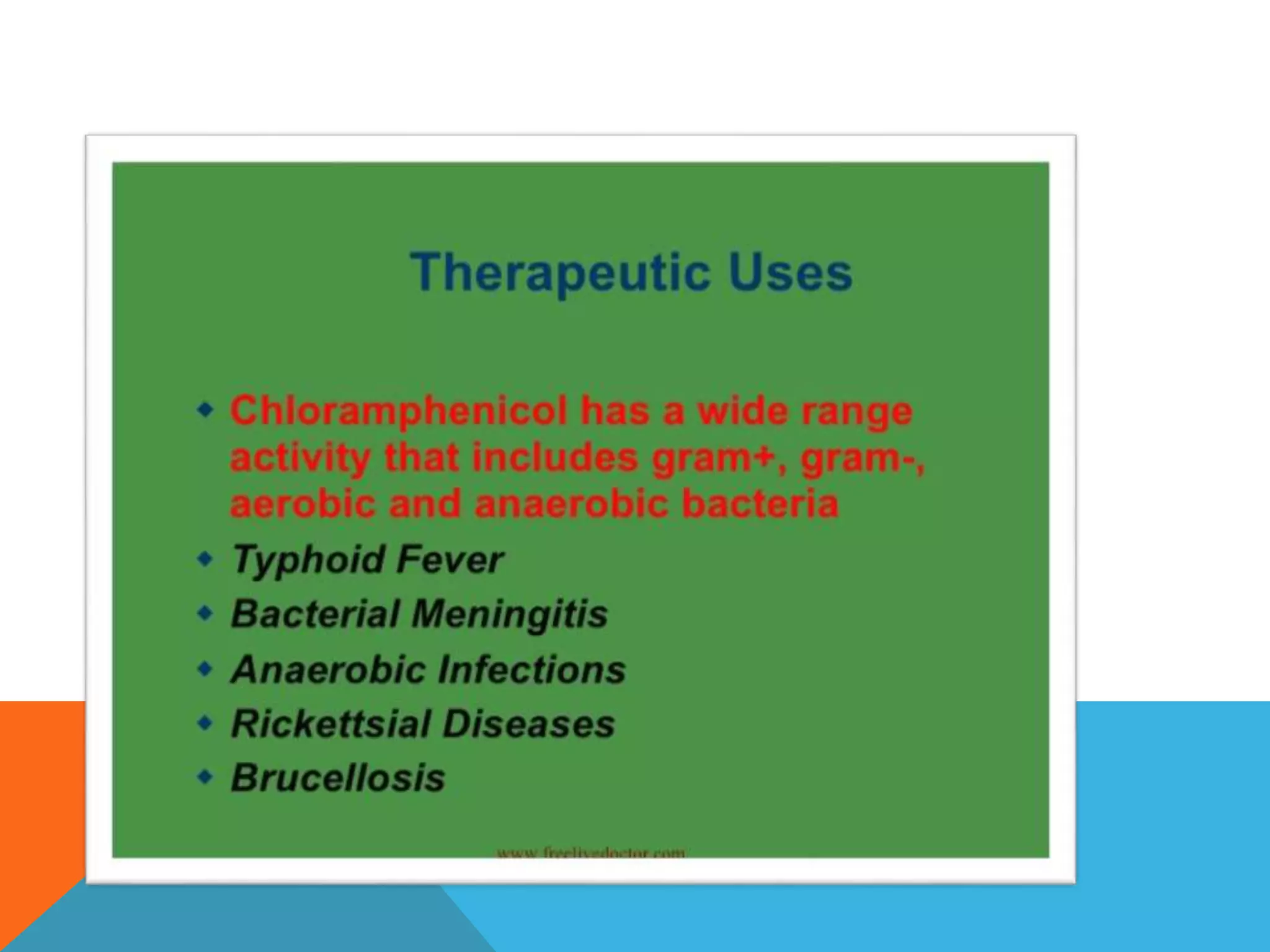
Clinical uses
Adverse effects
MECHANISMS OF ACTION
inhibits bacterial protein synthesis.
CAP binds 50S subunit and block elongation by inhibiting the formation of
initiation complexes and peptidyltransferase;
CAP is primarily bacteriostatic, but it may be bactericidal to some strains
of microorganisms even at lower concentration:
MECHANISMS OF RESISTANCE
reduced membrane permeability
mutation of the 50S ribosomal subunit
elaboration of chloramphenicol acetyltransferase
ADVERSE EFFECTS
. Toxicity for Newborn Infants (Gray-baby syndrome) Be seen in neonates,
especially premature infants, who have been given relatively large doses of
CAP.
The inadequate renal elimination mechanism of neonate and the inactive
metabolites also contributes to the occurrence of the syndrome.
. Gastrointestinal reaction. nausea, vomiting,diarrhea
. Hypersensitivity reactions
. A rare anemia, probably immunological in origin but often fatal
DRUG INTERACTION
Irreversibly inhibit the microsomal enzyme p-450.
Conversely other drug may alter the elimination of chloremphenicol
Chopramphenicol

Chopramphenicol

  • 1.
  • 2.
    CONTENTS • Pharmacokinetics • Absorption •Distribution • Fate and excretion
  • 3.
    INTRODUCTION Although an effectivebroad-spectrum antibiotics, its uses are limited by its serious toxicity. Now is rarely used except for severe infective diseases. It is well absorbed and widely distributed, including to the CNS. It is metabolized by glucuroni-dation in the liver.
  • 4.
    PHARMACOLOGIC EFFECTS Chloramphenical isactive against a broad range of organisms, including G+and G- bacteria (including anaerobes). But, its effects on G-bacteria is better than on G+ bacteria, especially Salmonella typhi.
  • 6.
    ABSORPTION Absorbed from theGIT tract. Peak con. Of 10 to 13ug/ml occurs with in 2 to 3 hr after the administration of 1g dose . The hydrolysis of cholremphenicol succinate is due to the esterases enzyme present in kidney, liver and lungs. Poor renal function in the neonates and other state of renal insufficiency result in increased plasma conc. Of chloremphinicol succinate
  • 10.
    CHLORAMPHENICOL Mechanisms of action Mechanismsof resistance Clinical uses Adverse effects
  • 11.
    MECHANISMS OF ACTION inhibitsbacterial protein synthesis. CAP binds 50S subunit and block elongation by inhibiting the formation of initiation complexes and peptidyltransferase; CAP is primarily bacteriostatic, but it may be bactericidal to some strains of microorganisms even at lower concentration:
  • 14.
    MECHANISMS OF RESISTANCE reducedmembrane permeability mutation of the 50S ribosomal subunit elaboration of chloramphenicol acetyltransferase
  • 15.
  • 16.
    . Toxicity forNewborn Infants (Gray-baby syndrome) Be seen in neonates, especially premature infants, who have been given relatively large doses of CAP. The inadequate renal elimination mechanism of neonate and the inactive metabolites also contributes to the occurrence of the syndrome.
  • 17.
    . Gastrointestinal reaction.nausea, vomiting,diarrhea . Hypersensitivity reactions . A rare anemia, probably immunological in origin but often fatal
  • 20.
    DRUG INTERACTION Irreversibly inhibitthe microsomal enzyme p-450. Conversely other drug may alter the elimination of chloremphenicol