   DR.SUNDUS
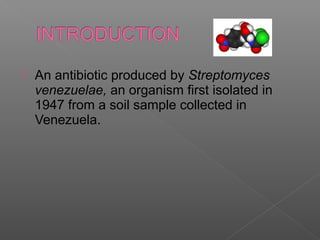
   An antibiotic produced by Streptomyces
    venezuelae, an organism first isolated in
    1947 from a soil sample collected in
    Venezuela.
   Chloramphenicol inhibits protein synthesis in bacteria and, to a
    lesser extent, in eukaryotic cells. The drug readily penetrates
    bacterial cells, probably by facilitated diffusion.
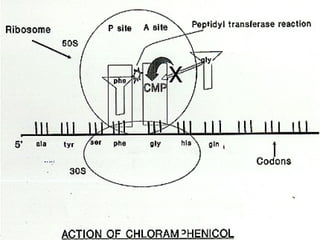
   Chloramphenicol acts primarily by binding reversibly to the 50
    S ribosomal subunit. Although binding of tRNA at the codon
    recognition site on the 30 S ribosomal subunit is thus
    undisturbed, the drug appears to prevent the binding of the
    amino-acid-containing end of the aminoacyl tRNA to the
    acceptor site on the 50 S ribosomal subunit. The interaction
    between peptidyltransferase and its amino acid substrate
    cannot occur, and peptide bond formation is inhibited
 Chloramphenicol also can inhibit mitochondrial protein
  synthesis in mammalian cells, perhaps because
  mitochondrial ribosomes resemble bacterial ribosomes
  (both are 70 S) more than they do the 80 S cytoplasmic
  ribosomes of mammalian cells.
 The peptidyltransferase of bovine mitochondrial
  ribosomes, but not cytoplasmic ribosomes, is
  susceptible to the inhibitory action of chloramphenicol.
  Mammalian erythropoietic cells seem to be particularly
  sensitive to the drug.
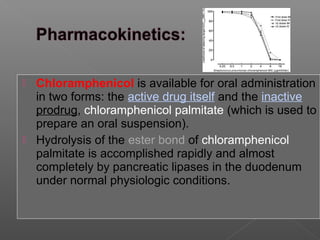
 Chloramphenicol is available for oral administration
  in two forms: the active drug itself and the inactive
  prodrug, chloramphenicol palmitate (which is used to
  prepare an oral suspension).
 Hydrolysis of the ester bond of chloramphenicol
  palmitate is accomplished rapidly and almost
  completely by pancreatic lipases in the duodenum
  under normal physiologic conditions.
 Chloramphenicol then is absorbed from the
  gastrointestinal tract
 peak concentrations of 10 to 13 µg/ml occur within 2
  to 3 hours after the administration of a 1-g dose.
 In patients with gastrointestinal disease or in
  newborns, the bioavailability is greater for
  chloramphenicol than for chloramphenicol palmitate,
  probably because of the incomplete hydrolysis of
  the latter
 The preparation of chloramphenicol for
  parenteral (IV) use is the water-soluble,
  inactive sodium succinate preparation.
 The hydrolysis of chloramphenicol succinate
  may be due to esterases of the liver, kidneys,
  and lungs.
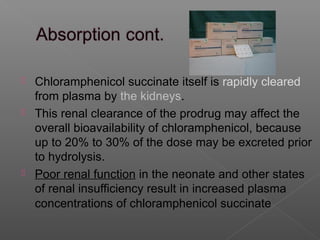
 Chloramphenicol succinate itself is rapidly cleared
  from plasma by the kidneys.
 This renal clearance of the prodrug may affect the
  overall bioavailability of chloramphenicol, because
  up to 20% to 30% of the dose may be excreted prior
  to hydrolysis.
 Poor renal function in the neonate and other states
  of renal insufficiency result in increased plasma
  concentrations of chloramphenicol succinate
 Chloramphenicol is well distributed in all body fluids
  and readily reaches therapeutic concentrations in
  CSF, where values are approximately 60% of those
  in plasma (range, 45% to 99%) in the presence or
  absence of meningitis. The drug actually may
  accumulate in brain tissue.
 Chloramphenicol is present in bile, is secreted into
  milk, and readily traverses the placental barrier. It
  also penetrates into the aqueous humor after
  subconjunctival injection.
 The half-life of chloramphenicol has been correlated
  with plasma bilirubin concentrations.
 About 50% of chloramphenicol is bound to plasma
  proteins; such binding is reduced in cirrhotic patients
  and in neonates.
 The half-life of the active drug (4 hours) is not
  significantly changed in patients with renal failure as
  compared with those with normal renal function. Full
  doses of chloramphenicol must still be given to
  achieve therapeutic concentrations of the active drug
  in uremia.
 The major route of elimination of chloramphenicol is
  hepatic metabolism to the inactive glucuronide. This
  metabolite, as well as chloramphenicol itself, is
  excreted in the urine by filtration and secretion.
 Over a 24-hour period, 75% to 90% of an orally
  administered dose is excreted; about 5% to 10% is in
  the biologically active form.
 Patients with hepatic cirrhosis have decreased
  metabolic clearance, and dosage should be
  adjusted in these individuals.
 The variability in the metabolism and
  pharmacokinetic parameters of chloramphenicol
  in neonates, infants, and children necessitates
  monitoring of drug concentrations in plasma
   Chloramphenicol inhibits the synthesis of
    proteins of the inner mitochondrial membrane that
    are synthesized in mitochondria, by inhibiting the
    ribosomal peptidyltransferase. These include
    subunits of cytochrome c oxidase, ubiquinone-
    cytochrome c reductase, and the proton-
    translocating ATPase. Much of the toxicity
    observed with this drug can be attributed to these
    effects
   The most important adverse effect of
    chloramphenicol is on the bone marrow.
    Chloramphenicol affects the hematopoietic
    system in two ways:
    › by an non-dose-related idiosyncratic response
      manifested by aplastic anemia, leading in many
      cases to fatal pancytopenia.
    › by a dose-related toxic effect that presents as
      anemia, leukopenia, or thrombocytopenia, and
 It seems to occur more commonly in individuals who
  undergo prolonged therapy and especially in those
  who are exposed to the drug on more than one
  occasion.
 A genetic predisposition is suggested by the
  occurrence of pancytopenia in identical twins.
  Although the incidence of the reaction is low-1 in
  approximately 30,000 or more courses of therapy-
  the fatality rate is high when bone-marrow aplasia is
  complete, and there is a higher risk of acute
  leukemia in those who recover
Very
                                          important


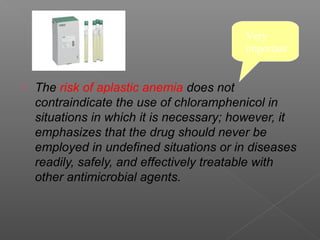
   The risk of aplastic anemia does not
    contraindicate the use of chloramphenicol in
    situations in which it is necessary; however, it
    emphasizes that the drug should never be
    employed in undefined situations or in diseases
    readily, safely, and effectively treatable with
    other antimicrobial agents.
 A second, and dose-related, toxic hematologic
  effect of chloramphenicol is a common and
  predictable (but reversible) erythroid suppression
  of the bone marrow.
 probably due to inhibitory action of the drug on
  mitochondrial protein synthesis.
 It occurs regularly when plasma concentrations
  are 25 µg/ml or higher and is observed with the
  use of large doses of chloramphenicol, prolonged
  treatment, or both.
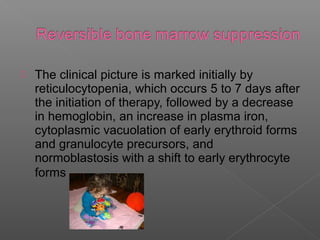
   The clinical picture is marked initially by
    reticulocytopenia, which occurs 5 to 7 days after
    the initiation of therapy, followed by a decrease
    in hemoglobin, an increase in plasma iron,
    cytoplasmic vacuolation of early erythroid forms
    and granulocyte precursors, and
    normoblastosis with a shift to early erythrocyte
    forms
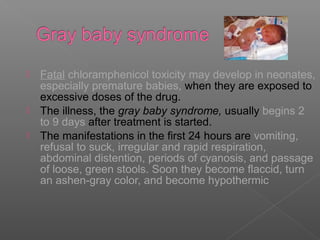
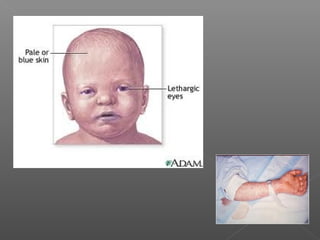
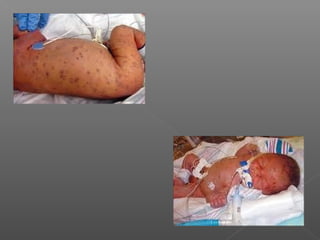
 Fatal chloramphenicol toxicity may develop in neonates,
  especially premature babies, when they are exposed to
  excessive doses of the drug.
 The illness, the gray baby syndrome, usually begins 2
  to 9 days after treatment is started.
 The manifestations in the first 24 hours are vomiting,
  refusal to suck, irregular and rapid respiration,
  abdominal distention, periods of cyanosis, and passage
  of loose, green stools. Soon they become flaccid, turn
  an ashen-gray color, and become hypothermic
 Two mechanisms are apparently responsible for
  chloramphenicol toxicity in neonates
 (1) failure of the drug to be conjugated with
  glucuronic acid, owing to inadequate activity of
  glucuronyl transferase in the liver, which is
  characteristic of the first 3 to 4 weeks of life; and (2)
  inadequate renal excretion of unconjugated drug in
  the newborn.
 both exchange transfusion and charcoal
  hemoperfusion have been used to treat overdose with
  chloramphenicol in infants.
 Although relatively uncommon, macular or
  vesicular skin rashes occur as a result of
  hypersensitivity to chloramphenicol. Fever may
  appear simultaneously or be the sole
  manifestation.
 Angioedema is a rare complication. Jarisch-
  Herxheimer reactions have been observed shortly
  after institution of chloramphenicol therapy for
  syphilis, brucellosis, and typhoid fever.
    Nausea, vomiting, unpleasant taste, diarrhea,
    and perineal irritation may follow the oral
    administration of chloramphenicol. Among the
    rare toxic effects produced by this antibiotic are
    blurring of vision and digital paresthesias. Optic
    neuritis occurs in 3% to 5% of children
   Therapy with chloramphenicol must be
    limited to infections for which the benefits of
    the drug outweigh the risks of the potential
    toxicities. When other antimicrobial drugs are
    available that are equally effective and
    potentially less toxic than chloramphenicol,
    they should be used
   Chloramphenicol has a wide range
    activity that includes gram+, gram-,
    aerobic and anaerobic bacteria
   Typhoid Fever
   Bacterial Meningitis
   Anaerobic Infections
   Rickettsial Diseases
   Brucellosis
 Chloramphenicol irreversibly inhibits hepatic
  microsomal cytochrome P450 enzymes and thus may
  prolong the half-lives of drugs that are metabolized by
  this system. Such drugs include dicumarol, phenytoin,
  chlorpropamide, and tolbutamide.
 Conversely, other drugs may alter the elimination of
  chloramphenicol. Chronic administration of
  phenobarbital or acute administration of rifampin
  shortens the half-life of the antibiotic, presumably
  because of enzyme induction, and may result in
  subtherapeutic concentrations of the drug
   The antimicrobial agents discussed in this lecture are
    principally second-line agents because of emerging
    resistance, concerns with toxicity, or special activity against
    selected organisms. The tetracyclines are broad-
    spectrum antibiotics with activity against aerobic and
    anaerobic gram-positive and gram-negative organisms,
    rickettsiae, mycoplasmas, and chlamydiae. However,
    resistance to tetracyclines has reduced their clinical
    usefulness over the last decade. Chloramphenicol is not
    a first-line antibiotic because of its potential for causing
    aplastic anemia. It is indicated for treatment of life-
    threatening infections such as bacterial meningitis or
    rickettsial infections.

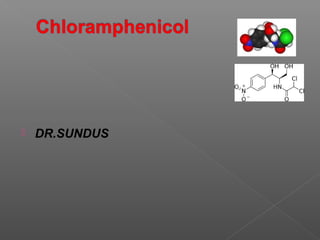
Chloramphenicol

  • 1.
    DR.SUNDUS
  • 2.
    An antibiotic produced by Streptomyces venezuelae, an organism first isolated in 1947 from a soil sample collected in Venezuela.
  • 3.
    Chloramphenicol inhibits protein synthesis in bacteria and, to a lesser extent, in eukaryotic cells. The drug readily penetrates bacterial cells, probably by facilitated diffusion.  Chloramphenicol acts primarily by binding reversibly to the 50 S ribosomal subunit. Although binding of tRNA at the codon recognition site on the 30 S ribosomal subunit is thus undisturbed, the drug appears to prevent the binding of the amino-acid-containing end of the aminoacyl tRNA to the acceptor site on the 50 S ribosomal subunit. The interaction between peptidyltransferase and its amino acid substrate cannot occur, and peptide bond formation is inhibited
  • 5.
     Chloramphenicol alsocan inhibit mitochondrial protein synthesis in mammalian cells, perhaps because mitochondrial ribosomes resemble bacterial ribosomes (both are 70 S) more than they do the 80 S cytoplasmic ribosomes of mammalian cells.  The peptidyltransferase of bovine mitochondrial ribosomes, but not cytoplasmic ribosomes, is susceptible to the inhibitory action of chloramphenicol. Mammalian erythropoietic cells seem to be particularly sensitive to the drug.
  • 6.
     Chloramphenicol isavailable for oral administration in two forms: the active drug itself and the inactive prodrug, chloramphenicol palmitate (which is used to prepare an oral suspension).  Hydrolysis of the ester bond of chloramphenicol palmitate is accomplished rapidly and almost completely by pancreatic lipases in the duodenum under normal physiologic conditions.
  • 7.
     Chloramphenicol thenis absorbed from the gastrointestinal tract  peak concentrations of 10 to 13 µg/ml occur within 2 to 3 hours after the administration of a 1-g dose.  In patients with gastrointestinal disease or in newborns, the bioavailability is greater for chloramphenicol than for chloramphenicol palmitate, probably because of the incomplete hydrolysis of the latter
  • 8.
     The preparationof chloramphenicol for parenteral (IV) use is the water-soluble, inactive sodium succinate preparation.  The hydrolysis of chloramphenicol succinate may be due to esterases of the liver, kidneys, and lungs.
  • 9.
     Chloramphenicol succinateitself is rapidly cleared from plasma by the kidneys.  This renal clearance of the prodrug may affect the overall bioavailability of chloramphenicol, because up to 20% to 30% of the dose may be excreted prior to hydrolysis.  Poor renal function in the neonate and other states of renal insufficiency result in increased plasma concentrations of chloramphenicol succinate
  • 10.
     Chloramphenicol iswell distributed in all body fluids and readily reaches therapeutic concentrations in CSF, where values are approximately 60% of those in plasma (range, 45% to 99%) in the presence or absence of meningitis. The drug actually may accumulate in brain tissue.  Chloramphenicol is present in bile, is secreted into milk, and readily traverses the placental barrier. It also penetrates into the aqueous humor after subconjunctival injection.
  • 11.
     The half-lifeof chloramphenicol has been correlated with plasma bilirubin concentrations.  About 50% of chloramphenicol is bound to plasma proteins; such binding is reduced in cirrhotic patients and in neonates.  The half-life of the active drug (4 hours) is not significantly changed in patients with renal failure as compared with those with normal renal function. Full doses of chloramphenicol must still be given to achieve therapeutic concentrations of the active drug in uremia.
  • 12.
     The majorroute of elimination of chloramphenicol is hepatic metabolism to the inactive glucuronide. This metabolite, as well as chloramphenicol itself, is excreted in the urine by filtration and secretion.  Over a 24-hour period, 75% to 90% of an orally administered dose is excreted; about 5% to 10% is in the biologically active form.
  • 13.
     Patients withhepatic cirrhosis have decreased metabolic clearance, and dosage should be adjusted in these individuals.  The variability in the metabolism and pharmacokinetic parameters of chloramphenicol in neonates, infants, and children necessitates monitoring of drug concentrations in plasma
  • 14.
    Chloramphenicol inhibits the synthesis of proteins of the inner mitochondrial membrane that are synthesized in mitochondria, by inhibiting the ribosomal peptidyltransferase. These include subunits of cytochrome c oxidase, ubiquinone- cytochrome c reductase, and the proton- translocating ATPase. Much of the toxicity observed with this drug can be attributed to these effects
  • 15.
    The most important adverse effect of chloramphenicol is on the bone marrow.  Chloramphenicol affects the hematopoietic system in two ways: › by an non-dose-related idiosyncratic response manifested by aplastic anemia, leading in many cases to fatal pancytopenia. › by a dose-related toxic effect that presents as anemia, leukopenia, or thrombocytopenia, and
  • 16.
     It seemsto occur more commonly in individuals who undergo prolonged therapy and especially in those who are exposed to the drug on more than one occasion.  A genetic predisposition is suggested by the occurrence of pancytopenia in identical twins. Although the incidence of the reaction is low-1 in approximately 30,000 or more courses of therapy- the fatality rate is high when bone-marrow aplasia is complete, and there is a higher risk of acute leukemia in those who recover
  • 17.
    Very important  The risk of aplastic anemia does not contraindicate the use of chloramphenicol in situations in which it is necessary; however, it emphasizes that the drug should never be employed in undefined situations or in diseases readily, safely, and effectively treatable with other antimicrobial agents.
  • 18.
     A second,and dose-related, toxic hematologic effect of chloramphenicol is a common and predictable (but reversible) erythroid suppression of the bone marrow.  probably due to inhibitory action of the drug on mitochondrial protein synthesis.  It occurs regularly when plasma concentrations are 25 µg/ml or higher and is observed with the use of large doses of chloramphenicol, prolonged treatment, or both.
  • 19.
    The clinical picture is marked initially by reticulocytopenia, which occurs 5 to 7 days after the initiation of therapy, followed by a decrease in hemoglobin, an increase in plasma iron, cytoplasmic vacuolation of early erythroid forms and granulocyte precursors, and normoblastosis with a shift to early erythrocyte forms
  • 20.
     Fatal chloramphenicoltoxicity may develop in neonates, especially premature babies, when they are exposed to excessive doses of the drug.  The illness, the gray baby syndrome, usually begins 2 to 9 days after treatment is started.  The manifestations in the first 24 hours are vomiting, refusal to suck, irregular and rapid respiration, abdominal distention, periods of cyanosis, and passage of loose, green stools. Soon they become flaccid, turn an ashen-gray color, and become hypothermic
  • 23.
     Two mechanismsare apparently responsible for chloramphenicol toxicity in neonates  (1) failure of the drug to be conjugated with glucuronic acid, owing to inadequate activity of glucuronyl transferase in the liver, which is characteristic of the first 3 to 4 weeks of life; and (2) inadequate renal excretion of unconjugated drug in the newborn.  both exchange transfusion and charcoal hemoperfusion have been used to treat overdose with chloramphenicol in infants.
  • 24.
     Although relativelyuncommon, macular or vesicular skin rashes occur as a result of hypersensitivity to chloramphenicol. Fever may appear simultaneously or be the sole manifestation.  Angioedema is a rare complication. Jarisch- Herxheimer reactions have been observed shortly after institution of chloramphenicol therapy for syphilis, brucellosis, and typhoid fever.
  • 25.
    Nausea, vomiting, unpleasant taste, diarrhea, and perineal irritation may follow the oral administration of chloramphenicol. Among the rare toxic effects produced by this antibiotic are blurring of vision and digital paresthesias. Optic neuritis occurs in 3% to 5% of children
  • 26.
    Therapy with chloramphenicol must be limited to infections for which the benefits of the drug outweigh the risks of the potential toxicities. When other antimicrobial drugs are available that are equally effective and potentially less toxic than chloramphenicol, they should be used
  • 27.
    Chloramphenicol has a wide range activity that includes gram+, gram-, aerobic and anaerobic bacteria  Typhoid Fever  Bacterial Meningitis  Anaerobic Infections  Rickettsial Diseases  Brucellosis
  • 28.
     Chloramphenicol irreversiblyinhibits hepatic microsomal cytochrome P450 enzymes and thus may prolong the half-lives of drugs that are metabolized by this system. Such drugs include dicumarol, phenytoin, chlorpropamide, and tolbutamide.  Conversely, other drugs may alter the elimination of chloramphenicol. Chronic administration of phenobarbital or acute administration of rifampin shortens the half-life of the antibiotic, presumably because of enzyme induction, and may result in subtherapeutic concentrations of the drug
  • 29.
    The antimicrobial agents discussed in this lecture are principally second-line agents because of emerging resistance, concerns with toxicity, or special activity against selected organisms. The tetracyclines are broad- spectrum antibiotics with activity against aerobic and anaerobic gram-positive and gram-negative organisms, rickettsiae, mycoplasmas, and chlamydiae. However, resistance to tetracyclines has reduced their clinical usefulness over the last decade. Chloramphenicol is not a first-line antibiotic because of its potential for causing aplastic anemia. It is indicated for treatment of life- threatening infections such as bacterial meningitis or rickettsial infections.