Dr.Zulcaif Ahmad Page 1
Alcohol Induce Liver Injury
There is no question that alcohol has the ability to change your body
This change can be felt and can be detected into your blood with in minutes after taking your
first alcoholic drink
If you continue to take alcoholic beverages BAC (blood alcohol concentration) will continue to
rise, which 0.8% you are legally intoxicated.
Body doesn’t respond towards alcohol than other food nutrients like Carbohydrates and fats and
proteins, when ever your body detects it, it tries to get rid of it.
Alcohol absorbed through stomach lining and small intestine, straight into the blood stream
that’s why it can be detected with in minutes.
Fatty change, or steatosis is the accumulation of fatty acids in liver cells. These can be seen as
fatty globules under the microscope. Alcoholism causes development of large fatty globules
(macro vesicular steatosis) throughout the liver and can begin to occur after a few days of heavy
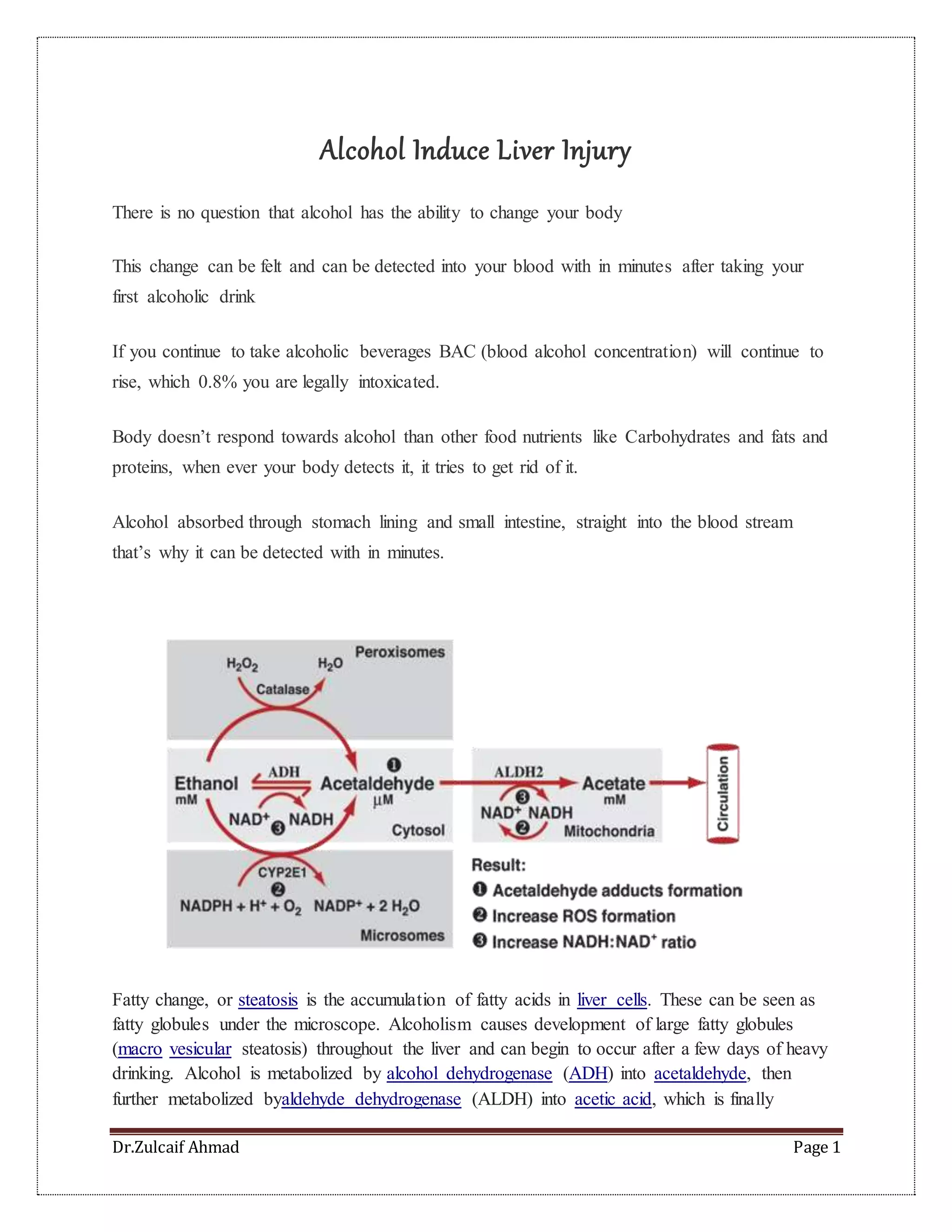
drinking. Alcohol is metabolized by alcohol dehydrogenase (ADH) into acetaldehyde, then
further metabolized byaldehyde dehydrogenase (ALDH) into acetic acid, which is finally
Dr.Zulcaif Ahmad Page 2
oxidized into carbon dioxide (CO2) and water ( H2O). This process generates NADH, and
increases the NADH/NAD+ ratio. A higher NADH concentration induces fatty acid
synthesis while a decreased NAD level results in decreased fatty acid oxidation. Subsequently,
the higher levels of fatty acids signal the liver cells to compound it to glycerolto
form triglycerides. These triglycerides accumulate, resulting in fatty liver.
Alcoholic hepatitis
This is called alcoholic steato necrosis and the inflammation appears to predispose to
liver fibrosis. Inflammatory cytokines (TNF-alpha, IL6 and IL8) are thought to be essential in the
initiation and perpetuation of liver injury by inducing apoptosis and necrosis. One possible
mechanism for the increased activity of TNF-α is the increased intestinal permeability due to
liver disease. This facilitates the absorption of the gut-produced endotoxin into the portal
circulation. The Kupffer cells of the liver then phagocytose endotoxin, stimulating the release of
TNF-α. TNF-α then triggers apoptotic pathways through the activation of caspases, resulting in
cell death.
Cirrhosis is a late stage of serious liver disease marked
by inflammation (swelling), fibrosis (cellular hardening) and damaged membranes preventing
detoxification of chemicals in the body, ending in scarring and necrosis (cell death). Between
10% to 20% of heavy drinkers will develop cirrhosis of the liver (NIAAA,
1993). Acetaldehyde may be responsible for alcohol-induced fibrosis by
stimulating collagen deposition by hepatic stellate cells. The production of oxidants derived from
NADPH oxi- dase and/or cytochromeP-450 2E1 and the formation of acetaldehyde-protein
adducts damage the cell membrane. Symptoms include jaundice (yellowing), liver enlargement,
and pain and tenderness from the structural changes in damaged liver architecture. Without total
abstinence from alcohol use, will eventually lead to liver failure. Late complications of cirrhosis
or liver failure include portal hypertension (high blood pressure in the portal vein due to the
increased flow resistance through the damaged liver), coagulation disorders (due to impaired
production of coagulation factors), ascites (heavy abdominal swelling due to buildup of fluids in
the tissues) and other complications, including hepatic encephalopathy and thehepatorenal
syndrome.
Diagnosis
Physical examination
Treatment
Alcoholic Liver Disease: Pathogenesis and New Therapeutic Targets
Dr.Zulcaif Ahmad Page 3
BIN GAO* and RAMON BATALLER‡ *Laboratory of Liver Diseases, National Institute on
Alcohol Abuse and Alcoholism, National Institutes of Health, Bethesda, Maryland; and ‡ Liver
Unit, Hospital Clínic, Institut d’Investigacions Biomèdiques August Pi i Sunyer, Centro de
Investigación Biomédica en Red de Enfermedades Hepáticas y Digestivas, Barcelona, Catalonia,
Spain
Treatment of AH
Supportive treatment
Patients with severe AH could require admission to an intensive care unit. The airway should be
protected in patients with acute alcoholic intoxication or an advanced degree of hepatic
encephalopathy. The use of benzodiazepines is contraindicated in these patients. Given the
potential risk of Wernicke encephalopathy among alcoholic and malnourished patients, the
administration of B-complex vitamins is often required. A daily protein intake of 1.5 g/kg body
wt has been proposed. Patients with AH are predisposed to develop severe infections, so early
diagnosis and empiric antibiotic treatment are advised.
Corticosteroids
The efficacy of corticosteroids in treating patients with AH is controversial, with different
findings from individual studies and meta-analyses. Several meta-analyses reported that
corticosteroids increased patient survival times, and one did not support use of corticosteroids
because of the heterogeneity of the clinical trials and the high risk of bias. Nevertheless, the
current American Association for the Study of Liver Diseases practice guidelines recommend the
use of corticosteroids for patients with severe AH, defined by Maddrey’s discriminant function
≥32 or hepatic encephalopathy. Patients must also be intensively monitored for evidence of
infections, which occur in almost 25% of patients during corticosteroid treatment and are
associated with a poor prognosis. The decision to stop corticosteroids can be based on
calculation of the Lille Model after 7 days of treatment; a Lille Model score greater than 0.45
indicates failure to respond to corticosteroid treatment and predicts a 6-month survival rate of
less than 25%. Severe acute AH is associated with significant lymphocyte corticosteroid
insensitivity, which can be reduced ex vivo by theophylline administration. or reagents that block
the IL-2 receptor. these drugs might therefore improve the efficacy of corticosteroids in treating
AH.
Pentoxifylline
Pentoxifylline is a phosphodiesterase inhibitor that blocks transcription of TNF-α to decrease
serum levels of the gene product. Pentoxifylline can be used to treat patients with severe AH
who cannot be given corticosteroids. It was shown to reduce the mortality of patients with severe
AH, which was related to decreased development of hepatorenal syndrome.However, this effect
Dr.Zulcaif Ahmad Page 4
was not appreciable after adjustment for multiple testing. Importantly, pentoxifylline was not
effective as rescue therapy for patients who did not respond to corticosteroids.
Anti-TNF-α agents
TNF-α has an important role in the pathogenesis of ALD in animal models, so there have been
several clinical studies of the effects of infliximab or etanercept (reagents that block this
cytokine) in patients with AH. Early-stage studies showed positive results in terms of survival
and safety, but later-stage clinical trials showed that these drugs actually increased mortality and
risk of infection among patients with AH. These reagents are therefore not recommended for the
treatment of AH.
Nutrition therapy
Alcoholic patients often experience protein calorie malnutrition, which can promote bacterial
infections. Nutritional support is recommended in patients with AH; it improves liver function
and results from histologic analyses and might increase survival times based on results of short-
term follow-up studies.
SAMe
SAMe is a methyl donor that has been shown to protect against alcoholic liver injury via multiple
mechanisms, including antioxidant functions, maintenance of mitochondrial function, and down-
regulation of TNF-α. An early-stage trial showed that administration of SAMe as a supplemental
agent significantly decreased mortality and need for liver transplantation among patients with
ALD; it had a favorable safety profile. However, in a Cochrane report, there was no evidence to
support the use of SAMe in treatment of patients with ALD. Long-term, high-quality,
randomized trials are required to establish its therapeutic effects.
Liver transplantation
Liver transplantation has been used to treat patients with decompensated ALD. Outcomes are
equal to or better than those obtained when it is used to treat end-stage liver disease from other
causes. Several liver transplantation centers have therefore proposed that this be a rescue option
for patients with severe AH who do not respond to medical therapy and are unlikely to survive
the mandatory, 6-month abstinence period but who fulfill all other standard criteria for
transplantation, including a thorough psychosocial evaluation.
Other therapies
Androgen corticosteroids have been used in attempts to improve the nutritional status of patients
with AH. Although initial trials with oxandrolone had positive results, they were not confirmed
in further studies; no benefit was shown in a meta-analysis. Pro pylthiouracil, an antithyroid
drug, has also been evaluated for the treatment of acute AH. A meta-analysis of 6 clinical trials
Dr.Zulcaif Ahmad Page 5
showed that propylthiouracil did not affect survival times and was associated with adverse
effects.144 Because ALD is associated with increased levels of oxidative stress, a number of
studies have investigated the benefits of antioxidants (eg, vitamin E and silymarin).
Unfortunately, in early-stage studies, survival times of patients with AH did not increase..
However, a study that evaluated the potential benefit of combining N-acetylcysteine with
corticosteroids showed an increased number of patients survived a short follow-up period
compared with controls.
Arthur I Cederbaum, Department of Pharmacology and Systems Therapeutics, Box 1603, Mount
Sinai School of Medicine, One Gustave Levy Place, New York, NY 10029, United States
Hepatic SAM levels are decreased in animal models of alcohol liver injury and in patients with
alcohol liver disease or viral cirrhosis. This review describes the protection by SAM against
alcohol and cytochrome P450 2E1- dependent cytotoxicity both in vitro and in vivo and
evaluates mechanisms for this protection.
Naltrexone
The blockade of opioid receptors is the basis behind naltrexone's action in the management of
opioid dependence—it reversibly blocks or attenuates the effects of opioids. Its mechanism of
action in alcohol dependence is not fully understood, but as an opioid receptor antagonist is
likely to be due to the modulation of the dopaminergic mesolimbic pathway (one of the primary
centers for risk-reward analysis in the brain, and a tertiary "pleasure center") which is
hypothesized to be a major center of the reward associated with addiction that all major drugs of
abuse are believed to activate
Disulfiram
Under normal metabolism, alcohol is broken down in the liver by the enzyme alcohol
dehydrogenase to acetaldehyde, which is then converted by the enzyme acetaldehyde
dehydrogenase to the harmless acetic acid. Disulfiram blocks this reaction at the intermediate
stage by blocking acetaldehyde dehydrogenase. After alcohol intake under the influence of
disulfiram, the concentration of acetaldehyde in the blood may be five to 10 times higher than
that found during metabolism of the same amount of alcohol alone.
Acamprosate

Alcohol Induce Liver Injury

  • 1.
    Dr.Zulcaif Ahmad Page1 Alcohol Induce Liver Injury There is no question that alcohol has the ability to change your body This change can be felt and can be detected into your blood with in minutes after taking your first alcoholic drink If you continue to take alcoholic beverages BAC (blood alcohol concentration) will continue to rise, which 0.8% you are legally intoxicated. Body doesn’t respond towards alcohol than other food nutrients like Carbohydrates and fats and proteins, when ever your body detects it, it tries to get rid of it. Alcohol absorbed through stomach lining and small intestine, straight into the blood stream that’s why it can be detected with in minutes. Fatty change, or steatosis is the accumulation of fatty acids in liver cells. These can be seen as fatty globules under the microscope. Alcoholism causes development of large fatty globules (macro vesicular steatosis) throughout the liver and can begin to occur after a few days of heavy drinking. Alcohol is metabolized by alcohol dehydrogenase (ADH) into acetaldehyde, then further metabolized byaldehyde dehydrogenase (ALDH) into acetic acid, which is finally
  • 2.
    Dr.Zulcaif Ahmad Page2 oxidized into carbon dioxide (CO2) and water ( H2O). This process generates NADH, and increases the NADH/NAD+ ratio. A higher NADH concentration induces fatty acid synthesis while a decreased NAD level results in decreased fatty acid oxidation. Subsequently, the higher levels of fatty acids signal the liver cells to compound it to glycerolto form triglycerides. These triglycerides accumulate, resulting in fatty liver. Alcoholic hepatitis This is called alcoholic steato necrosis and the inflammation appears to predispose to liver fibrosis. Inflammatory cytokines (TNF-alpha, IL6 and IL8) are thought to be essential in the initiation and perpetuation of liver injury by inducing apoptosis and necrosis. One possible mechanism for the increased activity of TNF-α is the increased intestinal permeability due to liver disease. This facilitates the absorption of the gut-produced endotoxin into the portal circulation. The Kupffer cells of the liver then phagocytose endotoxin, stimulating the release of TNF-α. TNF-α then triggers apoptotic pathways through the activation of caspases, resulting in cell death. Cirrhosis is a late stage of serious liver disease marked by inflammation (swelling), fibrosis (cellular hardening) and damaged membranes preventing detoxification of chemicals in the body, ending in scarring and necrosis (cell death). Between 10% to 20% of heavy drinkers will develop cirrhosis of the liver (NIAAA, 1993). Acetaldehyde may be responsible for alcohol-induced fibrosis by stimulating collagen deposition by hepatic stellate cells. The production of oxidants derived from NADPH oxi- dase and/or cytochromeP-450 2E1 and the formation of acetaldehyde-protein adducts damage the cell membrane. Symptoms include jaundice (yellowing), liver enlargement, and pain and tenderness from the structural changes in damaged liver architecture. Without total abstinence from alcohol use, will eventually lead to liver failure. Late complications of cirrhosis or liver failure include portal hypertension (high blood pressure in the portal vein due to the increased flow resistance through the damaged liver), coagulation disorders (due to impaired production of coagulation factors), ascites (heavy abdominal swelling due to buildup of fluids in the tissues) and other complications, including hepatic encephalopathy and thehepatorenal syndrome. Diagnosis Physical examination Treatment Alcoholic Liver Disease: Pathogenesis and New Therapeutic Targets
  • 3.
    Dr.Zulcaif Ahmad Page3 BIN GAO* and RAMON BATALLER‡ *Laboratory of Liver Diseases, National Institute on Alcohol Abuse and Alcoholism, National Institutes of Health, Bethesda, Maryland; and ‡ Liver Unit, Hospital Clínic, Institut d’Investigacions Biomèdiques August Pi i Sunyer, Centro de Investigación Biomédica en Red de Enfermedades Hepáticas y Digestivas, Barcelona, Catalonia, Spain Treatment of AH Supportive treatment Patients with severe AH could require admission to an intensive care unit. The airway should be protected in patients with acute alcoholic intoxication or an advanced degree of hepatic encephalopathy. The use of benzodiazepines is contraindicated in these patients. Given the potential risk of Wernicke encephalopathy among alcoholic and malnourished patients, the administration of B-complex vitamins is often required. A daily protein intake of 1.5 g/kg body wt has been proposed. Patients with AH are predisposed to develop severe infections, so early diagnosis and empiric antibiotic treatment are advised. Corticosteroids The efficacy of corticosteroids in treating patients with AH is controversial, with different findings from individual studies and meta-analyses. Several meta-analyses reported that corticosteroids increased patient survival times, and one did not support use of corticosteroids because of the heterogeneity of the clinical trials and the high risk of bias. Nevertheless, the current American Association for the Study of Liver Diseases practice guidelines recommend the use of corticosteroids for patients with severe AH, defined by Maddrey’s discriminant function ≥32 or hepatic encephalopathy. Patients must also be intensively monitored for evidence of infections, which occur in almost 25% of patients during corticosteroid treatment and are associated with a poor prognosis. The decision to stop corticosteroids can be based on calculation of the Lille Model after 7 days of treatment; a Lille Model score greater than 0.45 indicates failure to respond to corticosteroid treatment and predicts a 6-month survival rate of less than 25%. Severe acute AH is associated with significant lymphocyte corticosteroid insensitivity, which can be reduced ex vivo by theophylline administration. or reagents that block the IL-2 receptor. these drugs might therefore improve the efficacy of corticosteroids in treating AH. Pentoxifylline Pentoxifylline is a phosphodiesterase inhibitor that blocks transcription of TNF-α to decrease serum levels of the gene product. Pentoxifylline can be used to treat patients with severe AH who cannot be given corticosteroids. It was shown to reduce the mortality of patients with severe AH, which was related to decreased development of hepatorenal syndrome.However, this effect
  • 4.
    Dr.Zulcaif Ahmad Page4 was not appreciable after adjustment for multiple testing. Importantly, pentoxifylline was not effective as rescue therapy for patients who did not respond to corticosteroids. Anti-TNF-α agents TNF-α has an important role in the pathogenesis of ALD in animal models, so there have been several clinical studies of the effects of infliximab or etanercept (reagents that block this cytokine) in patients with AH. Early-stage studies showed positive results in terms of survival and safety, but later-stage clinical trials showed that these drugs actually increased mortality and risk of infection among patients with AH. These reagents are therefore not recommended for the treatment of AH. Nutrition therapy Alcoholic patients often experience protein calorie malnutrition, which can promote bacterial infections. Nutritional support is recommended in patients with AH; it improves liver function and results from histologic analyses and might increase survival times based on results of short- term follow-up studies. SAMe SAMe is a methyl donor that has been shown to protect against alcoholic liver injury via multiple mechanisms, including antioxidant functions, maintenance of mitochondrial function, and down- regulation of TNF-α. An early-stage trial showed that administration of SAMe as a supplemental agent significantly decreased mortality and need for liver transplantation among patients with ALD; it had a favorable safety profile. However, in a Cochrane report, there was no evidence to support the use of SAMe in treatment of patients with ALD. Long-term, high-quality, randomized trials are required to establish its therapeutic effects. Liver transplantation Liver transplantation has been used to treat patients with decompensated ALD. Outcomes are equal to or better than those obtained when it is used to treat end-stage liver disease from other causes. Several liver transplantation centers have therefore proposed that this be a rescue option for patients with severe AH who do not respond to medical therapy and are unlikely to survive the mandatory, 6-month abstinence period but who fulfill all other standard criteria for transplantation, including a thorough psychosocial evaluation. Other therapies Androgen corticosteroids have been used in attempts to improve the nutritional status of patients with AH. Although initial trials with oxandrolone had positive results, they were not confirmed in further studies; no benefit was shown in a meta-analysis. Pro pylthiouracil, an antithyroid drug, has also been evaluated for the treatment of acute AH. A meta-analysis of 6 clinical trials
  • 5.
    Dr.Zulcaif Ahmad Page5 showed that propylthiouracil did not affect survival times and was associated with adverse effects.144 Because ALD is associated with increased levels of oxidative stress, a number of studies have investigated the benefits of antioxidants (eg, vitamin E and silymarin). Unfortunately, in early-stage studies, survival times of patients with AH did not increase.. However, a study that evaluated the potential benefit of combining N-acetylcysteine with corticosteroids showed an increased number of patients survived a short follow-up period compared with controls. Arthur I Cederbaum, Department of Pharmacology and Systems Therapeutics, Box 1603, Mount Sinai School of Medicine, One Gustave Levy Place, New York, NY 10029, United States Hepatic SAM levels are decreased in animal models of alcohol liver injury and in patients with alcohol liver disease or viral cirrhosis. This review describes the protection by SAM against alcohol and cytochrome P450 2E1- dependent cytotoxicity both in vitro and in vivo and evaluates mechanisms for this protection. Naltrexone The blockade of opioid receptors is the basis behind naltrexone's action in the management of opioid dependence—it reversibly blocks or attenuates the effects of opioids. Its mechanism of action in alcohol dependence is not fully understood, but as an opioid receptor antagonist is likely to be due to the modulation of the dopaminergic mesolimbic pathway (one of the primary centers for risk-reward analysis in the brain, and a tertiary "pleasure center") which is hypothesized to be a major center of the reward associated with addiction that all major drugs of abuse are believed to activate Disulfiram Under normal metabolism, alcohol is broken down in the liver by the enzyme alcohol dehydrogenase to acetaldehyde, which is then converted by the enzyme acetaldehyde dehydrogenase to the harmless acetic acid. Disulfiram blocks this reaction at the intermediate stage by blocking acetaldehyde dehydrogenase. After alcohol intake under the influence of disulfiram, the concentration of acetaldehyde in the blood may be five to 10 times higher than that found during metabolism of the same amount of alcohol alone. Acamprosate