



ASTHMA
Dr.Zulcaif Ahmad
• It is an episodic, reversible
bronchoconstriction to tracheo-
bronchial tree due to its hyperactivity
towards a variety of stimuli which can
be extrinsic or intrinsic.
• Asthma is a reversible condition while
bronchoconstriction in COPD is
irreversible.
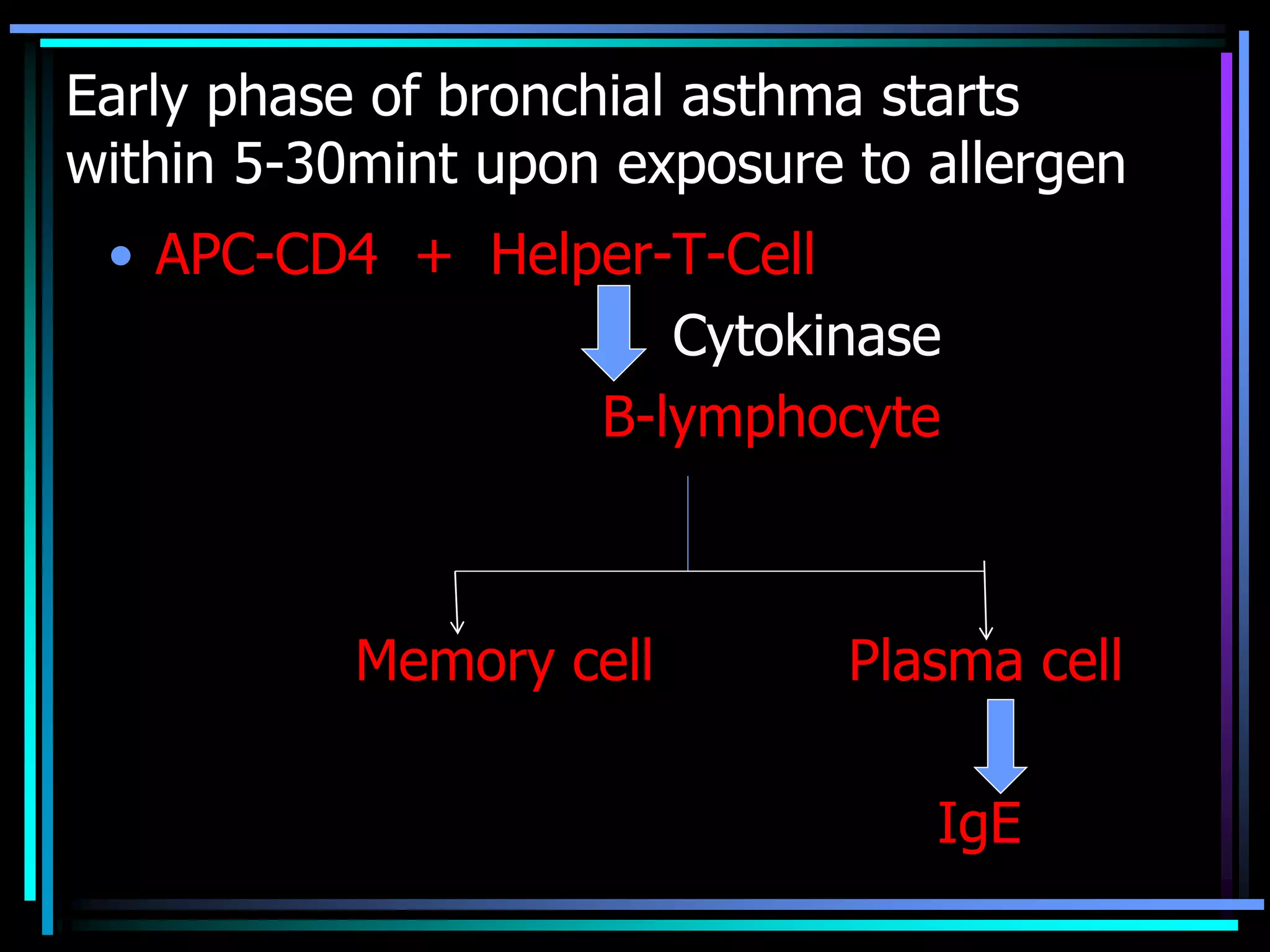
Early phase of bronchial asthma starts
within 5-30mint upon exposure to allergen
• APC-CD4 + Helper-T-Cell
Cytokinase
B-lymphocyte
Memory cell Plasma cell
IgE
• Upon Re-entry of antigen :
dust particle directly bind to IgE
Degranulation
Bronchoconstirction Histamine (Mast cell Rupture)
Inc.mucous production release
White color sputum
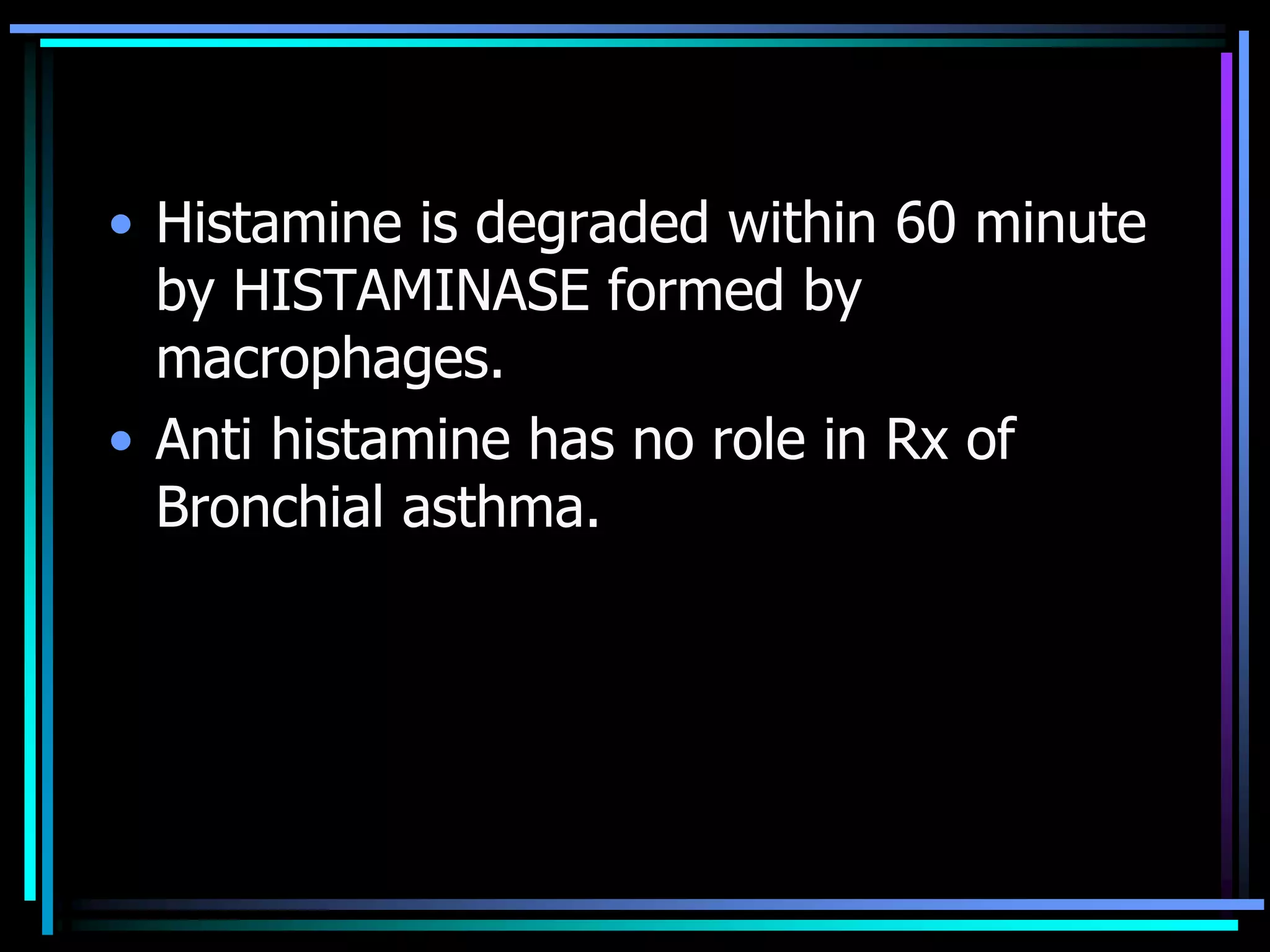
• Histamine is degraded within 60 minute
by HISTAMINASE formed by
macrophages.
• Anti histamine has no role in Rx of
Bronchial asthma.
Activates
Histamine Phospholipase A2
Asachideonic acid metabolism
(in cell membrane)
Lipoxigenase cyclooxygenase
Leukotrine A4 PG-G2
Leukorine B4 Leukotrine C4 D4 E4 PG-H2
Chemotactic factor SRSA  Tx-A2(platelet agregate)
For monocyte bronchoconstrictionPG-I2(inhb agregation)
lymphocyte inc. Bronchial glandother PG-D2, E2,
secreation F2
 vasoconstrictionPain fever HCL.scr
C/F (YOUNG <35 yrs)
• Episodic symptoms
• Chest tightness
• Dyspneae (due to bronchoconstriction of mucus plug)
• White sputum with cough
• Wheze
• 70% of hv Allergic Rhinitis
• Sneezing
• Post nasal drip
• Rhinorrhea
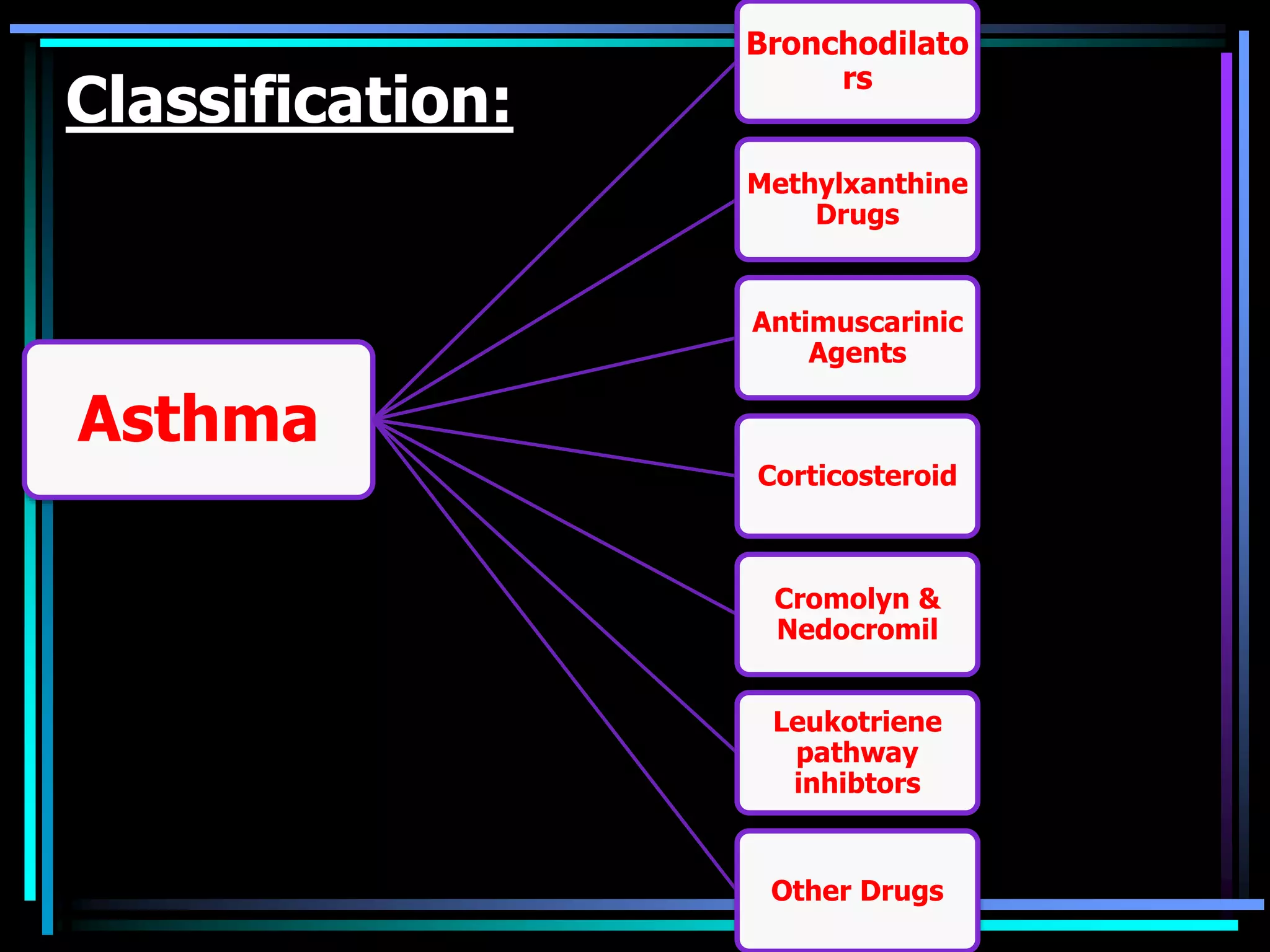
Classification:
Asthma
Bronchodilato
rs
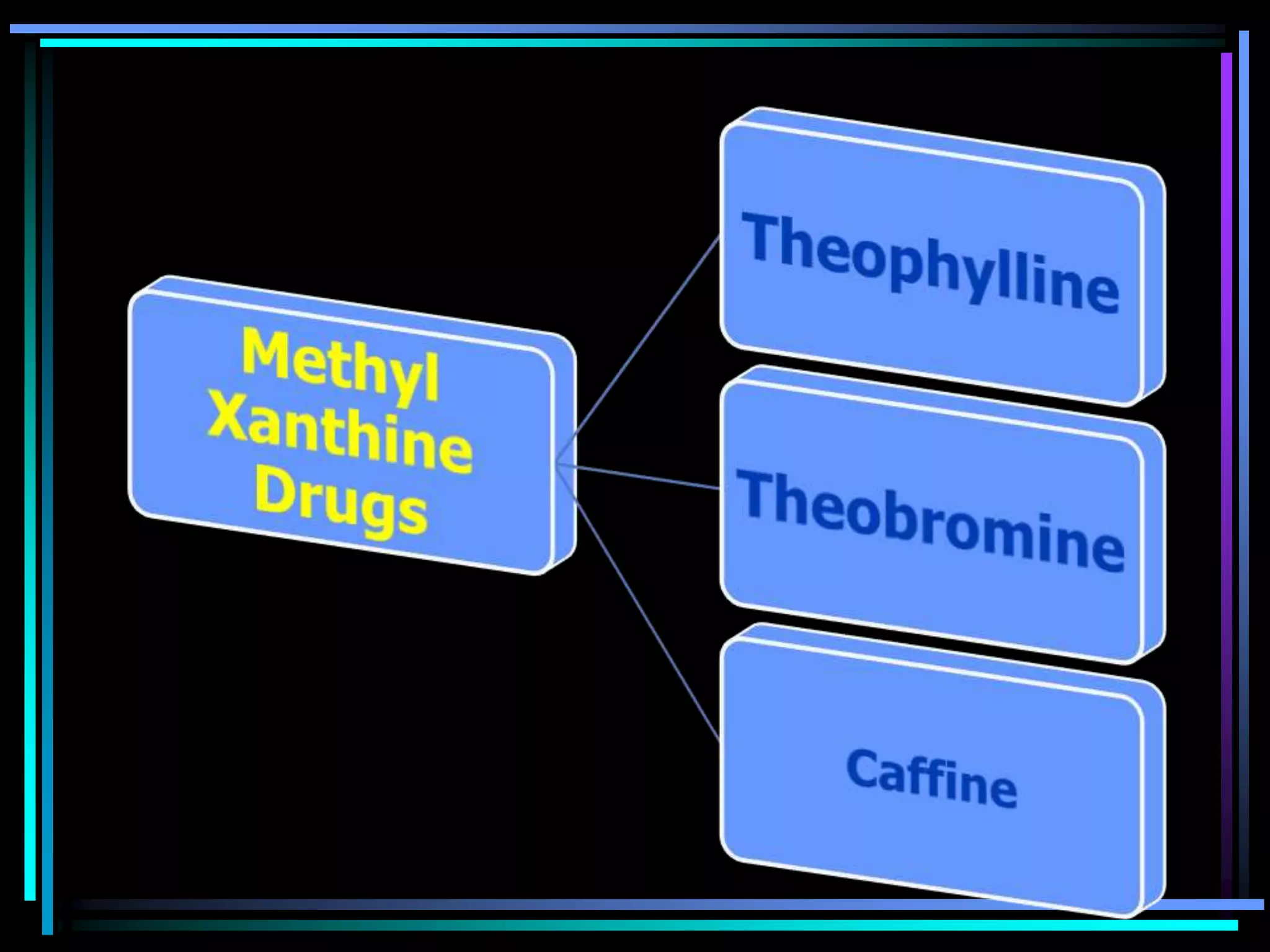
Methylxanthine
Drugs
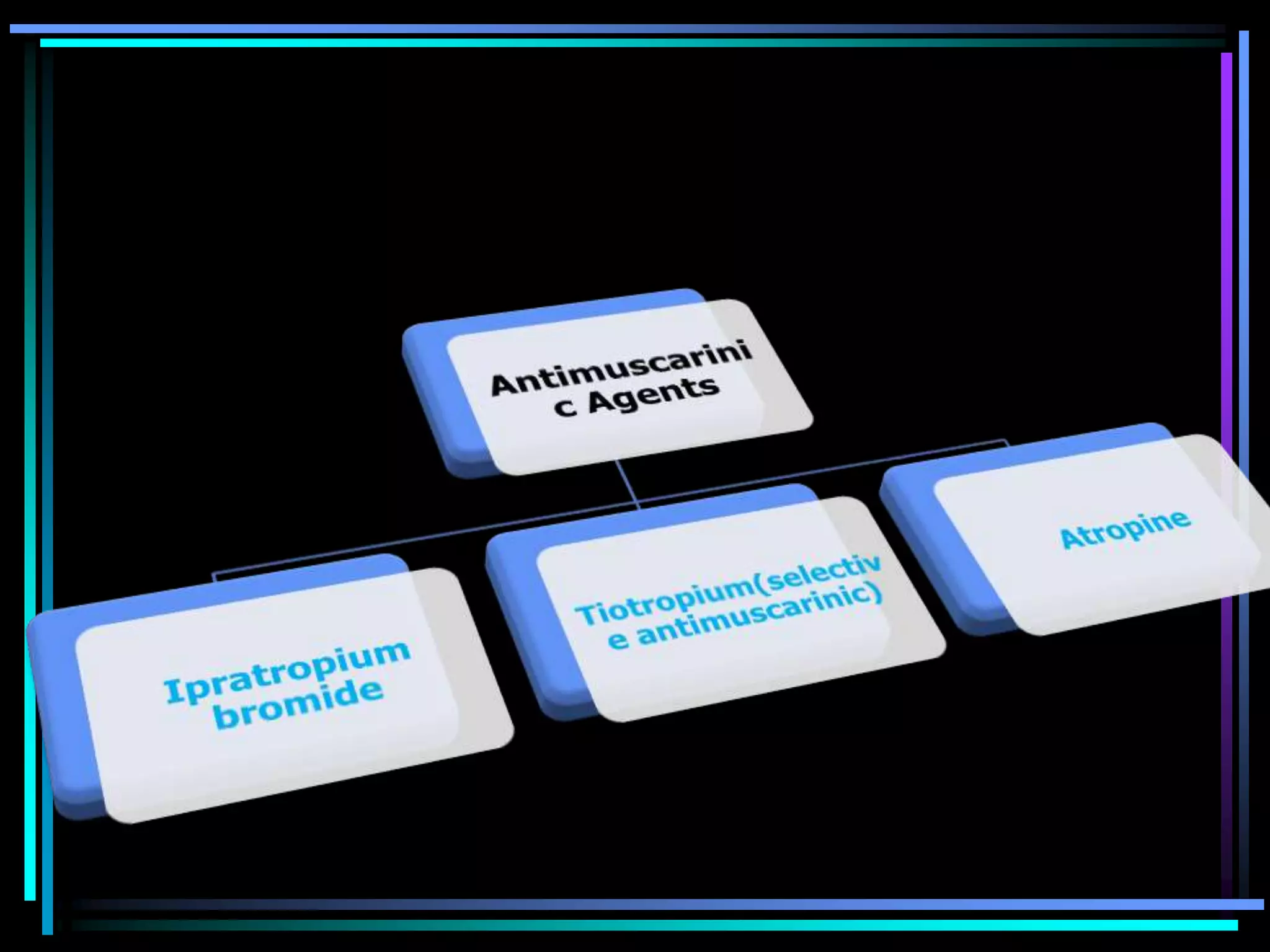
Antimuscarinic
Agents
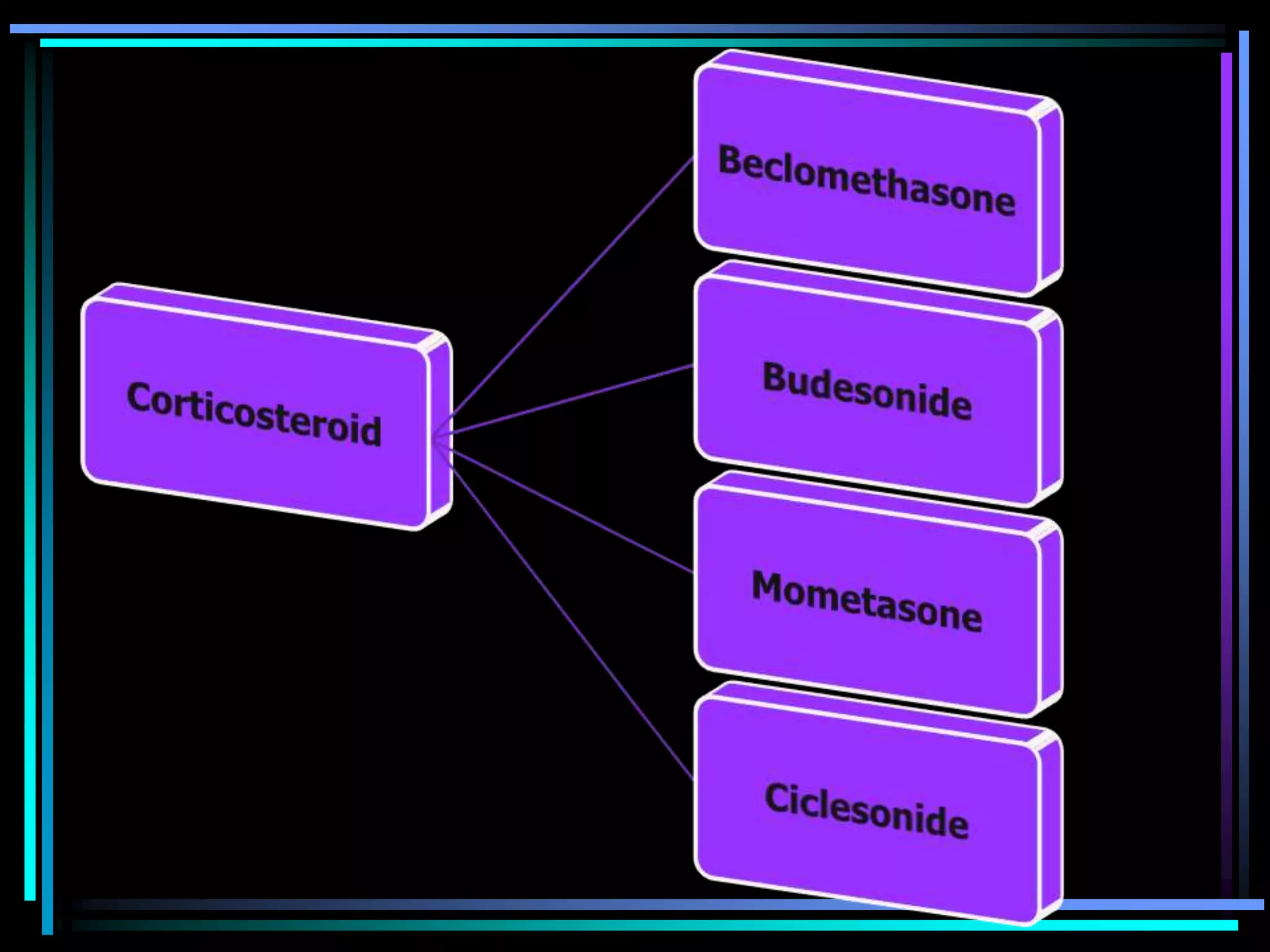
Corticosteroid
Cromolyn &
Nedocromil
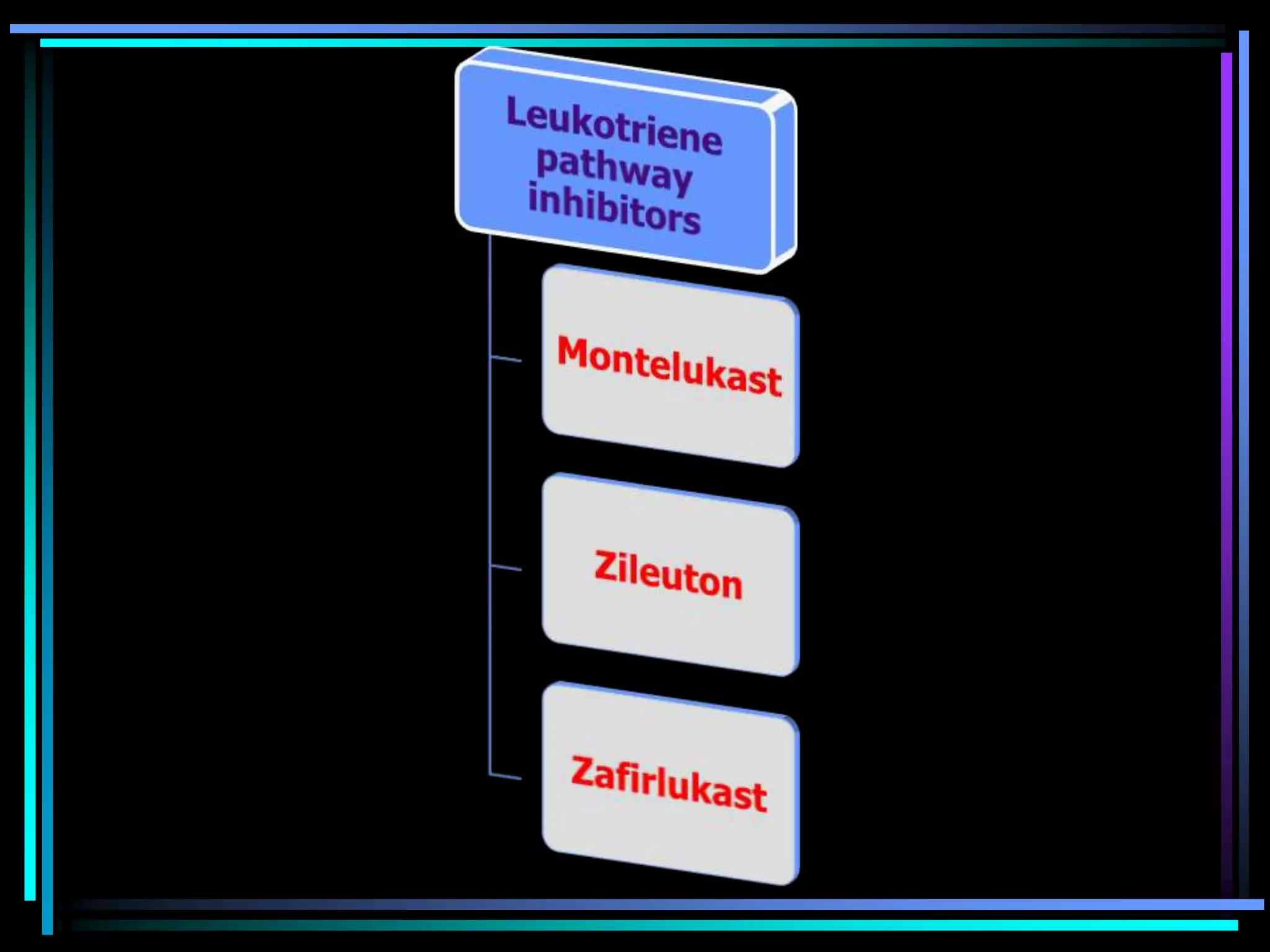
Leukotriene
pathway
inhibtors
Other Drugs
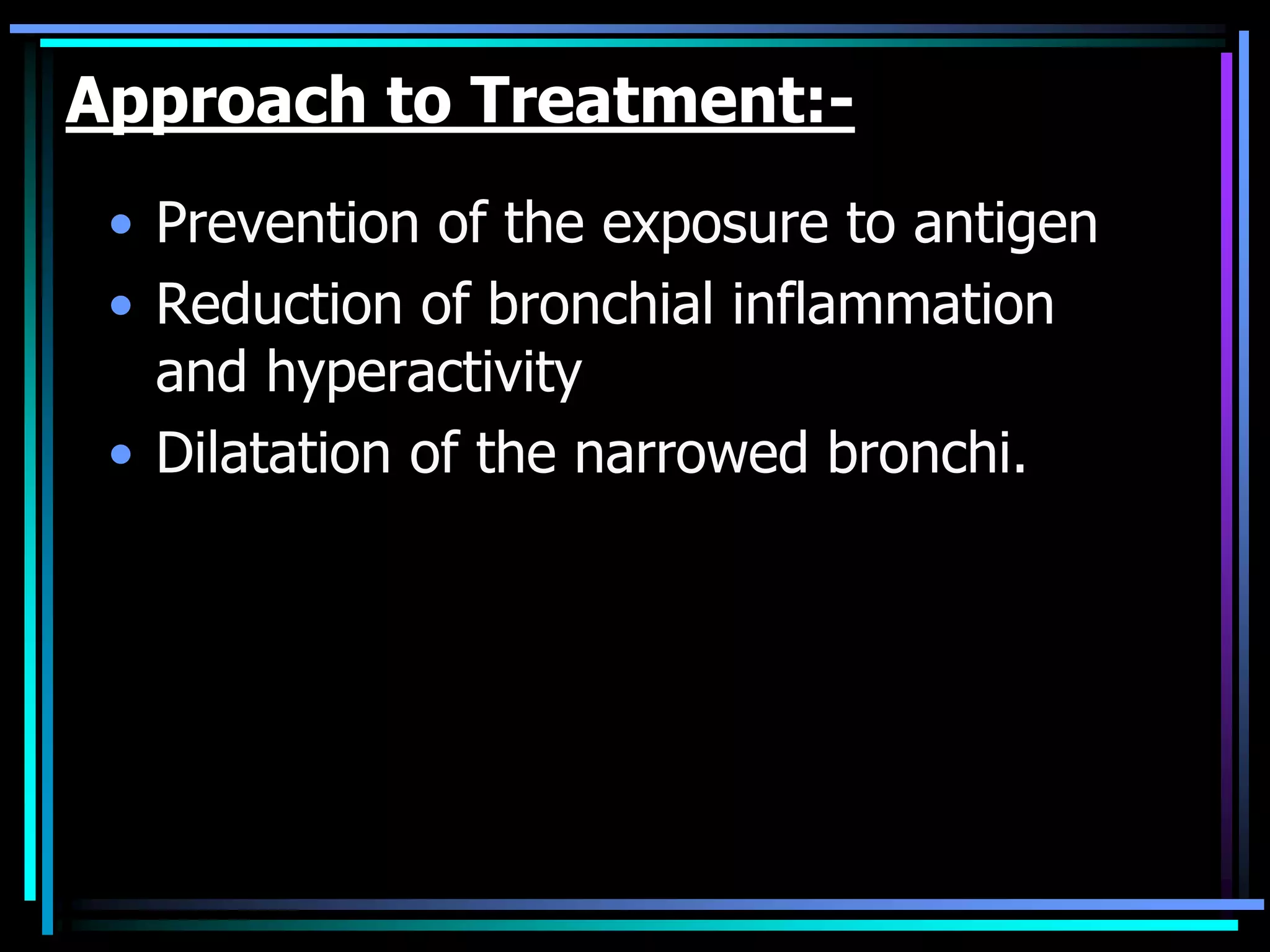
Approach to Treatment:-
• Prevention of the exposure to antigen
• Reduction of bronchial inflammation
and hyperactivity
• Dilatation of the narrowed bronchi.
Sympathomimetic
Drugs/
Bronchodilators
Non-Selective
Epinephrine,
Ephedrine,
Isoproternol
Beta selcetive Beta 2 selective
Salbutamol,
Terbutaline,
Femoterol
Salbutamol,
Terbutaline,
Femoterol
Bronchodilators
• Sympathomimetics (β2 receptor
agonist), Xanthine derivatives, Anti-
cholinergics / muscarinics.
• Sympathomimetic drugs
• adrenalin is an agonist for the α1, α2, β1,
β2 receptors. Binding with the β2
receptor it causes bronchodilatation but
binding on the β1 receptors it causes ↑
HR, ↑ BP, ↑ O2 demand.
• Non-selective
• Epinephrine, Ephedrine, Isoproterenol
{ephedrine causes tachyphylaxis / acute
tolerance}
• β receptor selective drugs
• Isopropanolol, Isoprenalin
• β2 receptor selective
• Salbutamol, Terbutaline, Femoterol
• β receptors are also present in the
peripheral vasculature, so long term use
may cause hypotension.
Long-acting beta-agonists:
• Long-acting beta-agonists(LABAs) dilate
the airway for up to 12 hours and are to
be taken along with your inhaled steroids.
Currently, researchers do not think that
long-acting bronchodilators can reduce
inflammation on their own, but they may
help the inhaled steroids to work better.
• Examples:
• Formoterol
• Salmeterol
The selective β2 agonists
• They can be given orally or inhalation
• They act selectively on β2 receptors
• They have long duration of action
• Bronchodilatation is maximal in 30 min
when given by inhalation and persists
for 2-3 hours
• They produce less cardio-vascular side
effects
• Orally they are given in doses of 4mg 3-
4 times
Mechanism of Action—it acts in
the following ways:
• 1. Salbutamol → Stimulates β2 receptors of
the bronchial smooth muscle → Stimulation
of the Adenylate Cyclase enzyme →
Increased intracellular cyclic-AMP (also
reduction of the intracellular calcium) →
Smooth muscle relaxation →
Bronchodilatation occurs.
• 2. Salbutamol → Acts on the β2 receptor of
the mast cell → ↑ c-AMP production →
Stabilization of the mast cell membrane → No
Histamine release → No bronchoconstriction.
• 3. Salbutamol increases the muco-ciliary
action of the lung.
• 4. Decreases micro-vascular
permeability of the lung.
• Inihbit release of bronchoconstircting
mediators from mast cell.
Uses:
Used in asthma.
Side effects of long-acting
bronchodilators include:
• Increased heart rate
• Headache
• Anxiety
• Tremor
• Pharmacokinetics
• Salbutamol is a direct-acting
sympathomimetic with β-
adrenergic activity and selective
action on β2 receptors, producing
bronchodilating effects. It also
decreases uterine contractility.
Onset
Inhalation: 5-15 min; oral: 30 min.
• Duration
Inhalation: 3-6 hr; oral: 8 hr;
modified-release preparation: 12
hr.
Absorption
Readily absorbed from the GI
tract.
Metabolism
Hepatic and in the gut wall.
Excretion
Via the urine as metabolites and
unchanged drug. Some excretion
in the faeces.
Xanthine derivatives:
• Chemically they are purine having
similar chemical structure with adenine
and uric acid. Wide spreads
pharmacological action so, not used.
These drugs have low therapeutic
index. Increases intra-cellular cyclic-
AMP concentration within the bronchial
smooth muscle cell.
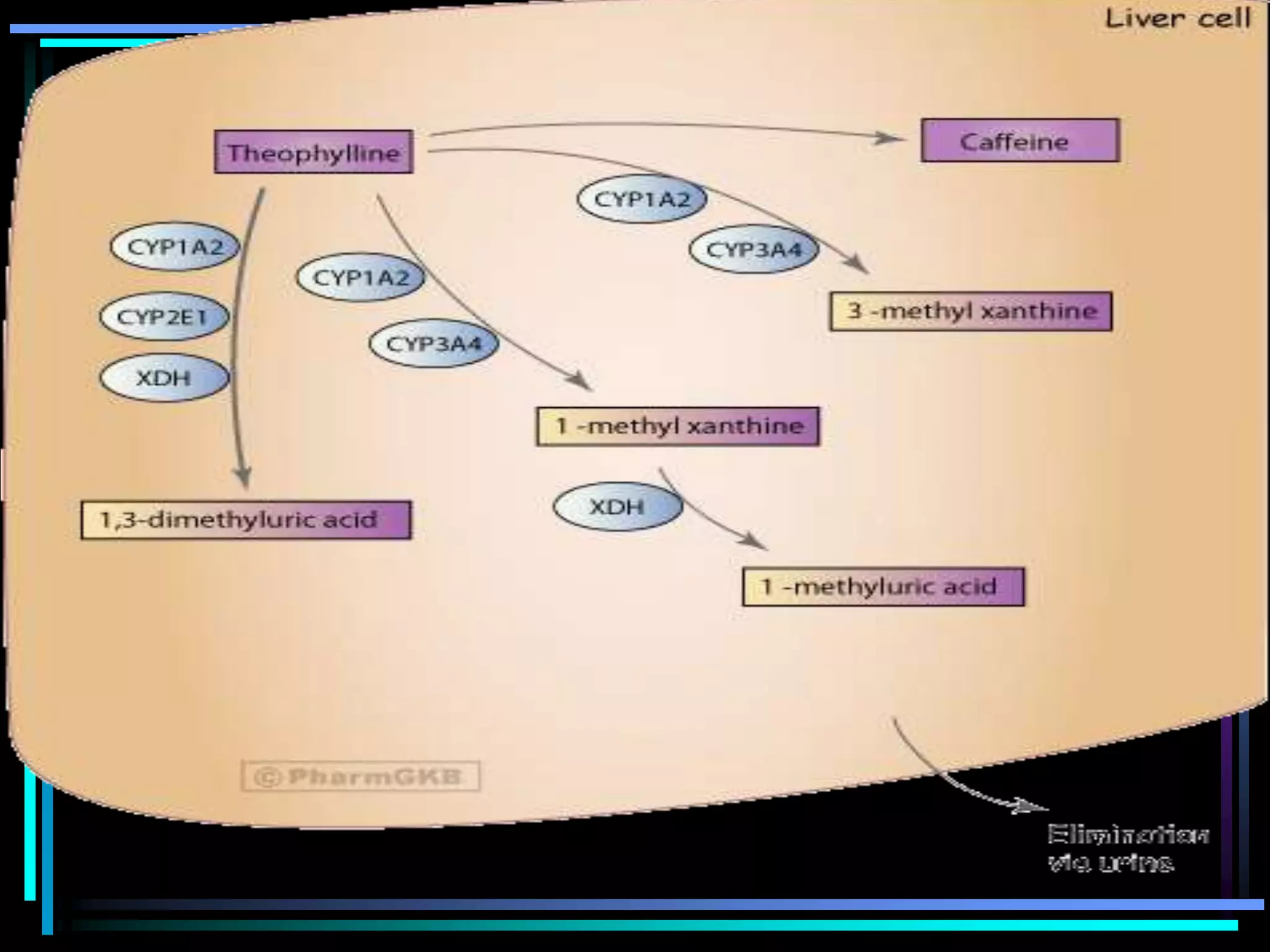
• Theophylline is the prototype, it is
water insoluble but it’s salts are water
soluble
Mechanism of Action of Theophylline
• 1. Combines with the adenosine receptor (PI)
and acts as antagonist of adenosine thus
prevents it to cause contraction of the
bronchial smooth muscle.
• 2. Combines and inactivates phospho-
diesterase enzyme and degradation of the
cyclic-AMP stops. C-AMP accumulates in the
bronchial smooth muscle and causes
bronchodilatation. C-AMP has negative effect
on the release of the calcium from the
endoplasmic reticulum.
Pharmacological effects:
• Lung: bronchodilatation
• CNS: Cortical stimulation, excitement, ↓
mental exhaustion and fatigue. Loss of sleep.
Stimulate medullary respiratory and vomiting
center.
• CVS : Positive ionotropic and chronotropic
effects. ↑ CO, ↑ HR, ↑ force of contraction. At
large doses it causes cerebral vaso-
constriction. In high level—toxicity—cardiac
arrhythmia, tachycardia
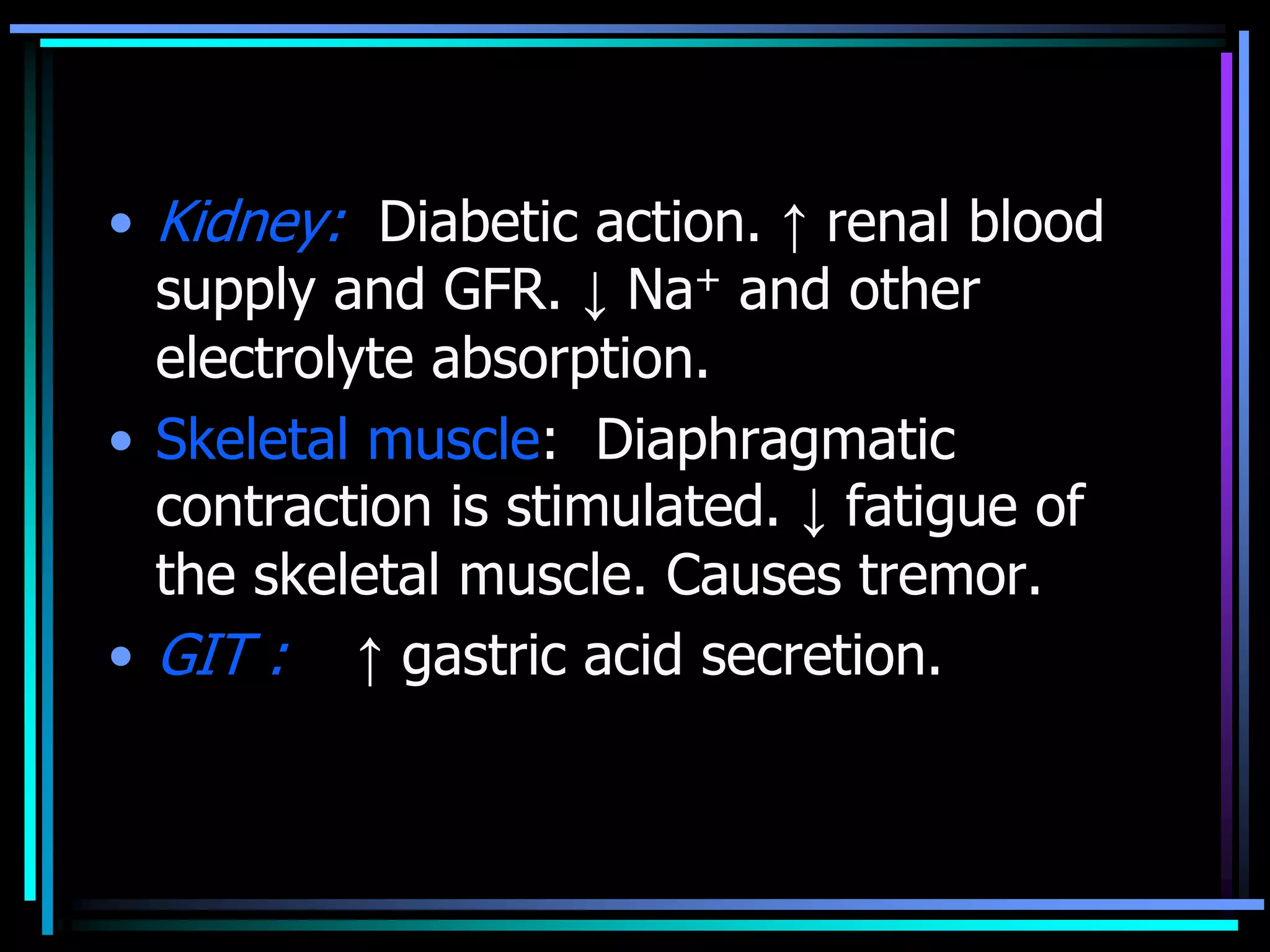
• Kidney: Diabetic action. ↑ renal blood
supply and GFR. ↓ Na+ and other
electrolyte absorption.
• Skeletal muscle: Diaphragmatic
contraction is stimulated. ↓ fatigue of
the skeletal muscle. Causes tremor.
• GIT : ↑ gastric acid secretion.
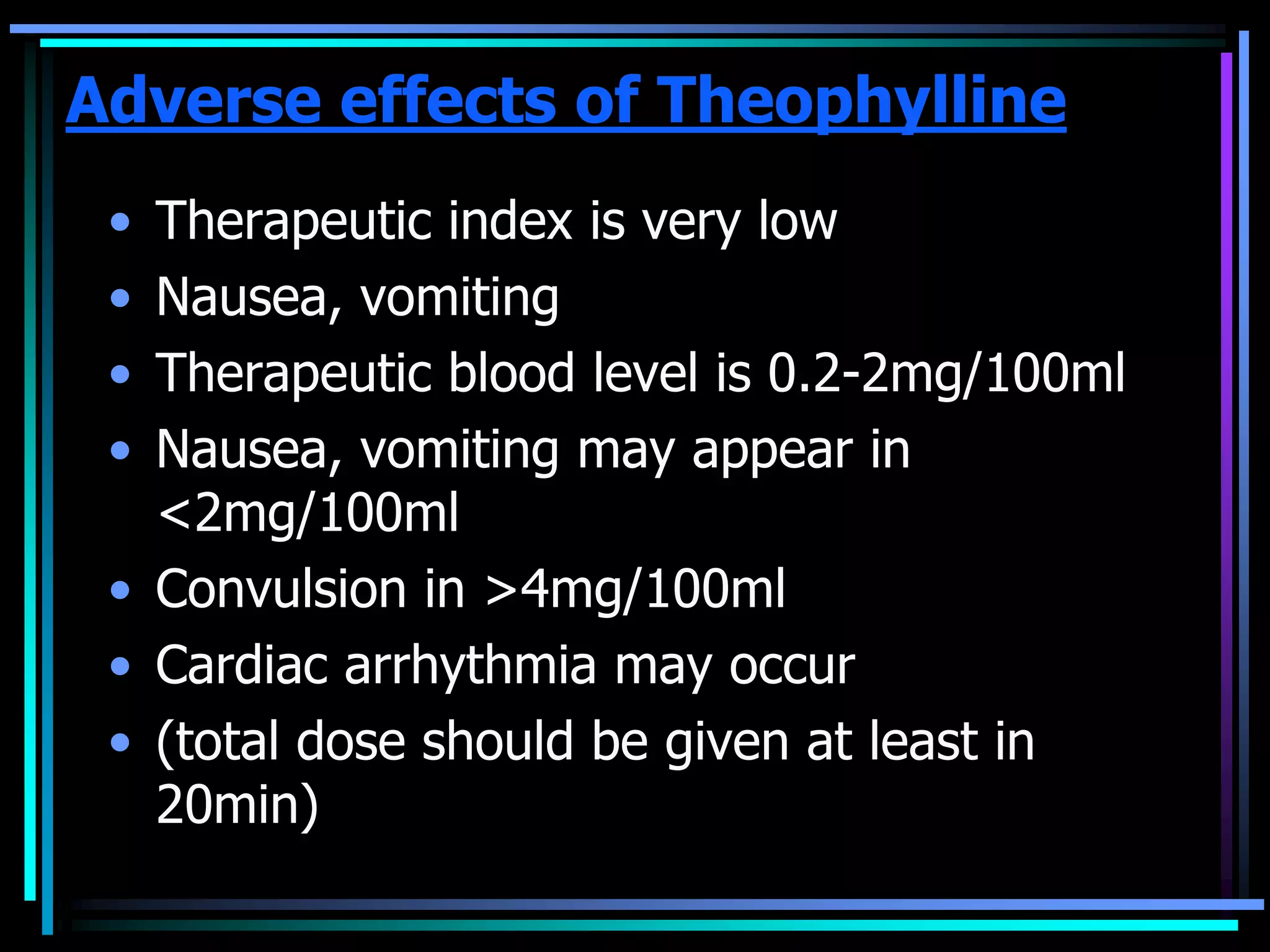
Adverse effects of Theophylline
• Therapeutic index is very low
• Nausea, vomiting
• Therapeutic blood level is 0.2-2mg/100ml
• Nausea, vomiting may appear in
<2mg/100ml
• Convulsion in >4mg/100ml
• Cardiac arrhythmia may occur
• (total dose should be given at least in
20min)
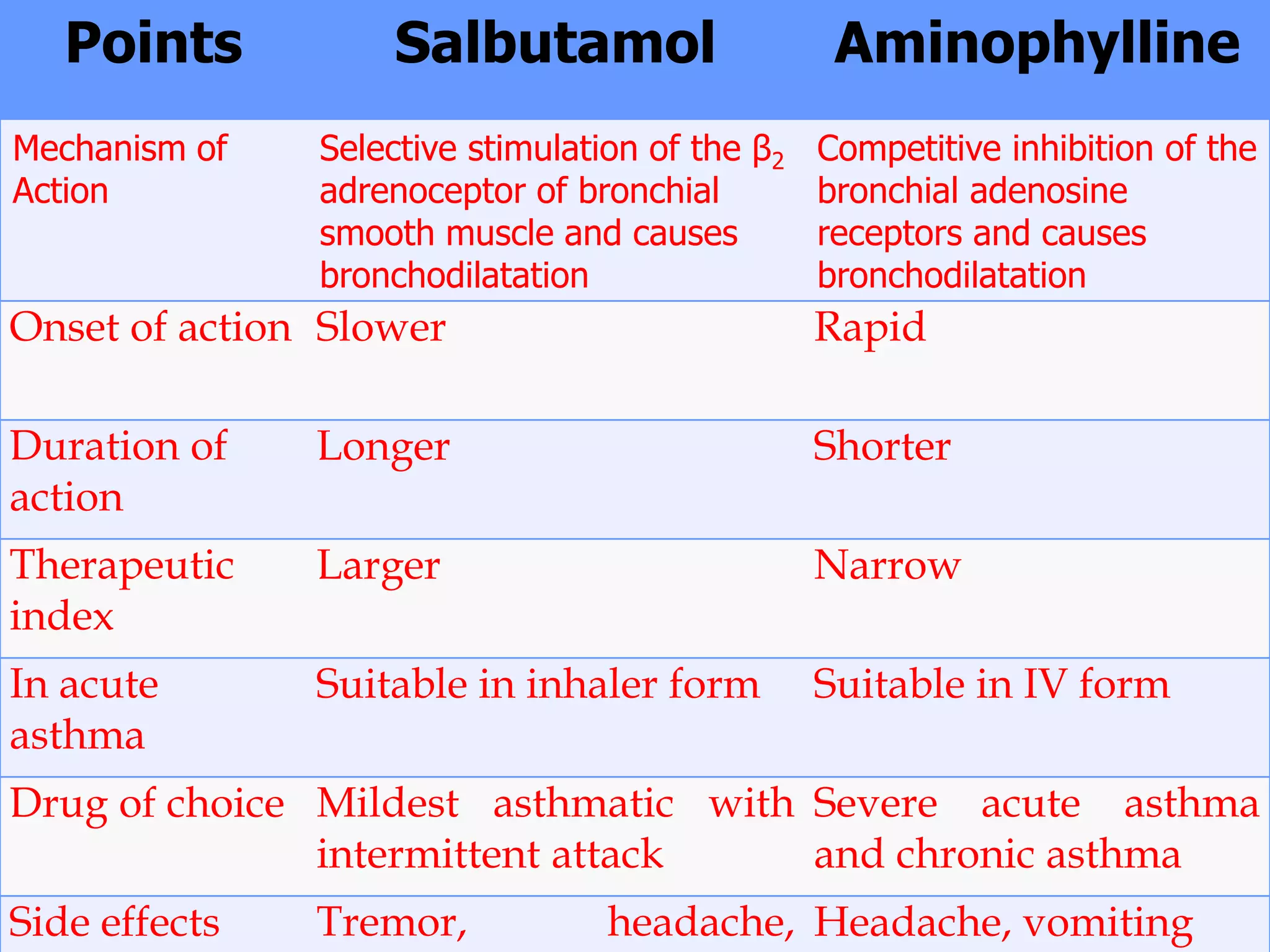
Points Salbutamol Aminophylline
Mechanism of
Action
Selective stimulation of the β2
adrenoceptor of bronchial
smooth muscle and causes
bronchodilatation
Competitive inhibition of the
bronchial adenosine
receptors and causes
bronchodilatation
Onset of action Slower Rapid
Duration of
action
Longer Shorter
Therapeutic
index
Larger Narrow
In acute
asthma
Suitable in inhaler form Suitable in IV form
Drug of choice Mildest asthmatic with
intermittent attack
Severe acute asthma
and chronic asthma
Side effects Tremor, headache, Headache, vomiting
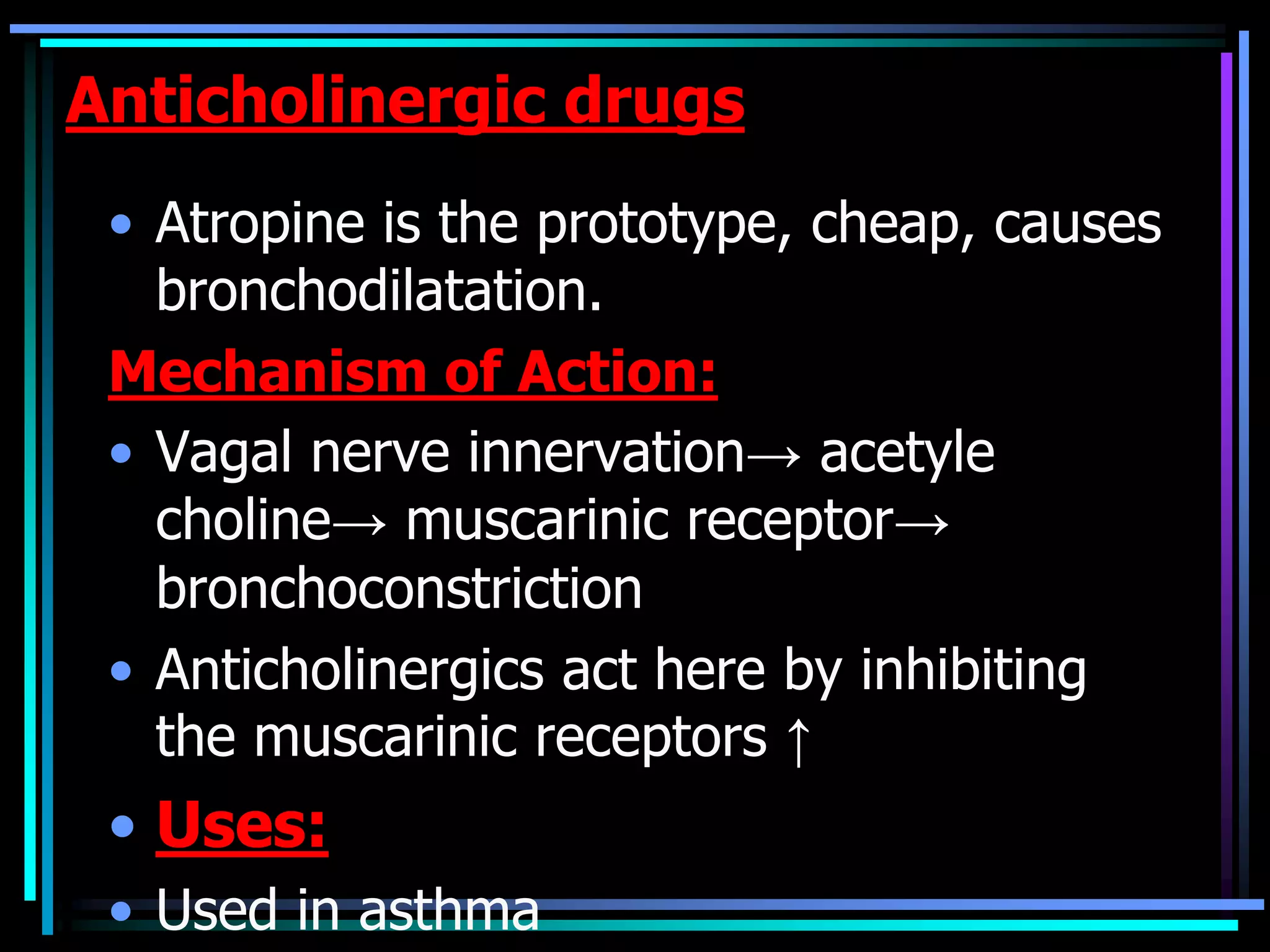
Anticholinergic drugs
• Atropine is the prototype, cheap, causes
bronchodilatation.
Mechanism of Action:
• Vagal nerve innervation→ acetyle
choline→ muscarinic receptor→
bronchoconstriction
• Anticholinergics act here by inhibiting
the muscarinic receptors ↑
• Uses:
• Used in asthma
Adverse effects of Atropine
• Can cross the BBB and go to the CNS.
• Mouth dryness.
• Destroy the cilia of the respiratory tract—
prone to infection.
• an allergic reaction (swelling of your lips,
tongue, or face, difficulty breathing, closing
of your throat, or hives);
• an irregular or fast heart rate;
• rash or flushing; or
• eye pain.
Corticosteroids (MOA)
• They: inhibit chemical mediators, whether
these are performed, like histamine, or newly
formed, like arachidonic acid metabolites
(prostaglandins and leukotrienes) or the
platelet-activating factor (PAF); restore the
sensitivity of beta-adrenergic receptors to
sympathomimetic drugs; exert a powerful
anti-inflammatory effect, notably reducing
bronchial mucus secretion; reduce bronchial
hyperreactivity and modify the bronchial
response to bronchoconstrictors; act on
respiratory function and gas exchanges.
• Many effects of corticosteroids in asthma
involve the synthesis of proteins, such as
lipomodulin (or macrocortin) which inhibits
phospholipase A2, a key-enzyme in the
synthesis of numerous chemical mediators
derived from membrane phospholipids. The
multiple effects of corticosteroids account for
their broad spectrum of activity and their
effectiveness against both acute and chronic
manifestations of asthma.
Uses:
• Inhaled glucocorticoids are the second-
line treatment for asthma.
• Glucocorticoids may be used in low
doses in adrenal insufficiency. In much
higher doses, oral or inhaled
glucocorticoids are used to suppress
various allergic, inflammatory, and
autoimmune disorders
Side effects
• Growth failure, delayed puberty
• Increased plasma amino acids, increased
urea formation, negative nitrogen balance
• Excitatory effect on central nervous system
(euphoria, psychosis)
• Glaucoma due to increased cranial pressure
• Cataracts
Possible side effects of long-term oral
corticosteroid use include:
• Water retention
• Bruising
• Puffy face
• Increased appetite
• Weight gain
• Stomach irritation
• Mood changes
• Fractures
Leukotriene:
• The leukotriene receptor antagonists
are among the most prescribed drugs
for the management of asthma, used
both for treatment and prevention of
acute asthmatic attacks. This class of
drugs acts by binding to cysteinyl
leukotriene receptors (CysLT1 and
CysLT2) and blocking their activation
and the subsequent inflammatory
cascade which cause the symptoms
commonly associated with asthma and
allergic rhinitis.
Mchanism of Action:
• Leukotrienes are synthesized in response to many
triggers, including receptor activation, antigen-
antibody interaction, physical stimuli such as cold,
and any stimulation that increases intercellular
calcium.These potent inflammatory mediators
promote neutrophil-endothelial interactions, inducing
bronchoconstriction and enhancing airway
hyperresponsiveness. They also stimulate smooth
muscle hypertrophy, mucus hypersecretion, and the
influx of eosinophils into airway tissues therefore,
inhibition of leukotrienes potentially plays an
important role in the treatment of asthma and other
allergic conditions such as allergic rhinitis, atopic
dermatitis, and chronic urticaria
• Leukotriene receptor antagonists, called
LTRAs for short, are a class of oral
medication that is non-steroidal. They may
also be referred to as anti-inflammatory
bronchoconstriction preventors. LTRAs work
by blocking a chemical reaction that can lead
to inflammation in the airways. Although not
preferred first choice therapy, LTRAs can be
tried when an inhaled steroid can not, or will
not, be used, or if the dose cannot be
increased
Uses:
• It is used in Asthama.
• Side Effects:
• Elevation in serum hepatic enzyme
• Nausea
• Headache
• Inhibitors of cytochrome P450.
Mechanism of action:
• Alter the function of delayed chloride
channels in cell membrane.
• Inhibiting cell activation
• This action thought to mediate
inhibition of cough.
• Inhibit the function of cells other then
mast cell degranulation and release of
histamine.
Clinical uses:
• Used for non seasonal asthma
• Particularly used in children and
pragnant woman.
Side effects:
• Throat irritation
• Cough
• Mouth dryness
• Chest tightness
• Wheezing
Anti Immunoglobulin E (Anti-IgE)
Therapy
• Anti-IgE treatment might be
recommended if you have allergic
asthma and you keep experiencing
persistent symptoms despite taking
your controller medications.
• If you have allergic asthma (about 60%
of asthma is caused by allergy), your
symptoms are triggered when you
inhale certain allergens in the air.
MOA:
• These allergens cause a chain reaction
that leads to inflammation in the lungs.
• While inhaled steroids work by treating
and reducing the inflammation, anti-IgE
therapy works by keeping inflammation
from developing in the first place. It
does so by blocking immunoglobulin E,
a substance in the body that is one of
the underlying causes of inflammation
in allergic asthma.
• Anti-IgE therapy is only available by
prescription. Unlike other asthma
medications, it is not administered by
pill or by inhaler. It needs to be injected
once every two or four weeks by a
doctor or other trained healthcare
professional.
• The only anti-IgE therapy available in
Canada is omalizumab.
Side Effects:
• Skin irritation
• Reaction at the site of the injection
• Respiratory tract infections (e.g.,
common cold).
Combination Medications
• Some pharmaceutical manufacturers
have combined two controller
medications into one inhaler. These
inhalers are referred to as "Combination
Medications".
• Combination medications contain both
an inhaled long-acting bronchodilator
(LABA) and an inhaled corticosteroid.
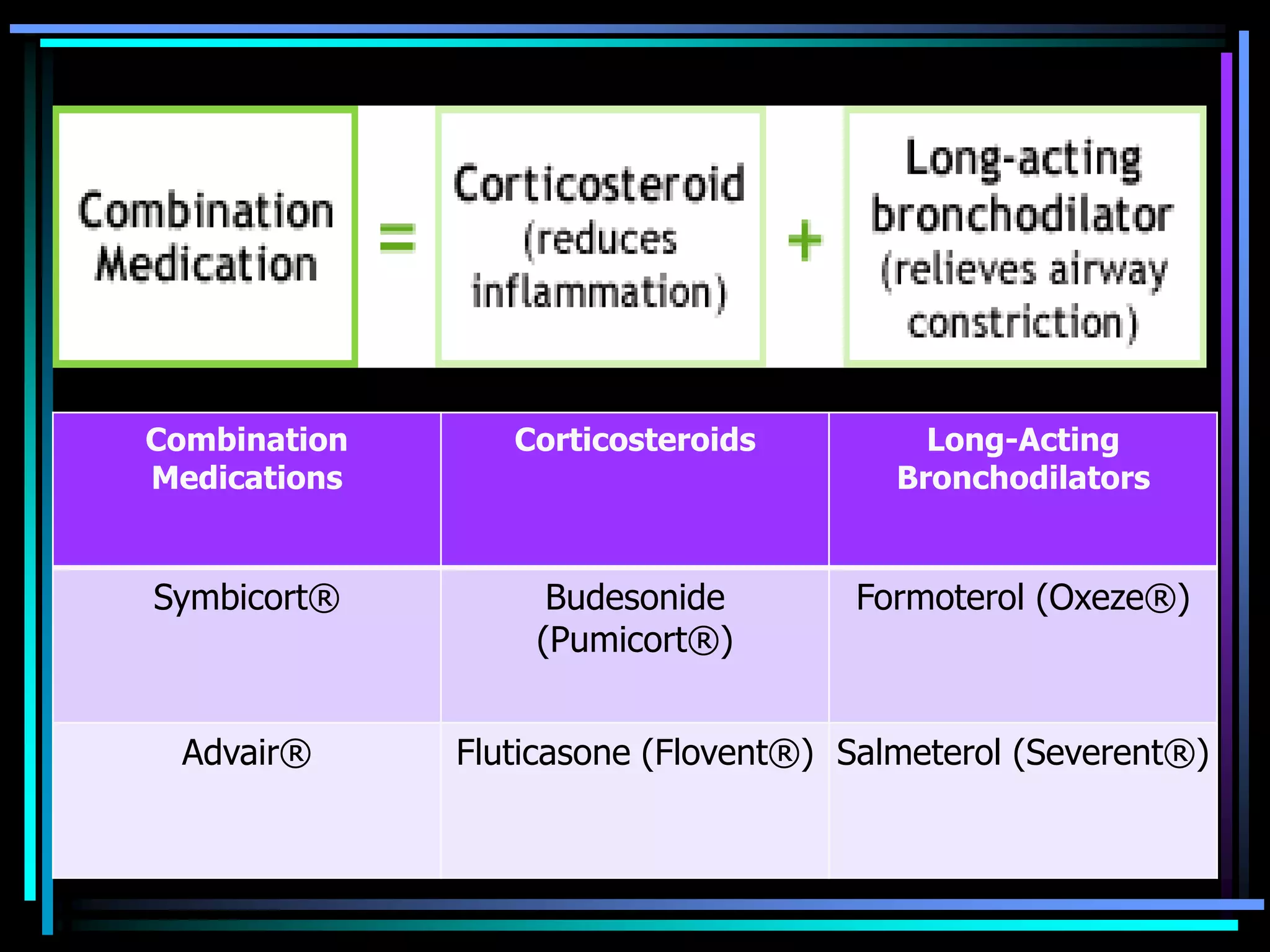
Combination
Medications
Corticosteroids Long-Acting
Bronchodilators
Symbicort® Budesonide
(Pumicort®)
Formoterol (Oxeze®)
Advair® Fluticasone (Flovent®) Salmeterol (Severent®)
• This means that two areas of asthma
can be effectively treated at the same
time the bronchodilator works by
widening your airways, making it easier
for you to breathe, and the inhaled
steroid reduces and prevents
inflammation of your airways.
• Recent studies show that many people
with asthma find that combination
medications give them better control
and are convenient to use.
Possible side effects of
combination medications include:
• Rapid heart beat
• Tremor or nervousness
• Cough, throat irritation or hoarseness

Asthma

  • 1.
  • 2.
    • It isan episodic, reversible bronchoconstriction to tracheo- bronchial tree due to its hyperactivity towards a variety of stimuli which can be extrinsic or intrinsic. • Asthma is a reversible condition while bronchoconstriction in COPD is irreversible.
  • 3.
    Early phase ofbronchial asthma starts within 5-30mint upon exposure to allergen • APC-CD4 + Helper-T-Cell Cytokinase B-lymphocyte Memory cell Plasma cell IgE
  • 4.
    • Upon Re-entryof antigen : dust particle directly bind to IgE Degranulation Bronchoconstirction Histamine (Mast cell Rupture) Inc.mucous production release White color sputum
  • 5.
    • Histamine isdegraded within 60 minute by HISTAMINASE formed by macrophages. • Anti histamine has no role in Rx of Bronchial asthma.
  • 6.
    Activates Histamine Phospholipase A2 Asachideonicacid metabolism (in cell membrane) Lipoxigenase cyclooxygenase Leukotrine A4 PG-G2 Leukorine B4 Leukotrine C4 D4 E4 PG-H2 Chemotactic factor SRSA  Tx-A2(platelet agregate) For monocyte bronchoconstrictionPG-I2(inhb agregation) lymphocyte inc. Bronchial glandother PG-D2, E2, secreation F2  vasoconstrictionPain fever HCL.scr
  • 7.
    C/F (YOUNG <35yrs) • Episodic symptoms • Chest tightness • Dyspneae (due to bronchoconstriction of mucus plug) • White sputum with cough • Wheze • 70% of hv Allergic Rhinitis • Sneezing • Post nasal drip • Rhinorrhea
  • 8.
  • 9.
    Approach to Treatment:- •Prevention of the exposure to antigen • Reduction of bronchial inflammation and hyperactivity • Dilatation of the narrowed bronchi.
  • 10.
    Sympathomimetic Drugs/ Bronchodilators Non-Selective Epinephrine, Ephedrine, Isoproternol Beta selcetive Beta2 selective Salbutamol, Terbutaline, Femoterol Salbutamol, Terbutaline, Femoterol
  • 11.
    Bronchodilators • Sympathomimetics (β2receptor agonist), Xanthine derivatives, Anti- cholinergics / muscarinics. • Sympathomimetic drugs • adrenalin is an agonist for the α1, α2, β1, β2 receptors. Binding with the β2 receptor it causes bronchodilatation but binding on the β1 receptors it causes ↑ HR, ↑ BP, ↑ O2 demand.
  • 12.
    • Non-selective • Epinephrine,Ephedrine, Isoproterenol {ephedrine causes tachyphylaxis / acute tolerance} • β receptor selective drugs • Isopropanolol, Isoprenalin • β2 receptor selective • Salbutamol, Terbutaline, Femoterol • β receptors are also present in the peripheral vasculature, so long term use may cause hypotension.
  • 13.
    Long-acting beta-agonists: • Long-actingbeta-agonists(LABAs) dilate the airway for up to 12 hours and are to be taken along with your inhaled steroids. Currently, researchers do not think that long-acting bronchodilators can reduce inflammation on their own, but they may help the inhaled steroids to work better. • Examples: • Formoterol • Salmeterol
  • 14.
    The selective β2agonists • They can be given orally or inhalation • They act selectively on β2 receptors • They have long duration of action • Bronchodilatation is maximal in 30 min when given by inhalation and persists for 2-3 hours • They produce less cardio-vascular side effects • Orally they are given in doses of 4mg 3- 4 times
  • 15.
    Mechanism of Action—itacts in the following ways: • 1. Salbutamol → Stimulates β2 receptors of the bronchial smooth muscle → Stimulation of the Adenylate Cyclase enzyme → Increased intracellular cyclic-AMP (also reduction of the intracellular calcium) → Smooth muscle relaxation → Bronchodilatation occurs. • 2. Salbutamol → Acts on the β2 receptor of the mast cell → ↑ c-AMP production → Stabilization of the mast cell membrane → No Histamine release → No bronchoconstriction.
  • 16.
    • 3. Salbutamolincreases the muco-ciliary action of the lung. • 4. Decreases micro-vascular permeability of the lung. • Inihbit release of bronchoconstircting mediators from mast cell.
  • 17.
    Uses: Used in asthma. Sideeffects of long-acting bronchodilators include: • Increased heart rate • Headache • Anxiety • Tremor
  • 18.
    • Pharmacokinetics • Salbutamolis a direct-acting sympathomimetic with β- adrenergic activity and selective action on β2 receptors, producing bronchodilating effects. It also decreases uterine contractility. Onset Inhalation: 5-15 min; oral: 30 min.
  • 19.
    • Duration Inhalation: 3-6hr; oral: 8 hr; modified-release preparation: 12 hr. Absorption Readily absorbed from the GI tract. Metabolism Hepatic and in the gut wall. Excretion Via the urine as metabolites and unchanged drug. Some excretion in the faeces.
  • 21.
    Xanthine derivatives: • Chemicallythey are purine having similar chemical structure with adenine and uric acid. Wide spreads pharmacological action so, not used. These drugs have low therapeutic index. Increases intra-cellular cyclic- AMP concentration within the bronchial smooth muscle cell. • Theophylline is the prototype, it is water insoluble but it’s salts are water soluble
  • 22.
    Mechanism of Actionof Theophylline • 1. Combines with the adenosine receptor (PI) and acts as antagonist of adenosine thus prevents it to cause contraction of the bronchial smooth muscle. • 2. Combines and inactivates phospho- diesterase enzyme and degradation of the cyclic-AMP stops. C-AMP accumulates in the bronchial smooth muscle and causes bronchodilatation. C-AMP has negative effect on the release of the calcium from the endoplasmic reticulum.
  • 23.
    Pharmacological effects: • Lung:bronchodilatation • CNS: Cortical stimulation, excitement, ↓ mental exhaustion and fatigue. Loss of sleep. Stimulate medullary respiratory and vomiting center. • CVS : Positive ionotropic and chronotropic effects. ↑ CO, ↑ HR, ↑ force of contraction. At large doses it causes cerebral vaso- constriction. In high level—toxicity—cardiac arrhythmia, tachycardia
  • 24.
    • Kidney: Diabeticaction. ↑ renal blood supply and GFR. ↓ Na+ and other electrolyte absorption. • Skeletal muscle: Diaphragmatic contraction is stimulated. ↓ fatigue of the skeletal muscle. Causes tremor. • GIT : ↑ gastric acid secretion.
  • 25.
    Adverse effects ofTheophylline • Therapeutic index is very low • Nausea, vomiting • Therapeutic blood level is 0.2-2mg/100ml • Nausea, vomiting may appear in <2mg/100ml • Convulsion in >4mg/100ml • Cardiac arrhythmia may occur • (total dose should be given at least in 20min)
  • 27.
    Points Salbutamol Aminophylline Mechanismof Action Selective stimulation of the β2 adrenoceptor of bronchial smooth muscle and causes bronchodilatation Competitive inhibition of the bronchial adenosine receptors and causes bronchodilatation Onset of action Slower Rapid Duration of action Longer Shorter Therapeutic index Larger Narrow In acute asthma Suitable in inhaler form Suitable in IV form Drug of choice Mildest asthmatic with intermittent attack Severe acute asthma and chronic asthma Side effects Tremor, headache, Headache, vomiting
  • 29.
    Anticholinergic drugs • Atropineis the prototype, cheap, causes bronchodilatation. Mechanism of Action: • Vagal nerve innervation→ acetyle choline→ muscarinic receptor→ bronchoconstriction • Anticholinergics act here by inhibiting the muscarinic receptors ↑ • Uses: • Used in asthma
  • 30.
    Adverse effects ofAtropine • Can cross the BBB and go to the CNS. • Mouth dryness. • Destroy the cilia of the respiratory tract— prone to infection. • an allergic reaction (swelling of your lips, tongue, or face, difficulty breathing, closing of your throat, or hives); • an irregular or fast heart rate; • rash or flushing; or • eye pain.
  • 32.
    Corticosteroids (MOA) • They:inhibit chemical mediators, whether these are performed, like histamine, or newly formed, like arachidonic acid metabolites (prostaglandins and leukotrienes) or the platelet-activating factor (PAF); restore the sensitivity of beta-adrenergic receptors to sympathomimetic drugs; exert a powerful anti-inflammatory effect, notably reducing bronchial mucus secretion; reduce bronchial hyperreactivity and modify the bronchial response to bronchoconstrictors; act on respiratory function and gas exchanges.
  • 33.
    • Many effectsof corticosteroids in asthma involve the synthesis of proteins, such as lipomodulin (or macrocortin) which inhibits phospholipase A2, a key-enzyme in the synthesis of numerous chemical mediators derived from membrane phospholipids. The multiple effects of corticosteroids account for their broad spectrum of activity and their effectiveness against both acute and chronic manifestations of asthma.
  • 34.
    Uses: • Inhaled glucocorticoidsare the second- line treatment for asthma. • Glucocorticoids may be used in low doses in adrenal insufficiency. In much higher doses, oral or inhaled glucocorticoids are used to suppress various allergic, inflammatory, and autoimmune disorders
  • 35.
    Side effects • Growthfailure, delayed puberty • Increased plasma amino acids, increased urea formation, negative nitrogen balance • Excitatory effect on central nervous system (euphoria, psychosis) • Glaucoma due to increased cranial pressure • Cataracts
  • 36.
    Possible side effectsof long-term oral corticosteroid use include: • Water retention • Bruising • Puffy face • Increased appetite • Weight gain • Stomach irritation • Mood changes • Fractures
  • 38.
    Leukotriene: • The leukotrienereceptor antagonists are among the most prescribed drugs for the management of asthma, used both for treatment and prevention of acute asthmatic attacks. This class of drugs acts by binding to cysteinyl leukotriene receptors (CysLT1 and CysLT2) and blocking their activation and the subsequent inflammatory cascade which cause the symptoms commonly associated with asthma and allergic rhinitis.
  • 39.
    Mchanism of Action: •Leukotrienes are synthesized in response to many triggers, including receptor activation, antigen- antibody interaction, physical stimuli such as cold, and any stimulation that increases intercellular calcium.These potent inflammatory mediators promote neutrophil-endothelial interactions, inducing bronchoconstriction and enhancing airway hyperresponsiveness. They also stimulate smooth muscle hypertrophy, mucus hypersecretion, and the influx of eosinophils into airway tissues therefore, inhibition of leukotrienes potentially plays an important role in the treatment of asthma and other allergic conditions such as allergic rhinitis, atopic dermatitis, and chronic urticaria
  • 40.
    • Leukotriene receptorantagonists, called LTRAs for short, are a class of oral medication that is non-steroidal. They may also be referred to as anti-inflammatory bronchoconstriction preventors. LTRAs work by blocking a chemical reaction that can lead to inflammation in the airways. Although not preferred first choice therapy, LTRAs can be tried when an inhaled steroid can not, or will not, be used, or if the dose cannot be increased
  • 41.
    Uses: • It isused in Asthama. • Side Effects: • Elevation in serum hepatic enzyme • Nausea • Headache • Inhibitors of cytochrome P450.
  • 43.
    Mechanism of action: •Alter the function of delayed chloride channels in cell membrane. • Inhibiting cell activation • This action thought to mediate inhibition of cough. • Inhibit the function of cells other then mast cell degranulation and release of histamine.
  • 44.
    Clinical uses: • Usedfor non seasonal asthma • Particularly used in children and pragnant woman. Side effects: • Throat irritation • Cough • Mouth dryness • Chest tightness • Wheezing
  • 46.
    Anti Immunoglobulin E(Anti-IgE) Therapy • Anti-IgE treatment might be recommended if you have allergic asthma and you keep experiencing persistent symptoms despite taking your controller medications. • If you have allergic asthma (about 60% of asthma is caused by allergy), your symptoms are triggered when you inhale certain allergens in the air.
  • 47.
    MOA: • These allergenscause a chain reaction that leads to inflammation in the lungs. • While inhaled steroids work by treating and reducing the inflammation, anti-IgE therapy works by keeping inflammation from developing in the first place. It does so by blocking immunoglobulin E, a substance in the body that is one of the underlying causes of inflammation in allergic asthma.
  • 48.
    • Anti-IgE therapyis only available by prescription. Unlike other asthma medications, it is not administered by pill or by inhaler. It needs to be injected once every two or four weeks by a doctor or other trained healthcare professional. • The only anti-IgE therapy available in Canada is omalizumab.
  • 49.
    Side Effects: • Skinirritation • Reaction at the site of the injection • Respiratory tract infections (e.g., common cold).
  • 50.
    Combination Medications • Somepharmaceutical manufacturers have combined two controller medications into one inhaler. These inhalers are referred to as "Combination Medications". • Combination medications contain both an inhaled long-acting bronchodilator (LABA) and an inhaled corticosteroid.
  • 51.
  • 52.
    • This meansthat two areas of asthma can be effectively treated at the same time the bronchodilator works by widening your airways, making it easier for you to breathe, and the inhaled steroid reduces and prevents inflammation of your airways. • Recent studies show that many people with asthma find that combination medications give them better control and are convenient to use.
  • 53.
    Possible side effectsof combination medications include: • Rapid heart beat • Tremor or nervousness • Cough, throat irritation or hoarseness