βeta-Lactamase Inhibitors
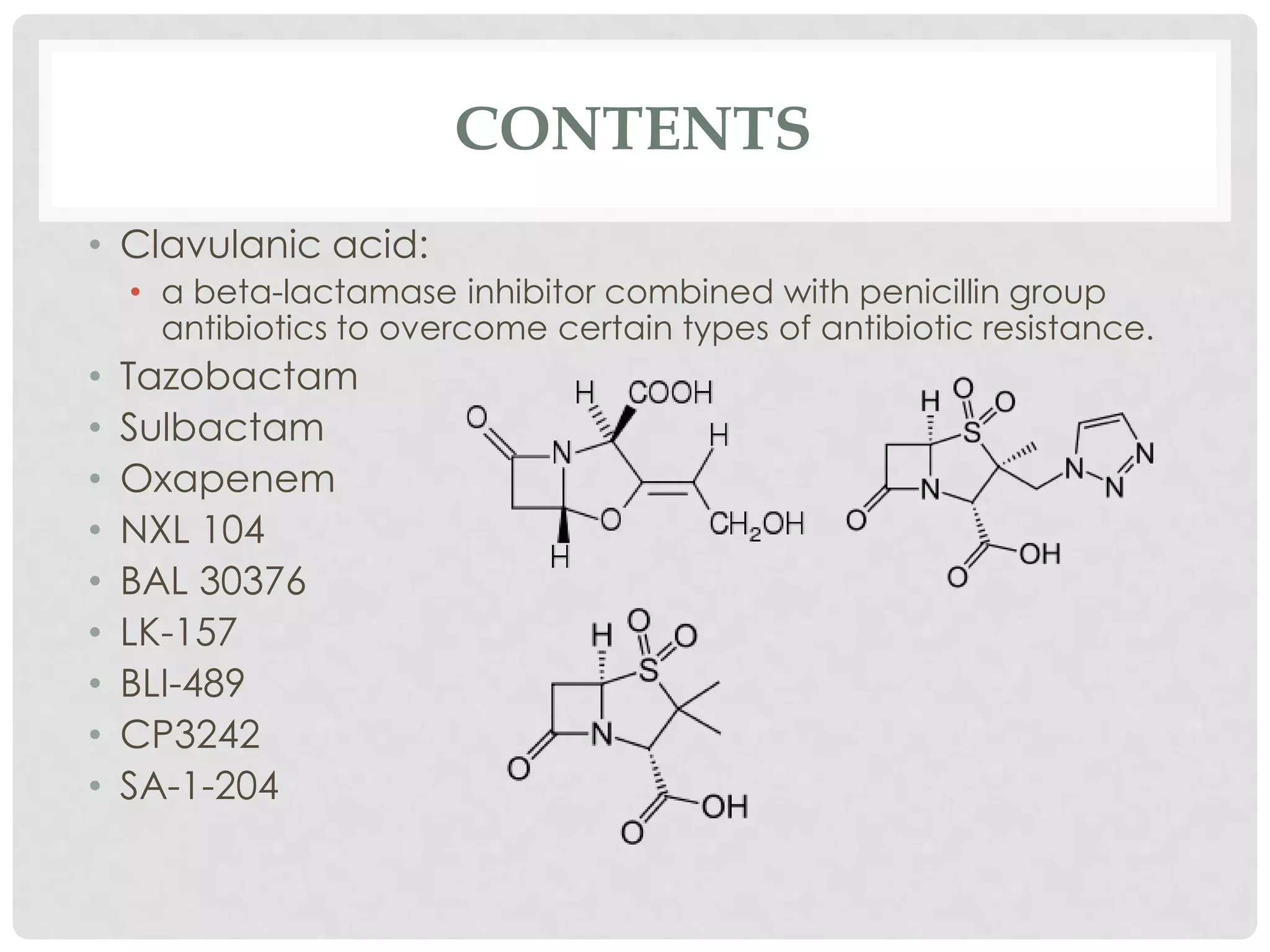
contentsClavulanicacid: a beta-lactamase inhibitor combined with penicillin group antibiotics to overcome certain types of antibiotic resistance.TazobactamSulbactamOxapenemNXL 104BAL 30376LK-157BLI-489CP3242SA-1-204
ClavulanicacidNatural product of Streptomyces clavuligerusPrevent the destruction of substrates of enzymesClavulanic acid + TEM-2-β-lactamases=acyl enzymeyield a transiently inhibited formact as enzyme-substrate complex
TazobactamInhibitory activity of CTX-M type β-lactamases:Tazobactam > clavulanic acid (10-fold)SHV-1- tazobactam complex acyclic form of tazobactam attached to Ser70 acyclic form of 5-atom vinyl carboxylic acid fragment attached to Ser130-OH in the inactive species.Acylation of Ser130Gly β-lactamase by Tazobactaminactivation proceeds independent of any additional covalent interaction
SulbactamClavulanicacid = SulbactamCephalosporinases< penicillinases or broad-spectrum β-lactamasesHowever,  the enzyme classes was not as great as observed with clavulanic acidsulbactam > cephalosporinases > clavulanicacidIn extensive studies: E. coli TEM-2 β-lactamasehydrolysis of sulbactam observed Sulbactamable to inhibit the most common forms of β-lactamase not able to interact with AmpCcephalosporinase
OxapenemOxygen-containing ring fused to β-lactam ringfound to be potent β-lactamase inhibitor but have poor stabilityOxapenems reduced MICs for ceftazidime against class C hyperprodutCeftazidime+AM-112 ->ESBL producing E. coli strainsAM-114 and AM-115->class A enzymesAM-113 and AM-114->class C enzymes
NXL 104NXL 104 and ceftazidime ->class A and  class C- producing Enterobacteriaceae membersMICs of ceftazidime/AVE 1330 A for Enterobacteriaceae were at least eight fold lower than those of ceftazidime alone
BAL 30376BAL 30376 a novel beta-lactamase inhibitor a combinationofBAL 0019764BAL 30376-f and BAL30376-v more active against MDR K.Pneumoniaecompared to Cefepimebut slightly less active than imipenem.Good activity against Enterobacteriaceaenon-fermentive Gram-negative bacteria
LK-157LK-157 + cefotaxime or cefepime= activity found comparable to that of tazobactamLK-157 decreased the MICs of aztreonam, ceftazidime, and cefuroxime B. fragilis (8- to ≥128-fold) β-lactamase-producing Enterobacteriaceae members (up to ≥64-fold)
BLI-489BLI-489 is activity against molecular class A or D enzymesPiperacillin/BLI-489 combination showed potent in vitro activity against diverse β-lactamase producers
CP3242Metallo- β-lactamase (MBL) inhibitor and competitively inhibits both IMP-1 and VIM-2Lowered the MICs of β-lactams against MBL-producing E. coli transformantsNovel competitive MBL inhibitor can be effective against MBL-producers in combination with β-lactam antibiotics
SA-1-204Effective against SHV producingE. coli strainspiperacillin/SA-1-204 was more potent than piperacillin/ tazobactam against strains bearing blaSHV-1
Thank you for your patientAny Question

Beta lactamase inhibitors-fx

  • 1.
  • 2.
    contentsClavulanicacid: a beta-lactamaseinhibitor combined with penicillin group antibiotics to overcome certain types of antibiotic resistance.TazobactamSulbactamOxapenemNXL 104BAL 30376LK-157BLI-489CP3242SA-1-204
  • 3.
    ClavulanicacidNatural product ofStreptomyces clavuligerusPrevent the destruction of substrates of enzymesClavulanic acid + TEM-2-β-lactamases=acyl enzymeyield a transiently inhibited formact as enzyme-substrate complex
  • 4.
    TazobactamInhibitory activity ofCTX-M type β-lactamases:Tazobactam > clavulanic acid (10-fold)SHV-1- tazobactam complex acyclic form of tazobactam attached to Ser70 acyclic form of 5-atom vinyl carboxylic acid fragment attached to Ser130-OH in the inactive species.Acylation of Ser130Gly β-lactamase by Tazobactaminactivation proceeds independent of any additional covalent interaction
  • 5.
    SulbactamClavulanicacid = SulbactamCephalosporinases<penicillinases or broad-spectrum β-lactamasesHowever, the enzyme classes was not as great as observed with clavulanic acidsulbactam > cephalosporinases > clavulanicacidIn extensive studies: E. coli TEM-2 β-lactamasehydrolysis of sulbactam observed Sulbactamable to inhibit the most common forms of β-lactamase not able to interact with AmpCcephalosporinase
  • 6.
    OxapenemOxygen-containing ring fusedto β-lactam ringfound to be potent β-lactamase inhibitor but have poor stabilityOxapenems reduced MICs for ceftazidime against class C hyperprodutCeftazidime+AM-112 ->ESBL producing E. coli strainsAM-114 and AM-115->class A enzymesAM-113 and AM-114->class C enzymes
  • 7.
    NXL 104NXL 104and ceftazidime ->class A and class C- producing Enterobacteriaceae membersMICs of ceftazidime/AVE 1330 A for Enterobacteriaceae were at least eight fold lower than those of ceftazidime alone
  • 8.
    BAL 30376BAL 30376a novel beta-lactamase inhibitor a combinationofBAL 0019764BAL 30376-f and BAL30376-v more active against MDR K.Pneumoniaecompared to Cefepimebut slightly less active than imipenem.Good activity against Enterobacteriaceaenon-fermentive Gram-negative bacteria
  • 9.
    LK-157LK-157 + cefotaximeor cefepime= activity found comparable to that of tazobactamLK-157 decreased the MICs of aztreonam, ceftazidime, and cefuroxime B. fragilis (8- to ≥128-fold) β-lactamase-producing Enterobacteriaceae members (up to ≥64-fold)
  • 10.
    BLI-489BLI-489 is activityagainst molecular class A or D enzymesPiperacillin/BLI-489 combination showed potent in vitro activity against diverse β-lactamase producers
  • 11.
    CP3242Metallo- β-lactamase (MBL)inhibitor and competitively inhibits both IMP-1 and VIM-2Lowered the MICs of β-lactams against MBL-producing E. coli transformantsNovel competitive MBL inhibitor can be effective against MBL-producers in combination with β-lactam antibiotics
  • 12.
    SA-1-204Effective against SHVproducingE. coli strainspiperacillin/SA-1-204 was more potent than piperacillin/ tazobactam against strains bearing blaSHV-1
  • 13.
    Thank you foryour patientAny Question

Editor's Notes

  • #3 A beta-lactamase inhibitor is a drug given in conjunction with a beta-lactam antibiotic. Although the inhibitor does not usually have significant antibiotic activity on its own,[1] it inhibits activity of beta-lactamase, a protein that confers resistance of beta-lactam antibiotics to bacteria.Beta-lactamase inhibitors in clinical use include clavulanic acid and its potassium salt (usually combined with amoxicillin or ticarcillin), sulbactam and tazobactam.