Chloramphenicol
introduction Broad spectrum (aerobic, anaerobic, gram +, gram -, rickettsiae)  Bacteriostatic
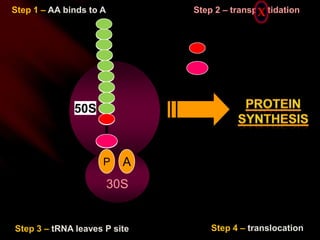
 Bactericidal (H.influenzae, Neisseria meningitidis)Step 1 – AA binds to AStep 2 – transpeptidation    XProtein synthesis 50S30SPAStep 4 –translocation Step 3 – tRNA leaves P site
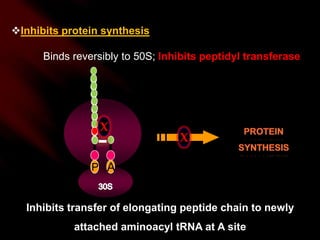
Inhibits protein synthesis 	Binds reversibly to 50S; Inhibits peptidyl transferaseXProtein synthesis XPA30SInhibits transfer of elongating peptide chain to newly attached aminoacyl tRNA at A site
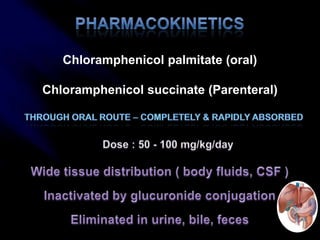
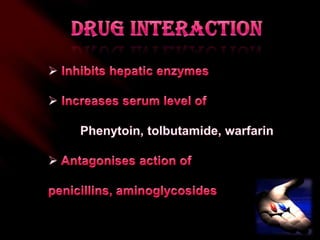
Pharmacokinetics Chloramphenicol palmitate (oral)Chloramphenicol succinate (Parenteral) through oral route – completely & rapidly absorbedDose : 50 - 100 mg/kg/day Wide tissue distribution ( body fluids, CSF )Inactivated by glucuronide conjugationEliminated in urine, bile, feces
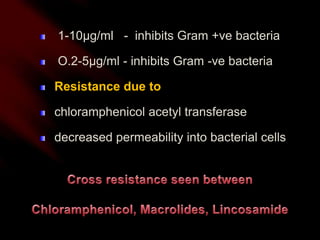
 1-10µg/ml   -  inhibits Gram +ve bacteria O.2-5µg/ml - inhibits Gram -ve bacteriaResistance due to chloramphenicol acetyl transferasedecreased permeability into bacterial cellsCross resistance seen between Chloramphenicol, Macrolides, Lincosamide
Clinical uses  Typhoid
Typhus
 Rocky Mountain Spotted Fever
 Meningococcal meningitis
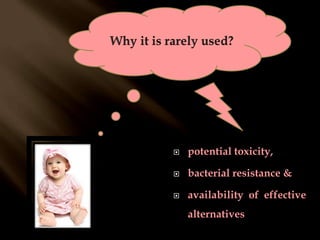
 Topically for eye infections When chloramphenicol should not be prescribed ?	hepatic failure 	new borns (<1wk)	premature infants
Adverse effectsNausea, vomiting, diarrhoea, oral/vaginal candidiasisBone marrow disturbances:  dose related reversible suppression of RBCs
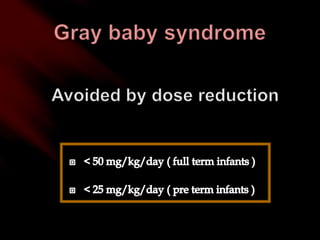
 aplastic anemia (idiosyncratic), irreversible, prolonged useGray Baby Syndrome
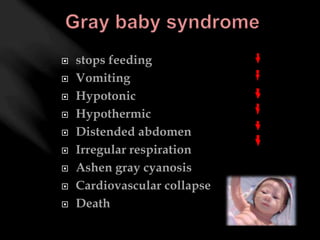
Gray baby syndrome stops feeding VomitingHypotonicHypothermic Distended abdomenIrregular respirationAshen gray cyanosis Cardiovascular collapse Death
Why Gray baby syndrome occurs in neonates ?Inability of neonate to metabolise & excrete chloramphenicol due to deficiency of glucuronosyl transferaseAt higher concentration it inhibits electron transport in liver, heart, skeletal muscle

Chloramphenicol

  • 1.
  • 2.
    introduction Broad spectrum(aerobic, anaerobic, gram +, gram -, rickettsiae) Bacteriostatic
  • 3.
    Bactericidal (H.influenzae,Neisseria meningitidis)Step 1 – AA binds to AStep 2 – transpeptidation XProtein synthesis 50S30SPAStep 4 –translocation Step 3 – tRNA leaves P site
  • 4.
    Inhibits protein synthesis Binds reversibly to 50S; Inhibits peptidyl transferaseXProtein synthesis XPA30SInhibits transfer of elongating peptide chain to newly attached aminoacyl tRNA at A site
  • 5.
    Pharmacokinetics Chloramphenicol palmitate(oral)Chloramphenicol succinate (Parenteral) through oral route – completely & rapidly absorbedDose : 50 - 100 mg/kg/day Wide tissue distribution ( body fluids, CSF )Inactivated by glucuronide conjugationEliminated in urine, bile, feces
  • 6.
    1-10µg/ml - inhibits Gram +ve bacteria O.2-5µg/ml - inhibits Gram -ve bacteriaResistance due to chloramphenicol acetyl transferasedecreased permeability into bacterial cellsCross resistance seen between Chloramphenicol, Macrolides, Lincosamide
  • 7.
  • 8.
  • 9.
    Rocky MountainSpotted Fever
  • 10.
  • 11.
    Topically foreye infections When chloramphenicol should not be prescribed ? hepatic failure new borns (<1wk) premature infants
  • 12.
    Adverse effectsNausea, vomiting,diarrhoea, oral/vaginal candidiasisBone marrow disturbances: dose related reversible suppression of RBCs
  • 13.
    aplastic anemia(idiosyncratic), irreversible, prolonged useGray Baby Syndrome
  • 14.
    Gray baby syndromestops feeding VomitingHypotonicHypothermic Distended abdomenIrregular respirationAshen gray cyanosis Cardiovascular collapse Death
  • 15.
    Why Gray babysyndrome occurs in neonates ?Inability of neonate to metabolise & excrete chloramphenicol due to deficiency of glucuronosyl transferaseAt higher concentration it inhibits electron transport in liver, heart, skeletal muscle