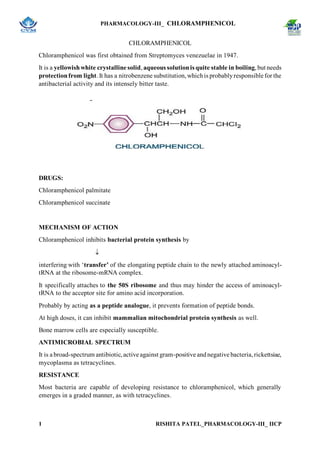
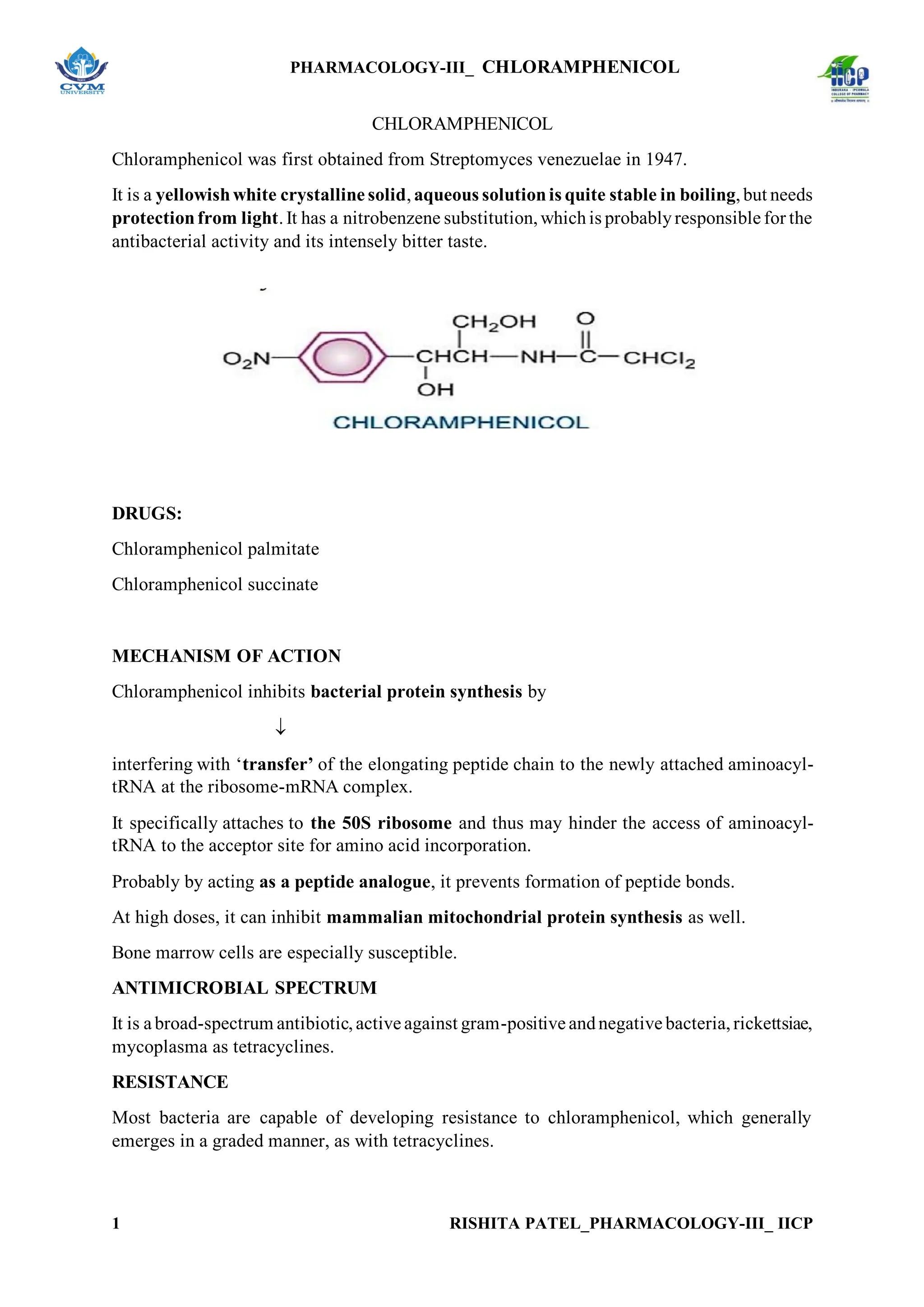
Chloramphenicol is a broad-spectrum antibiotic that was first obtained from Streptomyces venezuelae in 1947. It inhibits bacterial protein synthesis by interfering with the transfer of the elongating peptide chain during translation at the ribosome. Chloramphenicol is active against both gram-positive and gram-negative bacteria. While it is effective orally and inexpensive, extensive use led to high resistance among many bacteria. Chloramphenicol can cause serious bone marrow toxicity like aplastic anemia and is not recommended for minor infections. It requires careful dosage monitoring, especially in newborns, to avoid the potentially lethal "gray baby syndrome."


![CTEV [ clubfoot] DR ARUN LAL ,DR MOHAMED ASHRAF travancore medical college k...](https://cdn.slidesharecdn.com/ss_thumbnails/ctevclubfootdrarunlaldrmohamedashraftravancoremedicalcollegekollamkeralaindia-260208063247-18fc466c-thumbnail.jpg?width=640&height=640&fit=bounds)


![ONFH[AVN HIP] -TRIPLE REGIME -A NOVAL SURGICAL CONCEPT .pptx](https://cdn.slidesharecdn.com/ss_thumbnails/onfhavnhip2026koaconcalicutdrgokuldevdrmashraf-260210064517-213ec005-thumbnail.jpg?width=640&height=640&fit=bounds)


![PERI-PROSTHETIC FRACTURE NAIL-PLATE CONSTRUCT [NPC].pptx](https://cdn.slidesharecdn.com/ss_thumbnails/drarunkumardrmohamedashrafperiprostheticfrasturenail-plateconstructnpc-260209164459-7e9d15a1-thumbnail.jpg?width=640&height=640&fit=bounds)


