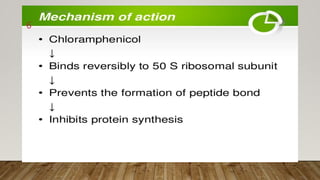
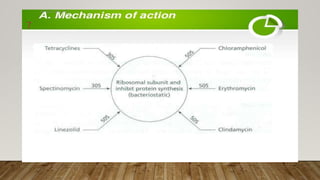
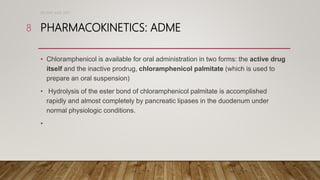
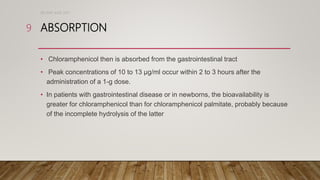
This document discusses chloramphenicol, an antibiotic produced by Streptomyces venezuelae. It was the first antibiotic manufactured synthetically on a large scale. Chloramphenicol inhibits bacterial protein synthesis by binding to the 50S ribosomal subunit, preventing peptide bond formation. It is absorbed orally and distributed widely throughout the body. While effective against many infections, it can cause potentially fatal bone marrow suppression and aplastic anemia. As a result, chloramphenicol is reserved for serious infections where other antibiotics cannot be used.