Antimalarial drugs
Dr. D. K. Brahma
Associate Professor
Dept. of Pharmacology
NEIGRIHMS
Introduction
• Malaria is major health problem in India & tropics
• Malaria caused by 4 species of plasmodium parasite :-
> Plasmodium vivax (tertian)
> Plasmodium ovale (tertian)
> Plasmodium falciparum (tertian)(severe malaria)
> Plasmodium malariae (quartan)
Life cycle (brief)
• Causative organism - Plasmodium vivax
• Vector/definitive host - female anopheles mosquito,
intermediate host - man.
• Life cycle occurs partly inside the mosquito (sexual sporogony ) & man
(asexual schizogony)
• Mosquito bites man - transmits sporozoites to his blood.
• Sporozoites - liver and reproduces asexually (tissue schizogony) producing
merozoites.
• Merozoites infect new RBCs and initiate asexual multiplication in RBC (blood
schizogony) - production of more merozoites.
• The RBC bursts and starts the infective cycle. Some merozoites develop into
male and female gametes.
• Some merozoites remain dormant in the liver (hypnozoites) which can cause a
relapse of infection later (p. vivax & ovale)
• When mosquito bites infected person, gametes are taken
up with the blood.
• The gametocytes mature in the mosquito gut and fuse to
form an ookinate which develops into sporozoites.(Sexual
sporogony)
• Sporozoites migrate to salivary glands and infect a new
host when mosquito bites the person.
Recurrent malaria : Can be relapse (hypnozoites) or
recrudescence (parasites surviving in blood due to
incomplete treatment)
Antimalarial drugs
Drugs for treatment/prophylaxis /prevention of
relapses of malaria
Antimalarial drugs - History
• 17th Century – Cinchona Tree in Peru
• 1820 till 1942 – Cinchona Bark
• WW I and WW II – Java blocked
• 1926 – Mepacrine
• 1945 – Proguanil
• Proguanil, Pyrimethamine
Sir Ronald Ross
Objectives of use of antimalarial drugs
• To prevent clinical attack of Malaria (prophylactic)
• To treat clinical attack of malaria (curative)
• To completely eradicate the parasite from patients
body (radical cure)
• To cut down human-to-mosquito transmission
(Gametocidal)
THERAPEUTIC CLASSIFICATION
Toprevent clinical attack of malaria (prophylactic)
- Causal prophylactics attack the pre-erythrocytic phase in liver which is
the cause of malarial infection.(TISSUE SCHIZONTOCIDE) E.g.
Primaquine, proguanil (100) and atovaquone (250)
- Suppressive prophylactics suppress the erythrocytic phase &
prevents attack of malarial fever. E.g.
Chloroquine, mefloquine, proguanil, Doxycycline
Prophylaxis adviced in (short term)
- Non immune travellers to endemic areas
- Non immune persons living in endemic areas for fixed time
(e.g.army units)
- Infants, children, pregnant women in endemic areas
- Intermittent preventive treatment in pregnancy – Pyri 75 mg +
Sulfadoxine (1500 mg) – 1 month – 2nd and 3rd trimester (Pf endemic)
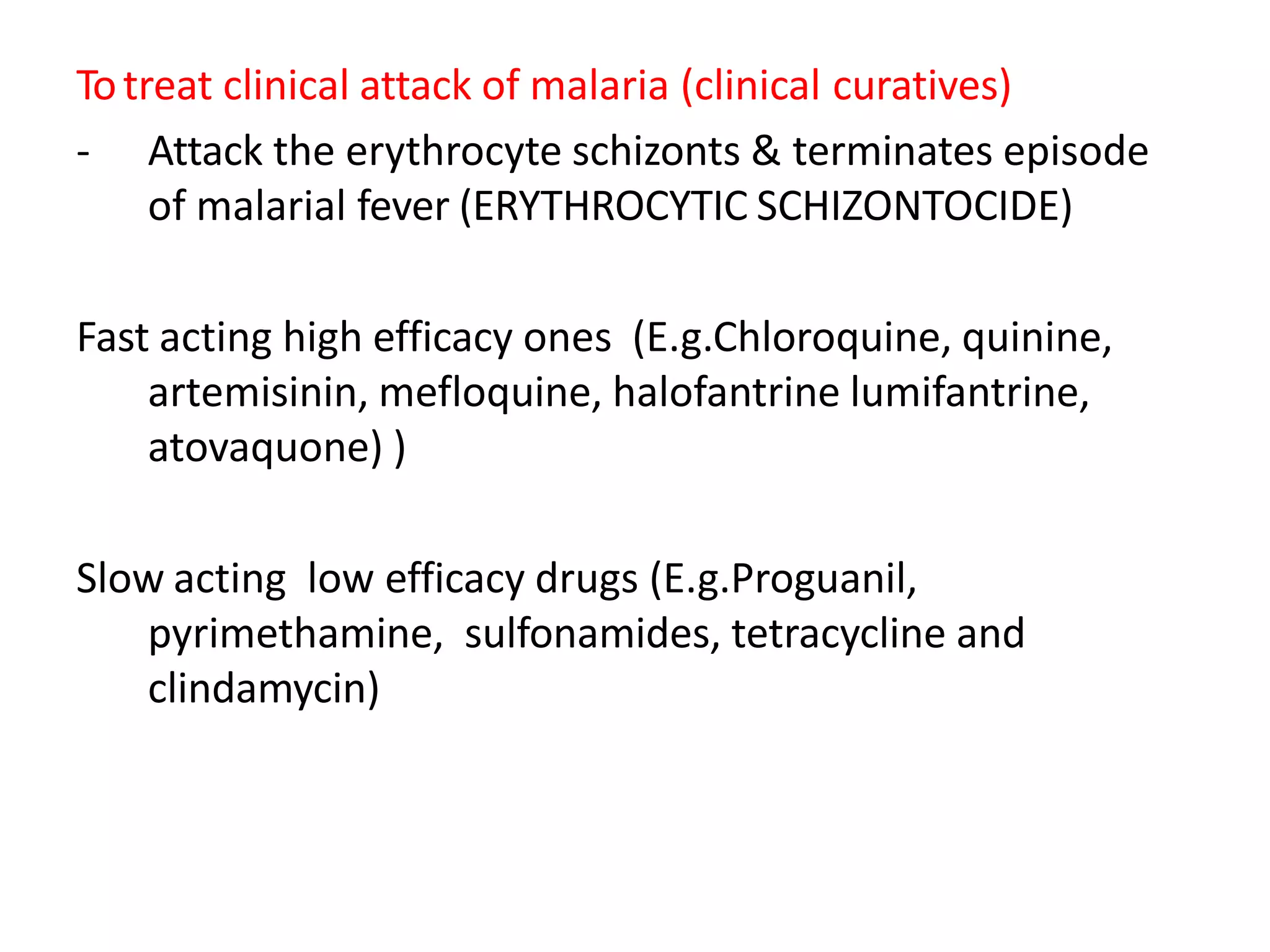
Totreat clinical attack of malaria (clinical curatives)
- Attack the erythrocyte schizonts & terminates episode
of malarial fever (ERYTHROCYTIC SCHIZONTOCIDE)
Fast acting high efficacy ones (E.g.Chloroquine, quinine,
artemisinin, mefloquine, halofantrine lumifantrine,
atovaquone) )
Slow acting low efficacy drugs (E.g.Proguanil,
pyrimethamine, sulfonamides, tetracycline and
clindamycin)
Tocompletely eradicate the parasite from the body
(radical cure) – erythrocytic schizontocides –
faster acting drugs in falciparum
- Indicated only in P.vivax & P.ovale because they
produce relapsing malaria due to persistence of
hypnozoites
- Recrudescnces - falciparum
Gametocidal drugs
- Helps in decreasing the transmission of malaria from infected
person to another.
- No use to the infected person
Eg. Primaquine, proguanil, pyrimethamine.
Source: Textbook of K. D. Tripathi, Jaypee Brothers Medical Publishers, 8th Edition , 2019
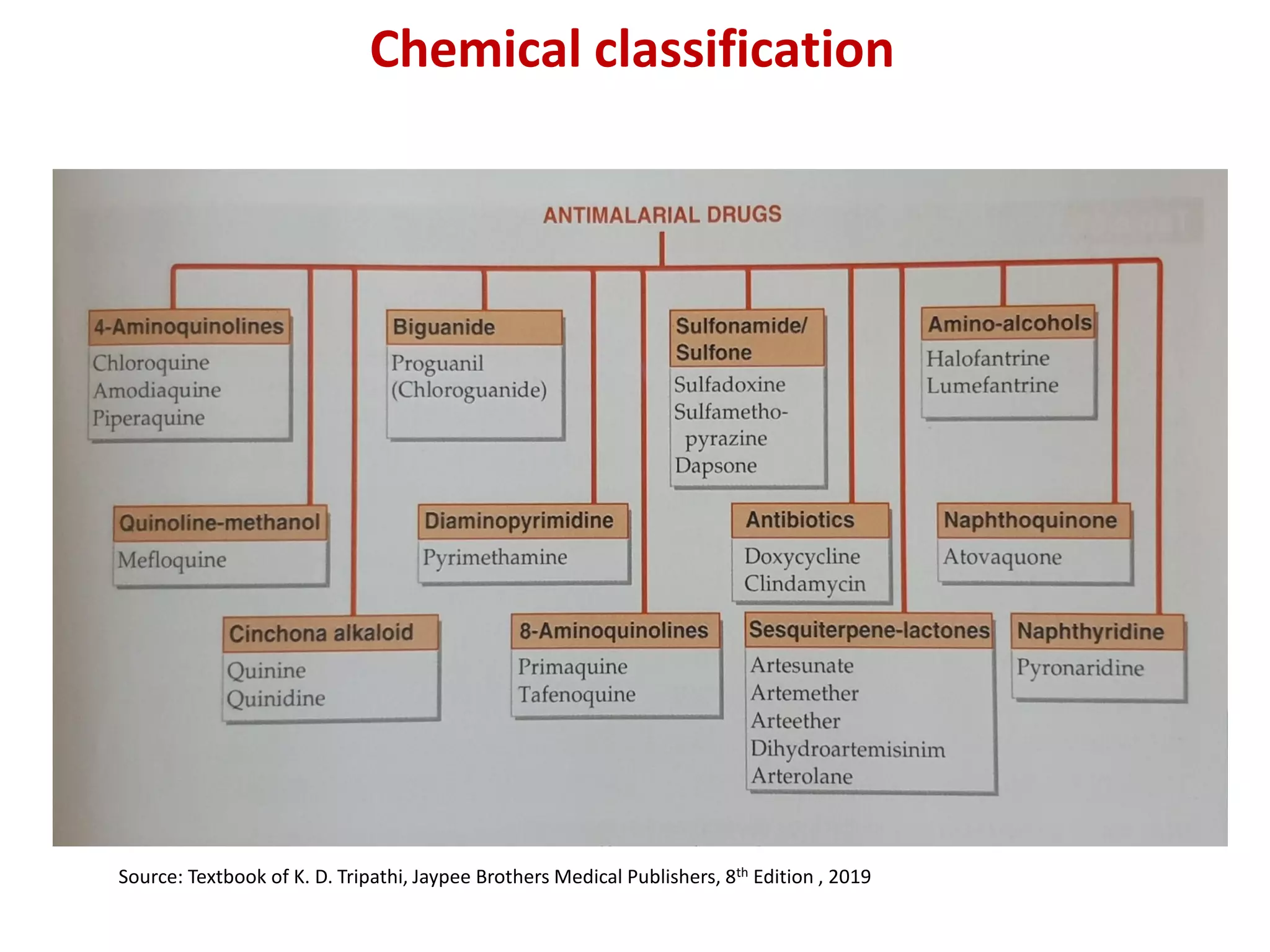
Chemical classification
Source: Textbook of K. D. Tripathi, Jaypee Brothers Medical Publishers, 8th Edition , 2019
Chloroquine (CQ)
- Rapid action Erythrocytic schizontocide of all species
of Plasmodium
- CQ-resistant falciparum
- No effect on primary and secondary hepatic stages
and gametes
- Controls clinical attacks in 1-2 days.
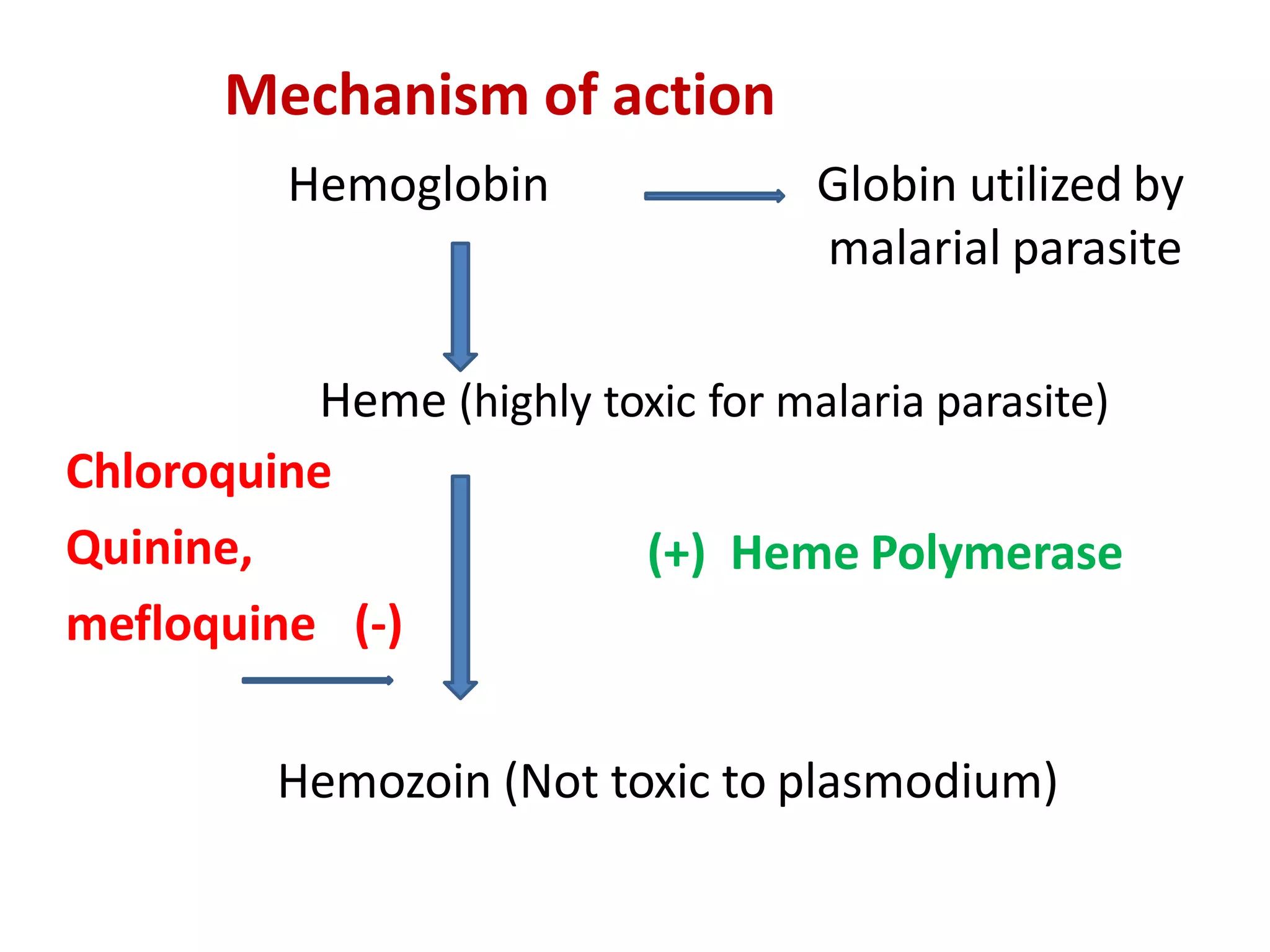
Hemoglobin Globin utilized by
malarial parasite
Heme (highly toxic for malaria parasite)
Chloroquine
Quinine,
mefloquine (-)
(+) Heme Polymerase
Hemozoin (Not toxic to plasmodium)
Mechanism of action
Mechanism of action
• Plasmodia digest hemoglobin to heme & globin in their acidic
vacuole. Globin is used by plasmodia for nutrition
• Heme being toxic to plasmodium is converted to non toxic
pigment hemazoin by heme polymerase enzyme of the parasite
• Chloroquine concentrates inside the acidic vacuole of parasite
& raises the pH of vacuole
• Interferes with conversion of toxic heme to non toxic
hemazoin by inhibiting heme polymerase
• CQ-Heme complex formed damages plasmodial membranes
Chloroquine resistance
• Chloroquine resistance is fast developing in
P.falciparum & is a major problem because severe
cases of malaria are caused by this species.
• Slow in vivax
• Multidrug resistance – Sulfa-
pyrimethamine, proguanil, quinine
• Resistance develops due to efflux mechanism
Pharmacological actions
1. Antimalarial activity
2. Other parasitic infections:
– Giardiasis, extrainstestinal amoebiasis
3. Other actions:
– Antiinflammatory, antihistaminic, local
anaesthetic, weak smooth muscle relaxant,
Antiarrhythmic activity.
Pharmacokinetics
• Good oral absorption
• Concentrated in liver, spleen, kidney, lungs,skin,
leucocytes
• Selective accumulation in retina: ocular toxicity
on prolonged use
• Metabolized in liver, excreted in urine
• T1/2 = 3-10 days. Due to tissue binding, small
amounts persist in body with terminal t1/2 of 1-2
months
Adverse drug reactions
Occuring at low dose/ short duration use
– Nausea, vomiting, anorexia, epigastric pain
– uneasiness
– Uncontrollable itching
– Headache, difficulty in accommodation
– abortion
Occuring at high doses/prolonged use
- Loss of vision(retinal damage)/, corneal deposits
leading to diminished vision
- Loss of hearing
- Mental disturbances
- Graying of hair
- Rashes, photoallergy
Contraindication
• Liver damage
• Severe GIT, neurological, retinal , hematological
diseases.
• Should not be co-administered with mefloquine,
amiodarone, antiarrhythmics.
• Can be given in pregnancy
• 250 mg oral tablet of chloroquine phosphate consists of 150
mg base
Therapeutic uses
1. Malaria : Used for clinical cure against P.ovale,
P.malariae, P. ovale & some P.falciparum that are
still sensitive.
2. Giardiasis
3. Extraintestinal amoebiasis
4. Rheumatoid arthritis
5. Discoid Lupus Erythematosus
6. Lepra reaction
7. Infectious mononucleosis
8. Photogenic reactions
Amodiaquine
• Identical properties to chloroquine
• Even Chloroquine resistant strains may be
effective.
• Less bitter
Piperaquine
•Effective in resistant cases
Mefloquine (Quinoline methanol)
• Developed to deal with chloroquine resistant P.falciparum
• Rapidly acting Erythrocytic schizonticide of chloroquine sensitive
& resistant plasmodia (clinical curative) – single dose.
• Also effective suppressive prophylactic for multidrug resistant
P.falciparum.
• But not gameticidal or kills hypnozoites
• Mechanism of action similar to Chloroquine – Relapse
• Kinetics: Well absorbed orally – peak conc. In 5 – 15 hours
• Highly bound to plasma protein
• Conc. In liver, lung and intestine
• Enterhepatic circulation – 2-3 weeks
Mefloquine (Quinoline methanol)
• Adverse effects : Bitter taste, Nausea, vomiting, diarrhoea, QT
prolongation, neuropsychiatric reactions (ataxia, anxiety,
hallucinations)
• Contraindicated in psychiatric disorders, cardiac conduction defects,
1st trimester of pregnancy.
• Uses: in multidrug resistant malaria in combination with ACT–
uncomplicated falciparum, CQ resistant and CQ-pyrimethamine
resistant
• Prophylactic use
Quinine
• L-isomer alkaloid isolated from cinchona bark. (Quinidine is d-
isomer used as antiarrhythmic (mainly) & as antimalarial)
• Erythrocyte schizontocide against all plasmodium (including
CQ &MDR P.falciparum) but more toxic than CQ and also less
effective
Also kills gametes of P.vivax
Resistance developed and cross resistance with Mefloquine
Effective in terminating acute attack of falciparum – recrudescence
– Doxy and clinda
• Mechanism of action: Similar to chloroquine
• Other actions: Local irritant and anaesthetic, analgesic,
antipyrretic and skeletal muscle relaxant
Adverse drug reactions
Cinchonism (large single dose/higher therapeutic doses
for longer period)
• Tinnitus, nausea & vomiting
• Headache, mental confusion, vertigo, difficulty in hearing &
visual disturbances
• Diarrhoea, flushing & marked perspiration
• Still higher doses : exaggerated symptoms with delirium ,
fever, tachypnoea, respiratory depression , pulmonary
edema, hypoglycemia.
- Idiosyncrasy in some individuals: cinchonism develops at
therapeutic doses itself
- Occasional hemolysis in pregnant women & patients with P.
falciparum→hemoglobinuria (black water fever) & kidney
damage
Uses
• Malaria:
– uncomplicated resistant falciparum malaria – oral
quinine given – when ACT not available
– Complicated & severe malaria including cerebral
malarial – IV quinine DOC
– Artesunate (IV/IM, artemether (IM), Artether
(IM)
• Nocturnal muscle cramps
Proguanil
– Not a popular drug for acute attack (slow action)
Pyrimethamine
Directly acting DHFRase inhibitor – high affinity
Used only in combination with sulfonamides or dapsone
for falciparum malaria treatment.
Sulfadoxine-pyrimethamine
• Long acting sulfonamides (Sulfadoxine)/dapsone are not effective
antimalarial but combination with Pyrimethamine causes
sequential blockade of folic acid synthesis in
plasmodia.
• Slow acting – but combination faster
• Effective against erythrocytic stage of P.falciparum.
• Combination acts faster & prevents development of
resistance.
• Uses: P. falciparum as curative but not vivax
• Risk of hypersensitivity reactions due to sulfonamide
component – SJS, Exfoliative – prophylactic dose lesser
(pregnancy)
Primaquine
• Most active against Liver hypnozoites (pre-erythrocytic
phase).
• Weak action against erythrocytic stage of vivax. No
action against erythrocytic stage of falciparum
• Has gametocidal action against all species.
• MOA: Not known – electron transport
Adverse effects
• Gastrointestinal
– epigastric distress, abdominal cramps ,
• Hemopoetic:
– mild anemia, methaemoglobinemia, cyanosis,
hemolytic anemia in G6PD deficiency.
• Avoided during pregnancy, G6PD patients
Uses
• Primary use is radical cure of relapsing malaria in P.
vivax . ( 15 mg daily for 14 days with dose of
chloroquine)
• Gametocidal in Falciparum malaria(45 mg of single
dose with chloroquine ) & cut down transmission of
malaria.
Tafenoquine
•Single dose antirelapse therapy for vivax
malaria.
Antibiotics
• Slow but potent action on erythrocytic stage of all
malarial parasites including multidrug resistant ones.
• Always used in combination with quinine or S-P for
treatment of chloroquine resistant malaria.
Halofantrine & Lumefantrine
• Amino alcohols
• Used in chloroquine resistant malaria since 1980
• Erratic bioavailabilty, lethal cardiotoxicity & cross
resistance to mefloquine limited its use
• Now a days used only when no other alternative
available
Atovaquone
• Not used in India
Artemisinin
• Artemisinin is the active principle of the plant
Quinghaosu (Artimisia annua)
• Sesquiterpine lactone derivative.
• Most potent and rapid acting against blood schizonticides
of P.falciparum resistant to all other drugs.
• Potent and rapid scizontocidal action – rapid parasite
clearance
• Lethal to early gametes
• Do not kill primary liver forms of hypnozoites
• Due to short duration of action→ high
recrudescence rate
Artemisinin derivatives
• Artemisinin: Poorly soluble in water and oil
• Derivatives:
• Artesunate: In water (oral, IV and IM)
• Artemether: In oil (oral and IM)
• Dihydroartemisin” Oral
• Arteether: India (In oil and IM)
• Arterolane: Oral synthetic
Mechanism of action
• These compounds have endoperoxide bridge.
• Heme iron cleaves this endoperoxide bridge to form
highly reactive free radicals (FE-Iron mediated cleavage)
which damage parasite membrane by covalently
binding to membrane proteins
Adverse effects
• Mild adverse effects like nausea, vomiting, abdominal
pain, drug fever, itching (common)
• Tinnitus, dizziness, bleeding, dark urine, ECG changes ,
QT prolongation, leucopenia are rare.
Uses
• Uncomplicated P. falciparum (CQ sensitive &
resistant)
• Severe & complicated malaria : given parenterally.
Artemisinin based combination therapy
(ACT)
• Artemisinin compunds are shorter acting drugs.
• Monotherapy needs to be extended beyond
disappearance of parasite to prevent recrudescence.
This can be prevented by combining artemisin
compounds with one long acting drug like mefloquine
etc.
Why combination therapy ?
• Rapid clinical & parasitological cure
• High cure rates and low relapse rates
• Absence of resistance
• Good tolerability profile
ACT Regimens in use
• Artesunate – Sulfadoxine- pyrimethamine
• Artesunate -Mefloquine
• Aretemether -lumefantrine
• Artesunate- amodiaquine
• Arterolane- piperaquine
Management of Malaria
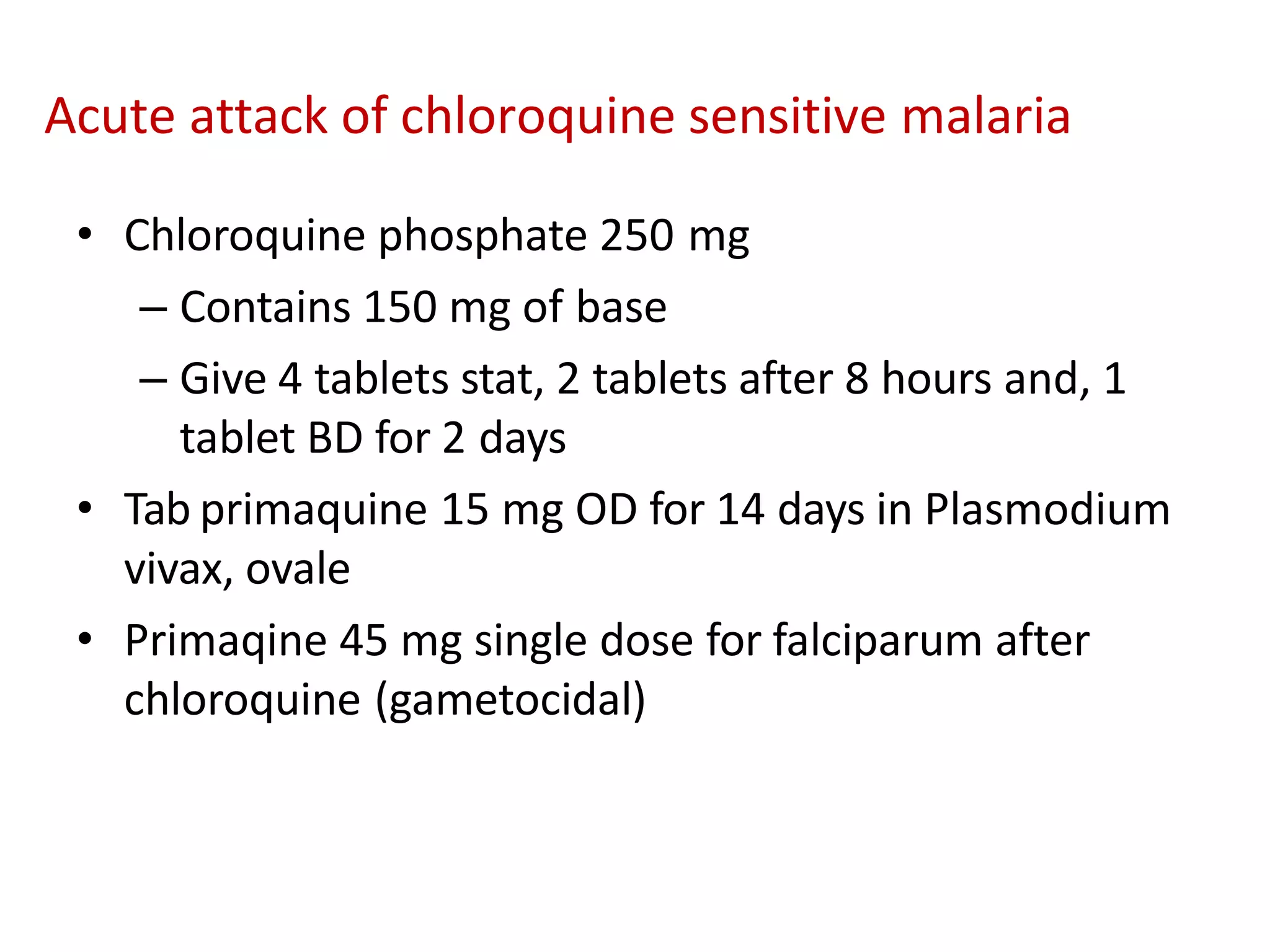
• Chloroquine phosphate 250 mg
– Contains 150 mg of base
– Give 4 tablets stat, 2 tablets after 8 hours and, 1
tablet BD for 2 days
• Tab primaquine 15 mg OD for 14 days in Plasmodium
vivax, ovale
• Primaqine 45 mg single dose for falciparum after
chloroquine (gametocidal)
Acute attack of chloroquine sensitive malaria
Occasional chloroquine resistant malaria
– Quinine 8hry + Doxycycline daily + Clindamycin 12
hrly … Primaquine
– ACT
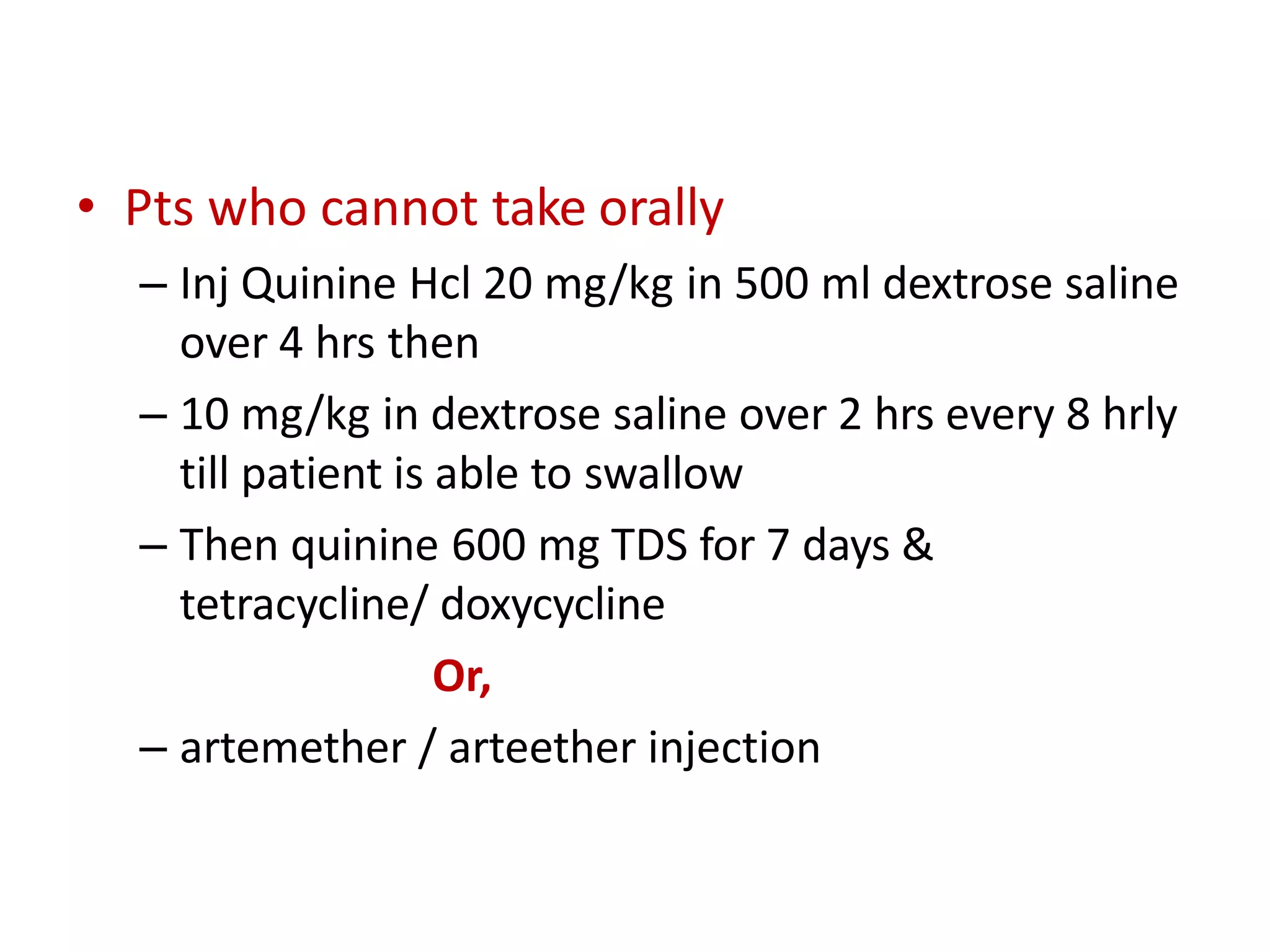
• Pts who cannot take orally
– Inj Quinine Hcl 20 mg/kg in 500 ml dextrose saline
over 4 hrs then
– 10 mg/kg in dextrose saline over 2 hrs every 8 hrly
till patient is able to swallow
– Then quinine 600 mg TDS for 7 days &
tetracycline/ doxycycline
Or,
– artemether / arteether injection
Source: Textbook of K. D. Tripathi, Jaypee Brothers Medical Publishers, 8th Edition , 2019
For Examination
• Classification of antimalarial drugs
(chemical/therapeutic)
• Chloroquine
• Primaquine
• Quinine
• Artemisinin/sesquiterpine derivatives
THANK YOU

Antimalarial Drugs Pharmacology

  • 1.
    Antimalarial drugs Dr. D.K. Brahma Associate Professor Dept. of Pharmacology NEIGRIHMS
  • 2.
    Introduction • Malaria ismajor health problem in India & tropics • Malaria caused by 4 species of plasmodium parasite :- > Plasmodium vivax (tertian) > Plasmodium ovale (tertian) > Plasmodium falciparum (tertian)(severe malaria) > Plasmodium malariae (quartan)
  • 3.
    Life cycle (brief) •Causative organism - Plasmodium vivax • Vector/definitive host - female anopheles mosquito, intermediate host - man. • Life cycle occurs partly inside the mosquito (sexual sporogony ) & man (asexual schizogony) • Mosquito bites man - transmits sporozoites to his blood. • Sporozoites - liver and reproduces asexually (tissue schizogony) producing merozoites. • Merozoites infect new RBCs and initiate asexual multiplication in RBC (blood schizogony) - production of more merozoites. • The RBC bursts and starts the infective cycle. Some merozoites develop into male and female gametes. • Some merozoites remain dormant in the liver (hypnozoites) which can cause a relapse of infection later (p. vivax & ovale)
  • 4.
    • When mosquitobites infected person, gametes are taken up with the blood. • The gametocytes mature in the mosquito gut and fuse to form an ookinate which develops into sporozoites.(Sexual sporogony) • Sporozoites migrate to salivary glands and infect a new host when mosquito bites the person. Recurrent malaria : Can be relapse (hypnozoites) or recrudescence (parasites surviving in blood due to incomplete treatment)
  • 5.
    Antimalarial drugs Drugs fortreatment/prophylaxis /prevention of relapses of malaria
  • 6.
    Antimalarial drugs -History • 17th Century – Cinchona Tree in Peru • 1820 till 1942 – Cinchona Bark • WW I and WW II – Java blocked • 1926 – Mepacrine • 1945 – Proguanil • Proguanil, Pyrimethamine Sir Ronald Ross
  • 7.
    Objectives of useof antimalarial drugs • To prevent clinical attack of Malaria (prophylactic) • To treat clinical attack of malaria (curative) • To completely eradicate the parasite from patients body (radical cure) • To cut down human-to-mosquito transmission (Gametocidal)
  • 8.
    THERAPEUTIC CLASSIFICATION Toprevent clinicalattack of malaria (prophylactic) - Causal prophylactics attack the pre-erythrocytic phase in liver which is the cause of malarial infection.(TISSUE SCHIZONTOCIDE) E.g. Primaquine, proguanil (100) and atovaquone (250) - Suppressive prophylactics suppress the erythrocytic phase & prevents attack of malarial fever. E.g. Chloroquine, mefloquine, proguanil, Doxycycline Prophylaxis adviced in (short term) - Non immune travellers to endemic areas - Non immune persons living in endemic areas for fixed time (e.g.army units) - Infants, children, pregnant women in endemic areas - Intermittent preventive treatment in pregnancy – Pyri 75 mg + Sulfadoxine (1500 mg) – 1 month – 2nd and 3rd trimester (Pf endemic)
  • 9.
    Totreat clinical attackof malaria (clinical curatives) - Attack the erythrocyte schizonts & terminates episode of malarial fever (ERYTHROCYTIC SCHIZONTOCIDE) Fast acting high efficacy ones (E.g.Chloroquine, quinine, artemisinin, mefloquine, halofantrine lumifantrine, atovaquone) ) Slow acting low efficacy drugs (E.g.Proguanil, pyrimethamine, sulfonamides, tetracycline and clindamycin)
  • 10.
    Tocompletely eradicate theparasite from the body (radical cure) – erythrocytic schizontocides – faster acting drugs in falciparum - Indicated only in P.vivax & P.ovale because they produce relapsing malaria due to persistence of hypnozoites - Recrudescnces - falciparum Gametocidal drugs - Helps in decreasing the transmission of malaria from infected person to another. - No use to the infected person Eg. Primaquine, proguanil, pyrimethamine.
  • 11.
    Source: Textbook ofK. D. Tripathi, Jaypee Brothers Medical Publishers, 8th Edition , 2019
  • 12.
    Chemical classification Source: Textbookof K. D. Tripathi, Jaypee Brothers Medical Publishers, 8th Edition , 2019
  • 13.
    Chloroquine (CQ) - Rapidaction Erythrocytic schizontocide of all species of Plasmodium - CQ-resistant falciparum - No effect on primary and secondary hepatic stages and gametes - Controls clinical attacks in 1-2 days.
  • 14.
    Hemoglobin Globin utilizedby malarial parasite Heme (highly toxic for malaria parasite) Chloroquine Quinine, mefloquine (-) (+) Heme Polymerase Hemozoin (Not toxic to plasmodium) Mechanism of action
  • 15.
    Mechanism of action •Plasmodia digest hemoglobin to heme & globin in their acidic vacuole. Globin is used by plasmodia for nutrition • Heme being toxic to plasmodium is converted to non toxic pigment hemazoin by heme polymerase enzyme of the parasite • Chloroquine concentrates inside the acidic vacuole of parasite & raises the pH of vacuole • Interferes with conversion of toxic heme to non toxic hemazoin by inhibiting heme polymerase • CQ-Heme complex formed damages plasmodial membranes
  • 16.
    Chloroquine resistance • Chloroquineresistance is fast developing in P.falciparum & is a major problem because severe cases of malaria are caused by this species. • Slow in vivax • Multidrug resistance – Sulfa- pyrimethamine, proguanil, quinine • Resistance develops due to efflux mechanism
  • 17.
    Pharmacological actions 1. Antimalarialactivity 2. Other parasitic infections: – Giardiasis, extrainstestinal amoebiasis 3. Other actions: – Antiinflammatory, antihistaminic, local anaesthetic, weak smooth muscle relaxant, Antiarrhythmic activity.
  • 18.
    Pharmacokinetics • Good oralabsorption • Concentrated in liver, spleen, kidney, lungs,skin, leucocytes • Selective accumulation in retina: ocular toxicity on prolonged use • Metabolized in liver, excreted in urine • T1/2 = 3-10 days. Due to tissue binding, small amounts persist in body with terminal t1/2 of 1-2 months
  • 19.
    Adverse drug reactions Occuringat low dose/ short duration use – Nausea, vomiting, anorexia, epigastric pain – uneasiness – Uncontrollable itching – Headache, difficulty in accommodation – abortion Occuring at high doses/prolonged use - Loss of vision(retinal damage)/, corneal deposits leading to diminished vision - Loss of hearing - Mental disturbances - Graying of hair - Rashes, photoallergy
  • 20.
    Contraindication • Liver damage •Severe GIT, neurological, retinal , hematological diseases. • Should not be co-administered with mefloquine, amiodarone, antiarrhythmics. • Can be given in pregnancy • 250 mg oral tablet of chloroquine phosphate consists of 150 mg base
  • 21.
    Therapeutic uses 1. Malaria: Used for clinical cure against P.ovale, P.malariae, P. ovale & some P.falciparum that are still sensitive. 2. Giardiasis 3. Extraintestinal amoebiasis 4. Rheumatoid arthritis 5. Discoid Lupus Erythematosus 6. Lepra reaction 7. Infectious mononucleosis 8. Photogenic reactions
  • 22.
    Amodiaquine • Identical propertiesto chloroquine • Even Chloroquine resistant strains may be effective. • Less bitter Piperaquine •Effective in resistant cases
  • 23.
    Mefloquine (Quinoline methanol) •Developed to deal with chloroquine resistant P.falciparum • Rapidly acting Erythrocytic schizonticide of chloroquine sensitive & resistant plasmodia (clinical curative) – single dose. • Also effective suppressive prophylactic for multidrug resistant P.falciparum. • But not gameticidal or kills hypnozoites • Mechanism of action similar to Chloroquine – Relapse • Kinetics: Well absorbed orally – peak conc. In 5 – 15 hours • Highly bound to plasma protein • Conc. In liver, lung and intestine • Enterhepatic circulation – 2-3 weeks
  • 24.
    Mefloquine (Quinoline methanol) •Adverse effects : Bitter taste, Nausea, vomiting, diarrhoea, QT prolongation, neuropsychiatric reactions (ataxia, anxiety, hallucinations) • Contraindicated in psychiatric disorders, cardiac conduction defects, 1st trimester of pregnancy. • Uses: in multidrug resistant malaria in combination with ACT– uncomplicated falciparum, CQ resistant and CQ-pyrimethamine resistant • Prophylactic use
  • 25.
    Quinine • L-isomer alkaloidisolated from cinchona bark. (Quinidine is d- isomer used as antiarrhythmic (mainly) & as antimalarial) • Erythrocyte schizontocide against all plasmodium (including CQ &MDR P.falciparum) but more toxic than CQ and also less effective Also kills gametes of P.vivax Resistance developed and cross resistance with Mefloquine Effective in terminating acute attack of falciparum – recrudescence – Doxy and clinda • Mechanism of action: Similar to chloroquine • Other actions: Local irritant and anaesthetic, analgesic, antipyrretic and skeletal muscle relaxant
  • 26.
    Adverse drug reactions Cinchonism(large single dose/higher therapeutic doses for longer period) • Tinnitus, nausea & vomiting • Headache, mental confusion, vertigo, difficulty in hearing & visual disturbances • Diarrhoea, flushing & marked perspiration • Still higher doses : exaggerated symptoms with delirium , fever, tachypnoea, respiratory depression , pulmonary edema, hypoglycemia. - Idiosyncrasy in some individuals: cinchonism develops at therapeutic doses itself - Occasional hemolysis in pregnant women & patients with P. falciparum→hemoglobinuria (black water fever) & kidney damage
  • 27.
    Uses • Malaria: – uncomplicatedresistant falciparum malaria – oral quinine given – when ACT not available – Complicated & severe malaria including cerebral malarial – IV quinine DOC – Artesunate (IV/IM, artemether (IM), Artether (IM) • Nocturnal muscle cramps
  • 28.
    Proguanil – Not apopular drug for acute attack (slow action) Pyrimethamine Directly acting DHFRase inhibitor – high affinity Used only in combination with sulfonamides or dapsone for falciparum malaria treatment.
  • 29.
    Sulfadoxine-pyrimethamine • Long actingsulfonamides (Sulfadoxine)/dapsone are not effective antimalarial but combination with Pyrimethamine causes sequential blockade of folic acid synthesis in plasmodia. • Slow acting – but combination faster • Effective against erythrocytic stage of P.falciparum. • Combination acts faster & prevents development of resistance. • Uses: P. falciparum as curative but not vivax • Risk of hypersensitivity reactions due to sulfonamide component – SJS, Exfoliative – prophylactic dose lesser (pregnancy)
  • 30.
    Primaquine • Most activeagainst Liver hypnozoites (pre-erythrocytic phase). • Weak action against erythrocytic stage of vivax. No action against erythrocytic stage of falciparum • Has gametocidal action against all species. • MOA: Not known – electron transport
  • 31.
    Adverse effects • Gastrointestinal –epigastric distress, abdominal cramps , • Hemopoetic: – mild anemia, methaemoglobinemia, cyanosis, hemolytic anemia in G6PD deficiency. • Avoided during pregnancy, G6PD patients
  • 32.
    Uses • Primary useis radical cure of relapsing malaria in P. vivax . ( 15 mg daily for 14 days with dose of chloroquine) • Gametocidal in Falciparum malaria(45 mg of single dose with chloroquine ) & cut down transmission of malaria.
  • 33.
    Tafenoquine •Single dose antirelapsetherapy for vivax malaria.
  • 34.
    Antibiotics • Slow butpotent action on erythrocytic stage of all malarial parasites including multidrug resistant ones. • Always used in combination with quinine or S-P for treatment of chloroquine resistant malaria.
  • 35.
    Halofantrine & Lumefantrine •Amino alcohols • Used in chloroquine resistant malaria since 1980 • Erratic bioavailabilty, lethal cardiotoxicity & cross resistance to mefloquine limited its use • Now a days used only when no other alternative available
  • 36.
  • 37.
    Artemisinin • Artemisinin isthe active principle of the plant Quinghaosu (Artimisia annua) • Sesquiterpine lactone derivative. • Most potent and rapid acting against blood schizonticides of P.falciparum resistant to all other drugs. • Potent and rapid scizontocidal action – rapid parasite clearance • Lethal to early gametes • Do not kill primary liver forms of hypnozoites • Due to short duration of action→ high recrudescence rate
  • 38.
    Artemisinin derivatives • Artemisinin:Poorly soluble in water and oil • Derivatives: • Artesunate: In water (oral, IV and IM) • Artemether: In oil (oral and IM) • Dihydroartemisin” Oral • Arteether: India (In oil and IM) • Arterolane: Oral synthetic
  • 39.
    Mechanism of action •These compounds have endoperoxide bridge. • Heme iron cleaves this endoperoxide bridge to form highly reactive free radicals (FE-Iron mediated cleavage) which damage parasite membrane by covalently binding to membrane proteins
  • 40.
    Adverse effects • Mildadverse effects like nausea, vomiting, abdominal pain, drug fever, itching (common) • Tinnitus, dizziness, bleeding, dark urine, ECG changes , QT prolongation, leucopenia are rare.
  • 41.
    Uses • Uncomplicated P.falciparum (CQ sensitive & resistant) • Severe & complicated malaria : given parenterally.
  • 42.
    Artemisinin based combinationtherapy (ACT) • Artemisinin compunds are shorter acting drugs. • Monotherapy needs to be extended beyond disappearance of parasite to prevent recrudescence. This can be prevented by combining artemisin compounds with one long acting drug like mefloquine etc.
  • 43.
    Why combination therapy? • Rapid clinical & parasitological cure • High cure rates and low relapse rates • Absence of resistance • Good tolerability profile
  • 44.
    ACT Regimens inuse • Artesunate – Sulfadoxine- pyrimethamine • Artesunate -Mefloquine • Aretemether -lumefantrine • Artesunate- amodiaquine • Arterolane- piperaquine
  • 45.
  • 46.
    • Chloroquine phosphate250 mg – Contains 150 mg of base – Give 4 tablets stat, 2 tablets after 8 hours and, 1 tablet BD for 2 days • Tab primaquine 15 mg OD for 14 days in Plasmodium vivax, ovale • Primaqine 45 mg single dose for falciparum after chloroquine (gametocidal) Acute attack of chloroquine sensitive malaria
  • 47.
    Occasional chloroquine resistantmalaria – Quinine 8hry + Doxycycline daily + Clindamycin 12 hrly … Primaquine – ACT
  • 48.
    • Pts whocannot take orally – Inj Quinine Hcl 20 mg/kg in 500 ml dextrose saline over 4 hrs then – 10 mg/kg in dextrose saline over 2 hrs every 8 hrly till patient is able to swallow – Then quinine 600 mg TDS for 7 days & tetracycline/ doxycycline Or, – artemether / arteether injection
  • 49.
    Source: Textbook ofK. D. Tripathi, Jaypee Brothers Medical Publishers, 8th Edition , 2019
  • 50.
    Source: Textbook ofK. D. Tripathi, Jaypee Brothers Medical Publishers, 8th Edition , 2019
  • 51.
    For Examination • Classificationof antimalarial drugs (chemical/therapeutic) • Chloroquine • Primaquine • Quinine • Artemisinin/sesquiterpine derivatives
  • 52.