Seminar Topic
Chloramphenicol as an antibiotic
Contents
1. History
2. Introduction
3. Characteristics
4. Structural formula
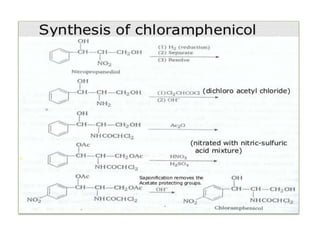
5. Synthesis of Chloramphenicol
6. Mechanism of action
7. Spectrum of Chloramphenicol
8. Intravenous preparation
9. Pharmacokinetics
10. Interactions with other medicines
11. Uses
12. Side effects
13. Precautions
14. Warnings of chloramphenicol
15. Chloramphenicol storage
16. Chloramphenicol dosage
History
Chloramphenicol was obtained from
Streptomyces Venezuela an organism first
isolated in 1947.
Introduced into clinical practice in 1949,
under the trade name chloromycetin. It
was the first antibiotic to be manufactured
synthetically on a large scale.
It was first Man made antibiotic.
Introduction
Chloramphenicol is an Antibiotic.
Chloramphenicol is useful for the
treatment of a number of bacterial
infections.
It has broad spectrum antibiotic that
typically stops bacterial growth by
stopping the production of protein.
Characteristics
Chloramphenicol is a yellowish white
Crystalline Solid.
It has a Nitrobenzene substitution
which is responsible for the
antibacterial
activity and intensely Bitter taste.
It is soluble in alcohol but poorly
soluble in water. hydrolyzed involved
with liberation of free chloramphenicol.
Structural formula
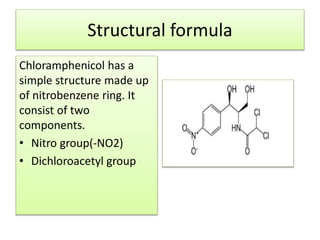
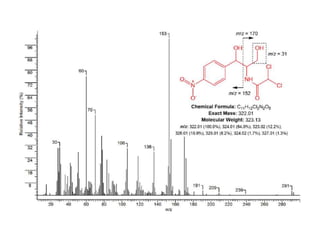
Chloramphenicol has a
simple structure made up
of nitrobenzene ring. It
consist of two
components.
• Nitro group(-NO2)
• Dichloroacetyl group
Mechanism of action of
chloramphenicol
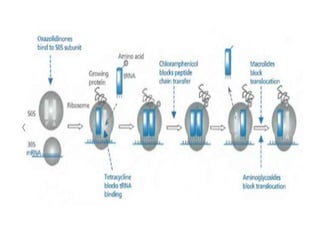
• Chloramphenicol binds to the bacterial 50s
ribosomal subunit.
• It inhibits protein synthesis at peptidyl
transferase reaction.
• Because of the similar of mammalian
mitochondrial ribosomes to those of bacterial
protein synthesis in these organelles may be
inhibited at high circulating chloramphenicol
level producing bone marrow toxicity.
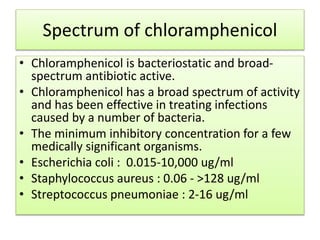
Spectrum of chloramphenicol
• Chloramphenicol is bacteriostatic and broad-
spectrum antibiotic active.
• Chloramphenicol has a broad spectrum of activity
and has been effective in treating infections
caused by a number of bacteria.
• The minimum inhibitory concentration for a few
medically significant organisms.
• Escherichia coli : 0.015-10,000 ug/ml
• Staphylococcus aureus : 0.06 - >128 ug/ml
• Streptococcus pneumoniae : 2-16 ug/ml
Intravenous
• The intravenous (IV) preparation of
chloramphenicol is the succinate ester.
• Chloramphenicol succinate ester is an inactive
prodrug and must first be hydrolysed to
chloramphenicol.
• The hydrolysis process is often in complete,
30% dose lost and removed in urine. Serum
concentration are only 70% of those achieve
when it is given orally.
Pharmacokinetics
• It remain unbounded to protein and is a small
molecule.
• It is extremely lipid soluble and penetrates
effectively into all tissues of the body including
brain.
• Its distribution is not uniform, with highest
concentrations found in liver & kidney, with
lowest in the brain & cerebrospinal fluid.
• Concentration in brain & cerebrospinal fluid is
around 30% to 50%.
Chloramphenicol Interactions
• If you are taking more than one medicine,
these may interact with each other.
• Following medicines may interact with
chloramphenicol:
• Cytotoxic drug used to treat cancer.
• Medicine used to thin the blood such as
warfarin.
• Tolbutamide used to treat diabetes.
Uses of Chloramphenicol
• Veterinary uses
• It is currently considered the most useful
treatment of chlamydial disease in koalas.
• Recent research suggests, It could also be
applied to frogs to prevent their wide spread
destruction from fungal infections.
• It has recently been discovered to be a life
saving cure for chytridiomycosis (is a fungal
disease) in amphibians.
Uses for different disease cure
• It is used to treat infections caused by certain
type of bacteria by stopping the growth of
bacteria.
• Used for bacterial eye infections.
• Used for bacterial ear infections.
• Used to treat serious life-threatening bacterial
infections such as:
• Typhoid fever, meningitis and septicaemia.
Side effects of Chloramphenicol
Eye drop & ear drop:
• Burning or stinging sensation
• Serious tiredness
• Bruising
• Serious allergic reaction.
Capsules or injection:
Decreases in white and red blood cells
Dry mouth, Vomiting, Diarrhea, Headache
Most important side effect is grey syndrome.
Precautions
Before taking it, tell your doctor or pharmacist
if you are allergic to it
If you have certain medical conditions
• A bone marrow
• A family history of blood disorder known as
dyscrasias.
If you have certain eye infections
• Use any other eye drop and use contact lenses
• Dry eye syndrome and any eye injury.
Warnings
For eye drops should be used with caution by
• People with eyesight problems
• Eye injury
• Dry eye syndrome
• Using contact lens
For capsules or injection
• People with history of liver disease & blood
disorder.
• With history of kidney disease
• Should not used children under 2 year (eye drop)
Storage
For eye drops
• Store it in a refrigerator between 2 degree C
and 8 degree C. Store it in original package to
protect from light.
For injection
• Do not store above 25 degree C.
Chloramphenicol dosage
Over dose
• Over dose with eye drops is unlikely to constitute
a hazard & no specific treatment is required. If
you think you might have accidentally taken more
than the recommended dose of it , contact your
doctor.
• In case of medical emergencies always dial 1122.
Missed dose: if you miss a dose, take it as
soon as you remember. If it is near the time of next
dose then skip the missed dose and resume your
usual dosing schedule. Do not double the dose to
catch up.
Chaloramphenicol as an antibiotic

Chaloramphenicol as an antibiotic

  • 2.
  • 3.
    Contents 1. History 2. Introduction 3.Characteristics 4. Structural formula 5. Synthesis of Chloramphenicol 6. Mechanism of action 7. Spectrum of Chloramphenicol 8. Intravenous preparation 9. Pharmacokinetics 10. Interactions with other medicines 11. Uses 12. Side effects 13. Precautions 14. Warnings of chloramphenicol 15. Chloramphenicol storage 16. Chloramphenicol dosage
  • 4.
    History Chloramphenicol was obtainedfrom Streptomyces Venezuela an organism first isolated in 1947. Introduced into clinical practice in 1949, under the trade name chloromycetin. It was the first antibiotic to be manufactured synthetically on a large scale. It was first Man made antibiotic.
  • 5.
    Introduction Chloramphenicol is anAntibiotic. Chloramphenicol is useful for the treatment of a number of bacterial infections. It has broad spectrum antibiotic that typically stops bacterial growth by stopping the production of protein.
  • 6.
    Characteristics Chloramphenicol is ayellowish white Crystalline Solid. It has a Nitrobenzene substitution which is responsible for the antibacterial activity and intensely Bitter taste. It is soluble in alcohol but poorly soluble in water. hydrolyzed involved with liberation of free chloramphenicol.
  • 7.
    Structural formula Chloramphenicol hasa simple structure made up of nitrobenzene ring. It consist of two components. • Nitro group(-NO2) • Dichloroacetyl group
  • 9.
    Mechanism of actionof chloramphenicol • Chloramphenicol binds to the bacterial 50s ribosomal subunit. • It inhibits protein synthesis at peptidyl transferase reaction. • Because of the similar of mammalian mitochondrial ribosomes to those of bacterial protein synthesis in these organelles may be inhibited at high circulating chloramphenicol level producing bone marrow toxicity.
  • 11.
    Spectrum of chloramphenicol •Chloramphenicol is bacteriostatic and broad- spectrum antibiotic active. • Chloramphenicol has a broad spectrum of activity and has been effective in treating infections caused by a number of bacteria. • The minimum inhibitory concentration for a few medically significant organisms. • Escherichia coli : 0.015-10,000 ug/ml • Staphylococcus aureus : 0.06 - >128 ug/ml • Streptococcus pneumoniae : 2-16 ug/ml
  • 13.
    Intravenous • The intravenous(IV) preparation of chloramphenicol is the succinate ester. • Chloramphenicol succinate ester is an inactive prodrug and must first be hydrolysed to chloramphenicol. • The hydrolysis process is often in complete, 30% dose lost and removed in urine. Serum concentration are only 70% of those achieve when it is given orally.
  • 14.
    Pharmacokinetics • It remainunbounded to protein and is a small molecule. • It is extremely lipid soluble and penetrates effectively into all tissues of the body including brain. • Its distribution is not uniform, with highest concentrations found in liver & kidney, with lowest in the brain & cerebrospinal fluid. • Concentration in brain & cerebrospinal fluid is around 30% to 50%.
  • 15.
    Chloramphenicol Interactions • Ifyou are taking more than one medicine, these may interact with each other. • Following medicines may interact with chloramphenicol: • Cytotoxic drug used to treat cancer. • Medicine used to thin the blood such as warfarin. • Tolbutamide used to treat diabetes.
  • 16.
    Uses of Chloramphenicol •Veterinary uses • It is currently considered the most useful treatment of chlamydial disease in koalas. • Recent research suggests, It could also be applied to frogs to prevent their wide spread destruction from fungal infections. • It has recently been discovered to be a life saving cure for chytridiomycosis (is a fungal disease) in amphibians.
  • 17.
    Uses for differentdisease cure • It is used to treat infections caused by certain type of bacteria by stopping the growth of bacteria. • Used for bacterial eye infections. • Used for bacterial ear infections. • Used to treat serious life-threatening bacterial infections such as: • Typhoid fever, meningitis and septicaemia.
  • 18.
    Side effects ofChloramphenicol Eye drop & ear drop: • Burning or stinging sensation • Serious tiredness • Bruising • Serious allergic reaction. Capsules or injection: Decreases in white and red blood cells Dry mouth, Vomiting, Diarrhea, Headache Most important side effect is grey syndrome.
  • 19.
    Precautions Before taking it,tell your doctor or pharmacist if you are allergic to it If you have certain medical conditions • A bone marrow • A family history of blood disorder known as dyscrasias. If you have certain eye infections • Use any other eye drop and use contact lenses • Dry eye syndrome and any eye injury.
  • 20.
    Warnings For eye dropsshould be used with caution by • People with eyesight problems • Eye injury • Dry eye syndrome • Using contact lens For capsules or injection • People with history of liver disease & blood disorder. • With history of kidney disease • Should not used children under 2 year (eye drop)
  • 21.
    Storage For eye drops •Store it in a refrigerator between 2 degree C and 8 degree C. Store it in original package to protect from light. For injection • Do not store above 25 degree C.
  • 22.
    Chloramphenicol dosage Over dose •Over dose with eye drops is unlikely to constitute a hazard & no specific treatment is required. If you think you might have accidentally taken more than the recommended dose of it , contact your doctor. • In case of medical emergencies always dial 1122. Missed dose: if you miss a dose, take it as soon as you remember. If it is near the time of next dose then skip the missed dose and resume your usual dosing schedule. Do not double the dose to catch up.