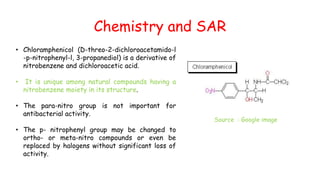
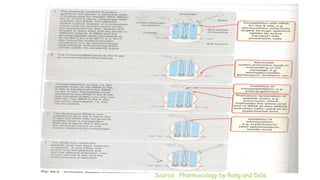
Chloramphenicol was the first antibiotic to be manufactured synthetically for clinical use. It inhibits bacterial protein synthesis by binding to the 50S ribosomal subunit. While broad-spectrum, it carries risks of bone marrow toxicity in humans. Safer derivatives like thiamphenicol and florfenicol were later developed.