Mahendra G S
NGSM Institute of Pharmaceutical Sciences
CEPHALOSPORIN
CEPHALOSPORIN
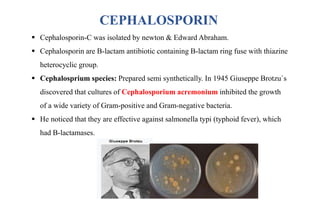
 Cephalosporin-C was isolated by newton & Edward Abraham.
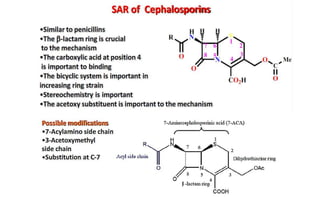
 Cephalosporin are B-lactam antibiotic containing B-lactam ring fuse with thiazine
heterocyclic group.
 Cephalosprium species: Prepared semi synthetically. In 1945 Giuseppe Brotzu`s
discovered that cultures of Cephalosporium acremonium inhibited the growth
of a wide variety of Gram-positive and Gram-negative bacteria.
 He noticed that they are effective against salmonella typi (typhoid fever), which
had B-lactamases.
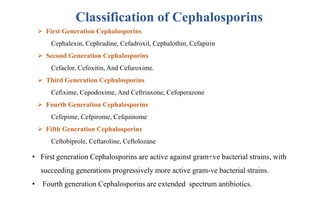
 First Generation Cephalosporins
Cephalexin, Cephradine, Cefadroxil, Cephalothin, Cefapirin
 Second Generation Cephalosporins
Cefaclor, Cefoxitin, And Cefuroxime.
 Third Generation Cephalosporins
Cefixime, Cepodoxime, And Ceftriaxone, Cefoperazone
 Fourth Generation Cephalosporins
Cefepime, Cefpirome, Cefquinome
 Fifth Generation Cephalosporins
Ceftobiprole, Ceftaroline, Ceftolozane
Classification of Cephalosporins
• First generation Cephalosporins are active against gram+ve bacterial strains, with
succeeding generations progressively more active gram-ve bacterial strains.
• Fourth generation Cephalosporins are extended spectrum antibiotics.
STRUCTURES AND ITS USES
Structure:
Uses :
1. First generation Cephalosporins
2. To treat infections caused by gram +ve bacteria.
3. To treat upper respiratory tract infections, ear, skin, urinary tract
and bone infections
CEPHALEXIN
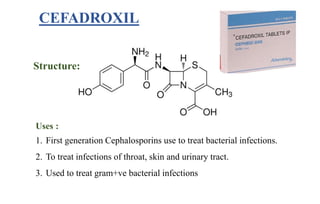
CEFADROXIL
Structure:
Uses :
1. First generation Cephalosporins use to treat bacterial infections.
2. To treat infections of throat, skin and urinary tract.
3. Used to treat gram+ve bacterial infections
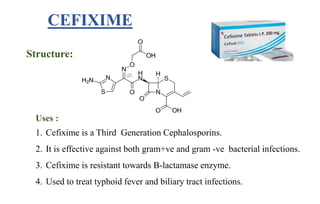
CEFIXIME
Structure:
Uses :
1. Cefixime is a Third Generation Cephalosporins.
2. It is effective against both gram+ve and gram -ve bacterial infections.
3. Cefixime is resistant towards B-lactamase enzyme.
4. Used to treat typhoid fever and biliary tract infections.
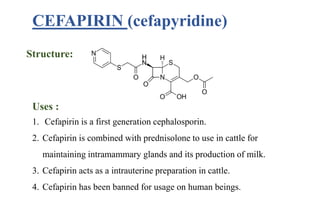
CEFAPIRIN (cefapyridine)
Structure:
Uses :
1. Cefapirin is a first generation cephalosporin.
2. Cefapirin is combined with prednisolone to use in cattle for
maintaining intramammary glands and its production of milk.
3. Cefapirin acts as a intrauterine preparation in cattle.
4. Cefapirin has been banned for usage on human beings.
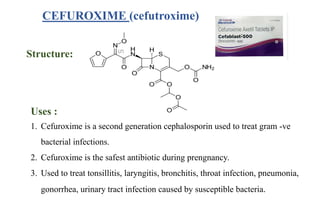
CEFUROXIME (cefutroxime)
Structure:
Uses :
1. Cefuroxime is a second generation cephalosporin used to treat gram -ve
bacterial infections.
2. Cefuroxime is the safest antibiotic during prengnancy.
3. Used to treat tonsillitis, laryngitis, bronchitis, throat infection, pneumonia,
gonorrhea, urinary tract infection caused by susceptible bacteria.
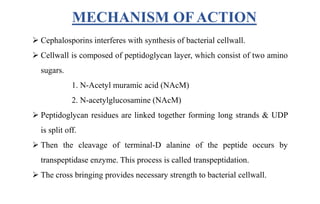
MECHANISM OF ACTION
 Cephalosporins interferes with synthesis of bacterial cellwall.
 Cellwall is composed of peptidoglycan layer, which consist of two amino
sugars.
1. N-Acetyl muramic acid (NAcM)
2. N-acetylglucosamine (NAcM)
 Peptidoglycan residues are linked together forming long strands & UDP
is split off.
 Then the cleavage of terminal-D alanine of the peptide occurs by
transpeptidase enzyme. This process is called transpeptidation.
 The cross bringing provides necessary strength to bacterial cellwall.
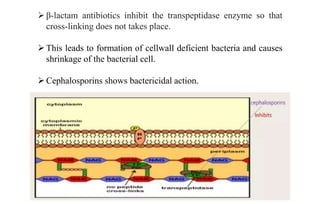
β-lactam antibiotics inhibit the transpeptidase enzyme so that
cross-linking does not takes place.
This leads to formation of cellwall deficient bacteria and causes
shrinkage of the bacterial cell.
Cephalosporins shows bactericidal action.
SIDE EFFECTS AND TOXICITY
• Pain and inflammation at injection site
• Diarrhoea
• Hypersensitivity reaction
• Nephrotoxicity
• Bleeding
• Pain on IM injection Eg: Cefalothin
• Nausea and vomiting
• Colitis
• Disulfiram like effects

CEPHALOSPORIN.pptx

  • 1.
    Mahendra G S NGSMInstitute of Pharmaceutical Sciences CEPHALOSPORIN
  • 2.
    CEPHALOSPORIN  Cephalosporin-C wasisolated by newton & Edward Abraham.  Cephalosporin are B-lactam antibiotic containing B-lactam ring fuse with thiazine heterocyclic group.  Cephalosprium species: Prepared semi synthetically. In 1945 Giuseppe Brotzu`s discovered that cultures of Cephalosporium acremonium inhibited the growth of a wide variety of Gram-positive and Gram-negative bacteria.  He noticed that they are effective against salmonella typi (typhoid fever), which had B-lactamases.
  • 4.
     First GenerationCephalosporins Cephalexin, Cephradine, Cefadroxil, Cephalothin, Cefapirin  Second Generation Cephalosporins Cefaclor, Cefoxitin, And Cefuroxime.  Third Generation Cephalosporins Cefixime, Cepodoxime, And Ceftriaxone, Cefoperazone  Fourth Generation Cephalosporins Cefepime, Cefpirome, Cefquinome  Fifth Generation Cephalosporins Ceftobiprole, Ceftaroline, Ceftolozane Classification of Cephalosporins • First generation Cephalosporins are active against gram+ve bacterial strains, with succeeding generations progressively more active gram-ve bacterial strains. • Fourth generation Cephalosporins are extended spectrum antibiotics.
  • 5.
    STRUCTURES AND ITSUSES Structure: Uses : 1. First generation Cephalosporins 2. To treat infections caused by gram +ve bacteria. 3. To treat upper respiratory tract infections, ear, skin, urinary tract and bone infections CEPHALEXIN
  • 6.
    CEFADROXIL Structure: Uses : 1. Firstgeneration Cephalosporins use to treat bacterial infections. 2. To treat infections of throat, skin and urinary tract. 3. Used to treat gram+ve bacterial infections
  • 7.
    CEFIXIME Structure: Uses : 1. Cefiximeis a Third Generation Cephalosporins. 2. It is effective against both gram+ve and gram -ve bacterial infections. 3. Cefixime is resistant towards B-lactamase enzyme. 4. Used to treat typhoid fever and biliary tract infections.
  • 8.
    CEFAPIRIN (cefapyridine) Structure: Uses : 1.Cefapirin is a first generation cephalosporin. 2. Cefapirin is combined with prednisolone to use in cattle for maintaining intramammary glands and its production of milk. 3. Cefapirin acts as a intrauterine preparation in cattle. 4. Cefapirin has been banned for usage on human beings.
  • 9.
    CEFUROXIME (cefutroxime) Structure: Uses : 1.Cefuroxime is a second generation cephalosporin used to treat gram -ve bacterial infections. 2. Cefuroxime is the safest antibiotic during prengnancy. 3. Used to treat tonsillitis, laryngitis, bronchitis, throat infection, pneumonia, gonorrhea, urinary tract infection caused by susceptible bacteria.
  • 10.
    MECHANISM OF ACTION Cephalosporins interferes with synthesis of bacterial cellwall.  Cellwall is composed of peptidoglycan layer, which consist of two amino sugars. 1. N-Acetyl muramic acid (NAcM) 2. N-acetylglucosamine (NAcM)  Peptidoglycan residues are linked together forming long strands & UDP is split off.  Then the cleavage of terminal-D alanine of the peptide occurs by transpeptidase enzyme. This process is called transpeptidation.  The cross bringing provides necessary strength to bacterial cellwall.
  • 11.
    β-lactam antibiotics inhibitthe transpeptidase enzyme so that cross-linking does not takes place. This leads to formation of cellwall deficient bacteria and causes shrinkage of the bacterial cell. Cephalosporins shows bactericidal action.
  • 12.
    SIDE EFFECTS ANDTOXICITY • Pain and inflammation at injection site • Diarrhoea • Hypersensitivity reaction • Nephrotoxicity • Bleeding • Pain on IM injection Eg: Cefalothin • Nausea and vomiting • Colitis • Disulfiram like effects