Mahendra G S
NGSM Institute of Pharmaceutical Sciences
PENECILLINS
Penicillium
Notatum
Penicillium
Chrysogenum
PENECILLINS
 Penicillin is a secondary metabolite produced by various bacteria.
 Penicillin are B-lactam antibiotics.
 A bacterial infection is caused by millions of tiny bacteria that are
trying to survive by multiplying in the host. Antibiotic attacks and kill
this bacteria.
 Penicillin is used as an antibiotic. It was obtained from “Penicillium
notatum”, now it is extracted from “Penicillium Chrysogenum”.
 Before the development of penicillin, many people suffered and died
from bacterial infections.
 alexander fleming discovered penicillin in 1928.
 Penicillin G is the first antibiotic (Penicillin) introduced into
chemotherapy.
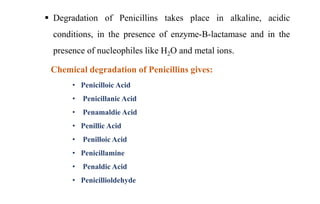
 Degradation of Penicillins takes place in alkaline, acidic
conditions, in the presence of enzyme-B-lactamase and in the
presence of nucleophiles like H2O and metal ions.
• Penicilloic Acid
• Penicillanic Acid
• Penamaldie Acid
• Penillic Acid
• Penilloic Acid
• Penicillamine
• Penaldic Acid
• Penicillioldehyde
Chemical degradation of Penicillins gives:
Penicillin structures and its uses
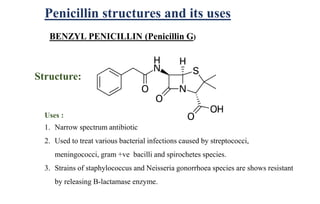
BENZYL PENICILLIN (Penicillin G)
Structure:
Uses :
1. Narrow spectrum antibiotic
2. Used to treat various bacterial infections caused by streptococci,
meningococci, gram +ve bacilli and spirochetes species.
3. Strains of staphylococcus and Neisseria gonorrhoea species are shows resistant
by releasing B-lactamase enzyme.
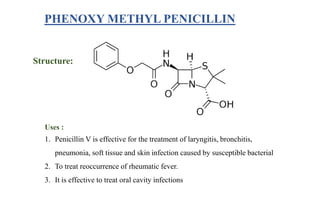
PHENOXY METHYL PENICILLIN
Structure:
Uses :
1. Penicillin V is effective for the treatment of laryngitis, bronchitis,
pneumonia, soft tissue and skin infection caused by susceptible bacterial
2. To treat reoccurrence of rheumatic fever.
3. It is effective to treat oral cavity infections
Structure:
Uses :
1. To treat sinusitis and other upper respiratory tract infections.
2. To treat urinary tract infections.
3. Prophylaxis treatment of bacterial endocarditis.
4. Amoxycillin is effective to treat bacterial infection of ear, nose, and
tonsillitis
AMOXICILLIN
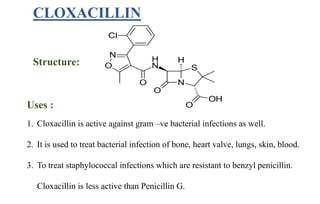
CLOXACILLIN
Structure:
Uses :
1. Cloxacillin is active against gram –ve bacterial infections as well.
2. It is used to treat bacterial infection of bone, heart valve, lungs, skin, blood.
3. To treat staphylococcal infections which are resistant to benzyl penicillin.
Cloxacillin is less active than Penicillin G.
Structure:
AMPICILLIN
Uses :
1. Ampicillin is used in the therapy of meningitis along with 3rd
generation cephalosporins.
2. Ampicillin+Gentamycin can be given to treat pneumonia, gram –ve
infection.
3. To treat hepatic encephalopathy.
4. To treat biliary tract infection.
PENECILLINS.pptx
PENECILLINS.pptx
PENECILLINS.pptx
PENECILLINS.pptx
PENECILLINS.pptx
PENECILLINS.pptx
PENECILLINS.pptx

PENECILLINS.pptx

  • 1.
    Mahendra G S NGSMInstitute of Pharmaceutical Sciences PENECILLINS
  • 2.
    Penicillium Notatum Penicillium Chrysogenum PENECILLINS  Penicillin isa secondary metabolite produced by various bacteria.  Penicillin are B-lactam antibiotics.  A bacterial infection is caused by millions of tiny bacteria that are trying to survive by multiplying in the host. Antibiotic attacks and kill this bacteria.  Penicillin is used as an antibiotic. It was obtained from “Penicillium notatum”, now it is extracted from “Penicillium Chrysogenum”.  Before the development of penicillin, many people suffered and died from bacterial infections.  alexander fleming discovered penicillin in 1928.  Penicillin G is the first antibiotic (Penicillin) introduced into chemotherapy.
  • 6.
     Degradation ofPenicillins takes place in alkaline, acidic conditions, in the presence of enzyme-B-lactamase and in the presence of nucleophiles like H2O and metal ions. • Penicilloic Acid • Penicillanic Acid • Penamaldie Acid • Penillic Acid • Penilloic Acid • Penicillamine • Penaldic Acid • Penicillioldehyde Chemical degradation of Penicillins gives:
  • 9.
    Penicillin structures andits uses BENZYL PENICILLIN (Penicillin G) Structure: Uses : 1. Narrow spectrum antibiotic 2. Used to treat various bacterial infections caused by streptococci, meningococci, gram +ve bacilli and spirochetes species. 3. Strains of staphylococcus and Neisseria gonorrhoea species are shows resistant by releasing B-lactamase enzyme.
  • 10.
    PHENOXY METHYL PENICILLIN Structure: Uses: 1. Penicillin V is effective for the treatment of laryngitis, bronchitis, pneumonia, soft tissue and skin infection caused by susceptible bacterial 2. To treat reoccurrence of rheumatic fever. 3. It is effective to treat oral cavity infections
  • 11.
    Structure: Uses : 1. Totreat sinusitis and other upper respiratory tract infections. 2. To treat urinary tract infections. 3. Prophylaxis treatment of bacterial endocarditis. 4. Amoxycillin is effective to treat bacterial infection of ear, nose, and tonsillitis AMOXICILLIN
  • 12.
    CLOXACILLIN Structure: Uses : 1. Cloxacillinis active against gram –ve bacterial infections as well. 2. It is used to treat bacterial infection of bone, heart valve, lungs, skin, blood. 3. To treat staphylococcal infections which are resistant to benzyl penicillin. Cloxacillin is less active than Penicillin G.
  • 13.
    Structure: AMPICILLIN Uses : 1. Ampicillinis used in the therapy of meningitis along with 3rd generation cephalosporins. 2. Ampicillin+Gentamycin can be given to treat pneumonia, gram –ve infection. 3. To treat hepatic encephalopathy. 4. To treat biliary tract infection.