
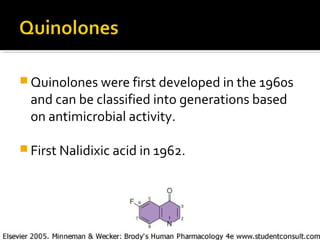

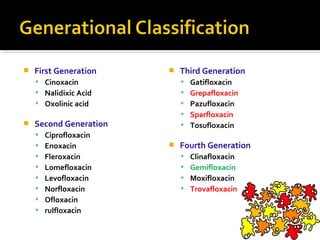

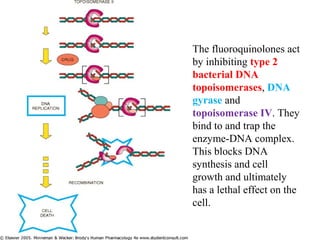

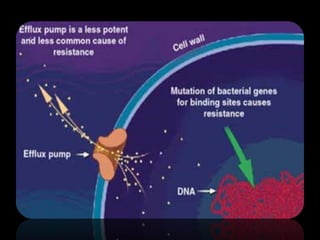
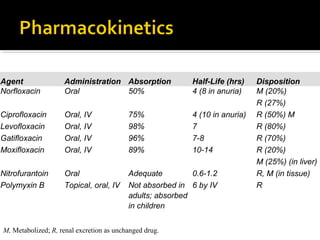
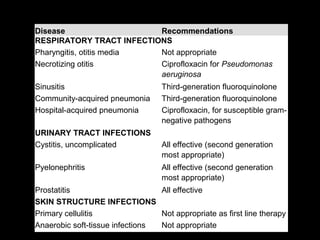
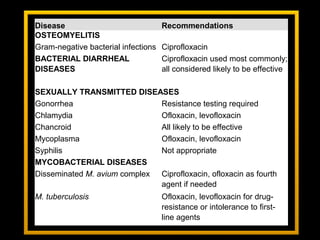
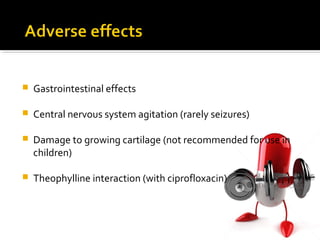


Quinolones were first developed in the 1960s and can be classified into generations based on their antimicrobial activity. First generation quinolones were active against gram-negative bacteria but not Pseudomonas. Later generations showed increased activity against gram-positive pathogens and mycobacteria. Quinolones act by inhibiting bacterial DNA gyrase and topoisomerase IV, blocking DNA synthesis. They are potent against a variety of bacteria including E. coli, Salmonella, and Staphylococcus. However, resistance may develop via mutations in genes encoding DNA gyrase/topoisomerase IV or active drug transport.


