


Diuretics
• Diuretics are chemicals that increase the rate of urine formation.
• Diuretic usage leads to increased excretion of electrolytes (especially sodium
and chloride ions) and water from the body by increasing the urine flow rate,
without affecting protein, vitamin, glucose or amino acid reabsorption.
• These pharmacological properties have led to the use of diuretics in the
treatment of edematous conditions resulting from a variety of causes (e.g.,
congestive heart failure, nephrotic syndrome and chronic liver disease) and in
the management of hypertension
Diuretics
• Diuretic drugs also are useful as the sole agent or as adjunct
therapy in the treatment of a wide range of other clinical
conditions, including hypercalcemia, diabetes insipidus, acute
mountain sickness, primary hyperaldosteronism, and glaucoma.
• The primary target organ for diuretics is the kidney, where these
drugs interfere with the reabsorption of sodium and other ions
from the lumina of the nephrons, which are the functional units of
the kidney.
Diuretics
Classification of Diuretics
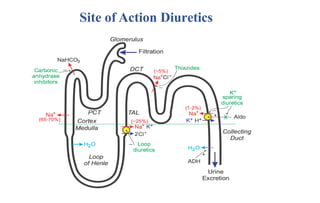
Site of Action Diuretics
Osmotic Diuretics
• Osmotic diuretics are low molecular- weight compounds that are freely filtered
through the Bowman’s capsule.
• Once in the renal tubule, osmotic diuretics have limited reabsorption because
of their high-water solubility.
• When administered as a hypertonic (hyperosmolar) solution, these agents
increase intraluminal osmotic pressure, causing water to pass from the body
into the tubule.
• Osmotic diuretics increase the volume of urine and the excretion of water and
almost all electrolytes.
Examples: Sorbitol and Mannitol
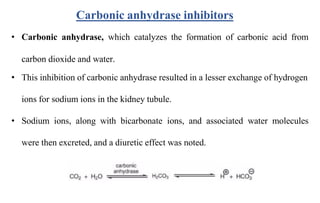
• Carbonic anhydrase, which catalyzes the formation of carbonic acid from
carbon dioxide and water.
• This inhibition of carbonic anhydrase resulted in a lesser exchange of hydrogen
ions for sodium ions in the kidney tubule.
• Sodium ions, along with bicarbonate ions, and associated water molecules
were then excreted, and a diuretic effect was noted.
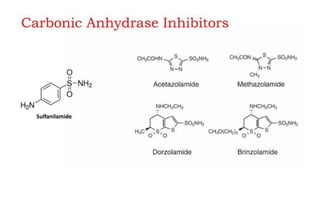
Carbonic anhydrase inhibitors
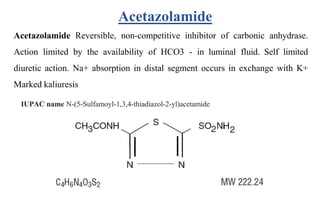
Acetazolamide Reversible, non-competitive inhibitor of carbonic anhydrase.
Action limited by the availability of HCO3 - in luminal fluid. Self limited
diuretic action. Na+ absorption in distal segment occurs in exchange with K+
Marked kaliuresis
IUPAC name N-(5-Sulfamoyl-1,3,4-thiadiazol-2-yl)acetamide
Acetazolamide
Acetazolamide: Uses
• Glaucoma
• Decrease formation of aqueous humour
• Mountain sickness
• Alters CO2 transport in lungs, tissues and brain
• Decreases CSF formation, lowers pH
• To alkalinise urine
• Periodic paralysis
• Epilepsy
Acetazolamide: Adverse effects
• Acidosis, hypokalaemia
• To be cautiously used in COPD patients
• Drowsiness
• Paraesthesia, fatigue, abdominal discomfort
• Hypersensitivity reaction
• Bone marrow depression
• Interferes with elimination of NH3 in urine
• Contraindicated in liver disease
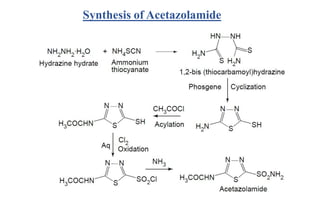
Synthesis of Acetazolamide
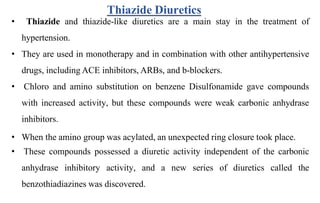
• Thiazide and thiazide-like diuretics are a main stay in the treatment of
hypertension.
• They are used in monotherapy and in combination with other antihypertensive
drugs, including ACE inhibitors, ARBs, and b-blockers.
• Chloro and amino substitution on benzene Disulfonamide gave compounds
with increased activity, but these compounds were weak carbonic anhydrase
inhibitors.
• When the amino group was acylated, an unexpected ring closure took place.
• These compounds possessed a diuretic activity independent of the carbonic
anhydrase inhibitory activity, and a new series of diuretics called the
benzothiadiazines was discovered.
Thiazide Diuretics
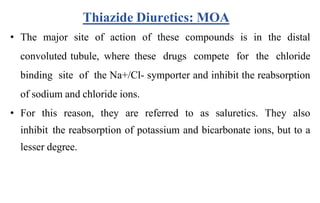
• The major site of action of these compounds is in the distal
convoluted tubule, where these drugs compete for the chloride
binding site of the Na+/Cl- symporter and inhibit the reabsorption
of sodium and chloride ions.
• For this reason, they are referred to as saluretics. They also
inhibit the reabsorption of potassium and bicarbonate ions, but to a
lesser degree.
Thiazide Diuretics: MOA
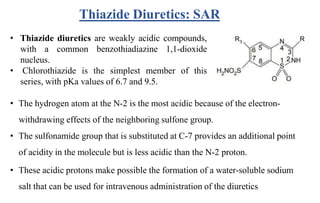
• Thiazide diuretics are weakly acidic compounds,
with a common benzothiadiazine 1,1-dioxide
nucleus.
• Chlorothiazide is the simplest member of this
series, with pKa values of 6.7 and 9.5.
• The hydrogen atom at the N-2 is the most acidic because of the electron-
withdrawing effects of the neighboring sulfone group.
• The sulfonamide group that is substituted at C-7 provides an additional point
of acidity in the molecule but is less acidic than the N-2 proton.
• These acidic protons make possible the formation of a water-soluble sodium
salt that can be used for intravenous administration of the diuretics
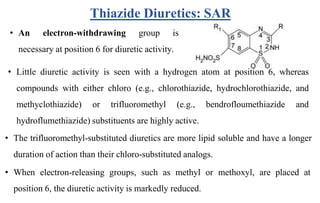
Thiazide Diuretics: SAR
• An electron-withdrawing group is
necessary at position 6 for diuretic activity.
• Little diuretic activity is seen with a hydrogen atom at position 6, whereas
compounds with either chloro (e.g., chlorothiazide, hydrochlorothiazide, and
methyclothiazide) or trifluoromethyl (e.g., bendrofloumethiazide and
hydroflumethiazide) substituents are highly active.
• The trifluoromethyl-substituted diuretics are more lipid soluble and have a longer
duration of action than their chloro-substituted analogs.
• When electron-releasing groups, such as methyl or methoxyl, are placed at
position 6, the diuretic activity is markedly reduced.
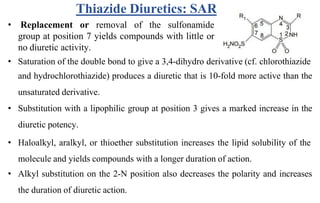
• Replacement or removal of the sulfonamide
group at position 7 yields compounds with little or
no diuretic activity.
• Saturation of the double bond to give a 3,4-dihydro derivative (cf. chlorothiazide
and hydrochlorothiazide) produces a diuretic that is 10-fold more active than the
unsaturated derivative.
• Substitution with a lipophilic group at position 3 gives a marked increase in the
diuretic potency.
• Haloalkyl, aralkyl, or thioether substitution increases the lipid solubility of the
molecule and yields compounds with a longer duration of action.
• Alkyl substitution on the 2-N position also decreases the polarity and increases
the duration of diuretic action.
Thiazide Diuretics: SAR
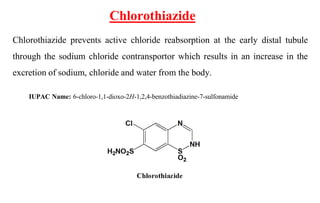
Chlorothiazide
Chlorothiazide prevents active chloride reabsorption at the early distal tubule
through the sodium chloride contransportor which results in an increase in the
excretion of sodium, chloride and water from the body.
IUPAC Name: 6-chloro-1,1-dioxo-2H-1,2,4-benzothiadiazine-7-sulfonamide
Medicinal Uses
Chlorothiazide is used for
•Management of hypertension
•Management of edema related to heart failure
•For increasing effectiveness of other antihypertensive drugs in severe
Side Effects
Side effects of chlorothiazide are
•Headache, Lightheadedness, Dizziness, Blurred vision
•Spinning feelings, Diarrhea, Constipation, Stomach cramps,
•Stomach upset
•Muscle spasms
Benzthiazide
Benzthiazide is used to treat hypertension and edema. Like other thiazides,
benzthiazide promotes water loss from the body (diuretics). They inhibit
Na+/Cl- reabsorption from the distal convoluted tubules in the kidneys.
IUPAC name 6-chloro-1,1-dioxo-3-(phenylmethylsulfanylmethyl)- 4H-benzo[e][1,2,4]
thiadiazine-7-sulfonamide
Uses:
1.Hypertension: Benzthiazide helps to reduce blood pressure by decreasing the
volume of fluid in the bloodstream, which in turn reduces the workload on the
heart.
2.Edema: It may also be prescribed for the treatment of edema (fluid retention)
associated with conditions such as congestive heart failure, liver cirrhosis, and
kidney disorders.
Adverse Effects:
• Electrolyte Imbalance, Dehydration
• Hyperuricemia, Hyperglycemia
• Photosensitivity
• Orthostatic Hypotension
• Renal Impairment
• Hypersensitivity Reactions.
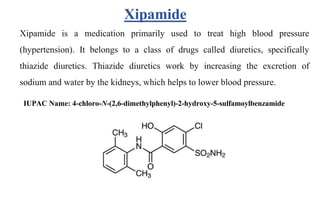
Xipamide is a medication primarily used to treat high blood pressure
(hypertension). It belongs to a class of drugs called diuretics, specifically
thiazide diuretics. Thiazide diuretics work by increasing the excretion of
sodium and water by the kidneys, which helps to lower blood pressure.
IUPAC Name: 4-chloro-N-(2,6-dimethylphenyl)-2-hydroxy-5-sulfamoylbenzamide
Xipamide
• Cardiac edema caused by decompensation of heart failure
• Renal edema, chronic renal disease (but not with anuria)
• Hepatic edema caused by cirrhosis
• Lymphoedema
• Hypertension in combination with chronic renal disease
Adverse Effects:
• Electrolyte Imbalance
• Dehydration
• Hypotension (Low Blood Pressure
• Renal Impairment
• Allergic Reactions
• Hyperglycemia or Hypoglycemia
• Gastrointestinal Effects
Uses
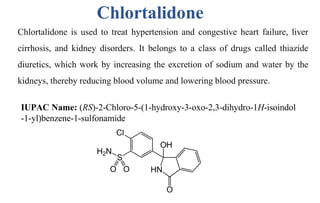
Chlortalidone is used to treat hypertension and congestive heart failure, liver
cirrhosis, and kidney disorders. It belongs to a class of drugs called thiazide
diuretics, which work by increasing the excretion of sodium and water by the
kidneys, thereby reducing blood volume and lowering blood pressure.
IUPAC Name: (RS)-2-Chloro-5-(1-hydroxy-3-oxo-2,3-dihydro-1H-isoindol
-1-yl)benzene-1-sulfonamide
Chlortalidone
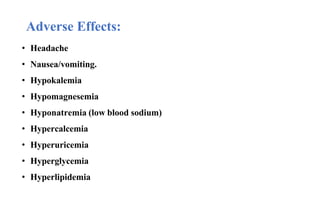
• Headache
• Nausea/vomiting.
• Hypokalemia
• Hypomagnesemia
• Hyponatremia (low blood sodium)
• Hypercalcemia
• Hyperuricemia
• Hyperglycemia
• Hyperlipidemia
Adverse Effects:
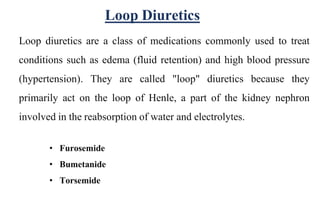
Loop diuretics are a class of medications commonly used to treat
conditions such as edema (fluid retention) and high blood pressure
(hypertension). They are called "loop" diuretics because they
primarily act on the loop of Henle, a part of the kidney nephron
involved in the reabsorption of water and electrolytes.
• Furosemide
• Bumetanide
• Torsemide
Loop Diuretics
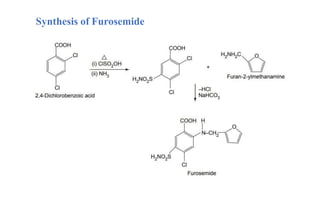
Furosemide
• Furosemide is used to reduce extra fluid in the body (edema) caused by
conditions such as heart failure, liver disease and kidney disease.
• They are organic compounds containing a benzenesulfonamide with an
amine group attached to a benzene ring.
IUPAC Name: 4-Chloro-2-[(furan-2-ylmethyl)amino]-5-sulfamoylbenzoic acid
Synthesis of Furosemide
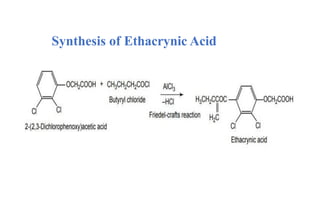
Ethacrynic Acid
Ethacrynic acid is a medication primarily used to treat fluid retention (edema) in
individuals with congestive heart failure, liver disease, or kidney problems. It
belongs to a class of drugs called loop diuretics, which work by increasing the
elimination of sodium and water from the body through the urine.
IUPAC name: [2,3-dichloro-4-(2-methylenebutanoyl)phenoxy]acetic acid
• Ethacrynic acid is a diuretic that is used to treat edema.
• The pill is used to treat edema associated with congestive heart
failure, cirrhosis and renal disease, accumulation of liquid in the
belly associated with cancer or edema, and management of
hospitalized children with congenital heart disease or nephrotic
syndrome.
• The injected form is used to rapidly remove water from the body when
needed – for example in acute pulmonary edema – or when a person
cannot take the medicine in pill form
Uses
• Ethacrynic acid can cause frequent urination, but this usually
resolves after taking the drug for a few weeks.
• Ethacrynic acid can also cause low potassium levels, which may
manifest as muscle cramps or weakness.
• It has also been known to cause reversible or permanent hearing
loss (ototoxicity) and liver damage when administered in
extremely high dosages.
• On oral administration, it produces diarrhea; intestinal bleeding
may occur at higher doses.
Adverse effects
Synthesis of Ethacrynic Acid
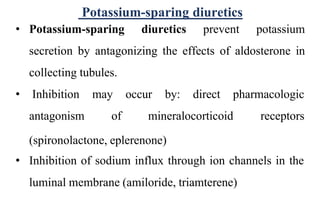
• Potassium-sparing diuretics prevent potassium
secretion by antagonizing the effects of aldosterone in
collecting tubules.
• Inhibition
antagonism
may occur by: direct pharmacologic
of mineralocorticoid receptors
(spironolactone, eplerenone)
• Inhibition of sodium influx through ion channels in the
luminal membrane (amiloride, triamterene)
Potassium-sparing diuretics
Spiranolactone
• Spironolactone is a medication primarily used to treat fluid build-up due to
heart failure, liver scarring, or kidney disease.
• It's also used for treating high blood pressure and in certain cases of hormonal
acne in women.
IUPAC name
S-[(7R,8R,9S,10R,13S,14S,17R)-10,13-Dimethyl-3,5'-dioxospiro[2,6,7,8,9,11,12,14,15,16-decahydro-1H
-cyclopenta[a]phenanthrene-17,2'-oxolane]-7-yl] ethanethioate
• Frequent Urination.
• Dehydration, Hyponatremia (Low Sodium Levels), Mild Hypotension
• Dry Skin, and Rashes.
• Sexual Dysfunction and Erectile Dysfunction
• Reduced Fertility, Including Semen Abnormalities Such As
Decreased Sperm Count and Motility In Men
• In Women, Spironolactone Can Cause Menstrual Irregularities, Breast
Tenderness, and Breast Enlargement
Side Effects
• Spironolactone is a medication primarily used to treat high blood pressure
(hypertension) and heart failure.
• It belongs to a class of drugs known as potassium-sparing diuretics, which
help the body get rid of excess water and salt while preventing the body from
losing too much potassium.
• Additionally, spironolactone is often prescribed off-label for other conditions
such as hormonal acne, hirsutism and polycystic ovary syndrome (PCOS)
due to its anti-androgenic effects, which can help reduce testosterone levels.
Therapeutic Uses
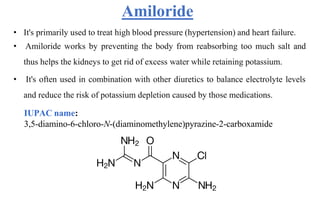
Amiloride
• It's primarily used to treat high blood pressure (hypertension) and heart failure.
• Amiloride works by preventing the body from reabsorbing too much salt and
thus helps the kidneys to get rid of excess water while retaining potassium.
• It's often used in combination with other diuretics to balance electrolyte levels
and reduce the risk of potassium depletion caused by those medications.
IUPAC name:
3,5-diamino-6-chloro-N-(diaminomethylene)pyrazine-2-carboxamide
• Common adverse effects of the use of amiloride include elevated
blood potassium, mild skin rashes, headaches, and gastrointestinal
side effects (nausea, vomiting, diarrhea, decreased
appetite, flatulence, and abdominal pain).
• Mild symptoms of high blood potassium concentrations
include unusual skin sensations, muscle weakness, or fatigue, but
more severe symptoms such as flaccid paralysis of the limbs, slow
heart rate, and even shock can occur.
Adverse effects
USES
1.Hypertension (High Blood Pressure): It's often prescribed as a part of antihypertensive therapy
to help lower blood pressure by reducing sodium reabsorption in the kidneys, leading to decreased
fluid retention and a consequent decrease in blood pressure.
2.Heart Failure: Amiloride can be used in the management of heart failure, particularly in cases
where there is fluid retention (edema) due to heart failure. By promoting diuresis (increased urine
production), it helps reduce fluid overload and relieve symptoms.
3.Edema: It's also used to treat edema (fluid retention) associated with conditions such as
congestive heart failure, liver cirrhosis, and kidney disorders. Amiloride helps the body eliminate
excess fluid by increasing urine production.
4.Hypokalemia Prevention: Amiloride is sometimes used to prevent low potassium levels
(hypokalemia) caused by other diuretics that promote potassium loss. It works by reducing
potassium excretion in the urine.
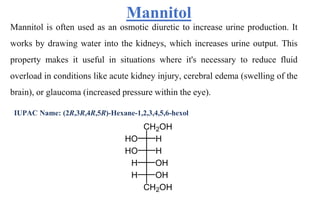
Mannitol
Mannitol is often used as an osmotic diuretic to increase urine production. It
works by drawing water into the kidneys, which increases urine output. This
property makes it useful in situations where it's necessary to reduce fluid
overload in conditions like acute kidney injury, cerebral edema (swelling of the
brain), or glaucoma (increased pressure within the eye).
IUPAC Name: (2R,3R,4R,5R)-Hexane-1,2,3,4,5,6-hexol
Medical Uses:
•Osmotic Diuretic: Mannitol is used intravenously as an osmotic diuretic to
increase urine production, particularly in cases of acute kidney injury, cerebral
edema, or glaucoma.
•Cerebral Edema: It's used to reduce swelling in the brain, especially in cases of
traumatic brain injury, stroke, or brain surgery.
•Intraocular Pressure Reduction: Mannitol can be administered intravenously
to reduce pressure within the eye, often before eye surgery or in acute glaucoma.
•Toxin Elimination: In certain poisonings or toxic ingestions, mannitol may be
used to promote the elimination of toxins from the body through increased urine
output.
1.Electrolyte Imbalance: Mannitol can cause electrolyte imbalances, particularly disturbances in
sodium and potassium levels. This can lead to symptoms such as weakness, confusion, and irregular
heartbeat.
2.Dehydration: Mannitol works by drawing water into the kidneys and increasing urine production.
In some cases, this can lead to dehydration, especially if the patient is not adequately hydrated or if
excessive doses are administered.
3.Exacerbation of Heart Failure: Mannitol can increase the workload on the heart by increasing
blood volume and potentially exacerbating heart failure in patients with pre-existing cardiac
conditions.
4.Hypotension: Rapid administration of mannitol can cause a sudden drop in blood pressure,
leading to symptoms such as dizziness, lightheadedness, and fainting.
5.Allergic Reactions: While rare, some individuals may experience allergic reactions to mannitol,
which can manifest as rash, itching, swelling, or difficulty breathing.
6.Fluid and Electrolyte Shifts: Mannitol can cause shifts in fluid and electrolyte balance within the
body, which may lead to edema, especially in patients with compromised renal function.
7.Excessive Diuresis: Mannitol's diuretic effect can sometimes lead to excessive urination, which
may result in dehydration, electrolyte imbalances, and potential renal complications.
Adverse effects

Diuretics Medicinal Chemistry...........

  • 1.
  • 2.
    • Diuretics arechemicals that increase the rate of urine formation. • Diuretic usage leads to increased excretion of electrolytes (especially sodium and chloride ions) and water from the body by increasing the urine flow rate, without affecting protein, vitamin, glucose or amino acid reabsorption. • These pharmacological properties have led to the use of diuretics in the treatment of edematous conditions resulting from a variety of causes (e.g., congestive heart failure, nephrotic syndrome and chronic liver disease) and in the management of hypertension Diuretics
  • 3.
    • Diuretic drugsalso are useful as the sole agent or as adjunct therapy in the treatment of a wide range of other clinical conditions, including hypercalcemia, diabetes insipidus, acute mountain sickness, primary hyperaldosteronism, and glaucoma. • The primary target organ for diuretics is the kidney, where these drugs interfere with the reabsorption of sodium and other ions from the lumina of the nephrons, which are the functional units of the kidney. Diuretics
  • 4.
  • 5.
    Site of ActionDiuretics
  • 6.
    Osmotic Diuretics • Osmoticdiuretics are low molecular- weight compounds that are freely filtered through the Bowman’s capsule. • Once in the renal tubule, osmotic diuretics have limited reabsorption because of their high-water solubility. • When administered as a hypertonic (hyperosmolar) solution, these agents increase intraluminal osmotic pressure, causing water to pass from the body into the tubule. • Osmotic diuretics increase the volume of urine and the excretion of water and almost all electrolytes. Examples: Sorbitol and Mannitol
  • 7.
    • Carbonic anhydrase,which catalyzes the formation of carbonic acid from carbon dioxide and water. • This inhibition of carbonic anhydrase resulted in a lesser exchange of hydrogen ions for sodium ions in the kidney tubule. • Sodium ions, along with bicarbonate ions, and associated water molecules were then excreted, and a diuretic effect was noted. Carbonic anhydrase inhibitors
  • 9.
    Acetazolamide Reversible, non-competitiveinhibitor of carbonic anhydrase. Action limited by the availability of HCO3 - in luminal fluid. Self limited diuretic action. Na+ absorption in distal segment occurs in exchange with K+ Marked kaliuresis IUPAC name N-(5-Sulfamoyl-1,3,4-thiadiazol-2-yl)acetamide Acetazolamide
  • 10.
    Acetazolamide: Uses • Glaucoma •Decrease formation of aqueous humour • Mountain sickness • Alters CO2 transport in lungs, tissues and brain • Decreases CSF formation, lowers pH • To alkalinise urine • Periodic paralysis • Epilepsy
  • 11.
    Acetazolamide: Adverse effects •Acidosis, hypokalaemia • To be cautiously used in COPD patients • Drowsiness • Paraesthesia, fatigue, abdominal discomfort • Hypersensitivity reaction • Bone marrow depression • Interferes with elimination of NH3 in urine • Contraindicated in liver disease
  • 12.
  • 13.
    • Thiazide andthiazide-like diuretics are a main stay in the treatment of hypertension. • They are used in monotherapy and in combination with other antihypertensive drugs, including ACE inhibitors, ARBs, and b-blockers. • Chloro and amino substitution on benzene Disulfonamide gave compounds with increased activity, but these compounds were weak carbonic anhydrase inhibitors. • When the amino group was acylated, an unexpected ring closure took place. • These compounds possessed a diuretic activity independent of the carbonic anhydrase inhibitory activity, and a new series of diuretics called the benzothiadiazines was discovered. Thiazide Diuretics
  • 14.
    • The majorsite of action of these compounds is in the distal convoluted tubule, where these drugs compete for the chloride binding site of the Na+/Cl- symporter and inhibit the reabsorption of sodium and chloride ions. • For this reason, they are referred to as saluretics. They also inhibit the reabsorption of potassium and bicarbonate ions, but to a lesser degree. Thiazide Diuretics: MOA
  • 15.
    • Thiazide diureticsare weakly acidic compounds, with a common benzothiadiazine 1,1-dioxide nucleus. • Chlorothiazide is the simplest member of this series, with pKa values of 6.7 and 9.5. • The hydrogen atom at the N-2 is the most acidic because of the electron- withdrawing effects of the neighboring sulfone group. • The sulfonamide group that is substituted at C-7 provides an additional point of acidity in the molecule but is less acidic than the N-2 proton. • These acidic protons make possible the formation of a water-soluble sodium salt that can be used for intravenous administration of the diuretics Thiazide Diuretics: SAR
  • 16.
    Thiazide Diuretics: SAR •An electron-withdrawing group is necessary at position 6 for diuretic activity. • Little diuretic activity is seen with a hydrogen atom at position 6, whereas compounds with either chloro (e.g., chlorothiazide, hydrochlorothiazide, and methyclothiazide) or trifluoromethyl (e.g., bendrofloumethiazide and hydroflumethiazide) substituents are highly active. • The trifluoromethyl-substituted diuretics are more lipid soluble and have a longer duration of action than their chloro-substituted analogs. • When electron-releasing groups, such as methyl or methoxyl, are placed at position 6, the diuretic activity is markedly reduced.
  • 17.
    • Replacement orremoval of the sulfonamide group at position 7 yields compounds with little or no diuretic activity. • Saturation of the double bond to give a 3,4-dihydro derivative (cf. chlorothiazide and hydrochlorothiazide) produces a diuretic that is 10-fold more active than the unsaturated derivative. • Substitution with a lipophilic group at position 3 gives a marked increase in the diuretic potency. • Haloalkyl, aralkyl, or thioether substitution increases the lipid solubility of the molecule and yields compounds with a longer duration of action. • Alkyl substitution on the 2-N position also decreases the polarity and increases the duration of diuretic action. Thiazide Diuretics: SAR
  • 18.
    Chlorothiazide Chlorothiazide prevents activechloride reabsorption at the early distal tubule through the sodium chloride contransportor which results in an increase in the excretion of sodium, chloride and water from the body. IUPAC Name: 6-chloro-1,1-dioxo-2H-1,2,4-benzothiadiazine-7-sulfonamide
  • 19.
    Medicinal Uses Chlorothiazide isused for •Management of hypertension •Management of edema related to heart failure •For increasing effectiveness of other antihypertensive drugs in severe Side Effects Side effects of chlorothiazide are •Headache, Lightheadedness, Dizziness, Blurred vision •Spinning feelings, Diarrhea, Constipation, Stomach cramps, •Stomach upset •Muscle spasms
  • 20.
    Benzthiazide Benzthiazide is usedto treat hypertension and edema. Like other thiazides, benzthiazide promotes water loss from the body (diuretics). They inhibit Na+/Cl- reabsorption from the distal convoluted tubules in the kidneys. IUPAC name 6-chloro-1,1-dioxo-3-(phenylmethylsulfanylmethyl)- 4H-benzo[e][1,2,4] thiadiazine-7-sulfonamide
  • 21.
    Uses: 1.Hypertension: Benzthiazide helpsto reduce blood pressure by decreasing the volume of fluid in the bloodstream, which in turn reduces the workload on the heart. 2.Edema: It may also be prescribed for the treatment of edema (fluid retention) associated with conditions such as congestive heart failure, liver cirrhosis, and kidney disorders. Adverse Effects: • Electrolyte Imbalance, Dehydration • Hyperuricemia, Hyperglycemia • Photosensitivity • Orthostatic Hypotension • Renal Impairment • Hypersensitivity Reactions.
  • 22.
    Xipamide is amedication primarily used to treat high blood pressure (hypertension). It belongs to a class of drugs called diuretics, specifically thiazide diuretics. Thiazide diuretics work by increasing the excretion of sodium and water by the kidneys, which helps to lower blood pressure. IUPAC Name: 4-chloro-N-(2,6-dimethylphenyl)-2-hydroxy-5-sulfamoylbenzamide Xipamide
  • 23.
    • Cardiac edemacaused by decompensation of heart failure • Renal edema, chronic renal disease (but not with anuria) • Hepatic edema caused by cirrhosis • Lymphoedema • Hypertension in combination with chronic renal disease Adverse Effects: • Electrolyte Imbalance • Dehydration • Hypotension (Low Blood Pressure • Renal Impairment • Allergic Reactions • Hyperglycemia or Hypoglycemia • Gastrointestinal Effects Uses
  • 24.
    Chlortalidone is usedto treat hypertension and congestive heart failure, liver cirrhosis, and kidney disorders. It belongs to a class of drugs called thiazide diuretics, which work by increasing the excretion of sodium and water by the kidneys, thereby reducing blood volume and lowering blood pressure. IUPAC Name: (RS)-2-Chloro-5-(1-hydroxy-3-oxo-2,3-dihydro-1H-isoindol -1-yl)benzene-1-sulfonamide Chlortalidone
  • 25.
    • Headache • Nausea/vomiting. •Hypokalemia • Hypomagnesemia • Hyponatremia (low blood sodium) • Hypercalcemia • Hyperuricemia • Hyperglycemia • Hyperlipidemia Adverse Effects:
  • 26.
    Loop diuretics area class of medications commonly used to treat conditions such as edema (fluid retention) and high blood pressure (hypertension). They are called "loop" diuretics because they primarily act on the loop of Henle, a part of the kidney nephron involved in the reabsorption of water and electrolytes. • Furosemide • Bumetanide • Torsemide Loop Diuretics
  • 27.
    Furosemide • Furosemide isused to reduce extra fluid in the body (edema) caused by conditions such as heart failure, liver disease and kidney disease. • They are organic compounds containing a benzenesulfonamide with an amine group attached to a benzene ring. IUPAC Name: 4-Chloro-2-[(furan-2-ylmethyl)amino]-5-sulfamoylbenzoic acid
  • 30.
  • 31.
    Ethacrynic Acid Ethacrynic acidis a medication primarily used to treat fluid retention (edema) in individuals with congestive heart failure, liver disease, or kidney problems. It belongs to a class of drugs called loop diuretics, which work by increasing the elimination of sodium and water from the body through the urine. IUPAC name: [2,3-dichloro-4-(2-methylenebutanoyl)phenoxy]acetic acid
  • 32.
    • Ethacrynic acidis a diuretic that is used to treat edema. • The pill is used to treat edema associated with congestive heart failure, cirrhosis and renal disease, accumulation of liquid in the belly associated with cancer or edema, and management of hospitalized children with congenital heart disease or nephrotic syndrome. • The injected form is used to rapidly remove water from the body when needed – for example in acute pulmonary edema – or when a person cannot take the medicine in pill form Uses
  • 33.
    • Ethacrynic acidcan cause frequent urination, but this usually resolves after taking the drug for a few weeks. • Ethacrynic acid can also cause low potassium levels, which may manifest as muscle cramps or weakness. • It has also been known to cause reversible or permanent hearing loss (ototoxicity) and liver damage when administered in extremely high dosages. • On oral administration, it produces diarrhea; intestinal bleeding may occur at higher doses. Adverse effects
  • 34.
  • 35.
    • Potassium-sparing diureticsprevent potassium secretion by antagonizing the effects of aldosterone in collecting tubules. • Inhibition antagonism may occur by: direct pharmacologic of mineralocorticoid receptors (spironolactone, eplerenone) • Inhibition of sodium influx through ion channels in the luminal membrane (amiloride, triamterene) Potassium-sparing diuretics
  • 36.
    Spiranolactone • Spironolactone isa medication primarily used to treat fluid build-up due to heart failure, liver scarring, or kidney disease. • It's also used for treating high blood pressure and in certain cases of hormonal acne in women. IUPAC name S-[(7R,8R,9S,10R,13S,14S,17R)-10,13-Dimethyl-3,5'-dioxospiro[2,6,7,8,9,11,12,14,15,16-decahydro-1H -cyclopenta[a]phenanthrene-17,2'-oxolane]-7-yl] ethanethioate
  • 37.
    • Frequent Urination. •Dehydration, Hyponatremia (Low Sodium Levels), Mild Hypotension • Dry Skin, and Rashes. • Sexual Dysfunction and Erectile Dysfunction • Reduced Fertility, Including Semen Abnormalities Such As Decreased Sperm Count and Motility In Men • In Women, Spironolactone Can Cause Menstrual Irregularities, Breast Tenderness, and Breast Enlargement Side Effects
  • 38.
    • Spironolactone isa medication primarily used to treat high blood pressure (hypertension) and heart failure. • It belongs to a class of drugs known as potassium-sparing diuretics, which help the body get rid of excess water and salt while preventing the body from losing too much potassium. • Additionally, spironolactone is often prescribed off-label for other conditions such as hormonal acne, hirsutism and polycystic ovary syndrome (PCOS) due to its anti-androgenic effects, which can help reduce testosterone levels. Therapeutic Uses
  • 39.
    Amiloride • It's primarilyused to treat high blood pressure (hypertension) and heart failure. • Amiloride works by preventing the body from reabsorbing too much salt and thus helps the kidneys to get rid of excess water while retaining potassium. • It's often used in combination with other diuretics to balance electrolyte levels and reduce the risk of potassium depletion caused by those medications. IUPAC name: 3,5-diamino-6-chloro-N-(diaminomethylene)pyrazine-2-carboxamide
  • 40.
    • Common adverseeffects of the use of amiloride include elevated blood potassium, mild skin rashes, headaches, and gastrointestinal side effects (nausea, vomiting, diarrhea, decreased appetite, flatulence, and abdominal pain). • Mild symptoms of high blood potassium concentrations include unusual skin sensations, muscle weakness, or fatigue, but more severe symptoms such as flaccid paralysis of the limbs, slow heart rate, and even shock can occur. Adverse effects
  • 41.
    USES 1.Hypertension (High BloodPressure): It's often prescribed as a part of antihypertensive therapy to help lower blood pressure by reducing sodium reabsorption in the kidneys, leading to decreased fluid retention and a consequent decrease in blood pressure. 2.Heart Failure: Amiloride can be used in the management of heart failure, particularly in cases where there is fluid retention (edema) due to heart failure. By promoting diuresis (increased urine production), it helps reduce fluid overload and relieve symptoms. 3.Edema: It's also used to treat edema (fluid retention) associated with conditions such as congestive heart failure, liver cirrhosis, and kidney disorders. Amiloride helps the body eliminate excess fluid by increasing urine production. 4.Hypokalemia Prevention: Amiloride is sometimes used to prevent low potassium levels (hypokalemia) caused by other diuretics that promote potassium loss. It works by reducing potassium excretion in the urine.
  • 42.
    Mannitol Mannitol is oftenused as an osmotic diuretic to increase urine production. It works by drawing water into the kidneys, which increases urine output. This property makes it useful in situations where it's necessary to reduce fluid overload in conditions like acute kidney injury, cerebral edema (swelling of the brain), or glaucoma (increased pressure within the eye). IUPAC Name: (2R,3R,4R,5R)-Hexane-1,2,3,4,5,6-hexol
  • 43.
    Medical Uses: •Osmotic Diuretic:Mannitol is used intravenously as an osmotic diuretic to increase urine production, particularly in cases of acute kidney injury, cerebral edema, or glaucoma. •Cerebral Edema: It's used to reduce swelling in the brain, especially in cases of traumatic brain injury, stroke, or brain surgery. •Intraocular Pressure Reduction: Mannitol can be administered intravenously to reduce pressure within the eye, often before eye surgery or in acute glaucoma. •Toxin Elimination: In certain poisonings or toxic ingestions, mannitol may be used to promote the elimination of toxins from the body through increased urine output.
  • 44.
    1.Electrolyte Imbalance: Mannitolcan cause electrolyte imbalances, particularly disturbances in sodium and potassium levels. This can lead to symptoms such as weakness, confusion, and irregular heartbeat. 2.Dehydration: Mannitol works by drawing water into the kidneys and increasing urine production. In some cases, this can lead to dehydration, especially if the patient is not adequately hydrated or if excessive doses are administered. 3.Exacerbation of Heart Failure: Mannitol can increase the workload on the heart by increasing blood volume and potentially exacerbating heart failure in patients with pre-existing cardiac conditions. 4.Hypotension: Rapid administration of mannitol can cause a sudden drop in blood pressure, leading to symptoms such as dizziness, lightheadedness, and fainting. 5.Allergic Reactions: While rare, some individuals may experience allergic reactions to mannitol, which can manifest as rash, itching, swelling, or difficulty breathing. 6.Fluid and Electrolyte Shifts: Mannitol can cause shifts in fluid and electrolyte balance within the body, which may lead to edema, especially in patients with compromised renal function. 7.Excessive Diuresis: Mannitol's diuretic effect can sometimes lead to excessive urination, which may result in dehydration, electrolyte imbalances, and potential renal complications. Adverse effects