Autoimmune Disorders Dr. Anthony P. Toledo
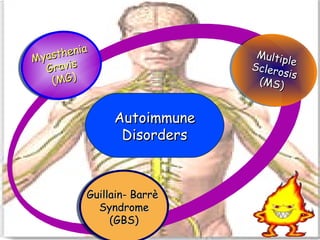
Autoimmune Disorders Multiple Sclerosis (MS) Myasthenia Gravis (MG) Guillain- Barrè  Syndrome (GBS)
Multiple Sclerosis
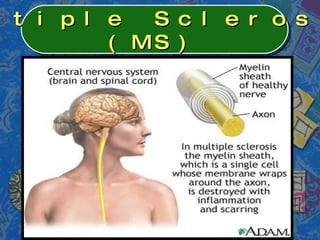
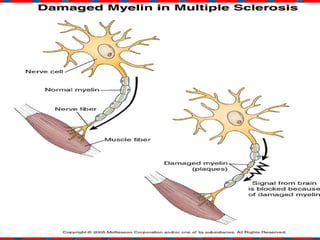
Multiple Sclerosis (MS)
 
Women  are more than twice as likely to develop multiple sclerosis as men. Multiple sclerosis usually affects people between the ages of 20 and 50 years, and the average age of onset is approximately 34 years. MS is more common in individuals of northern European descent. No cure  exists for MS. Overview of  Multiple Sclerosis
Cause of MS: Idiopathic  (Unknown)
These factors may increase the risk of developing MS: Heredity.   Researchers suspect that the tendency to develop multiple sclerosis is inherited, but the disease manifests only when environmental triggers are present.  Environmental factors.  Many viruses and bacteria have been suspected of causing MS, most recently the  Epstein-Barr virus ,  known also for causing infectious mononucleosis.  Geographical factors.   Multiple sclerosis is more common in countries with temperate climates, including Europe, southern Canada, Northern United States, and southeastern Australia. The reason is unknown.  Risk Factors on MS
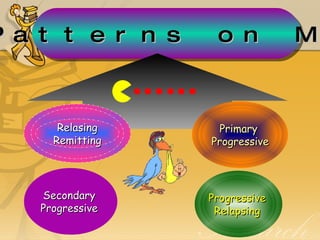
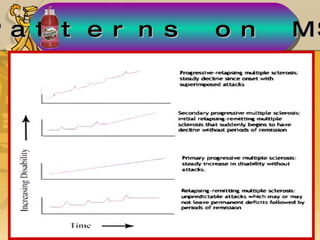
Patterns on MS Primary  Progressive Secondary Progressive Progressive Relapsing Relasing Remitting
Patterns on MS
CLINICAL MANIFESTATIONS ON MS
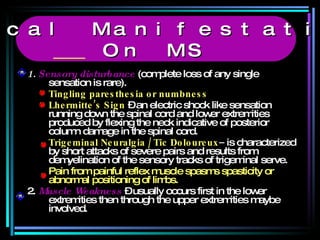
1.  Sensory disturbance  (complete loss of any single sensation is rare). Tingling paresthesia or numbness Lhermitte’s Sign  – an electric shock like sensation running down the spinal cord and lower extremities produced by flexing the neck indicative of posterior  column damage in the spinal cord. Trigeminal Neuralgia / Tic Doloureux –  is characterized by short attacks of severe pairs and results from demyelination of the sensory tracks of trigeminal serve. Pain from painful reflex muscle spasms spasticity or abnormal positioning of limbs. 2.  Muscle Weakness  – usually occurs first in the lower extremities then through the upper extremities maybe involved. Clinical Manifestations  On MS
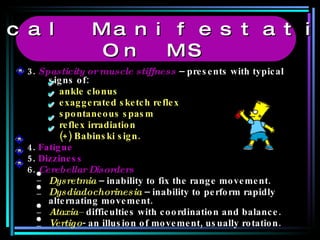
3.  Spasticity or muscle stiffness  – presents with typical signs of: ankle clonus  exaggerated sketch reflex spontaneous spasm reflex irradiation (+) Babinski sign. 4.  Fatigue 5.  Dizziness 6.   Cerebellar Disorders Dysretmia  – inability to fix the range movement. Dysdiadochorinesia  – inability to perform rapidly alternating movement. Ataxia–  difficulties with coordination and balance. Vertigo - an illusion of movement, usually rotation. Clinical Manifestations  On MS
7.  Cranial Nerve Involvement  (2, 5, 7, 8, most commonly involved) Optic Neuritis -  inflammation of the optic nerve,  which is an extension of the central nervous  system Nystagmus-   involuntary oscillation of the eyeball Diplopia   – having a double vision Scotoma  (patchy blindness) and / or totally  blindness  secondary to involvement of the optic  & oculomotor nerves. 8 .  Communication Disorders Dysarthria  – slurred speech paralysis Dysphagia   – difficulty of swallowing. Clinical Manifestations  On MS
Exacerbations:  New symptoms appear and existing ones worsens. Remissions:  Symptoms decrease or disappears. *  Note: Relapses may be associated with periods of emotional and physical stress. Characteristics of MS
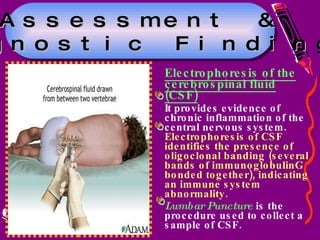
Electrophoresis of the cerebrospinal fluid (CSF) It provides evidence of chronic inflammation of the central nervous system.  Electrophoresis of CSF identifies the presence of oligoclonal banding (several bands of immunoglobulinG bonded together), indicating an immune system abnormality.  Lumbar Puncture  is the procedure used to collect a sample of CSF.  Assessment & Diagnostic Findings
Goal:  To delay the progression of the disease, manage chronic symptoms, treat acute exacerbations. Medical Management On MS
Beta interferons Interferon beta-1b  (Betaseron) ;  [subcutaneously every other day] and  interferon beta-1a (Avonex, Rebif)  [subcutaneously three times a week] are genetically engineered copies of proteins that occur naturally in your body. They help fight viral infection and regulate your immune system. Beta interferons aren't used in combination with one another; only one of these medications is used at a time. Glatiramer  (Copaxone) It works by blocking your immune system's attack on myelin. It is injected subcutaneously once daily. Side effects may include flushing and shortness of breath after injection.  Natalizumab  (Tysabri) This drug is administered intravenously once a month. It works by blocking the attachment of immune cells to brain blood vessels (a necessary step for immune cells to cross into the brain) thus reducing the immune cells' inflammatory action on brain nerve cells. Medication for  Relapsing MS
Mitoxantrone  (Novantrone) It is for treatment of aggressive forms of relapsing remitting MS, as well as certain forms of progressive MS.  It is given intravenously, every three months. Mitoxantrone may cause serious side effects, such as heart damage, after long-term use, so it's typically not used for longer than two to three years.  Medication for  Relapsing MS
Corticosteroids Doctors most often prescribe short courses of oral or intravenous corticosteroids to reduce inflammation in nerve tissue and to shorten the duration of flare-ups. Prolonged use of these medications, however, may cause side effects, such as osteoporosis and hypertension, and the benefit of long-term therapy in multiple sclerosis isn't established.  Muscle relaxants Baclofen (Lioresal)  and  Tizanidine  (Zanaflex)   are oral treatments for muscle spasticity. Baclofen may temporarily increase weakness in your legs. Tizanidine controls muscle spasms without causing your legs to feel weak, but can be associated with drowsiness or a dry mouth.  Medications to reduce fatigue To help combat fatigue, the physician may prescribe an antidepressant medication, the antiviral drug  Amantadine  (Symmetrel)  or a medication for narcolepsy called  Modafinil  (Provigil).  All drugs prescribed for this purpose appear to work because of their stimulant properties. Medication for Progressive MS
Nursing  Interventions  on MS
Promoting Physical Mobility :  relaxation and coordination exercised promote muscle sufficiency. Progressive resistive exercises are used to strengthen weak muscles. Exercises :   walking improves the gait, particularly the problem of loss of position of the legs and feet. Muscle stretching :  is prescribed to minimize joint contractures. A stretch-hold-relax routine is helpful for relaxing and treating muscle spasticity.  Activity & Rest :   The patient is not encouraged to very strenuous activities because it raises the body temperature and may aggravate symptoms. The patient is advised to take frequent short rest periods. Nursing Interventions  for MS
Eat a well-balanced diet:  eating a healthy, well-balanced diet can help keep the patient immune system strong.  Avoid Hot Baths:   extreme heat may cause extreme muscle weakness.  Cool down:  having the patient in an air condition home. Tepid or cool baths also may provide some relief.  Eye Patch:   for patient who has diplopia Speech Therapy Nursing Interventions  for MS
Myasthenia Gravis (MG)
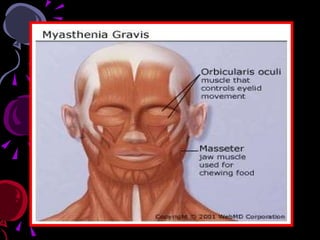
MG is a chronic autoimmune neuromuscular disease that affects the myoneural junction that is characterized by varying degrees of weakness of the skeletal (voluntary) muscles of the body. The name myasthenia gravis, which is Latin and Greek in origin, literally means   "grave muscle weakness." It is purely a motor disorder with no effect on sensation or coordination. Women  are more affected that men and they tend to develop the disease at an earlier age. (20-40 years for women, versus 60-70 years for men). Overview on MG
 
Myasthenia gravis is caused by a defect in the transmission of nerve impulses to muscles.  It occurs when normal communication between the nerve and muscle is interrupted at the neuromuscular junction - the place where nerve cells connect with the muscles they control.   Normally when impulses travel down the nerve, the nerve endings release a neurotransmitter substance called acetylcholine. Acetylcholine travels through the neuromuscular junction and binds to acetylcholine receptors which are activated and generate a muscle contraction.  Causes of MG
In myasthenia gravis, antibodies block, alter, or destroy the receptors for acetylcholine at the neuromuscular junction which prevents the muscle contraction from occurring.  These antibodies are produced by the body's own immune system.   Thus, myasthenia gravis is an autoimmune disease because the immune system - which normally protects the body from foreign organisms - mistakenly attacks itself.  Causes of MG
CLINICAL MANIFESTATIONS ON MG
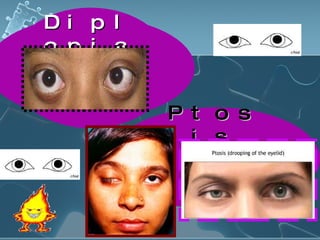
Initial Manifestations:  usually involves the  ocular muscles. Diplopia  (double vision)  Ptosis  (drooping of the eyelids)  Diffiuclty maintaining steady gaze Weakness of the muscles of the face and throat   (bulbar symptoms) Generalized weakness that affects all the extremities and the intercostals muscles results in decreasing vital capacity and respiratory failure. Weakness of the facial muscles results in a bland facial weakness. Clinical Manifestations On MG
Diplopia Ptosis
Laryngeal involvement produces  dysphonia  (voice impairment) and increases the patient’s risk for choking and aspiration.  Difficulty in breathing  Dysphagia  (difficulty of swallowing) Dysathria  (impaired speech) Fatigue  brought on by repetitive motions  Clinical Manifestations On MG
There is no cure, but long-term remission is possible. There may be minimal restriction on activity in many cases.  Patients that only have eye symptoms (ocular myasthenia gravis), may progress to have generalized myasthenia over time. Pregnancy is possible for a woman with myasthenia gravis but should be closely supervised.  The baby may be temporarily weak and require medications for a few weeks after birth but usually does not develop the disorder. Prognosis (Expectations) On MG
Goal:   Improving the function and reducing and removing circulating antibodies.  Therapeutic Modalities:   administration of anticholinesterase, medications and immuosupressive therapy, plasmapheresis, and thymectomy. Medical Management On MG
1. Pyridostigmine Bromide   (Mestinon)  The first line therapy and an anticholinesterase medication It provides symptomatic relief by inhibiting the breakdown of acetylcholine and increasing the relative concentration of available acetylcholine at the neuromuscular junction. Dosage:  usually four times a day Adverse effects:   fasciculation, abdominal pain, diarrhea and increased oropharyngeal secretions. Pharmacologic Therapy
2. Immunomodulating drugs  to reduce production of the antibody. 3. Corticosteroids  Suppress the patient’s immune response, which decreased the amount of antibody production, and this correlates with clinical improvement.  As the corticosteroid dosage is gradually increased, the anticholinesterase dosage is lowered. 4. Cytotoxic Medications Used to treat myasthenia gravis if there is inadequate response to steroids.  Pharmacologic Therapy
1.  Plasmapheresis  (Plasma exchange) Plasma exchange produces a temporary production in the level of circulating antibodies.  It consists of daily or alternate-day treatment & the number of treatment is determined by the patient’s response. 2.  Cholinesterase inhibitors, corticosteroids, immunosuppressive drugs ,  or a combination of these are used to sustain improvement. 3.  Intravenous immune globulin  (IVIG)   Ways to treat  exacerbations
Thymectomy Surgical removal of the thymus gland It can produce antigen-specific immunosupression and result in clinical improvement. The patient benefit from the procedure after 3 years and above because of the long life circulating T cells. Surgical Management
Nursing  Interventions  on MG
A myasthenic crisis occurs when the muscles that control breathing weaken to the point that ventilation is inadequate, creating a medical emergency and requiring a respirator for assisted ventilation.  Symptoms of Myasthenic Crisis: Respiratory distress  Dysphagia Dysarthria Eyelid Ptosis Diplopia Prominent Muscle Weakness The patient is placed in an intensive care unit for constant monitoring because of associated intense and sudden fluctuations in clinical condition. What is Myasthenic Crisis?
 
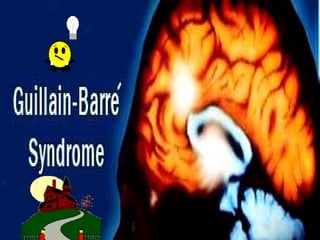
Alternative Names:  Landry-Guillain-Barré Syndrome Acute Idiopathic Polyneuritis Infectious Polyneuritis Acute Inflammatory Demyelinating Polyneuropathy (AIDP) Guillain-Barré Syndrome (GBS)
GBS is an acute and rapidly progressive inflammation of peripheral nerves that causes loss of sensation and muscle weakness.  This syndrome causes the destruction, removal, or loss of the myelin sheath of a nerve. It is also known as a  polyneuropathy,  which is a disease that involves several nerves. All age groups can be affected, but it occurs most often in young adults and the elderly. This disease is  rare  and  no cure  exists on GBS. Guillain-Barré Syndrome (GBS)
Infectious agent that are commonly associated with GBS:   Campylobacter jejuni, Cytomegalovirus Epstein-Barr virus Mycoplasma pneumoniae   Haemophilus influenzae   Human immuno deficiency virus (HIV Respiratory infection Autoimmunity Possible Causes  of GBS
CLINICAL  MANIFESTATIONS ON GBS
GBS typically begins with muscle weakness and diminished reflexes of the lower extremities.  (Ascending from legs to arms). Weakness in their legs, manifesting as  "rubbery legs"  or legs that tend to buckle, with or without dysthesias (numbness or tingling).  Facial diplegia  (affecting like parts on both sides of the face; possibly accompanied by opthalmoplegia [ocular paralysis]) Hyporeflexia and weakness may progress to  tetraplegia. Neuromuscular respiratory failure  (due to demyelination of the nerves that innervate the diaphragm and intercostal muscles.) Clinical Manifestations on GBS
Bulbar weakness:   (difficulty with eye movements, double vision) Oropharyngeal dysphagia  (difficulty with swallowing, drooling, and/or maintaining an open airway). Sensory loss:  (an important feature of GBS) loss of proprioception (position sense)  Areflexia  (absence deep tendon reflexes) Hypertonia  (excessive muscle tone) Difficulty of breathing Autonomic dysfunctions: Tachycardia/ Bradycardia Difficulty with bladder control or intestinal functions  Hypertension / Orthostatic hypotension  Clinical Manifestations on GBS
Respiratory Failure   Due to weakness or paralysis of the intercostals muscles and diaphragm.  Impeding sign of respiratory failure:  Decreasing vital capacity associated with weakness of the muscles used in swallowing, which causes difficulty in both coughing and swallowing.  Sign and Symptoms :   breathlessness while speaking, shallow and irregular breathing, use of accessory muscles, tachycardia, changes in respiratory pattern. Complications on GBS
The patient presents with symmetric weakness, diminished reflexes, and upward progression of motor weakness. A history of a viral illness in the previous weak suggests the diagnosis. Changes in vital capacity and negative inspiratory force are assessed to identify impending neuromuscular respiratory failure. Serum laboratory tests are not useful in the diagnosis. CSF Evaluation  - typical CSF findings include an  elevated protein level  (100 - 1000 mg/dL) without an accompanying pleocytosis (increased cell count). A sustained pleocytosis may indicate an alternative diagnosis such as infection. NCV  (Nerve Conduction Velocity)  - shows demyelination.  EMG  (Electromyography)  - a test of electrical activity in muscles that shows lack of nervous stimulation.  Assessment & Diagnostic  Findings on GBS
Almost all cases (95%) survive and the majority recovers completely.  Mild weakness may persist for some people.  The outcome is most likely to be very good when symptoms remit within 3 weeks of their onset. Prognosis (Expectations) on GBS
Two treatments have been shown to speed the recovery from and reduce the severity of GBS: Plasmapheresis  (plasma exchange)  It is a type of  "blood cleansing"  in which damaging antibodies are removed from the blood.  Plasmapheresis consists of removing the liquid portion of the blood (plasma) and separating it from the actual blood cells.  Scientists believe that plasmapheresis rids plasma of certain antibodies that contribute to the immune system attack on the peripheral nerves.  Intravenous immunoglobulin   Immunoglobulin contains healthy antibodies from blood donors. High doses of immunoglobulin can block the damaging antibodies that may contribute to GBS. Medical Management for GBS
Respiratory therapy or mechanical ventilation to support the pulmonary function and adequate oxygenation of patient with respiratory problems. ECG monitoring for patient with autonomic dysfunction. Short-acting medications such as alpha-adrenergic blocking agents are used to treat patients with tachycardia or hypertension. Increasing the amount of IV fluid is administered for patients with hypotension. Medical Management for GBS
Nursing  Interventions  For GBS
Maintaining Respiratory Function Respiratory function can be maximized with  incentive spirometry and chest physiotherapy. Monitor the changes in vital capacity & negative  inspiratory force. Mechanical ventilation if vital capacity falls,  making  spontaneous breathing impossible and tissue  oxygenation is inadequate. Suctioning to maintain a patent and clear airway. Monitor blood pressure and heart rate for  autonomic dysfunction. Nursing Interventions  for GBS
Enhancing Physical Mobility Perform range of motion exercises at least twice  daily. Paralyzed extremities are supported in functional  positions. Use of anti-coagulant agents and thigh-high elastic  compression stockings or sequential compression  boots, and adequate hydration decreased the risk for  deep vein thrombosis and pulmonary emboli. Padding placed over bony prominences such as  elbows and heels to reduce the risk for pressure  ulcers. Nursing Interventions  for GBS
Providing Adequate Nutrition For patient cannot swallow due to bulbar  paralysis (immobility of muscles), a  gastrostomy tube may be placed to  administer nutrients. The nurse must carefully assess the return  of the gag reflex and bowel sounds before  resuming oral nutrition. Nursing Interventions  for GBS
Improving Communication Establishing some form of communication  with picture cards or eye blink system. Collaboration with the speech therapist  may be helpful in developing a  communication mechanism that is most  effective for specific patient. Nursing Interventions  for GBS
Decreasing Fear and Anxiety Referral to a support group may provide  information and support to the patient and  family. Diversional activities are encouraged to decrease loneliness and isolation. Teaching relaxation exercises and  distraction techniques. Nursing Interventions  for GBS
Thank you   &   God Bless!!!

Autoimmune Disorders

  • 1.
    Autoimmune Disorders Dr.Anthony P. Toledo
  • 2.
    Autoimmune Disorders MultipleSclerosis (MS) Myasthenia Gravis (MG) Guillain- Barrè Syndrome (GBS)
  • 3.
  • 4.
  • 5.
  • 6.
    Women aremore than twice as likely to develop multiple sclerosis as men. Multiple sclerosis usually affects people between the ages of 20 and 50 years, and the average age of onset is approximately 34 years. MS is more common in individuals of northern European descent. No cure exists for MS. Overview of Multiple Sclerosis
  • 7.
    Cause of MS:Idiopathic (Unknown)
  • 8.
    These factors mayincrease the risk of developing MS: Heredity. Researchers suspect that the tendency to develop multiple sclerosis is inherited, but the disease manifests only when environmental triggers are present. Environmental factors. Many viruses and bacteria have been suspected of causing MS, most recently the Epstein-Barr virus , known also for causing infectious mononucleosis. Geographical factors. Multiple sclerosis is more common in countries with temperate climates, including Europe, southern Canada, Northern United States, and southeastern Australia. The reason is unknown. Risk Factors on MS
  • 9.
    Patterns on MSPrimary Progressive Secondary Progressive Progressive Relapsing Relasing Remitting
  • 10.
  • 11.
  • 12.
    1. Sensorydisturbance (complete loss of any single sensation is rare). Tingling paresthesia or numbness Lhermitte’s Sign – an electric shock like sensation running down the spinal cord and lower extremities produced by flexing the neck indicative of posterior column damage in the spinal cord. Trigeminal Neuralgia / Tic Doloureux – is characterized by short attacks of severe pairs and results from demyelination of the sensory tracks of trigeminal serve. Pain from painful reflex muscle spasms spasticity or abnormal positioning of limbs. 2. Muscle Weakness – usually occurs first in the lower extremities then through the upper extremities maybe involved. Clinical Manifestations On MS
  • 13.
    3. Spasticityor muscle stiffness – presents with typical signs of: ankle clonus exaggerated sketch reflex spontaneous spasm reflex irradiation (+) Babinski sign. 4. Fatigue 5. Dizziness 6. Cerebellar Disorders Dysretmia – inability to fix the range movement. Dysdiadochorinesia – inability to perform rapidly alternating movement. Ataxia– difficulties with coordination and balance. Vertigo - an illusion of movement, usually rotation. Clinical Manifestations On MS
  • 14.
    7. CranialNerve Involvement (2, 5, 7, 8, most commonly involved) Optic Neuritis - inflammation of the optic nerve, which is an extension of the central nervous system Nystagmus- involuntary oscillation of the eyeball Diplopia – having a double vision Scotoma (patchy blindness) and / or totally blindness secondary to involvement of the optic & oculomotor nerves. 8 . Communication Disorders Dysarthria – slurred speech paralysis Dysphagia – difficulty of swallowing. Clinical Manifestations On MS
  • 15.
    Exacerbations: Newsymptoms appear and existing ones worsens. Remissions: Symptoms decrease or disappears. * Note: Relapses may be associated with periods of emotional and physical stress. Characteristics of MS
  • 16.
    Electrophoresis of thecerebrospinal fluid (CSF) It provides evidence of chronic inflammation of the central nervous system. Electrophoresis of CSF identifies the presence of oligoclonal banding (several bands of immunoglobulinG bonded together), indicating an immune system abnormality. Lumbar Puncture is the procedure used to collect a sample of CSF. Assessment & Diagnostic Findings
  • 17.
    Goal: Todelay the progression of the disease, manage chronic symptoms, treat acute exacerbations. Medical Management On MS
  • 18.
    Beta interferons Interferonbeta-1b (Betaseron) ; [subcutaneously every other day] and interferon beta-1a (Avonex, Rebif) [subcutaneously three times a week] are genetically engineered copies of proteins that occur naturally in your body. They help fight viral infection and regulate your immune system. Beta interferons aren't used in combination with one another; only one of these medications is used at a time. Glatiramer (Copaxone) It works by blocking your immune system's attack on myelin. It is injected subcutaneously once daily. Side effects may include flushing and shortness of breath after injection. Natalizumab (Tysabri) This drug is administered intravenously once a month. It works by blocking the attachment of immune cells to brain blood vessels (a necessary step for immune cells to cross into the brain) thus reducing the immune cells' inflammatory action on brain nerve cells. Medication for Relapsing MS
  • 19.
    Mitoxantrone (Novantrone)It is for treatment of aggressive forms of relapsing remitting MS, as well as certain forms of progressive MS. It is given intravenously, every three months. Mitoxantrone may cause serious side effects, such as heart damage, after long-term use, so it's typically not used for longer than two to three years. Medication for Relapsing MS
  • 20.
    Corticosteroids Doctors mostoften prescribe short courses of oral or intravenous corticosteroids to reduce inflammation in nerve tissue and to shorten the duration of flare-ups. Prolonged use of these medications, however, may cause side effects, such as osteoporosis and hypertension, and the benefit of long-term therapy in multiple sclerosis isn't established. Muscle relaxants Baclofen (Lioresal) and Tizanidine (Zanaflex) are oral treatments for muscle spasticity. Baclofen may temporarily increase weakness in your legs. Tizanidine controls muscle spasms without causing your legs to feel weak, but can be associated with drowsiness or a dry mouth. Medications to reduce fatigue To help combat fatigue, the physician may prescribe an antidepressant medication, the antiviral drug Amantadine (Symmetrel) or a medication for narcolepsy called Modafinil (Provigil). All drugs prescribed for this purpose appear to work because of their stimulant properties. Medication for Progressive MS
  • 21.
  • 22.
    Promoting Physical Mobility: relaxation and coordination exercised promote muscle sufficiency. Progressive resistive exercises are used to strengthen weak muscles. Exercises : walking improves the gait, particularly the problem of loss of position of the legs and feet. Muscle stretching : is prescribed to minimize joint contractures. A stretch-hold-relax routine is helpful for relaxing and treating muscle spasticity. Activity & Rest : The patient is not encouraged to very strenuous activities because it raises the body temperature and may aggravate symptoms. The patient is advised to take frequent short rest periods. Nursing Interventions for MS
  • 23.
    Eat a well-balanceddiet: eating a healthy, well-balanced diet can help keep the patient immune system strong. Avoid Hot Baths: extreme heat may cause extreme muscle weakness. Cool down: having the patient in an air condition home. Tepid or cool baths also may provide some relief. Eye Patch: for patient who has diplopia Speech Therapy Nursing Interventions for MS
  • 24.
  • 25.
    MG is achronic autoimmune neuromuscular disease that affects the myoneural junction that is characterized by varying degrees of weakness of the skeletal (voluntary) muscles of the body. The name myasthenia gravis, which is Latin and Greek in origin, literally means "grave muscle weakness." It is purely a motor disorder with no effect on sensation or coordination. Women are more affected that men and they tend to develop the disease at an earlier age. (20-40 years for women, versus 60-70 years for men). Overview on MG
  • 26.
  • 27.
    Myasthenia gravis iscaused by a defect in the transmission of nerve impulses to muscles. It occurs when normal communication between the nerve and muscle is interrupted at the neuromuscular junction - the place where nerve cells connect with the muscles they control. Normally when impulses travel down the nerve, the nerve endings release a neurotransmitter substance called acetylcholine. Acetylcholine travels through the neuromuscular junction and binds to acetylcholine receptors which are activated and generate a muscle contraction. Causes of MG
  • 28.
    In myasthenia gravis,antibodies block, alter, or destroy the receptors for acetylcholine at the neuromuscular junction which prevents the muscle contraction from occurring. These antibodies are produced by the body's own immune system. Thus, myasthenia gravis is an autoimmune disease because the immune system - which normally protects the body from foreign organisms - mistakenly attacks itself. Causes of MG
  • 29.
  • 30.
    Initial Manifestations: usually involves the ocular muscles. Diplopia (double vision) Ptosis (drooping of the eyelids) Diffiuclty maintaining steady gaze Weakness of the muscles of the face and throat (bulbar symptoms) Generalized weakness that affects all the extremities and the intercostals muscles results in decreasing vital capacity and respiratory failure. Weakness of the facial muscles results in a bland facial weakness. Clinical Manifestations On MG
  • 31.
  • 32.
    Laryngeal involvement produces dysphonia (voice impairment) and increases the patient’s risk for choking and aspiration. Difficulty in breathing Dysphagia (difficulty of swallowing) Dysathria (impaired speech) Fatigue brought on by repetitive motions Clinical Manifestations On MG
  • 33.
    There is nocure, but long-term remission is possible. There may be minimal restriction on activity in many cases. Patients that only have eye symptoms (ocular myasthenia gravis), may progress to have generalized myasthenia over time. Pregnancy is possible for a woman with myasthenia gravis but should be closely supervised. The baby may be temporarily weak and require medications for a few weeks after birth but usually does not develop the disorder. Prognosis (Expectations) On MG
  • 34.
    Goal: Improving the function and reducing and removing circulating antibodies. Therapeutic Modalities: administration of anticholinesterase, medications and immuosupressive therapy, plasmapheresis, and thymectomy. Medical Management On MG
  • 35.
    1. Pyridostigmine Bromide (Mestinon) The first line therapy and an anticholinesterase medication It provides symptomatic relief by inhibiting the breakdown of acetylcholine and increasing the relative concentration of available acetylcholine at the neuromuscular junction. Dosage: usually four times a day Adverse effects: fasciculation, abdominal pain, diarrhea and increased oropharyngeal secretions. Pharmacologic Therapy
  • 36.
    2. Immunomodulating drugs to reduce production of the antibody. 3. Corticosteroids Suppress the patient’s immune response, which decreased the amount of antibody production, and this correlates with clinical improvement. As the corticosteroid dosage is gradually increased, the anticholinesterase dosage is lowered. 4. Cytotoxic Medications Used to treat myasthenia gravis if there is inadequate response to steroids. Pharmacologic Therapy
  • 37.
    1. Plasmapheresis (Plasma exchange) Plasma exchange produces a temporary production in the level of circulating antibodies. It consists of daily or alternate-day treatment & the number of treatment is determined by the patient’s response. 2. Cholinesterase inhibitors, corticosteroids, immunosuppressive drugs , or a combination of these are used to sustain improvement. 3. Intravenous immune globulin (IVIG) Ways to treat exacerbations
  • 38.
    Thymectomy Surgical removalof the thymus gland It can produce antigen-specific immunosupression and result in clinical improvement. The patient benefit from the procedure after 3 years and above because of the long life circulating T cells. Surgical Management
  • 39.
  • 40.
    A myasthenic crisisoccurs when the muscles that control breathing weaken to the point that ventilation is inadequate, creating a medical emergency and requiring a respirator for assisted ventilation. Symptoms of Myasthenic Crisis: Respiratory distress Dysphagia Dysarthria Eyelid Ptosis Diplopia Prominent Muscle Weakness The patient is placed in an intensive care unit for constant monitoring because of associated intense and sudden fluctuations in clinical condition. What is Myasthenic Crisis?
  • 41.
  • 42.
    Alternative Names: Landry-Guillain-Barré Syndrome Acute Idiopathic Polyneuritis Infectious Polyneuritis Acute Inflammatory Demyelinating Polyneuropathy (AIDP) Guillain-Barré Syndrome (GBS)
  • 43.
    GBS is anacute and rapidly progressive inflammation of peripheral nerves that causes loss of sensation and muscle weakness. This syndrome causes the destruction, removal, or loss of the myelin sheath of a nerve. It is also known as a polyneuropathy, which is a disease that involves several nerves. All age groups can be affected, but it occurs most often in young adults and the elderly. This disease is rare and no cure exists on GBS. Guillain-Barré Syndrome (GBS)
  • 44.
    Infectious agent thatare commonly associated with GBS: Campylobacter jejuni, Cytomegalovirus Epstein-Barr virus Mycoplasma pneumoniae Haemophilus influenzae Human immuno deficiency virus (HIV Respiratory infection Autoimmunity Possible Causes of GBS
  • 45.
  • 46.
    GBS typically beginswith muscle weakness and diminished reflexes of the lower extremities. (Ascending from legs to arms). Weakness in their legs, manifesting as "rubbery legs" or legs that tend to buckle, with or without dysthesias (numbness or tingling). Facial diplegia (affecting like parts on both sides of the face; possibly accompanied by opthalmoplegia [ocular paralysis]) Hyporeflexia and weakness may progress to tetraplegia. Neuromuscular respiratory failure (due to demyelination of the nerves that innervate the diaphragm and intercostal muscles.) Clinical Manifestations on GBS
  • 47.
    Bulbar weakness: (difficulty with eye movements, double vision) Oropharyngeal dysphagia (difficulty with swallowing, drooling, and/or maintaining an open airway). Sensory loss: (an important feature of GBS) loss of proprioception (position sense) Areflexia (absence deep tendon reflexes) Hypertonia (excessive muscle tone) Difficulty of breathing Autonomic dysfunctions: Tachycardia/ Bradycardia Difficulty with bladder control or intestinal functions Hypertension / Orthostatic hypotension Clinical Manifestations on GBS
  • 48.
    Respiratory Failure Due to weakness or paralysis of the intercostals muscles and diaphragm. Impeding sign of respiratory failure: Decreasing vital capacity associated with weakness of the muscles used in swallowing, which causes difficulty in both coughing and swallowing. Sign and Symptoms : breathlessness while speaking, shallow and irregular breathing, use of accessory muscles, tachycardia, changes in respiratory pattern. Complications on GBS
  • 49.
    The patient presentswith symmetric weakness, diminished reflexes, and upward progression of motor weakness. A history of a viral illness in the previous weak suggests the diagnosis. Changes in vital capacity and negative inspiratory force are assessed to identify impending neuromuscular respiratory failure. Serum laboratory tests are not useful in the diagnosis. CSF Evaluation - typical CSF findings include an elevated protein level (100 - 1000 mg/dL) without an accompanying pleocytosis (increased cell count). A sustained pleocytosis may indicate an alternative diagnosis such as infection. NCV (Nerve Conduction Velocity) - shows demyelination. EMG (Electromyography) - a test of electrical activity in muscles that shows lack of nervous stimulation. Assessment & Diagnostic Findings on GBS
  • 50.
    Almost all cases(95%) survive and the majority recovers completely. Mild weakness may persist for some people. The outcome is most likely to be very good when symptoms remit within 3 weeks of their onset. Prognosis (Expectations) on GBS
  • 51.
    Two treatments havebeen shown to speed the recovery from and reduce the severity of GBS: Plasmapheresis (plasma exchange) It is a type of "blood cleansing" in which damaging antibodies are removed from the blood. Plasmapheresis consists of removing the liquid portion of the blood (plasma) and separating it from the actual blood cells. Scientists believe that plasmapheresis rids plasma of certain antibodies that contribute to the immune system attack on the peripheral nerves. Intravenous immunoglobulin Immunoglobulin contains healthy antibodies from blood donors. High doses of immunoglobulin can block the damaging antibodies that may contribute to GBS. Medical Management for GBS
  • 52.
    Respiratory therapy ormechanical ventilation to support the pulmonary function and adequate oxygenation of patient with respiratory problems. ECG monitoring for patient with autonomic dysfunction. Short-acting medications such as alpha-adrenergic blocking agents are used to treat patients with tachycardia or hypertension. Increasing the amount of IV fluid is administered for patients with hypotension. Medical Management for GBS
  • 53.
  • 54.
    Maintaining Respiratory FunctionRespiratory function can be maximized with incentive spirometry and chest physiotherapy. Monitor the changes in vital capacity & negative inspiratory force. Mechanical ventilation if vital capacity falls, making spontaneous breathing impossible and tissue oxygenation is inadequate. Suctioning to maintain a patent and clear airway. Monitor blood pressure and heart rate for autonomic dysfunction. Nursing Interventions for GBS
  • 55.
    Enhancing Physical MobilityPerform range of motion exercises at least twice daily. Paralyzed extremities are supported in functional positions. Use of anti-coagulant agents and thigh-high elastic compression stockings or sequential compression boots, and adequate hydration decreased the risk for deep vein thrombosis and pulmonary emboli. Padding placed over bony prominences such as elbows and heels to reduce the risk for pressure ulcers. Nursing Interventions for GBS
  • 56.
    Providing Adequate NutritionFor patient cannot swallow due to bulbar paralysis (immobility of muscles), a gastrostomy tube may be placed to administer nutrients. The nurse must carefully assess the return of the gag reflex and bowel sounds before resuming oral nutrition. Nursing Interventions for GBS
  • 57.
    Improving Communication Establishingsome form of communication with picture cards or eye blink system. Collaboration with the speech therapist may be helpful in developing a communication mechanism that is most effective for specific patient. Nursing Interventions for GBS
  • 58.
    Decreasing Fear andAnxiety Referral to a support group may provide information and support to the patient and family. Diversional activities are encouraged to decrease loneliness and isolation. Teaching relaxation exercises and distraction techniques. Nursing Interventions for GBS
  • 59.
    Thank you & God Bless!!!