By: Safana Sadiq

 What is autoimmunity
 Causes of autoimmune disorders
 Classification of autoimmune disorders
 Examples of autoimmune disorders:
 Graves’ disease
 Hashimoto’s thyroiditis
 Addison’s disease
 Myasthenia gravis
 Diabetes mellitus type 1
Outline:

 Auto or self antigens
 Are antigens that presents in ones own cells
 Are altered by the action of bacteria, viruses, chemicals
or other drugs
 Auto antibodies
 Altered cell (Auto Ag) - elicits the productions of
Antibody

 Autoimmunity is defined as the presence of immune
response of auto Ab against self Ag.
 It can be a humoral or cell mediated immune
response against the constitutents of the body’s own
tissues.
What is autoimmunity?

 Autoimmunity is the failure of an organism in
recognizing its own constituent parts as non self,
which allows an immune response against its own
cells and tissues. Any disease that results from such
an aberrant immune response is termed an
autoimmune disease.
Autoimmune disease

1. Sequestered or Hidden antigens
 Ag in the secluded places - are not accessible to the
immune system.
 E.g. Lens Ag, Sperm Ag, etc.
2. Neo antigens
 Altered or Modified Antigens – by physical
(irradiation), chemical (drugs) or microbial agents (
intracellular viruses)
3. Cessation of Tolerance
 It may result when tolerance to the self-Ag is
abrogated.
Causes of autoimmune
diseases

4. Cross reacting Antigens
 A foreign Ag which resembles self a 2nd Ag
 Many species share organ specific Ags.
 E.g. Ag of Human brain & Ag of sheep brain,
Streptococcal M protein & Heart muscles,
Nephritogenic strains of Streptococci Ags & Renal
glomeruli shares similar epiotes.
5. Loss of Immunoregulation
 Loss of Self tolerance - caused by over activity or
lowered activity of T and B- cells
Causes of autoimmune
diseases..

Broadly classified into 3 groups
 1. Haemolytic autoimmune diseases
 2. Localised autoimmune diseases
 3. Systemic autoimmune diseases
Classification of
autoimmune disorders

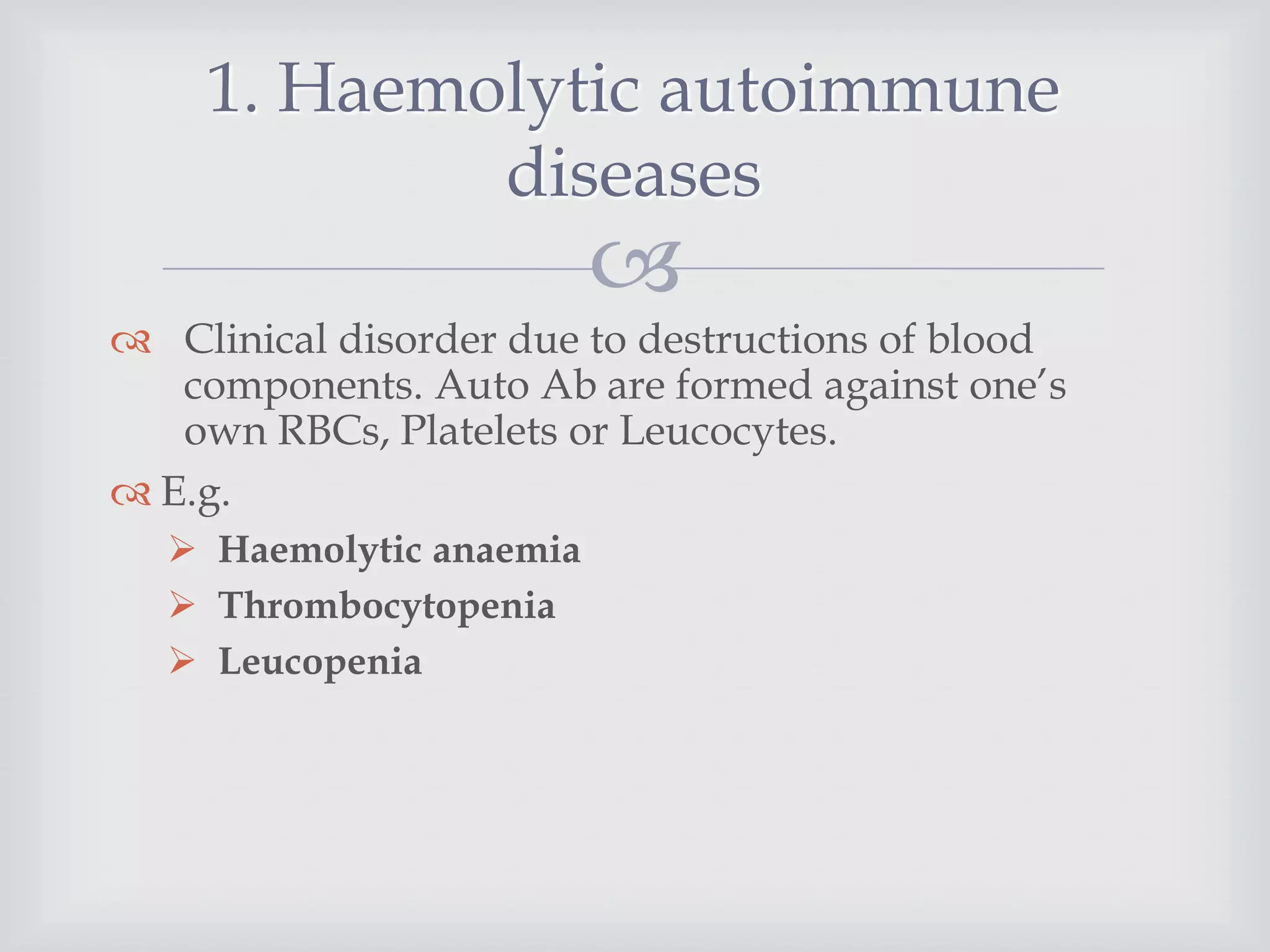
 Clinical disorder due to destructions of blood
components. Auto Ab are formed against one’s
own RBCs, Platelets or Leucocytes.
 E.g.
 Haemolytic anaemia
 Thrombocytopenia
 Leucopenia
1. Haemolytic autoimmune
diseases

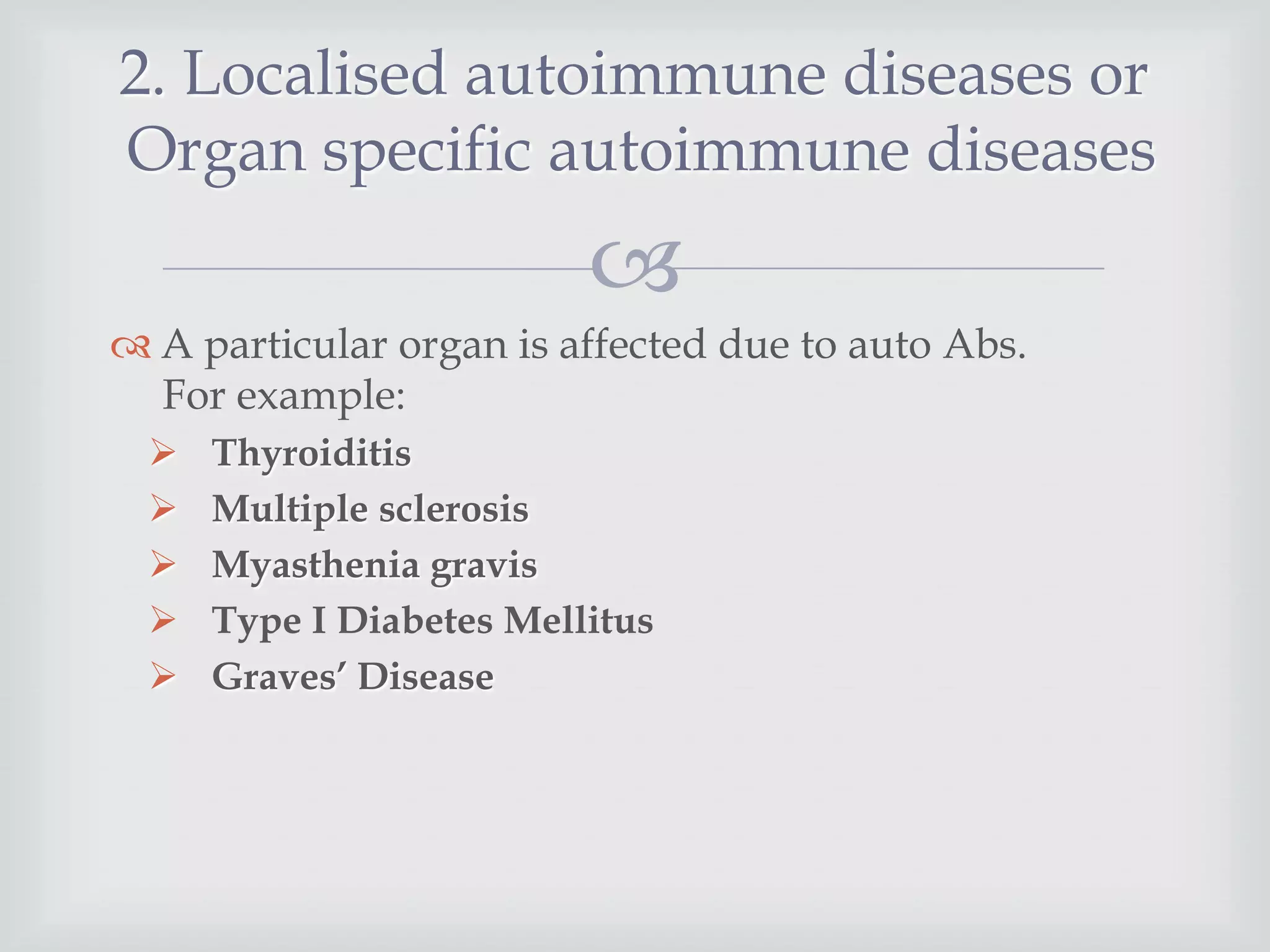
 A particular organ is affected due to auto Abs.
For example:
 Thyroiditis
 Multiple sclerosis
 Myasthenia gravis
 Type I Diabetes Mellitus
 Graves’ Disease
2. Localised autoimmune diseases or
Organ specific autoimmune diseases

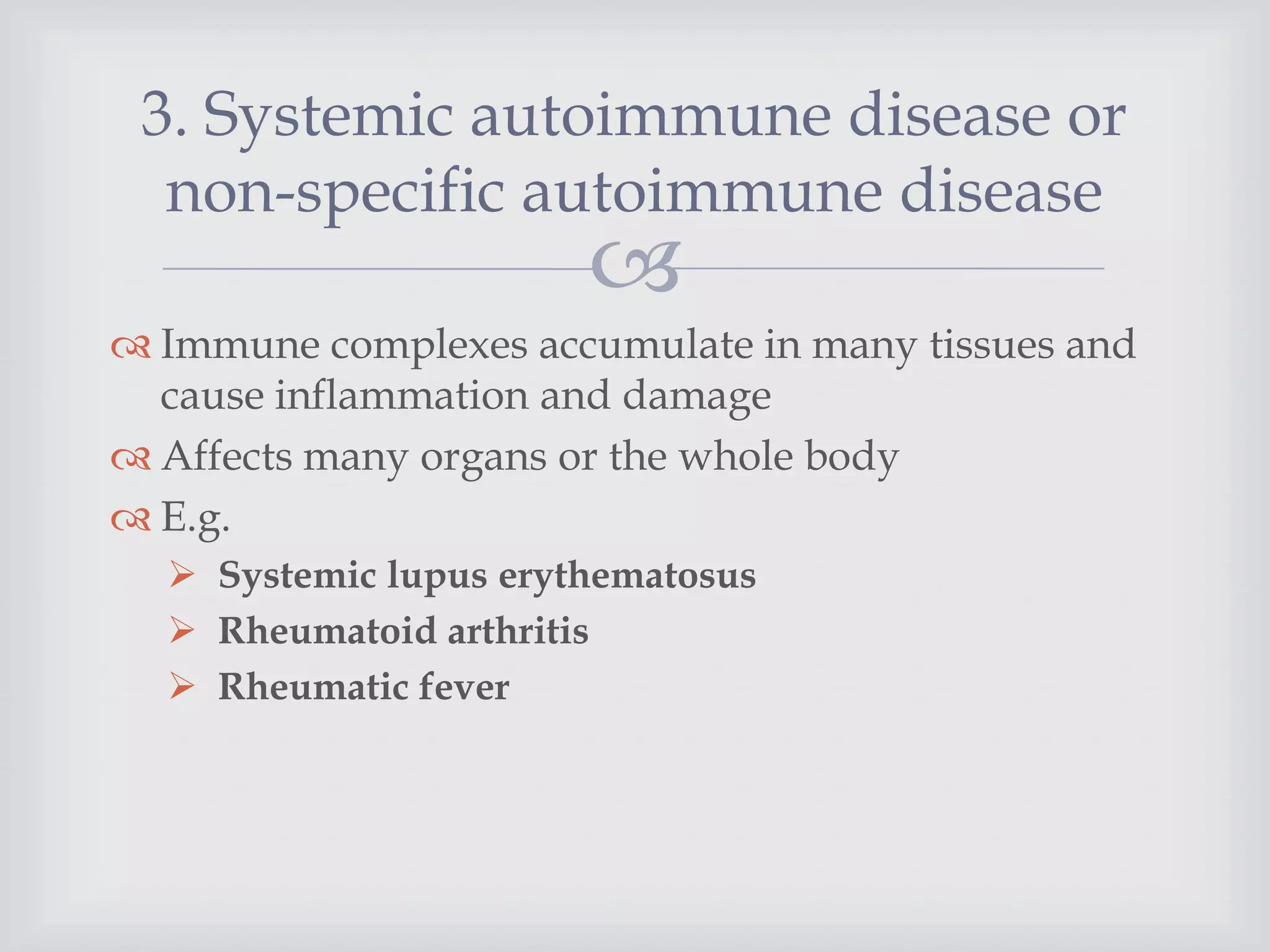
 Immune complexes accumulate in many tissues and
cause inflammation and damage
 Affects many organs or the whole body
 E.g.
 Systemic lupus erythematosus
 Rheumatoid arthritis
 Rheumatic fever
3. Systemic autoimmune disease or
non-specific autoimmune disease
GRAVES’ DISEASE

 Graves' disease is an autoimmune disease where the
thyroid is overactive, producing an excessive
amount of thyroid hormones (a serious metabolic
imbalance known as hyperthyroidism and
thyrotoxicosis).
 This is caused by thyroid autoantibodies that
activate the TSH-receptor, thereby stimulating
thyroid hormone synthesis and secretion, and
thyroid growth (causing a diffusely enlarged goiter).
Graves’ Disease

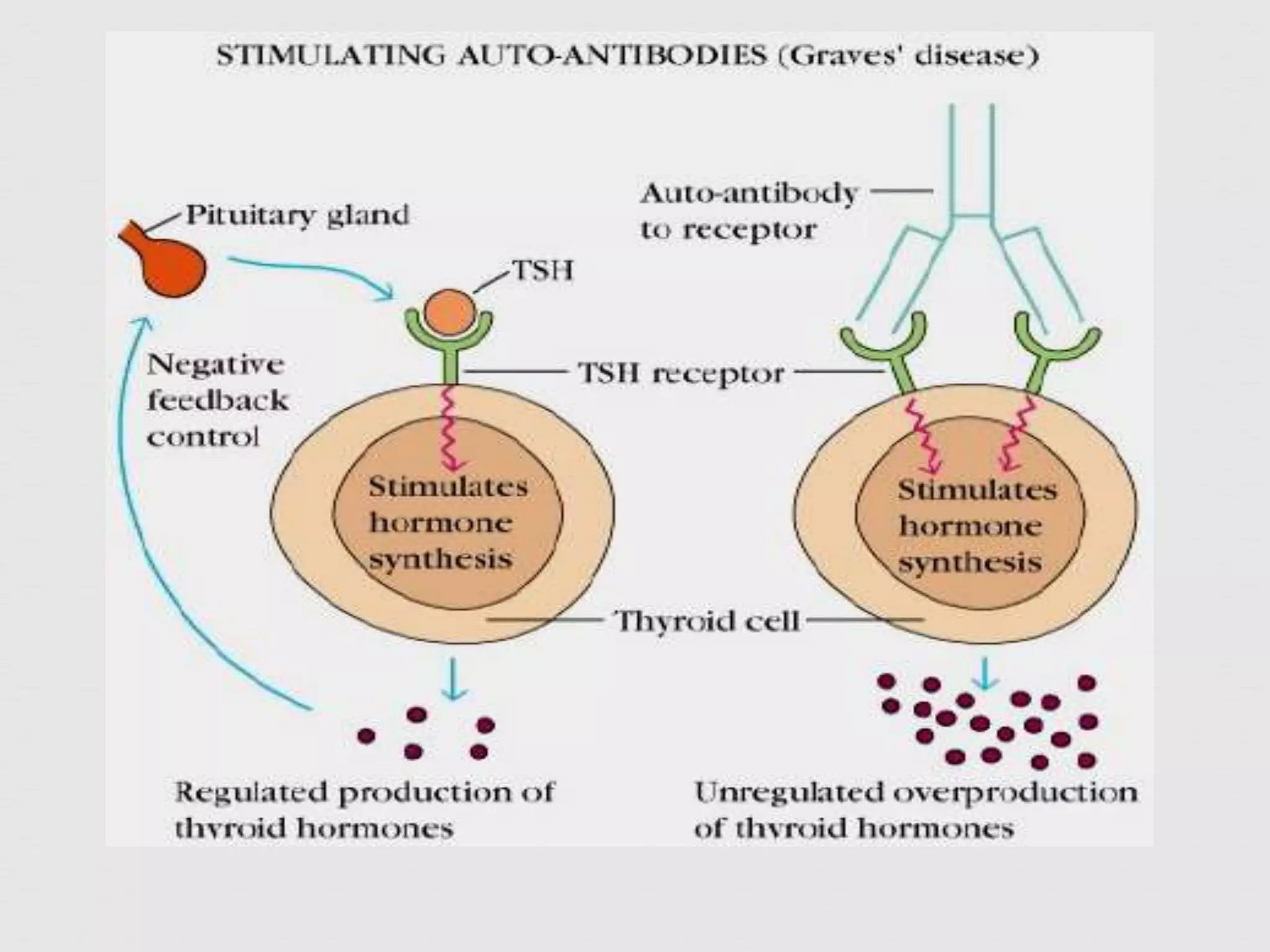
 The body produces antibodies to the TSH-Rs
(Thyroid Stimulating Hormone Receptors).
*(Antibodies to thyroglobulin and to the thyroid
hormones T3 and T4 may also be produced.)
 These antibodies (TSHR-Ab) bind to the TSH-Rs,
which are located on the cells that produce thyroid
hormone in the thyroid gland (follicular cells), and
chronically stimulate them, resulting in an
abnormally high production of T3 and T4.
Graves’ Disease…

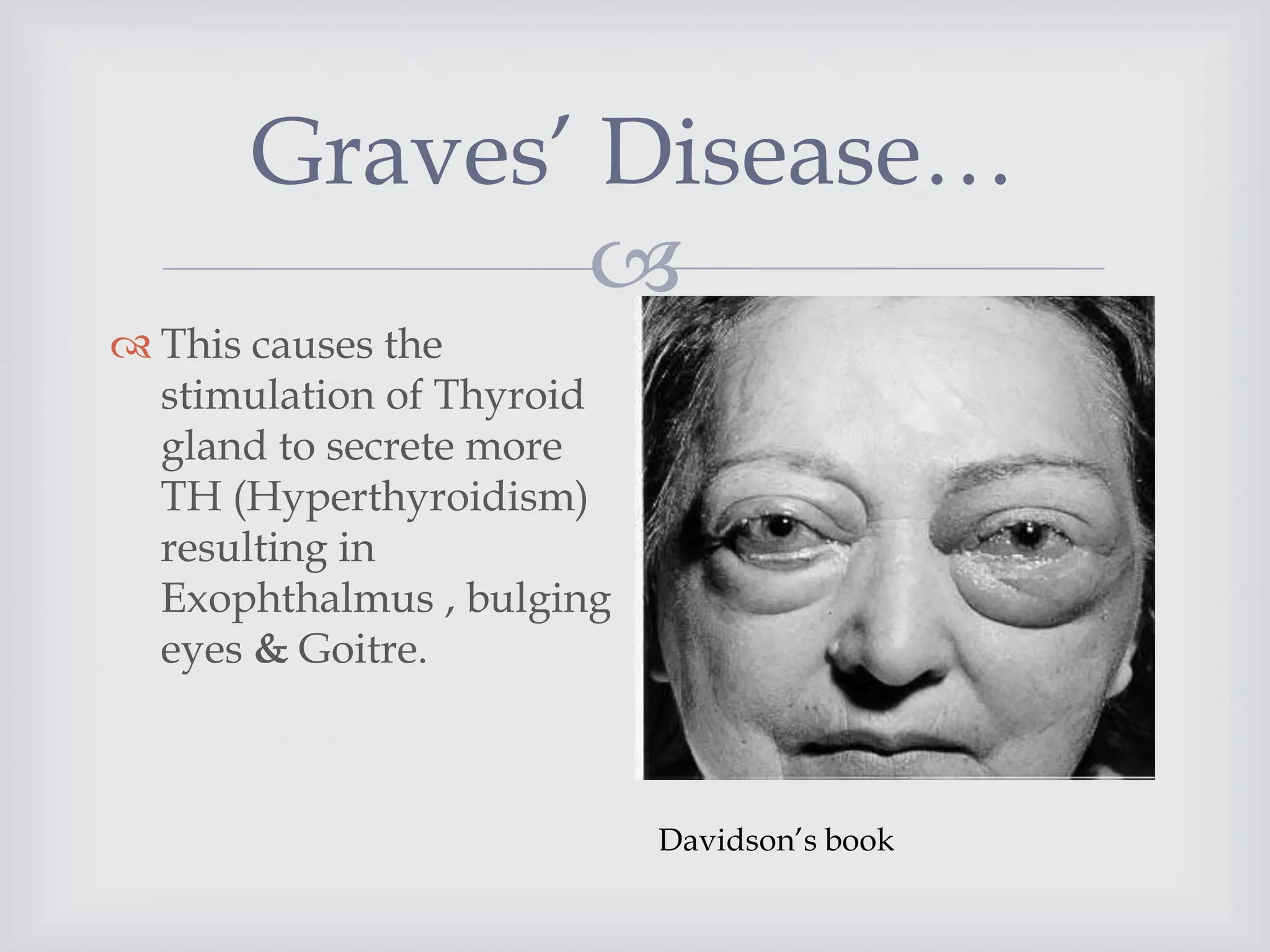
 This causes the
stimulation of Thyroid
gland to secrete more
TH (Hyperthyroidism)
resulting in
Exophthalmus , bulging
eyes & Goitre.
Graves’ Disease…
Davidson’s book
HASHIMOTO’S
THYROIDITIS

 Hashimoto's thyroiditis is a condition caused by
inflammation of the thyroid gland.
 It is the most common thyroid disease in the U.S.
 Is characterized by the destruction of thyroid cells by
various cell- and antibody-mediated immune
processes.
 Caused by auto Ab of IgG & IgM type against the
constituents of thyroid gland
Hashimoto’s thyroiditis

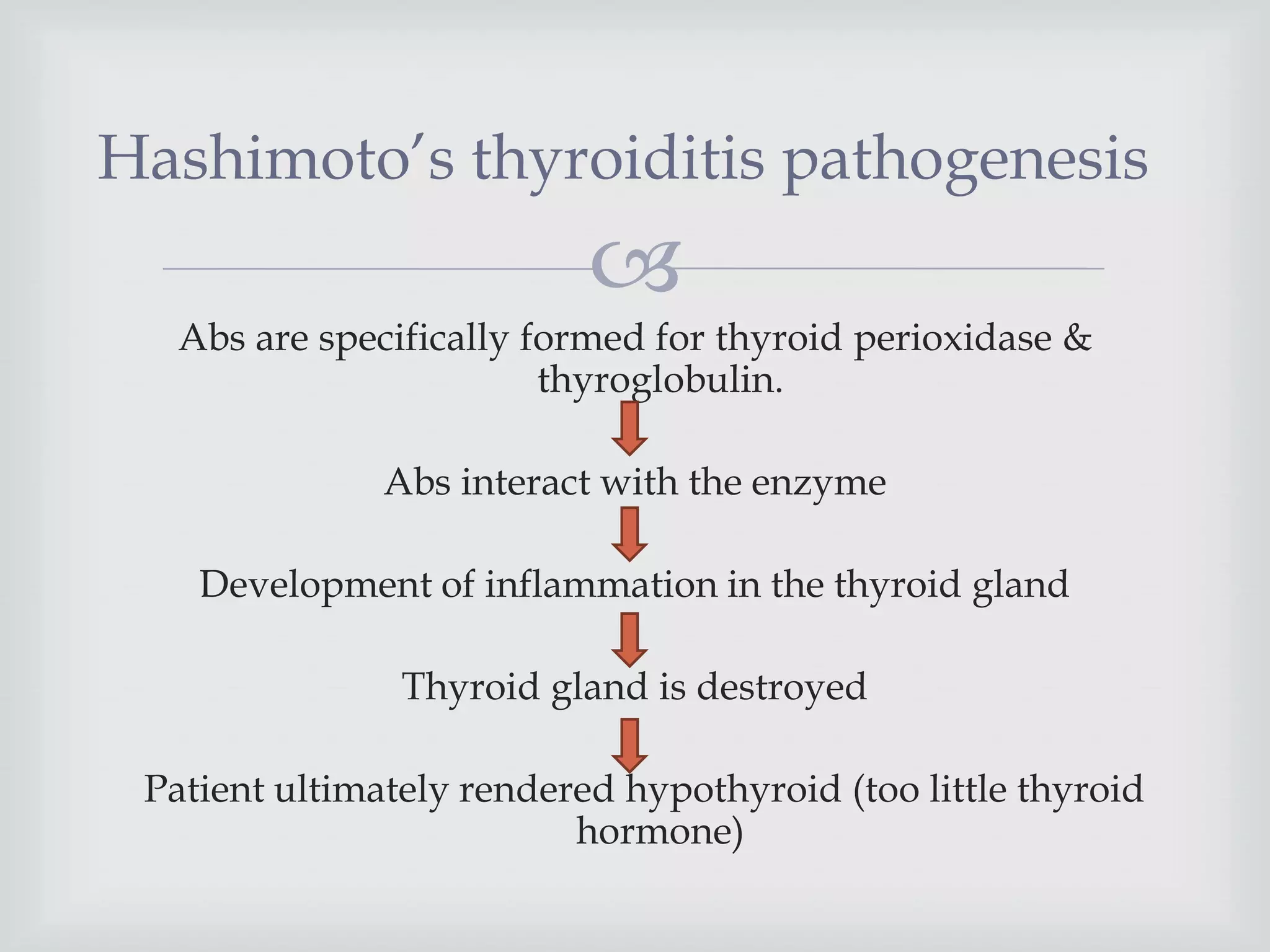
Abs are specifically formed for thyroid perioxidase &
thyroglobulin.
Abs interact with the enzyme
Development of inflammation in the thyroid gland
Thyroid gland is destroyed
Patient ultimately rendered hypothyroid (too little thyroid
hormone)
Hashimoto’s thyroiditis pathogenesis
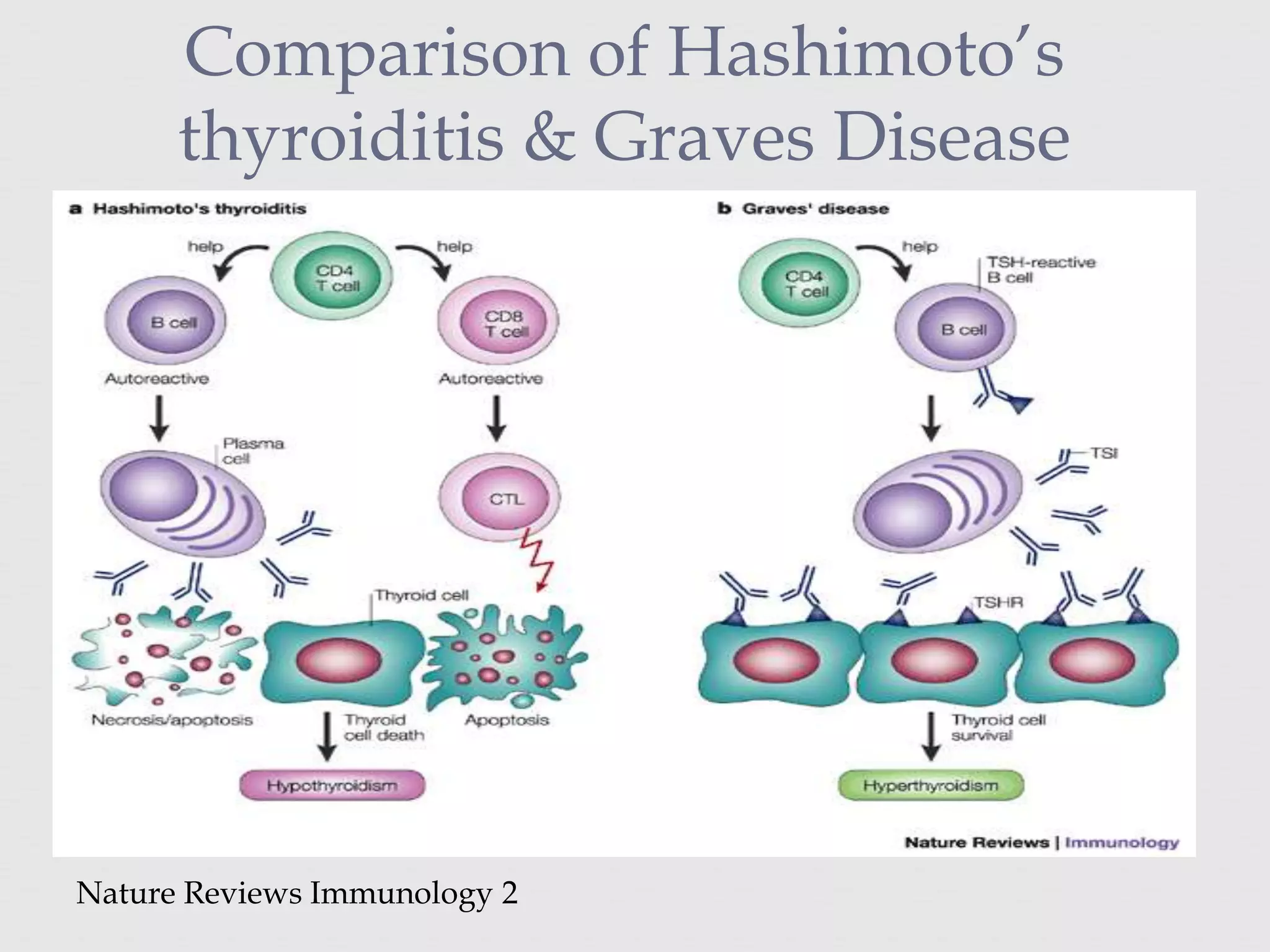
Comparison of Hashimoto’s
thyroiditis & Graves Disease
Nature Reviews Immunology 2

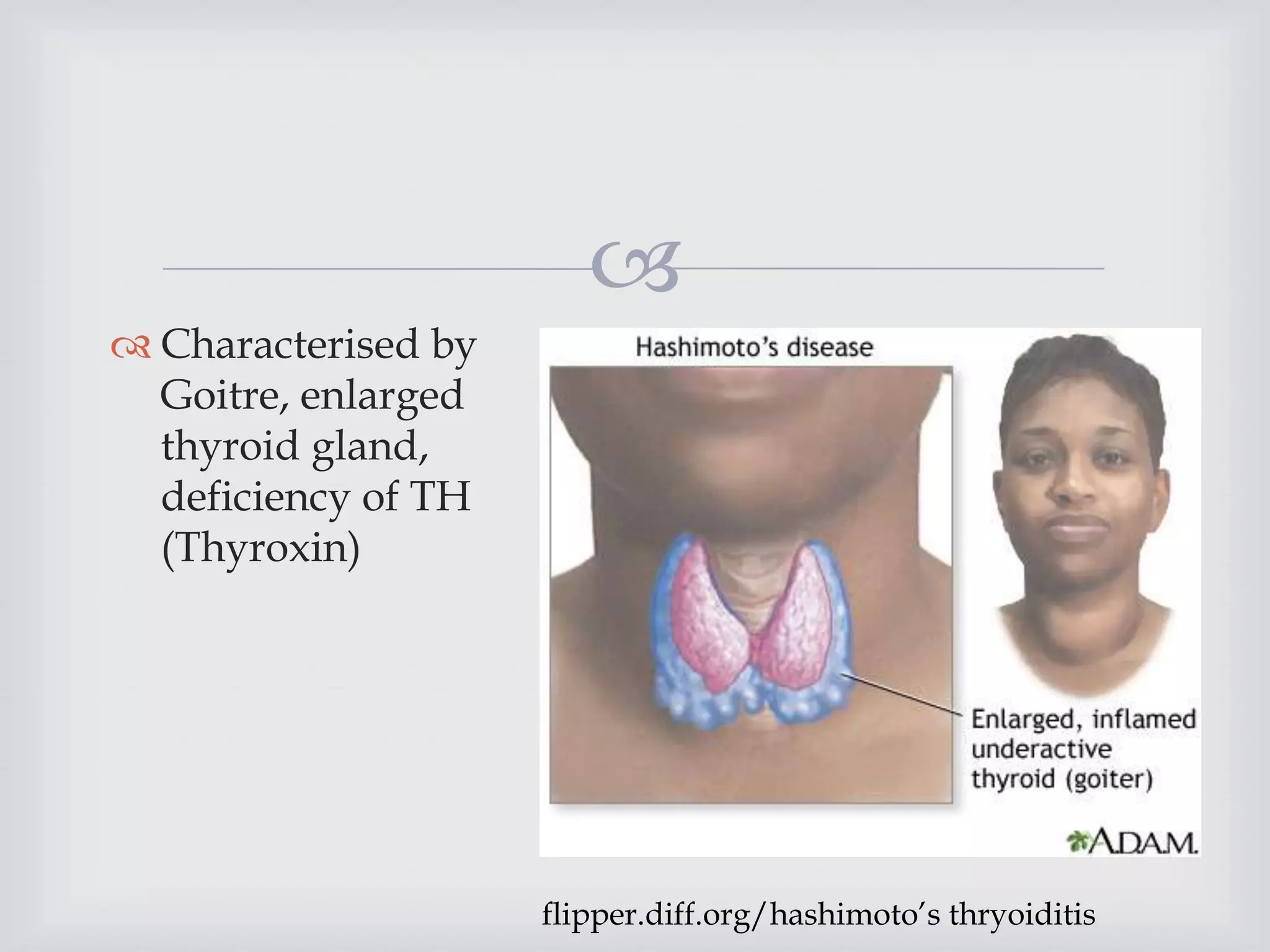
 Characterised by
Goitre, enlarged
thyroid gland,
deficiency of TH
(Thyroxin)
flipper.diff.org/hashimoto’s thryoiditis
ADDISON’S DISEASE

 Addison's disease, or primary adrenocortical
insufficiency, is an autoimmune disease
characterized by the presence of autoantibodies
directed predominantly against 21-hydroxylase, a
key regulator of mineralocorticoid and
glucocorticoid synthesis.
Addison’s Disease

 The myriad clinical manifestations of Addison's
disease, including muscle weakness and
fatigue, hypotension and hyponatremia, and loss of
axillary and pubic hair in women, are the result of
cortisol, aldosterone and sex hormone
deficiencies, respectively.
Addison’s Disease
MYASTHENIA
GRAVIS

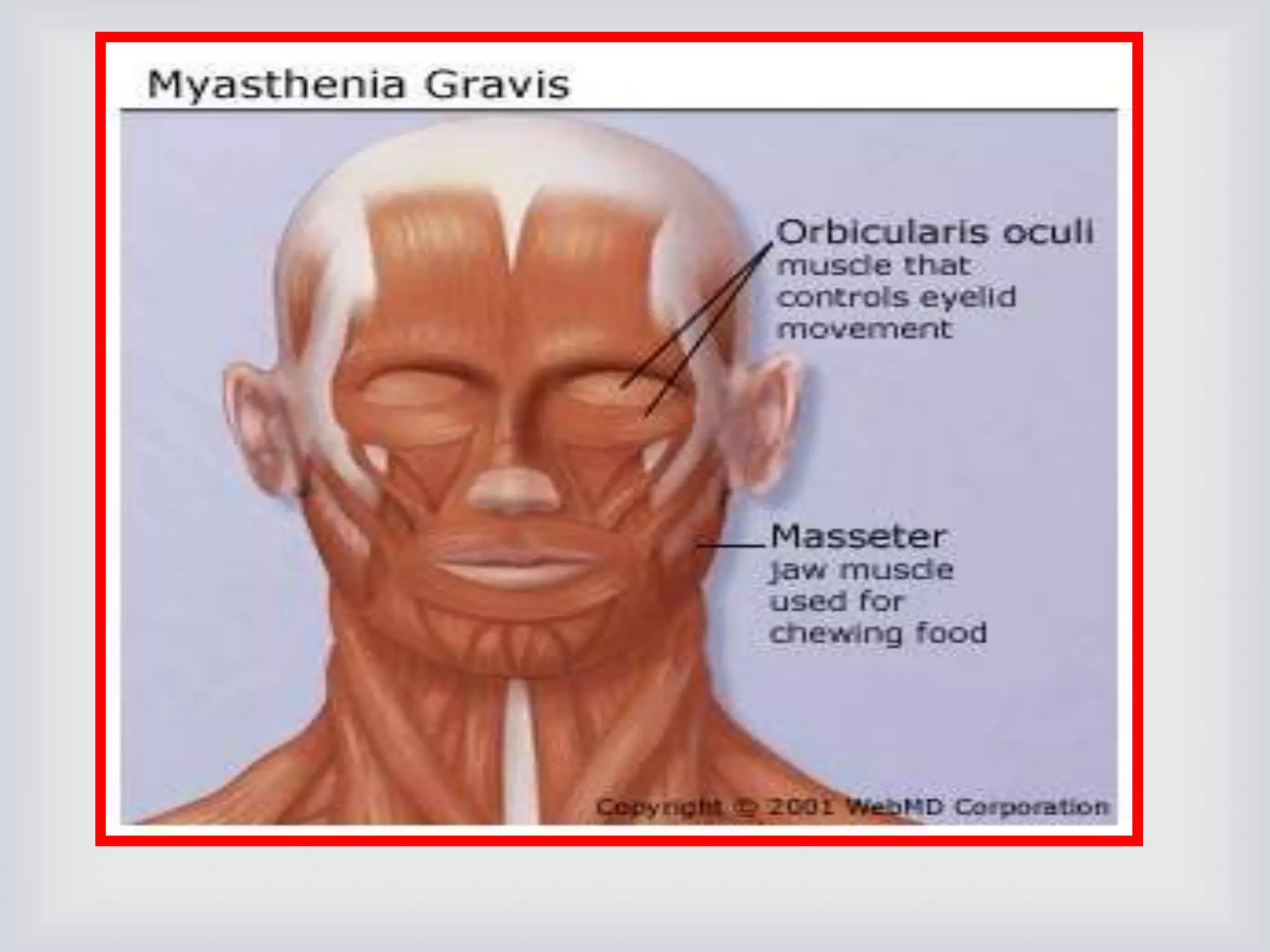
 MG is a chronic autoimmune neuromuscular disease
that affects the myoneural junction that is
characterized by varying degrees of weakness of the
skeletal (voluntary) muscles of the body.
 Classified as a “B cell” Disease
 Autoantibodies against nicotinic acetylcholine
receptors
Myasthenia Gravis


 Myasthenia gravis is caused by a defect in the
transmission of nerve impulses to muscles.
 It occurs when normal communication between the
nerve and muscle is interrupted at the
neuromuscular junction - the place where nerve cells
connect with the muscles they control.
 Normally when impulses travel down the nerve, the
nerve endings release a neurotransmitter substance,
acetylcholine.
Myasthenia Gravis

 Acetylcholine travels through the neuromuscular
junction and binds to acetylcholine receptors which
are activated and generate a muscle contraction.
 In myasthenia gravis, auto Abs block, alter, or
destroy the receptors for acetylcholine at the
neuromuscular junction which prevents the muscle
contraction from occurring.
Myasthenia Gravis
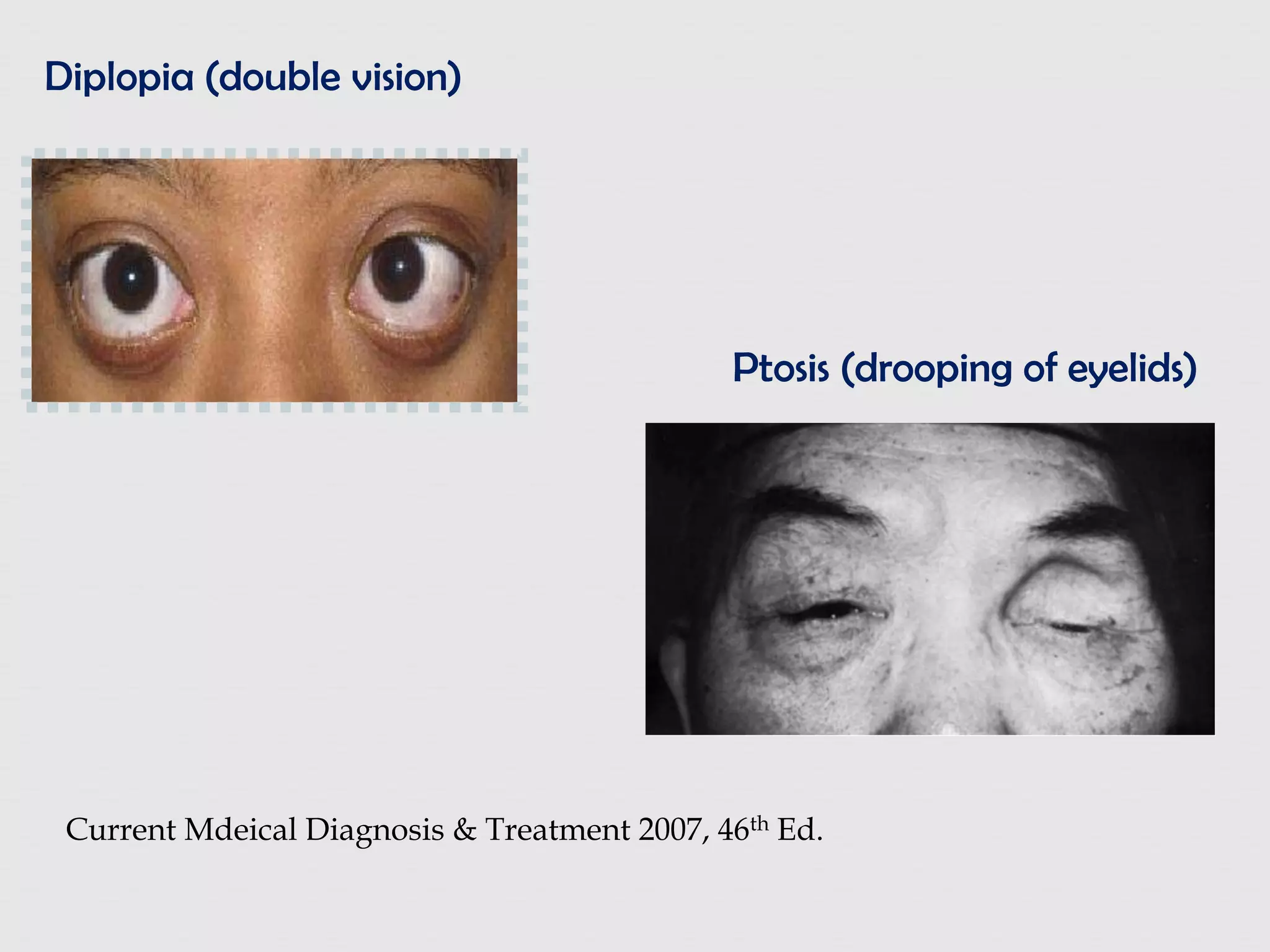
Diplopia (double vision)
Ptosis (drooping of eyelids)
Current Mdeical Diagnosis & Treatment 2007, 46th Ed.
DIABETES
MELLITUS TYPE 1

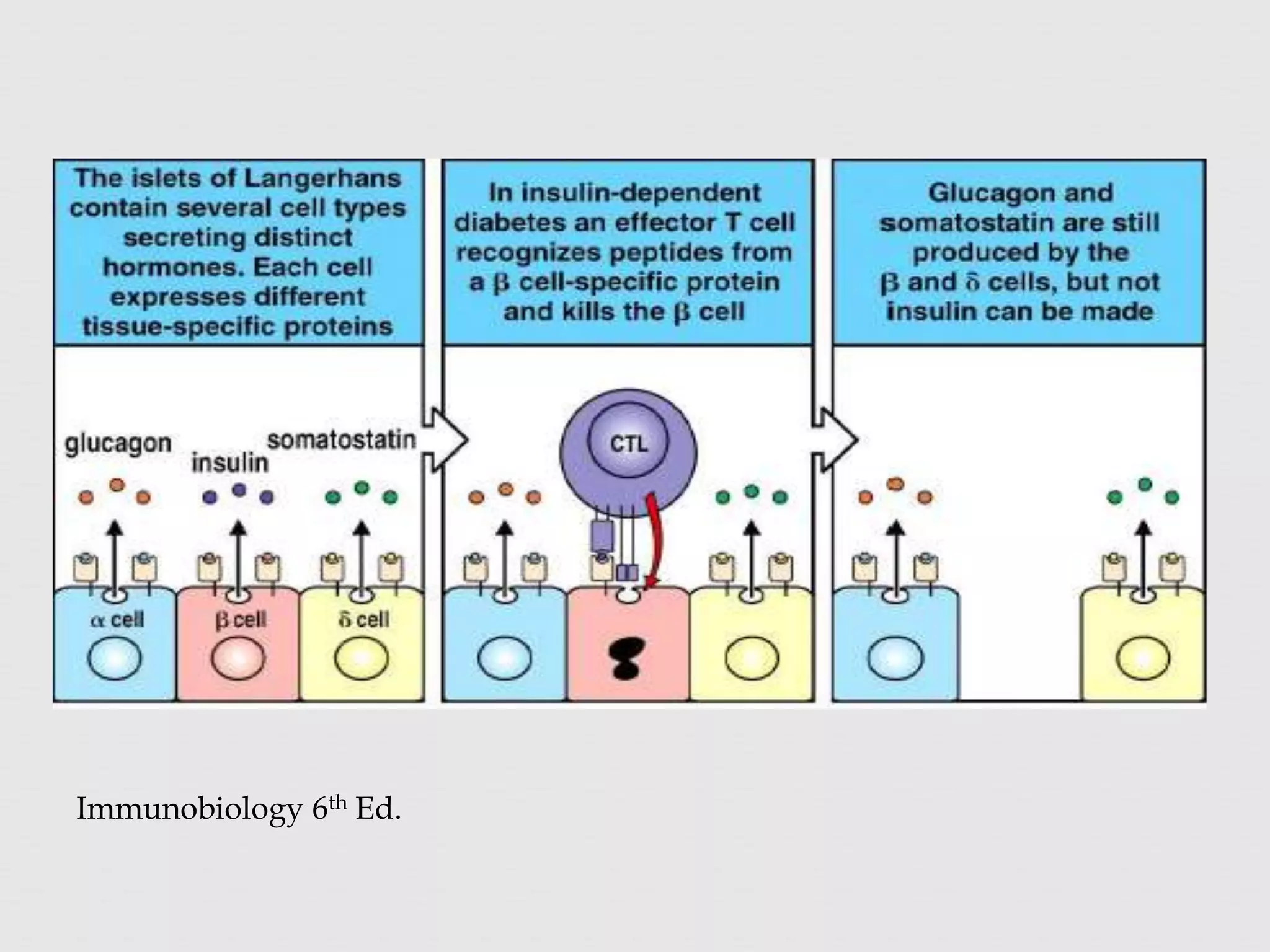
 Insulin dependent diabetes mellitus (type 1) is an inflammatory
autoimmune disease of the pancreas, resulting in a lack of
insulin.
 Insulin is produced in the pancreas by beta cells of the islets of
Langerhans. Insulin is necessary for glucose to get into cells and
be used for energy production. After eating, the glucose level in
blood rises, which leads to insulin being released from the
pancreas.
 In a person with type 1 diabetes mellitus, the beta cells of
Langerhans are damaged by autoimmune
inflammation, leading to an insufficiency of insulin. The
glucose level in blood rises and cells do not have enough
energy for metabolism.
Diabete Mellitus Type 1

 Type 2 diabetes (non-insulin-dependent diabetes
mellitus) Insulin concentrations are mostly increased
but peripheral tissues are resistant to insulin (insulin
resistance). Beta cells are not able increase secretion
of insulin to overcome this resistance. Type 2
diabetes usually develops after 40 years of age in
overweight people, lately in obese adolescents.
Type 2 Diabetes Mellitus
Immunobiology 6th Ed.

 Nature Reviews Immunology 2, p.195-204 (March
2002)
 Dr.T.V.Rao’s lecture note on Autoimmunity
 Robbins Basic Pathology, 8th Edition
 www.wikipedia.org/addison’s disease
 www.wikipedia.org/myasthenia gravis
 Burmester GR, Pezzuto A. Colour Atlas of
Immunology . 2003.
 www.diseases_john_hopkins_medical_institute/typ
e1_diabetes_mellitus
 www.slideshare.net/autoimmunedisorders
References:

THE END..

Autoimmune disorders

  • 1.
  • 2.
      What isautoimmunity  Causes of autoimmune disorders  Classification of autoimmune disorders  Examples of autoimmune disorders:  Graves’ disease  Hashimoto’s thyroiditis  Addison’s disease  Myasthenia gravis  Diabetes mellitus type 1 Outline:
  • 3.
      Auto orself antigens  Are antigens that presents in ones own cells  Are altered by the action of bacteria, viruses, chemicals or other drugs  Auto antibodies  Altered cell (Auto Ag) - elicits the productions of Antibody
  • 4.
      Autoimmunity isdefined as the presence of immune response of auto Ab against self Ag.  It can be a humoral or cell mediated immune response against the constitutents of the body’s own tissues. What is autoimmunity?
  • 5.
      Autoimmunity isthe failure of an organism in recognizing its own constituent parts as non self, which allows an immune response against its own cells and tissues. Any disease that results from such an aberrant immune response is termed an autoimmune disease. Autoimmune disease
  • 6.
     1. Sequestered orHidden antigens  Ag in the secluded places - are not accessible to the immune system.  E.g. Lens Ag, Sperm Ag, etc. 2. Neo antigens  Altered or Modified Antigens – by physical (irradiation), chemical (drugs) or microbial agents ( intracellular viruses) 3. Cessation of Tolerance  It may result when tolerance to the self-Ag is abrogated. Causes of autoimmune diseases
  • 7.
     4. Cross reactingAntigens  A foreign Ag which resembles self a 2nd Ag  Many species share organ specific Ags.  E.g. Ag of Human brain & Ag of sheep brain, Streptococcal M protein & Heart muscles, Nephritogenic strains of Streptococci Ags & Renal glomeruli shares similar epiotes. 5. Loss of Immunoregulation  Loss of Self tolerance - caused by over activity or lowered activity of T and B- cells Causes of autoimmune diseases..
  • 8.
     Broadly classified into3 groups  1. Haemolytic autoimmune diseases  2. Localised autoimmune diseases  3. Systemic autoimmune diseases Classification of autoimmune disorders
  • 9.
      Clinical disorderdue to destructions of blood components. Auto Ab are formed against one’s own RBCs, Platelets or Leucocytes.  E.g.  Haemolytic anaemia  Thrombocytopenia  Leucopenia 1. Haemolytic autoimmune diseases
  • 10.
      A particularorgan is affected due to auto Abs. For example:  Thyroiditis  Multiple sclerosis  Myasthenia gravis  Type I Diabetes Mellitus  Graves’ Disease 2. Localised autoimmune diseases or Organ specific autoimmune diseases
  • 11.
      Immune complexesaccumulate in many tissues and cause inflammation and damage  Affects many organs or the whole body  E.g.  Systemic lupus erythematosus  Rheumatoid arthritis  Rheumatic fever 3. Systemic autoimmune disease or non-specific autoimmune disease
  • 12.
  • 13.
      Graves' diseaseis an autoimmune disease where the thyroid is overactive, producing an excessive amount of thyroid hormones (a serious metabolic imbalance known as hyperthyroidism and thyrotoxicosis).  This is caused by thyroid autoantibodies that activate the TSH-receptor, thereby stimulating thyroid hormone synthesis and secretion, and thyroid growth (causing a diffusely enlarged goiter). Graves’ Disease
  • 14.
      The bodyproduces antibodies to the TSH-Rs (Thyroid Stimulating Hormone Receptors). *(Antibodies to thyroglobulin and to the thyroid hormones T3 and T4 may also be produced.)  These antibodies (TSHR-Ab) bind to the TSH-Rs, which are located on the cells that produce thyroid hormone in the thyroid gland (follicular cells), and chronically stimulate them, resulting in an abnormally high production of T3 and T4. Graves’ Disease…
  • 16.
      This causesthe stimulation of Thyroid gland to secrete more TH (Hyperthyroidism) resulting in Exophthalmus , bulging eyes & Goitre. Graves’ Disease… Davidson’s book
  • 17.
  • 18.
      Hashimoto's thyroiditisis a condition caused by inflammation of the thyroid gland.  It is the most common thyroid disease in the U.S.  Is characterized by the destruction of thyroid cells by various cell- and antibody-mediated immune processes.  Caused by auto Ab of IgG & IgM type against the constituents of thyroid gland Hashimoto’s thyroiditis
  • 19.
     Abs are specificallyformed for thyroid perioxidase & thyroglobulin. Abs interact with the enzyme Development of inflammation in the thyroid gland Thyroid gland is destroyed Patient ultimately rendered hypothyroid (too little thyroid hormone) Hashimoto’s thyroiditis pathogenesis
  • 20.
    Comparison of Hashimoto’s thyroiditis& Graves Disease Nature Reviews Immunology 2
  • 21.
      Characterised by Goitre,enlarged thyroid gland, deficiency of TH (Thyroxin) flipper.diff.org/hashimoto’s thryoiditis
  • 22.
  • 23.
      Addison's disease,or primary adrenocortical insufficiency, is an autoimmune disease characterized by the presence of autoantibodies directed predominantly against 21-hydroxylase, a key regulator of mineralocorticoid and glucocorticoid synthesis. Addison’s Disease
  • 24.
      The myriadclinical manifestations of Addison's disease, including muscle weakness and fatigue, hypotension and hyponatremia, and loss of axillary and pubic hair in women, are the result of cortisol, aldosterone and sex hormone deficiencies, respectively. Addison’s Disease
  • 25.
  • 26.
      MG isa chronic autoimmune neuromuscular disease that affects the myoneural junction that is characterized by varying degrees of weakness of the skeletal (voluntary) muscles of the body.  Classified as a “B cell” Disease  Autoantibodies against nicotinic acetylcholine receptors Myasthenia Gravis
  • 27.
  • 28.
      Myasthenia gravisis caused by a defect in the transmission of nerve impulses to muscles.  It occurs when normal communication between the nerve and muscle is interrupted at the neuromuscular junction - the place where nerve cells connect with the muscles they control.  Normally when impulses travel down the nerve, the nerve endings release a neurotransmitter substance, acetylcholine. Myasthenia Gravis
  • 29.
      Acetylcholine travelsthrough the neuromuscular junction and binds to acetylcholine receptors which are activated and generate a muscle contraction.  In myasthenia gravis, auto Abs block, alter, or destroy the receptors for acetylcholine at the neuromuscular junction which prevents the muscle contraction from occurring. Myasthenia Gravis
  • 30.
    Diplopia (double vision) Ptosis(drooping of eyelids) Current Mdeical Diagnosis & Treatment 2007, 46th Ed.
  • 31.
  • 32.
      Insulin dependentdiabetes mellitus (type 1) is an inflammatory autoimmune disease of the pancreas, resulting in a lack of insulin.  Insulin is produced in the pancreas by beta cells of the islets of Langerhans. Insulin is necessary for glucose to get into cells and be used for energy production. After eating, the glucose level in blood rises, which leads to insulin being released from the pancreas.  In a person with type 1 diabetes mellitus, the beta cells of Langerhans are damaged by autoimmune inflammation, leading to an insufficiency of insulin. The glucose level in blood rises and cells do not have enough energy for metabolism. Diabete Mellitus Type 1
  • 33.
      Type 2diabetes (non-insulin-dependent diabetes mellitus) Insulin concentrations are mostly increased but peripheral tissues are resistant to insulin (insulin resistance). Beta cells are not able increase secretion of insulin to overcome this resistance. Type 2 diabetes usually develops after 40 years of age in overweight people, lately in obese adolescents. Type 2 Diabetes Mellitus
  • 34.
  • 35.
      Nature ReviewsImmunology 2, p.195-204 (March 2002)  Dr.T.V.Rao’s lecture note on Autoimmunity  Robbins Basic Pathology, 8th Edition  www.wikipedia.org/addison’s disease  www.wikipedia.org/myasthenia gravis  Burmester GR, Pezzuto A. Colour Atlas of Immunology . 2003.  www.diseases_john_hopkins_medical_institute/typ e1_diabetes_mellitus  www.slideshare.net/autoimmunedisorders References:
  • 36.

Editor's Notes

  • #6 Normally, the immune system does not attack the self. However, there is a large group of autoimmune diseases in which the immune system does attack self-cellsThe attack can be directed either against a very specific tissue or to a large no. of tissuesOnce started, autoimmune diseases are hard to stop
  • #21 During Hashimoto's thyroiditis, self-reactive CD4+ T lymphocytes recruit B cells and CD8+ T cells into the thyroid. Disease progression leads to the death of thyroid cells and hypothyroidism. Both autoantibodies and thyroid-specific cytotoxic T lymphocytes (CTLs) have been proposed to be responsible for autoimmune thyrocyte depletion. b | In Graves' disease, activated CD4+ T cells induce B cells to secrete thyroid-stimulating immunoglobulins (TSI) against the thyroid-stimulating hormone receptor (TSHR), resulting in unrestrained thyroid hormone production and hyperthyroidism.
  • #24 It is due to adrenocortical damage & hence insufficient secretion of adrenal hormones.Tissue damage is caused by auto Ab against zonaglomerulosa cells of adrenal cortex.Autoimmune adrenalitis is the most common cause of Addison's disease in the industrialized world. Autoimmune destruction of the adrenal cortex is caused by an immune reaction against the enzyme 21-hydroxylase .This may be isolated or in the context of autoimmune polyendocrine syndrome (APS type 1 or 2), in which other hormone-producing organs, such as the thyroid and pancreas, may also be affected.
  • #33 The main source of energy for all cells and especially for brain cells is glucose.