Multiple Sclerosis
Prepared by
Swati Sheth
HOD,PNC
Introduction
 It is an Auto Immune Disease which is when the body starts
to destroy itself.
 It is a life-long disease with no cure.
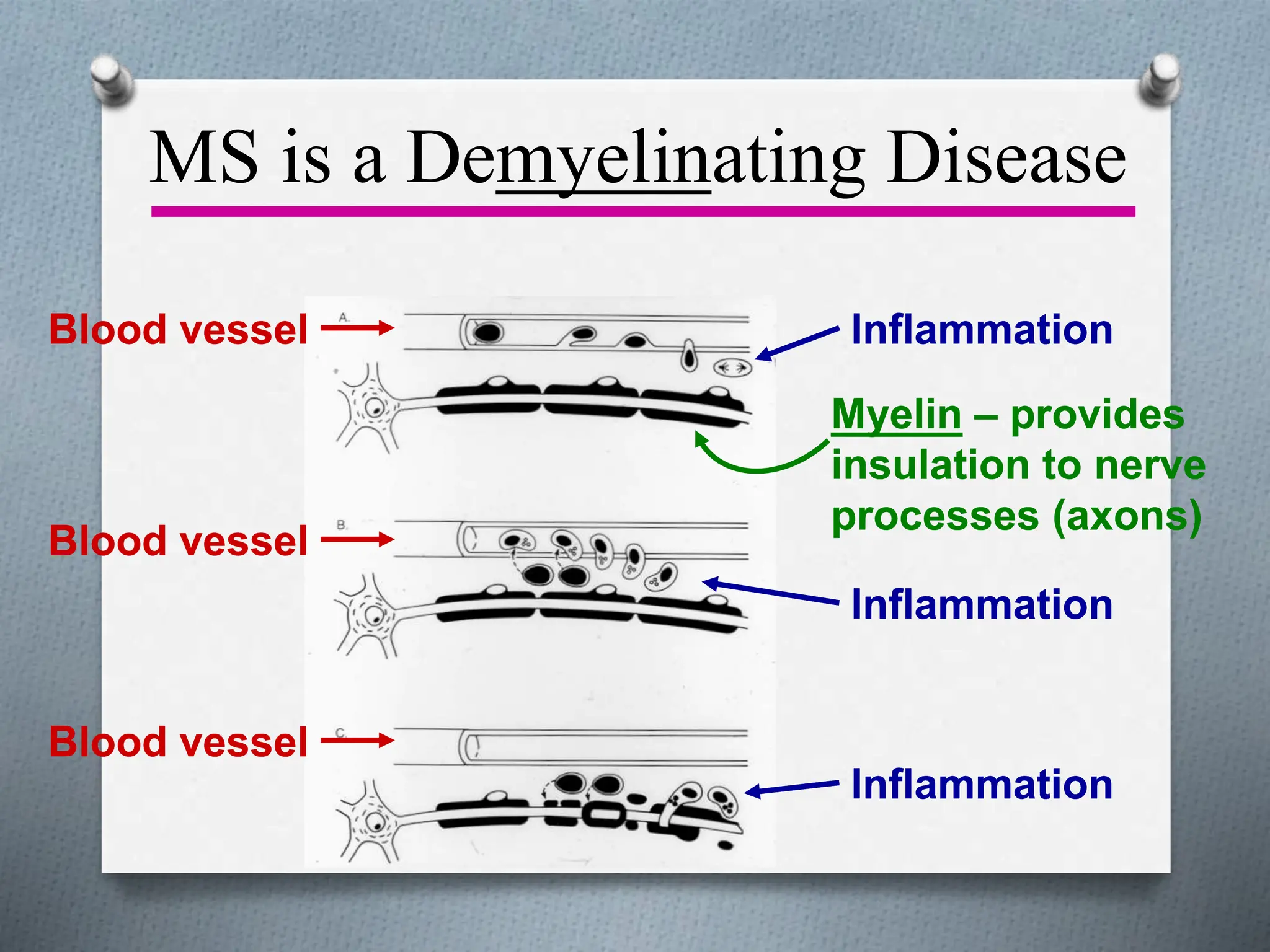
 In MS, the body attacks and destroys the fatty tissue called
myelin that insulates an axon/nerve, and is called
demyelination.
 If damage is severe it can also destroy the nerve/axon itself.
 MS affects the central nervous system and inflames the
white matter in the brain which creates plaques.
.
Multiple Sclerosis
O Chronic, progressive, degenerative disorder of the
CNS characterized by disseminated demyelination of
nerve fibers of the brain and spinal cord
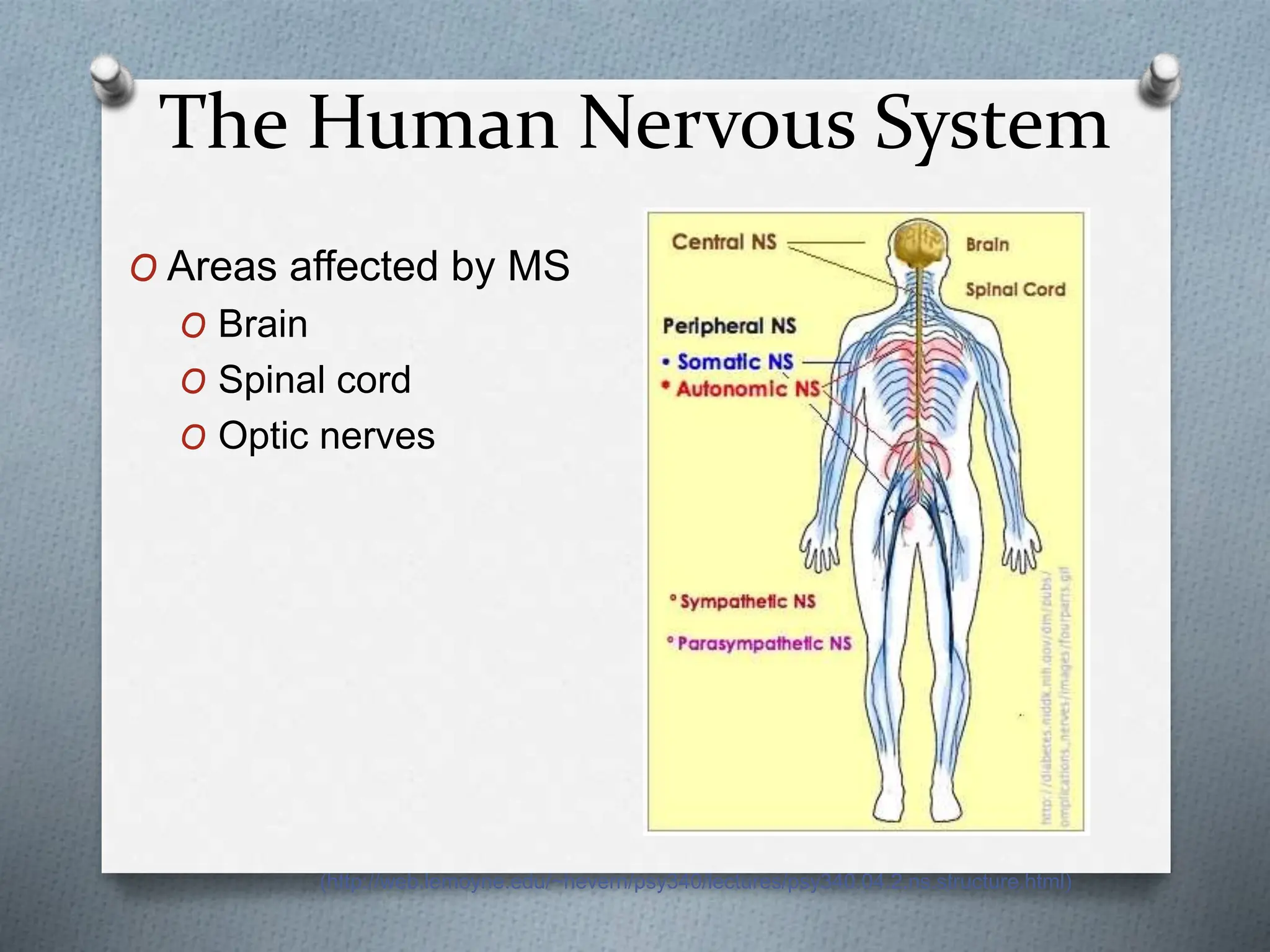
The Human Nervous System
O Areas affected by MS
O Brain
O Spinal cord
O Optic nerves
(http://web.lemoyne.edu/~hevern/psy340/lectures/psy340.04.2.ns.structure.html)
O MS is thought to be a disease of the immune system
– perhaps autoimmune.
O The immune system attacks the myelin coating
around the nerves in the central nervous system
(CNS – brain, spinal cord, and optic nerves) and the
nerve fibers themselves.
O Its name comes from the scarring caused by
inflammatory attacks at multiple sites in the central
nervous system.
MS is a Demyelinating Disease
Myelin – provides
insulation to nerve
processes (axons)
Blood vessel
Blood vessel
Blood vessel
Inflammation
Inflammation
Inflammation
Myelin – provides
insulation to nerve
processes (axons)
Blood vessel
Blood vessel
Blood vessel
Blood vessel
Blood vessel
Blood vessel
Inflammation
Inflammation
Inflammation
Inflammation
Inflammation
Inflammation
Etiology
O Unknown cause
O Related to infectious, immunologic, and genetic
factors
O Environmental factors
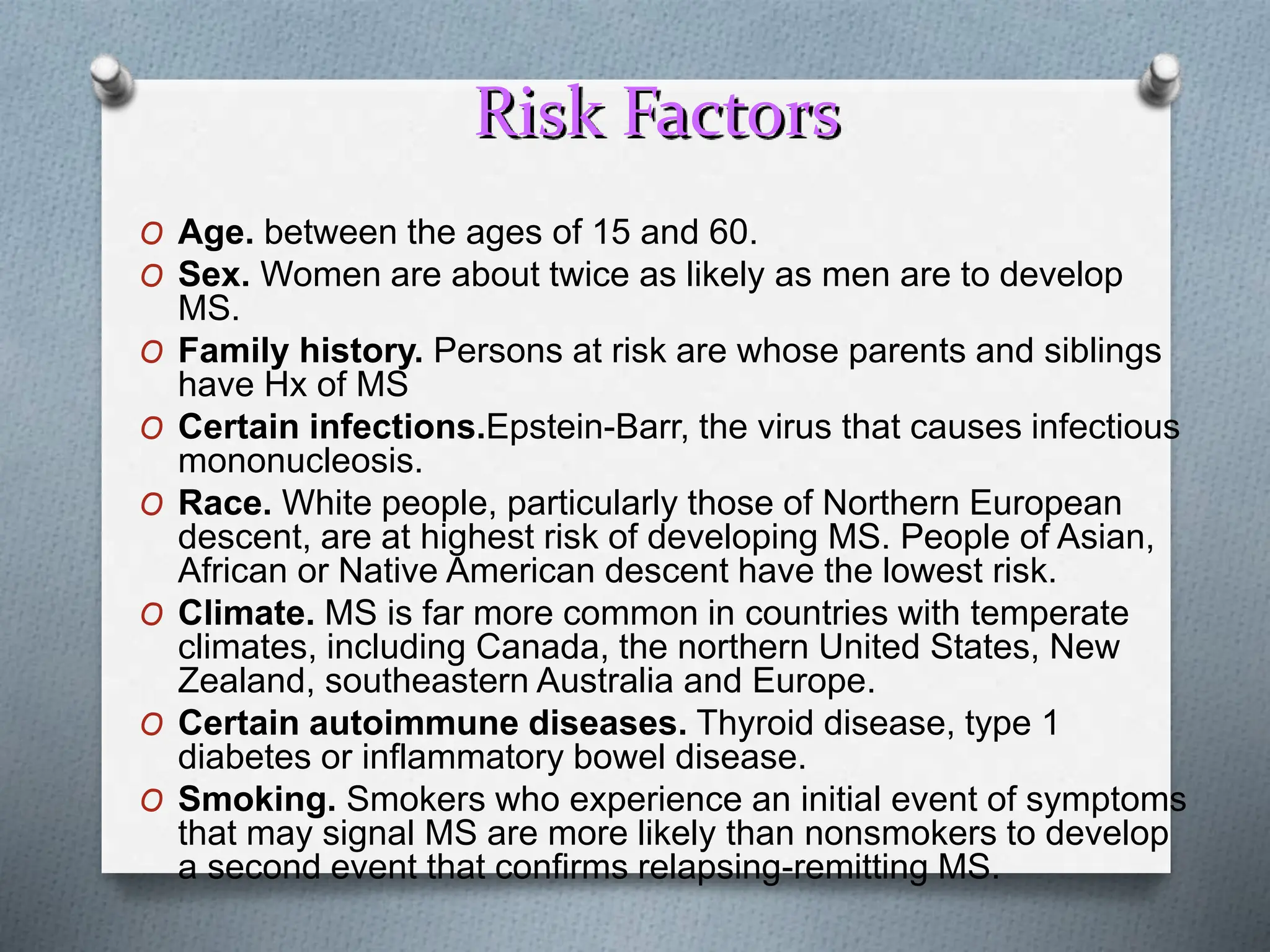
Risk Factors
O Age. between the ages of 15 and 60.
O Sex. Women are about twice as likely as men are to develop
MS.
O Family history. Persons at risk are whose parents and siblings
have Hx of MS
O Certain infections.Epstein-Barr, the virus that causes infectious
mononucleosis.
O Race. White people, particularly those of Northern European
descent, are at highest risk of developing MS. People of Asian,
African or Native American descent have the lowest risk.
O Climate. MS is far more common in countries with temperate
climates, including Canada, the northern United States, New
Zealand, southeastern Australia and Europe.
O Certain autoimmune diseases. Thyroid disease, type 1
diabetes or inflammatory bowel disease.
O Smoking. Smokers who experience an initial event of symptoms
that may signal MS are more likely than nonsmokers to develop
a second event that confirms relapsing-remitting MS.
Precipitating factors
 Infection
 Physical injury
 Emotional stress
 Excessive fatigue
 Pregnancy
 Poor state of health
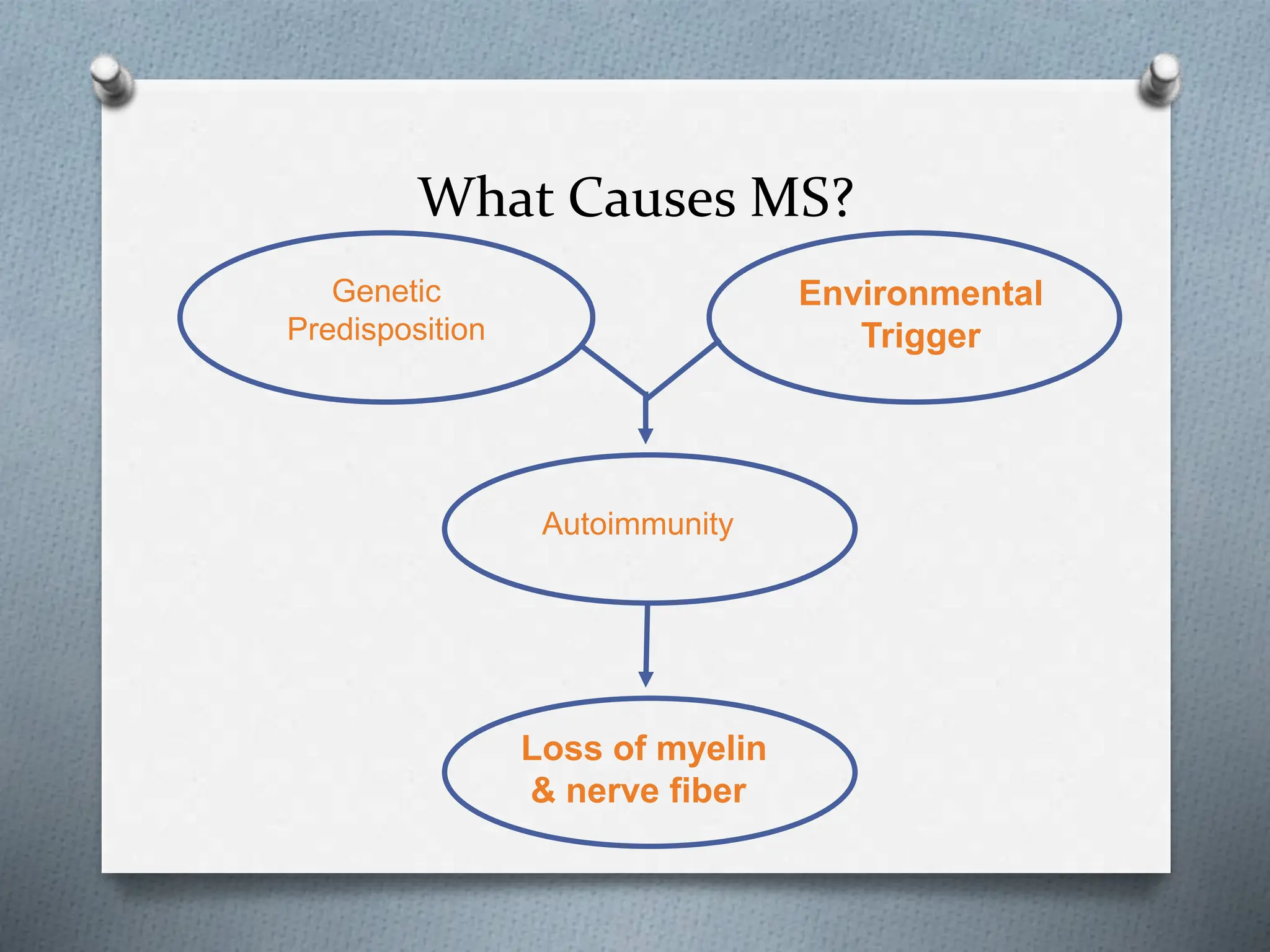
What Causes MS?
Genetic
Predisposition
Environmental
Trigger
Autoimmunity
Loss of myelin
& nerve fiber
Pathophysiology
O Mylelin sheath
O Segmented lamination that wraps axons of
many nerve cells
O Increases velocity of nerve impulse
conduction in the axons
O Composed of myelin, a substance with
high lipid content
Multiple Sclerosis
Pathophysiology
O Characterized by chronic inflammation,
demyelination, and gliosis (scarring) in the
CNS
O Initially triggered by a virus in genetically
susceptible individuals
O Subsequent antigen-antibody reaction
leads to demyelination of axons
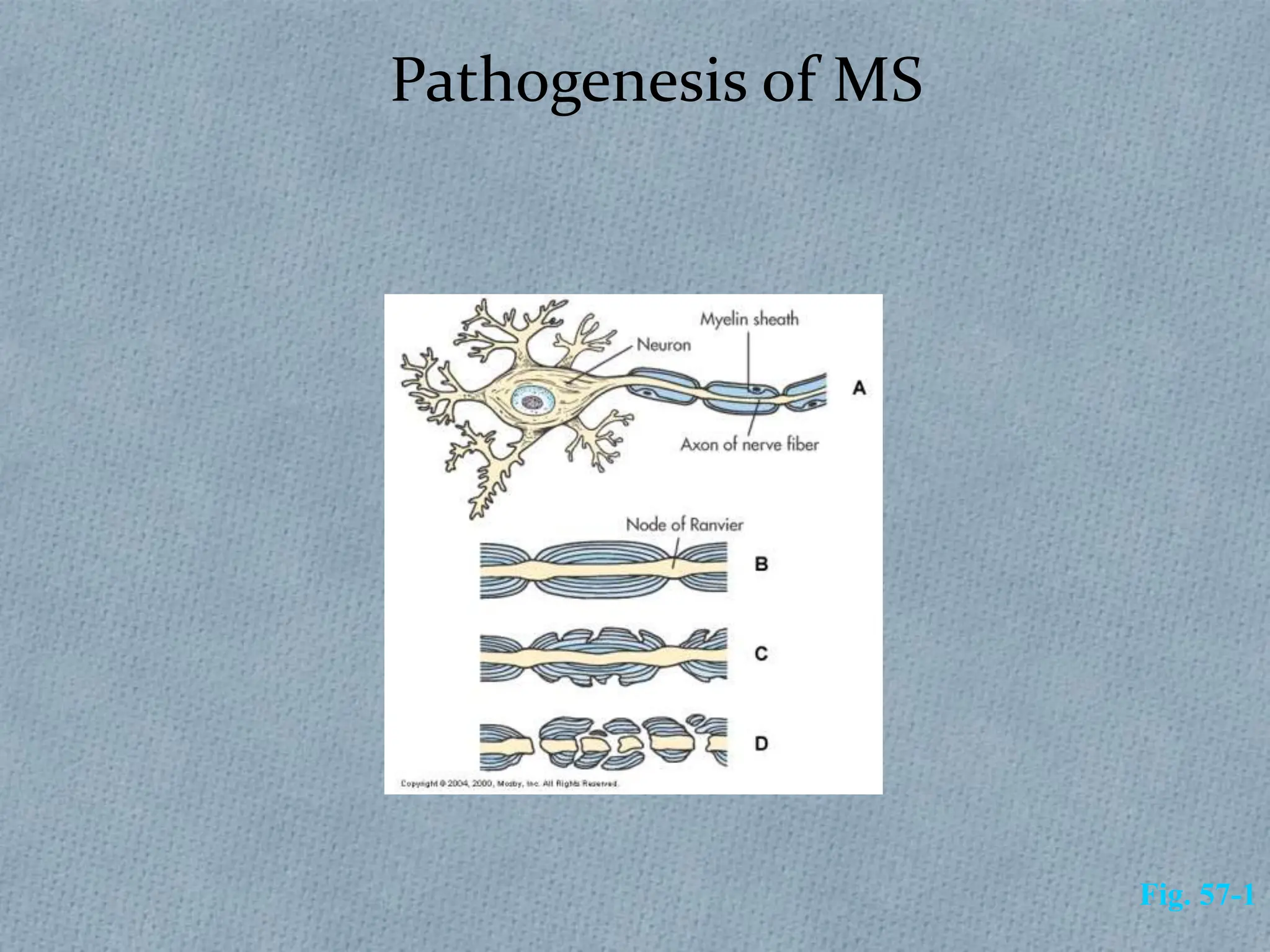
Pathogenesis of MS
Fig. 57-1
Multiple Sclerosis
Pathophysiology
O Disease process consists of loss of myelin,
disappearance of oligodendrocytes, and proliferation
of astrocytes
O Changes result in plaque formation with plaques
scattered throughout the CNS
Multiple Sclerosis
Pathophysiology
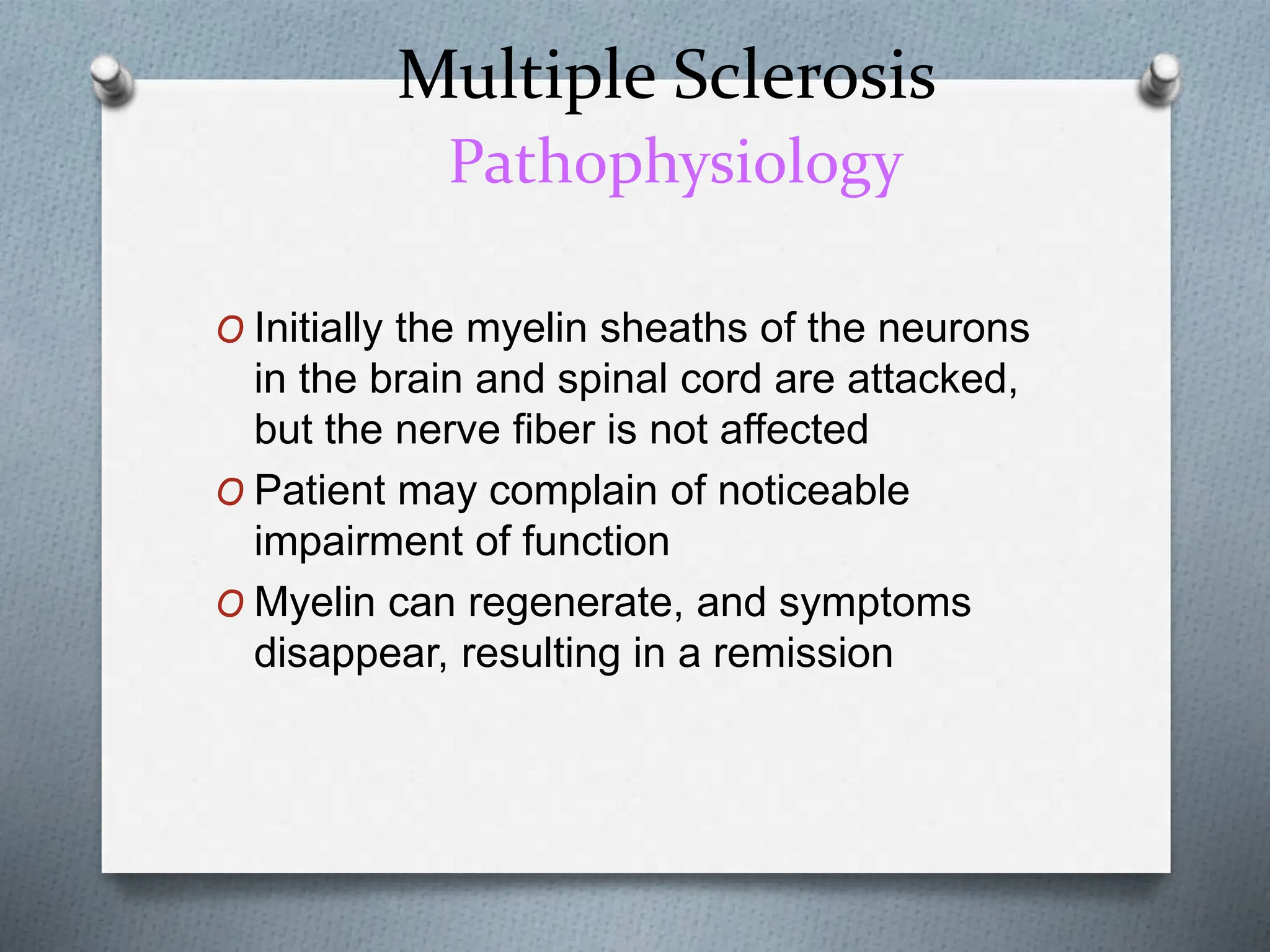
O Initially the myelin sheaths of the neurons
in the brain and spinal cord are attacked,
but the nerve fiber is not affected
O Patient may complain of noticeable
impairment of function
O Myelin can regenerate, and symptoms
disappear, resulting in a remission
Multiple Sclerosis
Etiology and Pathophysiology
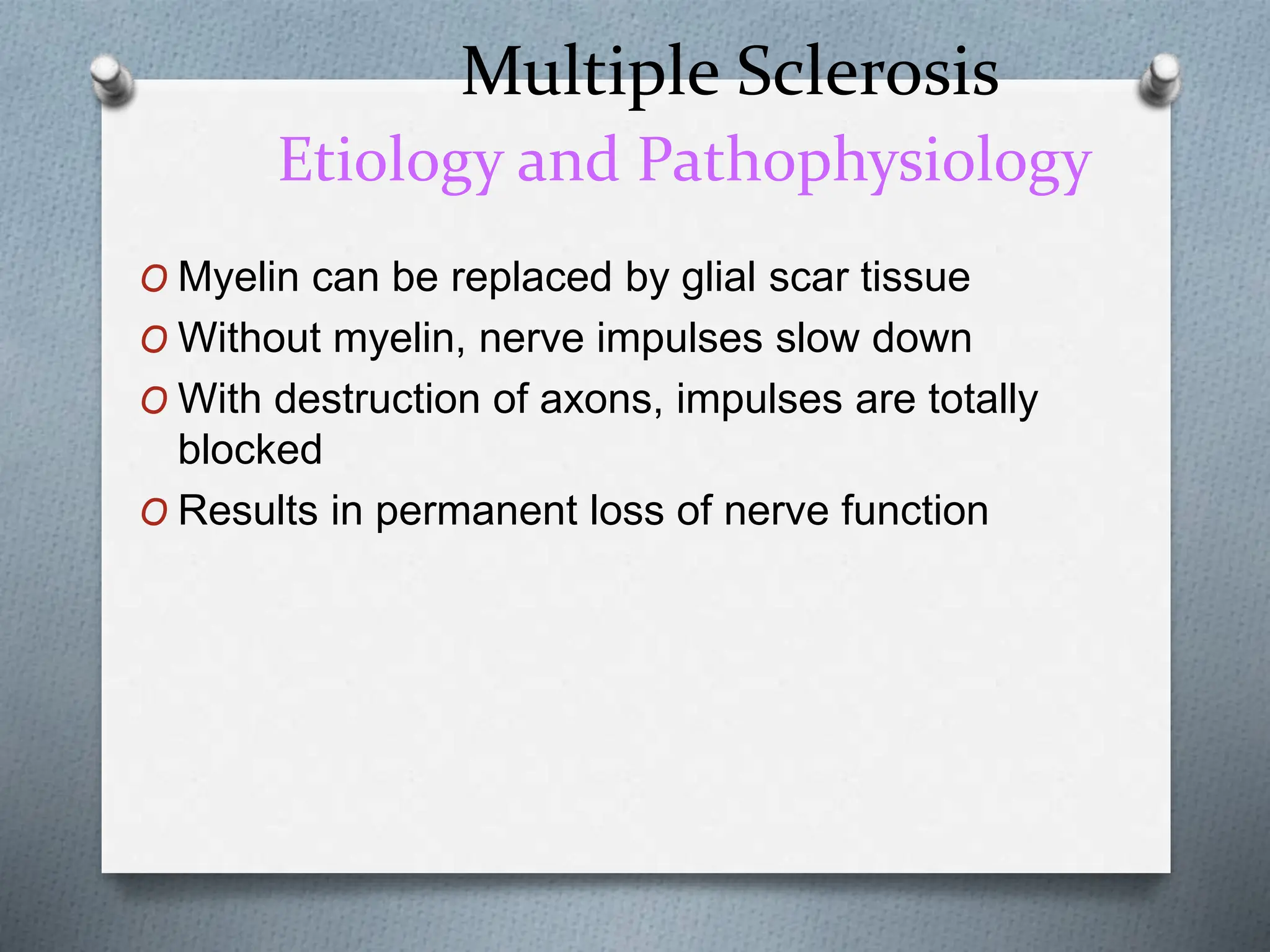
O Myelin can be replaced by glial scar tissue
O Without myelin, nerve impulses slow down
O With destruction of axons, impulses are totally
blocked
O Results in permanent loss of nerve function
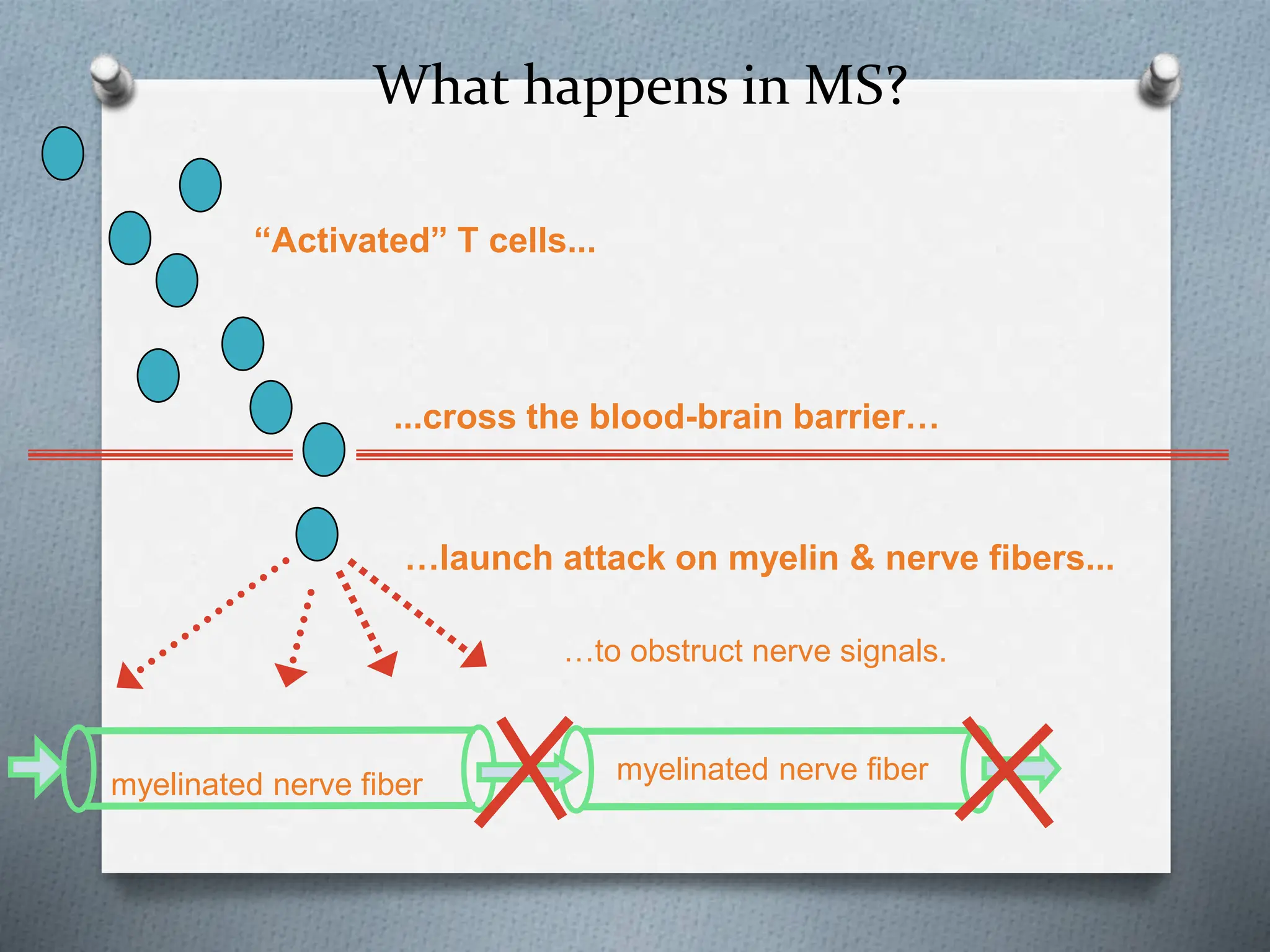
What happens in MS?
...cross the blood-brain barrier…
…launch attack on myelin & nerve fibers...
“Activated” T cells...
…to obstruct nerve signals.
myelinated nerve fiber myelinated nerve fiber
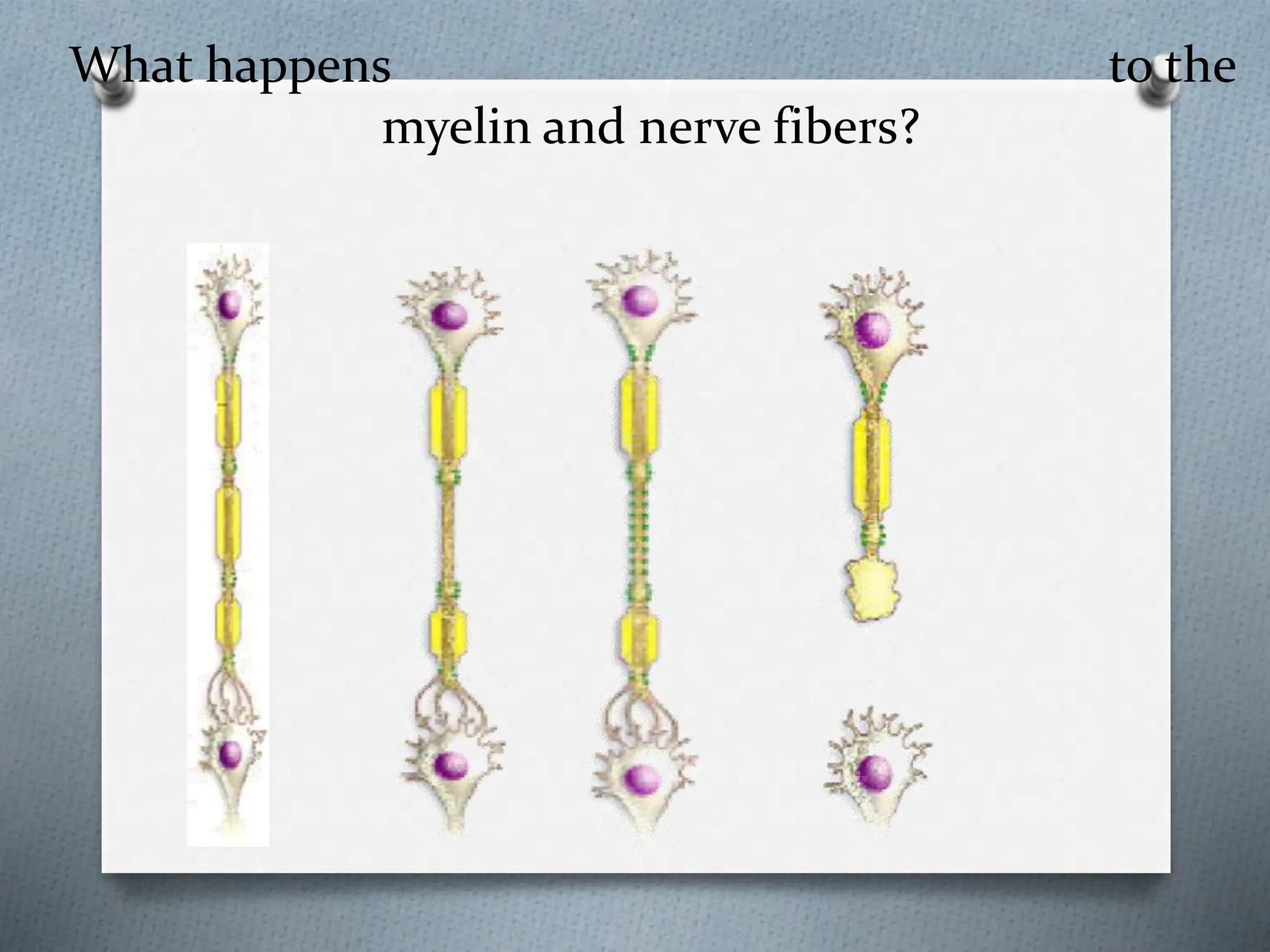
What happens to the
myelin and nerve fibers?
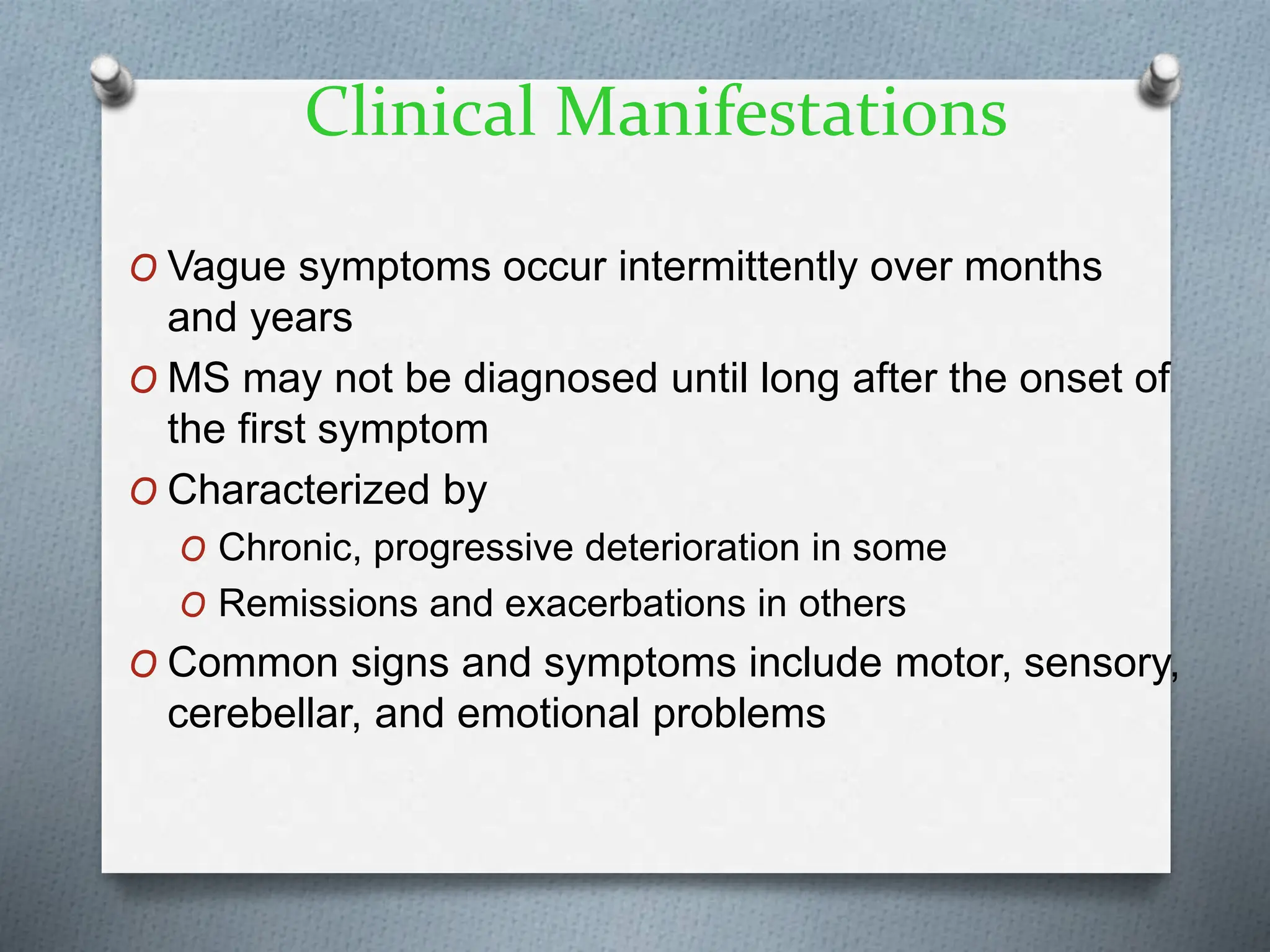
Clinical Manifestations
O Vague symptoms occur intermittently over months
and years
O MS may not be diagnosed until long after the onset of
the first symptom
O Characterized by
O Chronic, progressive deterioration in some
O Remissions and exacerbations in others
O Common signs and symptoms include motor, sensory,
cerebellar, and emotional problems
Clinical Manifestations
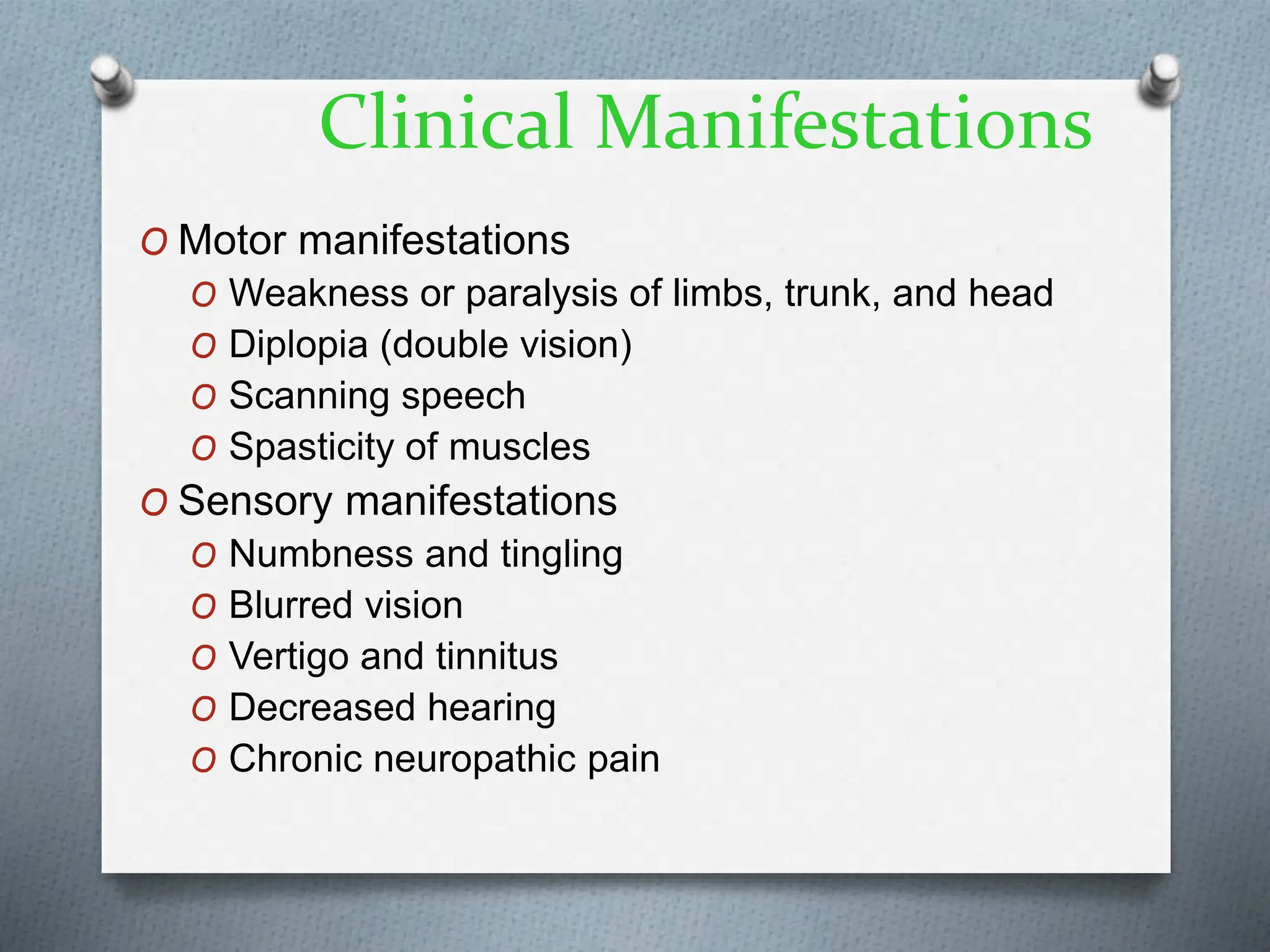
O Motor manifestations
O Weakness or paralysis of limbs, trunk, and head
O Diplopia (double vision)
O Scanning speech
O Spasticity of muscles
O Sensory manifestations
O Numbness and tingling
O Blurred vision
O Vertigo and tinnitus
O Decreased hearing
O Chronic neuropathic pain
Clinical Manifestations
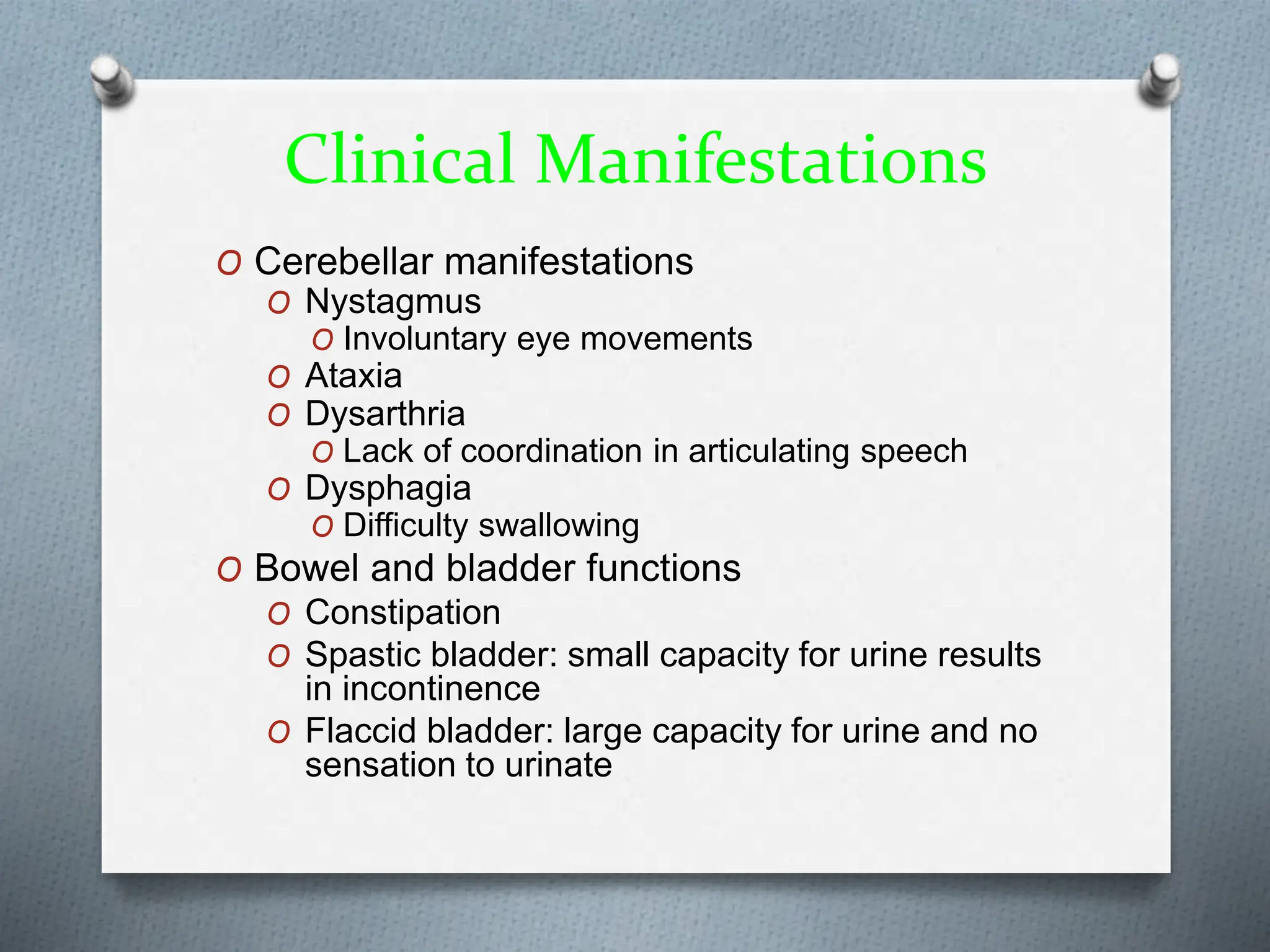
O Cerebellar manifestations
O Nystagmus
O Involuntary eye movements
O Ataxia
O Dysarthria
O Lack of coordination in articulating speech
O Dysphagia
O Difficulty swallowing
O Bowel and bladder functions
O Constipation
O Spastic bladder: small capacity for urine results
in incontinence
O Flaccid bladder: large capacity for urine and no
sensation to urinate
Clinical Manifestations
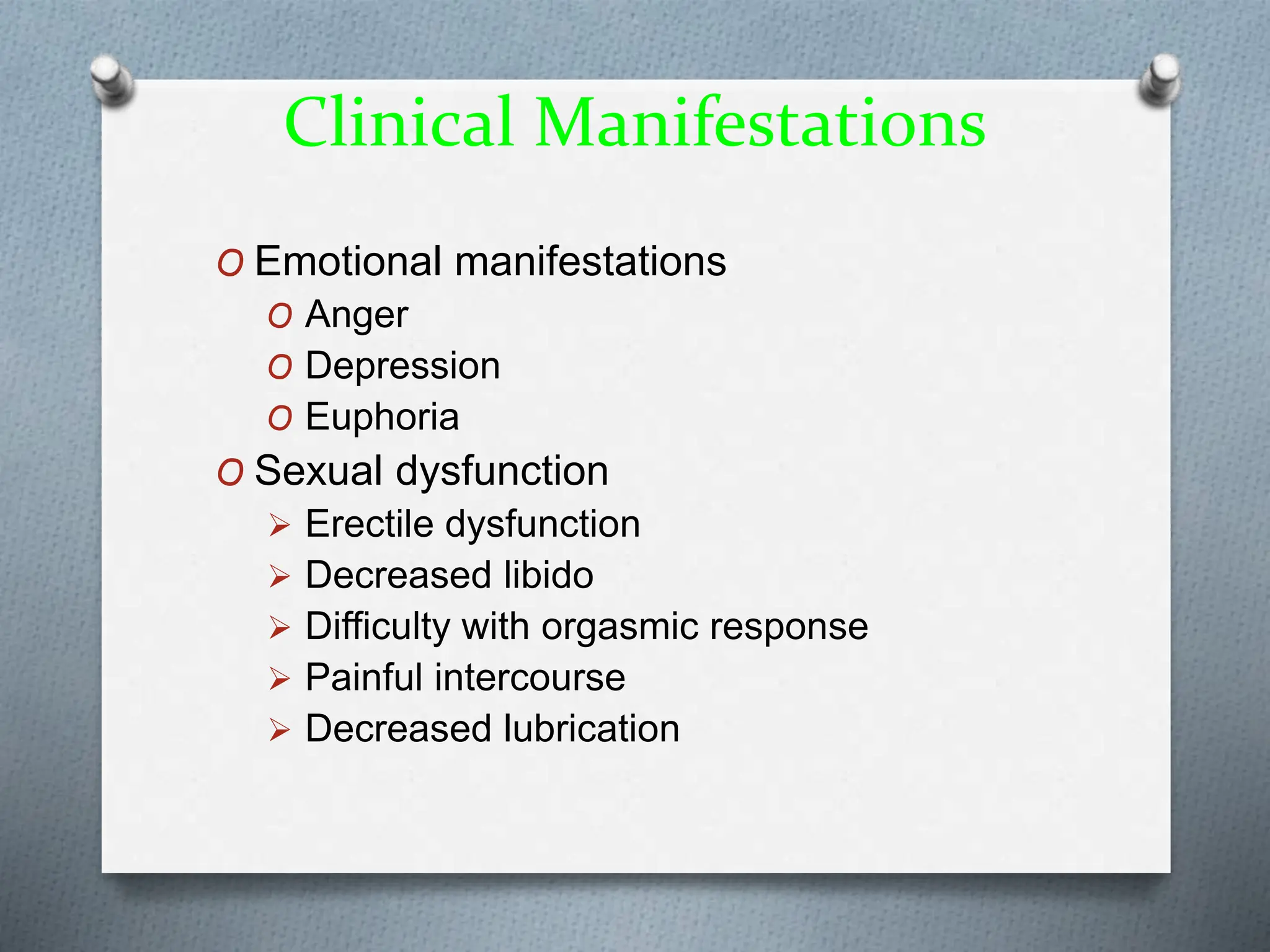
O Emotional manifestations
O Anger
O Depression
O Euphoria
O Sexual dysfunction
 Erectile dysfunction
 Decreased libido
 Difficulty with orgasmic response
 Painful intercourse
 Decreased lubrication
Different Patterns (courses) of
MS
ORelapsing-Remitting MS (RRMS)
OSecondary Progressive MS (SPMS)
OPrimary Progressive MS (PPMS)
OProgressive-Relapsing MS (PRMS)
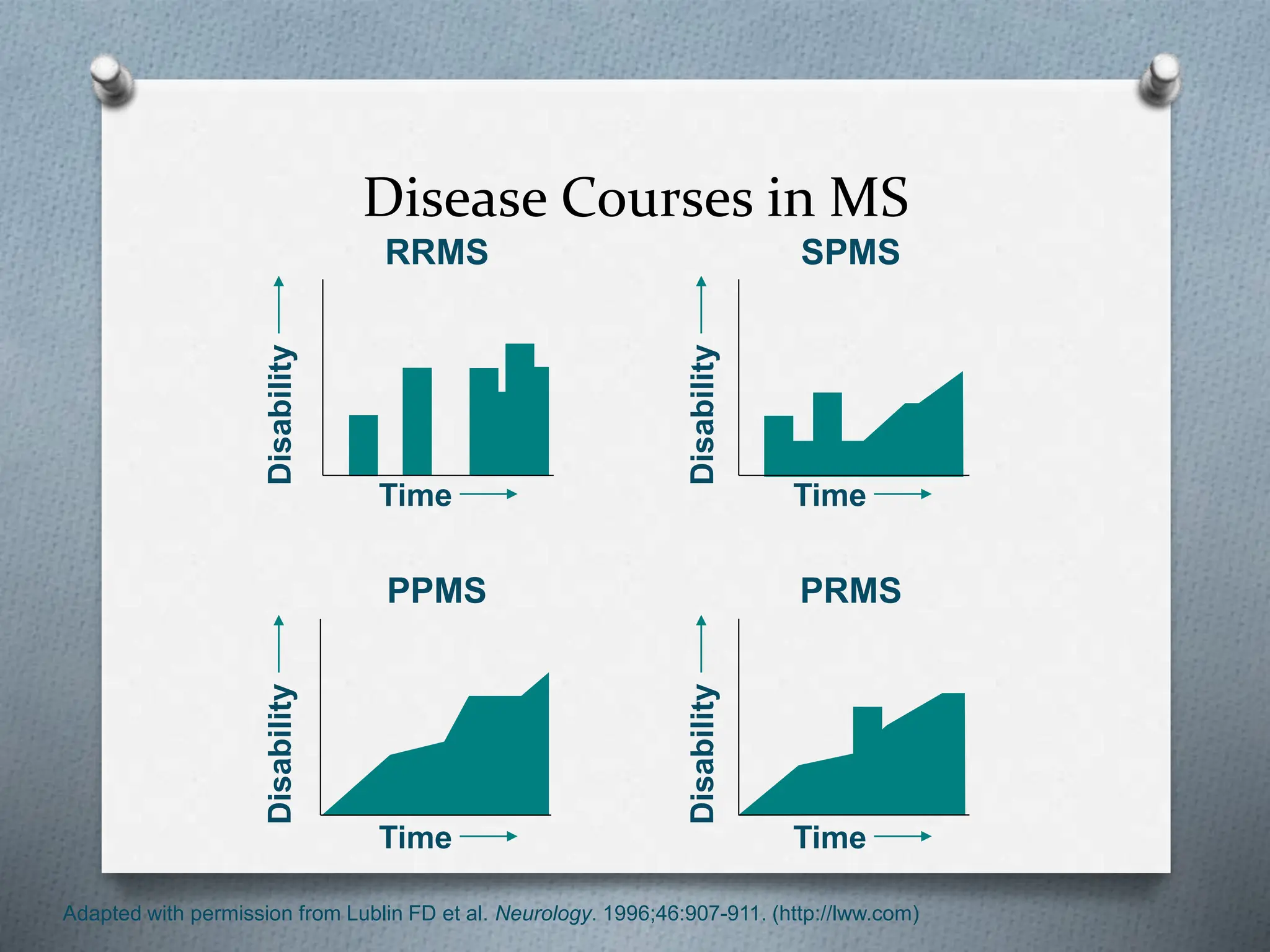
Adapted with permission from Lublin FD et al. Neurology. 1996;46:907-911. (http://lww.com)
RRMS
PPMS
Disability
Time
Time
Disability
SPMS
PRMS
Time
Time
Disability
Disability
Disease Courses in MS
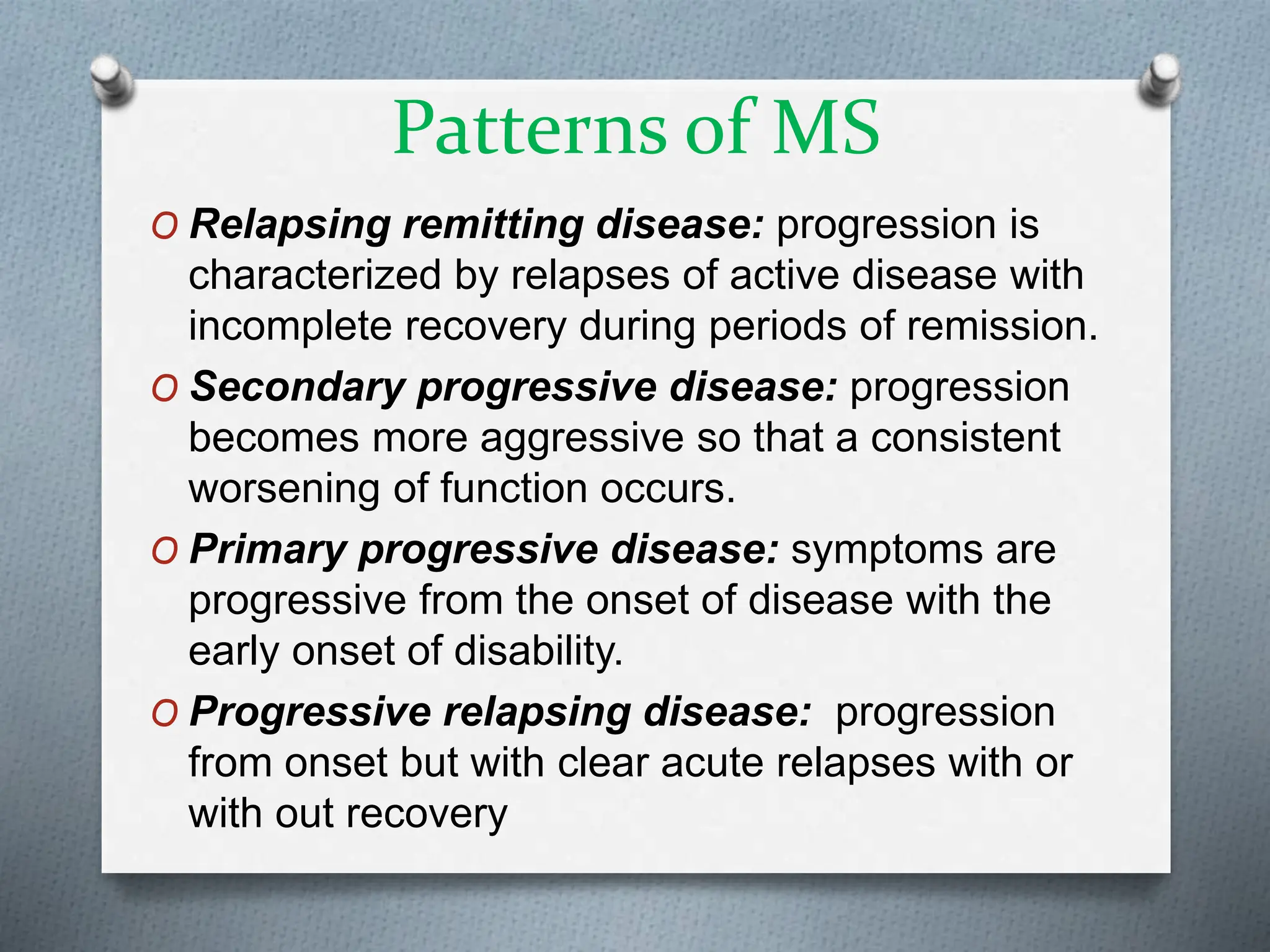
Patterns of MS
O Relapsing remitting disease: progression is
characterized by relapses of active disease with
incomplete recovery during periods of remission.
O Secondary progressive disease: progression
becomes more aggressive so that a consistent
worsening of function occurs.
O Primary progressive disease: symptoms are
progressive from the onset of disease with the
early onset of disability.
O Progressive relapsing disease: progression
from onset but with clear acute relapses with or
with out recovery
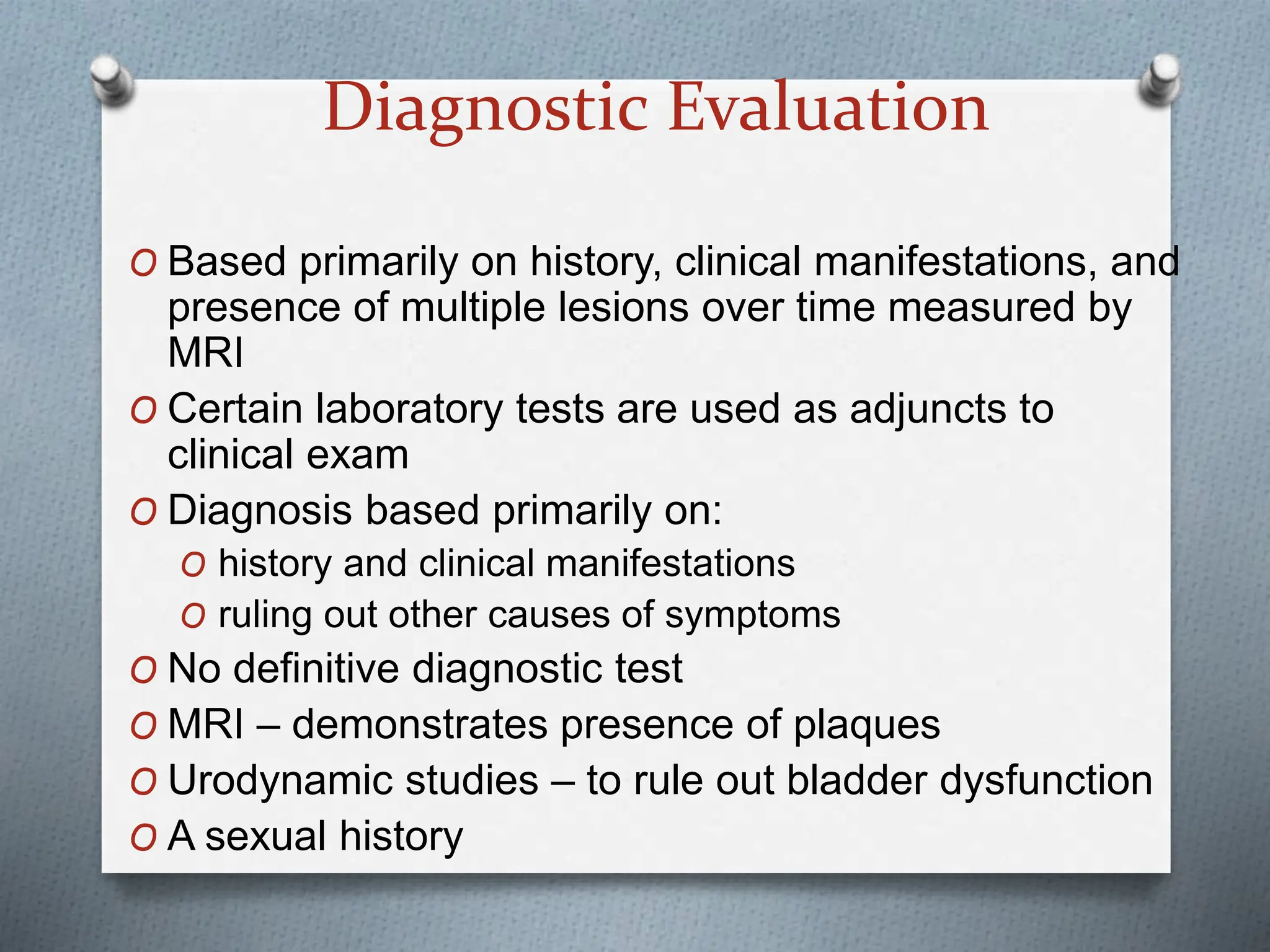
Diagnostic Evaluation
O Based primarily on history, clinical manifestations, and
presence of multiple lesions over time measured by
MRI
O Certain laboratory tests are used as adjuncts to
clinical exam
O Diagnosis based primarily on:
O history and clinical manifestations
O ruling out other causes of symptoms
O No definitive diagnostic test
O MRI – demonstrates presence of plaques
O Urodynamic studies – to rule out bladder dysfunction
O A sexual history
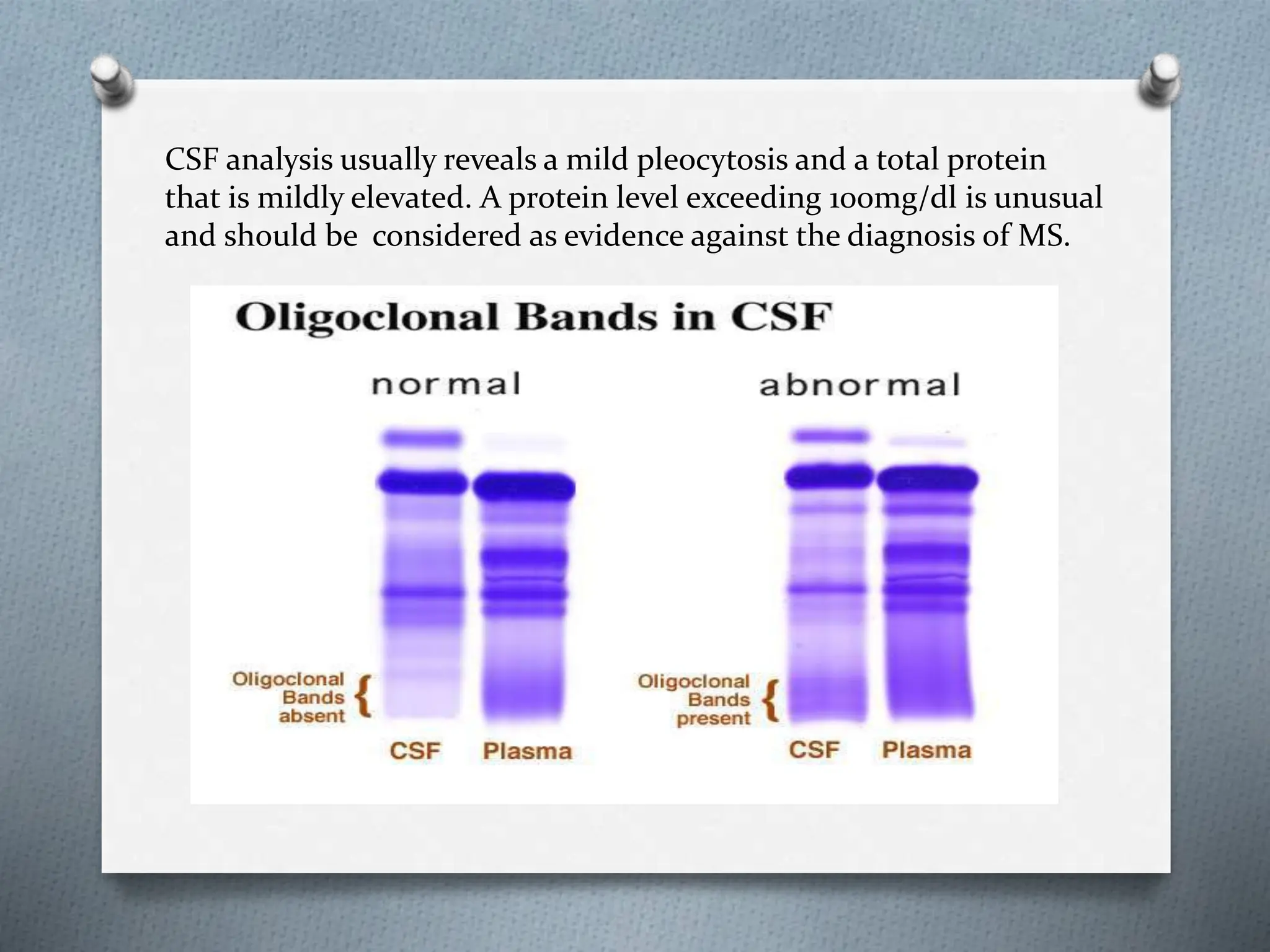
CSF analysis usually reveals a mild pleocytosis and a total protein
that is mildly elevated. A protein level exceeding 100mg/dl is unusual
and should be considered as evidence against the diagnosis of MS.
Management
O No cure exist for MS
O An individual treatment programe can be
helpful for relieving patients symptoms
O The goals of treatment are
O To delay the progression of disease
O Manage chronic symptoms
O Treat acute excerbations
Pharmacologic Therapy
O Disease modifying therapy :
O It reduces frequency of relapse,duration of
relapse and the no. and size of plaques
observed in MRI
O Interferon beta 1 a (rebif) and interferon
beta 1 b (beta seron) is administered SC
every other day.
O Interferon beta 1 a (Aronex) is
administered once a week (IM)
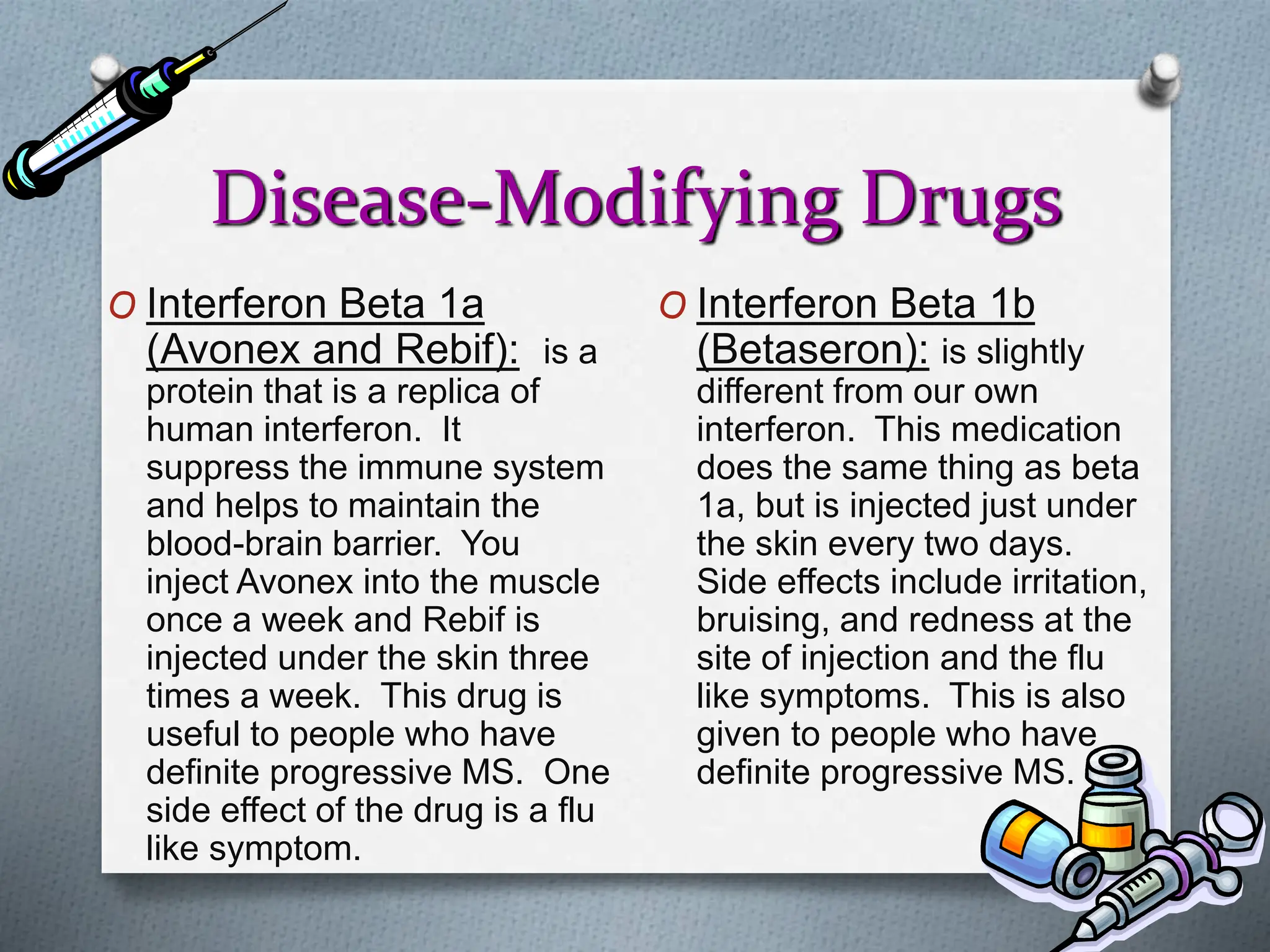
Disease-Modifying Drugs
O Interferon Beta 1a
(Avonex and Rebif): is a
protein that is a replica of
human interferon. It
suppress the immune system
and helps to maintain the
blood-brain barrier. You
inject Avonex into the muscle
once a week and Rebif is
injected under the skin three
times a week. This drug is
useful to people who have
definite progressive MS. One
side effect of the drug is a flu
like symptom.
O Interferon Beta 1b
(Betaseron): is slightly
different from our own
interferon. This medication
does the same thing as beta
1a, but is injected just under
the skin every two days.
Side effects include irritation,
bruising, and redness at the
site of injection and the flu
like symptoms. This is also
given to people who have
definite progressive MS.
Glatiramer
acetate(copaxone)
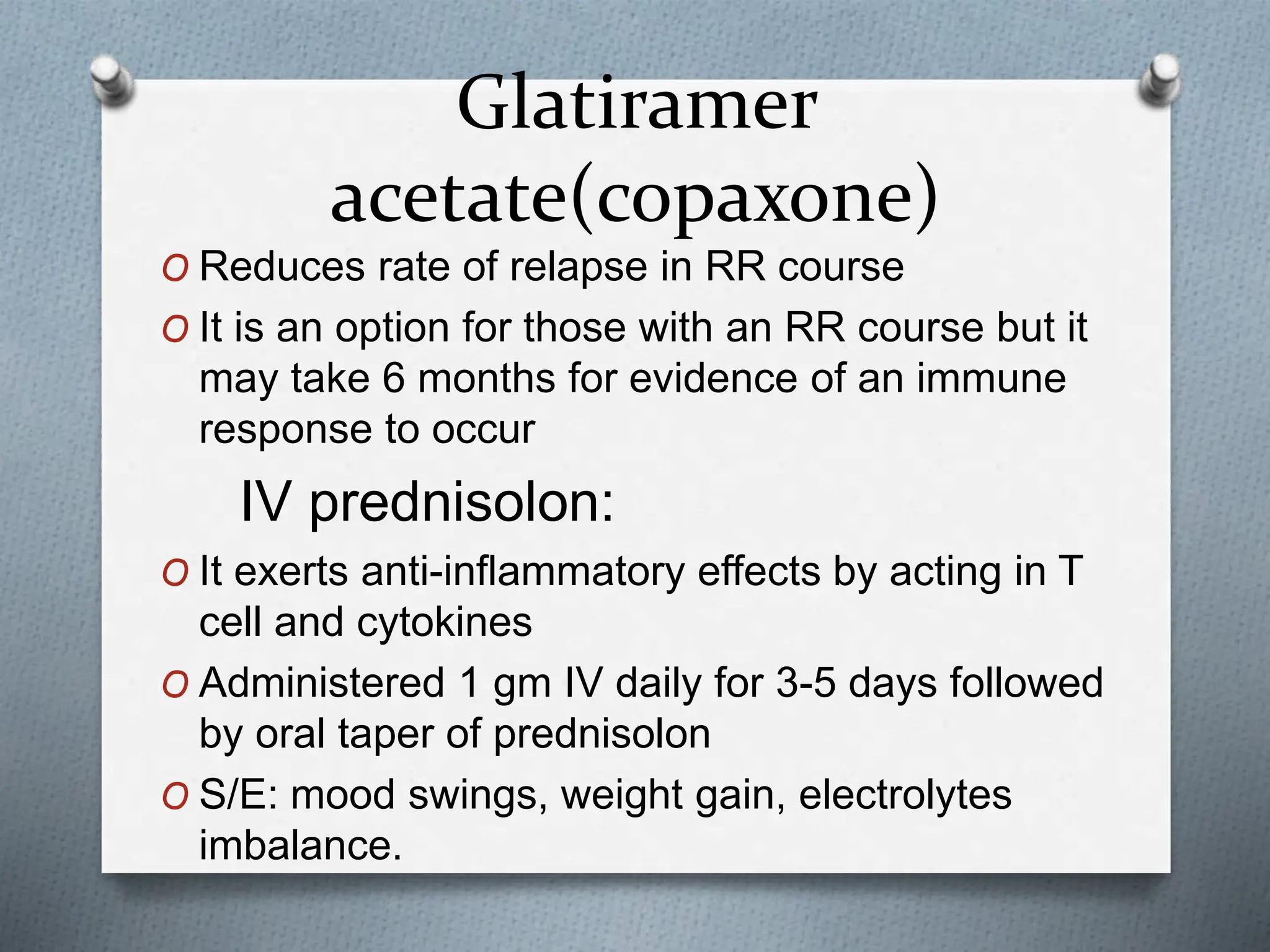
O Reduces rate of relapse in RR course
O It is an option for those with an RR course but it
may take 6 months for evidence of an immune
response to occur
IV prednisolon:
O It exerts anti-inflammatory effects by acting in T
cell and cytokines
O Administered 1 gm IV daily for 3-5 days followed
by oral taper of prednisolon
O S/E: mood swings, weight gain, electrolytes
imbalance.
Mitoxanthrone
O It reduce frequency of clinical relapse in pt
with secondary progressive or worsening
RR MS
O SE: cardiac toxicity
O Maximum lifetime dose can be
administered.
Symptom Management
O Spasticity- Baclofen, Tizanidine, Diazepam, Dantrolene
O Nerveblocks or surgical intervention- for disabling
symptoms
O Optic Neuritis- Methlyprednisolone, Oral steroids
O Ataxia- beta adrenergic blockers
O Bladder and bowel problems-anti cholinergic agents, a-
adrenergic blocker,anti spasmodic agents
O UTI- ascorbic acid to acidify urine,making bacterial growth
less likely
O Fatigue- Antidepressant, Amantadine
O Pain- Codeine, Aspirin
O Sexual Dysfunction- Viagra, Pravatine
O Tremor- Isoniazid, Primidone, Propranolol
TYPES OF EXERCISE
O Strengthening
O Aerobics
O Stretching
O Range of motion
O Passive stretching
O Posture exercise
O Physical therapy helps to
 Relieve spasticity
 Increase coordination
 Train the patient to substitute unaffected muscles for
impaired ones
Nutritional therapy
O includes megavitamins and diets consisting of low-
fat, gluten-free food, and raw vegetables
O High-protein diet with supplementary vitamins is often
prescribed
Nursing Assessment
O Health History
 Risk factors
 Precipitation factors
 Clinical manifestations
Nursing Diagnoses
O Impaired physical mobility
O Dressing/grooming self-care deficit
O Risk for impaired skin integrity
O Impaired urinary elimination pattern
O Sexual dysfunction
O Interrupted family processes
Nursing Planning
O Maximize neuromuscular function
O Maintain independence in activities of daily living for
as long as possible
O Optimize psychosocial well-being
O Adjust to the illness
O Reduce factors that precipitate exacerbations
Nursing Implementation
O Help identify triggers and develop ways to avoid them
or minimize their effects
O Reassure patient during diagnostic phase
O Assist in dealing with anxiety caused by diagnosis
O Prevent major complications of immobility
O Focus teaching on building general resistance to
illness
 Avoiding fatigue, extremes of hot and cold, exposure to
infection
O Teach good balance of exercise and rest, nutrition,
avoidance of hazards of immobility
Nursing Implementation
O Teach self-catheterization if necessary
O Teach adequate intake of fiber to aid in regular bowel
habits
MultipleSclerosis.ppt MSN II nervous system

MultipleSclerosis.ppt MSN II nervous system

  • 1.
  • 2.
    Introduction  It isan Auto Immune Disease which is when the body starts to destroy itself.  It is a life-long disease with no cure.  In MS, the body attacks and destroys the fatty tissue called myelin that insulates an axon/nerve, and is called demyelination.  If damage is severe it can also destroy the nerve/axon itself.  MS affects the central nervous system and inflames the white matter in the brain which creates plaques. .
  • 3.
    Multiple Sclerosis O Chronic,progressive, degenerative disorder of the CNS characterized by disseminated demyelination of nerve fibers of the brain and spinal cord
  • 4.
    The Human NervousSystem O Areas affected by MS O Brain O Spinal cord O Optic nerves (http://web.lemoyne.edu/~hevern/psy340/lectures/psy340.04.2.ns.structure.html)
  • 5.
    O MS isthought to be a disease of the immune system – perhaps autoimmune. O The immune system attacks the myelin coating around the nerves in the central nervous system (CNS – brain, spinal cord, and optic nerves) and the nerve fibers themselves. O Its name comes from the scarring caused by inflammatory attacks at multiple sites in the central nervous system.
  • 6.
    MS is aDemyelinating Disease Myelin – provides insulation to nerve processes (axons) Blood vessel Blood vessel Blood vessel Inflammation Inflammation Inflammation Myelin – provides insulation to nerve processes (axons) Blood vessel Blood vessel Blood vessel Blood vessel Blood vessel Blood vessel Inflammation Inflammation Inflammation Inflammation Inflammation Inflammation
  • 7.
    Etiology O Unknown cause ORelated to infectious, immunologic, and genetic factors O Environmental factors
  • 8.
    Risk Factors O Age.between the ages of 15 and 60. O Sex. Women are about twice as likely as men are to develop MS. O Family history. Persons at risk are whose parents and siblings have Hx of MS O Certain infections.Epstein-Barr, the virus that causes infectious mononucleosis. O Race. White people, particularly those of Northern European descent, are at highest risk of developing MS. People of Asian, African or Native American descent have the lowest risk. O Climate. MS is far more common in countries with temperate climates, including Canada, the northern United States, New Zealand, southeastern Australia and Europe. O Certain autoimmune diseases. Thyroid disease, type 1 diabetes or inflammatory bowel disease. O Smoking. Smokers who experience an initial event of symptoms that may signal MS are more likely than nonsmokers to develop a second event that confirms relapsing-remitting MS.
  • 9.
    Precipitating factors  Infection Physical injury  Emotional stress  Excessive fatigue  Pregnancy  Poor state of health
  • 10.
  • 11.
    Pathophysiology O Mylelin sheath OSegmented lamination that wraps axons of many nerve cells O Increases velocity of nerve impulse conduction in the axons O Composed of myelin, a substance with high lipid content
  • 12.
    Multiple Sclerosis Pathophysiology O Characterizedby chronic inflammation, demyelination, and gliosis (scarring) in the CNS O Initially triggered by a virus in genetically susceptible individuals O Subsequent antigen-antibody reaction leads to demyelination of axons
  • 13.
  • 14.
    Multiple Sclerosis Pathophysiology O Diseaseprocess consists of loss of myelin, disappearance of oligodendrocytes, and proliferation of astrocytes O Changes result in plaque formation with plaques scattered throughout the CNS
  • 15.
    Multiple Sclerosis Pathophysiology O Initiallythe myelin sheaths of the neurons in the brain and spinal cord are attacked, but the nerve fiber is not affected O Patient may complain of noticeable impairment of function O Myelin can regenerate, and symptoms disappear, resulting in a remission
  • 16.
    Multiple Sclerosis Etiology andPathophysiology O Myelin can be replaced by glial scar tissue O Without myelin, nerve impulses slow down O With destruction of axons, impulses are totally blocked O Results in permanent loss of nerve function
  • 17.
    What happens inMS? ...cross the blood-brain barrier… …launch attack on myelin & nerve fibers... “Activated” T cells... …to obstruct nerve signals. myelinated nerve fiber myelinated nerve fiber
  • 18.
    What happens tothe myelin and nerve fibers?
  • 19.
    Clinical Manifestations O Vaguesymptoms occur intermittently over months and years O MS may not be diagnosed until long after the onset of the first symptom O Characterized by O Chronic, progressive deterioration in some O Remissions and exacerbations in others O Common signs and symptoms include motor, sensory, cerebellar, and emotional problems
  • 20.
    Clinical Manifestations O Motormanifestations O Weakness or paralysis of limbs, trunk, and head O Diplopia (double vision) O Scanning speech O Spasticity of muscles O Sensory manifestations O Numbness and tingling O Blurred vision O Vertigo and tinnitus O Decreased hearing O Chronic neuropathic pain
  • 21.
    Clinical Manifestations O Cerebellarmanifestations O Nystagmus O Involuntary eye movements O Ataxia O Dysarthria O Lack of coordination in articulating speech O Dysphagia O Difficulty swallowing O Bowel and bladder functions O Constipation O Spastic bladder: small capacity for urine results in incontinence O Flaccid bladder: large capacity for urine and no sensation to urinate
  • 22.
    Clinical Manifestations O Emotionalmanifestations O Anger O Depression O Euphoria O Sexual dysfunction  Erectile dysfunction  Decreased libido  Difficulty with orgasmic response  Painful intercourse  Decreased lubrication
  • 23.
    Different Patterns (courses)of MS ORelapsing-Remitting MS (RRMS) OSecondary Progressive MS (SPMS) OPrimary Progressive MS (PPMS) OProgressive-Relapsing MS (PRMS)
  • 24.
    Adapted with permissionfrom Lublin FD et al. Neurology. 1996;46:907-911. (http://lww.com) RRMS PPMS Disability Time Time Disability SPMS PRMS Time Time Disability Disability Disease Courses in MS
  • 25.
    Patterns of MS ORelapsing remitting disease: progression is characterized by relapses of active disease with incomplete recovery during periods of remission. O Secondary progressive disease: progression becomes more aggressive so that a consistent worsening of function occurs. O Primary progressive disease: symptoms are progressive from the onset of disease with the early onset of disability. O Progressive relapsing disease: progression from onset but with clear acute relapses with or with out recovery
  • 26.
    Diagnostic Evaluation O Basedprimarily on history, clinical manifestations, and presence of multiple lesions over time measured by MRI O Certain laboratory tests are used as adjuncts to clinical exam O Diagnosis based primarily on: O history and clinical manifestations O ruling out other causes of symptoms O No definitive diagnostic test O MRI – demonstrates presence of plaques O Urodynamic studies – to rule out bladder dysfunction O A sexual history
  • 27.
    CSF analysis usuallyreveals a mild pleocytosis and a total protein that is mildly elevated. A protein level exceeding 100mg/dl is unusual and should be considered as evidence against the diagnosis of MS.
  • 28.
    Management O No cureexist for MS O An individual treatment programe can be helpful for relieving patients symptoms O The goals of treatment are O To delay the progression of disease O Manage chronic symptoms O Treat acute excerbations
  • 29.
    Pharmacologic Therapy O Diseasemodifying therapy : O It reduces frequency of relapse,duration of relapse and the no. and size of plaques observed in MRI O Interferon beta 1 a (rebif) and interferon beta 1 b (beta seron) is administered SC every other day. O Interferon beta 1 a (Aronex) is administered once a week (IM)
  • 30.
    Disease-Modifying Drugs O InterferonBeta 1a (Avonex and Rebif): is a protein that is a replica of human interferon. It suppress the immune system and helps to maintain the blood-brain barrier. You inject Avonex into the muscle once a week and Rebif is injected under the skin three times a week. This drug is useful to people who have definite progressive MS. One side effect of the drug is a flu like symptom. O Interferon Beta 1b (Betaseron): is slightly different from our own interferon. This medication does the same thing as beta 1a, but is injected just under the skin every two days. Side effects include irritation, bruising, and redness at the site of injection and the flu like symptoms. This is also given to people who have definite progressive MS.
  • 31.
    Glatiramer acetate(copaxone) O Reduces rateof relapse in RR course O It is an option for those with an RR course but it may take 6 months for evidence of an immune response to occur IV prednisolon: O It exerts anti-inflammatory effects by acting in T cell and cytokines O Administered 1 gm IV daily for 3-5 days followed by oral taper of prednisolon O S/E: mood swings, weight gain, electrolytes imbalance.
  • 32.
    Mitoxanthrone O It reducefrequency of clinical relapse in pt with secondary progressive or worsening RR MS O SE: cardiac toxicity O Maximum lifetime dose can be administered.
  • 33.
    Symptom Management O Spasticity-Baclofen, Tizanidine, Diazepam, Dantrolene O Nerveblocks or surgical intervention- for disabling symptoms O Optic Neuritis- Methlyprednisolone, Oral steroids O Ataxia- beta adrenergic blockers O Bladder and bowel problems-anti cholinergic agents, a- adrenergic blocker,anti spasmodic agents O UTI- ascorbic acid to acidify urine,making bacterial growth less likely O Fatigue- Antidepressant, Amantadine O Pain- Codeine, Aspirin O Sexual Dysfunction- Viagra, Pravatine O Tremor- Isoniazid, Primidone, Propranolol
  • 34.
    TYPES OF EXERCISE OStrengthening O Aerobics O Stretching O Range of motion O Passive stretching O Posture exercise O Physical therapy helps to  Relieve spasticity  Increase coordination  Train the patient to substitute unaffected muscles for impaired ones
  • 35.
    Nutritional therapy O includesmegavitamins and diets consisting of low- fat, gluten-free food, and raw vegetables O High-protein diet with supplementary vitamins is often prescribed
  • 36.
    Nursing Assessment O HealthHistory  Risk factors  Precipitation factors  Clinical manifestations
  • 37.
    Nursing Diagnoses O Impairedphysical mobility O Dressing/grooming self-care deficit O Risk for impaired skin integrity O Impaired urinary elimination pattern O Sexual dysfunction O Interrupted family processes
  • 38.
    Nursing Planning O Maximizeneuromuscular function O Maintain independence in activities of daily living for as long as possible O Optimize psychosocial well-being O Adjust to the illness O Reduce factors that precipitate exacerbations
  • 39.
    Nursing Implementation O Helpidentify triggers and develop ways to avoid them or minimize their effects O Reassure patient during diagnostic phase O Assist in dealing with anxiety caused by diagnosis O Prevent major complications of immobility O Focus teaching on building general resistance to illness  Avoiding fatigue, extremes of hot and cold, exposure to infection O Teach good balance of exercise and rest, nutrition, avoidance of hazards of immobility
  • 40.
    Nursing Implementation O Teachself-catheterization if necessary O Teach adequate intake of fiber to aid in regular bowel habits

Editor's Notes