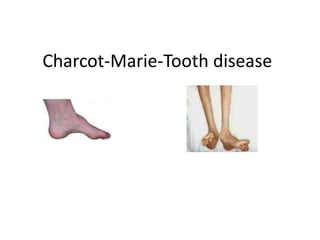
Charcot-Marie-Tooth disease
Types of Hereditary motor and sensory
neuropathy(HMSN)
• 1-CMT(Hypertrophic demyelinating)
• 2-CMT(Axonal)
• 3-Dejerine-sotta’s disease(AR)
• 4-Refsum’s disease(AR)
• 5-Spastic paraplegia
• 6-With optic atrophy
• 7-With Retinitis pigmentosa
Introduction
• One of most common inherited Neurological
disorders
• Compromises a group of disorders that affect
peripheral nerves
• Gradual progression of disease
• Occurs in adolescent or early childhood
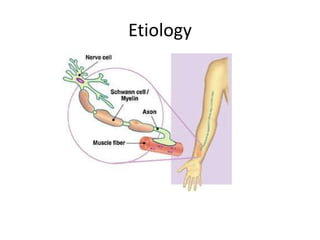
Etiology
• Mutations in genes that produce proteins
involved in the structure and function of
peripheral nerve axon or the myelin sheath
Types
• CMT – 1 AD Duplication of gene on
chromosome 17
• CMT – 2 Abnormalities in the axon of
peripheral nerve cell
• CMT – 3 Severe demyelinating neuropathy
• CMT – 4 AR Demyelinating motor and sensory
neuropathies
• CMT – X X linked dominant disease / point
mutation in connexin-32 gene on X
chromosome
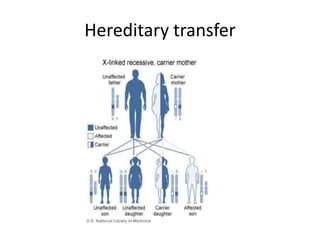
Hereditary transfer
Clinical features
• Weakness in feet and lower leg muscles
• Deformities – frequent tripping and falling
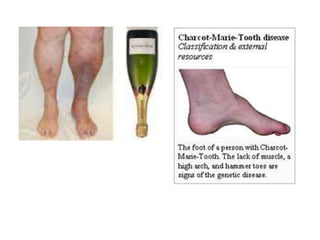
• Loss of muscle bulk in lower leg – ‘inverted
champagne bottle appearance’ / stork leg
appearance(distal muscle wasting)
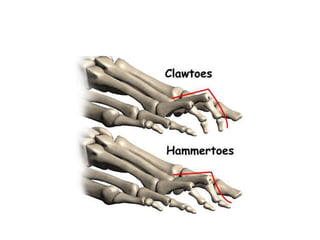
• Bony abnormalities – long standing cases –
PES CAVUS(high arch foot) , forefoot cavus
deformity(denervation of lumbricals)
Other features
• Spine – thoracic scoliosis
• Diminished or absent DTR
• Diminished vibration and proprioception sense
• Sensory gait ataxia
• Essential tremors
• SNHL
• Palpable peripheral nerves, diaphragmatic
weakness, vocal cord involvement
DIAGNOSTIC WORKUP
• Patient’s history
• Family history
• Symptoms
• Neurological findings
• Radiological evidences
• Electrodiagnostic tests
Treatment options
• Deformity correction
Plantar fascia release,
metatarsal osteotomy, calcaneal osteotomy ,
triple arthrodesis
• Rebalancing of deforming muscle forces
EDL transfer , posterior tibial
tendon transfer, Achillus tension lengthening,
peroneus longus to peroneus brevis tendon
transfer
Charcot marie-tooth disease

Charcot marie-tooth disease

  • 1.
  • 2.
    Types of Hereditarymotor and sensory neuropathy(HMSN) • 1-CMT(Hypertrophic demyelinating) • 2-CMT(Axonal) • 3-Dejerine-sotta’s disease(AR) • 4-Refsum’s disease(AR) • 5-Spastic paraplegia • 6-With optic atrophy • 7-With Retinitis pigmentosa
  • 3.
    Introduction • One ofmost common inherited Neurological disorders • Compromises a group of disorders that affect peripheral nerves • Gradual progression of disease • Occurs in adolescent or early childhood
  • 4.
  • 5.
    • Mutations ingenes that produce proteins involved in the structure and function of peripheral nerve axon or the myelin sheath
  • 6.
    Types • CMT –1 AD Duplication of gene on chromosome 17 • CMT – 2 Abnormalities in the axon of peripheral nerve cell • CMT – 3 Severe demyelinating neuropathy • CMT – 4 AR Demyelinating motor and sensory neuropathies • CMT – X X linked dominant disease / point mutation in connexin-32 gene on X chromosome
  • 7.
  • 8.
    Clinical features • Weaknessin feet and lower leg muscles • Deformities – frequent tripping and falling • Loss of muscle bulk in lower leg – ‘inverted champagne bottle appearance’ / stork leg appearance(distal muscle wasting) • Bony abnormalities – long standing cases – PES CAVUS(high arch foot) , forefoot cavus deformity(denervation of lumbricals)
  • 11.
    Other features • Spine– thoracic scoliosis • Diminished or absent DTR • Diminished vibration and proprioception sense • Sensory gait ataxia • Essential tremors • SNHL • Palpable peripheral nerves, diaphragmatic weakness, vocal cord involvement
  • 12.
    DIAGNOSTIC WORKUP • Patient’shistory • Family history • Symptoms • Neurological findings • Radiological evidences • Electrodiagnostic tests
  • 13.
    Treatment options • Deformitycorrection Plantar fascia release, metatarsal osteotomy, calcaneal osteotomy , triple arthrodesis • Rebalancing of deforming muscle forces EDL transfer , posterior tibial tendon transfer, Achillus tension lengthening, peroneus longus to peroneus brevis tendon transfer