By,
Ms. Ekta S Patel
II Year M.Sc Nursing
MSN(Neuroscience)
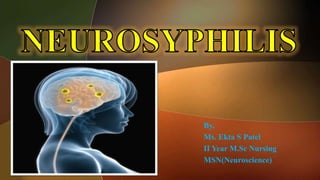
 Neurosyphilis is an infection of any part of the
nervous system resulting from infection by
spirochete Treponema pallidum. It develops after
inadequate treatment of elderly syphilis.
 Primary infection of syphilis is characterized by a
chancre (firm and painless genital ulcer).
 A secondary bacteremic stage may occur 2-12
weeks later and these results in generalized
mucocutaneous lesions (palmar – plantar rash)
and lymphadenopathy.
 Following latent period of 15-20 years tertiary
syphilis manifest as a slowly progressive
systemic inflammatory disease of skin
(gummas), heart (aortitis), and eyes
(choriorentinitis).
 Tertiary neurosyphilis develops in 7% of
patients with untreated primary syphilis and
result in chronic meningeal and parenchymal
inflammation.
 Neurosyphilis is defined as syphilis
of the spinal cord characterized by
degeneration of sensory neurons
and stabbing pains in the trunk and
legs and unsteady gait and
incontinence and impotence.
 The main cause of neurosyphilis is
from the bacteria that cause syphilis
which is called the Treponema
pallidum.
 Pathophysiology is extensive and
includes the meninges, blood
vessels, brain, spinal cord and
peripheral nerves.
The meninges are
congested and the pia-
archnoid is infiltrated
with lymphocytes that
greater around blood
vessels.
The blood vessels show
proliferation of intima
Splitting of elastica and
cellular infiltration
resulting severe
panarteritis
Lack of blood supply due
to arterial disease results
in atrophy. This is most
striking in the frontal
lobes.
The spinal cord shows
degeneration of the
posterior tracts and
peripheral nervous show
loss of the large calibre
sensory fibers.
 This condition produces three
main diseases. The classical
manifestation includes:
Meningovascular syphilis
Tabes dorsalis
General paralysis of the insane (GPI)
Meningovascular syphilis:
 The infection involves the meninges and blood
vessels causing them to be inflamed and
thickened. Blood vessel wall become narrowed.
 Episode of thrombosis occur causing sudden
paralysis of one of the cranial nerves or the limbs.
 CSF shows slightly raised lymphocyte count and
blood Wasserman reaction (WR) will usually be
positive. Many part of nervous system can be
involved.
Tabes dorsalis:
 The sign and symptoms of this disorder are
mainly due to degeneration of the dorsal
(posterior) part of the spinal cord (tubes
wasting).
 Here the sensory roots are affected. Patient
will have;
 Lightning pains
 Girdle pains
 Loss of position sense
 Tendon reflex will be absent, so no bladder
control will be present.
 Ulcers on feet due to loss of sensation.
 Gross destructive changes in knees and other
joints leads to disorganized joints Charcot’s
joint.
 Argyll Robertson pupil
General paralysis of the insane
(GPI):
 In this type of neurosyphilis the nervous cell of
the brain are involved. Many of them die and
the brain atrophies or shrinks.
Other sign and symptoms are,
 Slow mental deterioration leading to
dementia.
 Prominent psychiatric features. Patient may
have grandiose delusions, emotional
changes.
 Fits.
 Some have collected clinical and laboratory
features and entered them into templates; six
such diagnostic categories, as derived could be
outline as follows:
 Category 1: neuropsychiatric disorders
 Category 2: cerebrovascular accident
 Category 3: ocular
 Category 4: myelopathy
 Category 5: seizure
 Category 6: brainstem/ cranial nerves
 Primary and secondary syphilis can be
treated with benzathine penicillin 24 million
units IM weekly for 3 months.
 Neurosyphilis whether latent or active is
treated with penicillin G2 to 4 million units IV
every 4th hours for 10 days.
Nursing management:
 Nurse should be aware that no barrier
nursing precautions are necessary during
tertiary stage of disease.
 All the patients with neurosyphilis should be
encouraged to be as active and independent
as possible.
 Epilepsy is a common symptom of
meningovascular and general paralytic form of
neurosyphilis, so seizure precaution should be
provided in the care.
 Patients with delusions of grandeur should not
be contraindicated. Ways and means should be
found to deter any acceptable behaviour.
Sometime tranquilizer may give to calm the
patient.
 The patient with tables dorsalis should be
thought to take particular care of skin and
painless ulcer of feet. They should wear
comfortable easy fitting shoes to prevent
development of corn and abrasion on feet:
 Charcot’s joints
 Patient should be encouraged to participate in
physiotherapy to strengthen muscle, improve
co-ordination and correct posture and gait.
 Patient partner’s blood should be tested to
know, if they have contact syphilis.
 Every effort should be taken to maintain the
patient nutrition and general health.
Summary
Thank you

Neurosyphilis

  • 1.
    By, Ms. Ekta SPatel II Year M.Sc Nursing MSN(Neuroscience)
  • 3.
     Neurosyphilis isan infection of any part of the nervous system resulting from infection by spirochete Treponema pallidum. It develops after inadequate treatment of elderly syphilis.  Primary infection of syphilis is characterized by a chancre (firm and painless genital ulcer).  A secondary bacteremic stage may occur 2-12 weeks later and these results in generalized mucocutaneous lesions (palmar – plantar rash) and lymphadenopathy.
  • 4.
     Following latentperiod of 15-20 years tertiary syphilis manifest as a slowly progressive systemic inflammatory disease of skin (gummas), heart (aortitis), and eyes (choriorentinitis).  Tertiary neurosyphilis develops in 7% of patients with untreated primary syphilis and result in chronic meningeal and parenchymal inflammation.
  • 6.
     Neurosyphilis isdefined as syphilis of the spinal cord characterized by degeneration of sensory neurons and stabbing pains in the trunk and legs and unsteady gait and incontinence and impotence.
  • 8.
     The maincause of neurosyphilis is from the bacteria that cause syphilis which is called the Treponema pallidum.
  • 10.
     Pathophysiology isextensive and includes the meninges, blood vessels, brain, spinal cord and peripheral nerves.
  • 11.
    The meninges are congestedand the pia- archnoid is infiltrated with lymphocytes that greater around blood vessels. The blood vessels show proliferation of intima Splitting of elastica and cellular infiltration resulting severe panarteritis Lack of blood supply due to arterial disease results in atrophy. This is most striking in the frontal lobes. The spinal cord shows degeneration of the posterior tracts and peripheral nervous show loss of the large calibre sensory fibers.
  • 13.
     This conditionproduces three main diseases. The classical manifestation includes:
  • 14.
  • 15.
    Meningovascular syphilis:  Theinfection involves the meninges and blood vessels causing them to be inflamed and thickened. Blood vessel wall become narrowed.  Episode of thrombosis occur causing sudden paralysis of one of the cranial nerves or the limbs.  CSF shows slightly raised lymphocyte count and blood Wasserman reaction (WR) will usually be positive. Many part of nervous system can be involved.
  • 16.
    Tabes dorsalis:  Thesign and symptoms of this disorder are mainly due to degeneration of the dorsal (posterior) part of the spinal cord (tubes wasting).  Here the sensory roots are affected. Patient will have;  Lightning pains  Girdle pains  Loss of position sense
  • 17.
     Tendon reflexwill be absent, so no bladder control will be present.  Ulcers on feet due to loss of sensation.  Gross destructive changes in knees and other joints leads to disorganized joints Charcot’s joint.  Argyll Robertson pupil
  • 18.
    General paralysis ofthe insane (GPI):  In this type of neurosyphilis the nervous cell of the brain are involved. Many of them die and the brain atrophies or shrinks.
  • 19.
    Other sign andsymptoms are,  Slow mental deterioration leading to dementia.  Prominent psychiatric features. Patient may have grandiose delusions, emotional changes.  Fits.
  • 21.
     Some havecollected clinical and laboratory features and entered them into templates; six such diagnostic categories, as derived could be outline as follows:  Category 1: neuropsychiatric disorders  Category 2: cerebrovascular accident  Category 3: ocular  Category 4: myelopathy  Category 5: seizure  Category 6: brainstem/ cranial nerves
  • 23.
     Primary andsecondary syphilis can be treated with benzathine penicillin 24 million units IM weekly for 3 months.  Neurosyphilis whether latent or active is treated with penicillin G2 to 4 million units IV every 4th hours for 10 days.
  • 24.
    Nursing management:  Nurseshould be aware that no barrier nursing precautions are necessary during tertiary stage of disease.  All the patients with neurosyphilis should be encouraged to be as active and independent as possible.
  • 25.
     Epilepsy isa common symptom of meningovascular and general paralytic form of neurosyphilis, so seizure precaution should be provided in the care.  Patients with delusions of grandeur should not be contraindicated. Ways and means should be found to deter any acceptable behaviour. Sometime tranquilizer may give to calm the patient.
  • 26.
     The patientwith tables dorsalis should be thought to take particular care of skin and painless ulcer of feet. They should wear comfortable easy fitting shoes to prevent development of corn and abrasion on feet:  Charcot’s joints
  • 27.
     Patient shouldbe encouraged to participate in physiotherapy to strengthen muscle, improve co-ordination and correct posture and gait.  Patient partner’s blood should be tested to know, if they have contact syphilis.  Every effort should be taken to maintain the patient nutrition and general health.
  • 28.
  • 30.