Management of Patients with Cerebrovascular Disorders
Cerebrovascular Disorders $53.6 Functional abnormality of the CNS that occurs when the blood supply is disrupted  Stroke is the primary cerebrovascular disorder and the third leading cause of death in the U.S. Stroke is the leading cause of serious long-term disability in the U.S. Direct and indirect costs of stroke are billion
Prevention Nonmodifiable risk factors Age (over 55), male gender, African American race Modifiable risk factors: see Chart 62-1 Hypertension: the primary risk factor  Cardiovascular disease Elevated cholesterol or elevated hematocrit Obesity Diabetes  Oral contraceptive use Smoking and drug and alcohol abuse
Stroke “ Brain attack” Sudden loss of function resulting from a disruption of the blood supply to a part of the brain Types of stroke: see Table 62-1 Ischemic (80% to 85%)  Hemorrhagic (15% to 20%)
Ischemic Stroke Disruption of the blood supply due to an obstruction, usually a thrombus or embolism, that causes infarction of brain tissue Types Large artery thrombosis Small penetrating artery thrombosis Cardiogenic embolism Cryptogenic Other
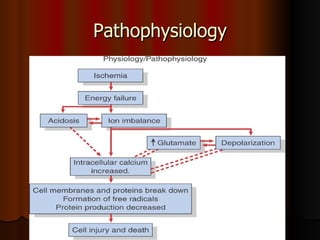
Pathophysiology
Manifestations of Ischemic Stroke Symptoms depend upon the location and size of the affected area  Numbness or weakness of face, arm, or leg, especially on one side  Confusion or change in mental status Trouble speaking or understanding speech Difficulty in walking, dizziness, or loss of balance or coordination Sudden, severe headache Perceptual disturbances See Tables 62-2   and   62-3
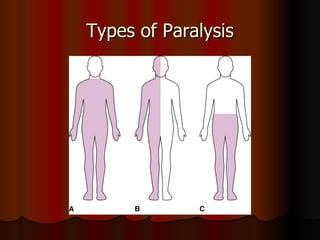
Types of Paralysis
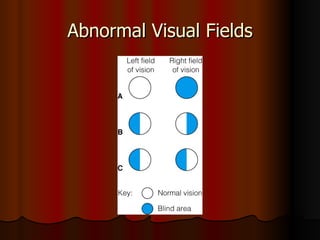
Abnormal Visual Fields
Cerebrovascular Terms Hemiplegia Hemiparesis  Dysarthria Aphasia: expressive aphasia, receptive aphasia Hemianopsia
Transient Ischemic Attack (TIA) Temporary neurologic deficit resulting from a temporary impairment of blood flow “ Warning of an impending stroke” Diagnostic work-up is required to treat and prevent irreversible deficits
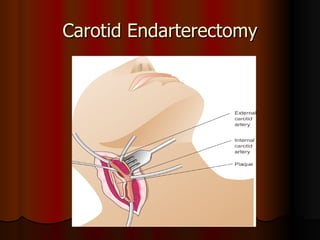
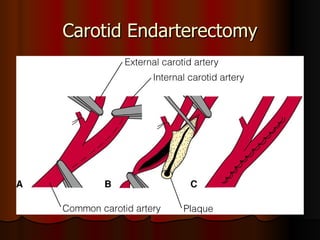
Carotid Endarterectomy
Preventive Treatment and  Secondary Prevention Health maintenance measures including a healthy diet, exercise, and the prevention and treatment of periodontal disease Carotid endarterectomy Anticoagulant therapy  Antiplatelet therapy: aspirin, dipyridamole (Persantine), clopidogrel (Plavix), and ticlopidine (Ticlid) Statins Antihypertensive medications
Medical Management During Acute Phase of Stroke Prompt diagnosis and treatment Assessment of stroke: NIHSS assessment tool Thrombolytic therapy Criteria for tissue plasminogen activator  ( tPA): see Chart 62-2 IV dosage and administration Patient monitoring Side effects: potential bleeding
Medical Management During Acute Phase of Stroke (cont.) Elevate HOB unless contraindicated  Maintain airway and ventilation Provide continuous hemodynamic monitoring and neurologic assessment See the guidelines in Appendix B
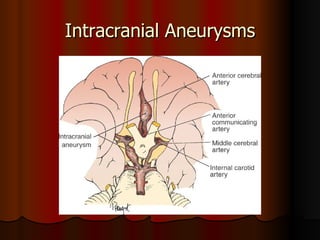
Hemorrhagic Stroke Caused by bleeding into brain tissue, the ventricles, or subarachnoid space  May be due to spontaneous rupture of small vessels primarily related to hypertension; subarachnoid hemorrhage due to a ruptured aneurysm; or intracerebral hemorrhage related to amyloid angiopathy, arterial venous malformations (AVMs), intracranial aneurysms, or medications such as anticoagulants
Hemorrhagic Stroke (cont.) Brain metabolism is disrupted by exposure to blood ICP increases due to blood in the subarachnoid space Compression or secondary ischemia from reduced perfusion and vasoconstriction injures brain tissue
Manifestations Similar to ischemic stroke Severe headache Early and sudden changes in LOC Vomiting
Medical Management Prevention: control of hypertension Diagnosis: CT scan, cerebral angiography, and lumbar puncture if CT is negative and ICP is not elevated to confirm subarachnoid hemorrhage Care is primarily supportive Bed rest with sedation  Oxygen Treatment of vasospasm, increased ICP, hypertension, potential seizures, and prevention of further bleeding
Intracranial Aneurysms
Nursing Process—Assessing the Patient Recovering From an Ischemic Stroke Acute phase  Ongoing/frequent monitoring of all systems including vital signs and neurologic assessment: LOC and motor, speech, and eye symptoms Monitor for potential complications including  musculoskeletal problems, swallowing difficulties, respiratory problems, and signs and symptoms of increased ICP and meningeal irritation After the stroke is complete Focus on patient function; self-care ability, coping, and teaching needs to facilitate rehabilitation
Nursing Process—Diagnosis of the Patient Recovering From an Ischemic Stroke Impaired physical mobility Acute pain Self-care deficits Disturbed sensory perception Impaired swallowing Urinary incontinence
Nursing Process—Diagnosis of the Patient Recovering From an Ischemic Stroke (cont.) Disturbed thought processes Impaired verbal communication Risk for impaired skin integrity Interrupted family processes Sexual dysfunction
Collaborative Problems/Potential Complications Decreased cerebral blood flow Inadequate oxygen delivery to brain Pneumonia
Nursing Process—Planning Patient Recovery After an Ischemic Stroke Major goals include:  Improved mobility  Avoidance of shoulder pain Achievement of self-care  Relief of sensory and perceptual deprivation  Prevention of aspiration Continence of bowel and bladder
Nursing Process—Planning Patient Recovery After an Ischemic Stroke (cont.) Major goals include (cont): Improved thought processes Achievement of a form of communication Maintenance of skin integrity  Restoration of family functioning  Improved sexual function  Absence of complications
Interventions Focus on the whole person Provide interventions to prevent complications and to promote rehabilitation Provide support and encouragement Listen to the patient
Improving Mobility and Preventing  Joint Deformities Turn and position the patient in correct alignment every 2 hours Use splints Practice passive or active ROM 4 to 5 times day Position hands and fingers Prevent flexion contractures  Prevent shoulder abduction Do not lift by flaccid shoulder Implement measures to prevent and treat shoulder problems
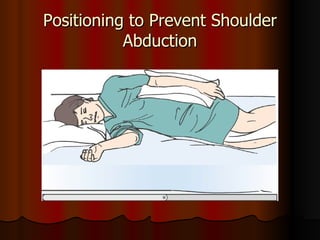
Positioning to Prevent Shoulder Abduction
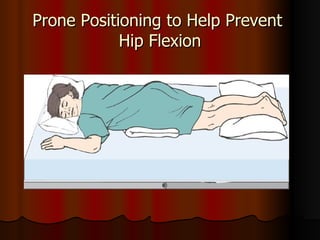
Prone Positioning to Help Prevent  Hip Flexion
Improving Mobility and Preventing  Joint Deformities Perform passive or active ROM 4 to 5 times day Encourage patient to exercise unaffected side Establish regular exercise routine Use quadriceps setting and gluteal exercises Assist patient out of bed as soon as possible: assess and help patient achieve balance and move slowly Implement ambulation training
Interventions Enhance self-care Set realistic goals with the patient Encourage personal hygiene Ensure that patient does not neglect the affected side Use assistive devices and modification of clothing  Provide support and encouragement Implement strategies to enhance communication: see Chart 62-4 Encourage the patient with visual field loss to turn his head and look to side
Interventions (cont.) Nutrition  Consult with speech therapist or nutritionist Have patient sit upright to eat, preferably OOB Use chin tuck or swallowing method Feed thickened liquids or pureed diet Bowel and bladder control Assess and schedule voiding Implement measures to prevent constipation: fiber, fluid, and toileting schedule Provide bowel and bladder retraining
Nursing Process—Assessment of the Patient With a Hemorrhagic Stroke/Cerebral Aneurysm Complete an ongoing neurologic assessment: use neurologic flow chart Monitor respiratory status and oxygenation Monitor ICP Monitor patients with intracerebral or subarachnoid hemorrhage in the ICU Monitor for potential complications Monitor fluid balance and laboratory data Reported all changes immediately
Nursing Process—Diagnosis of the Patient With a Hemorrhagic Stroke/ Cerebral Aneurysm Ineffective tissue perfusion (cerebral) Disturbed sensory perception Anxiety
Collaborative Problems/Potential Complications Vasospasm Seizures Hydrocephalus  Rebleeding Hyponatremia
Nursing Process—Planning Care of the Patient With a Hemorrhagic Stroke/Cerebral Aneurysm Goals may include:  Improved cerebral tissue perfusion  Relief of sensory and perceptual deprivation  Relief of anxiety  Absence of complications
Aneurysm Precautions Absolute bed rest Elevate HOB 30° to promote venous drainage or keep the bed flat to increase cerebral perfusion Avoid all activity that may increase ICP or BP; implement Valsalva maneuver, acute flexion, and rotation of the neck or head Exhale through mouth when voiding or defecating to decrease strain
Aneurysm Precautions (cont.) Nurse provides all personal care and hygiene Provide nonstimulating, nonstressful environment: dim lighting, no reading, no TV, and no radio Prevent constipation Restrict visitors
Interventions Relieve sensory deprivation and anxiety Keep sensory stimulation to a minimum for aneurysm precautions Implement reality orientation Provide patient and family teaching Provide support and reassurance Implement seizure precautions Implement strategies to regain and promote self-care and rehabilitation
Home Care and Teaching for the Patient Recovering From a Stroke Prevention of subsequent strokes, health promotion, and implementation of follow-up care Prevention of and signs and symptoms of complications  Medication teaching Safety measures Adaptive strategies and use of assistive devices for ADLs
Home Care and Teaching for the Patient Recovering From a Stroke (cont.) Nutrition: diet, swallowing techniques, and tube feeding administration Elimination :   bowel and bladder programs and catheter use Exercise and activities :   recreation and diversion Socialization, support groups, and community resources See Chart 62-6

Cerebrovascular Diseases

  • 1.
    Management of Patientswith Cerebrovascular Disorders
  • 2.
    Cerebrovascular Disorders $53.6Functional abnormality of the CNS that occurs when the blood supply is disrupted Stroke is the primary cerebrovascular disorder and the third leading cause of death in the U.S. Stroke is the leading cause of serious long-term disability in the U.S. Direct and indirect costs of stroke are billion
  • 3.
    Prevention Nonmodifiable riskfactors Age (over 55), male gender, African American race Modifiable risk factors: see Chart 62-1 Hypertension: the primary risk factor Cardiovascular disease Elevated cholesterol or elevated hematocrit Obesity Diabetes Oral contraceptive use Smoking and drug and alcohol abuse
  • 4.
    Stroke “ Brainattack” Sudden loss of function resulting from a disruption of the blood supply to a part of the brain Types of stroke: see Table 62-1 Ischemic (80% to 85%) Hemorrhagic (15% to 20%)
  • 5.
    Ischemic Stroke Disruptionof the blood supply due to an obstruction, usually a thrombus or embolism, that causes infarction of brain tissue Types Large artery thrombosis Small penetrating artery thrombosis Cardiogenic embolism Cryptogenic Other
  • 6.
  • 7.
    Manifestations of IschemicStroke Symptoms depend upon the location and size of the affected area Numbness or weakness of face, arm, or leg, especially on one side Confusion or change in mental status Trouble speaking or understanding speech Difficulty in walking, dizziness, or loss of balance or coordination Sudden, severe headache Perceptual disturbances See Tables 62-2 and 62-3
  • 8.
  • 9.
  • 10.
    Cerebrovascular Terms HemiplegiaHemiparesis Dysarthria Aphasia: expressive aphasia, receptive aphasia Hemianopsia
  • 11.
    Transient Ischemic Attack(TIA) Temporary neurologic deficit resulting from a temporary impairment of blood flow “ Warning of an impending stroke” Diagnostic work-up is required to treat and prevent irreversible deficits
  • 12.
  • 13.
  • 14.
    Preventive Treatment and Secondary Prevention Health maintenance measures including a healthy diet, exercise, and the prevention and treatment of periodontal disease Carotid endarterectomy Anticoagulant therapy Antiplatelet therapy: aspirin, dipyridamole (Persantine), clopidogrel (Plavix), and ticlopidine (Ticlid) Statins Antihypertensive medications
  • 15.
    Medical Management DuringAcute Phase of Stroke Prompt diagnosis and treatment Assessment of stroke: NIHSS assessment tool Thrombolytic therapy Criteria for tissue plasminogen activator ( tPA): see Chart 62-2 IV dosage and administration Patient monitoring Side effects: potential bleeding
  • 16.
    Medical Management DuringAcute Phase of Stroke (cont.) Elevate HOB unless contraindicated Maintain airway and ventilation Provide continuous hemodynamic monitoring and neurologic assessment See the guidelines in Appendix B
  • 17.
    Hemorrhagic Stroke Causedby bleeding into brain tissue, the ventricles, or subarachnoid space May be due to spontaneous rupture of small vessels primarily related to hypertension; subarachnoid hemorrhage due to a ruptured aneurysm; or intracerebral hemorrhage related to amyloid angiopathy, arterial venous malformations (AVMs), intracranial aneurysms, or medications such as anticoagulants
  • 18.
    Hemorrhagic Stroke (cont.)Brain metabolism is disrupted by exposure to blood ICP increases due to blood in the subarachnoid space Compression or secondary ischemia from reduced perfusion and vasoconstriction injures brain tissue
  • 19.
    Manifestations Similar toischemic stroke Severe headache Early and sudden changes in LOC Vomiting
  • 20.
    Medical Management Prevention:control of hypertension Diagnosis: CT scan, cerebral angiography, and lumbar puncture if CT is negative and ICP is not elevated to confirm subarachnoid hemorrhage Care is primarily supportive Bed rest with sedation Oxygen Treatment of vasospasm, increased ICP, hypertension, potential seizures, and prevention of further bleeding
  • 21.
  • 22.
    Nursing Process—Assessing thePatient Recovering From an Ischemic Stroke Acute phase Ongoing/frequent monitoring of all systems including vital signs and neurologic assessment: LOC and motor, speech, and eye symptoms Monitor for potential complications including musculoskeletal problems, swallowing difficulties, respiratory problems, and signs and symptoms of increased ICP and meningeal irritation After the stroke is complete Focus on patient function; self-care ability, coping, and teaching needs to facilitate rehabilitation
  • 23.
    Nursing Process—Diagnosis ofthe Patient Recovering From an Ischemic Stroke Impaired physical mobility Acute pain Self-care deficits Disturbed sensory perception Impaired swallowing Urinary incontinence
  • 24.
    Nursing Process—Diagnosis ofthe Patient Recovering From an Ischemic Stroke (cont.) Disturbed thought processes Impaired verbal communication Risk for impaired skin integrity Interrupted family processes Sexual dysfunction
  • 25.
    Collaborative Problems/Potential ComplicationsDecreased cerebral blood flow Inadequate oxygen delivery to brain Pneumonia
  • 26.
    Nursing Process—Planning PatientRecovery After an Ischemic Stroke Major goals include: Improved mobility Avoidance of shoulder pain Achievement of self-care Relief of sensory and perceptual deprivation Prevention of aspiration Continence of bowel and bladder
  • 27.
    Nursing Process—Planning PatientRecovery After an Ischemic Stroke (cont.) Major goals include (cont): Improved thought processes Achievement of a form of communication Maintenance of skin integrity Restoration of family functioning Improved sexual function Absence of complications
  • 28.
    Interventions Focus onthe whole person Provide interventions to prevent complications and to promote rehabilitation Provide support and encouragement Listen to the patient
  • 29.
    Improving Mobility andPreventing Joint Deformities Turn and position the patient in correct alignment every 2 hours Use splints Practice passive or active ROM 4 to 5 times day Position hands and fingers Prevent flexion contractures Prevent shoulder abduction Do not lift by flaccid shoulder Implement measures to prevent and treat shoulder problems
  • 30.
    Positioning to PreventShoulder Abduction
  • 31.
    Prone Positioning toHelp Prevent Hip Flexion
  • 32.
    Improving Mobility andPreventing Joint Deformities Perform passive or active ROM 4 to 5 times day Encourage patient to exercise unaffected side Establish regular exercise routine Use quadriceps setting and gluteal exercises Assist patient out of bed as soon as possible: assess and help patient achieve balance and move slowly Implement ambulation training
  • 33.
    Interventions Enhance self-careSet realistic goals with the patient Encourage personal hygiene Ensure that patient does not neglect the affected side Use assistive devices and modification of clothing Provide support and encouragement Implement strategies to enhance communication: see Chart 62-4 Encourage the patient with visual field loss to turn his head and look to side
  • 34.
    Interventions (cont.) Nutrition Consult with speech therapist or nutritionist Have patient sit upright to eat, preferably OOB Use chin tuck or swallowing method Feed thickened liquids or pureed diet Bowel and bladder control Assess and schedule voiding Implement measures to prevent constipation: fiber, fluid, and toileting schedule Provide bowel and bladder retraining
  • 35.
    Nursing Process—Assessment ofthe Patient With a Hemorrhagic Stroke/Cerebral Aneurysm Complete an ongoing neurologic assessment: use neurologic flow chart Monitor respiratory status and oxygenation Monitor ICP Monitor patients with intracerebral or subarachnoid hemorrhage in the ICU Monitor for potential complications Monitor fluid balance and laboratory data Reported all changes immediately
  • 36.
    Nursing Process—Diagnosis ofthe Patient With a Hemorrhagic Stroke/ Cerebral Aneurysm Ineffective tissue perfusion (cerebral) Disturbed sensory perception Anxiety
  • 37.
    Collaborative Problems/Potential ComplicationsVasospasm Seizures Hydrocephalus Rebleeding Hyponatremia
  • 38.
    Nursing Process—Planning Careof the Patient With a Hemorrhagic Stroke/Cerebral Aneurysm Goals may include: Improved cerebral tissue perfusion Relief of sensory and perceptual deprivation Relief of anxiety Absence of complications
  • 39.
    Aneurysm Precautions Absolutebed rest Elevate HOB 30° to promote venous drainage or keep the bed flat to increase cerebral perfusion Avoid all activity that may increase ICP or BP; implement Valsalva maneuver, acute flexion, and rotation of the neck or head Exhale through mouth when voiding or defecating to decrease strain
  • 40.
    Aneurysm Precautions (cont.)Nurse provides all personal care and hygiene Provide nonstimulating, nonstressful environment: dim lighting, no reading, no TV, and no radio Prevent constipation Restrict visitors
  • 41.
    Interventions Relieve sensorydeprivation and anxiety Keep sensory stimulation to a minimum for aneurysm precautions Implement reality orientation Provide patient and family teaching Provide support and reassurance Implement seizure precautions Implement strategies to regain and promote self-care and rehabilitation
  • 42.
    Home Care andTeaching for the Patient Recovering From a Stroke Prevention of subsequent strokes, health promotion, and implementation of follow-up care Prevention of and signs and symptoms of complications Medication teaching Safety measures Adaptive strategies and use of assistive devices for ADLs
  • 43.
    Home Care andTeaching for the Patient Recovering From a Stroke (cont.) Nutrition: diet, swallowing techniques, and tube feeding administration Elimination : bowel and bladder programs and catheter use Exercise and activities : recreation and diversion Socialization, support groups, and community resources See Chart 62-6