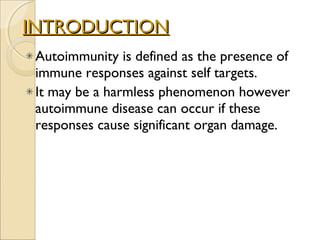
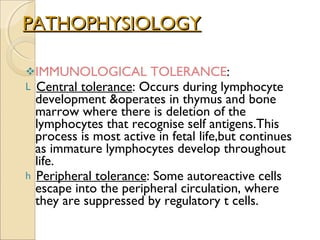
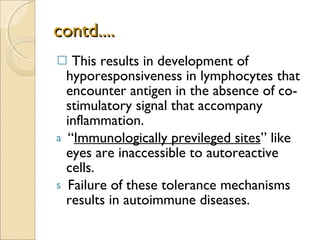
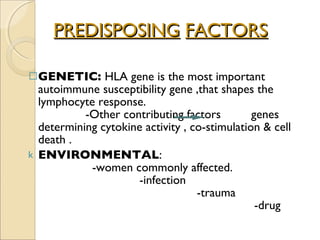
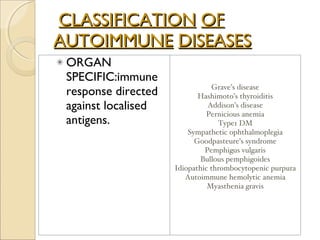
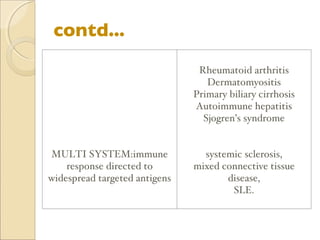
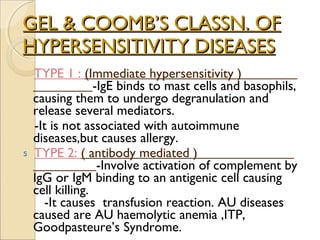
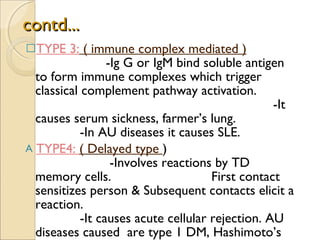
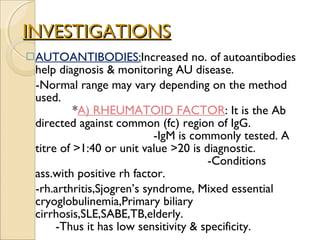
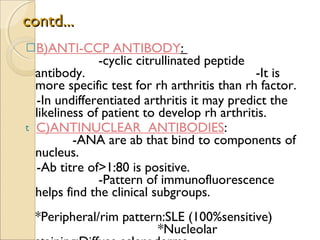
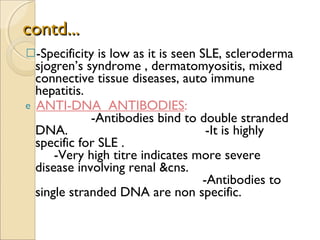
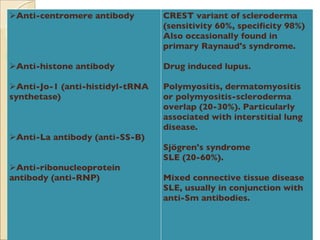
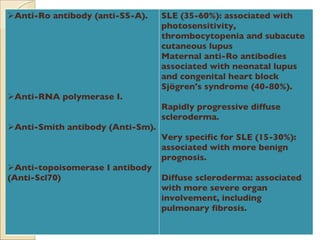
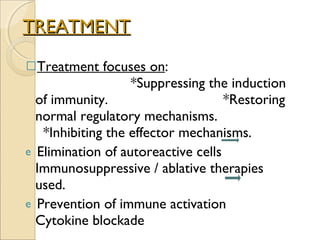
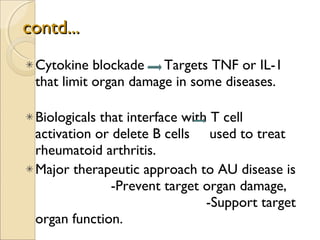
Autoimmune diseases occur when the immune system attacks the body's own tissues and organs. There are several mechanisms that normally prevent this, including central tolerance in the thymus and bone marrow, and peripheral tolerance by regulatory T cells. A failure of these tolerance mechanisms can result in autoimmune diseases. Genetic and environmental factors also contribute to predisposing individuals. Autoimmune diseases can be organ-specific or affect multiple systems. Diagnosis involves detecting elevated levels of autoantibodies through various tests. Treatment aims to suppress immune induction and restore tolerance, as well as inhibit effector mechanisms causing organ damage.



![ONFH[AVN HIP] -TRIPLE REGIME -A NOVAL SURGICAL CONCEPT .pptx](https://cdn.slidesharecdn.com/ss_thumbnails/onfhavnhip2026koaconcalicutdrgokuldevdrmashraf-260210064517-213ec005-thumbnail.jpg?width=640&height=640&fit=bounds)


