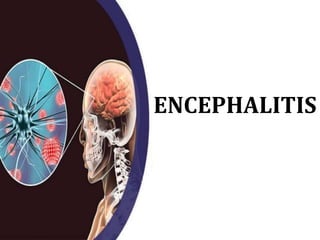
ENCEPHALITIS
• Encephalitis is an inflammation of cerebral
tissue, typically accompanied by
meningeal inflammation.
• Meningoencephalitis is most commonly
caused by a viral infection. Like
meningitis, encephalitis can be infectious
or noninfectious and acute, subacute, or
chronic
Definition
• Encephalitis is an acute
inflammation of the brain. Most
often caused by virus , although it
can caused by bacteria
• Encephalitis with meningitis is
known as meningoencephalitIs
Types
Primary encephalitis
• The brain or spinal cord is
the predominate foci of the
toxin or pathogen.
Secondary encephalitis:
• It is caused by an infection
that is spread from another
part of the body.
Viral
• Resolves without specific
treatment within two
weeks it is also called as
aseptic meningitis
• Eg : Herpes simplex virus
• Arboviruses
Bacterial
• Quite severe and may
results brain damage,
hearing loss, learning
disability and also
causes death.
Fungal
• It is much less common
than the other two
infections. It is rare in
healthy people but it is
more likely in persons
who have impaired
immune system.
Post ischemic inflammatory encephalitis:
• It occurs due to brain inflammation
following a CVA. In patients with cerebral
ischemia, inflammation can result in
secondary brain injury, and microvascular
occlusion can be caused by activated
leukocytes or a microvascular thrombus.
This edema can result in increased ICP and
compromised cerebral perfusion.
Post infectious encephalomyelitis:
• It follows a viral or bacterial infectious
process.
ETIOLOGY
• Virus : herpes simplex virus,
arboviruses
• Bacteria
• Fungus
• Cva
• Immunosuppressed
• Upper respiratory infections
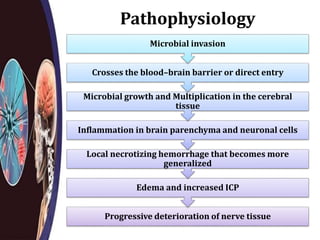
Pathophysiology
Progressive deterioration of nerve tissue
Edema and increased ICP
Local necrotizing hemorrhage that becomes more
generalized
Inflammation in brain parenchyma and neuronal cells
Microbial growth and Multiplication in the cerebral
tissue
Crosses the blood–brain barrier or direct entry
Microbial invasion
Signs and symptoms
• Symptoms may develop hours or weeks
after exposure.
• The symptoms include fever, headache,
and brain aberration (eg, disorientation,
neurologic deficits, seizures).
• Increased ICP may result in alteration in
consciousness, nausea, and vomiting.
• Motor weakness, such as hemiparesis,
may be detected.
• Increased deep tendon reflexes and
extensor plantar response are noted.
• Bizarre behavior and personality
changes may present at onset.
• Hypothalamic-pituitary involvement
may result in hypothermia, diabetes
insipidus, SIADH
Neurologic symptoms may include
• Superior quadrant visual field defects,
• Aphasia, dysphagia, ataxia and
paresthesias
• The patient with brainstem
encephalitis may present with
• Nystagmus,
• Decreased extraocular movements,
• Hearing loss,
• Dysphagia, dysarthria,
• Respiratory abnormalities, and motor
involvement.
Complications
• Cognitive disabilities and personality
changes
• Seizures
• Motor deficits
• Blindness
DIAGNOSIS
• Lumbar puncture, with evaluation
of CSF, is performed to detect
leukocytosis, increased
mononuclear cell pleocytosis,
increased proteins, and normal or
slightly lowered glucose.
Polymerase chain reaction (PCR)
• Polymerase chain reaction analysis of
the virus' deoxyribonucleic acid
(DNA), and the detection of
intrathecally produced viral
antibodies, are essential in diagnosing
the specific virus (eg, herpes simplex
virus, cytomegalovirus).
• EEG may demonstrate slow brain
wave complexes in encephalitis.
• MRI differentiates post infectious
encephalomyelitis from acute viral
encephalitis.
• Brain tissue biopsy indicates
presence of infectious organisms
Medical Management
• VIRAL encephalitis – Acyclovir,
Ganciclovir
• Antipyretics to reduce fever
• Diuretics – reduce risk of cerebral edema.
• Anticonvulsants
• Intravenous acyclovir over 10 to 21 days
is indicated for herpes simplex virus.
• Mothers who have genital herpes simplex
may be treated with acyclovir during the
third trimester to avoid shedding the
virus to their babies.
NURSING MANAGEMENT
• Obtain patient history of recent infection,
animal exposure, tick or mosquito bite,
recent travel, exposure to ill contacts.
• Before delivery, women should be
questioned regarding a history of
congenital herpes simplex virus and
examined for evidence of this virus; a
cesarean delivery should be explored with
the physician.
• Perform a complete clinical assessment
• Monitor for increased ICP
• Breathing assistance
• IV fluid to enhance hydration
• Preventing Injury
• Promoting Cerebral Perfusion
• Relieving Fever
• Monitor temperature and vital signs frequently.
– Administer antipyretics and other cooling measures as
indicated.
– Monitor fluid intake and output, and provide fluid
replacement through I.V. lines as needed.
• Be alert to signs of other coexisting infections, such as UTI or
pneumonia
• Managing Aberrations in Thought Processes
• Orient to person, place, time
Nursing Diagnoses
• Ineffective Tissue Perfusion
(cerebral) related to disease process
• Hyperthermia related to infectious
process
• Disturbed Thought Processes due to
personality changes
• Risk of Infection related to
transmittal.
• Risk for Injury related to seizures and
cerebral edema
Encephalitis

Encephalitis

  • 1.
  • 2.
    • Encephalitis isan inflammation of cerebral tissue, typically accompanied by meningeal inflammation. • Meningoencephalitis is most commonly caused by a viral infection. Like meningitis, encephalitis can be infectious or noninfectious and acute, subacute, or chronic
  • 3.
    Definition • Encephalitis isan acute inflammation of the brain. Most often caused by virus , although it can caused by bacteria • Encephalitis with meningitis is known as meningoencephalitIs
  • 4.
    Types Primary encephalitis • Thebrain or spinal cord is the predominate foci of the toxin or pathogen. Secondary encephalitis: • It is caused by an infection that is spread from another part of the body. Viral • Resolves without specific treatment within two weeks it is also called as aseptic meningitis • Eg : Herpes simplex virus • Arboviruses Bacterial • Quite severe and may results brain damage, hearing loss, learning disability and also causes death. Fungal • It is much less common than the other two infections. It is rare in healthy people but it is more likely in persons who have impaired immune system.
  • 5.
    Post ischemic inflammatoryencephalitis: • It occurs due to brain inflammation following a CVA. In patients with cerebral ischemia, inflammation can result in secondary brain injury, and microvascular occlusion can be caused by activated leukocytes or a microvascular thrombus. This edema can result in increased ICP and compromised cerebral perfusion. Post infectious encephalomyelitis: • It follows a viral or bacterial infectious process.
  • 6.
    ETIOLOGY • Virus :herpes simplex virus, arboviruses • Bacteria • Fungus • Cva • Immunosuppressed • Upper respiratory infections
  • 7.
    Pathophysiology Progressive deterioration ofnerve tissue Edema and increased ICP Local necrotizing hemorrhage that becomes more generalized Inflammation in brain parenchyma and neuronal cells Microbial growth and Multiplication in the cerebral tissue Crosses the blood–brain barrier or direct entry Microbial invasion
  • 8.
    Signs and symptoms •Symptoms may develop hours or weeks after exposure. • The symptoms include fever, headache, and brain aberration (eg, disorientation, neurologic deficits, seizures). • Increased ICP may result in alteration in consciousness, nausea, and vomiting.
  • 9.
    • Motor weakness,such as hemiparesis, may be detected. • Increased deep tendon reflexes and extensor plantar response are noted. • Bizarre behavior and personality changes may present at onset. • Hypothalamic-pituitary involvement may result in hypothermia, diabetes insipidus, SIADH
  • 10.
    Neurologic symptoms mayinclude • Superior quadrant visual field defects, • Aphasia, dysphagia, ataxia and paresthesias • The patient with brainstem encephalitis may present with • Nystagmus, • Decreased extraocular movements, • Hearing loss, • Dysphagia, dysarthria, • Respiratory abnormalities, and motor involvement.
  • 11.
    Complications • Cognitive disabilitiesand personality changes • Seizures • Motor deficits • Blindness
  • 12.
    DIAGNOSIS • Lumbar puncture,with evaluation of CSF, is performed to detect leukocytosis, increased mononuclear cell pleocytosis, increased proteins, and normal or slightly lowered glucose.
  • 13.
    Polymerase chain reaction(PCR) • Polymerase chain reaction analysis of the virus' deoxyribonucleic acid (DNA), and the detection of intrathecally produced viral antibodies, are essential in diagnosing the specific virus (eg, herpes simplex virus, cytomegalovirus).
  • 14.
    • EEG maydemonstrate slow brain wave complexes in encephalitis. • MRI differentiates post infectious encephalomyelitis from acute viral encephalitis. • Brain tissue biopsy indicates presence of infectious organisms
  • 15.
    Medical Management • VIRALencephalitis – Acyclovir, Ganciclovir • Antipyretics to reduce fever • Diuretics – reduce risk of cerebral edema. • Anticonvulsants • Intravenous acyclovir over 10 to 21 days is indicated for herpes simplex virus. • Mothers who have genital herpes simplex may be treated with acyclovir during the third trimester to avoid shedding the virus to their babies.
  • 16.
    NURSING MANAGEMENT • Obtainpatient history of recent infection, animal exposure, tick or mosquito bite, recent travel, exposure to ill contacts. • Before delivery, women should be questioned regarding a history of congenital herpes simplex virus and examined for evidence of this virus; a cesarean delivery should be explored with the physician.
  • 17.
    • Perform acomplete clinical assessment • Monitor for increased ICP • Breathing assistance • IV fluid to enhance hydration • Preventing Injury • Promoting Cerebral Perfusion • Relieving Fever • Monitor temperature and vital signs frequently. – Administer antipyretics and other cooling measures as indicated. – Monitor fluid intake and output, and provide fluid replacement through I.V. lines as needed. • Be alert to signs of other coexisting infections, such as UTI or pneumonia • Managing Aberrations in Thought Processes • Orient to person, place, time
  • 18.
    Nursing Diagnoses • IneffectiveTissue Perfusion (cerebral) related to disease process • Hyperthermia related to infectious process • Disturbed Thought Processes due to personality changes • Risk of Infection related to transmittal. • Risk for Injury related to seizures and cerebral edema