1
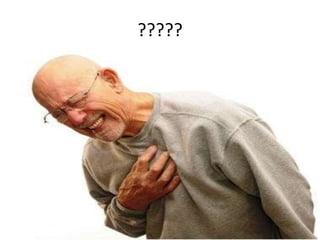
?????
2
Manikandan.T
R.N.R.M.,M.Sc.,(N).,D.C.A.,Ph.D
Research Scholar
VMRF,Salem.
3
• Angina – pain
• Pectoris – chest
4
• Angina pectoris is a clinical syndrome usually
characterized by episodes of pain or pressure in
the anterior chest -BRUNNER 2008-
• Angina is chest pain resulting from myocardial
ischemia(inadequate supply of blood to the
myocardium) -JOYCE M B;LACK 2004-
5
• 4,45,687 death in us in 2005(1 in every 5
deaths)
6
• Age (≥ 55 years for men, ≥ 65 for women)
• Cigarette smoking
• Diabetes mellitus (DM)
• Dyslipidemia
• Family History of premature Cardiovascular Disease (men <55 years,
female <65 years old)
• Hypertension (HTN)
• Kidney disease (microalbuminuria or GFR<60 mL/min)
• Obesity (BMI ≥ 30 kg/m2)
• Physical inactivity
• Atherosclerosis
• Pulmonary embolism (a blockage in a lung artery)
• A lung infection
• Emotion/ stress
• Digestion of a large meal
• physical exertion
• Aortic stenosis (narrowing of the heart’s aortic
valve)
• Hypertrophic cardiomyopathy .
• Pericarditis (inflammation in the tissues that
surround the heart)
• A panic attack
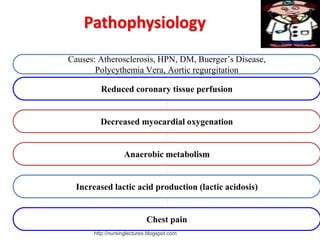
Causes: Atherosclerosis, HPN, DM, Buerger’s Disease,
Polycythemia Vera, Aortic regurgitation
Reduced coronary tissue perfusion
Decreased myocardial oxygenation
Anaerobic metabolism
Increased lactic acid production (lactic acidosis)
Chest pain
http://nursinglectures.blogspot.com
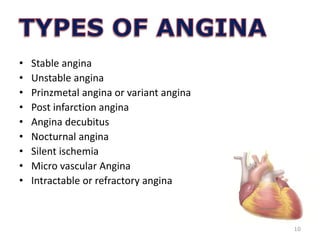
• Stable angina
• Unstable angina
• Prinzmetal angina or variant angina
• Post infarction angina
• Angina decubitus
• Nocturnal angina
• Silent ischemia
• Micro vascular Angina
• Intractable or refractory angina
10
Stable angina
• stable angina is type of chest discomfort and
associated symptoms precipitated by some
activity (running, walking, emotion etc.)
normally stable angina is relieved with rest or
nitroglycerin or both.
Unstable angina
• It occurs at rest (or with minimal exertion),
usually lasting >10 min.
• It is severe than stable angina
• Unstable angina also can occur with or
without physical exertion, and rest or
medicine may not relieve the pain.
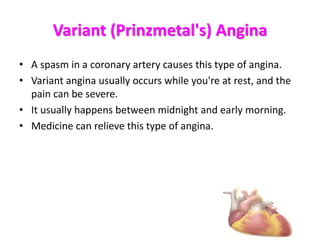
Variant (Prinzmetal's) Angina
• A spasm in a coronary artery causes this type of angina.
• Variant angina usually occurs while you're at rest, and the
pain can be severe.
• It usually happens between midnight and early morning.
• Medicine can relieve this type of angina.
Cont.,
Post infarction angina
• Occurs after MI when residual ischemia may
cause episodes of angina
Angina decubitus
• Paroxysmal chest pain occurs when client sits
or stands up
Cont.,
Nocturnal angina
• Frequently occurs nocturnally (may be
associated with REM stage of sleep)
Silent ischemia
• Objective evidence of ischemia (such as
electrocardiographic changes with a stress
test), but patient reports no symptoms.
Micro vascular Angina
• Micro vascular angina can be more severe and
last longer than other types of angina.
Medicine may not relieve this type of angina.
Micro vascular Angina or Angina Syndrome X
is characterized by angina-like chest pain, but
have different causes. The cause of Micro
vascular Angina is unknown
Intractable or refractory angina
• Severe incapacitating chest pain
• Quality [crushing, squeezing, pressing, burning,
strangling, tight, stabbing]
• Onset [gradual or sudden,usually during activity]
• Duration [3-5 minutes, with a range of 2-15mts
• Location [substernal or retrosternal]
17
Radiation :
[left chest and
arm,neck,jaw,teeth,back,both shoulders,
elbows and wrists]
Associated symptoms:
[nausea,vomiting,dyspnea,& diaphoresis]
Provocation:
[exertion,activity,emotional stress,
extreme temperature, heavy meals]
18
• Physical assessment
• ECG
• Holter monitoring
• Stress test
• Cardiac imaging
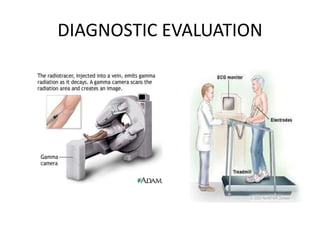
• PET
• Echocardiography
• MRI
• Cardiac catheterisation&Coronary angiography
19
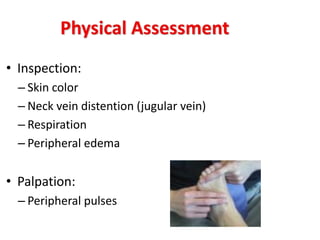
• Inspection:
– Skin color
– Neck vein distention (jugular vein)
– Respiration
– Peripheral edema
• Palpation:
– Peripheral pulses
21
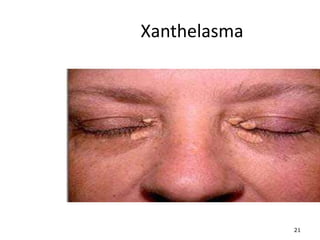
Xanthelasma
• Auscultation:
– Heart sounds
– Murmurs
– Pericardial friction rub
 Cardiac Enzymes (Cardiac Markers):
1st: Myoglobin
a. urine = 0 – 2mg/dL (↑within 30mins – 2hrs after MI)
b. blood = <70mg/dL
2nd: Troponin - (Troponin T & I)
- blood = <0.6mg/dL - ↑ within 3-6hrs after MI & remains elevated for
21 days upon onset of attack
3rd: Creatinine kinase (CK)
CK-MB – specific to myocardial tissue (↑within 4-6hrs & decreases to
normal within 2-3days)
• male = 12-70 mg/dL
• female = 10-55 mg/dL
4th: LDH (specifically LDH1- most sensitive indicator of myocardial damage)
= 45-90mg/dL - ↑within 3-4 days & remains elevated for 14 days
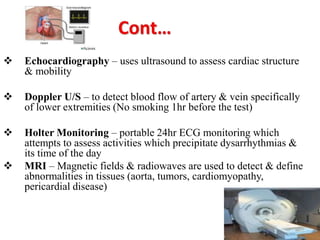
DIAGNOSTIC EVALUATION
 Echocardiography – uses ultrasound to assess cardiac structure
& mobility
 Doppler U/S – to detect blood flow of artery & vein specifically
of lower extremities (No smoking 1hr before the test)
 Holter Monitoring – portable 24hr ECG monitoring which
attempts to assess activities which precipitate dysarrhythmias &
its time of the day
 MRI – Magnetic fields & radiowaves are used to detect & define
abnormalities in tissues (aorta, tumors, cardiomyopathy,
pericardial disease)
A,B,C.D,E is promoted to reduce manifestation
and control risk factors
• Aspirin& Anti anginal
• Beta blockers and BP control
• Cigarette and cholesterol control
• Diet and diabetes control
• Exercise and education
26
Pharmacological management
1)opiate analgesic:
Are used to relieve or reduce acute pain
(eg.,inj.morphine)
27
Cont.,
2)vaso dilators:
• Nitroglycerin:
It dilates the blood vessels.
• Route- sublingual, spray,oral,topical,iv
28
2)Beta-Blockers: (e.g, metaprolol,atenolol)
it blocks the beta adrenergic sympathetic stimulation to the
heart. the result is reduction in heart rate, slowed conduction of
impulses through conduction system, decreases BP, reduces
myocardial contractility to balances the myocardial oxygen needs.
3)calcium channel blockers:(e.g,nifidipine,amlodipine)
These agents decrease the SA node automaticity and AV node
conduction resulting in slower heart rate and decrease in strength of
heart muscle contraction, these effects decrease the work load of the
heart and also relaxes the blood vessels cause decrease in BP.
29
Cont.,
4) Lipid lowering agents – statins:
– Simvastatin
– atorvastatin
5) Anti platelet / anti coagulant medication:
prevent platelet aggregation
• Aspirin: (75 mg)
It prevents platelet activation.
30
Cont.,
Clopidrogel:
given to the patient who are allergic to aspirin
Heparin:
It prevents the formation of new blood clots.
The dose is based on the result of APTT value
• subcutaneous injection of LMWH to treat
patient with unstable angina. LMWH increases
the risk of bleeding so the patient is monitored
for s/s of external and internal bleeding such as
low BP,increased HR.
31
Cont.,
• Oxygen administration:
• Directed towards MI prevention
– Lifestyle modification (individualized regular
exercise program, smoking cessation, weight
reduction)
– Stress reduction
– Diet changes
– Avoidance of cold
32
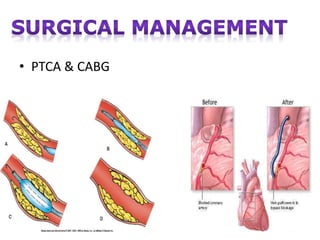
• PTCA & CABG
33
 Diet instructions (low salt, low fat, low cholesterol, high fiber);
avoid animal fats
E.g.. White meat – chicken w/o skin, fish
 Stop smoking & avoid alcohol
 Activity restrictions & Rest
 NTGs – max of 3doses at 5-min intervals
 Advise clients to always carry 3 tablets
 Store meds in cool, dry place, air-tight amber bottles &
change stocks every 6months
 Inform clients that headache, dizziness, flushed face are
common side effects.
Nursing diagnosis
1)Acute pain related to myocardial ischemia
resulting coronary artery occlusion
2)In effective cardiac tissue perfusion related to
CAD as evidenced by chest pain
3)Anxiety related to hospital admission, fear of
death
4)Risk for bleeding related to coagulopathies
associated with thrombolytic therapy
Cont.,
5)Risk for constipation related to bed
rest,pain,medication
6)Risk for activity intolerance related to imbalance
between oxygen supply and demand as evidenced
by weakness,fatigue
7)Risk for impaired skin integrity related to bed rest
8)Deficient knowledge related to prognosis,treatment
regimen
9)Ineffective therapeutic regimen related to failure to
accept necessary life style .
37
38

Angina Pectoris.PPT

  • 1.
  • 2.
  • 3.
  • 4.
    • Angina –pain • Pectoris – chest 4
  • 5.
    • Angina pectorisis a clinical syndrome usually characterized by episodes of pain or pressure in the anterior chest -BRUNNER 2008- • Angina is chest pain resulting from myocardial ischemia(inadequate supply of blood to the myocardium) -JOYCE M B;LACK 2004- 5
  • 6.
    • 4,45,687 deathin us in 2005(1 in every 5 deaths) 6
  • 7.
    • Age (≥55 years for men, ≥ 65 for women) • Cigarette smoking • Diabetes mellitus (DM) • Dyslipidemia • Family History of premature Cardiovascular Disease (men <55 years, female <65 years old) • Hypertension (HTN) • Kidney disease (microalbuminuria or GFR<60 mL/min) • Obesity (BMI ≥ 30 kg/m2) • Physical inactivity
  • 8.
    • Atherosclerosis • Pulmonaryembolism (a blockage in a lung artery) • A lung infection • Emotion/ stress • Digestion of a large meal • physical exertion • Aortic stenosis (narrowing of the heart’s aortic valve) • Hypertrophic cardiomyopathy . • Pericarditis (inflammation in the tissues that surround the heart) • A panic attack
  • 9.
    Causes: Atherosclerosis, HPN,DM, Buerger’s Disease, Polycythemia Vera, Aortic regurgitation Reduced coronary tissue perfusion Decreased myocardial oxygenation Anaerobic metabolism Increased lactic acid production (lactic acidosis) Chest pain http://nursinglectures.blogspot.com
  • 10.
    • Stable angina •Unstable angina • Prinzmetal angina or variant angina • Post infarction angina • Angina decubitus • Nocturnal angina • Silent ischemia • Micro vascular Angina • Intractable or refractory angina 10
  • 11.
    Stable angina • stableangina is type of chest discomfort and associated symptoms precipitated by some activity (running, walking, emotion etc.) normally stable angina is relieved with rest or nitroglycerin or both.
  • 12.
    Unstable angina • Itoccurs at rest (or with minimal exertion), usually lasting >10 min. • It is severe than stable angina • Unstable angina also can occur with or without physical exertion, and rest or medicine may not relieve the pain.
  • 13.
    Variant (Prinzmetal's) Angina •A spasm in a coronary artery causes this type of angina. • Variant angina usually occurs while you're at rest, and the pain can be severe. • It usually happens between midnight and early morning. • Medicine can relieve this type of angina.
  • 14.
    Cont., Post infarction angina •Occurs after MI when residual ischemia may cause episodes of angina Angina decubitus • Paroxysmal chest pain occurs when client sits or stands up
  • 15.
    Cont., Nocturnal angina • Frequentlyoccurs nocturnally (may be associated with REM stage of sleep) Silent ischemia • Objective evidence of ischemia (such as electrocardiographic changes with a stress test), but patient reports no symptoms.
  • 16.
    Micro vascular Angina •Micro vascular angina can be more severe and last longer than other types of angina. Medicine may not relieve this type of angina. Micro vascular Angina or Angina Syndrome X is characterized by angina-like chest pain, but have different causes. The cause of Micro vascular Angina is unknown Intractable or refractory angina • Severe incapacitating chest pain
  • 17.
    • Quality [crushing,squeezing, pressing, burning, strangling, tight, stabbing] • Onset [gradual or sudden,usually during activity] • Duration [3-5 minutes, with a range of 2-15mts • Location [substernal or retrosternal] 17
  • 18.
    Radiation : [left chestand arm,neck,jaw,teeth,back,both shoulders, elbows and wrists] Associated symptoms: [nausea,vomiting,dyspnea,& diaphoresis] Provocation: [exertion,activity,emotional stress, extreme temperature, heavy meals] 18
  • 19.
    • Physical assessment •ECG • Holter monitoring • Stress test • Cardiac imaging • PET • Echocardiography • MRI • Cardiac catheterisation&Coronary angiography 19
  • 20.
    • Inspection: – Skincolor – Neck vein distention (jugular vein) – Respiration – Peripheral edema • Palpation: – Peripheral pulses
  • 21.
  • 22.
    • Auscultation: – Heartsounds – Murmurs – Pericardial friction rub
  • 23.
     Cardiac Enzymes(Cardiac Markers): 1st: Myoglobin a. urine = 0 – 2mg/dL (↑within 30mins – 2hrs after MI) b. blood = <70mg/dL 2nd: Troponin - (Troponin T & I) - blood = <0.6mg/dL - ↑ within 3-6hrs after MI & remains elevated for 21 days upon onset of attack 3rd: Creatinine kinase (CK) CK-MB – specific to myocardial tissue (↑within 4-6hrs & decreases to normal within 2-3days) • male = 12-70 mg/dL • female = 10-55 mg/dL 4th: LDH (specifically LDH1- most sensitive indicator of myocardial damage) = 45-90mg/dL - ↑within 3-4 days & remains elevated for 14 days
  • 24.
  • 25.
     Echocardiography –uses ultrasound to assess cardiac structure & mobility  Doppler U/S – to detect blood flow of artery & vein specifically of lower extremities (No smoking 1hr before the test)  Holter Monitoring – portable 24hr ECG monitoring which attempts to assess activities which precipitate dysarrhythmias & its time of the day  MRI – Magnetic fields & radiowaves are used to detect & define abnormalities in tissues (aorta, tumors, cardiomyopathy, pericardial disease)
  • 26.
    A,B,C.D,E is promotedto reduce manifestation and control risk factors • Aspirin& Anti anginal • Beta blockers and BP control • Cigarette and cholesterol control • Diet and diabetes control • Exercise and education 26
  • 27.
    Pharmacological management 1)opiate analgesic: Areused to relieve or reduce acute pain (eg.,inj.morphine) 27
  • 28.
    Cont., 2)vaso dilators: • Nitroglycerin: Itdilates the blood vessels. • Route- sublingual, spray,oral,topical,iv 28
  • 29.
    2)Beta-Blockers: (e.g, metaprolol,atenolol) itblocks the beta adrenergic sympathetic stimulation to the heart. the result is reduction in heart rate, slowed conduction of impulses through conduction system, decreases BP, reduces myocardial contractility to balances the myocardial oxygen needs. 3)calcium channel blockers:(e.g,nifidipine,amlodipine) These agents decrease the SA node automaticity and AV node conduction resulting in slower heart rate and decrease in strength of heart muscle contraction, these effects decrease the work load of the heart and also relaxes the blood vessels cause decrease in BP. 29
  • 30.
    Cont., 4) Lipid loweringagents – statins: – Simvastatin – atorvastatin 5) Anti platelet / anti coagulant medication: prevent platelet aggregation • Aspirin: (75 mg) It prevents platelet activation. 30
  • 31.
    Cont., Clopidrogel: given to thepatient who are allergic to aspirin Heparin: It prevents the formation of new blood clots. The dose is based on the result of APTT value • subcutaneous injection of LMWH to treat patient with unstable angina. LMWH increases the risk of bleeding so the patient is monitored for s/s of external and internal bleeding such as low BP,increased HR. 31
  • 32.
    Cont., • Oxygen administration: •Directed towards MI prevention – Lifestyle modification (individualized regular exercise program, smoking cessation, weight reduction) – Stress reduction – Diet changes – Avoidance of cold 32
  • 33.
    • PTCA &CABG 33
  • 34.
     Diet instructions(low salt, low fat, low cholesterol, high fiber); avoid animal fats E.g.. White meat – chicken w/o skin, fish  Stop smoking & avoid alcohol  Activity restrictions & Rest  NTGs – max of 3doses at 5-min intervals  Advise clients to always carry 3 tablets  Store meds in cool, dry place, air-tight amber bottles & change stocks every 6months  Inform clients that headache, dizziness, flushed face are common side effects.
  • 35.
    Nursing diagnosis 1)Acute painrelated to myocardial ischemia resulting coronary artery occlusion 2)In effective cardiac tissue perfusion related to CAD as evidenced by chest pain 3)Anxiety related to hospital admission, fear of death 4)Risk for bleeding related to coagulopathies associated with thrombolytic therapy
  • 36.
    Cont., 5)Risk for constipationrelated to bed rest,pain,medication 6)Risk for activity intolerance related to imbalance between oxygen supply and demand as evidenced by weakness,fatigue 7)Risk for impaired skin integrity related to bed rest 8)Deficient knowledge related to prognosis,treatment regimen 9)Ineffective therapeutic regimen related to failure to accept necessary life style .
  • 37.
  • 38.