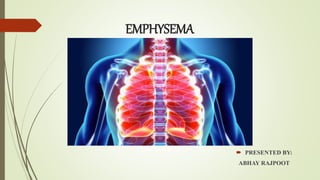
EMPHYSEMA
 PRESENTED BY:
ABHAY RAJPOOT
INTRODUCTION
 Emphysema is a lung condition that causes shortness of breath. In people
with emphysema, the air sacs in the lungs (alveoli) are damaged. Over
time, the inner walls of the air sacs weaken and rupture — creating larger
air spaces instead of many small ones. This reduces the surface area of the
lungs and, in turn, the amount of oxygen that reaches your bloodstream.
DEFINITION
 It is defined as impaired gas exchange (O2, CO2) resulting from
destruction of wall of over distended alveoli or permanent dilation of air
sac.
INCIDENCE
 The National Health Interview Survey reports the prevalence of emphysema at 18
cases per 1000 persons and chronic bronchitis at 34 cases per 1000 persons.
RISK FACTOR
 Smoking. Emphysema is most likely to develop in cigarette smokers, but cigar and pipe
smokers also are susceptible. The risk for all types of smokers increases with the number
of years and amount of tobacco smoked.
 Age. Although the lung damage that occurs in emphysema develops gradually, most
people with tobacco-related emphysema begin to experience symptoms of the disease
between the ages of 40 and 60.
 Exposure to secondhand smoke. Secondhand smoke, also known as passive or
environmental tobacco smoke, is smoke that you inadvertently inhale from someone
else's cigarette, pipe or cigar. Being around secondhand smoke increases your risk of
emphysema.
 Occupational exposure to fumes or dust. If you breathe fumes from certain chemicals
or dust from grain, cotton, wood or mining products, you're more likely to develop
emphysema. This risk is even greater if you smoke.
 Exposure to indoor and outdoor pollution. Breathing indoor pollutants, such as fumes
from heating fuel, as well as outdoor pollutants — car exhaust, for instance — increases
your risk of emphysema.
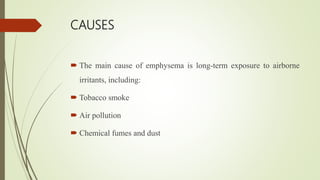
CAUSES
 The main cause of emphysema is long-term exposure to airborne
irritants, including:
 Tobacco smoke
 Air pollution
 Chemical fumes and dust
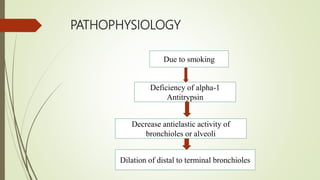
PATHOPHYSIOLOGY
Due to smoking
Deficiency of alpha-1
Antitrypsin
Decrease antielastic activity of
bronchioles or alveoli
Dilation of distal to terminal bronchioles
SYMPTOMS
 Breathlessness with exertion or even at rest
 Swelling of the legs, ankles and feet
 Bloating of the abdomen due to fluid buildup
 Cough while lying down
 Fatigue
 Irregular heartbeats that feel rapid, fluttering
 Pleuritic Chest pain
 Dizziness
 Dyspnea
 Cyanosis
DIAGNOSTIC EVALUATION:
 Lung (pulmonary) function tests
 Laboratory tests.
 Arterial blood gas analysis.
 CT scan.
X-RAY
Spirometry
COMPLICATIONS
People who have emphysema are also more likely to develop:
 Collapsed lung (pneumothorax). A collapsed lung can be life-
threatening in people who have severe emphysema, because the
function of their lungs is already so compromised. This is uncommon
but serious when it occurs.
 Heart problems. Emphysema can increase the pressure in the arteries
that connect the heart and lungs.
 Large holes in the lungs (bullae). Some people with emphysema
develop empty spaces in the lungs called bullae. They can be as large
as half the lung. In addition to reducing the amount of space available
for the lung to expand, giant bullae can increase your risk of
pneumothorax.
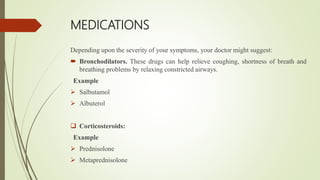
MEDICATIONS
Depending upon the severity of your symptoms, your doctor might suggest:
 Bronchodilators. These drugs can help relieve coughing, shortness of breath and
breathing problems by relaxing constricted airways.
Example
 Salbutamol
 Albuterol
 Corticosteroids:
Example
 Prednisolone
 Metaprednisolone
CONTI…
 Anticholinergic:
Example
 Atropine sulphate
 Mast Cell Stabilizers :
Example
 Cromolyn sodium
 Xanthine derivatives :
Example
 Theophylline
 Aminophylline
 Antitussives Drugs:
THERAPY
 Pulmonary rehabilitation. A pulmonary rehabilitation program can teach you
breathing exercises and techniques that may help reduce your breathlessness and
improve your ability to exercise.
 Nutrition therapy. You'll also receive advice about proper nutrition. In the early
stages of emphysema, many people need to lose weight, while people with late-
stage emphysema often need to gain weight.
 Supplemental oxygen. If you have severe emphysema with low blood oxygen
levels, using oxygen regularly at home and when you exercise may provide some
relief. Many people use oxygen 24 hours a day. It's usually administered via
narrow tubing that fits into your nostrils
SURGERY
 Lung volume reduction surgery. In this procedure, surgeons
remove small wedges of damaged lung tissue. Removing the
diseased tissue helps the remaining lung tissue expand and work
more efficiently and helps improve breathing.
 Lung transplant. Lung transplantation is an option if you have
severe lung damage and other options have failed.
NURSING DIAGNOSIS
 Ineffective airway clearance related to excessive mucous congestion
as evidenced by shortness of breath.
 Fluid volume deficit related to fever, diaphoresis as evidenced by
reduced skin turgor.
 Altered nutrition less then body requirements related to loss of
appetite as evidenced by weight loss
 Activity intolerance related to decreased energy reserves as evidenced
by patients tired look
THANK YOU

Emphyisema

  • 1.
  • 2.
    INTRODUCTION  Emphysema isa lung condition that causes shortness of breath. In people with emphysema, the air sacs in the lungs (alveoli) are damaged. Over time, the inner walls of the air sacs weaken and rupture — creating larger air spaces instead of many small ones. This reduces the surface area of the lungs and, in turn, the amount of oxygen that reaches your bloodstream.
  • 3.
    DEFINITION  It isdefined as impaired gas exchange (O2, CO2) resulting from destruction of wall of over distended alveoli or permanent dilation of air sac.
  • 4.
    INCIDENCE  The NationalHealth Interview Survey reports the prevalence of emphysema at 18 cases per 1000 persons and chronic bronchitis at 34 cases per 1000 persons.
  • 7.
    RISK FACTOR  Smoking.Emphysema is most likely to develop in cigarette smokers, but cigar and pipe smokers also are susceptible. The risk for all types of smokers increases with the number of years and amount of tobacco smoked.  Age. Although the lung damage that occurs in emphysema develops gradually, most people with tobacco-related emphysema begin to experience symptoms of the disease between the ages of 40 and 60.  Exposure to secondhand smoke. Secondhand smoke, also known as passive or environmental tobacco smoke, is smoke that you inadvertently inhale from someone else's cigarette, pipe or cigar. Being around secondhand smoke increases your risk of emphysema.  Occupational exposure to fumes or dust. If you breathe fumes from certain chemicals or dust from grain, cotton, wood or mining products, you're more likely to develop emphysema. This risk is even greater if you smoke.  Exposure to indoor and outdoor pollution. Breathing indoor pollutants, such as fumes from heating fuel, as well as outdoor pollutants — car exhaust, for instance — increases your risk of emphysema.
  • 8.
    CAUSES  The maincause of emphysema is long-term exposure to airborne irritants, including:  Tobacco smoke  Air pollution  Chemical fumes and dust
  • 9.
    PATHOPHYSIOLOGY Due to smoking Deficiencyof alpha-1 Antitrypsin Decrease antielastic activity of bronchioles or alveoli Dilation of distal to terminal bronchioles
  • 10.
    SYMPTOMS  Breathlessness withexertion or even at rest  Swelling of the legs, ankles and feet  Bloating of the abdomen due to fluid buildup  Cough while lying down  Fatigue  Irregular heartbeats that feel rapid, fluttering  Pleuritic Chest pain  Dizziness  Dyspnea  Cyanosis
  • 11.
    DIAGNOSTIC EVALUATION:  Lung(pulmonary) function tests  Laboratory tests.  Arterial blood gas analysis.  CT scan.
  • 12.
  • 13.
  • 14.
    COMPLICATIONS People who haveemphysema are also more likely to develop:  Collapsed lung (pneumothorax). A collapsed lung can be life- threatening in people who have severe emphysema, because the function of their lungs is already so compromised. This is uncommon but serious when it occurs.  Heart problems. Emphysema can increase the pressure in the arteries that connect the heart and lungs.  Large holes in the lungs (bullae). Some people with emphysema develop empty spaces in the lungs called bullae. They can be as large as half the lung. In addition to reducing the amount of space available for the lung to expand, giant bullae can increase your risk of pneumothorax.
  • 15.
    MEDICATIONS Depending upon theseverity of your symptoms, your doctor might suggest:  Bronchodilators. These drugs can help relieve coughing, shortness of breath and breathing problems by relaxing constricted airways. Example  Salbutamol  Albuterol  Corticosteroids: Example  Prednisolone  Metaprednisolone
  • 16.
    CONTI…  Anticholinergic: Example  Atropinesulphate  Mast Cell Stabilizers : Example  Cromolyn sodium  Xanthine derivatives : Example  Theophylline  Aminophylline  Antitussives Drugs:
  • 17.
    THERAPY  Pulmonary rehabilitation.A pulmonary rehabilitation program can teach you breathing exercises and techniques that may help reduce your breathlessness and improve your ability to exercise.  Nutrition therapy. You'll also receive advice about proper nutrition. In the early stages of emphysema, many people need to lose weight, while people with late- stage emphysema often need to gain weight.  Supplemental oxygen. If you have severe emphysema with low blood oxygen levels, using oxygen regularly at home and when you exercise may provide some relief. Many people use oxygen 24 hours a day. It's usually administered via narrow tubing that fits into your nostrils
  • 18.
    SURGERY  Lung volumereduction surgery. In this procedure, surgeons remove small wedges of damaged lung tissue. Removing the diseased tissue helps the remaining lung tissue expand and work more efficiently and helps improve breathing.  Lung transplant. Lung transplantation is an option if you have severe lung damage and other options have failed.
  • 19.
    NURSING DIAGNOSIS  Ineffectiveairway clearance related to excessive mucous congestion as evidenced by shortness of breath.  Fluid volume deficit related to fever, diaphoresis as evidenced by reduced skin turgor.  Altered nutrition less then body requirements related to loss of appetite as evidenced by weight loss  Activity intolerance related to decreased energy reserves as evidenced by patients tired look
  • 20.