Mr. Manikandan.T,
RN., RM., M.Sc(N)., D.C.A .,(Ph.D)
Assistant Professor,
Dept. of Medical Surgical Nursing,
VMCON, Puducherry.
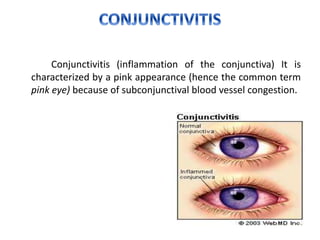
Conjunctivitis (inflammation of the conjunctiva) It is
characterized by a pink appearance (hence the common term
pink eye) because of subconjunctival blood vessel congestion.
CAUSES
• Exogenous : causative agents are introduced
from outside – Microorganism, foreign bodies,
chemicals
• Endogenous – blood borne infection/ allergic
response
CLASSIFICATION
• Microbial infection (Bacterial & Viral)
• Allergy
• irritating toxic stimuli
• Vernal
• Bacterial conjunctivitis can be acute or chronic. The most
common causative microorganisms are Streptococcus
pneumoniae, Haemophilus influenzae, and Staphylococcus
aureus.
• is an infection also caused by Insects, physical contact with
other people, poor hygiene (touching the eye with unclean
hands), or using contaminated eye makeup and facial lotions
can also cause the infection. Sharing makeup and wearing
contact lenses that are not your own or are improperly
cleaned can also cause bacterial conjunctivitis.
Symptoms
• Redness
• burning, and discharge.
• There is papillary formation
• conjunctival irritation
• The eyes may be difficult to open because of adhesions
caused by the exudate.
• Purulent discharge occurs in severe acute bacterial
infections.
• In gonococcal conjunctivitis, the symptoms are more
acute. The exudate is profuse and purulent, and there
is lymphadenopathy.
Diagnosis
• Clinical evaluation
• Sometimes culture of conjunctival smear or
scrapings
Management
• Conjunctival sac wash with warm water/
saline
• Ask the patient to lie on affected side
• Antibiotics – ointment
• Viral conjunctivitis is most commonly caused by
contagious viruses associated with the common cold.
• Herpetic conjunctivitis (Herpes simplex – conjunctival
follicles are affected)
• Epidemic keratoconjunctivitis – inflammation of
conjunctiva and enlargement of pre auricular gland.
The outbreak of epidemics is seasonal, especially
during the summer when people use swimming pools.
• Pharyngo conjunctival fever - caused by adeno virus,
follicular conjunctivitis with pharyngitis and fever.
• It can develop through exposure to the coughing or
sneezing of someone with an upper respiratory tract
infection.
Causes
• Measles
• Chickenpox
• Rubella
• Mumps
• Adenoviruses
• Enteroviruses
Symptoms
• Watery discharge
• Swelling of eye
• Photophobia
• Redness
• Blurred vision
• Foriegn body sensation
• Lid edema
• Conjunctival Hyperemia
Diagnosis
• H.C
• P/E
Management
• Hygiene (hand & environment)
• Avoid touching the noninfected eye after touching the
infected eye
• Viral conjunctivitis is self-limiting, lasting 1 wk in mild cases to
up to 3 wk in severe cases. It requires only cool compresses
for symptomatic relief.
• topical corticosteroids (eg, 1% prednisolone acetate qid).
• Antiviral drug – acyclovir drop
• Immunologic or allergic conjunctivitis is a
hypersensitivity reaction that occurs as part of
allergic rhinitis (hay fever), or it can be an
independent allergic reaction.
Causes
• allergy to pollens and other environmental
allergens.
• household dust
• pollen from trees and grass
• animal dander
• chemical scents such as household detergents
or perfume
Symptoms
• Pruritus
• epiphora (ie, excessive secretion of tears)
• mucoid discharge is usually associated with
rubbing the eyes because of severe pruritus.
• Red, itchy, watery, and burning eyes.
• Photophobia
Diagnosis
• allergy skin test
• A blood test
• A scraping of your conjunctival tissue
Management
• Wash the eye with cold water
• Avoid exposing to allergy
• Topical / oral anti histamine
• Instill 2 % sodium cromoglycate eye drops –
itching
• Dexamethosone eye drops - allergy
• Chemical conjunctivitis can be the result of
medications chlorine from swimming pools;
exposure to toxic fumes among industrial
workers or exposure to other irritants such as
smoke, hair sprays, acids, and alkalis.
Symptoms
• Severe pain.
• Decreased vision.
• Redness.
• Large amounts of swelling.
Management
• Eye irrigation with saline
• ointment may be used to decrease the
redness and irritation.
• Vernal conjunctivitis is long-term (chronic)
swelling (inflammation) of the outer lining of
the eyes. It occurs mostly during warm
weather.
• Caused by allergic rhinitis, asthma, and
eczema. It is most common in young males,
and most often occurs during the spring and
summer
Symptoms
• Burning eyes
• Discomfort in bright light (photophobia).
• Itching eyes.
• Watering eyes.
Management
• Corticosteroid
• Vasoconstrictors – topical epinephrine
• Cold compress, ice pack, cool ventilation
Conjunctival disorder

Conjunctival disorder

  • 2.
    Mr. Manikandan.T, RN., RM.,M.Sc(N)., D.C.A .,(Ph.D) Assistant Professor, Dept. of Medical Surgical Nursing, VMCON, Puducherry.
  • 3.
    Conjunctivitis (inflammation ofthe conjunctiva) It is characterized by a pink appearance (hence the common term pink eye) because of subconjunctival blood vessel congestion.
  • 4.
    CAUSES • Exogenous :causative agents are introduced from outside – Microorganism, foreign bodies, chemicals • Endogenous – blood borne infection/ allergic response
  • 5.
    CLASSIFICATION • Microbial infection(Bacterial & Viral) • Allergy • irritating toxic stimuli • Vernal
  • 6.
    • Bacterial conjunctivitiscan be acute or chronic. The most common causative microorganisms are Streptococcus pneumoniae, Haemophilus influenzae, and Staphylococcus aureus. • is an infection also caused by Insects, physical contact with other people, poor hygiene (touching the eye with unclean hands), or using contaminated eye makeup and facial lotions can also cause the infection. Sharing makeup and wearing contact lenses that are not your own or are improperly cleaned can also cause bacterial conjunctivitis.
  • 7.
    Symptoms • Redness • burning,and discharge. • There is papillary formation • conjunctival irritation • The eyes may be difficult to open because of adhesions caused by the exudate. • Purulent discharge occurs in severe acute bacterial infections. • In gonococcal conjunctivitis, the symptoms are more acute. The exudate is profuse and purulent, and there is lymphadenopathy.
  • 8.
    Diagnosis • Clinical evaluation •Sometimes culture of conjunctival smear or scrapings
  • 9.
    Management • Conjunctival sacwash with warm water/ saline • Ask the patient to lie on affected side • Antibiotics – ointment
  • 10.
    • Viral conjunctivitisis most commonly caused by contagious viruses associated with the common cold. • Herpetic conjunctivitis (Herpes simplex – conjunctival follicles are affected) • Epidemic keratoconjunctivitis – inflammation of conjunctiva and enlargement of pre auricular gland. The outbreak of epidemics is seasonal, especially during the summer when people use swimming pools. • Pharyngo conjunctival fever - caused by adeno virus, follicular conjunctivitis with pharyngitis and fever. • It can develop through exposure to the coughing or sneezing of someone with an upper respiratory tract infection.
  • 11.
    Causes • Measles • Chickenpox •Rubella • Mumps • Adenoviruses • Enteroviruses
  • 12.
    Symptoms • Watery discharge •Swelling of eye • Photophobia • Redness • Blurred vision • Foriegn body sensation • Lid edema • Conjunctival Hyperemia
  • 13.
  • 14.
    Management • Hygiene (hand& environment) • Avoid touching the noninfected eye after touching the infected eye • Viral conjunctivitis is self-limiting, lasting 1 wk in mild cases to up to 3 wk in severe cases. It requires only cool compresses for symptomatic relief. • topical corticosteroids (eg, 1% prednisolone acetate qid). • Antiviral drug – acyclovir drop
  • 15.
    • Immunologic orallergic conjunctivitis is a hypersensitivity reaction that occurs as part of allergic rhinitis (hay fever), or it can be an independent allergic reaction.
  • 16.
    Causes • allergy topollens and other environmental allergens. • household dust • pollen from trees and grass • animal dander • chemical scents such as household detergents or perfume
  • 17.
    Symptoms • Pruritus • epiphora(ie, excessive secretion of tears) • mucoid discharge is usually associated with rubbing the eyes because of severe pruritus. • Red, itchy, watery, and burning eyes. • Photophobia
  • 18.
    Diagnosis • allergy skintest • A blood test • A scraping of your conjunctival tissue
  • 19.
    Management • Wash theeye with cold water • Avoid exposing to allergy • Topical / oral anti histamine • Instill 2 % sodium cromoglycate eye drops – itching • Dexamethosone eye drops - allergy
  • 20.
    • Chemical conjunctivitiscan be the result of medications chlorine from swimming pools; exposure to toxic fumes among industrial workers or exposure to other irritants such as smoke, hair sprays, acids, and alkalis.
  • 21.
    Symptoms • Severe pain. •Decreased vision. • Redness. • Large amounts of swelling.
  • 22.
    Management • Eye irrigationwith saline • ointment may be used to decrease the redness and irritation.
  • 23.
    • Vernal conjunctivitisis long-term (chronic) swelling (inflammation) of the outer lining of the eyes. It occurs mostly during warm weather. • Caused by allergic rhinitis, asthma, and eczema. It is most common in young males, and most often occurs during the spring and summer
  • 24.
    Symptoms • Burning eyes •Discomfort in bright light (photophobia). • Itching eyes. • Watering eyes.
  • 25.
    Management • Corticosteroid • Vasoconstrictors– topical epinephrine • Cold compress, ice pack, cool ventilation