SUBJECT- MEDICAL SURGICAL NURSING
TOPIC- ANGINA PECTORIS
- MR. MIGRON RUBIN
INTRODUCTION
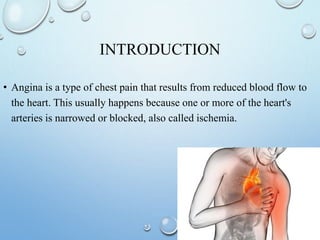
• Angina is a type of chest pain that results from reduced blood flow to
the heart. This usually happens because one or more of the heart's
arteries is narrowed or blocked, also called ischemia.
DEFINITION
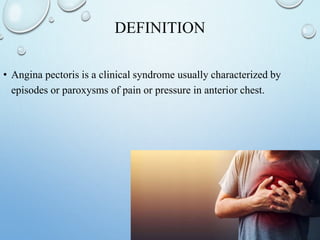
• Angina pectoris is a clinical syndrome usually characterized by
episodes or paroxysms of pain or pressure in anterior chest.
TYPES
• STABLE ANGINA- Predictable & consistent pain that occurs on exertion
and last for 5-10 min
• UNSTABLE ANGINA- Pain occurs more frequently & lasts longer more
than 20min.
• REFRACTORY ANGINA- It is severe incapacitating chest pain.
• VARIANT OR PRINZMETAL ANGINA-Pain occurs at rest with reversible ST
segment elevation.
• SILENT ISCHEMIA- It is ischemia that occurs in absence of any subjective
symptoms.
RISK FACTORS
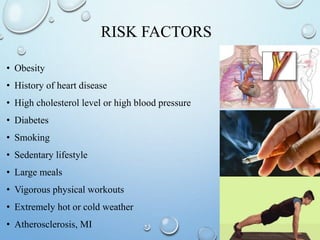
• Obesity
• History of heart disease
• High cholesterol level or high blood pressure
• Diabetes
• Smoking
• Sedentary lifestyle
• Large meals
• Vigorous physical workouts
• Extremely hot or cold weather
• Atherosclerosis, MI
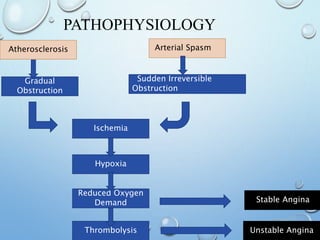
PATHOPHYSIOLOGY
SU
Sudden Irreversible
Obstruction
Thrombolysis
Gradual
Obstruction
Ischemia
Hypoxia
Reduced Oxygen
Demand Stable Angina
Unstable Angina
Atherosclerosis Arterial Spasm
CLINICAL MANIFESTATIONS
• Chest pain
• Shortness of breath
• Fatigue
• Dizziness
• Profuse sweating
• Anxiety
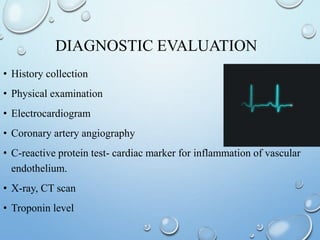
DIAGNOSTIC EVALUATION
• History collection
• Physical examination
• Electrocardiogram
• Coronary artery angiography
• C-reactive protein test- cardiac marker for inflammation of vascular
endothelium.
• X-ray, CT scan
• Troponin level
MANAGEMENT
Medical management
• Nitrates- nitroglycerin, ISMN & ISDN
• Beta adrenergic blockers- metoprolol, carvedilol etc.
• ACE- ramipril , captopril etc.
• Calcium channel blockers- amlodipine, verapamil etc.
• Anticoagulants- heparin, enoxaparin etc.
• Thrombolytic agent- urokinase, streptokinase etc.
• Antiplatelet- clopidogrel, aspirin.
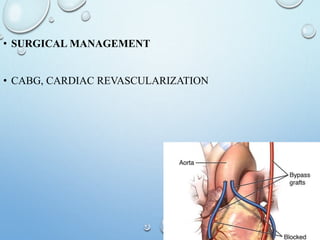
• SURGICAL MANAGEMENT
• CABG, CARDIAC REVASCULARIZATION
NURSING MANAGEMENT
• Acute pain related to decreased myocardial blood flow.
• Decreased cardiac output related to alterations in rate/rhythm and electrical
conduction.
• Anxiety related to chest pain & threatening environment.
• Activity intolerance related to abnormal pulse & ECG changes.
• Deficient knowledge related to inaccurate information.
• Conclusion-
• Angina pectoris is a clinical condition resulting from less blood supply to heart
leading to severe chest pain.
Angina

Angina

  • 1.
    SUBJECT- MEDICAL SURGICALNURSING TOPIC- ANGINA PECTORIS - MR. MIGRON RUBIN
  • 2.
    INTRODUCTION • Angina isa type of chest pain that results from reduced blood flow to the heart. This usually happens because one or more of the heart's arteries is narrowed or blocked, also called ischemia.
  • 3.
    DEFINITION • Angina pectorisis a clinical syndrome usually characterized by episodes or paroxysms of pain or pressure in anterior chest.
  • 4.
    TYPES • STABLE ANGINA-Predictable & consistent pain that occurs on exertion and last for 5-10 min • UNSTABLE ANGINA- Pain occurs more frequently & lasts longer more than 20min. • REFRACTORY ANGINA- It is severe incapacitating chest pain. • VARIANT OR PRINZMETAL ANGINA-Pain occurs at rest with reversible ST segment elevation. • SILENT ISCHEMIA- It is ischemia that occurs in absence of any subjective symptoms.
  • 5.
    RISK FACTORS • Obesity •History of heart disease • High cholesterol level or high blood pressure • Diabetes • Smoking • Sedentary lifestyle • Large meals • Vigorous physical workouts • Extremely hot or cold weather • Atherosclerosis, MI
  • 6.
  • 7.
    CLINICAL MANIFESTATIONS • Chestpain • Shortness of breath • Fatigue • Dizziness • Profuse sweating • Anxiety
  • 8.
    DIAGNOSTIC EVALUATION • Historycollection • Physical examination • Electrocardiogram • Coronary artery angiography • C-reactive protein test- cardiac marker for inflammation of vascular endothelium. • X-ray, CT scan • Troponin level
  • 9.
    MANAGEMENT Medical management • Nitrates-nitroglycerin, ISMN & ISDN • Beta adrenergic blockers- metoprolol, carvedilol etc. • ACE- ramipril , captopril etc. • Calcium channel blockers- amlodipine, verapamil etc. • Anticoagulants- heparin, enoxaparin etc. • Thrombolytic agent- urokinase, streptokinase etc. • Antiplatelet- clopidogrel, aspirin.
  • 10.
    • SURGICAL MANAGEMENT •CABG, CARDIAC REVASCULARIZATION
  • 11.
    NURSING MANAGEMENT • Acutepain related to decreased myocardial blood flow. • Decreased cardiac output related to alterations in rate/rhythm and electrical conduction. • Anxiety related to chest pain & threatening environment. • Activity intolerance related to abnormal pulse & ECG changes. • Deficient knowledge related to inaccurate information.
  • 12.
    • Conclusion- • Anginapectoris is a clinical condition resulting from less blood supply to heart leading to severe chest pain.