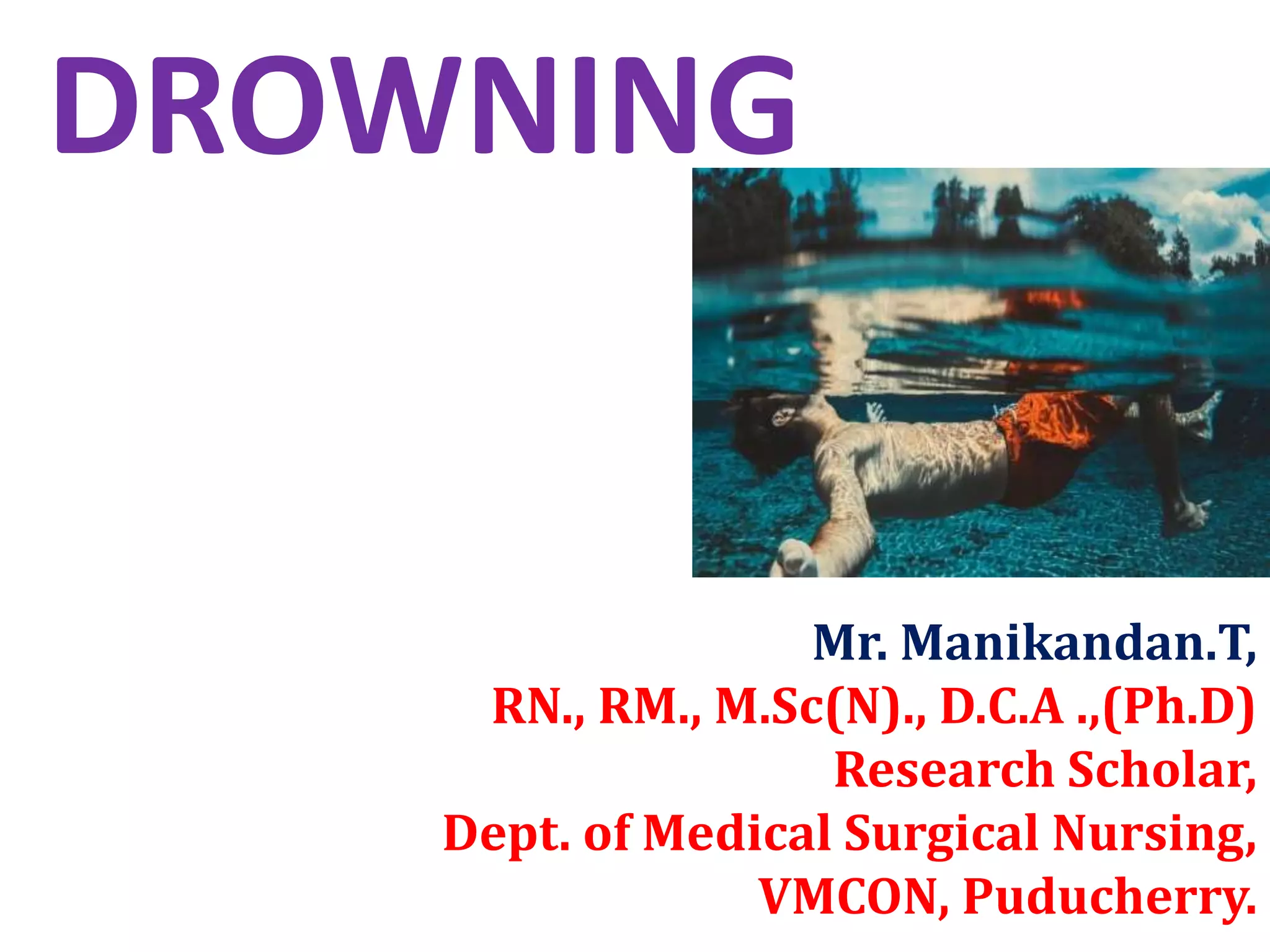

DROWNING
Mr. Manikandan.T,
RN., RM., M.Sc(N)., D.C.A .,(Ph.D)
Research Scholar,
Dept. of Medical Surgical Nursing,
VMCON, Puducherry.
DEFINITION:
• Drowning is the result of immersion of nose and mouth in
water (or any other liquid). Water enters the windpipe and
lungs, clogging the lungs completely.
• Type of suffocation induced by the submersion or immersion
of the mouth and nose in a liquid. Most instances of
fatal drowning occur alone or in situations where others
present are either unaware of the victim's situation or unable
to offer assistance.
CAUSES
• The causes of drowning are accidental and usually
preventable.
• The accident often occurs within a short distance
of safety like in a bathtub or close to shore.
• Other factors that contribute to drowning include
– alcohol
– trauma (injuries from diving into shallow water)
– medical emergencies (seizures, heart
attacks, hypoglycemic or diabetic coma, stroke)
PROCESS OF DROWNING:
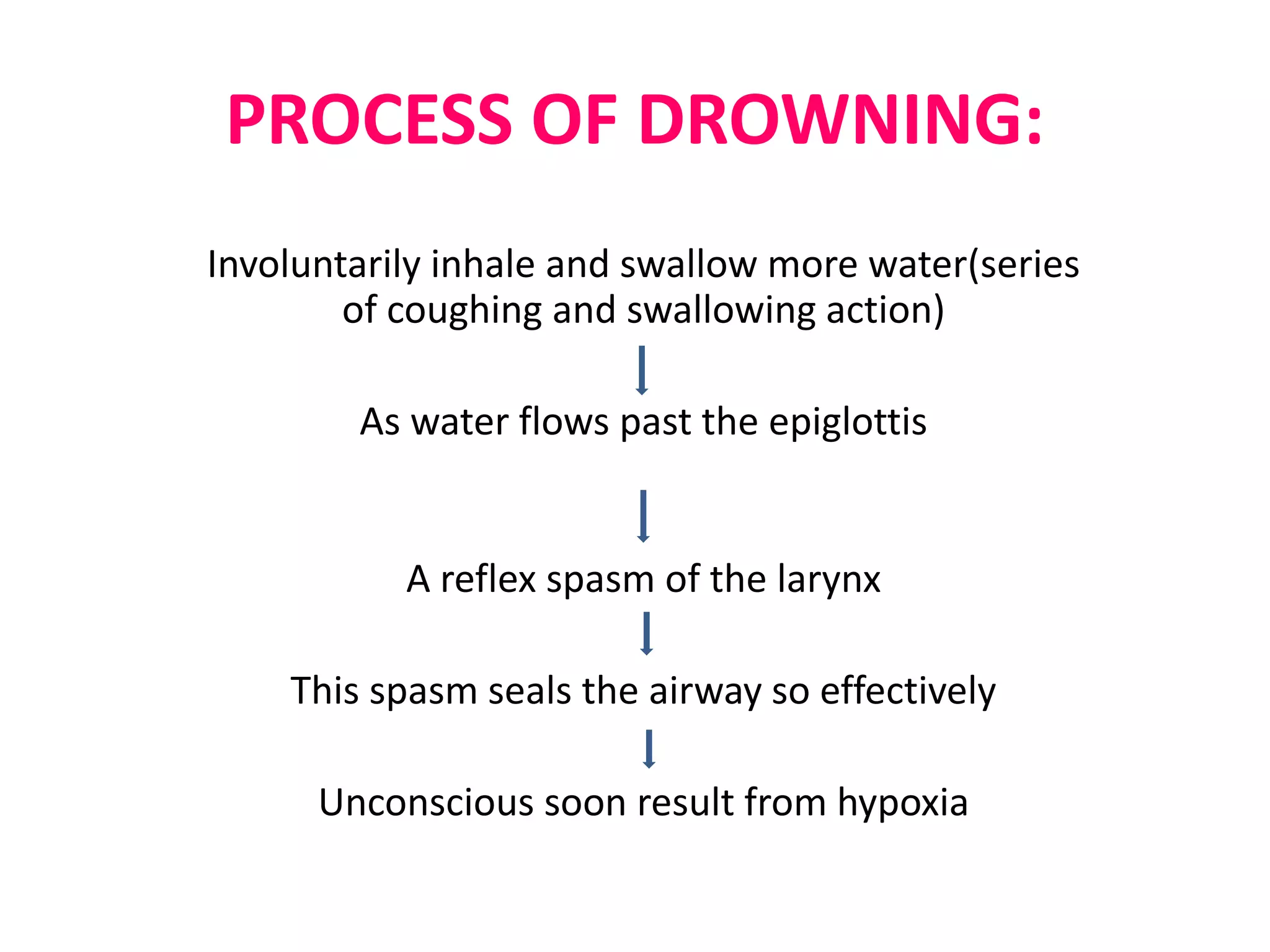
Involuntarily inhale and swallow more water(series
of coughing and swallowing action)
As water flows past the epiglottis
A reflex spasm of the larynx
This spasm seals the airway so effectively
Unconscious soon result from hypoxia
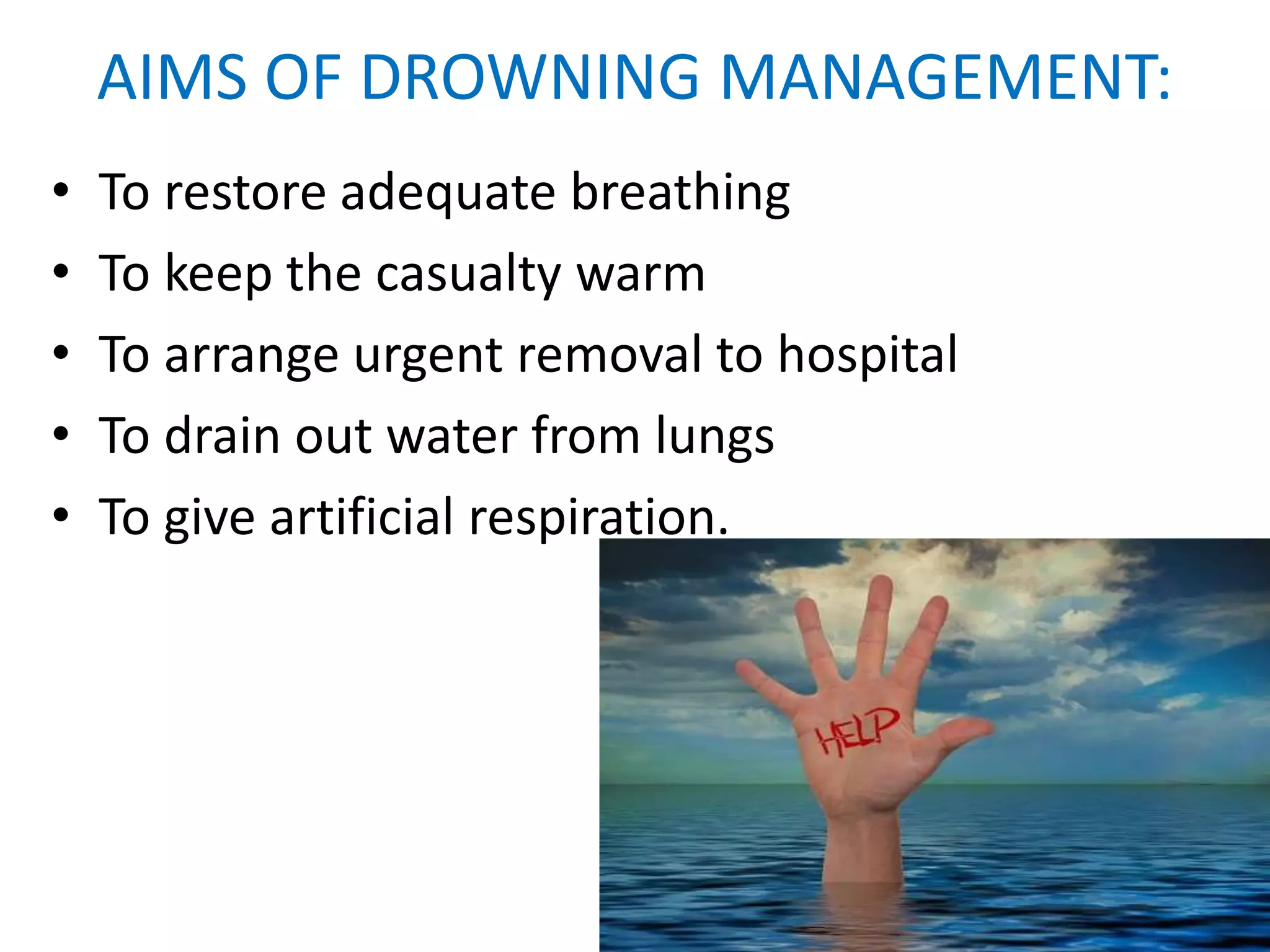
AIMS OF DROWNING MANAGEMENT:
• To restore adequate breathing
• To keep the casualty warm
• To arrange urgent removal to hospital
• To drain out water from lungs
• To give artificial respiration.
MANAGEMENT:
• The aim is drain out water from lungs and to give artificial
respiration.
• Act quickly, remove seaweeds and mud from nose and
throat. Start artificial ventilation immediately.
• Turn the victim face down with head to one side and arms
stretched beyond his head. Infants and children could be
held upside down for short period.
• Raise the middle part of the body
• with your hand round the belly to drain out water from
lungs.
Cont.…:
• Give artificial respiration until respiration comes to normal
• Remove wet cloths
• Keep the body warm cover with blankets
• When the victim become conscious, give hot drinks like
coffee or tea
• Do not allow him to sit up
• After doing the above, remove quickly to hospital.
Prevention- Drowning
• Tips
– Infants should never be left in the bathtub alone, even for a few
seconds, and the caregiver should not be distracted by other tasks or
chores.
– Toddlers and small children should not be unattended near backyard
or neighborhood pools.
– Everybody should learn how to swim and the buddy system is
important for every age.
– Never swim alone.
– When in natural water, like rivers and lakes, it is important to know the
depth of the water, its temperature, and whether any dangerous
currents exist.
– While enjoying watercraft, boats etc. on lakes, rivers, or in the ocean
floatation devices should be available to every person on the vessel.
– Boating while intoxicated (BWI) is against the federal law. Alcohol
should not be used in excess when swimming or boating and its use is
commonly associated with teenage drowning deaths.
THANKS

Drowning

  • 1.
    DROWNING Mr. Manikandan.T, RN., RM.,M.Sc(N)., D.C.A .,(Ph.D) Research Scholar, Dept. of Medical Surgical Nursing, VMCON, Puducherry.
  • 2.
    DEFINITION: • Drowning isthe result of immersion of nose and mouth in water (or any other liquid). Water enters the windpipe and lungs, clogging the lungs completely. • Type of suffocation induced by the submersion or immersion of the mouth and nose in a liquid. Most instances of fatal drowning occur alone or in situations where others present are either unaware of the victim's situation or unable to offer assistance.
  • 3.
    CAUSES • The causesof drowning are accidental and usually preventable. • The accident often occurs within a short distance of safety like in a bathtub or close to shore. • Other factors that contribute to drowning include – alcohol – trauma (injuries from diving into shallow water) – medical emergencies (seizures, heart attacks, hypoglycemic or diabetic coma, stroke)
  • 4.
    PROCESS OF DROWNING: Involuntarilyinhale and swallow more water(series of coughing and swallowing action) As water flows past the epiglottis A reflex spasm of the larynx This spasm seals the airway so effectively Unconscious soon result from hypoxia
  • 5.
    AIMS OF DROWNINGMANAGEMENT: • To restore adequate breathing • To keep the casualty warm • To arrange urgent removal to hospital • To drain out water from lungs • To give artificial respiration.
  • 6.
    MANAGEMENT: • The aimis drain out water from lungs and to give artificial respiration. • Act quickly, remove seaweeds and mud from nose and throat. Start artificial ventilation immediately. • Turn the victim face down with head to one side and arms stretched beyond his head. Infants and children could be held upside down for short period. • Raise the middle part of the body • with your hand round the belly to drain out water from lungs.
  • 7.
    Cont.…: • Give artificialrespiration until respiration comes to normal • Remove wet cloths • Keep the body warm cover with blankets • When the victim become conscious, give hot drinks like coffee or tea • Do not allow him to sit up • After doing the above, remove quickly to hospital.
  • 8.
    Prevention- Drowning • Tips –Infants should never be left in the bathtub alone, even for a few seconds, and the caregiver should not be distracted by other tasks or chores. – Toddlers and small children should not be unattended near backyard or neighborhood pools. – Everybody should learn how to swim and the buddy system is important for every age. – Never swim alone. – When in natural water, like rivers and lakes, it is important to know the depth of the water, its temperature, and whether any dangerous currents exist. – While enjoying watercraft, boats etc. on lakes, rivers, or in the ocean floatation devices should be available to every person on the vessel. – Boating while intoxicated (BWI) is against the federal law. Alcohol should not be used in excess when swimming or boating and its use is commonly associated with teenage drowning deaths.
  • 9.