INTRODUCTION
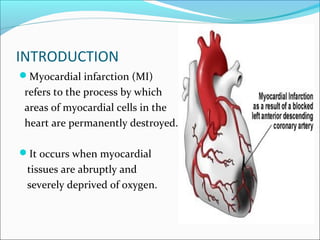
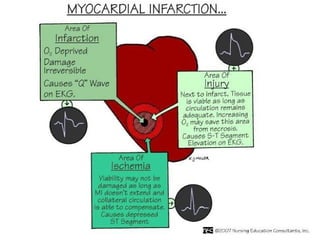
Myocardial infarction (MI)
refers to the process by which
areas of myocardial cells in the
heart are permanently destroyed.
It occurs when myocardial
tissues are abruptly and
severely deprived of oxygen.
DEFINITION
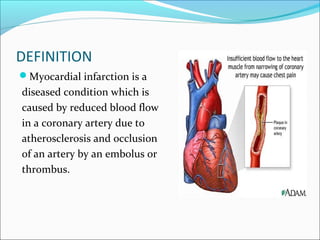
Myocardial infarction is a
diseased condition which is
caused by reduced blood flow
in a coronary artery due to
atherosclerosis and occlusion
of an artery by an embolus or
thrombus.
LOCATION / TYPES OF MYPCARDIAL INFARCTION
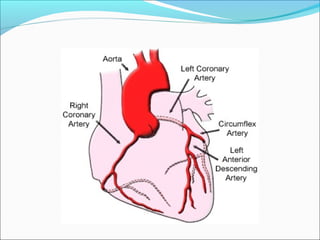
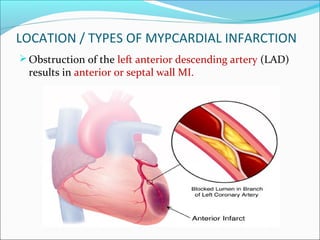
Obstruction of the left anterior descending artery (LAD)
results in anterior or septal wall MI.
Contd…..
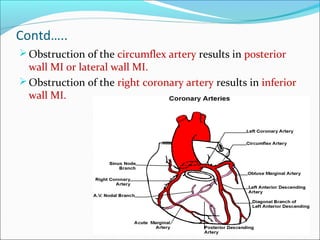
Obstruction of the circumflex artery results in posterior
wall MI or lateral wall MI.
Obstruction of the right coronary artery results in inferior
wall MI.
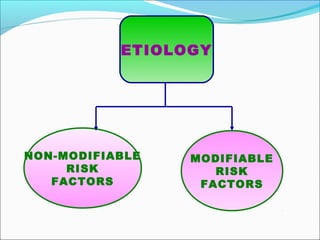
ETIOLOGY
NON-MODIFIABLE
RISK
FACTORS
MODIFIABLE
RISK
FACTORS
ETIOLOGY
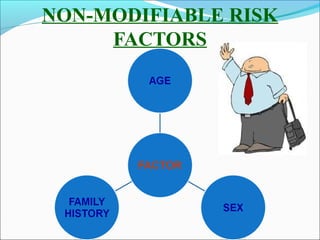
NON-MODIFIABLE RISK
FACTORS
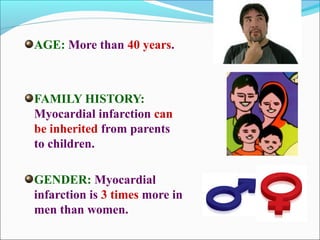
AGE: More than 40 years.
FAMILY HISTORY:
Myocardial infarction can
be inherited from parents
to children.
GENDER: Myocardial
infarction is 3 times more in
men than women.
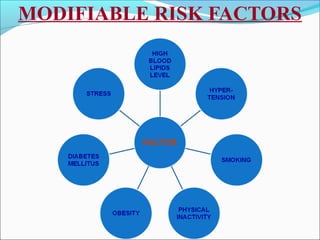
MODIFIABLE RISK FACTORS
PATHOPHYSIOLOGY
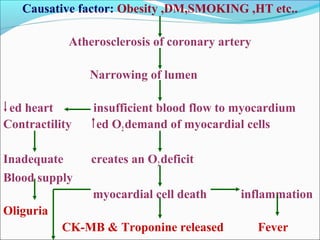
Causative factor: Obesity ,DM,SMOKING ,HT etc..
Atherosclerosis of coronary artery
Narrowing of lumen
ed heart insufficient blood flow to myocardium
Contractility ed O2demand of myocardial cells
Inadequate creates an O2deficit
Blood supply
myocardial cell death inflammation
Oliguria
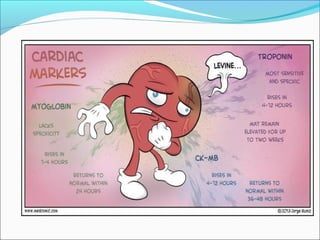
CK-MB & Troponine released Fever
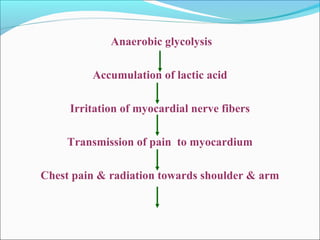
Anaerobic glycolysis
Accumulation of lactic acid
Irritation of myocardial nerve fibers
Transmission of pain to myocardium
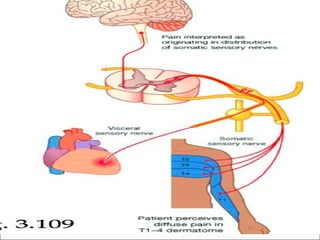
Chest pain & radiation towards shoulder & arm
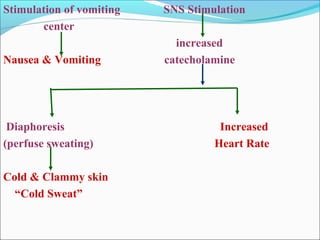
Stimulation of vomiting SNS Stimulation
center
increased
Nausea & Vomiting catecholamine
Diaphoresis Increased
(perfuse sweating) Heart Rate
Cold & Clammy skin
“Cold Sweat”
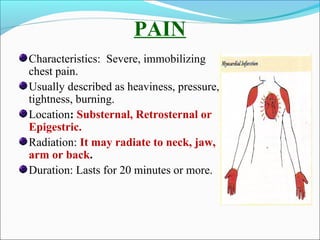
PAIN
Characteristics: Severe, immobilizing
chest pain.
Usually described as heaviness, pressure,
tightness, burning.
Location: Substernal, Retrosternal or
Epigestric.
Radiation: It may radiate to neck, jaw,
arm or back.
Duration: Lasts for 20 minutes or more.
NAUSEA & VOMITING
Stimulation of vomiting center by severe pain causes
nausea & vomiting.
FEVER
100.4 to 102.2°F
It is due to inflammatory process caused by
Myocardial cell death.
SYMPATHETIC NERVOUS SYSTEM
STIMULATION
Increased catecholamine releases.
Diaphoresis (perfuse sweating).
Cold & clammy skin (“cold sweat”).
CARDIOVASCULAR MANIFESTATIONS
Hypotension
Decrease cardiac output
Shock
Urine output (Oliguria): <30ml/day.
Dyspnoea
DIAGNOSTIC TESTS
CONTD…..
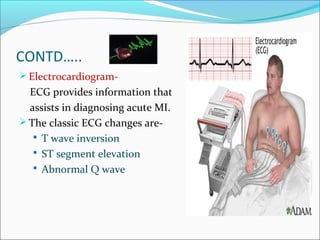
Electrocardiogram-
ECG provides information that
assists in diagnosing acute MI.
The classic ECG changes are-
 T wave inversion
 ST segment elevation
 Abnormal Q wave
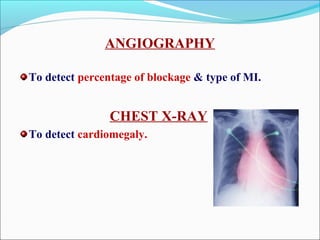
ANGIOGRAPHY
To detect percentage of blockage & type of MI.
CHEST X-RAY
To detect cardiomegaly.
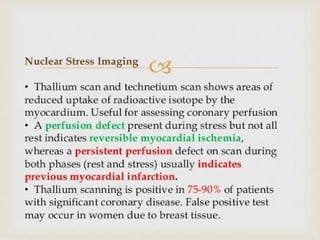
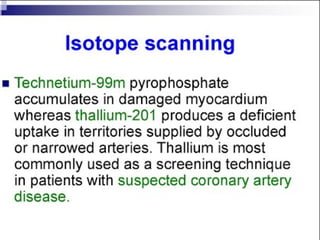
Positron emission tomography- (PET scan)
It is used to evaluate cardiac metabolism & to assess
tissue perfusion.
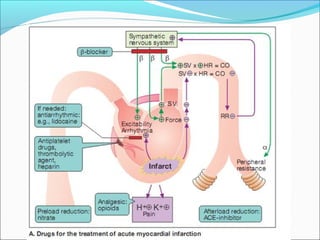
DRUG THERAPY IN MYOCARDIAL INFRACTION
Pharmacological therapy in MI has following
objectives.
1.To reduce pain, anxiety and apprehension .
2.Oxygenation .
3.Maintenance of blood volume, tissue perfusion, and
microcirculation .
4.correction of acidosis.
5.Prevention and treatment of arrhythmias.
6.To manage cardiac output .
7. Prevention of thrombus extension, embolism, venous
thrombosis
8.Thrombolysis and reperfusion.
9.Prevention of remodeling and subsequent CHF
10.Prevention of future attacks
a. platelet inhibitors.
b. beta blockers
c. control of hyperlipidemia .
1.To reduce pain anxiety and apprehension
1. After pain is not relieved by 3 doses of GTN given 5
min. apart , an opioid analgesic [morphine
/pethidine] or diazepam is administered parentally.
2.Prevention and treatment of arrhythmias.
Prophylactic i.v. infusion of beta blockers as soon as the
MI patient is seen ,reduces the incidence of arrhythmia
and mortality .
Beta blockers used early in evolving MI can reduce the
infract size and complications.
Tachyarrhythmias may be treated with i.v lidocaine,
procainamide, or amiodarone.
3. To manage cardiac output-
The objective is to increase c.o. and to decrease filling
pressure without increasing cardiac work or lowering
BP-
A. Furosemide- indicated if pulmonary wedge pressure
is > 20 mm Hg. It decreases cardiac preload.
B. Vasodilators – GTN or nitoprusside have been manily
used.
C. Inotropic agents- dopamin or dobutamine to
augment pumping action of heart.
4.Prevention of thrombus extension, embolism,
venous thrombosis-
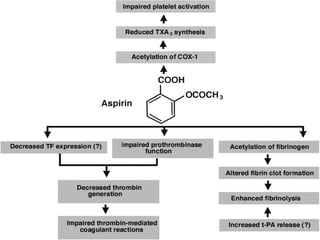
1. Aspirin [162- 325 mg] as soon as MI is suspected. This is
continued at 80- 160 mg / day.
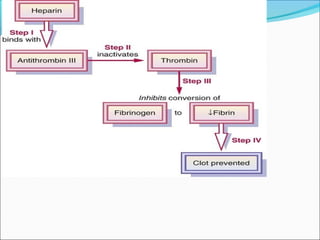
2. Anticoagulants [heparin followed by oral
anticoagulants ]are used to prevent deep vein thrombosis
and pulmonary or arterial embolism.
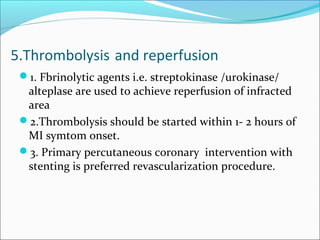
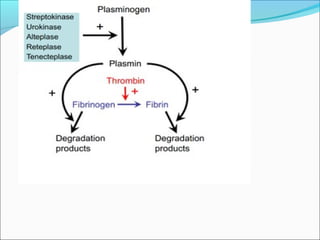
5.Thrombolysis and reperfusion
1. Fbrinolytic agents i.e. streptokinase /urokinase/
alteplase are used to achieve reperfusion of infracted
area
2.Thrombolysis should be started within 1- 2 hours of
MI symtom onset.
3. Primary percutaneous coronary intervention with
stenting is preferred revascularization procedure.
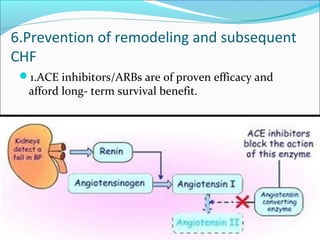
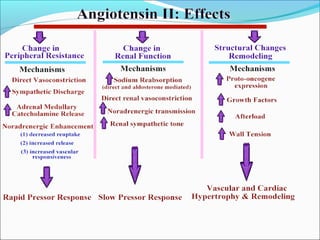
6.Prevention of remodeling and subsequent
CHF
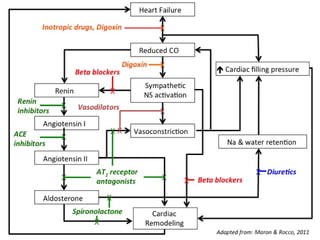
1.ACE inhibitors/ARBs are of proven efficacy and
afford long- term survival benefit.
7.Prevention of future attacks-
Platelet inhibitors- asprine or clopidogrel.
Beta blockers- reduce risk of re infaraction, CHF, and
mortality.
Control of hyperlipidemia.
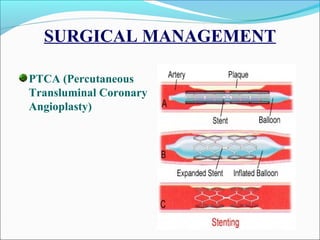
SURGICAL MANAGEMENT
PTCA (Percutaneous
Transluminal Coronary
Angioplasty)
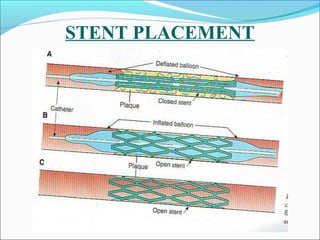
STENT PLACEMENT
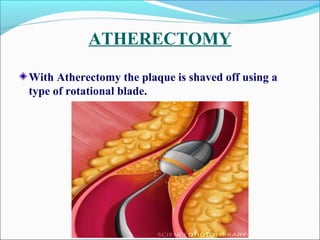
ATHERECTOMY
With Atherectomy the plaque is shaved off using a
type of rotational blade.
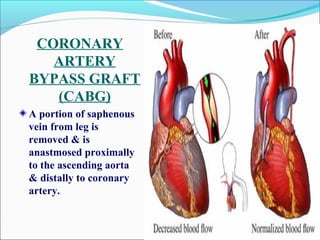
CORONARY
ARTERY
BYPASS GRAFT
(CABG)
A portion of saphenous
vein from leg is
removed & is
anastmosed proximally
to the ascending aorta
& distally to coronary
artery.
Recent Advances in the Management of Acute
Myocardial Infarction
1. Optimsing the Outcomes Of PPCI
Thrombus aspiration during PPCI
Rheolytic thrombectomy (RT) before direct infarct artery stenting as compared
to direct stenting (DS) alone to improve the results of myocardial reperfusion
and clinical outcome in patients with acute myocardial infarction.
Intracoronary Gp IIb/IIIa inhibitors
Intracoronary administration of drugs increases local drug concentration
several fold. The increased concentration of Gp IIb/IIIa inhibitors like
Abciximab, Eptifibatide, Tirofiban are shown to improve the outcomes of
PCI safely and efficaciously in terms of reduction in infarct size,
peri-procedural MI .
Adenosine
Intracoronary administration of vasodilators such as adenosine during
and after PPCI has been shown to improve flow in the infarct-related
coronary artery and myocardial perfusion and reduces infarct size.
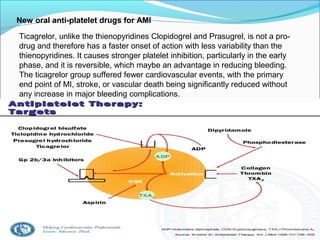
New oral anti-platelet drugs for AMI
Ticagrelor, unlike the thienopyridines Clopidogrel and Prasugrel, is not a pro-
drug and therefore has a faster onset of action with less variability than the
thienopyridines. It causes stronger platelet inhibition, particularly in the early
phase, and it is reversible, which maybe an advantage in reducing bleeding.
The ticagrelor group suffered fewer cardiovascular events, with the primary
end point of MI, stroke, or vascular death being significantly reduced without
any increase in major bleeding complications.
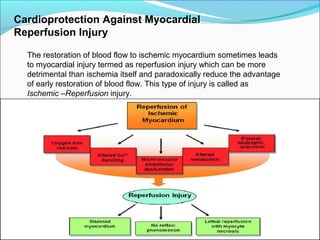
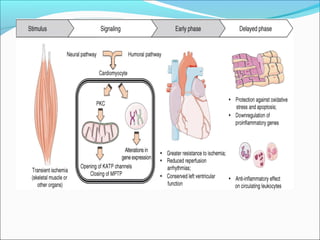
Cardioprotection Against Myocardial
Reperfusion Injury
The restoration of blood flow to ischemic myocardium sometimes leads
to myocardial injury termed as reperfusion injury which can be more
detrimental than ischemia itself and paradoxically reduce the advantage
of early restoration of blood flow. This type of injury is called as
Ischemic –Reperfusion injury.
a. The drugs which target these pathways are
cyclosporine, erythropoietin, glucagon-like peptide 1
and atrial nitriuretic peptides. The new strategies for protection
against reperfusion injury are Ischemic conditioning, targeting
the RISK [reperfusion injury salvage kinase]pathway, targeting
mitochondrial[phosphotyrosyl phosphatase activator] PTPa
b. The ischemic conditioning can be defined as preconditioning
when performed before reperfusion and post-conditioning . In clinical
practice the remote ischemic preconditioning is carried out with brief
occlusion of blood flow to either upper or lower limb by periodically inflating
and releasing the blood pressure cuff. The remote ischemic
preconditioning is believed to activate changes in intracellular
kinase and mitochondria that are cardio-protective..
c. The ischemic post-conditioning is carried out by transient
balloon occlusion of the infarct related artery. The remote
ischemic post-conditioning is carried out by transient occlusion
of other than the infarct related coronary artery.
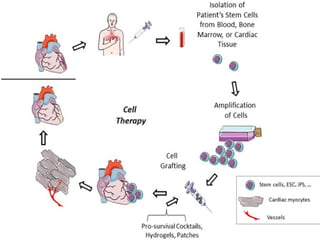
Cardiac Repair and Regeneration
The Transplantation of Progenitor Cells And Regeneration Enhancement
in Acute Myocardial Infarction investigated both safety, feasibility, and
potential effects on parameters of myocardial function of intracoronary
infusion of either circulating progenitor cells (CPC) or bone
marrow-derived progenitor cells (BMC) in patients with acute myocardial
infarction (AMI).
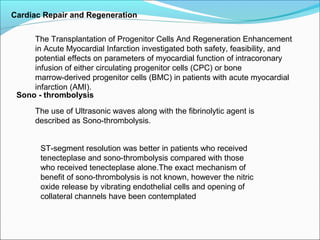
Sono - thrombolysis
The use of Ultrasonic waves along with the fibrinolytic agent is
described as Sono-thrombolysis.
ST-segment resolution was better in patients who received
tenecteplase and sono-thrombolysis compared with those
who received tenecteplase alone.The exact mechanism of
benefit of sono-thrombolysis is not known, however the nitric
oxide release by vibrating endothelial cells and opening of
collateral channels have been contemplated
THANKSTHANKS

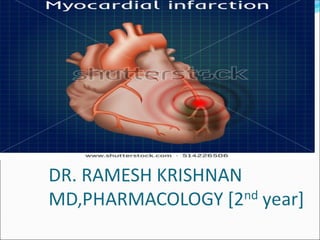
Myocardial infarction

  • 2.
    INTRODUCTION Myocardial infarction (MI) refersto the process by which areas of myocardial cells in the heart are permanently destroyed. It occurs when myocardial tissues are abruptly and severely deprived of oxygen.
  • 3.
    DEFINITION Myocardial infarction isa diseased condition which is caused by reduced blood flow in a coronary artery due to atherosclerosis and occlusion of an artery by an embolus or thrombus.
  • 5.
    LOCATION / TYPESOF MYPCARDIAL INFARCTION Obstruction of the left anterior descending artery (LAD) results in anterior or septal wall MI.
  • 6.
    Contd….. Obstruction of thecircumflex artery results in posterior wall MI or lateral wall MI. Obstruction of the right coronary artery results in inferior wall MI.
  • 8.
  • 9.
  • 10.
  • 11.
    AGE: More than40 years. FAMILY HISTORY: Myocardial infarction can be inherited from parents to children. GENDER: Myocardial infarction is 3 times more in men than women.
  • 12.
  • 13.
  • 14.
    Causative factor: Obesity,DM,SMOKING ,HT etc.. Atherosclerosis of coronary artery Narrowing of lumen ed heart insufficient blood flow to myocardium Contractility ed O2demand of myocardial cells Inadequate creates an O2deficit Blood supply myocardial cell death inflammation Oliguria CK-MB & Troponine released Fever
  • 15.
    Anaerobic glycolysis Accumulation oflactic acid Irritation of myocardial nerve fibers Transmission of pain to myocardium Chest pain & radiation towards shoulder & arm
  • 16.
    Stimulation of vomitingSNS Stimulation center increased Nausea & Vomiting catecholamine Diaphoresis Increased (perfuse sweating) Heart Rate Cold & Clammy skin “Cold Sweat”
  • 17.
    PAIN Characteristics: Severe, immobilizing chestpain. Usually described as heaviness, pressure, tightness, burning. Location: Substernal, Retrosternal or Epigestric. Radiation: It may radiate to neck, jaw, arm or back. Duration: Lasts for 20 minutes or more.
  • 19.
    NAUSEA & VOMITING Stimulationof vomiting center by severe pain causes nausea & vomiting. FEVER 100.4 to 102.2°F It is due to inflammatory process caused by Myocardial cell death.
  • 20.
    SYMPATHETIC NERVOUS SYSTEM STIMULATION Increasedcatecholamine releases. Diaphoresis (perfuse sweating). Cold & clammy skin (“cold sweat”).
  • 21.
    CARDIOVASCULAR MANIFESTATIONS Hypotension Decrease cardiacoutput Shock Urine output (Oliguria): <30ml/day. Dyspnoea
  • 22.
  • 23.
    CONTD….. Electrocardiogram- ECG provides informationthat assists in diagnosing acute MI. The classic ECG changes are-  T wave inversion  ST segment elevation  Abnormal Q wave
  • 26.
    ANGIOGRAPHY To detect percentageof blockage & type of MI. CHEST X-RAY To detect cardiomegaly.
  • 27.
    Positron emission tomography-(PET scan) It is used to evaluate cardiac metabolism & to assess tissue perfusion.
  • 29.
    DRUG THERAPY INMYOCARDIAL INFRACTION Pharmacological therapy in MI has following objectives. 1.To reduce pain, anxiety and apprehension . 2.Oxygenation . 3.Maintenance of blood volume, tissue perfusion, and microcirculation . 4.correction of acidosis. 5.Prevention and treatment of arrhythmias. 6.To manage cardiac output .
  • 30.
    7. Prevention ofthrombus extension, embolism, venous thrombosis 8.Thrombolysis and reperfusion. 9.Prevention of remodeling and subsequent CHF 10.Prevention of future attacks a. platelet inhibitors. b. beta blockers c. control of hyperlipidemia .
  • 32.
    1.To reduce painanxiety and apprehension 1. After pain is not relieved by 3 doses of GTN given 5 min. apart , an opioid analgesic [morphine /pethidine] or diazepam is administered parentally.
  • 33.
    2.Prevention and treatmentof arrhythmias. Prophylactic i.v. infusion of beta blockers as soon as the MI patient is seen ,reduces the incidence of arrhythmia and mortality . Beta blockers used early in evolving MI can reduce the infract size and complications. Tachyarrhythmias may be treated with i.v lidocaine, procainamide, or amiodarone.
  • 35.
    3. To managecardiac output- The objective is to increase c.o. and to decrease filling pressure without increasing cardiac work or lowering BP- A. Furosemide- indicated if pulmonary wedge pressure is > 20 mm Hg. It decreases cardiac preload. B. Vasodilators – GTN or nitoprusside have been manily used. C. Inotropic agents- dopamin or dobutamine to augment pumping action of heart.
  • 37.
    4.Prevention of thrombusextension, embolism, venous thrombosis- 1. Aspirin [162- 325 mg] as soon as MI is suspected. This is continued at 80- 160 mg / day. 2. Anticoagulants [heparin followed by oral anticoagulants ]are used to prevent deep vein thrombosis and pulmonary or arterial embolism.
  • 40.
    5.Thrombolysis and reperfusion 1.Fbrinolytic agents i.e. streptokinase /urokinase/ alteplase are used to achieve reperfusion of infracted area 2.Thrombolysis should be started within 1- 2 hours of MI symtom onset. 3. Primary percutaneous coronary intervention with stenting is preferred revascularization procedure.
  • 42.
    6.Prevention of remodelingand subsequent CHF 1.ACE inhibitors/ARBs are of proven efficacy and afford long- term survival benefit.
  • 44.
    7.Prevention of futureattacks- Platelet inhibitors- asprine or clopidogrel. Beta blockers- reduce risk of re infaraction, CHF, and mortality. Control of hyperlipidemia.
  • 45.
  • 46.
  • 47.
    ATHERECTOMY With Atherectomy theplaque is shaved off using a type of rotational blade.
  • 48.
    CORONARY ARTERY BYPASS GRAFT (CABG) A portionof saphenous vein from leg is removed & is anastmosed proximally to the ascending aorta & distally to coronary artery.
  • 49.
    Recent Advances inthe Management of Acute Myocardial Infarction 1. Optimsing the Outcomes Of PPCI Thrombus aspiration during PPCI Rheolytic thrombectomy (RT) before direct infarct artery stenting as compared to direct stenting (DS) alone to improve the results of myocardial reperfusion and clinical outcome in patients with acute myocardial infarction. Intracoronary Gp IIb/IIIa inhibitors Intracoronary administration of drugs increases local drug concentration several fold. The increased concentration of Gp IIb/IIIa inhibitors like Abciximab, Eptifibatide, Tirofiban are shown to improve the outcomes of PCI safely and efficaciously in terms of reduction in infarct size, peri-procedural MI . Adenosine Intracoronary administration of vasodilators such as adenosine during and after PPCI has been shown to improve flow in the infarct-related coronary artery and myocardial perfusion and reduces infarct size.
  • 50.
    New oral anti-plateletdrugs for AMI Ticagrelor, unlike the thienopyridines Clopidogrel and Prasugrel, is not a pro- drug and therefore has a faster onset of action with less variability than the thienopyridines. It causes stronger platelet inhibition, particularly in the early phase, and it is reversible, which maybe an advantage in reducing bleeding. The ticagrelor group suffered fewer cardiovascular events, with the primary end point of MI, stroke, or vascular death being significantly reduced without any increase in major bleeding complications.
  • 51.
    Cardioprotection Against Myocardial ReperfusionInjury The restoration of blood flow to ischemic myocardium sometimes leads to myocardial injury termed as reperfusion injury which can be more detrimental than ischemia itself and paradoxically reduce the advantage of early restoration of blood flow. This type of injury is called as Ischemic –Reperfusion injury.
  • 52.
    a. The drugswhich target these pathways are cyclosporine, erythropoietin, glucagon-like peptide 1 and atrial nitriuretic peptides. The new strategies for protection against reperfusion injury are Ischemic conditioning, targeting the RISK [reperfusion injury salvage kinase]pathway, targeting mitochondrial[phosphotyrosyl phosphatase activator] PTPa b. The ischemic conditioning can be defined as preconditioning when performed before reperfusion and post-conditioning . In clinical practice the remote ischemic preconditioning is carried out with brief occlusion of blood flow to either upper or lower limb by periodically inflating and releasing the blood pressure cuff. The remote ischemic preconditioning is believed to activate changes in intracellular kinase and mitochondria that are cardio-protective.. c. The ischemic post-conditioning is carried out by transient balloon occlusion of the infarct related artery. The remote ischemic post-conditioning is carried out by transient occlusion of other than the infarct related coronary artery.
  • 54.
    Cardiac Repair andRegeneration The Transplantation of Progenitor Cells And Regeneration Enhancement in Acute Myocardial Infarction investigated both safety, feasibility, and potential effects on parameters of myocardial function of intracoronary infusion of either circulating progenitor cells (CPC) or bone marrow-derived progenitor cells (BMC) in patients with acute myocardial infarction (AMI). Sono - thrombolysis The use of Ultrasonic waves along with the fibrinolytic agent is described as Sono-thrombolysis. ST-segment resolution was better in patients who received tenecteplase and sono-thrombolysis compared with those who received tenecteplase alone.The exact mechanism of benefit of sono-thrombolysis is not known, however the nitric oxide release by vibrating endothelial cells and opening of collateral channels have been contemplated
  • 57.