Downloaded 140 times
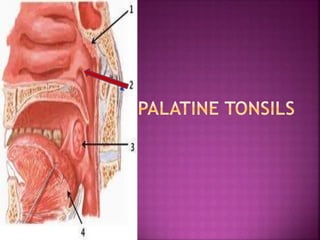


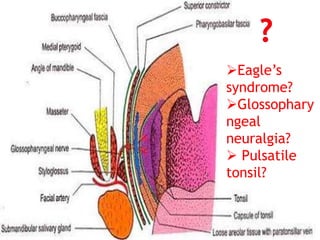
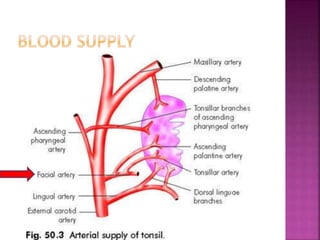
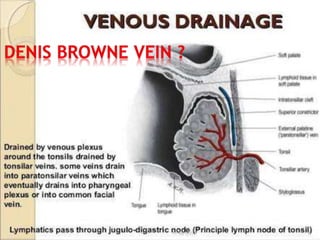

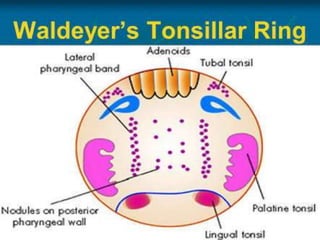




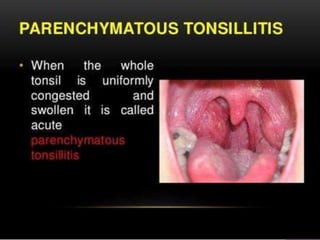

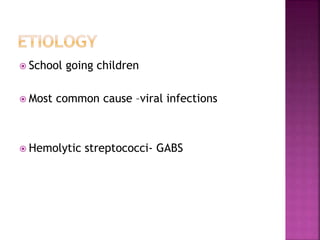
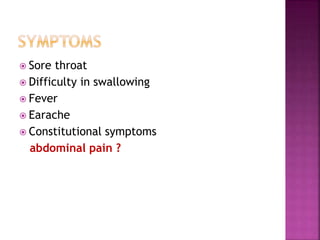

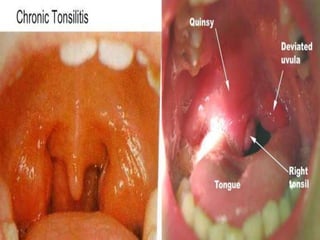

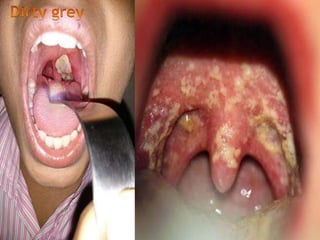

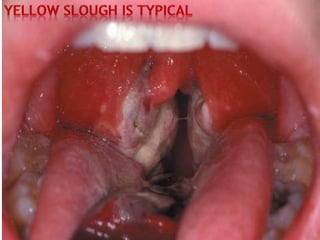
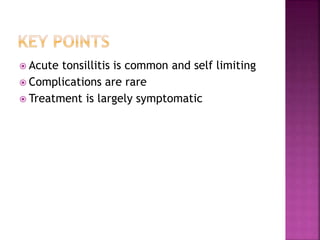


The document discusses tonsillitis, including: - Tonsillitis commonly affects school-aged children and is usually caused by viral infections like streptococci. - Symptoms include sore throat, difficulty swallowing, fever, and earache. On examination, the tonsils may be red, swollen, and coated with yellow spots. - Treatment is usually supportive with rest, hydration, and analgesics. Antibiotics are sometimes used for bacterial causes like streptococcal infections. Complications can include peritonsillar abscess or other infections.


![RADIAL NERVE PALSY[1].pptx](https://cdn.slidesharecdn.com/ss_thumbnails/radialnervepalsy1-220928130238-5944f60b-thumbnail.jpg?width=640&height=640&fit=bounds)


