Acute tonsillitis

Dr. Barbara Pieper
Palatine tonsils
Palatine tonsils
• Each tonsil is an
  ovoid mass of
  lymphoid tissue
• Situated in the
  lateral wall of
  oropharynx
  between anterior
  and posterior
  pillars
Palatine tonsils

• Actual size is bigger
  than it appears from
  the surface
• Tonsils extend
  upwards in the soft
  palate , downwards
  into base of tongue,
• Anteriorly into
  palatoglossal arch
Palatine tonsils
• A tonsil presents two
  surfaces - a medial
  and a lateral
• And two poles an
  upper and a lower
Palatine tonsils
• The medial surface of the tonsil is covered by
  non-keratinising stratified squamous
  epithelium which dips into the tonsils in form
  of crypts (tube-like invaginations)
• The lateral surface presents as well defined
  fibrous capsule
• Foreign material is directly transported to the
  lymphoid cells via tonsillar crypts
Arterial supply of tonsil
Lymphatic drainage
• Drainage goes into upper deep cervical
  nodes particularly the iugulodigastric
  (tonsillar) nodes situated below the
  angle of mandible
Classification of tonsillitis
• Acute catarrhal or superficial tonsillitis, part of
  generalised pharyngitis
• Acute follicular tonsillitis, infection spreads
  into the crypts
• Acute parenchymatous tonsillitis, tonsil
  substance is affected, tonsil is uniformly
  enlarged and red
• Acute membranous tonsillitis, stage ahead of
  follicular tonsillitis
Aetiology of acute tonsillitis
Most commonly infecting organisms
- haemolytic streptococcus
- staphylococcus
- pneumococcus
- Haemophilus influenzae
Symptoms of acute tonsillitis
• Sore throat
• Difficulty in swallowing - the child may
  refuse to eat anything
• Fever - from 38° to 40°C, may be
  associated with chills and rigors
• Earache
• Constitutional symptoms include
  headache, malaise, abdominal pain
Signs of acute tonsillitis
• Foetid breath, tongue coasted
• Hyperaemia of pillars, soft palate and uvula
• Tonsils are red and swollen with yellowish
  spots (follicular) or whitish membrane
  (membranous)
• Tonsils may be enlarged and congested
  (parenchymatous)
• The iugulodigastric lymph nodes are enlarged
  and tender
Treatment of acute tonsillitis
• Patient is put to bed and encouraged to
  take plenty of fluids
• Analgesics (e.g.Paracetamol) to relieve
  local pain and bring down the fever
• Antimicrobial therapy for 7-10 days
  penicillin is the drug of choice,
  alternativly in case of penicillin-allergy
  erythromycin
Complications of acute tonsillitis
•   Chronic tonsillitis
•   Peritonsillar abscess
•   Parapharyngeal abscess
•   Cervical abscess
•   Acute otitis media
•   Rheumatic fever
•   Acute glomerulonephritis
•   Subacute bacterial endocarditis
Differential diagnosis of membrane
           over the tonsil
• Diphteria
     slower in onset
     less local discomfort
     membrane is adherent and removal
     leaves a bleeding surface
     culture: corynebacterium diphteriae

• Vincent´s angina
     less fever, less discomfort
     membrane over one tonsil
     removal leaves irregular ulcer under membrane
     culture: fusiform bacili, spirochaetes
Differential diagnosis of membrane
           over the tonsil
• Infectious mononucleosis - glandular fever
     young adults affected
     both tonsils enlarged, congested,
     covered with membrane
     marked local discomfort
     enlarged lymphnodes in posterior triangle
     of neck, hepato- and splenomegaly
     caused by Epstein-Barr virus
     failure of antibiotic treatment
     blood smear: 50% lymphocytes, 10% atypical
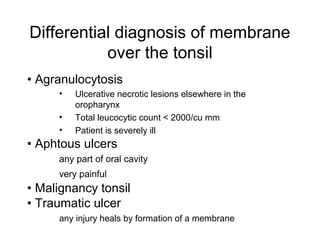
Differential diagnosis of membrane
           over the tonsil
• Agranulocytosis
     •   Ulcerative necrotic lesions elsewhere in the
         oropharynx
     •   Total leucocytic count < 2000/cu mm
     •   Patient is severely ill
• Aphtous ulcers
     any part of oral cavity
     very painful
• Malignancy tonsil
• Traumatic ulcer
     any injury heals by formation of a membrane
Try to get a look inside

Acute tonsillitis

  • 1.
  • 2.
  • 3.
    Palatine tonsils • Eachtonsil is an ovoid mass of lymphoid tissue • Situated in the lateral wall of oropharynx between anterior and posterior pillars
  • 4.
    Palatine tonsils • Actualsize is bigger than it appears from the surface • Tonsils extend upwards in the soft palate , downwards into base of tongue, • Anteriorly into palatoglossal arch
  • 5.
    Palatine tonsils • Atonsil presents two surfaces - a medial and a lateral • And two poles an upper and a lower
  • 6.
    Palatine tonsils • Themedial surface of the tonsil is covered by non-keratinising stratified squamous epithelium which dips into the tonsils in form of crypts (tube-like invaginations) • The lateral surface presents as well defined fibrous capsule • Foreign material is directly transported to the lymphoid cells via tonsillar crypts
  • 8.
  • 9.
    Lymphatic drainage • Drainagegoes into upper deep cervical nodes particularly the iugulodigastric (tonsillar) nodes situated below the angle of mandible
  • 10.
    Classification of tonsillitis •Acute catarrhal or superficial tonsillitis, part of generalised pharyngitis • Acute follicular tonsillitis, infection spreads into the crypts • Acute parenchymatous tonsillitis, tonsil substance is affected, tonsil is uniformly enlarged and red • Acute membranous tonsillitis, stage ahead of follicular tonsillitis
  • 13.
    Aetiology of acutetonsillitis Most commonly infecting organisms - haemolytic streptococcus - staphylococcus - pneumococcus - Haemophilus influenzae
  • 14.
    Symptoms of acutetonsillitis • Sore throat • Difficulty in swallowing - the child may refuse to eat anything • Fever - from 38° to 40°C, may be associated with chills and rigors • Earache • Constitutional symptoms include headache, malaise, abdominal pain
  • 15.
    Signs of acutetonsillitis • Foetid breath, tongue coasted • Hyperaemia of pillars, soft palate and uvula • Tonsils are red and swollen with yellowish spots (follicular) or whitish membrane (membranous) • Tonsils may be enlarged and congested (parenchymatous) • The iugulodigastric lymph nodes are enlarged and tender
  • 16.
    Treatment of acutetonsillitis • Patient is put to bed and encouraged to take plenty of fluids • Analgesics (e.g.Paracetamol) to relieve local pain and bring down the fever • Antimicrobial therapy for 7-10 days penicillin is the drug of choice, alternativly in case of penicillin-allergy erythromycin
  • 17.
    Complications of acutetonsillitis • Chronic tonsillitis • Peritonsillar abscess • Parapharyngeal abscess • Cervical abscess • Acute otitis media • Rheumatic fever • Acute glomerulonephritis • Subacute bacterial endocarditis
  • 18.
    Differential diagnosis ofmembrane over the tonsil • Diphteria slower in onset less local discomfort membrane is adherent and removal leaves a bleeding surface culture: corynebacterium diphteriae • Vincent´s angina less fever, less discomfort membrane over one tonsil removal leaves irregular ulcer under membrane culture: fusiform bacili, spirochaetes
  • 19.
    Differential diagnosis ofmembrane over the tonsil • Infectious mononucleosis - glandular fever young adults affected both tonsils enlarged, congested, covered with membrane marked local discomfort enlarged lymphnodes in posterior triangle of neck, hepato- and splenomegaly caused by Epstein-Barr virus failure of antibiotic treatment blood smear: 50% lymphocytes, 10% atypical
  • 20.
    Differential diagnosis ofmembrane over the tonsil • Agranulocytosis • Ulcerative necrotic lesions elsewhere in the oropharynx • Total leucocytic count < 2000/cu mm • Patient is severely ill • Aphtous ulcers any part of oral cavity very painful • Malignancy tonsil • Traumatic ulcer any injury heals by formation of a membrane
  • 21.
    Try to geta look inside