PROTEOMICS
OCTOBER 11, 2015
SHAH ABDUL LATIF UNIVERSITY KHAIRPUR
DEPARTMENT OF BIOCHEMISTRY
DEDICATED TO
HONOURABLE SIR MAQBOOL AHMED SOOMRO
BS (HONS:) SALU KHAIRPUR
SHAH ABDUL LATIF UNIVERSITY KHAIRPUR
DEPARTMENT OF
TOPIC: TONSILS INFLAMATION
SUBJECT: PROTEOMICS
SUBMITED TO: RESPECTED SIR MAQBOOL AHMED SOOMRO
SUBMITED BY: ABDUL-RAHMAN SHAIKH
CONTENT
Topic Page #
What is tonsillitis? ------------------------------------------------------------------- 01
Cause of tonsillitis ------------------------------------------------------------------- 02
Symptoms of tonsillitis -------------------------------------------------------------- 02
How tonsillitis is diagnosed? ------------------------------------------------------- 03
Treatment of tonsillitis -------------------------------------------------------------- 04
Tonsil conditions --------------------------------------------------------------------- 04
Outlook for tonsillitis --------------------------------------------------------------- 05
Preventing tonsillitis ----------------------------------------------------------------- 05
01
TONSILS INFLAMATION
What Is Tonsillitis?
Tonsils are the two lymph nodes located on each side of the back of your throat. They
function as a defense mechanism, helping to prevent infection from entering the rest of your body.
When the tonsils themselves become infected, the condition is called tonsillitis.
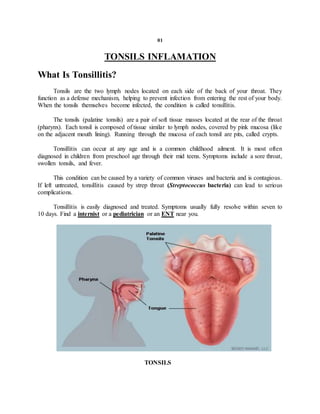
The tonsils (palatine tonsils) are a pair of soft tissue masses located at the rear of the throat
(pharynx). Each tonsil is composed of tissue similar to lymph nodes, covered by pink mucosa (like
on the adjacent mouth lining). Running through the mucosa of each tonsil are pits, called crypts.
Tonsillitis can occur at any age and is a common childhood ailment. It is most often
diagnosed in children from preschool age through their mid teens. Symptoms include a sore throat,
swollen tonsils, and fever.
This condition can be caused by a variety of common viruses and bacteria and is contagious.
If left untreated, tonsillitis caused by strep throat (Streptococcus bacteria) can lead to serious
complications.
Tonsillitis is easily diagnosed and treated. Symptoms usually fully resolve within seven to
10 days. Find a internist or a pediatrician or an ENT near you.
TONSILS
02
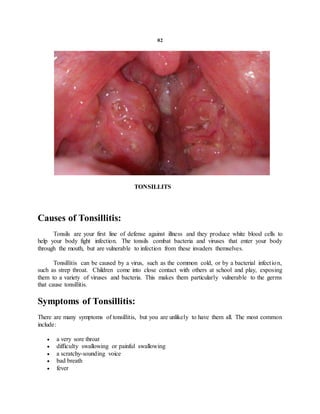
TONSILLITS
Causes of Tonsillitis:
Tonsils are your first line of defense against illness and they produce white blood cells to
help your body fight infection. The tonsils combat bacteria and viruses that enter your body
through the mouth, but are vulnerable to infection from these invaders themselves.
Tonsillitis can be caused by a virus, such as the common cold, or by a bacterial infection,
such as strep throat. Children come into close contact with others at school and play, exposing
them to a variety of viruses and bacteria. This makes them particularly vulnerable to the germs
that cause tonsillitis.
Symptoms of Tonsillitis:
There are many symptoms of tonsillitis, but you are unlikely to have them all. The most common
include:
 a very sore throat
 difficulty swallowing or painful swallowing
 a scratchy-sounding voice
 bad breath
 fever
03
 chills
 earaches
 stomach aches
 headaches
 a stiff neck
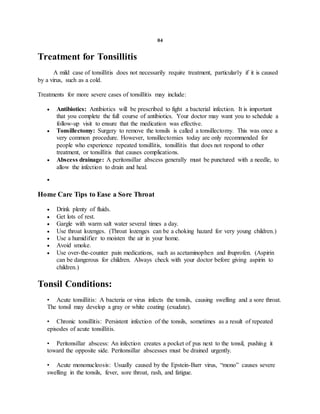
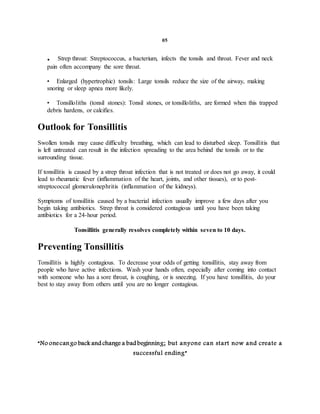
 jaw and neck tenderness (due to swollen lymph nodes)
 tonsils that appear red and swollen
 tonsils that have white or yellow spots
In very young children, you may also notice increased irritability, poor appetite, or excessive
drooling. Seek immediate medical care if you or your child is having difficulty breathing
because the swollen tonsils may be obstructing the airways.
How Tonsillitis Is Diagnosed
Diagnosis is based on a physical examination of the throat and may include a throat culture.
To take a throat culture, your doctor will gently swab the back of your throat and send the sample
to a laboratory to identify the cause of your throat infection.
Tonsil Tests
• Throat (pharynx) swab: A doctor rubs a cotton swab on the tonsils and throat and sends the
swab for tests. Usually this is done to check for bacteria such as Streptococcus.
• Monospot test: A blood test can detect certain antibodies, which can help confirm that a
person’s symptoms are due to mononucleosis.
• Epstein-Barr virus antibodies: If a monospot test is negative, antibodies in the blood against
EBV might help diagnose mononucleosis.
04
Treatment for Tonsillitis
A mild case of tonsillitis does not necessarily require treatment, particularly if it is caused
by a virus, such as a cold.
Treatments for more severe cases of tonsillitis may include:
 Antibiotics: Antibiotics will be prescribed to fight a bacterial infection. It is important
that you complete the full course of antibiotics. Your doctor may want you to schedule a
follow-up visit to ensure that the medication was effective.
 Tonsillectomy: Surgery to remove the tonsils is called a tonsillectomy. This was once a
very common procedure. However, tonsillectomies today are only recommended for
people who experience repeated tonsillitis, tonsillitis that does not respond to other
treatment, or tonsillitis that causes complications.
 Abscess drainage: A peritonsillar abscess generally must be punctured with a needle, to
allow the infection to drain and heal.

Home Care Tips to Ease a Sore Throat
 Drink plenty of fluids.
 Get lots of rest.
 Gargle with warm salt water several times a day.
 Use throat lozenges. (Throat lozenges can be a choking hazard for very young children.)
 Use a humidifier to moisten the air in your home.
 Avoid smoke.
 Use over-the-counter pain medications, such as acetaminophen and ibuprofen. (Aspirin
can be dangerous for children. Always check with your doctor before giving aspirin to
children.)
Tonsil Conditions:
• Acute tonsillitis: A bacteria or virus infects the tonsils, causing swelling and a sore throat.
The tonsil may develop a gray or white coating (exudate).
• Chronic tonsillitis: Persistent infection of the tonsils, sometimes as a result of repeated
episodes of acute tonsillitis.
• Peritonsillar abscess: An infection creates a pocket of pus next to the tonsil, pushing it
toward the opposite side. Peritonsillar abscesses must be drained urgently.
• Acute mononucleosis: Usually caused by the Epstein-Barr virus, “mono” causes severe
swelling in the tonsils, fever, sore throat, rash, and fatigue.
05
. Strep throat: Streptococcus, a bacterium, infects the tonsils and throat. Fever and neck
pain often accompany the sore throat.
• Enlarged (hypertrophic) tonsils: Large tonsils reduce the size of the airway, making
snoring or sleep apnea more likely.
• Tonsilloliths (tonsil stones): Tonsil stones, or tonsilloliths, are formed when this trapped
debris hardens, or calcifies.
Outlook for Tonsillitis
Swollen tonsils may cause difficulty breathing, which can lead to disturbed sleep. Tonsillitis that
is left untreated can result in the infection spreading to the area behind the tonsils or to the
surrounding tissue.
If tonsillitis is caused by a strep throat infection that is not treated or does not go away, it could
lead to rheumatic fever (inflammation of the heart, joints, and other tissues), or to post-
streptococcal glomerulonephritis (inflammation of the kidneys).
Symptoms of tonsillitis caused by a bacterial infection usually improve a few days after you
begin taking antibiotics. Strep throat is considered contagious until you have been taking
antibiotics for a 24-hour period.
Tonsillitis generally resolves completely within seven to 10 days.
Preventing Tonsillitis
Tonsillitis is highly contagious. To decrease your odds of getting tonsillitis, stay away from
people who have active infections. Wash your hands often, especially after coming into contact
with someone who has a sore throat, is coughing, or is sneezing. If you have tonsillitis, do your
best to stay away from others until you are no longer contagious.
“No onecango back and change a bad beginning; but anyone can start now and create a
successful ending”

What is tonsillitis

  • 1.
    PROTEOMICS OCTOBER 11, 2015 SHAHABDUL LATIF UNIVERSITY KHAIRPUR DEPARTMENT OF BIOCHEMISTRY
  • 2.
    DEDICATED TO HONOURABLE SIRMAQBOOL AHMED SOOMRO BS (HONS:) SALU KHAIRPUR
  • 3.
    SHAH ABDUL LATIFUNIVERSITY KHAIRPUR DEPARTMENT OF TOPIC: TONSILS INFLAMATION SUBJECT: PROTEOMICS SUBMITED TO: RESPECTED SIR MAQBOOL AHMED SOOMRO SUBMITED BY: ABDUL-RAHMAN SHAIKH
  • 4.
    CONTENT Topic Page # Whatis tonsillitis? ------------------------------------------------------------------- 01 Cause of tonsillitis ------------------------------------------------------------------- 02 Symptoms of tonsillitis -------------------------------------------------------------- 02 How tonsillitis is diagnosed? ------------------------------------------------------- 03 Treatment of tonsillitis -------------------------------------------------------------- 04 Tonsil conditions --------------------------------------------------------------------- 04 Outlook for tonsillitis --------------------------------------------------------------- 05 Preventing tonsillitis ----------------------------------------------------------------- 05
  • 5.
    01 TONSILS INFLAMATION What IsTonsillitis? Tonsils are the two lymph nodes located on each side of the back of your throat. They function as a defense mechanism, helping to prevent infection from entering the rest of your body. When the tonsils themselves become infected, the condition is called tonsillitis. The tonsils (palatine tonsils) are a pair of soft tissue masses located at the rear of the throat (pharynx). Each tonsil is composed of tissue similar to lymph nodes, covered by pink mucosa (like on the adjacent mouth lining). Running through the mucosa of each tonsil are pits, called crypts. Tonsillitis can occur at any age and is a common childhood ailment. It is most often diagnosed in children from preschool age through their mid teens. Symptoms include a sore throat, swollen tonsils, and fever. This condition can be caused by a variety of common viruses and bacteria and is contagious. If left untreated, tonsillitis caused by strep throat (Streptococcus bacteria) can lead to serious complications. Tonsillitis is easily diagnosed and treated. Symptoms usually fully resolve within seven to 10 days. Find a internist or a pediatrician or an ENT near you. TONSILS
  • 6.
    02 TONSILLITS Causes of Tonsillitis: Tonsilsare your first line of defense against illness and they produce white blood cells to help your body fight infection. The tonsils combat bacteria and viruses that enter your body through the mouth, but are vulnerable to infection from these invaders themselves. Tonsillitis can be caused by a virus, such as the common cold, or by a bacterial infection, such as strep throat. Children come into close contact with others at school and play, exposing them to a variety of viruses and bacteria. This makes them particularly vulnerable to the germs that cause tonsillitis. Symptoms of Tonsillitis: There are many symptoms of tonsillitis, but you are unlikely to have them all. The most common include:  a very sore throat  difficulty swallowing or painful swallowing  a scratchy-sounding voice  bad breath  fever
  • 7.
    03  chills  earaches stomach aches  headaches  a stiff neck  jaw and neck tenderness (due to swollen lymph nodes)  tonsils that appear red and swollen  tonsils that have white or yellow spots In very young children, you may also notice increased irritability, poor appetite, or excessive drooling. Seek immediate medical care if you or your child is having difficulty breathing because the swollen tonsils may be obstructing the airways. How Tonsillitis Is Diagnosed Diagnosis is based on a physical examination of the throat and may include a throat culture. To take a throat culture, your doctor will gently swab the back of your throat and send the sample to a laboratory to identify the cause of your throat infection. Tonsil Tests • Throat (pharynx) swab: A doctor rubs a cotton swab on the tonsils and throat and sends the swab for tests. Usually this is done to check for bacteria such as Streptococcus. • Monospot test: A blood test can detect certain antibodies, which can help confirm that a person’s symptoms are due to mononucleosis. • Epstein-Barr virus antibodies: If a monospot test is negative, antibodies in the blood against EBV might help diagnose mononucleosis.
  • 8.
    04 Treatment for Tonsillitis Amild case of tonsillitis does not necessarily require treatment, particularly if it is caused by a virus, such as a cold. Treatments for more severe cases of tonsillitis may include:  Antibiotics: Antibiotics will be prescribed to fight a bacterial infection. It is important that you complete the full course of antibiotics. Your doctor may want you to schedule a follow-up visit to ensure that the medication was effective.  Tonsillectomy: Surgery to remove the tonsils is called a tonsillectomy. This was once a very common procedure. However, tonsillectomies today are only recommended for people who experience repeated tonsillitis, tonsillitis that does not respond to other treatment, or tonsillitis that causes complications.  Abscess drainage: A peritonsillar abscess generally must be punctured with a needle, to allow the infection to drain and heal.  Home Care Tips to Ease a Sore Throat  Drink plenty of fluids.  Get lots of rest.  Gargle with warm salt water several times a day.  Use throat lozenges. (Throat lozenges can be a choking hazard for very young children.)  Use a humidifier to moisten the air in your home.  Avoid smoke.  Use over-the-counter pain medications, such as acetaminophen and ibuprofen. (Aspirin can be dangerous for children. Always check with your doctor before giving aspirin to children.) Tonsil Conditions: • Acute tonsillitis: A bacteria or virus infects the tonsils, causing swelling and a sore throat. The tonsil may develop a gray or white coating (exudate). • Chronic tonsillitis: Persistent infection of the tonsils, sometimes as a result of repeated episodes of acute tonsillitis. • Peritonsillar abscess: An infection creates a pocket of pus next to the tonsil, pushing it toward the opposite side. Peritonsillar abscesses must be drained urgently. • Acute mononucleosis: Usually caused by the Epstein-Barr virus, “mono” causes severe swelling in the tonsils, fever, sore throat, rash, and fatigue.
  • 9.
    05 . Strep throat:Streptococcus, a bacterium, infects the tonsils and throat. Fever and neck pain often accompany the sore throat. • Enlarged (hypertrophic) tonsils: Large tonsils reduce the size of the airway, making snoring or sleep apnea more likely. • Tonsilloliths (tonsil stones): Tonsil stones, or tonsilloliths, are formed when this trapped debris hardens, or calcifies. Outlook for Tonsillitis Swollen tonsils may cause difficulty breathing, which can lead to disturbed sleep. Tonsillitis that is left untreated can result in the infection spreading to the area behind the tonsils or to the surrounding tissue. If tonsillitis is caused by a strep throat infection that is not treated or does not go away, it could lead to rheumatic fever (inflammation of the heart, joints, and other tissues), or to post- streptococcal glomerulonephritis (inflammation of the kidneys). Symptoms of tonsillitis caused by a bacterial infection usually improve a few days after you begin taking antibiotics. Strep throat is considered contagious until you have been taking antibiotics for a 24-hour period. Tonsillitis generally resolves completely within seven to 10 days. Preventing Tonsillitis Tonsillitis is highly contagious. To decrease your odds of getting tonsillitis, stay away from people who have active infections. Wash your hands often, especially after coming into contact with someone who has a sore throat, is coughing, or is sneezing. If you have tonsillitis, do your best to stay away from others until you are no longer contagious. “No onecango back and change a bad beginning; but anyone can start now and create a successful ending”