TONSILLITIS
DEPT OF OTORHINOLARYNGOLOGY
           JJM M C
         DAVANAGERE
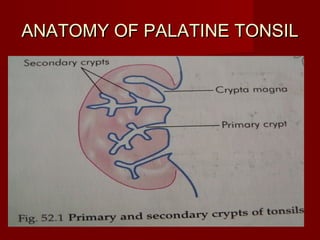
ANATOMY OF PALATINE TONSIL
   Paired structures situated in lateral wall of
    oropharynx between anterior and posterior
    pillars
   Consists of two surfaces (medial and lateral) and
    two poles (upper and lower)
   Medial surface is covered by non keratinizing
    stratified squamous epithelium
   There are 12-15 crypts on the medial surface
   Largest crypt is called crypta magna or
    intratonsillar cleft
ANATOMY OF PALATINE TONSIL
   Lateral surface of tonsil presents a well defined
    fibrous capsule
   Loose areolar tissue lies between the tonsillar
    bed and the capsule, it is the site for collection of
    pus in peritonsillar abscess (Quinsy)
   Upper pole of tonsil extends into soft palate, its
    medial surface is covered by semilunar fold
    plica semilunaris
   Lower pole of tonsil is attached to the tongue,
    triangular fold of mucous membrane extends
    from anterior pillar to antero-inferior part of tonsil
    enclosing plica triangularis
   Tonsil is seperated from the tongue by tonsilo-
    lingual sulcus
ANATOMY OF PALATINE TONSIL
TONSILLAR BED
   Formed by
   Loose areolar tissue containing paratonsillar
    vein
   Pharyngo-basilar fascia
   Superior constrictor muscle
   Bucco-pharyngeal fascia
   Styloglossus
   Medial pterygoid muscle
   Glossopharyngeal nerve
   Facial artery
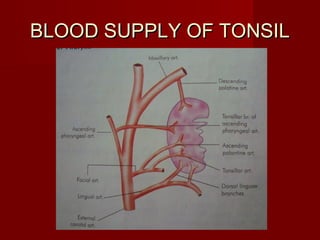
BLOOD SUPPLY OF TONSIL
LYMPHATIC DRAINAGE


 Lymphatics pierce the superior constrictor
 and drain into upper deep cervical (jugulo-
 digastric) node
FUNCTIONS OF TONSIL
 It is the component of inner waldeyer’s
  ring
 It has a protective role and acts as a
  sentinal at portal of air and food passage
 Crypts increase the surface area for
  contact with foreign substances
ACUTE TONSILLITIS
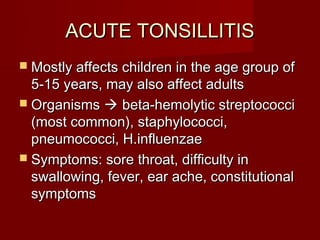
 Mostly affects children in the age group of
  5-15 years, may also affect adults
 Organisms  beta-hemolytic streptococci
  (most common), staphylococci,
  pneumococci, H.influenzae
 Symptoms: sore throat, difficulty in
  swallowing, fever, ear ache, constitutional
  symptoms
ACUTE TONSILLITIS-TYPES
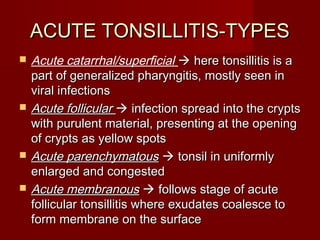
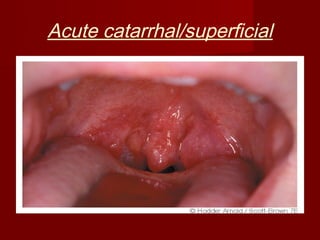
   Acute catarrhal/superficial  here tonsillitis is a
    part of generalized pharyngitis, mostly seen in
    viral infections
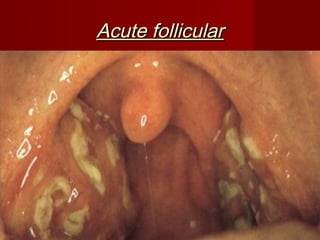
   Acute follicular  infection spread into the crypts
    with purulent material, presenting at the opening
    of crypts as yellow spots
   Acute parenchymatous  tonsil in uniformly
    enlarged and congested
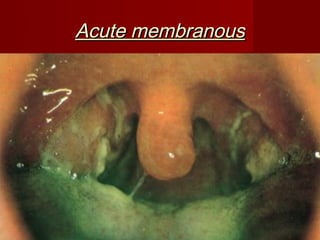
   Acute membranous  follows stage of acute
    follicular tonsillitis where exudates coalesce to
    form membrane on the surface
Acute catarrhal/superficial
Acute follicular
Acute membranous
SIGNS

 Halitosis
 Coated tongue
 Congestion of pillars, soft palate and uvula
 Jugulo-digastric nodes enlarged and
  tender
 Tonsils are congested and enlarged
  depending on type of acute tonsillitis
TREATMENT
 Bed rest
 Plenty of oral fluids
 Analgesics
 Antimicrobial therapy penicillin
 In case of penicillin sensitivity macrolides
  are given
COMPLICATIONS
 chronic tonsillitis
 peritonsillar abscess
 parapharyngeal abscess
 cervical abscess
 acute otitis media
 rheumatic fever
 acute glomerulo nephritis
 sub acute bacterial endocarditis
DIFFERENTIAL DIAGNOSIS OF
 MEMBRANE OVER THE TONSIL
 Membranous tonsillitis
 Diphtheria
 Vincents angina
 Infectious mononucleosis
 Agranulocytosis
 Leukaemia
 Traumatic ulcer
 Aphthous ulcer
 malignancy
CHRONIC TONSILLITIS
 Aetiology:
 Complication of acute tonsillitis
 Sub clinical infection of tonsil
 Chronic sinusitis or dental sepsis


 Mostly affects children and young adults
TYPES OF CHRONIC
            TONSILLITIS
 Chronic follicular tonsillitis
 Chronic parenchymatous tonsillitis : tonsils
  are very much enlarged uniformly and
  may interfere with speech, deglutition and
  respiration, long standing cases may
  develop pulmonary hypertension
 Chronic fibroid tonsillitis
CLINICAL FEATURES

 recurrent attacks of sore throat
 chronic irritation in throat with cough
 halitosis
 dysphagia
 odynophagia
 thick speech
SIGNS
 Tonsil may show varying degree of
  enlargement depending on the type
 Irwin-moore sign pressure on the
  anterior pillar expresses frank pus or
  cheesy material  mainly seen in fibroid
  type
 Flushing of the anterior pillar compared to
  rest of the pharyngeal mucosa
 Enlargement of the jugulo-digastric node
   soft non tender
TREATMENT


 conservative management
 tonsillectomy
COMPLICATIONS
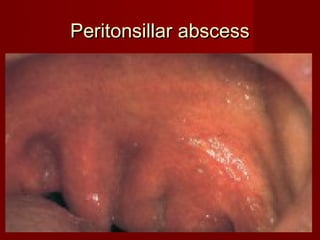
 Peritonsillar abscess
 Parapharyngeal abscess
 Retro pharyngeal abscess
 Intra tonsillar abscess
 Tonsillar cyst
 Tonsillolith
 Focus of infection for    RF, AGN
Peritonsillar abscess
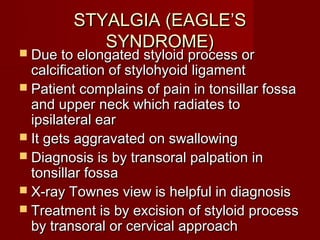
STYALGIA (EAGLE’S
           SYNDROME)
 Due to elongated styloid process or
  calcification of stylohyoid ligament
 Patient complains of pain in tonsillar fossa
  and upper neck which radiates to
  ipsilateral ear
 It gets aggravated on swallowing
 Diagnosis is by transoral palpation in
  tonsillar fossa
 X-ray Townes view is helpful in diagnosis
 Treatment is by excision of styloid process
  by transoral or cervical approach

Tonsillitis

  • 1.
  • 2.
    ANATOMY OF PALATINETONSIL  Paired structures situated in lateral wall of oropharynx between anterior and posterior pillars  Consists of two surfaces (medial and lateral) and two poles (upper and lower)  Medial surface is covered by non keratinizing stratified squamous epithelium  There are 12-15 crypts on the medial surface  Largest crypt is called crypta magna or intratonsillar cleft
  • 3.
    ANATOMY OF PALATINETONSIL  Lateral surface of tonsil presents a well defined fibrous capsule  Loose areolar tissue lies between the tonsillar bed and the capsule, it is the site for collection of pus in peritonsillar abscess (Quinsy)  Upper pole of tonsil extends into soft palate, its medial surface is covered by semilunar fold plica semilunaris  Lower pole of tonsil is attached to the tongue, triangular fold of mucous membrane extends from anterior pillar to antero-inferior part of tonsil enclosing plica triangularis  Tonsil is seperated from the tongue by tonsilo- lingual sulcus
  • 4.
  • 5.
    TONSILLAR BED  Formed by  Loose areolar tissue containing paratonsillar vein  Pharyngo-basilar fascia  Superior constrictor muscle  Bucco-pharyngeal fascia  Styloglossus  Medial pterygoid muscle  Glossopharyngeal nerve  Facial artery
  • 6.
  • 7.
    LYMPHATIC DRAINAGE  Lymphaticspierce the superior constrictor and drain into upper deep cervical (jugulo- digastric) node
  • 8.
    FUNCTIONS OF TONSIL It is the component of inner waldeyer’s ring  It has a protective role and acts as a sentinal at portal of air and food passage  Crypts increase the surface area for contact with foreign substances
  • 9.
    ACUTE TONSILLITIS  Mostlyaffects children in the age group of 5-15 years, may also affect adults  Organisms  beta-hemolytic streptococci (most common), staphylococci, pneumococci, H.influenzae  Symptoms: sore throat, difficulty in swallowing, fever, ear ache, constitutional symptoms
  • 10.
    ACUTE TONSILLITIS-TYPES  Acute catarrhal/superficial  here tonsillitis is a part of generalized pharyngitis, mostly seen in viral infections  Acute follicular  infection spread into the crypts with purulent material, presenting at the opening of crypts as yellow spots  Acute parenchymatous  tonsil in uniformly enlarged and congested  Acute membranous  follows stage of acute follicular tonsillitis where exudates coalesce to form membrane on the surface
  • 11.
  • 12.
  • 13.
  • 14.
    SIGNS  Halitosis  Coatedtongue  Congestion of pillars, soft palate and uvula  Jugulo-digastric nodes enlarged and tender  Tonsils are congested and enlarged depending on type of acute tonsillitis
  • 15.
    TREATMENT  Bed rest Plenty of oral fluids  Analgesics  Antimicrobial therapy penicillin  In case of penicillin sensitivity macrolides are given
  • 16.
    COMPLICATIONS  chronic tonsillitis peritonsillar abscess  parapharyngeal abscess  cervical abscess  acute otitis media  rheumatic fever  acute glomerulo nephritis  sub acute bacterial endocarditis
  • 17.
    DIFFERENTIAL DIAGNOSIS OF MEMBRANE OVER THE TONSIL  Membranous tonsillitis  Diphtheria  Vincents angina  Infectious mononucleosis  Agranulocytosis  Leukaemia  Traumatic ulcer  Aphthous ulcer  malignancy
  • 18.
    CHRONIC TONSILLITIS  Aetiology: Complication of acute tonsillitis  Sub clinical infection of tonsil  Chronic sinusitis or dental sepsis  Mostly affects children and young adults
  • 19.
    TYPES OF CHRONIC TONSILLITIS  Chronic follicular tonsillitis  Chronic parenchymatous tonsillitis : tonsils are very much enlarged uniformly and may interfere with speech, deglutition and respiration, long standing cases may develop pulmonary hypertension  Chronic fibroid tonsillitis
  • 20.
    CLINICAL FEATURES  recurrentattacks of sore throat  chronic irritation in throat with cough  halitosis  dysphagia  odynophagia  thick speech
  • 21.
    SIGNS  Tonsil mayshow varying degree of enlargement depending on the type  Irwin-moore sign pressure on the anterior pillar expresses frank pus or cheesy material  mainly seen in fibroid type  Flushing of the anterior pillar compared to rest of the pharyngeal mucosa  Enlargement of the jugulo-digastric node  soft non tender
  • 22.
  • 23.
    COMPLICATIONS  Peritonsillar abscess Parapharyngeal abscess  Retro pharyngeal abscess  Intra tonsillar abscess  Tonsillar cyst  Tonsillolith  Focus of infection for RF, AGN
  • 24.
  • 25.
    STYALGIA (EAGLE’S SYNDROME)  Due to elongated styloid process or calcification of stylohyoid ligament  Patient complains of pain in tonsillar fossa and upper neck which radiates to ipsilateral ear  It gets aggravated on swallowing  Diagnosis is by transoral palpation in tonsillar fossa  X-ray Townes view is helpful in diagnosis  Treatment is by excision of styloid process by transoral or cervical approach