TONSILLITIS
SRUTHI LAKSHMANAN
RA1841002010134
ACUTE TONSILLITIS
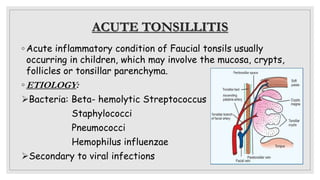
◦ Acute inflammatory condition of Faucial tonsils usually
occurring in children, which may involve the mucosa, crypts,
follicles or tonsillar parenchyma.
◦ ETIOLOGY:
Bacteria: Beta- hemolytic Streptococcus
Staphylococci
Pneumococci
Hemophilus influenzae
Secondary to viral infections
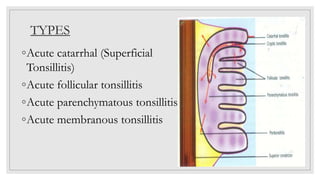
TYPES
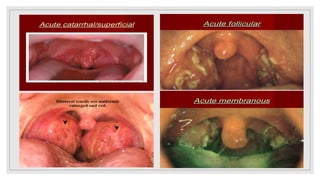
◦Acute catarrhal (Superficial
Tonsillitis)
◦Acute follicular tonsillitis
◦Acute parenchymatous tonsillitis
◦Acute membranous tonsillitis
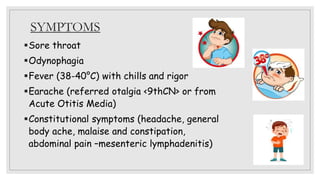
SYMPTOMS
Sore throat
Odynophagia
Fever (38-40°C) with chills and rigor
Earache (referred otalgia <9thCN> or from
Acute Otitis Media)
Constitutional symptoms (headache, general
body ache, malaise and constipation,
abdominal pain –mesenteric lymphadenitis)
SIGNS
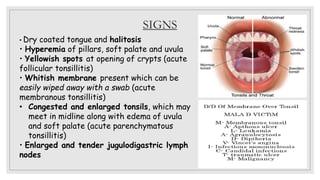
• Dry coated tongue and halitosis
• Hyperemia of pillars, soft palate and uvula
• Yellowish spots at opening of crypts (acute
follicular tonsillitis)
• Whitish membrane present which can be
easily wiped away with a swab (acute
membranous tonsillitis)
• Congested and enlarged tonsils, which may
meet in midline along with edema of uvula
and soft palate (acute parenchymatous
tonsillitis)
• Enlarged and tender jugulodigastric lymph
nodes
INVESTIGATIONS & TREATMENT
Rapid strep tests
- Latex agglutination or ELISA
methods extract antigen (group-A
streptococcal) from a swab-highly
specific ,but less sensitive
Throat culture
- Culture from swab from posterior
pharynx and tonsillar area.
Conservative
• Bed rest with plenty of fluids
• Analgesics to relieve local pain
and bring fever down
• Antibiotics for 7-10 days
- Penicillin or amoxicillin (drug of
choice)
- Erythromycin in patients
allergic to penicillin.
COMPLICATIONS
• Chronic tonsillitis with recurrent acute attacks (incomplete
resolution or persistent of micro-abscess)
• Peritonsillar abscess
• Parapharyngeal abscess
• Cervical abscess due of suppuration of jugulodigastric lymph nodes
• Acute otitis media-seen in recurrent acute tonsillitis
• Rheumatic fever- Group A- beta hemolytic Streptococci
• Acute glomerulonephritis (rare)
• Subacute bacterial endocarditis-Streptococcus viridans
CHRONIC TONSILLITIS
ETIOLOGY
◦ Results from inadequately
treated acute tonsillitis
◦ Subclinical infection of
tonsils
◦ Predisposing factors:
Chronic sinusitis
Dental infection
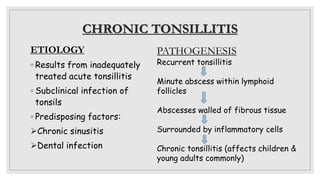
PATHOGENESIS
Recurrent tonsillitis
Minute abscess within lymphoid
follicles
Abscesses walled of fibrous tissue
Surrounded by inflammatory cells
Chronic tonsillitis (affects children &
young adults commonly)
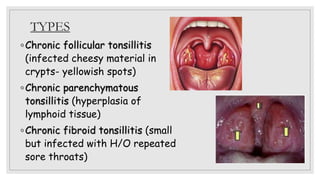
TYPES
◦Chronic follicular tonsillitis
(infected cheesy material in
crypts- yellowish spots)
◦Chronic parenchymatous
tonsillitis (hyperplasia of
lymphoid tissue)
◦Chronic fibroid tonsillitis (small
but infected with H/O repeated
sore throats)
SYMPTOMS
• History of recurrent sore throat or acute tonsillitis
• Chronic irritation in throat with cough
• Bad taste in mouth
• Foul breath due to pus in crypts
• Thick speech
• Difficulty in swallowing
• Choking spells in night
SIGNS
• Nontender enlargement of jugulodigastric lymph nodes
bilaterally
• Yellowish beads of pus on medial surface (chronic follicular
type)
• Varying degree of tonsillar enlargement (chronic
parenchymatous type)
• Features of cor pulmonale (long-standing chronic
parenchymatous type)
• Small tonsils but express frank pus or cheesy material on
pressing anterior pillar (chronic fibroid type)
• Positive tonsillar squeeze (Ervin-Moore sign)
Expression of purulent cheesy material from tonsillar crypts
on pressure on anterior pillar
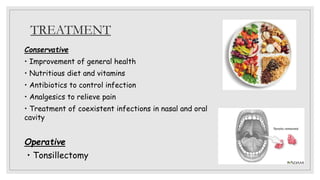
TREATMENT
Conservative
• Improvement of general health
• Nutritious diet and vitamins
• Antibiotics to control infection
• Analgesics to relieve pain
• Treatment of coexistent infections in nasal and oral
cavity
Operative
• Tonsillectomy
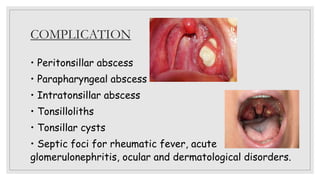
COMPLICATION
• Peritonsillar abscess
• Parapharyngeal abscess
• Intratonsillar abscess
• Tonsilloliths
• Tonsillar cysts
• Septic foci for rheumatic fever, acute
glomerulonephritis, ocular and dermatological disorders.
Tonsillitis

Tonsillitis

  • 1.
  • 2.
    ACUTE TONSILLITIS ◦ Acuteinflammatory condition of Faucial tonsils usually occurring in children, which may involve the mucosa, crypts, follicles or tonsillar parenchyma. ◦ ETIOLOGY: Bacteria: Beta- hemolytic Streptococcus Staphylococci Pneumococci Hemophilus influenzae Secondary to viral infections
  • 3.
    TYPES ◦Acute catarrhal (Superficial Tonsillitis) ◦Acutefollicular tonsillitis ◦Acute parenchymatous tonsillitis ◦Acute membranous tonsillitis
  • 5.
    SYMPTOMS Sore throat Odynophagia Fever (38-40°C)with chills and rigor Earache (referred otalgia <9thCN> or from Acute Otitis Media) Constitutional symptoms (headache, general body ache, malaise and constipation, abdominal pain –mesenteric lymphadenitis)
  • 6.
    SIGNS • Dry coatedtongue and halitosis • Hyperemia of pillars, soft palate and uvula • Yellowish spots at opening of crypts (acute follicular tonsillitis) • Whitish membrane present which can be easily wiped away with a swab (acute membranous tonsillitis) • Congested and enlarged tonsils, which may meet in midline along with edema of uvula and soft palate (acute parenchymatous tonsillitis) • Enlarged and tender jugulodigastric lymph nodes
  • 7.
    INVESTIGATIONS & TREATMENT Rapidstrep tests - Latex agglutination or ELISA methods extract antigen (group-A streptococcal) from a swab-highly specific ,but less sensitive Throat culture - Culture from swab from posterior pharynx and tonsillar area. Conservative • Bed rest with plenty of fluids • Analgesics to relieve local pain and bring fever down • Antibiotics for 7-10 days - Penicillin or amoxicillin (drug of choice) - Erythromycin in patients allergic to penicillin.
  • 8.
    COMPLICATIONS • Chronic tonsillitiswith recurrent acute attacks (incomplete resolution or persistent of micro-abscess) • Peritonsillar abscess • Parapharyngeal abscess • Cervical abscess due of suppuration of jugulodigastric lymph nodes • Acute otitis media-seen in recurrent acute tonsillitis • Rheumatic fever- Group A- beta hemolytic Streptococci • Acute glomerulonephritis (rare) • Subacute bacterial endocarditis-Streptococcus viridans
  • 9.
    CHRONIC TONSILLITIS ETIOLOGY ◦ Resultsfrom inadequately treated acute tonsillitis ◦ Subclinical infection of tonsils ◦ Predisposing factors: Chronic sinusitis Dental infection PATHOGENESIS Recurrent tonsillitis Minute abscess within lymphoid follicles Abscesses walled of fibrous tissue Surrounded by inflammatory cells Chronic tonsillitis (affects children & young adults commonly)
  • 10.
    TYPES ◦Chronic follicular tonsillitis (infectedcheesy material in crypts- yellowish spots) ◦Chronic parenchymatous tonsillitis (hyperplasia of lymphoid tissue) ◦Chronic fibroid tonsillitis (small but infected with H/O repeated sore throats)
  • 11.
    SYMPTOMS • History ofrecurrent sore throat or acute tonsillitis • Chronic irritation in throat with cough • Bad taste in mouth • Foul breath due to pus in crypts • Thick speech • Difficulty in swallowing • Choking spells in night
  • 12.
    SIGNS • Nontender enlargementof jugulodigastric lymph nodes bilaterally • Yellowish beads of pus on medial surface (chronic follicular type) • Varying degree of tonsillar enlargement (chronic parenchymatous type) • Features of cor pulmonale (long-standing chronic parenchymatous type) • Small tonsils but express frank pus or cheesy material on pressing anterior pillar (chronic fibroid type) • Positive tonsillar squeeze (Ervin-Moore sign) Expression of purulent cheesy material from tonsillar crypts on pressure on anterior pillar
  • 13.
    TREATMENT Conservative • Improvement ofgeneral health • Nutritious diet and vitamins • Antibiotics to control infection • Analgesics to relieve pain • Treatment of coexistent infections in nasal and oral cavity Operative • Tonsillectomy
  • 14.
    COMPLICATION • Peritonsillar abscess •Parapharyngeal abscess • Intratonsillar abscess • Tonsilloliths • Tonsillar cysts • Septic foci for rheumatic fever, acute glomerulonephritis, ocular and dermatological disorders.