1
Acute otitis media
Author: Edžus Urtāns
Mentor: Dr.Uldis Urtāns
 Acute inflammation in middle ear
 < 3 weeks (month)
 Often associated with a viral upper
respiratory infection
 Most common reason for medical therapy
for children younger than 5 years
 Recurrent otitis media:
 At least 4 episodes/ year
 At least 3 episodes/ 6 months
(with adequate therapy)
Acute otitis media
 Most children have at least one episode of
AOM (by age 3, 50-85%)
 Peak incidence age 6-15 months
 Increased incidence in the fall and winter
 Only 20% are adults
 >700 milion cases/year
Epidemiology
 Eustachian tube is lined with respiratory
mucosa
 Responds together with nasopharynx
mucosa
 Edema > narrowed > negative middle
lumen ear pressure
 Influx of pathogens from nasopharynx is
possible
Causes
Causes
 Inflammatory response in middle ear worsens
the obstruction
 Trigger:
 Allergies
 Upper respiratory tract infections
 GER (especially children)
 Adenoid hypertrophy
 Other
 Viral (30-70%)
 RSV
 Rhinovirus
 Coronavirus
 Influenza, parainfluenza
 Bacterial (55%)
 Streptococcus pneumoniae (44%)
 Haemophilus influenzae (41%)
 Moraxella catarrhalis (14%)
 Gram negative enteric bacteria
 S. Aureus
• Combined (15%)
Causes
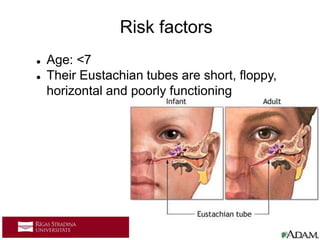
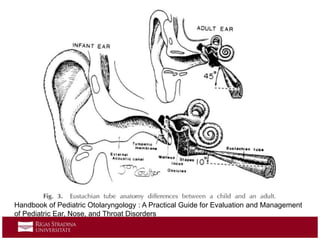
 Age: <7
 Their Eustachian tubes are short, floppy,
horizontal and poorly functioning
Risk factors
Handbook of Pediatric Otolaryngology : A Practical Guide for Evaluation and Management
of Pediatric Ear, Nose, and Throat Disorders
Risk factors
 Genetic predisposition
 Eustachian tube dysfunction
 Allergic tendencies
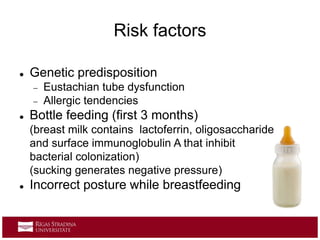
 Bottle feeding (first 3 months)
(breast milk contains lactoferrin, oligosaccharide
and surface immunoglobulin A that inhibit
bacterial colonization)
(sucking generates negative pressure)
 Incorrect posture while breastfeeding
Risk factors
 Underlying pathology
 Unrepaired cleft palate
 Parental smoking
 Large familys/attending daycare
 Immunocompromised states
 Otalgia (not always)
 Fever
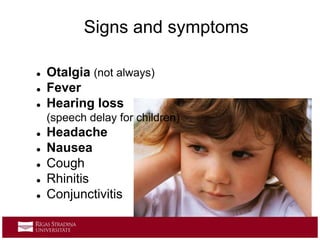
 Hearing loss
(speech delay for children)
 Headache
 Nausea
 Cough
 Rhinitis
 Conjunctivitis
Signs and symptoms
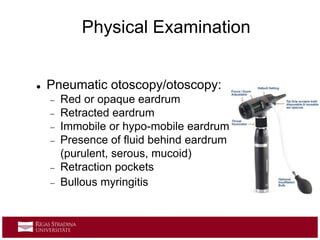
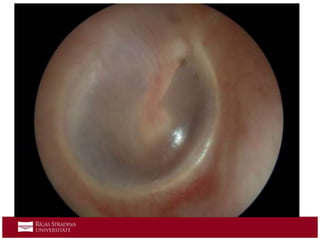
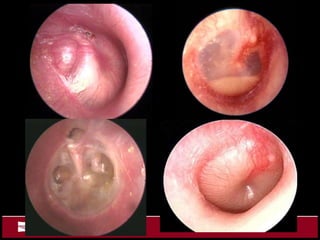
 Pneumatic otoscopy/otoscopy:
 Red or opaque eardrum
 Retracted eardrum
 Immobile or hypo-mobile eardrum
 Presence of fluid behind eardrum
(purulent, serous, mucoid)
 Retraction pockets
 Bullous myringitis
Physical Examination
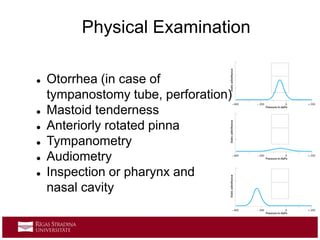
 Otorrhea (in case of
tympanostomy tube, perforation)
 Mastoid tenderness
 Anteriorly rotated pinna
 Tympanometry
 Audiometry
 Inspection or pharynx and
nasal cavity
Physical Examination
Diagnosis
 Acute onset of signs and syptoms
 The presence of middle ear effusion
(hypomobile eardrum, air-fluid level)
 Signs and symptoms of middle ear inflamation
(erythema, otalgia)
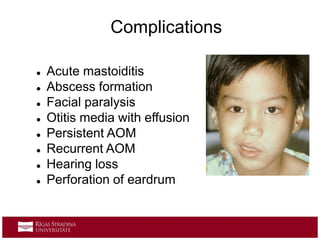
 Acute mastoiditis
 Abscess formation
 Facial paralysis
 Otitis media with effusion
 Persistent AOM
 Recurrent AOM
 Hearing loss
 Perforation of eardrum
Complications
Complications (rare)
 Lateral sinus thrombosis
 Otitic hydrocephalus
 Septic shock
 Meningitis
 Encephalitis
 Extradural abscess
 Labyrinthitis
 Antibacterial therapy for:
 Children of age <6months
 6 months to 2 years with severe illness
 Recurrent or billateral AOM
 Immunocompromised patients
 Patients with a perforated tympanic membrane
 Pain management (Ibuprofen, Diclofenac,
paracetamol)
 Decongestants and/or antihistamines,
nasal steroids
Treatment
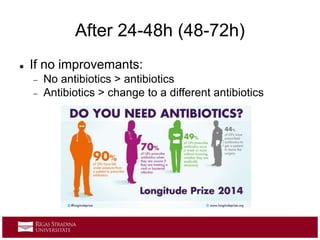
After 24-48h (48-72h)
 If no improvemants:
 No antibiotics > antibiotics
 Antibiotics > change to a different antibiotics
Antibacterial therapy
 Amoxicilin 750-1500mg/day 50-100 mg/kg/day
(has not recived amoxicilin in past 30 days and has no
allergy to penicilin)
 Amoxicillin-clavulanate 875/125mg/day
90/6.4 mg/kg/day
(alternative for amoxicilin)
 Ceftriaxone 1-2g/day 50mg/kg/day or
Cefuroxim 500mg/day 30mg/kg/day
 Azithromycin, clarithromycin, erythromycin in
case of allergy to penicilin
 5-7-10 days
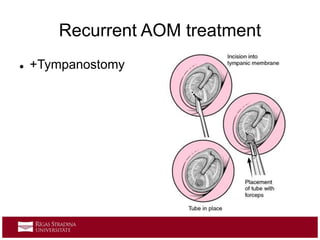
Recurrent AOM treatment
 +Tympanostomy
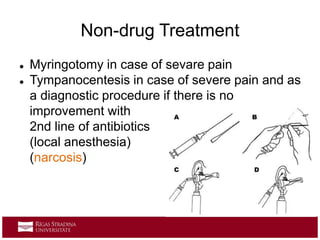
Non-drug Treatment
 Myringotomy in case of sevare pain
 Tympanocentesis in case of severe pain and as
a diagnostic procedure if there is no
improvement with
2nd line of antibiotics
(local anesthesia)
(narcosis)
 Avoiding risk factors if possible
 Vaccination: ?
 S. Pneumonia (PCV-7)
 Influenza
• Adenoidectomy
• Polipectomy
Preventive measures
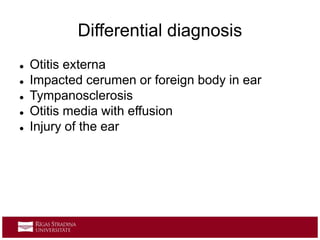
Differential diagnosis
 Otitis externa
 Impacted cerumen or foreign body in ear
 Tympanosclerosis
 Otitis media with effusion
 Injury of the ear
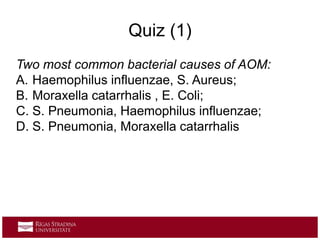
Quiz (1)
Two most common bacterial causes of AOM:
A. Haemophilus influenzae, S. Aureus;
B. Moraxella catarrhalis , E. Coli;
C. S. Pneumonia, Haemophilus influenzae;
D. S. Pneumonia, Moraxella catarrhalis
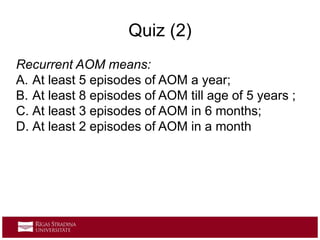
Quiz (2)
Recurrent AOM means:
A. At least 5 episodes of AOM a year;
B. At least 8 episodes of AOM till age of 5 years ;
C. At least 3 episodes of AOM in 6 months;
D. At least 2 episodes of AOM in a month
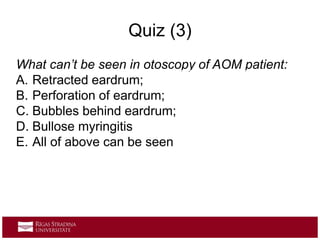
Quiz (3)
What can’t be seen in otoscopy of AOM patient:
A. Retracted eardrum;
B. Perforation of eardrum;
C. Bubbles behind eardrum;
D. Bullose myringitis
E. All of above can be seen
Quiz (4)
What is always necessary to treat AOM:
(more then one answer is possible)
A. Antibiotics;
B. Analgetics;
C. Tympanostomy;
D. Tea;
E. None from above
 Shapiro, Nina L. Handbook Of Pediatric Otolaryngology : A Practical
Guide For Evaluation And Management Of Pediatric Ear, Nose, And
Throat Disorders. Singapore: World Scientific Publishing Company,
2012. eBook Academic Collection (EBSCOhost). Web. 5 Mar. 2016.
 https://www.clinicalkey.com.db.rsu.lv/#!/content/medical_topic/21-s2.0-
1014193?scrollTo=%23heading0
 http://web.a.ebscohost.com.db.rsu.lv/dynamed/detail?vid=2&sid=74b4f
a24-4f97-43f1-a411-
581c0fcc826e%40sessionmgr4003&hid=4204&bdata=JnNpdGU9ZHlu
YW1lZC1saXZlJnNjb3BlPXNpdGU%3d#AN=116345&db=dme
 https://www.clinicalkey.com.db.rsu.lv/#!/content/book/3-s2.0-
B9780323079327000247?scrollTo=%23hl0001072
 https://www.clinicalkey.com.db.rsu.lv/#!/content/book/3-s2.0-
B9780323280471005540
 http://www.aafp.org/afp/2007/1201/p1650.html
 http://journals.plos.org/plosone/article?id=10.1371/journal.pone.00362
26
 http://www.ncbi.nlm.nih.gov/pmc/articles/PMC153141/
Sources
Thank you for your attention!
(and sorry for terrible english)

Acute otitis media

  • 1.
    1 Acute otitis media Author:Edžus Urtāns Mentor: Dr.Uldis Urtāns
  • 2.
     Acute inflammationin middle ear  < 3 weeks (month)  Often associated with a viral upper respiratory infection  Most common reason for medical therapy for children younger than 5 years  Recurrent otitis media:  At least 4 episodes/ year  At least 3 episodes/ 6 months (with adequate therapy) Acute otitis media
  • 3.
     Most childrenhave at least one episode of AOM (by age 3, 50-85%)  Peak incidence age 6-15 months  Increased incidence in the fall and winter  Only 20% are adults  >700 milion cases/year Epidemiology
  • 4.
     Eustachian tubeis lined with respiratory mucosa  Responds together with nasopharynx mucosa  Edema > narrowed > negative middle lumen ear pressure  Influx of pathogens from nasopharynx is possible Causes
  • 5.
    Causes  Inflammatory responsein middle ear worsens the obstruction  Trigger:  Allergies  Upper respiratory tract infections  GER (especially children)  Adenoid hypertrophy  Other
  • 6.
     Viral (30-70%) RSV  Rhinovirus  Coronavirus  Influenza, parainfluenza  Bacterial (55%)  Streptococcus pneumoniae (44%)  Haemophilus influenzae (41%)  Moraxella catarrhalis (14%)  Gram negative enteric bacteria  S. Aureus • Combined (15%) Causes
  • 7.
     Age: <7 Their Eustachian tubes are short, floppy, horizontal and poorly functioning Risk factors
  • 8.
    Handbook of PediatricOtolaryngology : A Practical Guide for Evaluation and Management of Pediatric Ear, Nose, and Throat Disorders
  • 9.
    Risk factors  Geneticpredisposition  Eustachian tube dysfunction  Allergic tendencies  Bottle feeding (first 3 months) (breast milk contains lactoferrin, oligosaccharide and surface immunoglobulin A that inhibit bacterial colonization) (sucking generates negative pressure)  Incorrect posture while breastfeeding
  • 10.
    Risk factors  Underlyingpathology  Unrepaired cleft palate  Parental smoking  Large familys/attending daycare  Immunocompromised states
  • 11.
     Otalgia (notalways)  Fever  Hearing loss (speech delay for children)  Headache  Nausea  Cough  Rhinitis  Conjunctivitis Signs and symptoms
  • 12.
     Pneumatic otoscopy/otoscopy: Red or opaque eardrum  Retracted eardrum  Immobile or hypo-mobile eardrum  Presence of fluid behind eardrum (purulent, serous, mucoid)  Retraction pockets  Bullous myringitis Physical Examination
  • 15.
     Otorrhea (incase of tympanostomy tube, perforation)  Mastoid tenderness  Anteriorly rotated pinna  Tympanometry  Audiometry  Inspection or pharynx and nasal cavity Physical Examination
  • 16.
    Diagnosis  Acute onsetof signs and syptoms  The presence of middle ear effusion (hypomobile eardrum, air-fluid level)  Signs and symptoms of middle ear inflamation (erythema, otalgia)
  • 17.
     Acute mastoiditis Abscess formation  Facial paralysis  Otitis media with effusion  Persistent AOM  Recurrent AOM  Hearing loss  Perforation of eardrum Complications
  • 18.
    Complications (rare)  Lateralsinus thrombosis  Otitic hydrocephalus  Septic shock  Meningitis  Encephalitis  Extradural abscess  Labyrinthitis
  • 19.
     Antibacterial therapyfor:  Children of age <6months  6 months to 2 years with severe illness  Recurrent or billateral AOM  Immunocompromised patients  Patients with a perforated tympanic membrane  Pain management (Ibuprofen, Diclofenac, paracetamol)  Decongestants and/or antihistamines, nasal steroids Treatment
  • 20.
    After 24-48h (48-72h) If no improvemants:  No antibiotics > antibiotics  Antibiotics > change to a different antibiotics
  • 21.
    Antibacterial therapy  Amoxicilin750-1500mg/day 50-100 mg/kg/day (has not recived amoxicilin in past 30 days and has no allergy to penicilin)  Amoxicillin-clavulanate 875/125mg/day 90/6.4 mg/kg/day (alternative for amoxicilin)  Ceftriaxone 1-2g/day 50mg/kg/day or Cefuroxim 500mg/day 30mg/kg/day  Azithromycin, clarithromycin, erythromycin in case of allergy to penicilin  5-7-10 days
  • 22.
  • 23.
    Non-drug Treatment  Myringotomyin case of sevare pain  Tympanocentesis in case of severe pain and as a diagnostic procedure if there is no improvement with 2nd line of antibiotics (local anesthesia) (narcosis)
  • 24.
     Avoiding riskfactors if possible  Vaccination: ?  S. Pneumonia (PCV-7)  Influenza • Adenoidectomy • Polipectomy Preventive measures
  • 25.
    Differential diagnosis  Otitisexterna  Impacted cerumen or foreign body in ear  Tympanosclerosis  Otitis media with effusion  Injury of the ear
  • 26.
    Quiz (1) Two mostcommon bacterial causes of AOM: A. Haemophilus influenzae, S. Aureus; B. Moraxella catarrhalis , E. Coli; C. S. Pneumonia, Haemophilus influenzae; D. S. Pneumonia, Moraxella catarrhalis
  • 27.
    Quiz (2) Recurrent AOMmeans: A. At least 5 episodes of AOM a year; B. At least 8 episodes of AOM till age of 5 years ; C. At least 3 episodes of AOM in 6 months; D. At least 2 episodes of AOM in a month
  • 28.
    Quiz (3) What can’tbe seen in otoscopy of AOM patient: A. Retracted eardrum; B. Perforation of eardrum; C. Bubbles behind eardrum; D. Bullose myringitis E. All of above can be seen
  • 29.
    Quiz (4) What isalways necessary to treat AOM: (more then one answer is possible) A. Antibiotics; B. Analgetics; C. Tympanostomy; D. Tea; E. None from above
  • 30.
     Shapiro, NinaL. Handbook Of Pediatric Otolaryngology : A Practical Guide For Evaluation And Management Of Pediatric Ear, Nose, And Throat Disorders. Singapore: World Scientific Publishing Company, 2012. eBook Academic Collection (EBSCOhost). Web. 5 Mar. 2016.  https://www.clinicalkey.com.db.rsu.lv/#!/content/medical_topic/21-s2.0- 1014193?scrollTo=%23heading0  http://web.a.ebscohost.com.db.rsu.lv/dynamed/detail?vid=2&sid=74b4f a24-4f97-43f1-a411- 581c0fcc826e%40sessionmgr4003&hid=4204&bdata=JnNpdGU9ZHlu YW1lZC1saXZlJnNjb3BlPXNpdGU%3d#AN=116345&db=dme  https://www.clinicalkey.com.db.rsu.lv/#!/content/book/3-s2.0- B9780323079327000247?scrollTo=%23hl0001072  https://www.clinicalkey.com.db.rsu.lv/#!/content/book/3-s2.0- B9780323280471005540  http://www.aafp.org/afp/2007/1201/p1650.html  http://journals.plos.org/plosone/article?id=10.1371/journal.pone.00362 26  http://www.ncbi.nlm.nih.gov/pmc/articles/PMC153141/ Sources
  • 31.
    Thank you foryour attention! (and sorry for terrible english)