 Annular arrangement of lymphoid tissue in
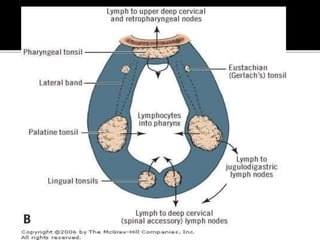
the pharynx
 Circumscribes the nasopharyx and the
oropharyx
 Constituents: (superior to inferior)
a) nasopharygeal tonsils
b) tubal tonsils
c) palatine tonsil
d) lingual tonsil
 Also called “faucial” tonsil
 Two in number, lying in the tonsilar fossa in
the lateral wall of the oropharynx
 Extends upwards into the soft palate
 Downward into the base of tongue
 Anteriorly into the palatoglossal arch
 Two pillars, two surfaces, two poles
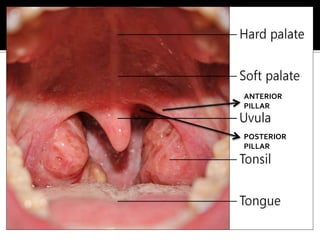
 Anterior pillar- palatoglossal arch
 Posterior pillar – palatophargeal arch
ANTERIOR
PILLAR
POSTERIOR
PILLAR
 Medial surface of tonsil – nonkeratinized
stratified squamous epithelium – which dips
into the substance to form 12-15 crypts –
openings on the surface
 The largest – crypta magna or intratonsillar
cleft- ventral part of 2nd pharyngeal pouch –
seperates upper pole from the tonsillar body
 Lateral surface of tonsil – well defined fibrous
capsule – seperates tonsil from its bed
 Tonsillar bed :
superior constrictor muscle
styloglossus muscle
glossopharyngeal nerve
buccopharygeal fascia
 Between capsule and the tonsillar bed is a
layer of loose areolar fat
 5 arteries
 Facial artery
 Ascending pharyngeal artery – external
carotid
 Dorsal lingual branches – lingual artery
 Descending palatine branch – maxillary artery
TONSILLAR BRANCH
Ascending palatine
 Veins ---- paratonsillar vein----common facial
vein----pharyngeal venous plexus
 Lymphatics---no afferents---efferents(pierce the
superior constrictor)---upper deep cervical nodes
especially the jugulodigastic (tonsillar) nodes
located below the angle of mandible
 Nerve supply – lesser palatine branches of
sphenopalatine ganglion and glossopharyngeal
nerve provide sensory supply
 Divided into two:
 ACUTE and CHRONIC
 The tonsil consists of
i) surface epithelium which is continuous
with the oropharyngeal lining
ii) crypts- invaginations of the surface
epithelium
iii) lymphoid tissue
 as part of general pharyngitis, usually in viral
infections
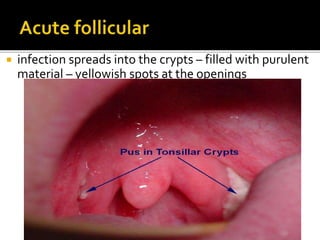
 infection spreads into the crypts – filled with purulent
material – yellowish spots at the openings
 uniformly enlarged and erythematous with exudates, edema of uvula and
soft palate
 exudation from crypts coalesces to form a membrane on
the surface
 Most commonly seen in school-going
children
 Rare in infants and elderly
 Haemolytic streptococcus is most common
 Others: staph, pneumococci, H.influenzae
 Can be primary or secondary to a viral
 Sore throat
 Difficulty in swallowing
 Fever
 Earache
 Constitutional symptoms : headache,
myalgia, malaise, constipation
 Breath is foetid, tongue coasted
 Hyperaemia of pillars, soft palate, uvula
 Tonsils appear red and enlarged (purulent,
parachymatous, membranous – the
membrane can be easily wiped away with a
swab)
 Jugulodigastic nodes are enlarged and tender
 Bed rest and fluids
 Analgesics – aspirin or paracetamol according
to age- to relieve local pain and bring down
fever
 Antibiotics- for 7 to 10 days- penicillin is the
drug of choice- if allergic, erthyromycin
 Chronic tonsillitis : due to incomplete resolution of
acute attacks; may persist in lymphoid follicles
forming microabscesses
 Peritonsillar abscess
 Parapharygeal abscess
 Cervical abscess : suppuration of jugulodigastic lymph
nodes
 Acute otitis media
 Rheumatic fever
 Acute glomerulonephritis
 Subacute bacterial endocarditis: mostly due to
viridans, infection in people with valvular heart
disease
 Diphtheria
 Vincent angina
 Infectious mononucleosis
 Agranulocytosis
 Leukaemia
 Aphthous ulcers
 Malignancy of tonsil
 Candidal infection of tonsil
 Traumatic ulcer
 Complication of acute attacks : pathologically
microabscess walled off by fibrous tissue is
seen in the lymphoid follicles of the tonsils
 Subclinical infections of tonsils without an
acute attack
 Chronic infections of sinuses or teeth can be
predisposing
 Usually occurs in children and young adults,
rarely in elderly
 Chronic follicular tonsillitis: tonsillar crpypts
with cheesy infected material – yellow spots
 Chronic parenchymatous tonsillitis :
hyperplasia of the lymphoid tissue of tonsil,
profound enlargement, obstructive
symptoms
 Chronic fibroid tonsillitis: small but infected,
history of repeated sore throats
 Recurrent attacks of sore throat or acute
tonsillitis
 Bad breath/ hallitosis due to puss in throat
 Chronic irritation in throat in cough
 Obstructive symptoms: thick speech,
difficulty swallowing, choking spells and sleep
apnoea
 chronic parenchymatous type
 Chronic follicular type
 Small tonsils, pressure on anterior pillar
expesses frank pus or cheesy material –
chronic fibroid
 Flushing of anterior pillars compared to the
rest of the pharyngeal mucosa
 Enlargement and tenderness of
jugulodigastic lymph nodes
 Chronic sore throat
 Malodorous breath
 Peritonsillar erythema
 Persistent cervical lymphadenopathy
 Presence of tonsillotiths
 Attention to general health, diet, treatment of
coexistent infection of teeth, nose and sinuses
 Tonsillectomy
absolute indictations:
i) 7 or more episodes in one year, 5 py for 2, 3 py
for 3, 2 wks or more of lost school or work in 1year
ii) peritonsillar abscess: 4-6 wks after treatment,
two attacks in adults
iii) tonsillitis causing febrile seizes
iv) hypertrophy of tonsils
v) suspicion of malignancy
 Peritonsillar abscess
 Parapharyngeal abscess
 Intratonsillar abscess
 usually follows acute follicular
 red and swollen, pain and dysphagia
 Tonsilloliths
cypyt is blocked with the retention of debris
inorganic salts of ca, mg are deposited to form a
calculus/stone, may ulcerate through the surface
local discomfort/foreign body sensation
felt on palpation or gritty feeling on probing
 Tonsillar cyst
 yellowish swelling over tonsil due to blockage
 Focus of infection in rheumatic fever, acute
glomerulonephritis, eye and skin disorders
Tonsillitis
Tonsillitis
Tonsillitis

Tonsillitis

  • 2.
     Annular arrangementof lymphoid tissue in the pharynx  Circumscribes the nasopharyx and the oropharyx  Constituents: (superior to inferior) a) nasopharygeal tonsils b) tubal tonsils c) palatine tonsil d) lingual tonsil
  • 4.
     Also called“faucial” tonsil  Two in number, lying in the tonsilar fossa in the lateral wall of the oropharynx  Extends upwards into the soft palate  Downward into the base of tongue  Anteriorly into the palatoglossal arch  Two pillars, two surfaces, two poles  Anterior pillar- palatoglossal arch  Posterior pillar – palatophargeal arch
  • 5.
  • 6.
     Medial surfaceof tonsil – nonkeratinized stratified squamous epithelium – which dips into the substance to form 12-15 crypts – openings on the surface  The largest – crypta magna or intratonsillar cleft- ventral part of 2nd pharyngeal pouch – seperates upper pole from the tonsillar body  Lateral surface of tonsil – well defined fibrous capsule – seperates tonsil from its bed
  • 7.
     Tonsillar bed: superior constrictor muscle styloglossus muscle glossopharyngeal nerve buccopharygeal fascia  Between capsule and the tonsillar bed is a layer of loose areolar fat
  • 8.
     5 arteries Facial artery  Ascending pharyngeal artery – external carotid  Dorsal lingual branches – lingual artery  Descending palatine branch – maxillary artery TONSILLAR BRANCH Ascending palatine
  • 9.
     Veins ----paratonsillar vein----common facial vein----pharyngeal venous plexus  Lymphatics---no afferents---efferents(pierce the superior constrictor)---upper deep cervical nodes especially the jugulodigastic (tonsillar) nodes located below the angle of mandible  Nerve supply – lesser palatine branches of sphenopalatine ganglion and glossopharyngeal nerve provide sensory supply
  • 10.
     Divided intotwo:  ACUTE and CHRONIC
  • 11.
     The tonsilconsists of i) surface epithelium which is continuous with the oropharyngeal lining ii) crypts- invaginations of the surface epithelium iii) lymphoid tissue
  • 12.
     as partof general pharyngitis, usually in viral infections
  • 13.
     infection spreadsinto the crypts – filled with purulent material – yellowish spots at the openings
  • 14.
     uniformly enlargedand erythematous with exudates, edema of uvula and soft palate
  • 15.
     exudation fromcrypts coalesces to form a membrane on the surface
  • 16.
     Most commonlyseen in school-going children  Rare in infants and elderly  Haemolytic streptococcus is most common  Others: staph, pneumococci, H.influenzae  Can be primary or secondary to a viral
  • 17.
     Sore throat Difficulty in swallowing  Fever  Earache  Constitutional symptoms : headache, myalgia, malaise, constipation
  • 18.
     Breath isfoetid, tongue coasted  Hyperaemia of pillars, soft palate, uvula  Tonsils appear red and enlarged (purulent, parachymatous, membranous – the membrane can be easily wiped away with a swab)  Jugulodigastic nodes are enlarged and tender
  • 19.
     Bed restand fluids  Analgesics – aspirin or paracetamol according to age- to relieve local pain and bring down fever  Antibiotics- for 7 to 10 days- penicillin is the drug of choice- if allergic, erthyromycin
  • 20.
     Chronic tonsillitis: due to incomplete resolution of acute attacks; may persist in lymphoid follicles forming microabscesses  Peritonsillar abscess  Parapharygeal abscess  Cervical abscess : suppuration of jugulodigastic lymph nodes  Acute otitis media  Rheumatic fever  Acute glomerulonephritis  Subacute bacterial endocarditis: mostly due to viridans, infection in people with valvular heart disease
  • 21.
     Diphtheria  Vincentangina  Infectious mononucleosis  Agranulocytosis  Leukaemia  Aphthous ulcers  Malignancy of tonsil  Candidal infection of tonsil  Traumatic ulcer
  • 22.
     Complication ofacute attacks : pathologically microabscess walled off by fibrous tissue is seen in the lymphoid follicles of the tonsils  Subclinical infections of tonsils without an acute attack  Chronic infections of sinuses or teeth can be predisposing  Usually occurs in children and young adults, rarely in elderly
  • 23.
     Chronic folliculartonsillitis: tonsillar crpypts with cheesy infected material – yellow spots  Chronic parenchymatous tonsillitis : hyperplasia of the lymphoid tissue of tonsil, profound enlargement, obstructive symptoms  Chronic fibroid tonsillitis: small but infected, history of repeated sore throats
  • 24.
     Recurrent attacksof sore throat or acute tonsillitis  Bad breath/ hallitosis due to puss in throat  Chronic irritation in throat in cough  Obstructive symptoms: thick speech, difficulty swallowing, choking spells and sleep apnoea
  • 26.
     chronic parenchymatoustype  Chronic follicular type  Small tonsils, pressure on anterior pillar expesses frank pus or cheesy material – chronic fibroid  Flushing of anterior pillars compared to the rest of the pharyngeal mucosa  Enlargement and tenderness of jugulodigastic lymph nodes
  • 27.
     Chronic sorethroat  Malodorous breath  Peritonsillar erythema  Persistent cervical lymphadenopathy  Presence of tonsillotiths
  • 28.
     Attention togeneral health, diet, treatment of coexistent infection of teeth, nose and sinuses  Tonsillectomy absolute indictations: i) 7 or more episodes in one year, 5 py for 2, 3 py for 3, 2 wks or more of lost school or work in 1year ii) peritonsillar abscess: 4-6 wks after treatment, two attacks in adults iii) tonsillitis causing febrile seizes iv) hypertrophy of tonsils v) suspicion of malignancy
  • 29.
     Peritonsillar abscess Parapharyngeal abscess  Intratonsillar abscess  usually follows acute follicular  red and swollen, pain and dysphagia  Tonsilloliths cypyt is blocked with the retention of debris inorganic salts of ca, mg are deposited to form a calculus/stone, may ulcerate through the surface local discomfort/foreign body sensation felt on palpation or gritty feeling on probing  Tonsillar cyst  yellowish swelling over tonsil due to blockage  Focus of infection in rheumatic fever, acute glomerulonephritis, eye and skin disorders