Dr Manpreet Singh Nanda
Associate Professor ENT
MMMC&H Solan
E.N.T
 Otorhinolaryngology
 Oto – Ear
 Rhino – Nose
 Laryngo – Larynx (Throat)
 Otolaryngology – Head and Neck Surgery
 Both Medical and Surgical field (10%)
 All age groups
 Patience and practice – narrow dark cavities
Essentials
 Listen – Heart of good history taking
 Patience
 Observe
 Relative
 Opening greetings – Patient at ease
 Good eye contact
 Patient’s own language
 Remember – patient too assesses you
General approach
 Name
 Age
 Sex
 Religion
 Social status
 Occupation
 Residential address
 Chief Complaints
 History of presenting illness
 Past History; Drug History, Treatment History, Allergy History
 Personal History
 Family History
 Immunisation History
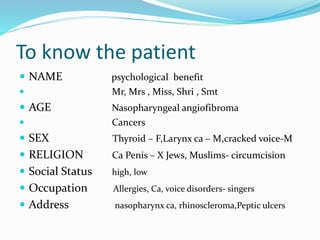
To know the patient
 NAME psychological benefit
 Mr, Mrs , Miss, Shri , Smt
 AGE Nasopharyngeal angiofibroma
 Cancers
 SEX Thyroid – F,Larynx ca – M,cracked voice-M
 RELIGION Ca Penis – X Jews, Muslims- circumcision
 Social Status high, low
 Occupation Allergies, Ca, voice disorders- singers
 Address nasopharynx ca, rhinoscleroma,Peptic ulcers
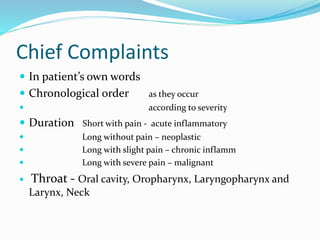
Chief Complaints
 In patient’s own words
 Chronological order as they occur
 according to severity
 Duration Short with pain - acute inflammatory
 Long without pain – neoplastic
 Long with slight pain – chronic inflamm
 Long with severe pain – malignant
 Throat - Oral cavity, Oropharynx, Laryngopharynx and
Larynx, Neck
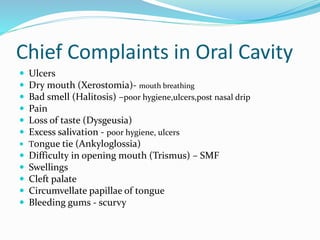
Chief Complaints in Oral Cavity
 Ulcers
 Dry mouth (Xerostomia)- mouth breathing
 Bad smell (Halitosis) –poor hygiene,ulcers,post nasal drip
 Pain
 Loss of taste (Dysgeusia)
 Excess salivation - poor hygiene, ulcers
 Tongue tie (Ankyloglossia)
 Difficulty in opening mouth (Trismus) – SMF
 Swellings
 Cleft palate
 Circumvellate papillae of tongue
 Bleeding gums - scurvy
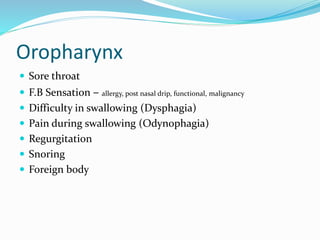
Oropharynx
 Sore throat
 F.B Sensation – allergy, post nasal drip, functional, malignancy
 Difficulty in swallowing (Dysphagia)
 Pain during swallowing (Odynophagia)
 Regurgitation
 Snoring
 Foreign body
Larynx
 Change in voice – hoarse, cracked voice in males(puberphonia),
vocal fatigue- elders, functional
 Repeated clearing of throat- GERD, Chronic laryngitis
 Difficulty in breathing - infections, tumours
 Cough and expectoration
 Neck swellings
History of presenting illness
 Mode of onset – sudden, gradual
 Side
 Any cause of onset
 Duration
 Progress – slow , rapid, intermittent, continous, increasing,
declining
 Factors aggravating or relieving
 Treatment for the same, since when and where
 How it has impacted life style
 LOOK FOR NEGATIVE ANSWERS
Past history
 All diseases before this disease in chronological order
 Diabetes, HTN, Bleeding disorders, TB, Asthma, HIV,
HBV, STD
 Surgeries, hospital admissions, Trauma
 Deliveries and pregnancies
 Drug history- at present or past- steroids, insulin, ocp,
anti hypertensives
 Allergy history – drugs or diet or allergen
 FOR DRUG ALLERGY – WRITE IN RED
Personal history
 Life style – exercise, sedentary
 Food habits – regular-irregular, spicy-non spicy,
nonveg- veg, excess tea or coffee
 Smoking – frequency , quality
 IV abuse
 Alcohol – quantity, quality
 Sexual life
 Bladder & Bowel habits
 Menstrual history
Family history
 Enquire about parents, siblings and children
 Familial diseases like Peptic ulcer, cancers, allergies,
diabetes and HTN, otosclerosis
 Infectious diseases- by contact – TB , acute infections
Immunisation history
 Children – immunisation schedule
 CONCLUSION OF HISTORY
 Ask patient about his any other concerns
 Say Thank You
 Explain the examination part and need
 Proceed to examine

History taking in throat disorders

  • 1.
    Dr Manpreet SinghNanda Associate Professor ENT MMMC&H Solan
  • 2.
    E.N.T  Otorhinolaryngology  Oto– Ear  Rhino – Nose  Laryngo – Larynx (Throat)  Otolaryngology – Head and Neck Surgery  Both Medical and Surgical field (10%)  All age groups  Patience and practice – narrow dark cavities
  • 3.
    Essentials  Listen –Heart of good history taking  Patience  Observe  Relative  Opening greetings – Patient at ease  Good eye contact  Patient’s own language  Remember – patient too assesses you
  • 4.
    General approach  Name Age  Sex  Religion  Social status  Occupation  Residential address  Chief Complaints  History of presenting illness  Past History; Drug History, Treatment History, Allergy History  Personal History  Family History  Immunisation History
  • 5.
    To know thepatient  NAME psychological benefit  Mr, Mrs , Miss, Shri , Smt  AGE Nasopharyngeal angiofibroma  Cancers  SEX Thyroid – F,Larynx ca – M,cracked voice-M  RELIGION Ca Penis – X Jews, Muslims- circumcision  Social Status high, low  Occupation Allergies, Ca, voice disorders- singers  Address nasopharynx ca, rhinoscleroma,Peptic ulcers
  • 6.
    Chief Complaints  Inpatient’s own words  Chronological order as they occur  according to severity  Duration Short with pain - acute inflammatory  Long without pain – neoplastic  Long with slight pain – chronic inflamm  Long with severe pain – malignant  Throat - Oral cavity, Oropharynx, Laryngopharynx and Larynx, Neck
  • 7.
    Chief Complaints inOral Cavity  Ulcers  Dry mouth (Xerostomia)- mouth breathing  Bad smell (Halitosis) –poor hygiene,ulcers,post nasal drip  Pain  Loss of taste (Dysgeusia)  Excess salivation - poor hygiene, ulcers  Tongue tie (Ankyloglossia)  Difficulty in opening mouth (Trismus) – SMF  Swellings  Cleft palate  Circumvellate papillae of tongue  Bleeding gums - scurvy
  • 8.
    Oropharynx  Sore throat F.B Sensation – allergy, post nasal drip, functional, malignancy  Difficulty in swallowing (Dysphagia)  Pain during swallowing (Odynophagia)  Regurgitation  Snoring  Foreign body
  • 9.
    Larynx  Change invoice – hoarse, cracked voice in males(puberphonia), vocal fatigue- elders, functional  Repeated clearing of throat- GERD, Chronic laryngitis  Difficulty in breathing - infections, tumours  Cough and expectoration  Neck swellings
  • 10.
    History of presentingillness  Mode of onset – sudden, gradual  Side  Any cause of onset  Duration  Progress – slow , rapid, intermittent, continous, increasing, declining  Factors aggravating or relieving  Treatment for the same, since when and where  How it has impacted life style  LOOK FOR NEGATIVE ANSWERS
  • 11.
    Past history  Alldiseases before this disease in chronological order  Diabetes, HTN, Bleeding disorders, TB, Asthma, HIV, HBV, STD  Surgeries, hospital admissions, Trauma  Deliveries and pregnancies  Drug history- at present or past- steroids, insulin, ocp, anti hypertensives  Allergy history – drugs or diet or allergen  FOR DRUG ALLERGY – WRITE IN RED
  • 12.
    Personal history  Lifestyle – exercise, sedentary  Food habits – regular-irregular, spicy-non spicy, nonveg- veg, excess tea or coffee  Smoking – frequency , quality  IV abuse  Alcohol – quantity, quality  Sexual life  Bladder & Bowel habits  Menstrual history
  • 13.
    Family history  Enquireabout parents, siblings and children  Familial diseases like Peptic ulcer, cancers, allergies, diabetes and HTN, otosclerosis  Infectious diseases- by contact – TB , acute infections
  • 14.
    Immunisation history  Children– immunisation schedule  CONCLUSION OF HISTORY  Ask patient about his any other concerns  Say Thank You  Explain the examination part and need  Proceed to examine