Vasomotor Rhinitis & NARES
-R.Malarvizhi
Vasomotor Rhinitis (VMR)
 Also called perennial non-allergic
rhinitis & intrinsic rhinitis
 Clinically resembles allergic rhinitis
 Tests of nasal allergy - negative
 Chronic rhinitis
 3-4 th decade
Pathology
 Exact etio not known
 Rich blood supply to nasal mucosa
 Sympathetic stimulation –
vasoconstriction & mucosa shrinkage
 Parasypathetic stimulation- vasodilation &
engorgement
 Parasympathetic overactivity – likely to cause
the condition ( excessive secretion from nasal
glands)
Pathology
 Thus Vasomotor imbalance –
offending event
 There is instability in autonomic
control-
 Nasal mucosa is hyperactive &
responds to several non- specific
stimuli eg: temp, humidity, air blasts,
dust & smoke (NARES)
 Predisposing drugs- anti-HT, local
vasodilators, physical stress,,
endocrine imbalance,etc
Symptomatology
 Paroxysmal sneezing
 Bouts just after getting up from bed
 Excessive rhinorrhoea
 Accompanies sneezing or may b a predominant
symptom
 Profuse & watery
 Leaning forward drips from nose
 Nasal obstruction
 Alternates from side-side i,e dependent side
 Throat & nasal itching
 Frequent nasal infections
Signs ( O/E)
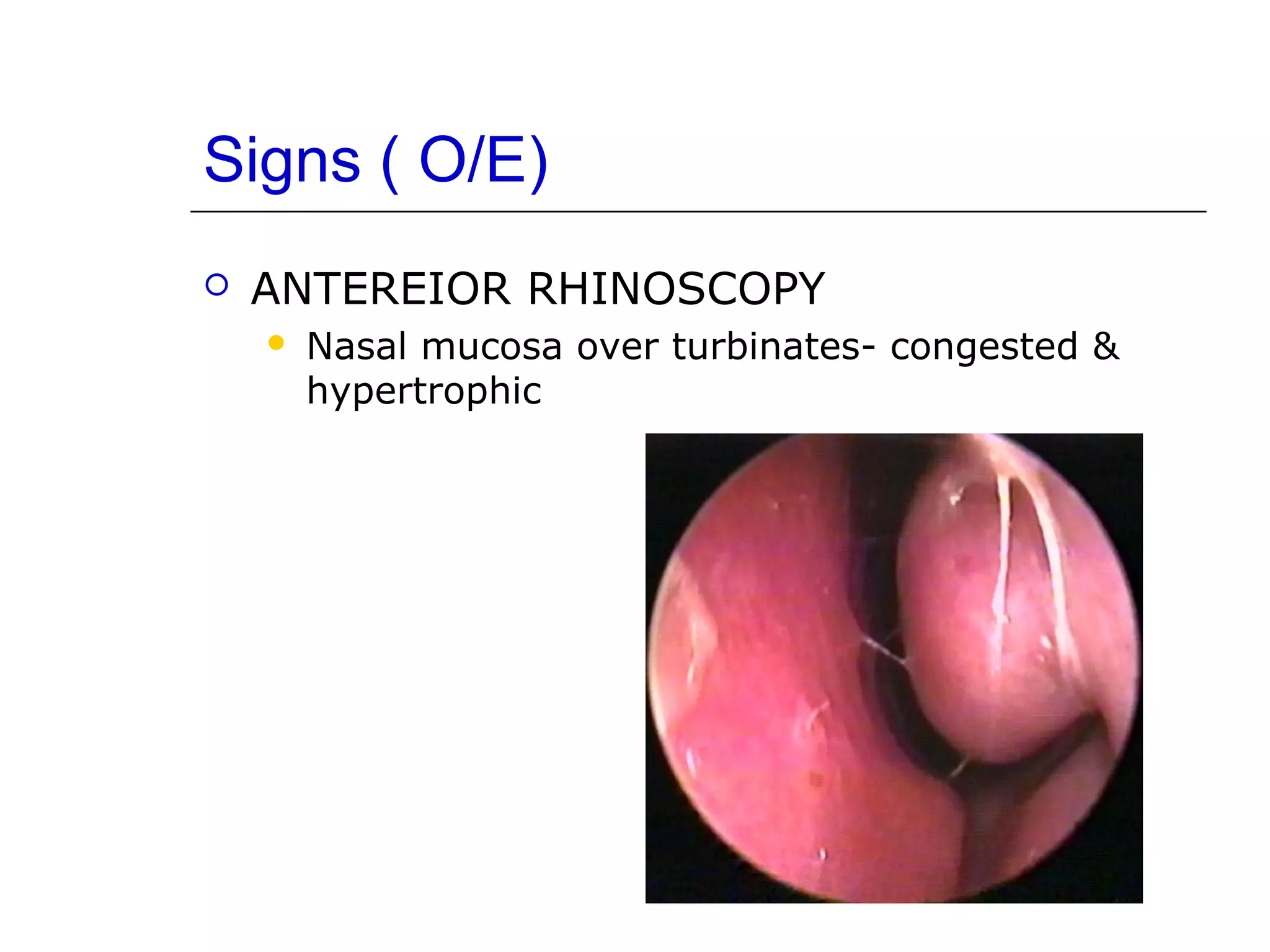
 ANTEREIOR RHINOSCOPY
 Nasal mucosa over turbinates- congested &
hypertrophic
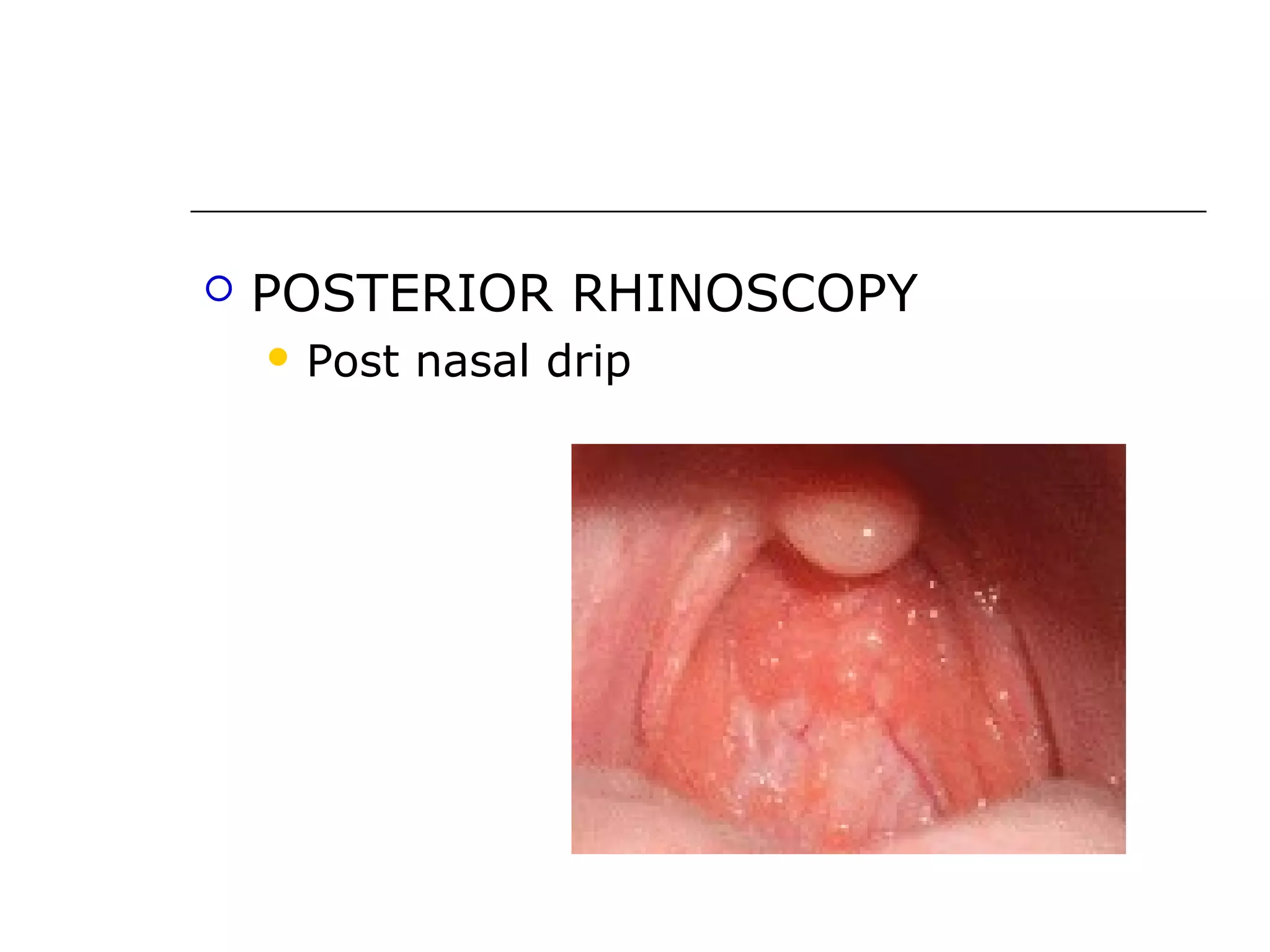
 POSTERIOR RHINOSCOPY
 Post nasal drip
Complications
 Long standing cases
 Nasal polypi
 Hypertrophic rhinitis
 Sinusitis
Treatment
 Medical
 Avoid provoking factors eg: dust
 Antihistamines & oral nasal decongesants for
sneezing & rhinorrhoea
 Topical steroids – spray or aerosol
 Beclomethasone dipropionate
 Budesonide
 fluticasone
 Systemic steroids- short time in v. severe
cases
 Psychological factors removal . Tranquilizers
may b needed
Treatment
 Surgical
 Nasal obstruction relieved by reducing
size of turbinates
 Asso causes like polypi, DNS needs
appropriate correction
 Vidian neurectomy for excessive
rhinorrhoea not controlled by medical
t/t
 Sectioning parasympathetic n.fibres of
nose
NARES
 Non- Allergic Rhinitis with
Eosinophilia Syndrome
 Form of chronic rhinitis asso with
polypi
 Etio – hyperactive nasal mucosa
responding to several non- specific
stimuli
 Symptoms & signs as of VMR
Various eponyms
 Drug induced rhinitis
 Rhinitis medicamentosa
 Rhinitis of pregnancy
 Honeymoon rhinitis
 Emotional rhinitis
 Rhinitis due to hypothyroidism
 Gustatory rhinitis
 Non-air flow rhinitis
Drug induced rhinitis
 Anti – HT
 Resepine, guanethidine, methyl dopa &
propranolol
 Are sympathetic blocking agents causing nasal
stuffiness
 Anticholinesterases
 Neostigmine in t/t myasthenia gravis
 Acetyl choline- like action --- Nasal obstruction
 OCP
Rhinitis medicamentosa
 Topical decongesants cause
rebound phenomenon
 Esp excessive use
 T/T
 Withdrawal of nasal drops
 Short course systemic steroids
 In case of turbinate hypertrophy
surgical reduction
Rhinitis of pregnancy
 Persistant rhinitis due to hormonal
changes
 Nasal mucosa- oedematous &
blocks airway
 Sec infection– sinusitis
 Care in prescribing drugs
 T/T
 Local measures
 Cryosurgery
 Honeymoon rhinitis
 Follows sexual excitement leading to nasal
stuffiness
 Emotional rhinitis
 Psychological states like anxiety, tension,
hostility, humiliation, resentment & grief
 T/T
 Proper counselling for psychological
adjustment
 Imipramine- has both antidepressant &
anticholinergic action
Rhinitis due to Hypothyroidism
 Hypothyroidism leads to hypoactivity
of sympathetic system
 Predominance of parasympathetic
system
 Leads to nasal stuffiness & ‘colds’
 T/T Thyroid hormone replacement
Gustatory rhinitis
 Cholinergic response to stimulation of sensory
receptors on palate
 Spicy & pungent food
 Rhinorrhoes, nasal stuffiness, lacrimation,
sweating & flushing of face
 Spicy esp red pepper containing capsaicin
known to stimulate sensory nerves
 RELIEVED by Ipratopium bromide (anti
cholijergic) nasal spray taken few min before
meals
Non-air flow rhinitis
 Seen in pts of laryngotomy &
tracheostomy
 Sinz nose not used for air flow --- swollen
turbinates due to loss of vasomotor
control
 Similar changes in nasopharyngeal
obstruction due to choanal atresiaor
adenoidal hyperplasia
 Latter having addi factor of infection due to
stagnation of discharge in nose which wud
otherwise drain freely into nasopharynx
Thank You

Vasomotor rhinitis & nares

  • 1.
    Vasomotor Rhinitis &NARES -R.Malarvizhi
  • 2.
    Vasomotor Rhinitis (VMR) Also called perennial non-allergic rhinitis & intrinsic rhinitis  Clinically resembles allergic rhinitis  Tests of nasal allergy - negative  Chronic rhinitis  3-4 th decade
  • 3.
    Pathology  Exact etionot known  Rich blood supply to nasal mucosa  Sympathetic stimulation – vasoconstriction & mucosa shrinkage  Parasypathetic stimulation- vasodilation & engorgement  Parasympathetic overactivity – likely to cause the condition ( excessive secretion from nasal glands)
  • 4.
    Pathology  Thus Vasomotorimbalance – offending event  There is instability in autonomic control-  Nasal mucosa is hyperactive & responds to several non- specific stimuli eg: temp, humidity, air blasts, dust & smoke (NARES)
  • 5.
     Predisposing drugs-anti-HT, local vasodilators, physical stress,, endocrine imbalance,etc
  • 6.
    Symptomatology  Paroxysmal sneezing Bouts just after getting up from bed  Excessive rhinorrhoea  Accompanies sneezing or may b a predominant symptom  Profuse & watery  Leaning forward drips from nose  Nasal obstruction  Alternates from side-side i,e dependent side  Throat & nasal itching  Frequent nasal infections
  • 8.
    Signs ( O/E) ANTEREIOR RHINOSCOPY  Nasal mucosa over turbinates- congested & hypertrophic
  • 9.
  • 10.
    Complications  Long standingcases  Nasal polypi  Hypertrophic rhinitis  Sinusitis
  • 11.
    Treatment  Medical  Avoidprovoking factors eg: dust  Antihistamines & oral nasal decongesants for sneezing & rhinorrhoea  Topical steroids – spray or aerosol  Beclomethasone dipropionate  Budesonide  fluticasone  Systemic steroids- short time in v. severe cases  Psychological factors removal . Tranquilizers may b needed
  • 12.
    Treatment  Surgical  Nasalobstruction relieved by reducing size of turbinates  Asso causes like polypi, DNS needs appropriate correction  Vidian neurectomy for excessive rhinorrhoea not controlled by medical t/t  Sectioning parasympathetic n.fibres of nose
  • 13.
    NARES  Non- AllergicRhinitis with Eosinophilia Syndrome  Form of chronic rhinitis asso with polypi  Etio – hyperactive nasal mucosa responding to several non- specific stimuli  Symptoms & signs as of VMR
  • 14.
    Various eponyms  Druginduced rhinitis  Rhinitis medicamentosa  Rhinitis of pregnancy  Honeymoon rhinitis  Emotional rhinitis  Rhinitis due to hypothyroidism  Gustatory rhinitis  Non-air flow rhinitis
  • 15.
    Drug induced rhinitis Anti – HT  Resepine, guanethidine, methyl dopa & propranolol  Are sympathetic blocking agents causing nasal stuffiness  Anticholinesterases  Neostigmine in t/t myasthenia gravis  Acetyl choline- like action --- Nasal obstruction  OCP
  • 16.
    Rhinitis medicamentosa  Topicaldecongesants cause rebound phenomenon  Esp excessive use  T/T  Withdrawal of nasal drops  Short course systemic steroids  In case of turbinate hypertrophy surgical reduction
  • 17.
    Rhinitis of pregnancy Persistant rhinitis due to hormonal changes  Nasal mucosa- oedematous & blocks airway  Sec infection– sinusitis  Care in prescribing drugs  T/T  Local measures  Cryosurgery
  • 18.
     Honeymoon rhinitis Follows sexual excitement leading to nasal stuffiness  Emotional rhinitis  Psychological states like anxiety, tension, hostility, humiliation, resentment & grief  T/T  Proper counselling for psychological adjustment  Imipramine- has both antidepressant & anticholinergic action
  • 19.
    Rhinitis due toHypothyroidism  Hypothyroidism leads to hypoactivity of sympathetic system  Predominance of parasympathetic system  Leads to nasal stuffiness & ‘colds’  T/T Thyroid hormone replacement
  • 20.
    Gustatory rhinitis  Cholinergicresponse to stimulation of sensory receptors on palate  Spicy & pungent food  Rhinorrhoes, nasal stuffiness, lacrimation, sweating & flushing of face  Spicy esp red pepper containing capsaicin known to stimulate sensory nerves  RELIEVED by Ipratopium bromide (anti cholijergic) nasal spray taken few min before meals
  • 21.
    Non-air flow rhinitis Seen in pts of laryngotomy & tracheostomy  Sinz nose not used for air flow --- swollen turbinates due to loss of vasomotor control  Similar changes in nasopharyngeal obstruction due to choanal atresiaor adenoidal hyperplasia  Latter having addi factor of infection due to stagnation of discharge in nose which wud otherwise drain freely into nasopharynx
  • 22.