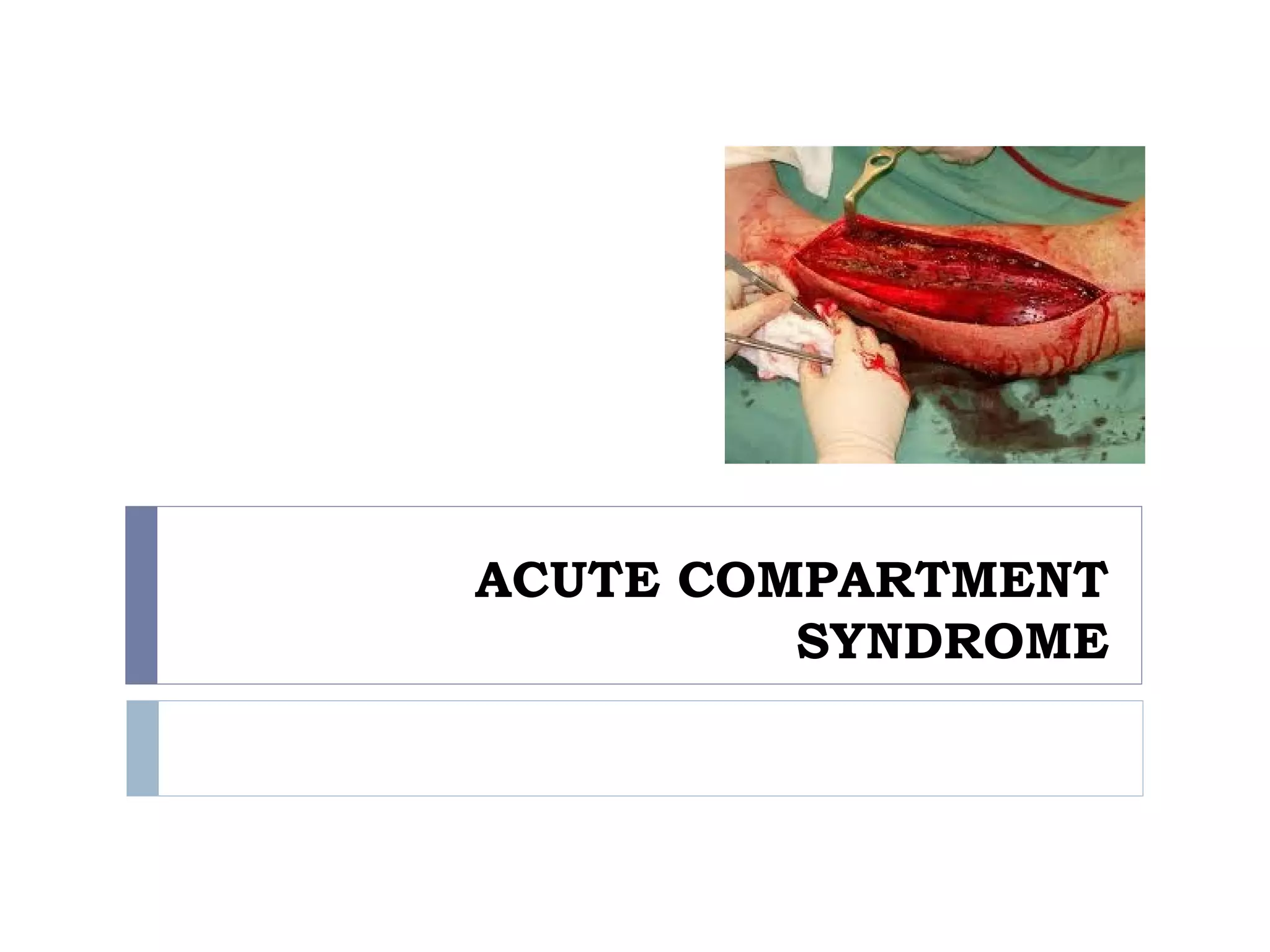
ACUTE COMPARTMENT
SYNDROME
HISTORY
 Raised pressure in a closed space
 Richard von Volkmann
 Hilderbrand
 Rowlands
 Murphy
PATHOPHYSIOLOGY
 Raised pressure within a confined space
 Increased volume of compartment
 Ischemia reperfusion injury
 MAJOR VESSEL RARELY OBSTRUCTED
 Difference between compartment and diastolic
pressure
 Crush syndrome
 Anesthetized / sedated / intubated patient
 Prolonged surgery
 Tight cast / constrictive dressing / pneumatic anti
shock garment
ETIOLOGY
 Decreased compartment size
   Constrictive dressings and casts
   Closure of fascial defects
   Thermal injuries and frostbite
   Localized external pressure
   Pneumatic tourniquet
Increased compartment contents
   Primary edema accumulation
       Postischemic swelling
         Arterial injuries
         Arterial thrombosis or embolism
         Reconstructive vascular and bypass
surgery
         Replantation
         Prolonged tourniquet time
         Arterial spasm
         Cardiac catheterization and
angiography
         Ergotamine ingestion
      Prolonged immobilization with
limb compression
         Drug overdose with limb
compression
         General anesthesia with limb
compression
     
  Increased capillary pressure or
permeability
         Exercise
         Venous obstruction
         Thermal injuries and frostbite
         Exertion, seizures, and eclampsia
         Venous disease
         Intraarterial injection
         Venomous snake bite
         Infection
 Primarily hemorrhage accumulation
      Hereditary bleeding disorders (e.g.,
hemophilia)
      Anticoagulant therapy
      Vessel laceration
   Combination of edema and
hemorrhage accumulation
      Fractures
         Supracondylar elbow
         Both-bone forearm
         Distal radius
      Soft tissue injury
         Crush
         Severe muscle tear, contusion
         Gunshot wounds
         Iatrogenic (i.e., postoperative
bleeding, inflammation)
   Miscellaneous
      Intravenous infiltration (e.g., blood,
saline)
      High-pressure injection
DIAGNOSIS : CLINICAL ASSESSMENT
 Symptoms may be masked by other injuries
 ?? Open fracture
 Disproportionate pain
 In regional/epidural anesthesia
 Numbness / tingling
 Signs
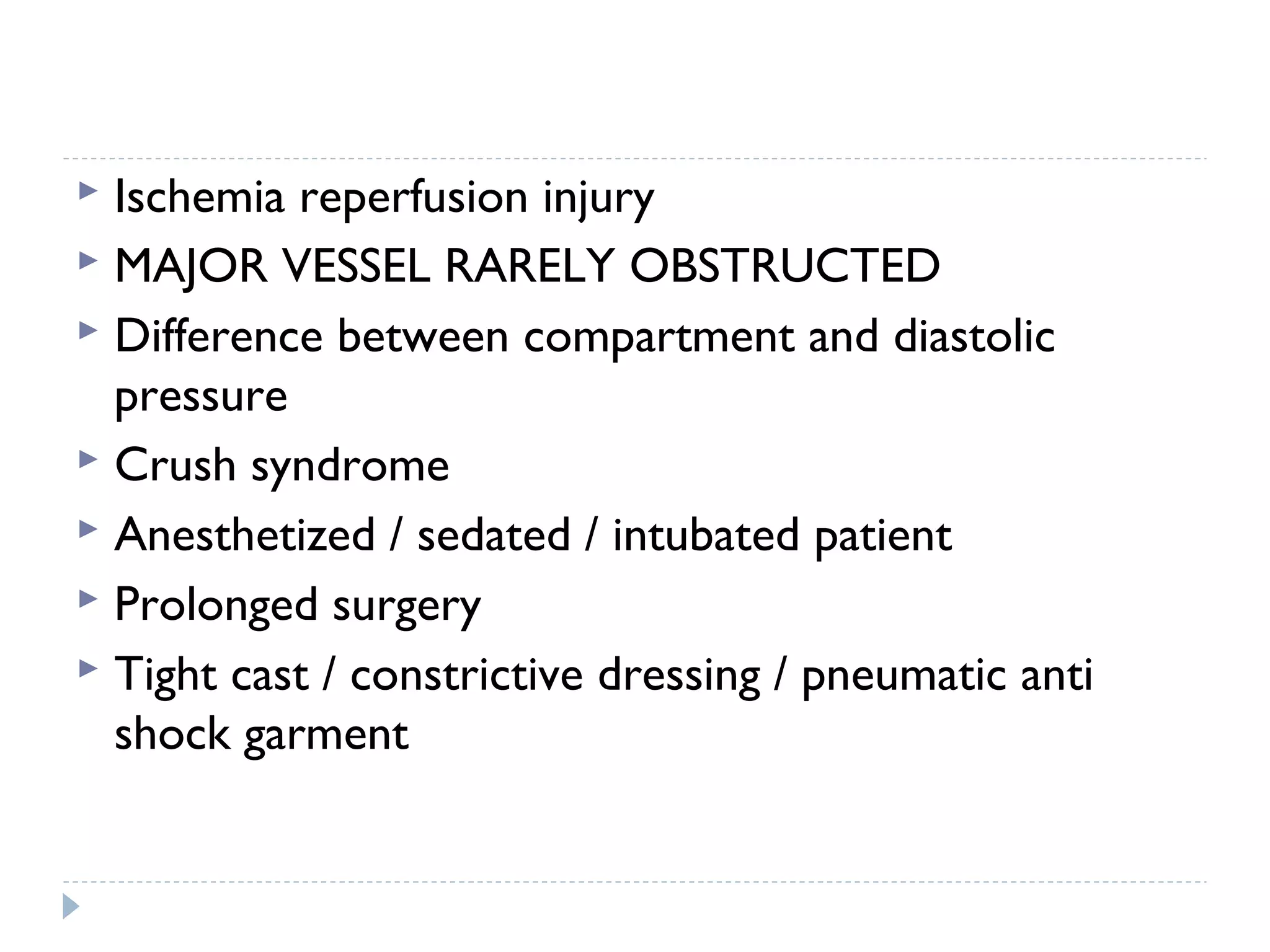
 Compartment
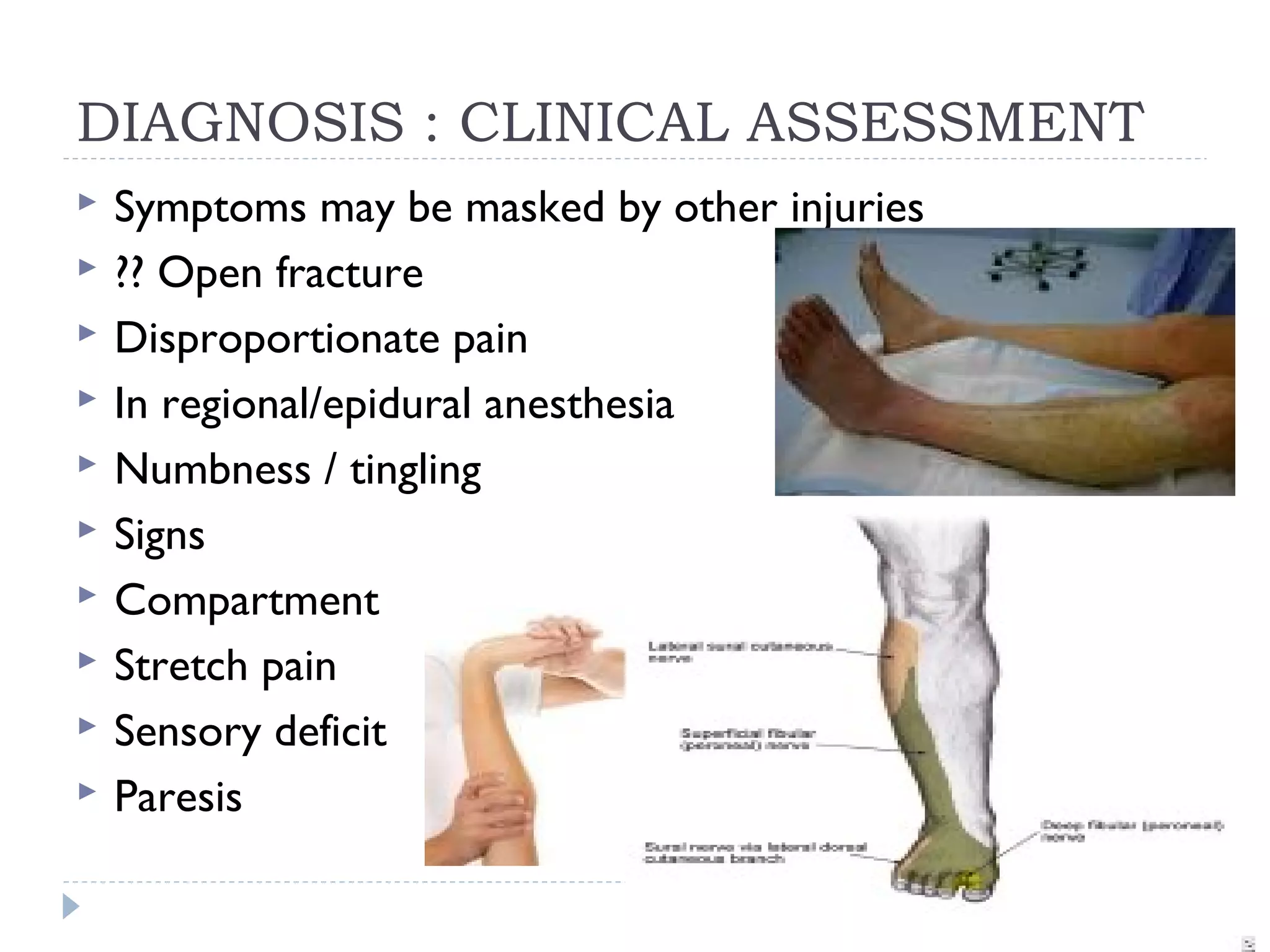
 Stretch pain
 Sensory deficit
 Paresis
 Pulse / capillary refill
 Differential – artery occlusion, nerve injury, crush
syndrome
 ?? Delay in diagnosis of major arterial injury
 Arterial pressure index
 Nerve injury – diagnosis of exclusion
 Crush syndrome
TISSUE PRESSURE MEASUREMENT
 Incipient vs. fulminant
 Ideally after every fracture
 Polytrauma patient
 Chemical overdose / head injury + long bone
fracture
 Arterial repair
MEASUREMENT TECHNIQUES
1. Needle manometer
• Landerer
• 18 gauge needle, 20ml syringe, column of saline and
air, mercury manometer
2. Wick catheter
• Scholander
• Polyglycolic acid suture, polyethylene tubing
• Disadvantage
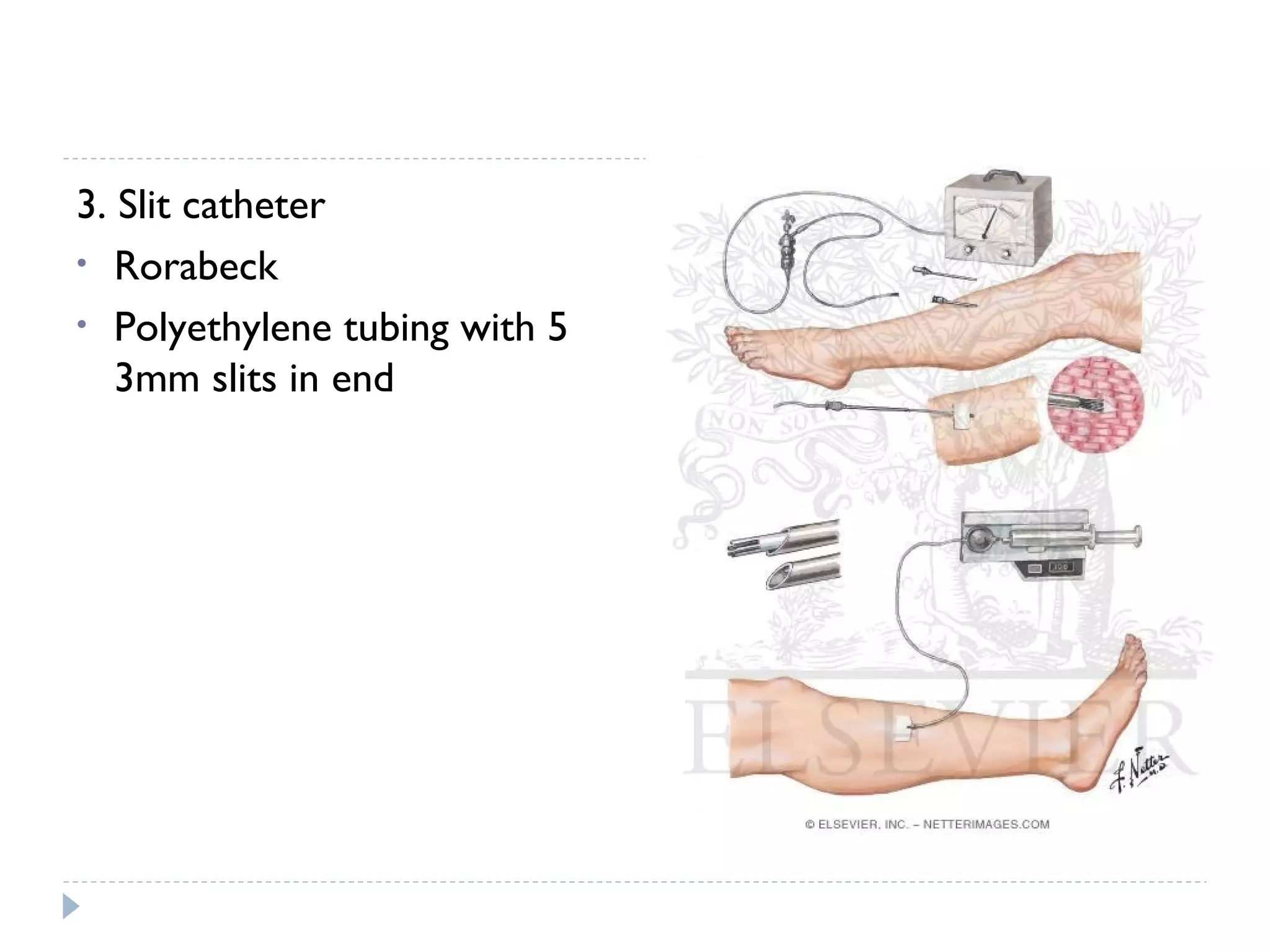
3. Slit catheter
• Rorabeck
• Polyethylene tubing with 5
3mm slits in end
4. STIC catheter
• Hand held device
5. Micro capillary infusion
6. Arterial transducer measurement
7. Tc 99m-methoxyisobutylisonitrile
8. Doppler flow measurement
9. Near infrared spectroscopy
PRESSURE THRESHOLD FOR FASCIOTOMY
 Within 10-30 mm Hg of diastolic pressure
(Whitesides)
 Above 45mm Hg (Matsen)
 30mm Hg difference between compartment and
diastolic pressure (Mc Queen)
 40mm Hg difference between mean arterial pressure
and compartment pressure (Heppenstall)
TREATMENT OF INCIPIENT COMPARTMENT
SYNDROME
 Incipient compartment syndrome
 Remove tight dressings and casts
 Limb position at the level of heart
 Oxygen support
 Hydration
 ESTABLISHED COMPARTMENT SYNDROME
Surgical decompression
HAND
 Clinical feature
 Crush injury / carpal
fracture
 Longitudinal dorsal
incisions
FOREARM
 Fracture / soft tissue fluid infiltration / gun shot injury
/ deep infection / iv drug abuse
 3 compartments
 Volar Henry / volar ulnar / Thompson
 Both superficial and deep compartment should be
released
Henry approach
 Volar ulnar approach
 Dorsal approach
LEG
 Fibulectomy – Patman / radical surgery
 Perifibular fasciotomy – Matsen
Single incision technique
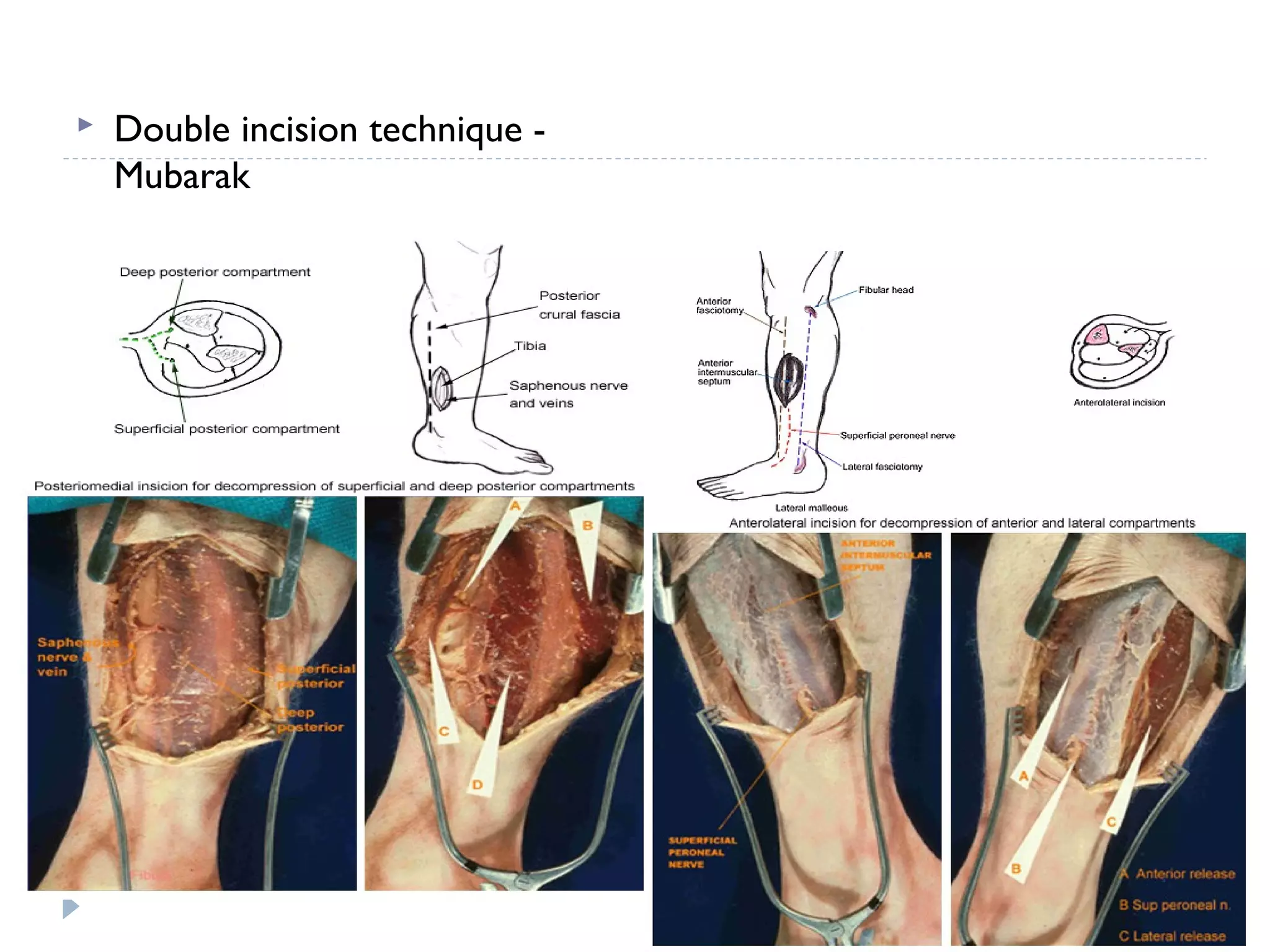
 Double incision technique -
Mubarak
THIGH
 3 compartments
FOOT
 Claw toe deformity
 Calcaneal fractures / Lisfranc
injury / blunt trauma
 Difficult to diagnose
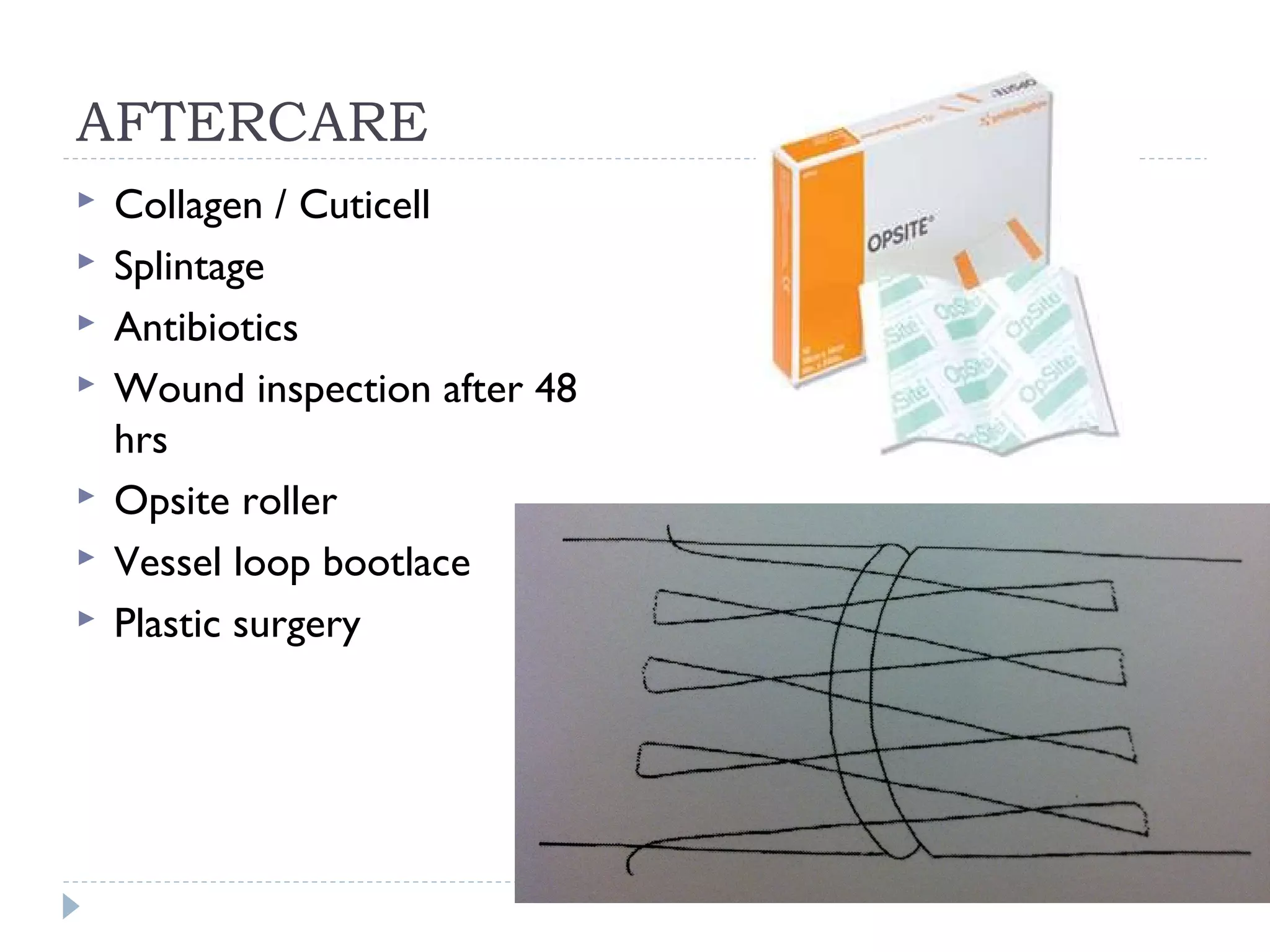
AFTERCARE
 Collagen / Cuticell
 Splintage
 Antibiotics
 Wound inspection after 48
hrs
 Opsite roller
 Vessel loop bootlace
 Plastic surgery
COMPLICATIONS
1. COMPARTMENT SYNDROME
2. FASCIOTOMY
MEDICAL MANAGEMENT
 Mannitol
 Hyperbaric oxygen
SKELETAL INJURIES
 Fracture must be stabilized
 Location, character of fracture / skill of surgeon
 Plating / nailing / ex fix
 Soft tissue coverage
MUST AVOID
 CONTRACTURE
 SENSORY DEFICIT
 PARALYSIS
 INFECTION
 NON UNION
 AMPUTATION

Acute compartment syndrome

  • 1.
  • 2.
    HISTORY  Raised pressurein a closed space  Richard von Volkmann  Hilderbrand  Rowlands  Murphy
  • 3.
    PATHOPHYSIOLOGY  Raised pressurewithin a confined space  Increased volume of compartment
  • 4.
     Ischemia reperfusioninjury  MAJOR VESSEL RARELY OBSTRUCTED  Difference between compartment and diastolic pressure  Crush syndrome  Anesthetized / sedated / intubated patient  Prolonged surgery  Tight cast / constrictive dressing / pneumatic anti shock garment
  • 5.
    ETIOLOGY  Decreased compartmentsize    Constrictive dressings and casts    Closure of fascial defects    Thermal injuries and frostbite    Localized external pressure    Pneumatic tourniquet Increased compartment contents    Primary edema accumulation        Postischemic swelling          Arterial injuries          Arterial thrombosis or embolism          Reconstructive vascular and bypass surgery          Replantation          Prolonged tourniquet time          Arterial spasm          Cardiac catheterization and angiography          Ergotamine ingestion       Prolonged immobilization with limb compression          Drug overdose with limb compression          General anesthesia with limb compression         Increased capillary pressure or permeability          Exercise          Venous obstruction          Thermal injuries and frostbite          Exertion, seizures, and eclampsia          Venous disease          Intraarterial injection          Venomous snake bite          Infection  Primarily hemorrhage accumulation       Hereditary bleeding disorders (e.g., hemophilia)       Anticoagulant therapy       Vessel laceration    Combination of edema and hemorrhage accumulation       Fractures          Supracondylar elbow          Both-bone forearm          Distal radius       Soft tissue injury          Crush          Severe muscle tear, contusion          Gunshot wounds          Iatrogenic (i.e., postoperative bleeding, inflammation)    Miscellaneous       Intravenous infiltration (e.g., blood, saline)       High-pressure injection
  • 6.
    DIAGNOSIS : CLINICALASSESSMENT  Symptoms may be masked by other injuries  ?? Open fracture  Disproportionate pain  In regional/epidural anesthesia  Numbness / tingling  Signs  Compartment  Stretch pain  Sensory deficit  Paresis
  • 7.
     Pulse /capillary refill  Differential – artery occlusion, nerve injury, crush syndrome  ?? Delay in diagnosis of major arterial injury  Arterial pressure index  Nerve injury – diagnosis of exclusion  Crush syndrome
  • 8.
    TISSUE PRESSURE MEASUREMENT Incipient vs. fulminant  Ideally after every fracture  Polytrauma patient  Chemical overdose / head injury + long bone fracture  Arterial repair
  • 9.
    MEASUREMENT TECHNIQUES 1. Needlemanometer • Landerer • 18 gauge needle, 20ml syringe, column of saline and air, mercury manometer
  • 10.
    2. Wick catheter •Scholander • Polyglycolic acid suture, polyethylene tubing • Disadvantage
  • 11.
    3. Slit catheter •Rorabeck • Polyethylene tubing with 5 3mm slits in end
  • 12.
    4. STIC catheter •Hand held device 5. Micro capillary infusion 6. Arterial transducer measurement 7. Tc 99m-methoxyisobutylisonitrile 8. Doppler flow measurement 9. Near infrared spectroscopy
  • 13.
    PRESSURE THRESHOLD FORFASCIOTOMY  Within 10-30 mm Hg of diastolic pressure (Whitesides)  Above 45mm Hg (Matsen)  30mm Hg difference between compartment and diastolic pressure (Mc Queen)  40mm Hg difference between mean arterial pressure and compartment pressure (Heppenstall)
  • 14.
    TREATMENT OF INCIPIENTCOMPARTMENT SYNDROME  Incipient compartment syndrome  Remove tight dressings and casts  Limb position at the level of heart  Oxygen support  Hydration  ESTABLISHED COMPARTMENT SYNDROME Surgical decompression
  • 15.
    HAND  Clinical feature Crush injury / carpal fracture  Longitudinal dorsal incisions
  • 16.
    FOREARM  Fracture /soft tissue fluid infiltration / gun shot injury / deep infection / iv drug abuse  3 compartments  Volar Henry / volar ulnar / Thompson  Both superficial and deep compartment should be released
  • 17.
  • 18.
  • 19.
  • 20.
    LEG  Fibulectomy –Patman / radical surgery  Perifibular fasciotomy – Matsen Single incision technique
  • 21.
     Double incisiontechnique - Mubarak
  • 22.
  • 23.
    FOOT  Claw toedeformity  Calcaneal fractures / Lisfranc injury / blunt trauma  Difficult to diagnose
  • 24.
    AFTERCARE  Collagen /Cuticell  Splintage  Antibiotics  Wound inspection after 48 hrs  Opsite roller  Vessel loop bootlace  Plastic surgery
  • 25.
  • 26.
  • 27.
    SKELETAL INJURIES  Fracturemust be stabilized  Location, character of fracture / skill of surgeon  Plating / nailing / ex fix  Soft tissue coverage
  • 28.
    MUST AVOID  CONTRACTURE SENSORY DEFICIT  PARALYSIS  INFECTION  NON UNION  AMPUTATION