Dr. Tamer Mohammed Aly Orthopedic and spine surgeon
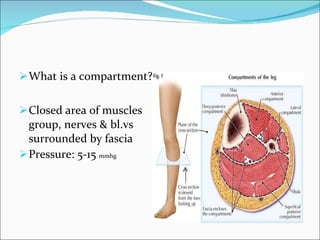
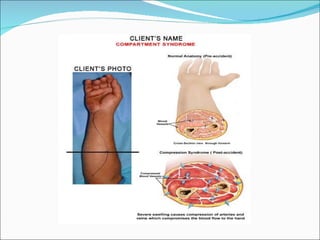
What is a compartment? Closed area of muscles group, nerves & bl.vs surrounded by fascia Pressure: 5-15  mmhg
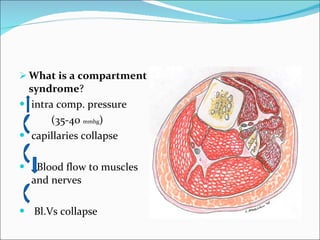
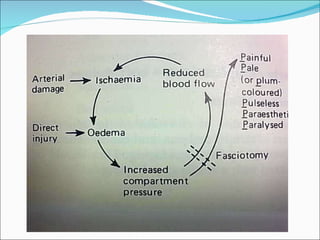
What is a compartment   syndrome ? intra comp. pressure (35-40  mmhg ) capillaries collapse Blood flow to muscles  and nerves Bl.Vs collapse
 
 
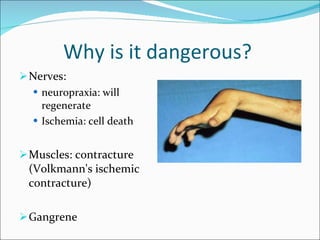
Why is it dangerous?  Nerves: neuropraxia: will regenerate Ischemia: cell death  Muscles: contracture  (Volkmann's ischemic contracture) Gangrene
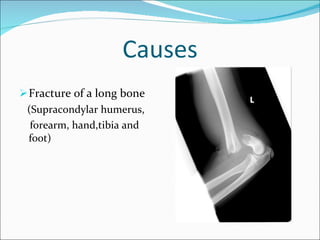
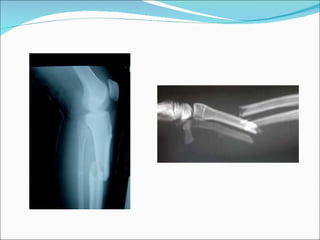
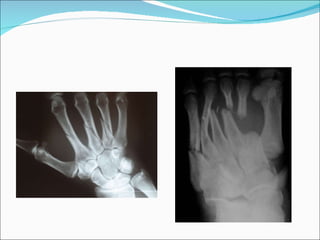
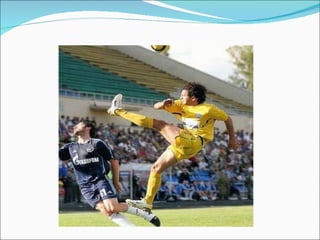
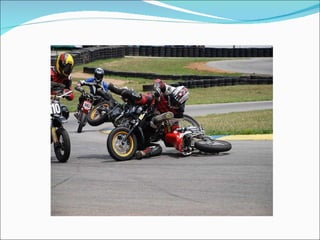
Causes Fracture of a long bone (Supracondylar humerus, forearm, hand,tibia and foot)
 
 
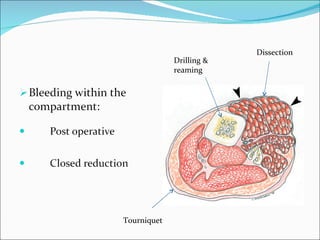
Drilling & reaming Dissection Tourniquet
 
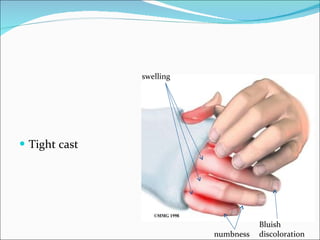
Tight cast swelling Bluish discoloration numbness
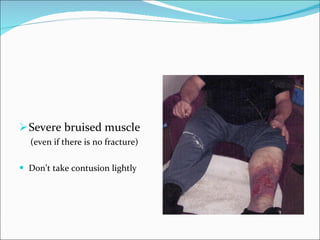
Severe bruised muscle (even if there is no fracture) Don’t take contusion lightly


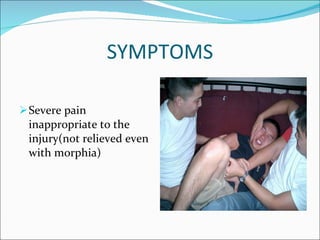
SYMPTOMS Severe pain inappropriate to the injury(not relieved even with morphia)
Burning of the affected limb Tight muscle(rigid) Numbness: bad sign
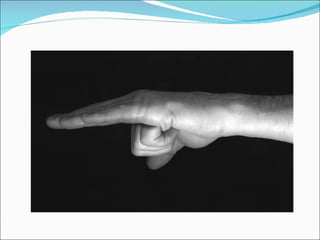
SIGNS & DIAGNOSIS Passive stretching of fingers or toes (muscle stretch)will lead to severe pain (diagnostic sign) Never wait for signs of ischemia (5 Ps): irreversible damage
 
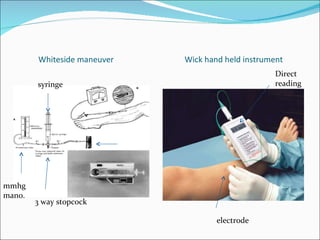
Whiteside maneuver  Wick hand held instrument  syringe 3 way stopcock mmhg mano. electrode Direct reading
 
Don’t wait so long
Non surgical management: Remove any tight bandage, tubigrip or soaked dressing Cast should be removed completely Elevation
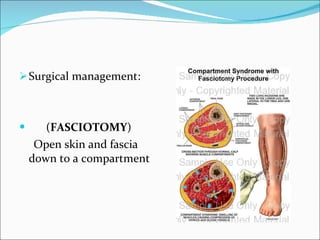
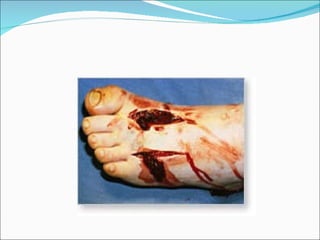
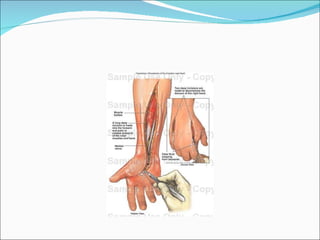
Surgical management: ( FASCIOTOMY ) Open skin and fascia down to a compartment
 
 
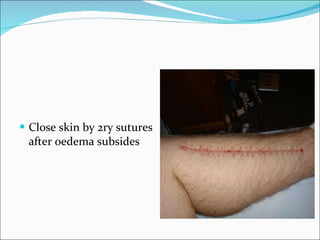
Close skin by 2ry sutures after oedema subsides
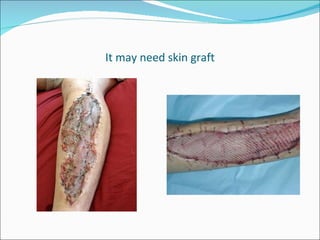
It may need skin graft
Compartment syndrome is a serious  syndrome, Which needs  to be diagnosed early. Palpable pulse doesn’t exclude  compartment syndrome If diagnosis  and fasciotomy were done within 24 hrs, the  prognosis is good. If delayed, complications will develop. The earlier you diagnose, the safer you are
 
Thank you

Compartment syndrome

  • 1.
    Dr. Tamer MohammedAly Orthopedic and spine surgeon
  • 2.
    What is acompartment? Closed area of muscles group, nerves & bl.vs surrounded by fascia Pressure: 5-15 mmhg
  • 3.
    What is acompartment syndrome ? intra comp. pressure (35-40 mmhg ) capillaries collapse Blood flow to muscles and nerves Bl.Vs collapse
  • 4.
  • 5.
  • 6.
    Why is itdangerous? Nerves: neuropraxia: will regenerate Ischemia: cell death Muscles: contracture (Volkmann's ischemic contracture) Gangrene
  • 7.
    Causes Fracture ofa long bone (Supracondylar humerus, forearm, hand,tibia and foot)
  • 8.
  • 9.
  • 10.
    Drilling & reamingDissection Tourniquet
  • 11.
  • 12.
    Tight cast swellingBluish discoloration numbness
  • 13.
    Severe bruised muscle(even if there is no fracture) Don’t take contusion lightly
  • 14.
  • 15.
  • 16.
  • 17.
    SYMPTOMS Severe paininappropriate to the injury(not relieved even with morphia)
  • 18.
    Burning of theaffected limb Tight muscle(rigid) Numbness: bad sign
  • 19.
    SIGNS & DIAGNOSISPassive stretching of fingers or toes (muscle stretch)will lead to severe pain (diagnostic sign) Never wait for signs of ischemia (5 Ps): irreversible damage
  • 20.
  • 21.
    Whiteside maneuver Wick hand held instrument syringe 3 way stopcock mmhg mano. electrode Direct reading
  • 22.
  • 23.
  • 24.
    Non surgical management:Remove any tight bandage, tubigrip or soaked dressing Cast should be removed completely Elevation
  • 25.
    Surgical management: (FASCIOTOMY ) Open skin and fascia down to a compartment
  • 26.
  • 27.
  • 28.
    Close skin by2ry sutures after oedema subsides
  • 29.
    It may needskin graft
  • 30.
    Compartment syndrome isa serious syndrome, Which needs to be diagnosed early. Palpable pulse doesn’t exclude compartment syndrome If diagnosis and fasciotomy were done within 24 hrs, the prognosis is good. If delayed, complications will develop. The earlier you diagnose, the safer you are
  • 31.
  • 32.