The document discusses different types of reading paths, including linear text, non-linear text, charts, graphs, and graphic organizers. Linear text follows a sequential order, while non-linear text combines visual elements without a set order. Common charts discussed are line graphs, bar graphs, pie graphs and histograms, which use visual representations to show relationships in data. Graphic organizers like Venn diagrams and concept diagrams also use visual symbols to show relationships between concepts.
Reading Path
Itis the way that the text or text
plus other features, can determine
or order the way the we read it
5.
Linear Text
Mostcommon type of reading
It focuses on the arrangement of
the words, both grammatically and
stylistically
Examples:
Story, Speech, Letter, Newspaper
Report, etc.
6.
Non-Linear Text
Textcombined with visual elements
The Reading path is non-sequential
Pictures, Graphs, Tables and
Graphic Organizer
7.
Charts or Graphs
Graphical representation of data
Represented by symbols or legends
Used to ease understanding of
large quantities of data and show
the relationships of the data
8.
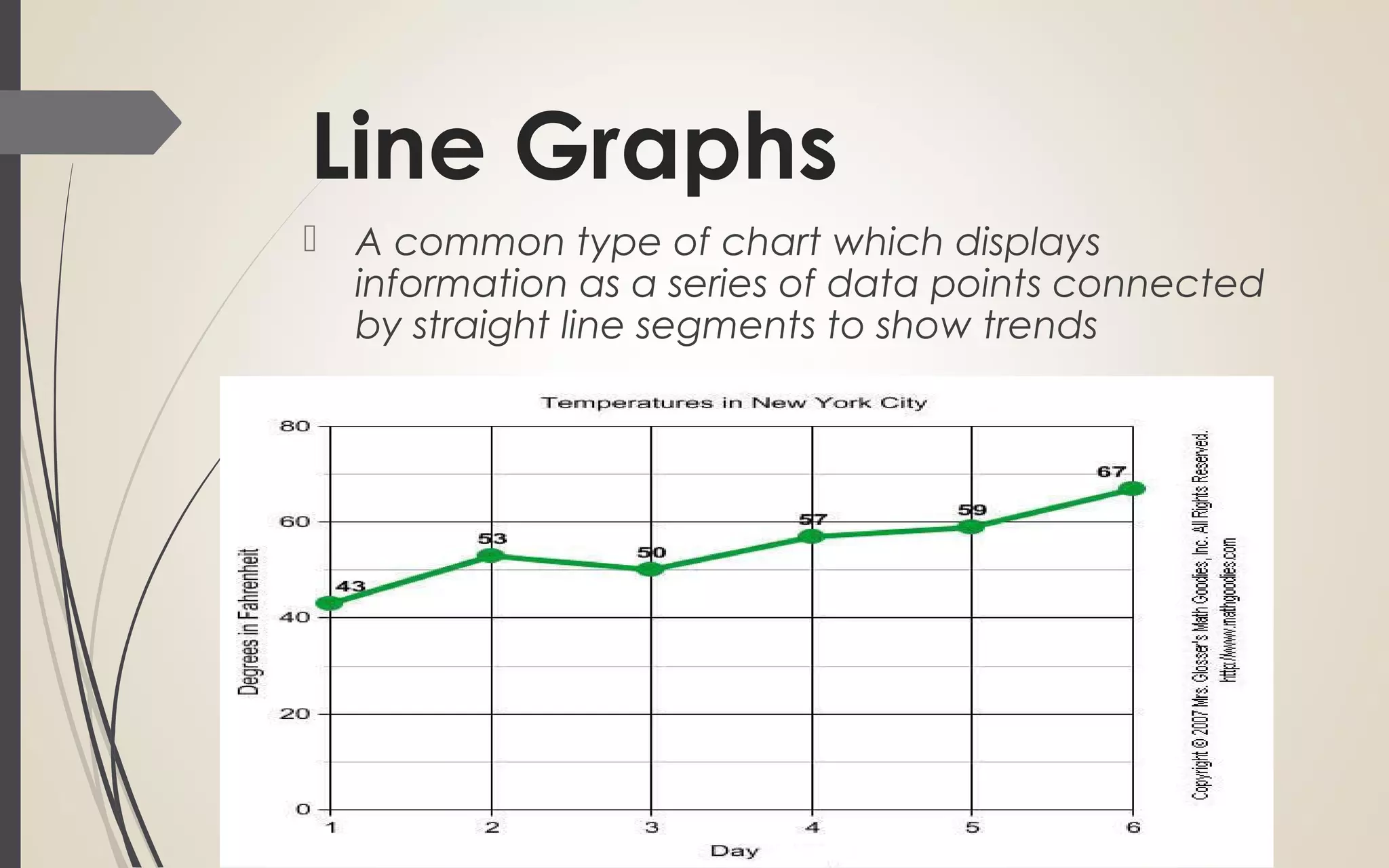
Line Graphs
Acommon type of chart which displays
information as a series of data points connected
by straight line segments to show trends
9.
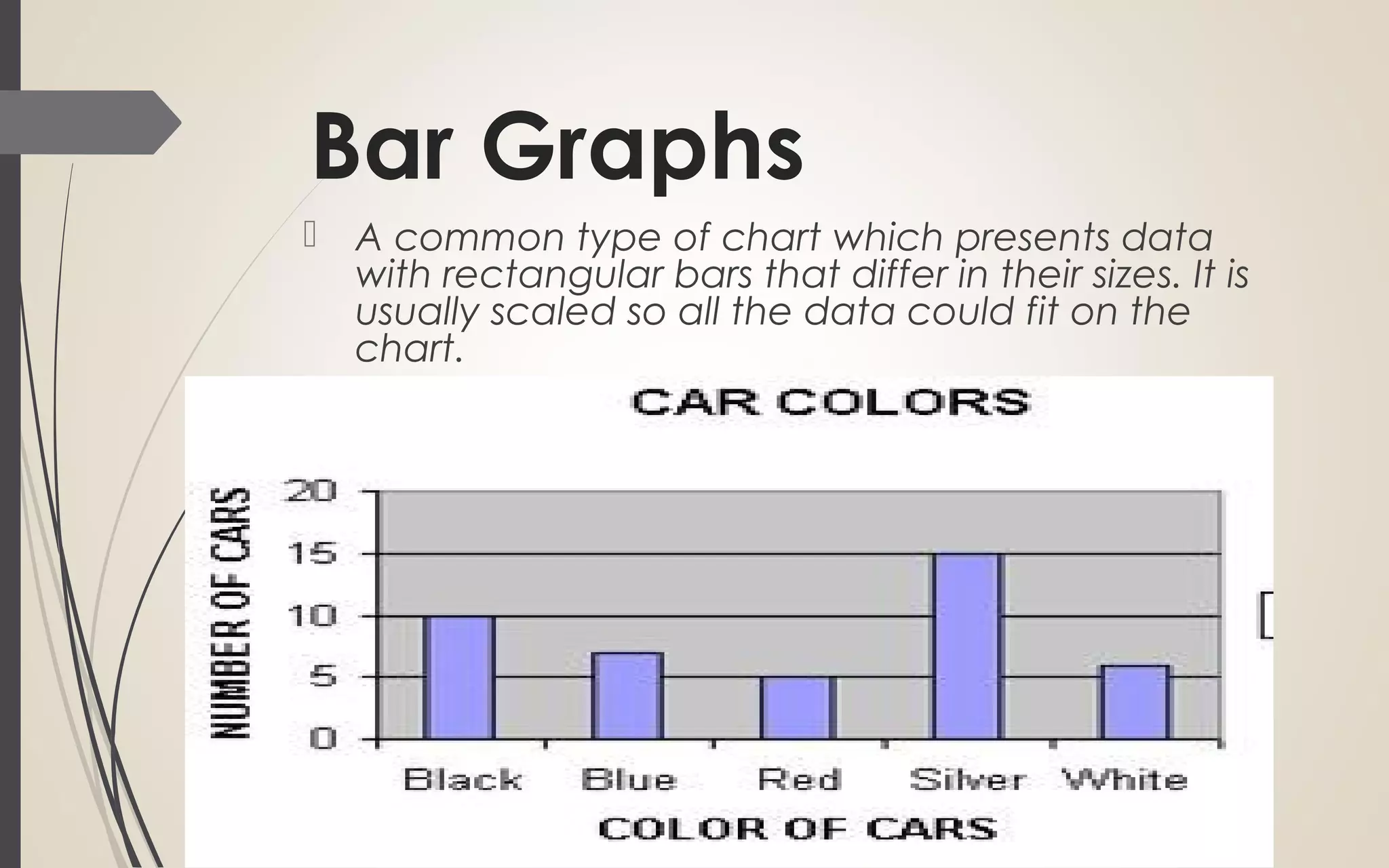
Bar Graphs
Acommon type of chart which presents data
with rectangular bars that differ in their sizes. It is
usually scaled so all the data could fit on the
chart.
10.
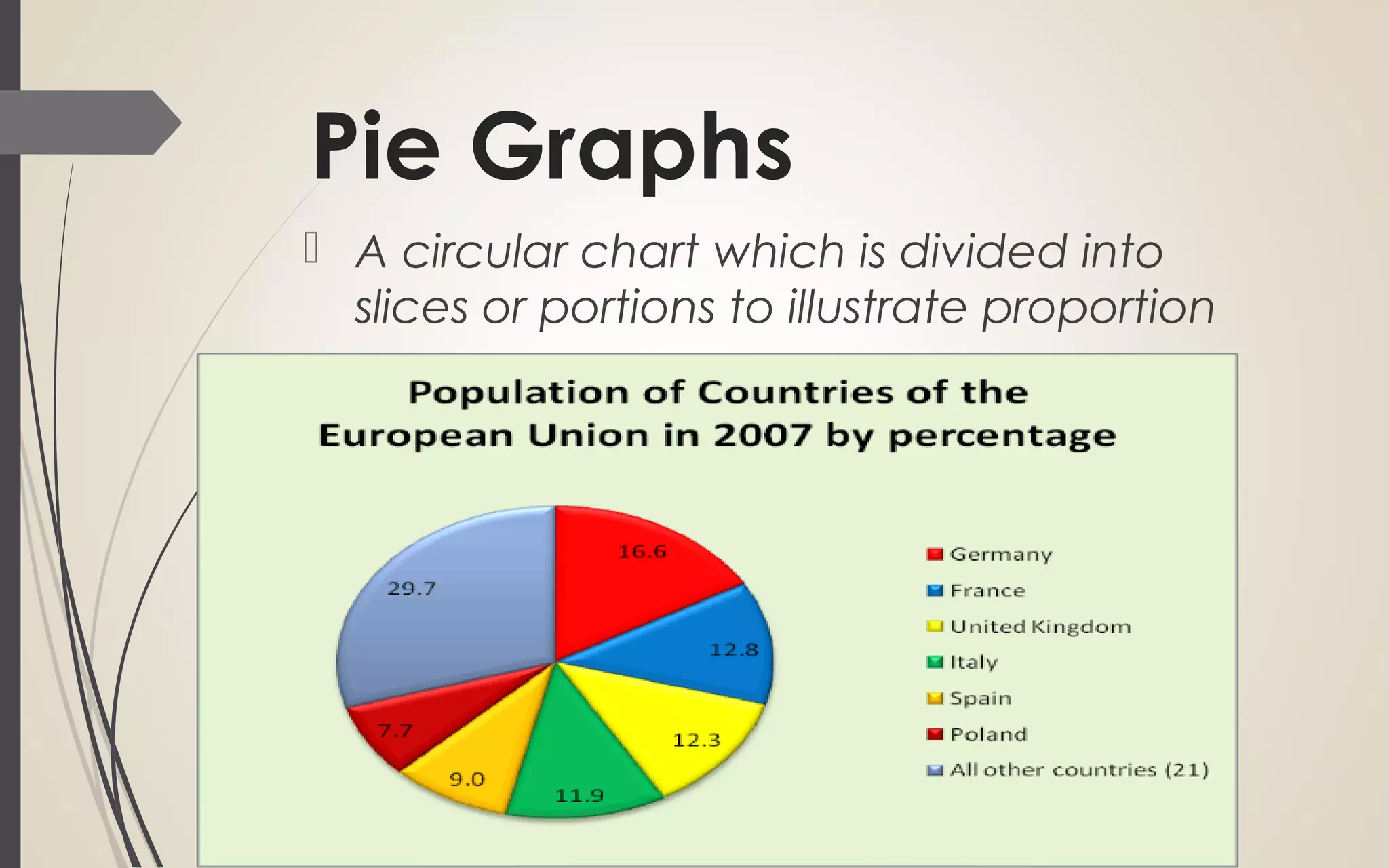
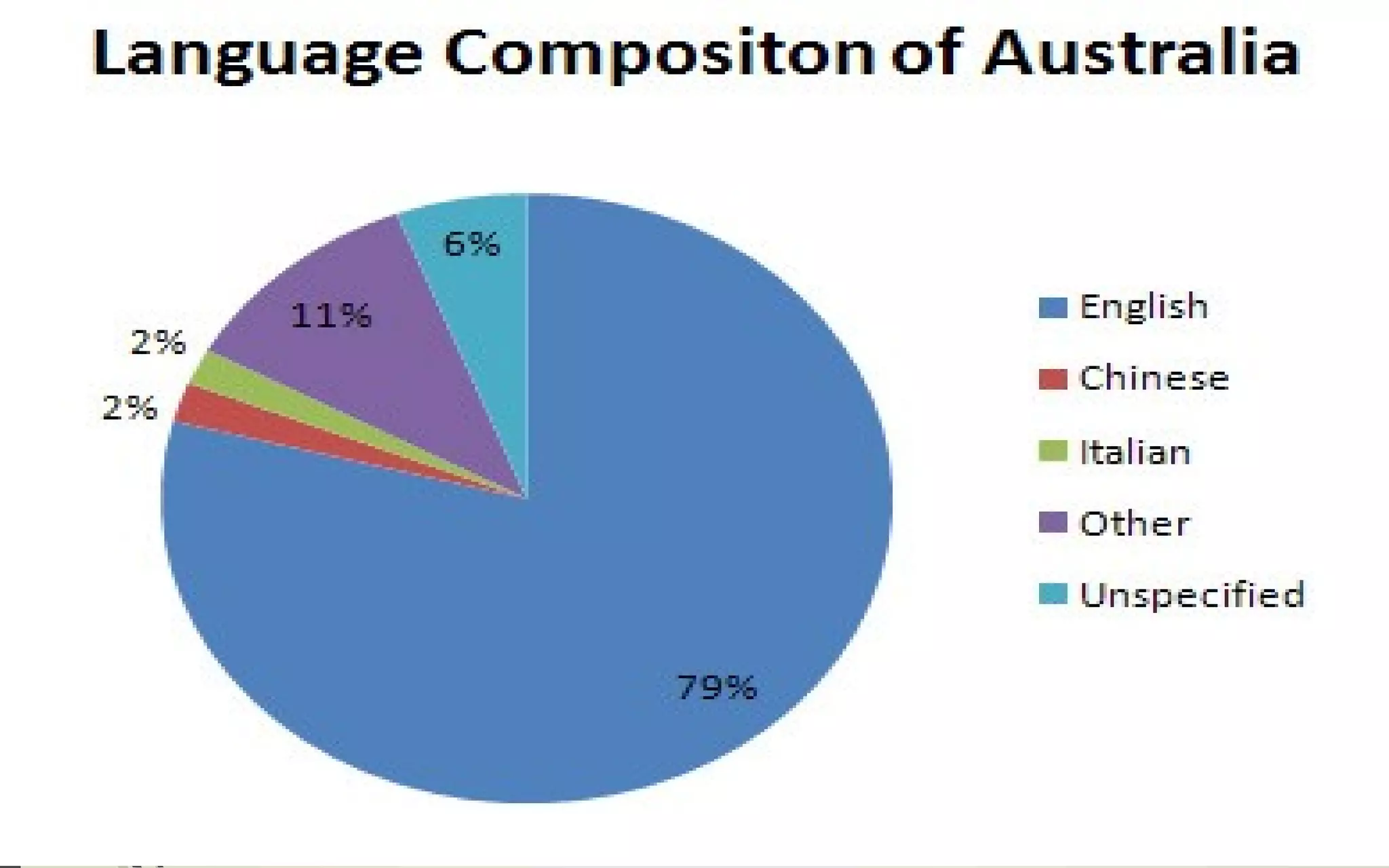
Pie Graphs
Acircular chart which is divided into
slices or portions to illustrate proportion
11.
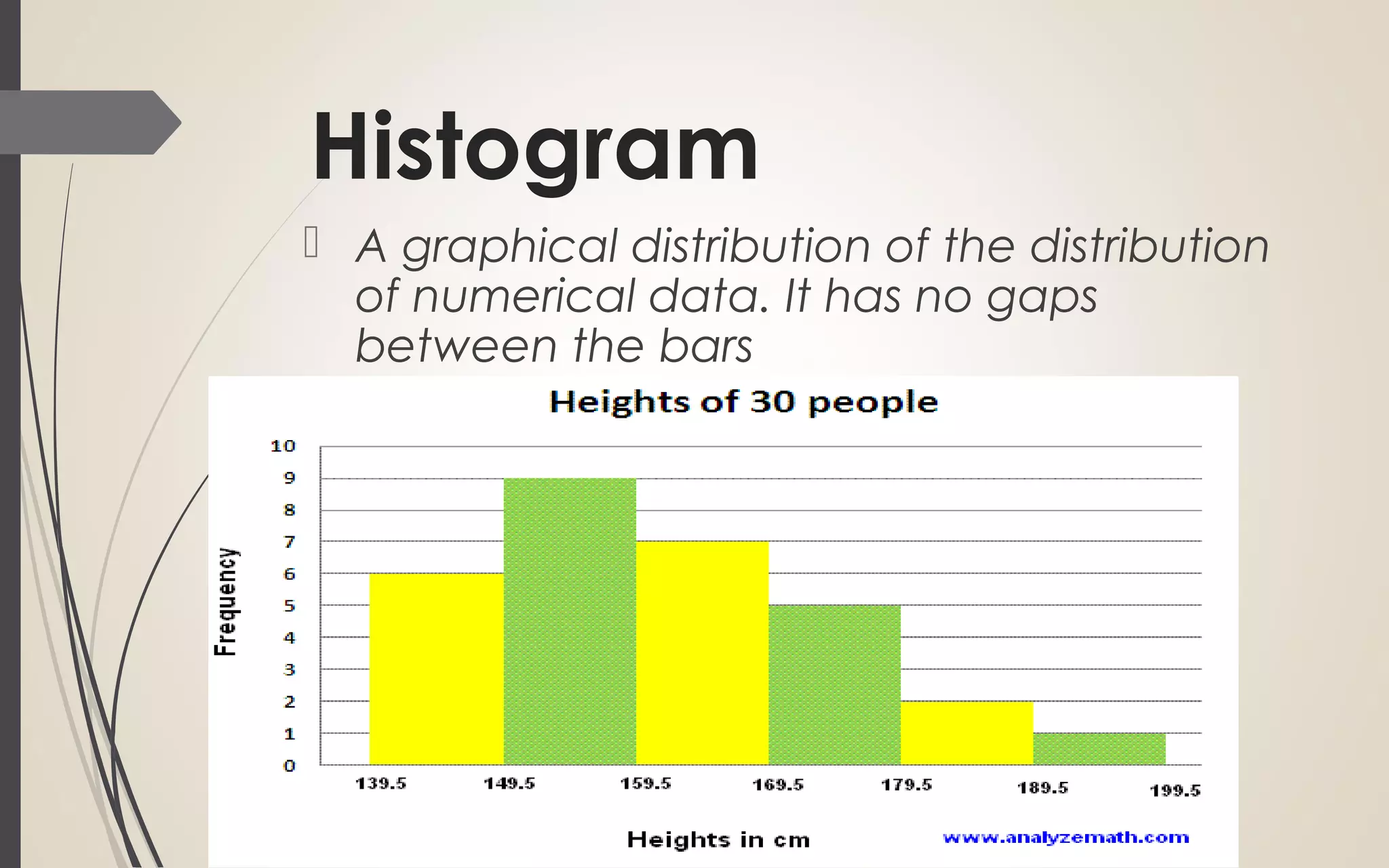
Histogram
A graphicaldistribution of the distribution
of numerical data. It has no gaps
between the bars
13.
Questions:
1. What isthe most common language used in
Australia?
2. What is the total percentage of the languages
English and Italian combined?
3. What is the second most common language
used in Australia?
4. What is the average percentage of the people
using English and other languages combined?
5. What is the percentage of people using Chinese
language?
17.
Graphic Organizer
Alsocalled as “concept map”
A communication tool that uses visual
symbols to express knowledge,
concepts or thoughts and the
relationships between them
Provide a visual aid to facilitate
learning and instruction
18.
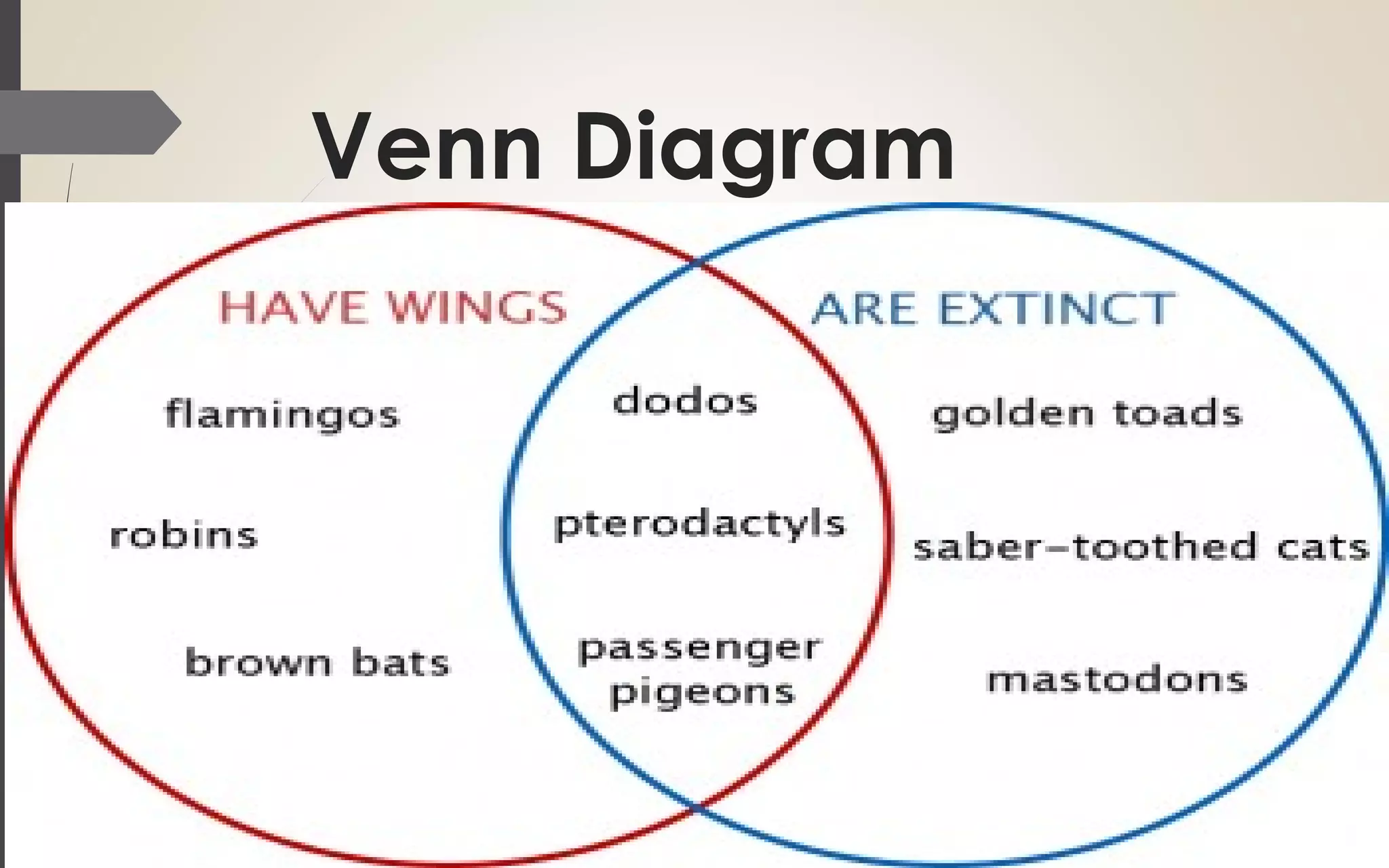
Venn Diagram
Introductionby John Venn in 1890
A diagram that shows all possible
logical relationships between a set
of items
Comprises of two overlapping
circles
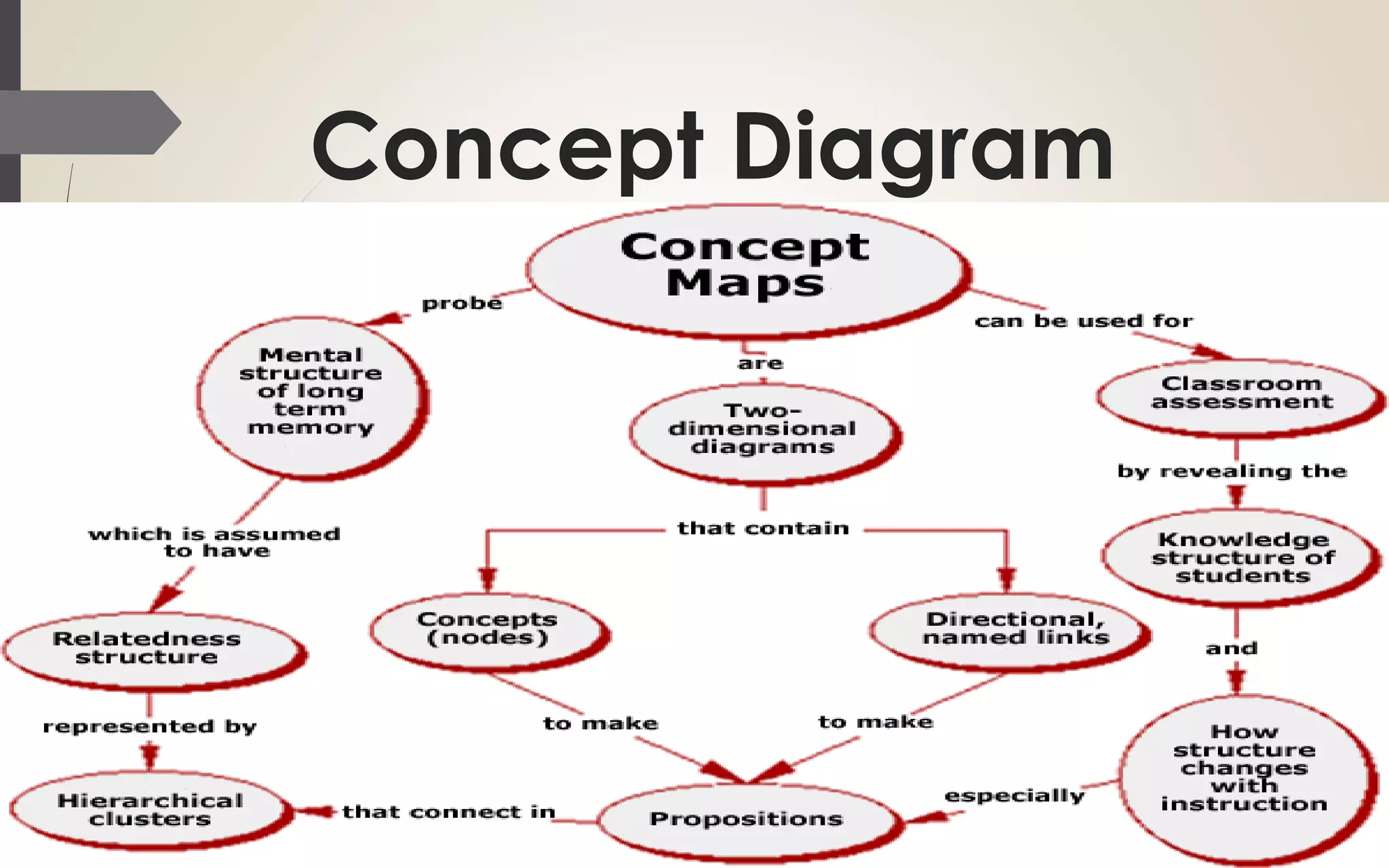
Concept Diagram
Adiagram that depicts suggested
relationships between concepts
Typically represents ideas and
information as boxes and circle
and uses lines to show the
relationship between them