Download as PDF, PPTX
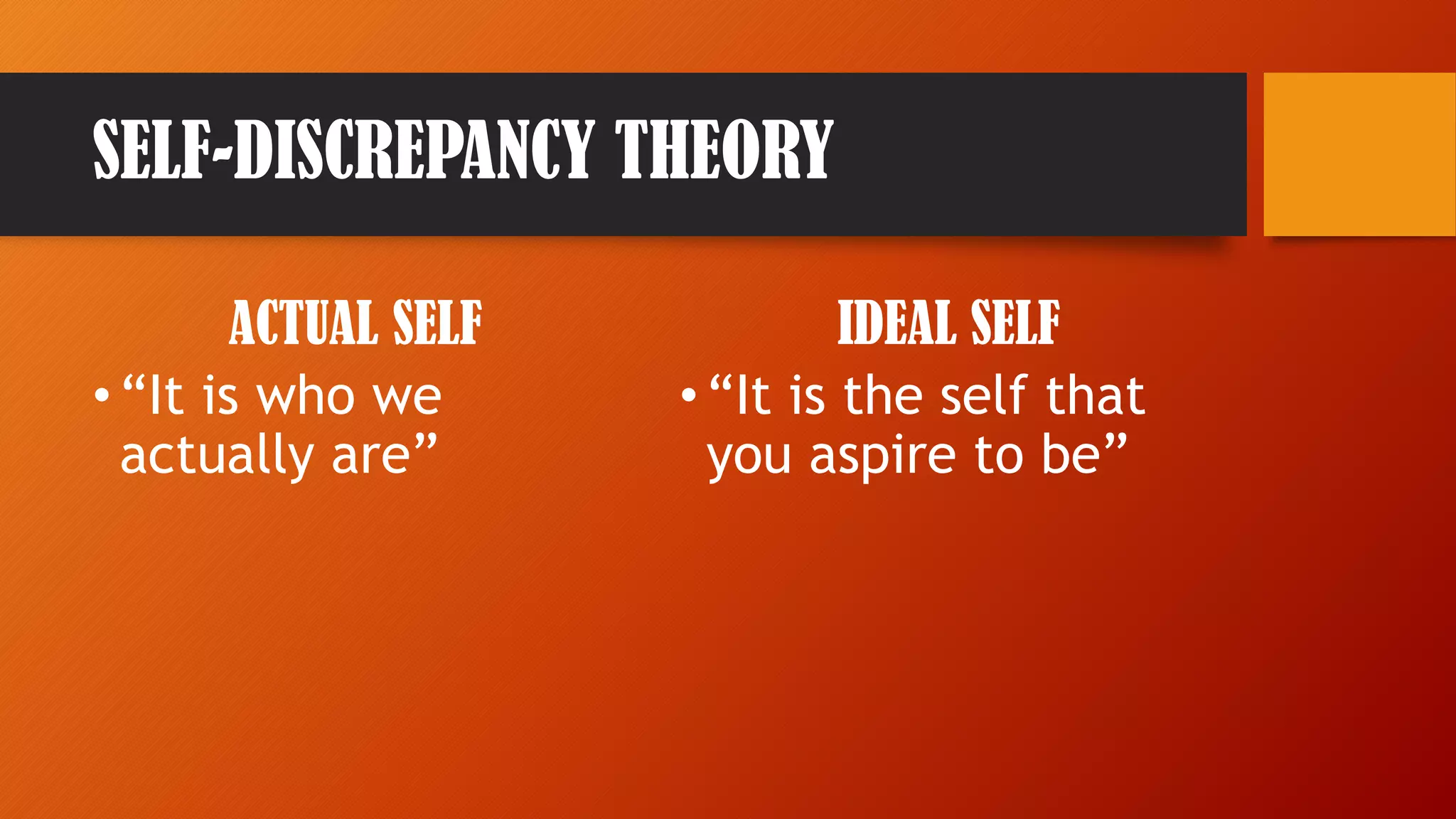
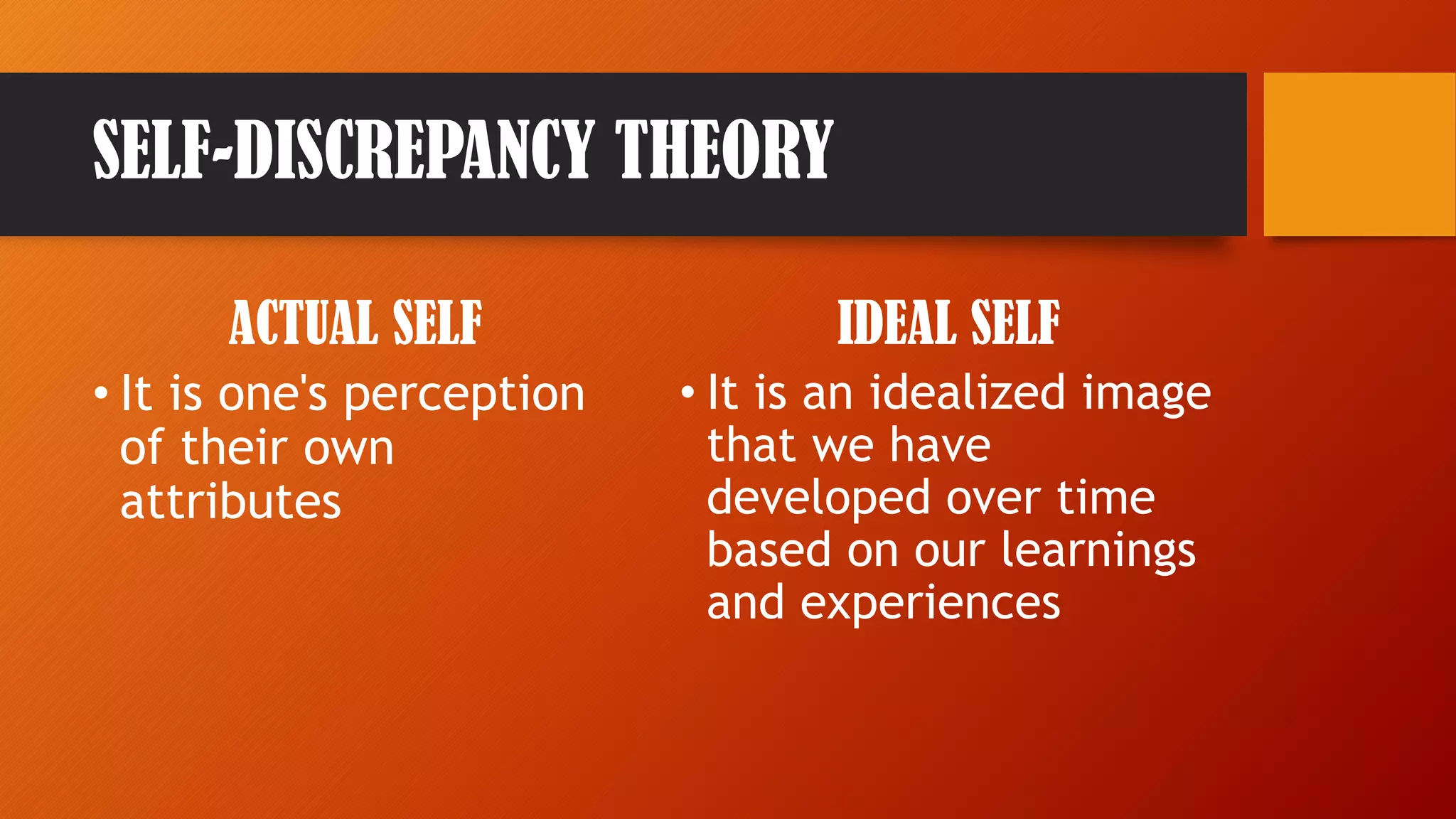
The document explores the concept of self through personal development, addressing the importance of understanding oneself to enhance relationships and self-confidence. It discusses self-discrepancy theory, distinguishing between the actual self and the ideal self, highlighting their definitions and the implications of these self-perceptions. Theories by Carl Jung and Edward Tony Higgins are referenced to elaborate on the unity of consciousness and the psychological framework for understanding self-identity.
Explores the importance of self-understanding in relationships and confidence, and questions about ideal versus actual self.
Defines 'self' focusing on cognitive uniqueness and continuity, referencing Carl Jung's view on consciousness and wholeness.
Introduces Self-Discrepancy Theory by Edward Higgins, highlighting his academic background and contributions.
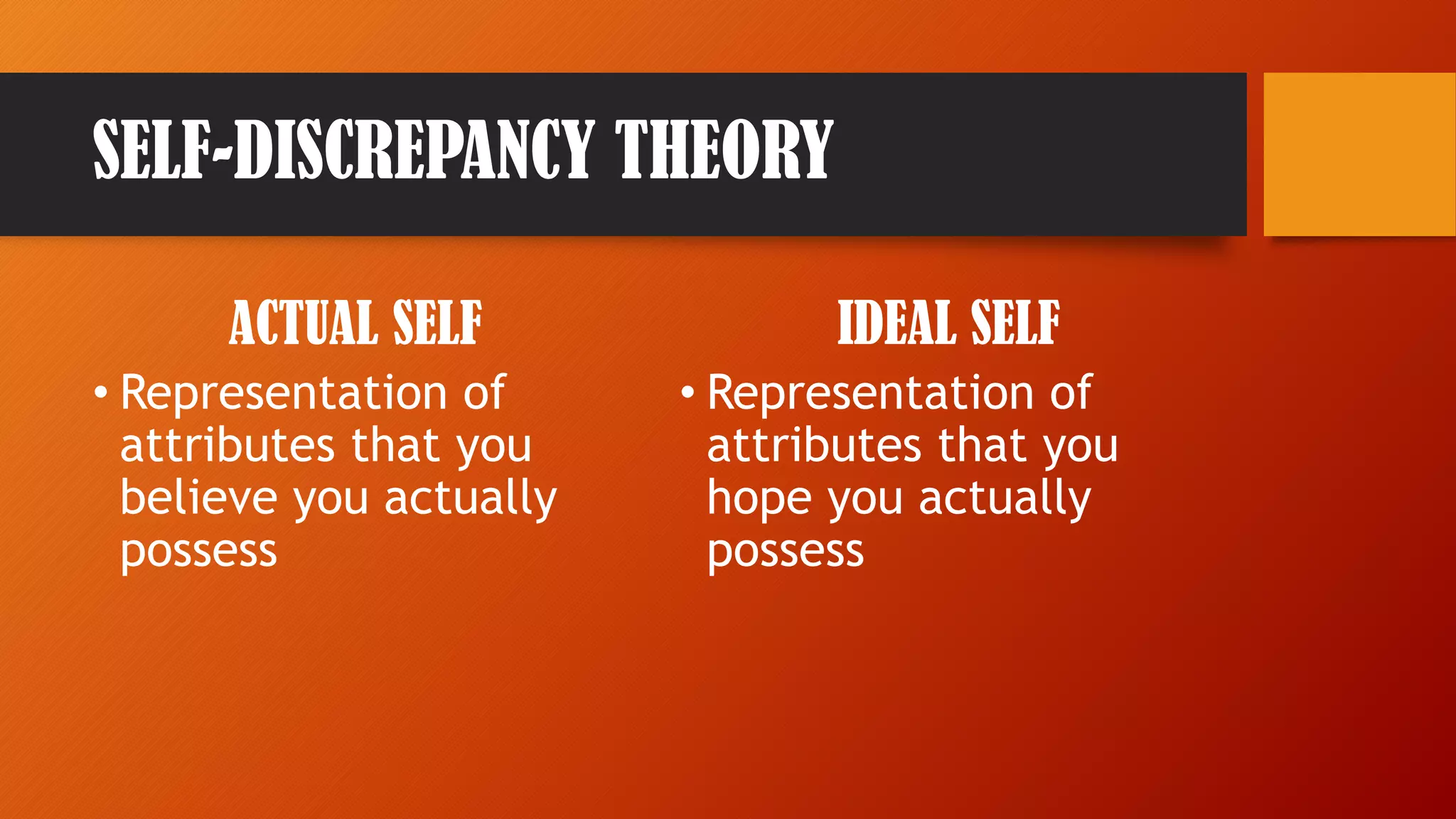
Details Self-Discrepancy Theory: contrasts 'actual self'—who we are now— versus 'ideal self'—who we aspire to be.


