 Stanzas
 Lines
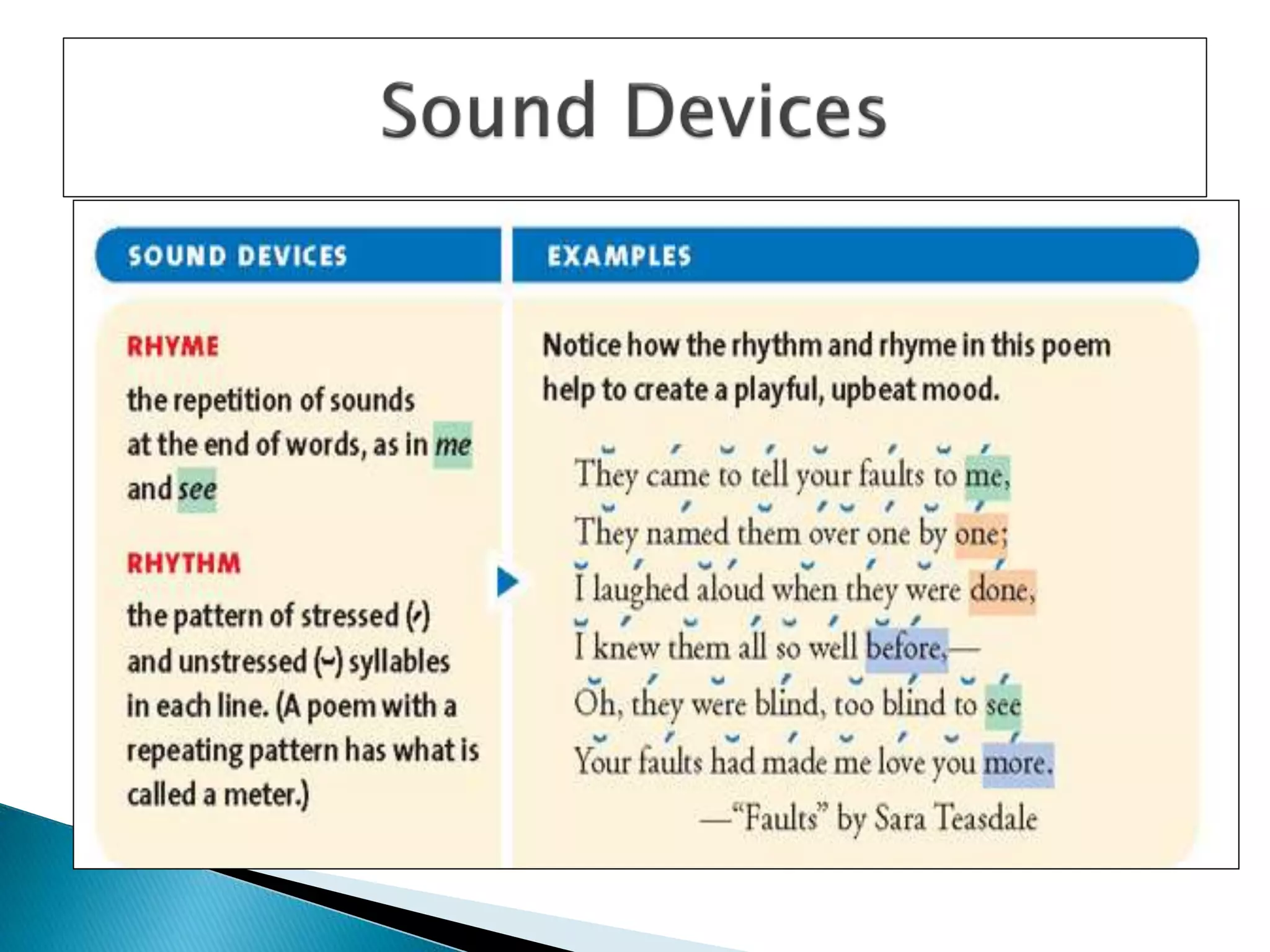
 Rhythm
 Rhyme
 Repetition
 Rhyme Scheme
 Alliteration
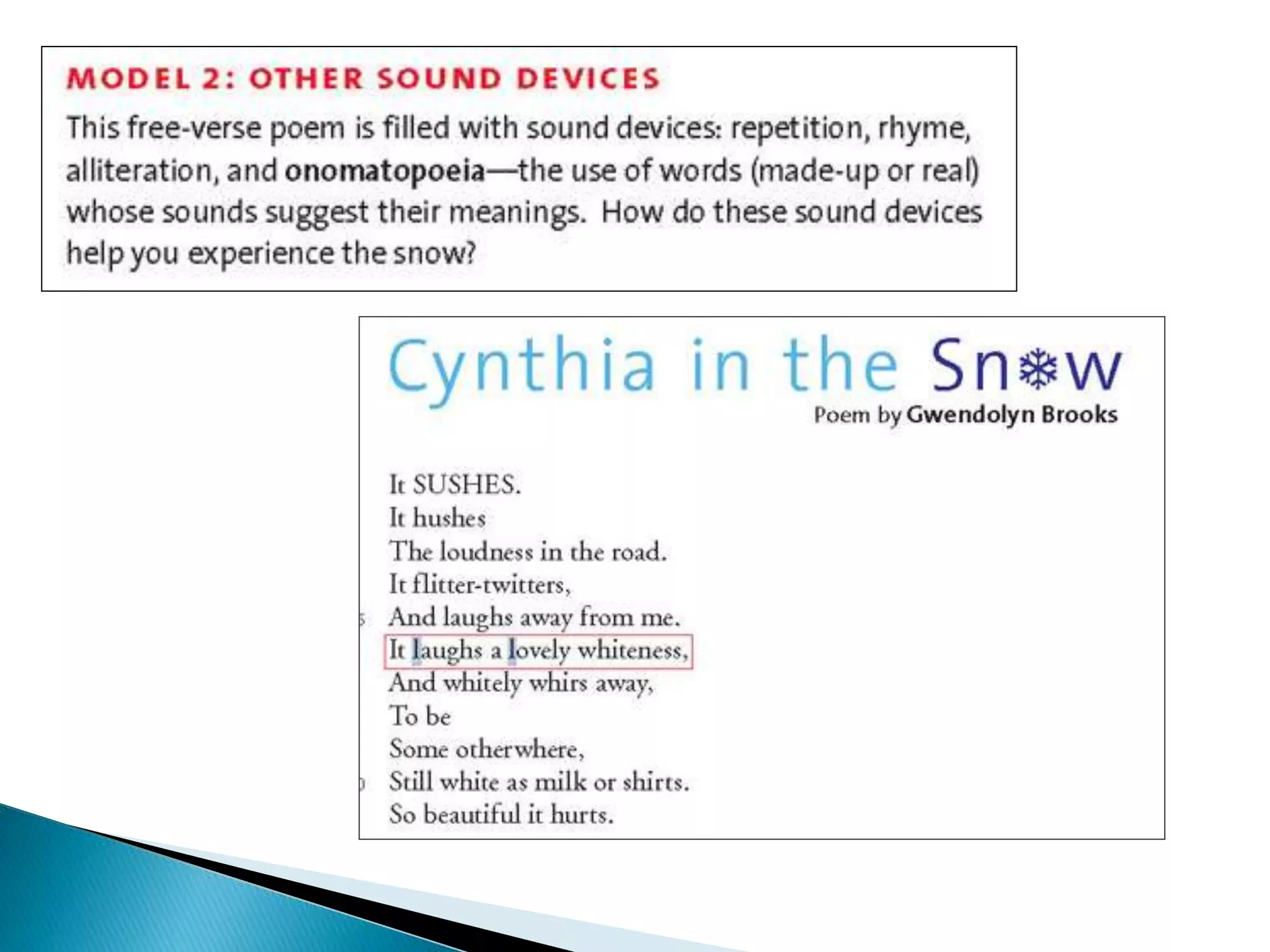
 Onomatopoeia
 Imagery
 Form – a poem’s shape
◦ the way the words and lines are laid out on the
page.
 Stanzas – a group lines in a poem (like a
paragraph)
◦ Each stanza is a separate emotion or idea
◦ Each contribute to the overall meaning of poem
 Lines – the main unit in a poem
◦ May or may not be a complete sentence
◦ Varies in length
 Conventional/Traditional forms
◦ Fixed rules – such as a set number of lines or a repeating pattern
of rhythm or rhyme
◦ Examples: limericks and haikus
 Free Verse – open form
o Has rhythm like everyday speech
o Does not have a regular rhyme pattern
 Graphical Elements- help convey meaning
o Include position, appearance of words, capital letters, lines and
stanzas on a page.
There are many different types
of poetry just as there are
many different types of
fiction.
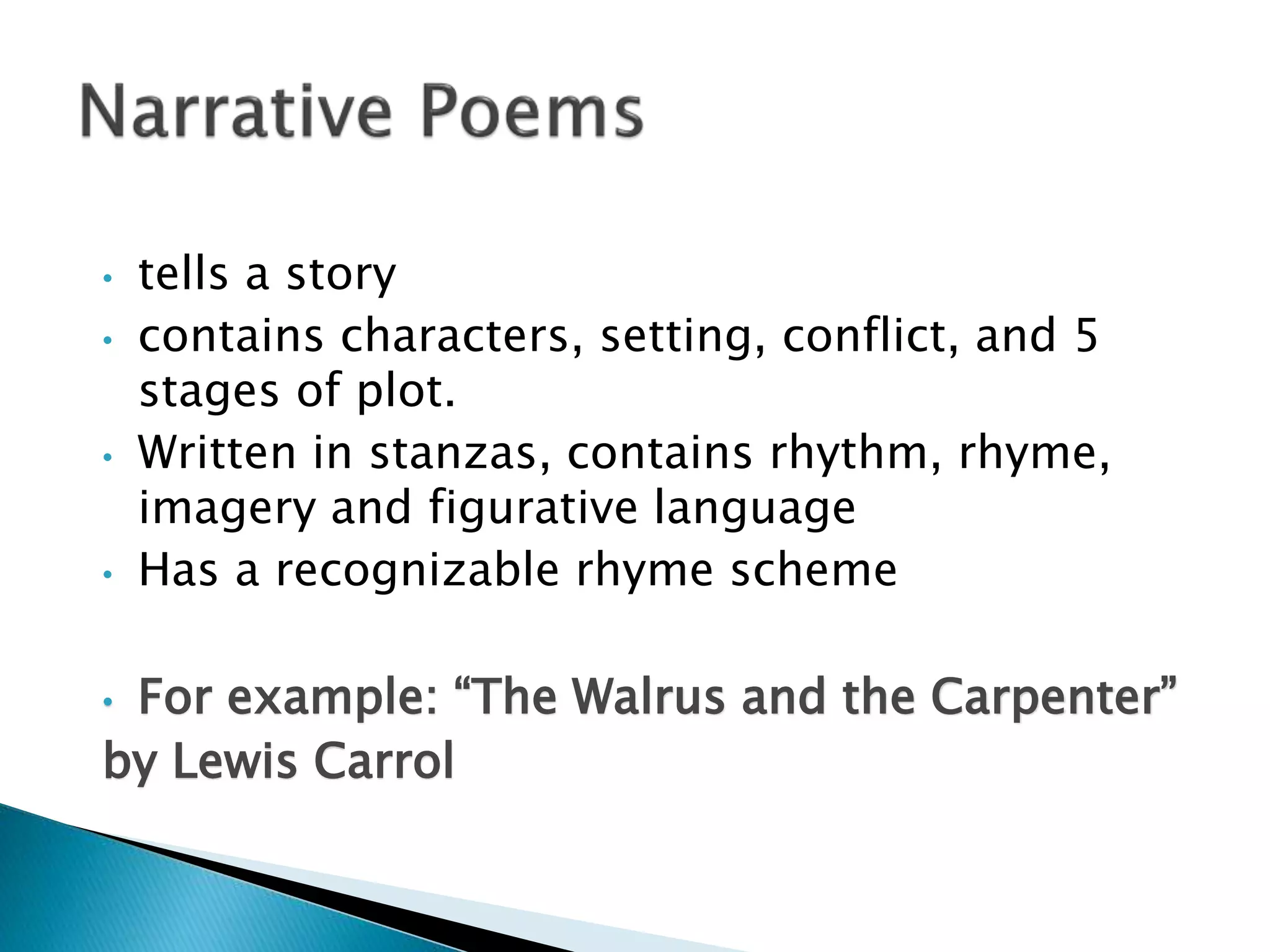
• tells a story
• contains characters, setting, conflict, and 5
stages of plot.
• Written in stanzas, contains rhythm, rhyme,
imagery and figurative language
• Has a recognizable rhyme scheme
• For example: “The Walrus and the Carpenter”
by Lewis Carrol
 Limericks:
◦ A short poem made up of 5 lines
◦ Rhyme scheme (pattern of rhyme): aabba
◦ has a sing-song rhythm
There was an old man with a beard, a
Who said, “It is just as I feared!”- a
Two Owls and a Hen, b
Four Larks and a Wren, b
Have all built their nest in my beard! a
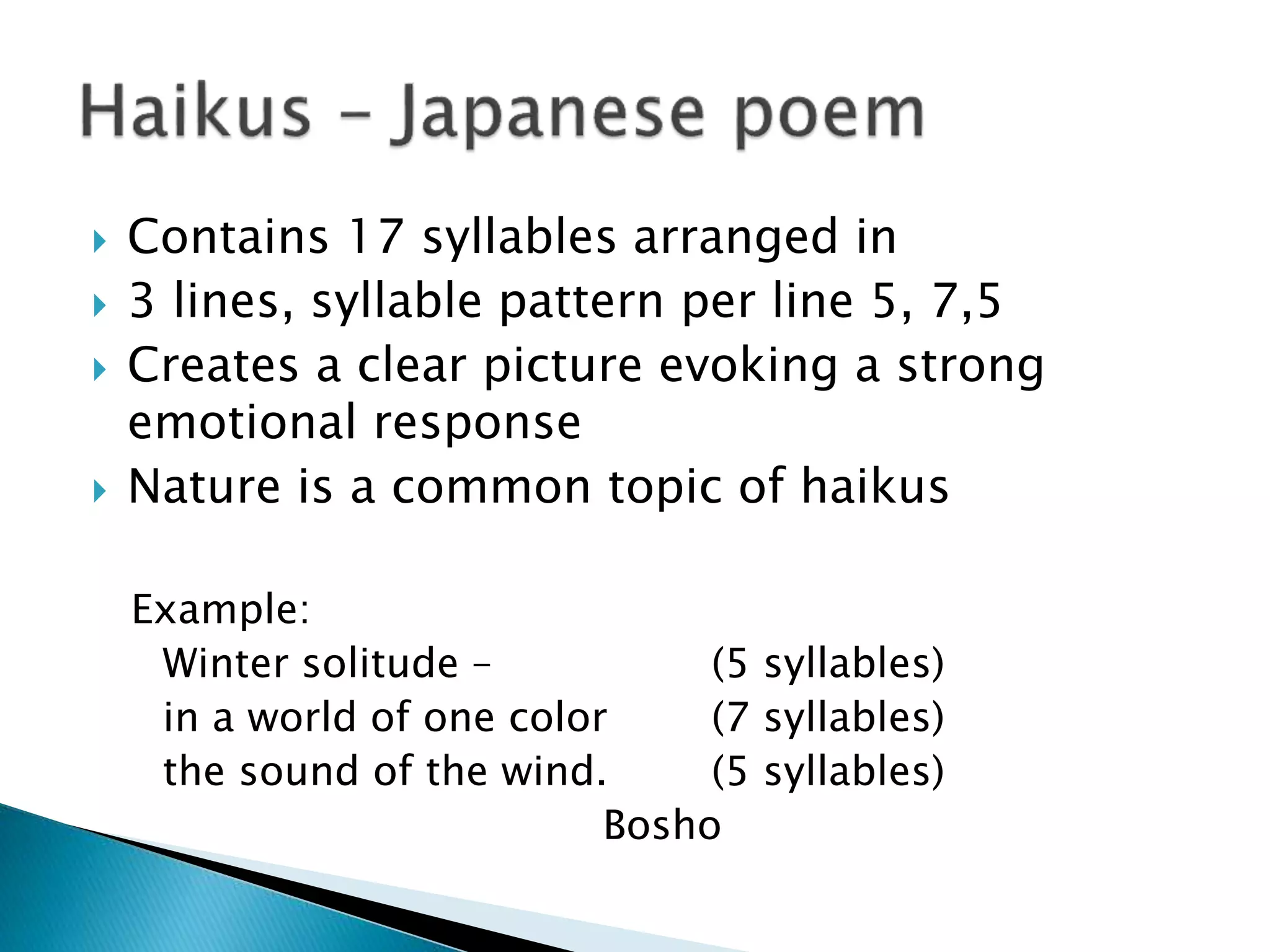
 Contains 17 syllables arranged in
 3 lines, syllable pattern per line 5, 7,5
 Creates a clear picture evoking a strong
emotional response
 Nature is a common topic of haikus
Example:
Winter solitude – (5 syllables)
in a world of one color (7 syllables)
the sound of the wind. (5 syllables)
Bosho
 Contains not regular pattern for rhythm or
rhyme
 Used to capture sound and rhythm of regular
speech
 Example: “On Turning Ten” by Billy Collins
This is the beginning of sadness, I say to myself,
as I walk through the universe in my sneakers,
It is time to say goodbye to my imaginary friends,
time to turn the first big number.
 Let’s look at this
stanza of the poem.
 Identify the type of
figurative language
used.
 Which senses are
being appealed to?
“The summer
still hangs
heavy and sweet
with sunlight
as it did last year.”
Personification:
summer hangs
Simile: as it did last
year
Touch: heavy
Taste: sweet
Sight: sunlight
“The autumn
still comes
showering gold and
crimson
as it did last year.”
Personification:
showering
Simile: as it did last
year
Sight: gold and
crimson
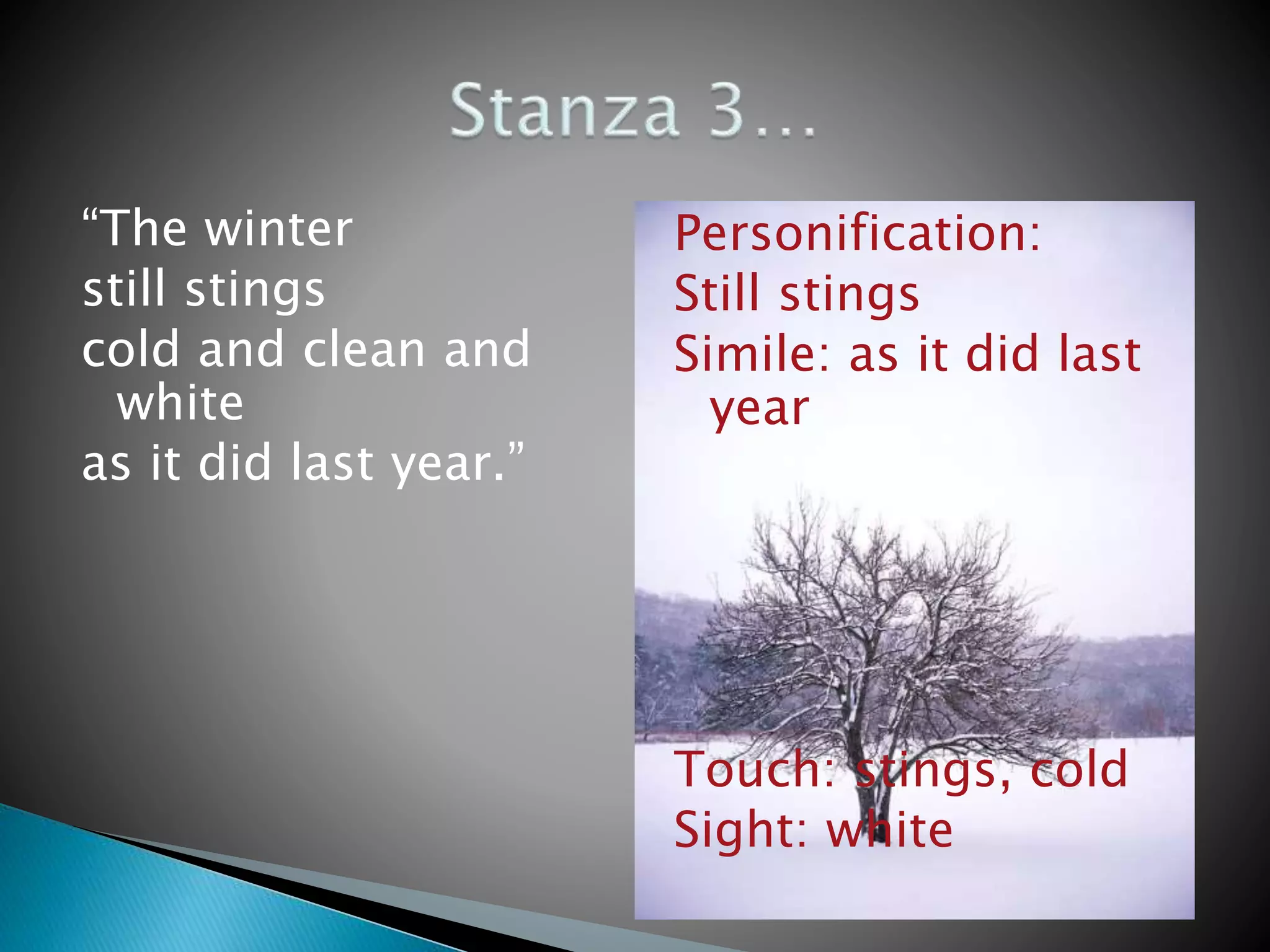
“The winter
still stings
cold and clean and
white
as it did last year.”
Personification:
Still stings
Simile: as it did last
year
Touch: stings, cold
Sight: white
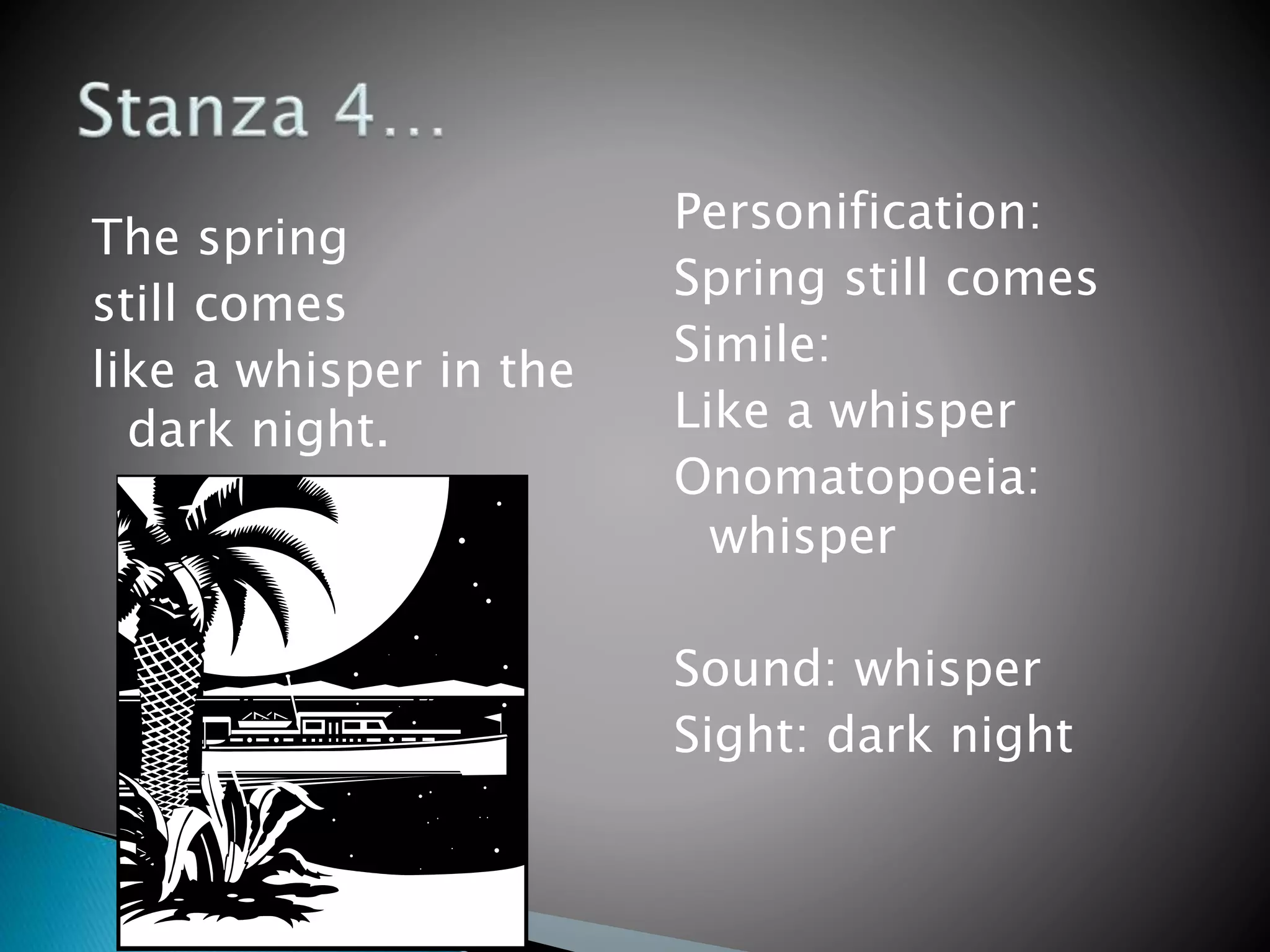
The spring
still comes
like a whisper in the
dark night.
Personification:
Spring still comes
Simile:
Like a whisper
Onomatopoeia:
whisper
Sound: whisper
Sight: dark night

Elements of Poetry

  • 2.
     Stanzas  Lines Rhythm  Rhyme  Repetition  Rhyme Scheme  Alliteration  Onomatopoeia  Imagery
  • 3.
     Form –a poem’s shape ◦ the way the words and lines are laid out on the page.  Stanzas – a group lines in a poem (like a paragraph) ◦ Each stanza is a separate emotion or idea ◦ Each contribute to the overall meaning of poem  Lines – the main unit in a poem ◦ May or may not be a complete sentence ◦ Varies in length
  • 4.
     Conventional/Traditional forms ◦Fixed rules – such as a set number of lines or a repeating pattern of rhythm or rhyme ◦ Examples: limericks and haikus  Free Verse – open form o Has rhythm like everyday speech o Does not have a regular rhyme pattern  Graphical Elements- help convey meaning o Include position, appearance of words, capital letters, lines and stanzas on a page.
  • 8.
    There are manydifferent types of poetry just as there are many different types of fiction.
  • 9.
    • tells astory • contains characters, setting, conflict, and 5 stages of plot. • Written in stanzas, contains rhythm, rhyme, imagery and figurative language • Has a recognizable rhyme scheme • For example: “The Walrus and the Carpenter” by Lewis Carrol
  • 10.
     Limericks: ◦ Ashort poem made up of 5 lines ◦ Rhyme scheme (pattern of rhyme): aabba ◦ has a sing-song rhythm There was an old man with a beard, a Who said, “It is just as I feared!”- a Two Owls and a Hen, b Four Larks and a Wren, b Have all built their nest in my beard! a
  • 11.
     Contains 17syllables arranged in  3 lines, syllable pattern per line 5, 7,5  Creates a clear picture evoking a strong emotional response  Nature is a common topic of haikus Example: Winter solitude – (5 syllables) in a world of one color (7 syllables) the sound of the wind. (5 syllables) Bosho
  • 12.
     Contains notregular pattern for rhythm or rhyme  Used to capture sound and rhythm of regular speech  Example: “On Turning Ten” by Billy Collins This is the beginning of sadness, I say to myself, as I walk through the universe in my sneakers, It is time to say goodbye to my imaginary friends, time to turn the first big number.
  • 19.
     Let’s lookat this stanza of the poem.  Identify the type of figurative language used.  Which senses are being appealed to? “The summer still hangs heavy and sweet with sunlight as it did last year.” Personification: summer hangs Simile: as it did last year Touch: heavy Taste: sweet Sight: sunlight
  • 20.
    “The autumn still comes showeringgold and crimson as it did last year.” Personification: showering Simile: as it did last year Sight: gold and crimson
  • 21.
    “The winter still stings coldand clean and white as it did last year.” Personification: Still stings Simile: as it did last year Touch: stings, cold Sight: white
  • 22.
    The spring still comes likea whisper in the dark night. Personification: Spring still comes Simile: Like a whisper Onomatopoeia: whisper Sound: whisper Sight: dark night

Editor's Notes

  • #2 Authors use things like similes, metaphors, personification and hyperbole to get the reader to really understand what the characters are going through. What they are feeling, seeing, smelling, touching, tasting and hearing. First, let’s define each of these and then take a look at some example to really understand how it works.