Bronchiectasis
Presented by
Dr. Mohamed Abdelaziz Omer
Consultant chest physician
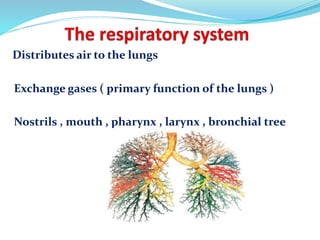
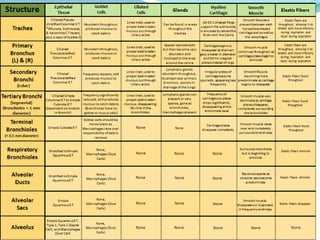
Distributes air to the lungs
Exchange gases ( primary function of the lungs )
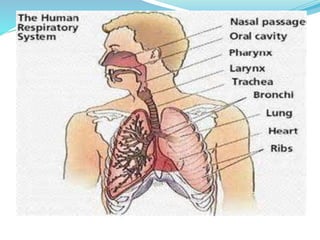
Nostrils , mouth , pharynx , larynx , bronchial tree
Wind pipe
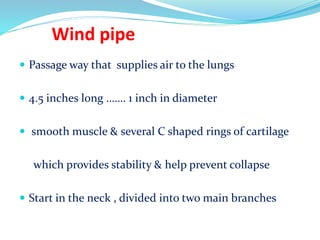
 Passage way that supplies air to the lungs
 4.5 inches long ……. 1 inch in diameter
 smooth muscle & several C shaped rings of cartilage
which provides stability & help prevent collapse
 Start in the neck , divided into two main branches
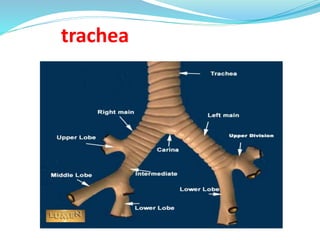
trachea
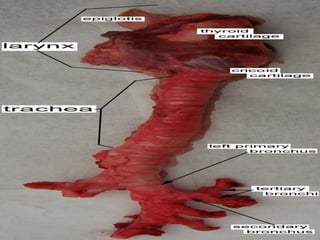
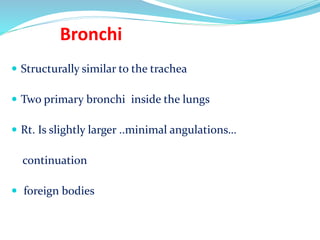
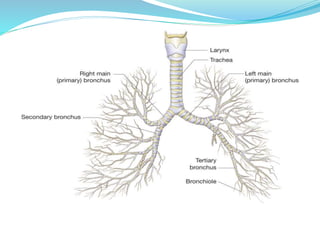
Bronchi
 Structurally similar to the trachea
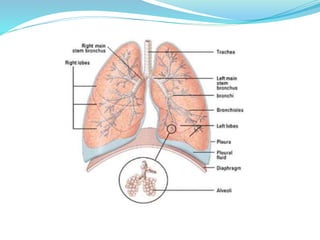
 Two primary bronchi inside the lungs
 Rt. Is slightly larger ..minimal angulations…
continuation
 foreign bodies
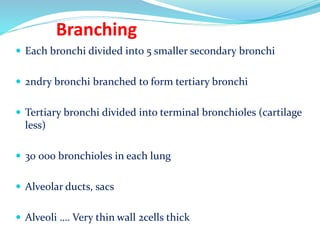
Branching
 Each bronchi divided into 5 smaller secondary bronchi
 2ndry bronchi branched to form tertiary bronchi
 Tertiary bronchi divided into terminal bronchioles (cartilage
less)
 30 000 bronchioles in each lung
 Alveolar ducts, sacs
 Alveoli …. Very thin wall 2cells thick
Purifier
 Mucus blanket covers large proportion of the
membrane lining the bronchial tree
 125 ml daily
 Cilia
 Hair like moves the mucus up to the pharynx
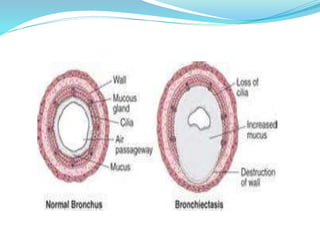
Broncheictasis
 Uncommon disease 20-50% cause not found ( B L F )
 Most often secondary to an infectious process
 Could be congenital
 described by Laennec 1819
 detailed by sir Wilham Osler in late 1800
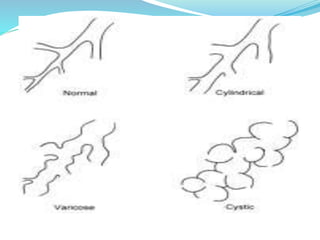
 Reid characterized it as cylindrical ,cystic ,varicose in 1950
Definition
 Abnormal permanent distortion of one or > conducting bronchi
 Abnormal dilatation of the proximal & medium sized >2mm
 Cylindrical diffuse mucosal edema & dilatation but straight end
abruptly
 Varicose has a bulbous appearance with a dilated bronchus &
interspersed sites of relative constriction & obstructive scarring
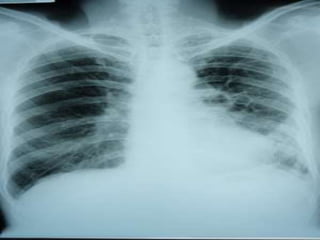
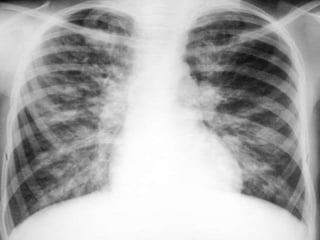
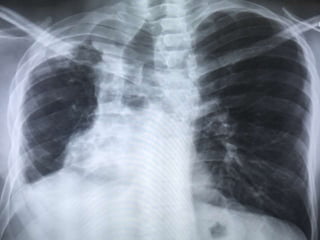
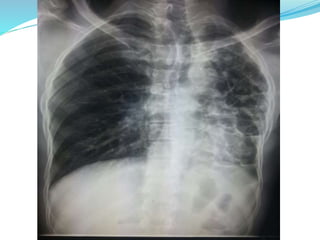
picture
 Caused by weakness or destruction of the muscular elastic
component of the bronchial wall
 Transmural inflammation , edema , scarring , ulceration
causes
 impaired drainage
 aspiration
 Obstruction (middle lobe syndrome )
 Defect of defense mechanism or host response
neutrophilic proteases , cytokines , NO , O2 radicals
. CF , William-Capell syndrome
 Mounier-Kuhn (tracheobronchomegally), Swyer-James
Macleod syndrome (unilateral hyper lucent lung) ,
yellow nail syndrome young syndrome , Iry ciliary
dyskinasia , AAT deficiency , AD PKD , Toxic gas exposure
 CTD , autoimmune diseases , idiopathic inflammatory
disease , immune deficiency
Bronchiectasis most commonly present as a focal process
involving a lobe , segment or sub-segment of the lung
 Far less commonly it may be a diffuse process involving
entire lung or both lungs these cases most often occur
in association with systemic illness such as CF ,
sinopulmonary disease or both
 Majority of this article will address non-CF related
Typical offending organisms
 Necrotizing infection either inadequately or non treated at all
 klebsiella sp. , staph.aureus , MTB , NMTB , Mycoplasma
pneumonia measles , pertussis , HSV , RSV in childhood ,
MAC and certain types of adenoviruses
.Widened airways with extra mucus are prone to infection
.Haemophilus species 50% , pseudomonas 20%
Cystic fibrosis
 The most common cause in developed countries
 Multisystem disorder , chloride transport system in
exocrine
 2ry to a defect in CFTR protein
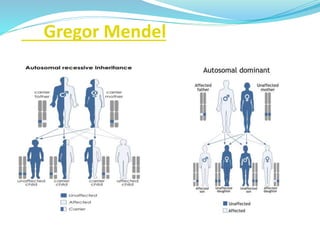
 Autosomal recessive
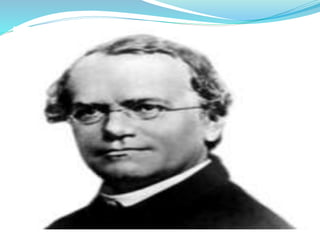
Gregor Mendel
Symptoms
 No to few symptoms morphological diagnosis
 Dry variant post TB upper lobes
 Weakness , weight loss
 Cough , sputum ,blood streaks , dyspnea , pleuritic chest pain
wheezing , fever
complications
 Recurrent pneumonia , Chronic bronchial infection
 Empyema , abscess
 Core pulmonale
 Pneumothorax
 Life threatening hemoptysis ?
 Respiratory failure
Diagnosis
 Compatible clinical Hx. Of chronic respiratory symptoms
 Daily cough & viscid sputum production
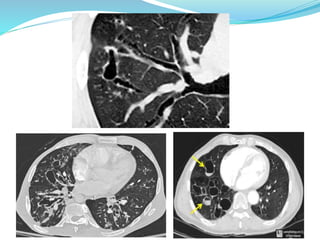
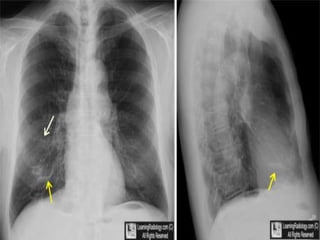
 Characteristic radiographic finding on CT scan ( bronchial
wall thickening & luminal dilatation )
prognosis
 Pre-antibiotic era die within 5 years
 1940 the mortality was 30% mostly die within 2 years
 1990 in Finland compared the mortality rate :-
20% BA , 28% bronchiectasis , 38% COPD
 Bronchiectasis with CF is of worst prognosis
Prevention
 Immunization
 Flu vaccination
 Smoking
 counseling
management
 Control infection antibiotics
 Bronchodilators
 Control secretions steroids Postural drainage
 Lobectomy , artery embolization
 oxygen
 Dietary supplementation
 creosote
Thank you

Bronchiectasis

  • 1.
    Bronchiectasis Presented by Dr. MohamedAbdelaziz Omer Consultant chest physician
  • 2.
    Distributes air tothe lungs Exchange gases ( primary function of the lungs ) Nostrils , mouth , pharynx , larynx , bronchial tree
  • 6.
    Wind pipe  Passageway that supplies air to the lungs  4.5 inches long ……. 1 inch in diameter  smooth muscle & several C shaped rings of cartilage which provides stability & help prevent collapse  Start in the neck , divided into two main branches
  • 7.
  • 8.
    Bronchi  Structurally similarto the trachea  Two primary bronchi inside the lungs  Rt. Is slightly larger ..minimal angulations… continuation  foreign bodies
  • 9.
    Branching  Each bronchidivided into 5 smaller secondary bronchi  2ndry bronchi branched to form tertiary bronchi  Tertiary bronchi divided into terminal bronchioles (cartilage less)  30 000 bronchioles in each lung  Alveolar ducts, sacs  Alveoli …. Very thin wall 2cells thick
  • 12.
    Purifier  Mucus blanketcovers large proportion of the membrane lining the bronchial tree  125 ml daily  Cilia  Hair like moves the mucus up to the pharynx
  • 13.
    Broncheictasis  Uncommon disease20-50% cause not found ( B L F )  Most often secondary to an infectious process  Could be congenital  described by Laennec 1819  detailed by sir Wilham Osler in late 1800  Reid characterized it as cylindrical ,cystic ,varicose in 1950
  • 14.
    Definition  Abnormal permanentdistortion of one or > conducting bronchi  Abnormal dilatation of the proximal & medium sized >2mm  Cylindrical diffuse mucosal edema & dilatation but straight end abruptly  Varicose has a bulbous appearance with a dilated bronchus & interspersed sites of relative constriction & obstructive scarring
  • 20.
    picture  Caused byweakness or destruction of the muscular elastic component of the bronchial wall  Transmural inflammation , edema , scarring , ulceration
  • 21.
    causes  impaired drainage aspiration  Obstruction (middle lobe syndrome )  Defect of defense mechanism or host response neutrophilic proteases , cytokines , NO , O2 radicals
  • 22.
    . CF ,William-Capell syndrome  Mounier-Kuhn (tracheobronchomegally), Swyer-James Macleod syndrome (unilateral hyper lucent lung) , yellow nail syndrome young syndrome , Iry ciliary dyskinasia , AAT deficiency , AD PKD , Toxic gas exposure  CTD , autoimmune diseases , idiopathic inflammatory disease , immune deficiency
  • 23.
    Bronchiectasis most commonlypresent as a focal process involving a lobe , segment or sub-segment of the lung  Far less commonly it may be a diffuse process involving entire lung or both lungs these cases most often occur in association with systemic illness such as CF , sinopulmonary disease or both  Majority of this article will address non-CF related
  • 27.
    Typical offending organisms Necrotizing infection either inadequately or non treated at all  klebsiella sp. , staph.aureus , MTB , NMTB , Mycoplasma pneumonia measles , pertussis , HSV , RSV in childhood , MAC and certain types of adenoviruses .Widened airways with extra mucus are prone to infection .Haemophilus species 50% , pseudomonas 20%
  • 28.
    Cystic fibrosis  Themost common cause in developed countries  Multisystem disorder , chloride transport system in exocrine  2ry to a defect in CFTR protein  Autosomal recessive
  • 29.
  • 30.
    Symptoms  No tofew symptoms morphological diagnosis  Dry variant post TB upper lobes  Weakness , weight loss  Cough , sputum ,blood streaks , dyspnea , pleuritic chest pain wheezing , fever
  • 31.
    complications  Recurrent pneumonia, Chronic bronchial infection  Empyema , abscess  Core pulmonale  Pneumothorax  Life threatening hemoptysis ?  Respiratory failure
  • 32.
    Diagnosis  Compatible clinicalHx. Of chronic respiratory symptoms  Daily cough & viscid sputum production  Characteristic radiographic finding on CT scan ( bronchial wall thickening & luminal dilatation )
  • 33.
    prognosis  Pre-antibiotic eradie within 5 years  1940 the mortality was 30% mostly die within 2 years  1990 in Finland compared the mortality rate :- 20% BA , 28% bronchiectasis , 38% COPD  Bronchiectasis with CF is of worst prognosis
  • 35.
    Prevention  Immunization  Fluvaccination  Smoking  counseling
  • 36.
    management  Control infectionantibiotics  Bronchodilators  Control secretions steroids Postural drainage  Lobectomy , artery embolization  oxygen  Dietary supplementation  creosote
  • 39.