BRONCHIECTASIS
Dr. Aswini Kumar
Mohapatra
Professor & Head
Dept. of Pulmonary Medicine
Definition :
 Characterized by chronic permanent and
abnormal dilatation of bronchi, which
contain cartilage and bronchial glands. It
occurs due to destruction of the elastic and
muscular components of the bronchial wall
 Chronic mucopurulent expectoration and
recurrent acute pulmonary infections
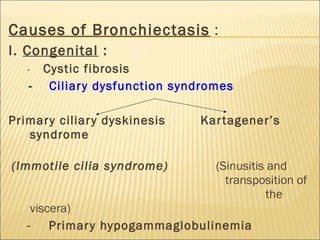
Causes of Bronchiectasis :
I. Congenital :
- Cystic fibrosis
- Ciliary dysfunction syndromes
Primary ciliary dyskinesis Kartagener’s
syndrome
(Immotile cilia syndrome) (Sinusitis and
transposition of
the
viscera)
- Primary hypogammaglobulinemia
II. Acquired:
A. Children -
 Pneumonia (complicating whooping cough and
measles)
 Primary TB
 Inhaled foreign body
B. Adults -
 Suppurative pneumonia
 Pulmonary TB
 Allergic bronchopulmonary aspergillosis
 Bronchial tumours
Pathogenesis :
 Infection and obstruction-two important
key features
 Repeated pulmonary infections coupled with
defective host defenses with impaired
clearing mechanism
 Mechanical obstruction or obstruction due to
muscus impaction impairs clearance leading
to repeated infection
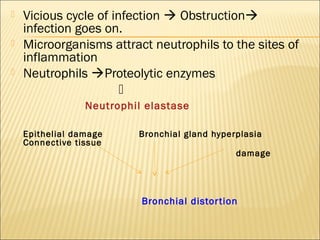
 Vicious cycle of infection  Obstruction
infection goes on.
 Microorganisms attract neutrophils to the sites of
inflammation
 Neutrophils Proteolytic enzymes

Neutrophil elastase
Epithelial damage Bronchial gland hyperplasia
Connective tissue
damage
Bronchial distortion
Types:
1. Cylindrical or fusiform
2. Varicose
3. Cystic or saccular
4. Follicular
Symptoms:
 Cough: Chronic productive with purulent
expectoration Halitosis ±
 Pneumonia and pleurisy-Due to inflammatory
changes in the airways. Fever, malaise and
increased cough and sputum volume. Chest pain
and recurrent pleurisy in the same site
 Haemoptysis
 Poor personal health
 Extensive disease+ purulent sputum anorexia,
weight loss, lassitude , low grade fever and
failure thrive in children
Signs:
 May be unilateral or bilateral
 No secretions in the bronchiectatic airways  no
abnormal physical signs
 Large amount of secretions in the airways  Coarse
crackles
 Collapse with retained secretions blocking proximal
bronchus. Diminished breath sounds
 Advanced Disease  Dilatation of the bronchi 
bronchial breathing clubbing
Investigations:
1. Bacteriological and mycological examination of the
sputum
2. Radiological examinations -
A. Plain chest x-ray-
 ‘ring shadows’ or ‘honey coombing’ due to cystic
dilated bronchi
 ‘tramline shadows’ or ‘band shadows’
B.Bronchography :
 Most accurate diagnostic procedure for evaluating
Bronchiectasis, particularly when contemplating
surgery.
 Contrast used- Dianosil
 Main indication is to find out whether apparently
looking dilations show any evidence of
Bronchiectasis, so that surgery can be or can not
be undertaken
 replaced by CT-scan
C. HRCT thorax :
 Use of 1.0 to 1.5mm window every 1cm with
acquisition times of one second
 Most sensitive and specific test for diagnosing
Bronchiectasis
3. Assessment of ciliary function:
 Pellets of saccharin placed in the anterior chamber of
the nose to reach the pharynx, when patient can taste
it. This time greatly prolonged in patients with ciliary
dysfunction
 Structural abnormality of the Cilia  detected by
election microscopy
Management :
1.Chest physiotherapy/broncho-pulmonary
hygiene -
 Helps in the drainage of excessive bronchial
secretions
 Patient should adopt a position in which the
lobe to be drained is uppermost
 Deep breathing followed by forced expiratory
man oeuvres helps in moving secretions in the
dilated bronchi towards the trachea, from which
they can be cleared by vigorous coughing
 Percussion of the chest wall with cupped hands
 Devices-
o Positive expiratory pressure masks
o flutter valve aid sputum clearance
 Duration -
 Optimum duration and frequency of physiotherapy
depend on the amount of sputum. 5-10
minutes/once or twice daily
 Maintaining adequate systemic hydration
2. Antibiotics
Depend on the organisms isolated from the sputum.
Most common bacteria:-
 H. influenzae
 P. aeruginosa
 S. aureus
- Penicillin or ampicillin + aminoglycocide covers
H.influenzae and S,.aureus
- For pseudomonas –antibiotic therapy more
challenging

I.V ceftazidime (1-2gm/8hrly)
Or Oral Ciprofloxain 250-750mg / 12hrly
3. Surgery
Role of surgery for Bronchiectasis has declined
but not disappeared
Indications -
a) Failure of medical therapy with repeatd
exacerbations
b) Uncontrolled haemoptysis
c) Obstructive lesions i.e. tumour
surgery it contemplated , in whom the Bronchiectasis is
unilateral and confined to a single lobe or segment on CT
 main stay of surgery resection of destroyed
areas of lung which are acting as a reservoir of
infection
Complications:
 Local Systemic
Local :
 recurrent pneumonia
 Lung abscess
 Empyema
 Haemoptysis
 Pulmonary artery hypertension with Cor-pulmonale
 Congestive cardiac failure and
 Respiratory failure
Systemic :
 Hypoproteinemia- generalised edema
 Amyloidosis-nephrotic syndrome due to secondary amyloidosis
Bronchiectasis final

Bronchiectasis final

  • 1.
    BRONCHIECTASIS Dr. Aswini Kumar Mohapatra Professor& Head Dept. of Pulmonary Medicine
  • 2.
    Definition :  Characterizedby chronic permanent and abnormal dilatation of bronchi, which contain cartilage and bronchial glands. It occurs due to destruction of the elastic and muscular components of the bronchial wall  Chronic mucopurulent expectoration and recurrent acute pulmonary infections
  • 3.
    Causes of Bronchiectasis: I. Congenital : - Cystic fibrosis - Ciliary dysfunction syndromes Primary ciliary dyskinesis Kartagener’s syndrome (Immotile cilia syndrome) (Sinusitis and transposition of the viscera) - Primary hypogammaglobulinemia
  • 4.
    II. Acquired: A. Children-  Pneumonia (complicating whooping cough and measles)  Primary TB  Inhaled foreign body B. Adults -  Suppurative pneumonia  Pulmonary TB  Allergic bronchopulmonary aspergillosis  Bronchial tumours
  • 5.
    Pathogenesis :  Infectionand obstruction-two important key features  Repeated pulmonary infections coupled with defective host defenses with impaired clearing mechanism  Mechanical obstruction or obstruction due to muscus impaction impairs clearance leading to repeated infection
  • 6.
     Vicious cycleof infection  Obstruction infection goes on.  Microorganisms attract neutrophils to the sites of inflammation  Neutrophils Proteolytic enzymes  Neutrophil elastase Epithelial damage Bronchial gland hyperplasia Connective tissue damage Bronchial distortion
  • 7.
    Types: 1. Cylindrical orfusiform 2. Varicose 3. Cystic or saccular 4. Follicular
  • 8.
    Symptoms:  Cough: Chronicproductive with purulent expectoration Halitosis ±  Pneumonia and pleurisy-Due to inflammatory changes in the airways. Fever, malaise and increased cough and sputum volume. Chest pain and recurrent pleurisy in the same site  Haemoptysis  Poor personal health  Extensive disease+ purulent sputum anorexia, weight loss, lassitude , low grade fever and failure thrive in children
  • 9.
    Signs:  May beunilateral or bilateral  No secretions in the bronchiectatic airways  no abnormal physical signs  Large amount of secretions in the airways  Coarse crackles  Collapse with retained secretions blocking proximal bronchus. Diminished breath sounds  Advanced Disease  Dilatation of the bronchi  bronchial breathing clubbing
  • 10.
    Investigations: 1. Bacteriological andmycological examination of the sputum 2. Radiological examinations - A. Plain chest x-ray-  ‘ring shadows’ or ‘honey coombing’ due to cystic dilated bronchi  ‘tramline shadows’ or ‘band shadows’
  • 11.
    B.Bronchography :  Mostaccurate diagnostic procedure for evaluating Bronchiectasis, particularly when contemplating surgery.  Contrast used- Dianosil  Main indication is to find out whether apparently looking dilations show any evidence of Bronchiectasis, so that surgery can be or can not be undertaken  replaced by CT-scan
  • 12.
    C. HRCT thorax:  Use of 1.0 to 1.5mm window every 1cm with acquisition times of one second  Most sensitive and specific test for diagnosing Bronchiectasis
  • 13.
    3. Assessment ofciliary function:  Pellets of saccharin placed in the anterior chamber of the nose to reach the pharynx, when patient can taste it. This time greatly prolonged in patients with ciliary dysfunction  Structural abnormality of the Cilia  detected by election microscopy
  • 14.
    Management : 1.Chest physiotherapy/broncho-pulmonary hygiene-  Helps in the drainage of excessive bronchial secretions  Patient should adopt a position in which the lobe to be drained is uppermost  Deep breathing followed by forced expiratory man oeuvres helps in moving secretions in the dilated bronchi towards the trachea, from which they can be cleared by vigorous coughing  Percussion of the chest wall with cupped hands
  • 15.
     Devices- o Positiveexpiratory pressure masks o flutter valve aid sputum clearance  Duration -  Optimum duration and frequency of physiotherapy depend on the amount of sputum. 5-10 minutes/once or twice daily  Maintaining adequate systemic hydration
  • 16.
    2. Antibiotics Depend onthe organisms isolated from the sputum. Most common bacteria:-  H. influenzae  P. aeruginosa  S. aureus - Penicillin or ampicillin + aminoglycocide covers H.influenzae and S,.aureus - For pseudomonas –antibiotic therapy more challenging  I.V ceftazidime (1-2gm/8hrly) Or Oral Ciprofloxain 250-750mg / 12hrly
  • 17.
    3. Surgery Role ofsurgery for Bronchiectasis has declined but not disappeared Indications - a) Failure of medical therapy with repeatd exacerbations b) Uncontrolled haemoptysis c) Obstructive lesions i.e. tumour surgery it contemplated , in whom the Bronchiectasis is unilateral and confined to a single lobe or segment on CT  main stay of surgery resection of destroyed areas of lung which are acting as a reservoir of infection
  • 18.
    Complications:  Local Systemic Local:  recurrent pneumonia  Lung abscess  Empyema  Haemoptysis  Pulmonary artery hypertension with Cor-pulmonale  Congestive cardiac failure and  Respiratory failure Systemic :  Hypoproteinemia- generalised edema  Amyloidosis-nephrotic syndrome due to secondary amyloidosis