WELCOME
TO
MY
PRESENTATION
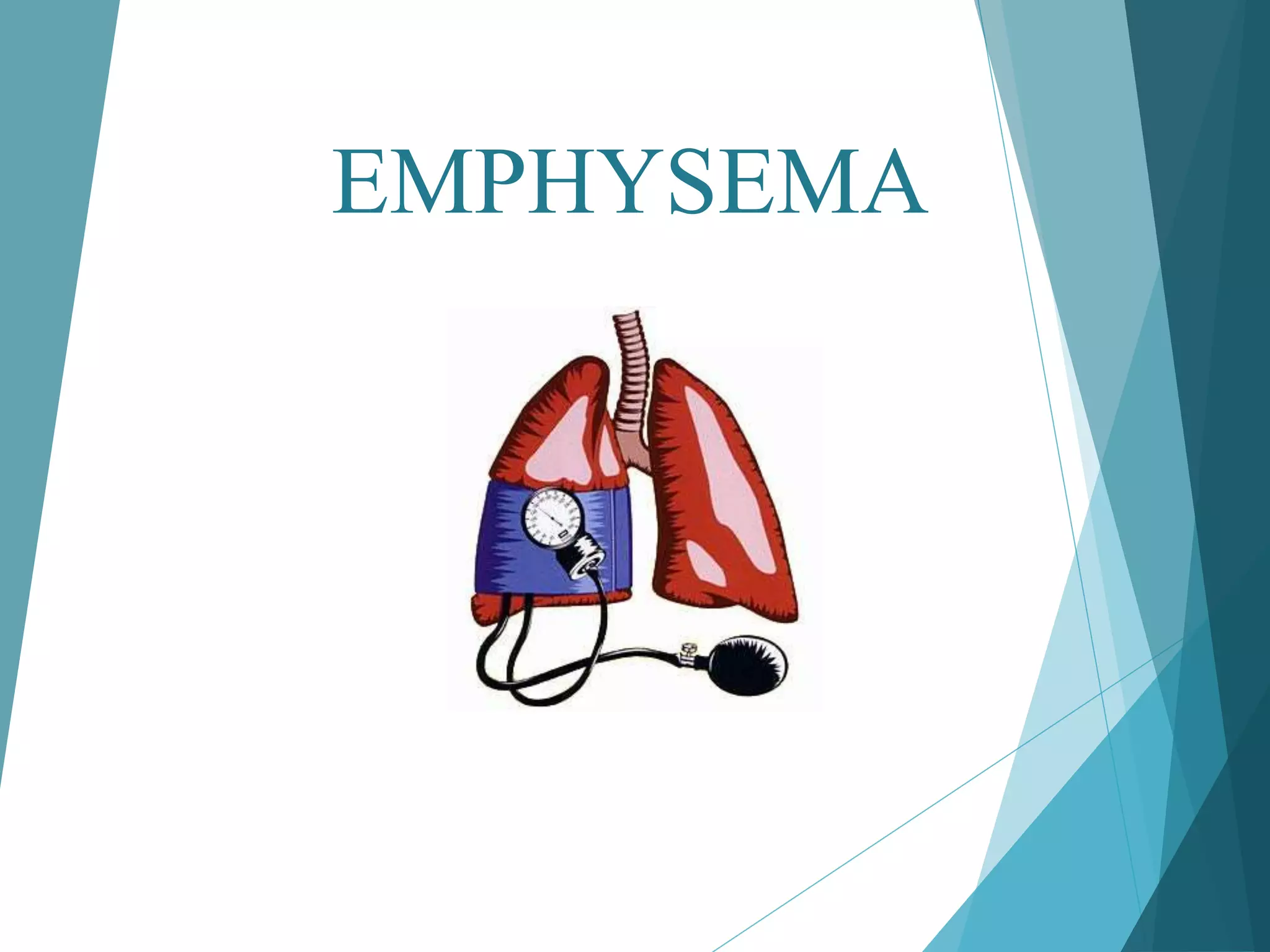
EMPHYSEMA
Content:
 What is emphysema
 Lung anatomy and physiology
 Lung comparism
 Incidence and prevalence
 Type
 Cause
 Pathology
 Risk factor
 Symptom
 Diagnosis
 Breath sound
 Treatment
 Prevention
 conclusion
Introduction:
 Affects 2 out of 1,000 people
 1.8 million Americans in the United States
have emphysema.
 Emphysema is ranked 15th among chronic
conditions or diseases which limit people’s
daily activity
 More common in men vs. women
 Studies show that the amount of women
with the disease is gradually increasing
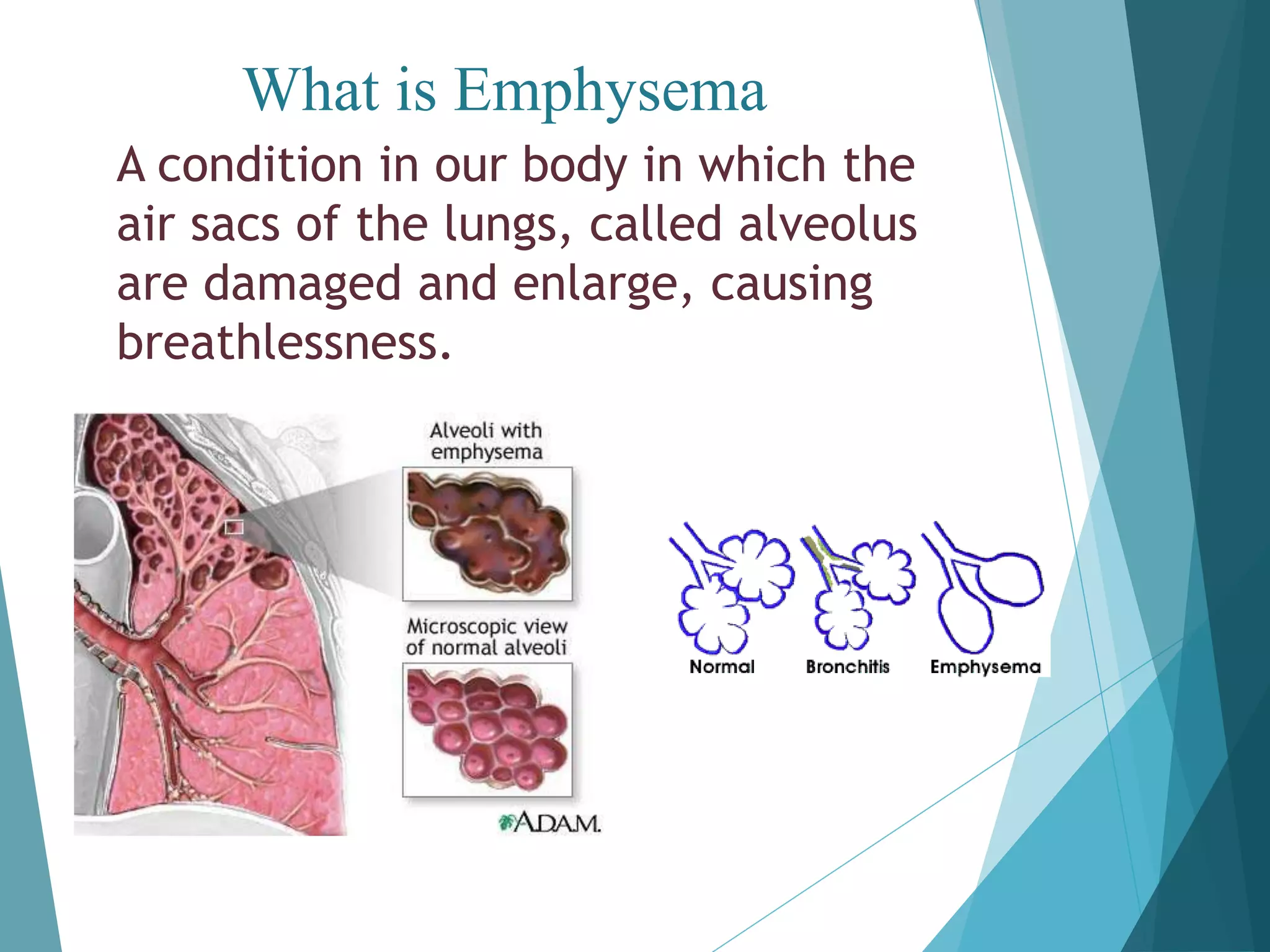
What is Emphysema
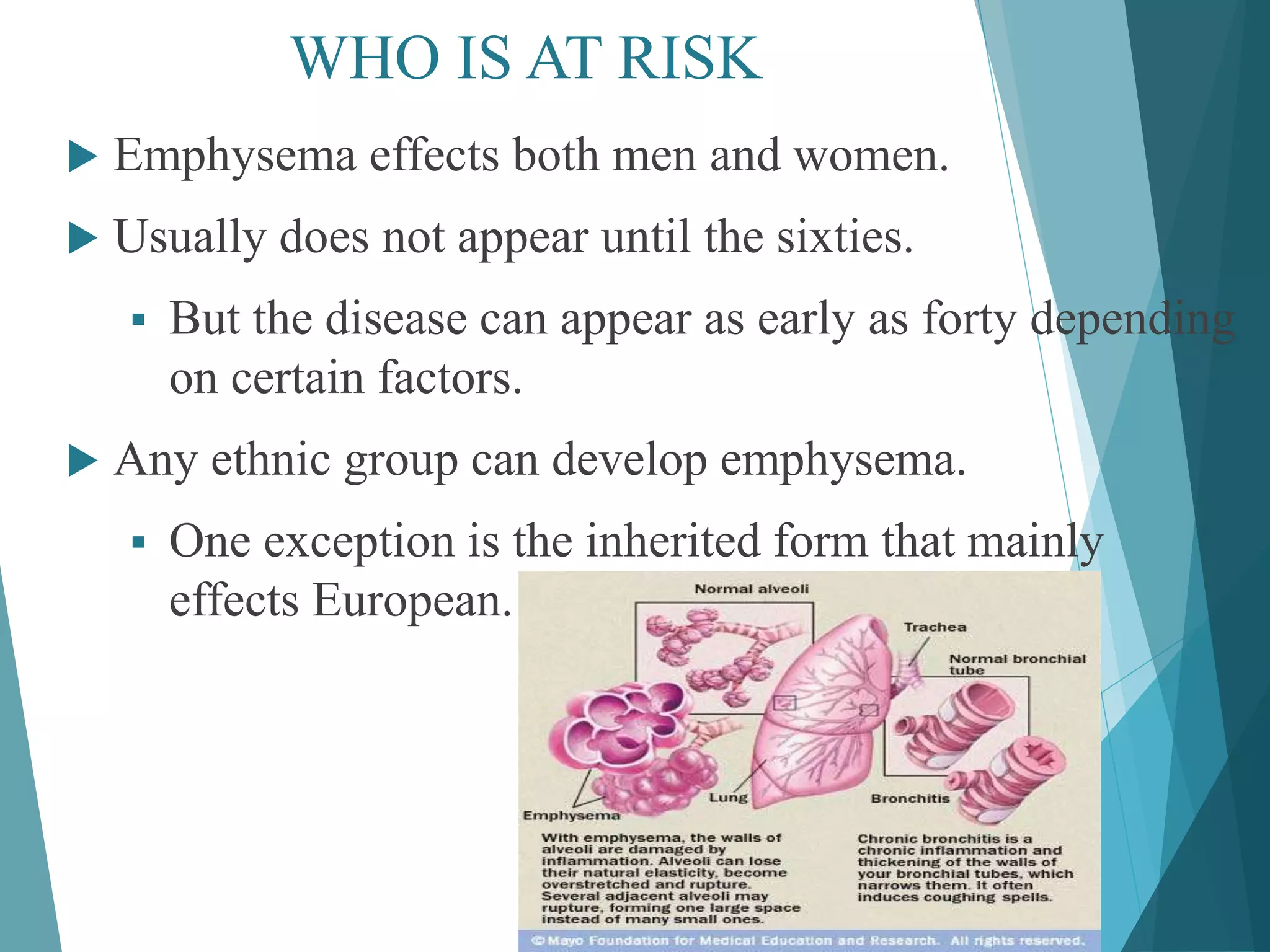
A condition in our body in which the
air sacs of the lungs, called alveolus
are damaged and enlarge, causing
breathlessness.
LUNG ANATOMY & PHYSIOLOGY
The function of the lungs is to Oxygenate our blood by
removing Carbon Dioxide and replacing it with Oxygen.
LUNG COMPARISONS
SIDE-BY-SIDE COMPARISON
Type of emphysema
 There are four type:
1. Centriacinar
2. Panacinar
3. Paraseptal [Distal acinar]
4. Mixed and unclassified
[Irregular]
 Centriacinar :
[ centrilobular, Proximal acinar ]
• Dilatation of Respiratory Bronchiole
• Upper lobes - severely involved
• Can coexist with chronic bronchitis
• Invariably occurs in smokers
• Coal mine workers [carbon, dust]
 Panacinar Emphysema:
• Whole of Acinus uniformly affected
• Lower lobes severely involved
• Association:
… A1AT deficiency
… Cigarette smokers
 Paraseptal (Distal Acinar)
• Localized along pleura - peripheral part
of the acinus
• Predisposes to spontaneous peumothorax
• Adjacent to foci of fibrosis
• Least common
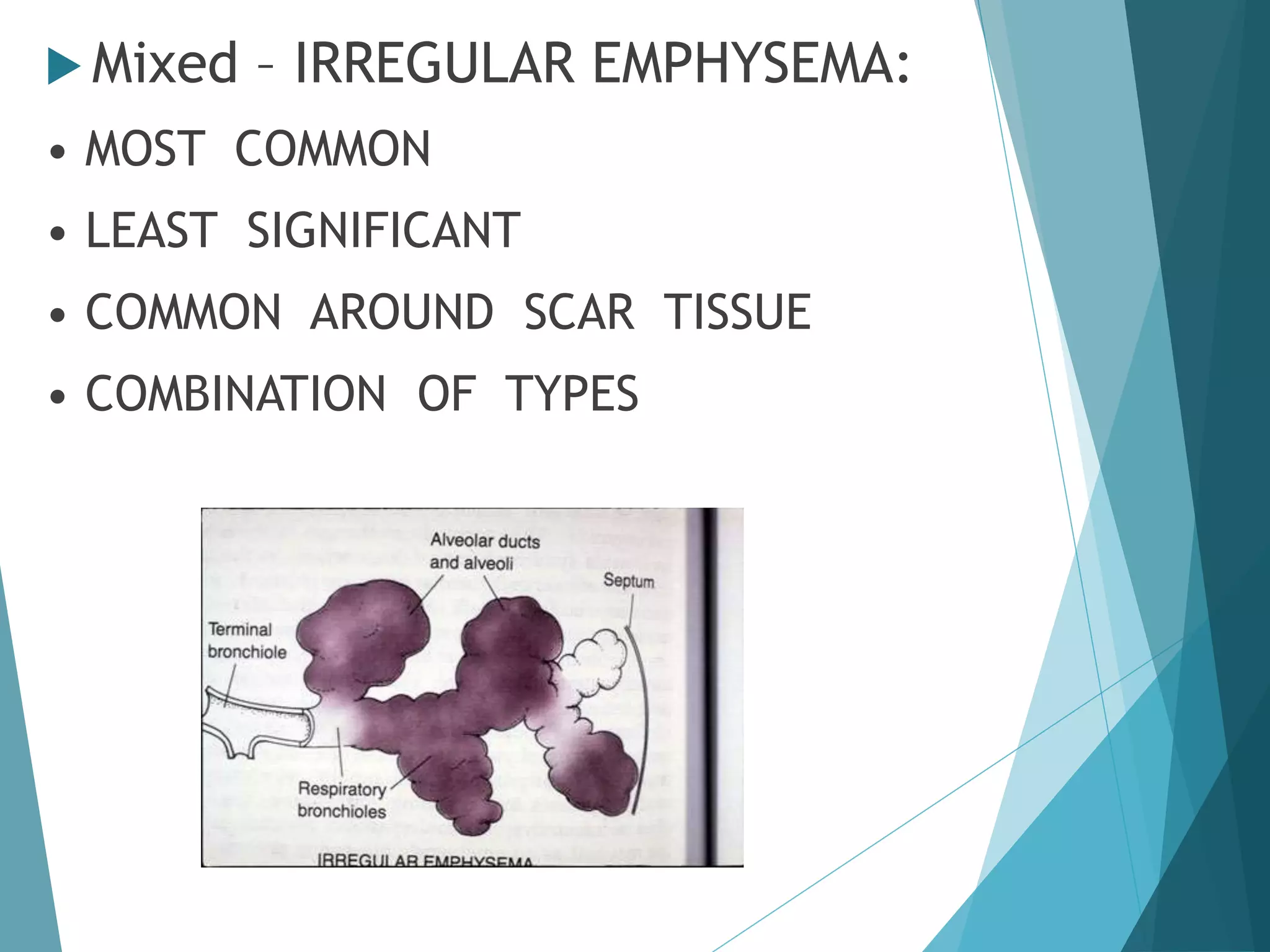
 Mixed – IRREGULAR EMPHYSEMA:
• MOST COMMON
• LEAST SIGNIFICANT
• COMMON AROUND SCAR TISSUE
• COMBINATION OF TYPES
What Are The Causes
MOST COMMON
 Smoking
SMOKING FACTS ON EMPHYSEM
80 percent of emphysema causes result from
the long term effects of smoking cigarettes
About 90 percent of emphysema causes are
heavy smokers
Cont…
Prolonged exposure to second
hand smoke
Chemical fumes
Dust
Air pollution
IN RARE CASES
 Deficiency of the Alpha-1 Antitrypsin
 A protein made by the liver that protects the lungs.
 That is inherited
MM: normal level
MS: 80% of normal
MZ: 60% of normal
SZ: 40% of normal
ZZ: 10% of normal level
Is It Transmitted??
Pathophysiology
What are the Effects to Our
Body?
 People with emphysema will
not oxygenated their blood
well.
 They can’t remove carbon
dioxide from their blood and
lungs.
 They have a rapid breathing
rate.
WHO IS AT RISK
 Emphysema effects both men and women.
 Usually does not appear until the sixties.
 But the disease can appear as early as forty depending
on certain factors.
 Any ethnic group can develop emphysema.
 One exception is the inherited form that mainly
effects European.
Occurrence among Male and
Female
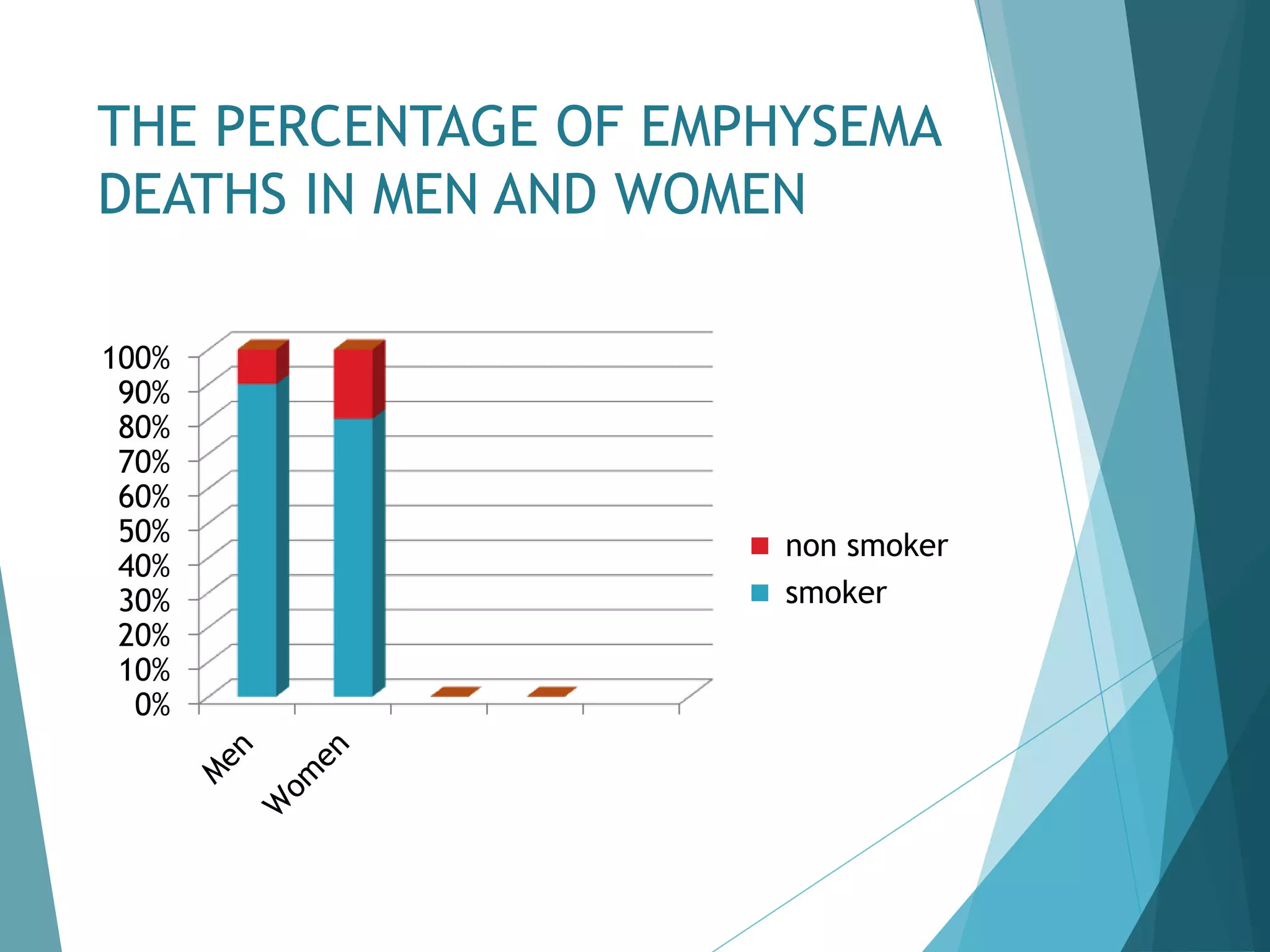
 Occur more in male than
females due to percentage of
male smokers.
 As the number of female
smokers increase, emphysema
also develops in them rapidly.
 Death rate increase rapidly.
THE PERCENTAGE OF EMPHYSEMA
DEATHS IN MEN AND WOMEN
0%
10%
20%
30%
40%
50%
60%
70%
80%
90%
100%
non smoker
smoker
SYMPTOMS OF EMPHYSEMA
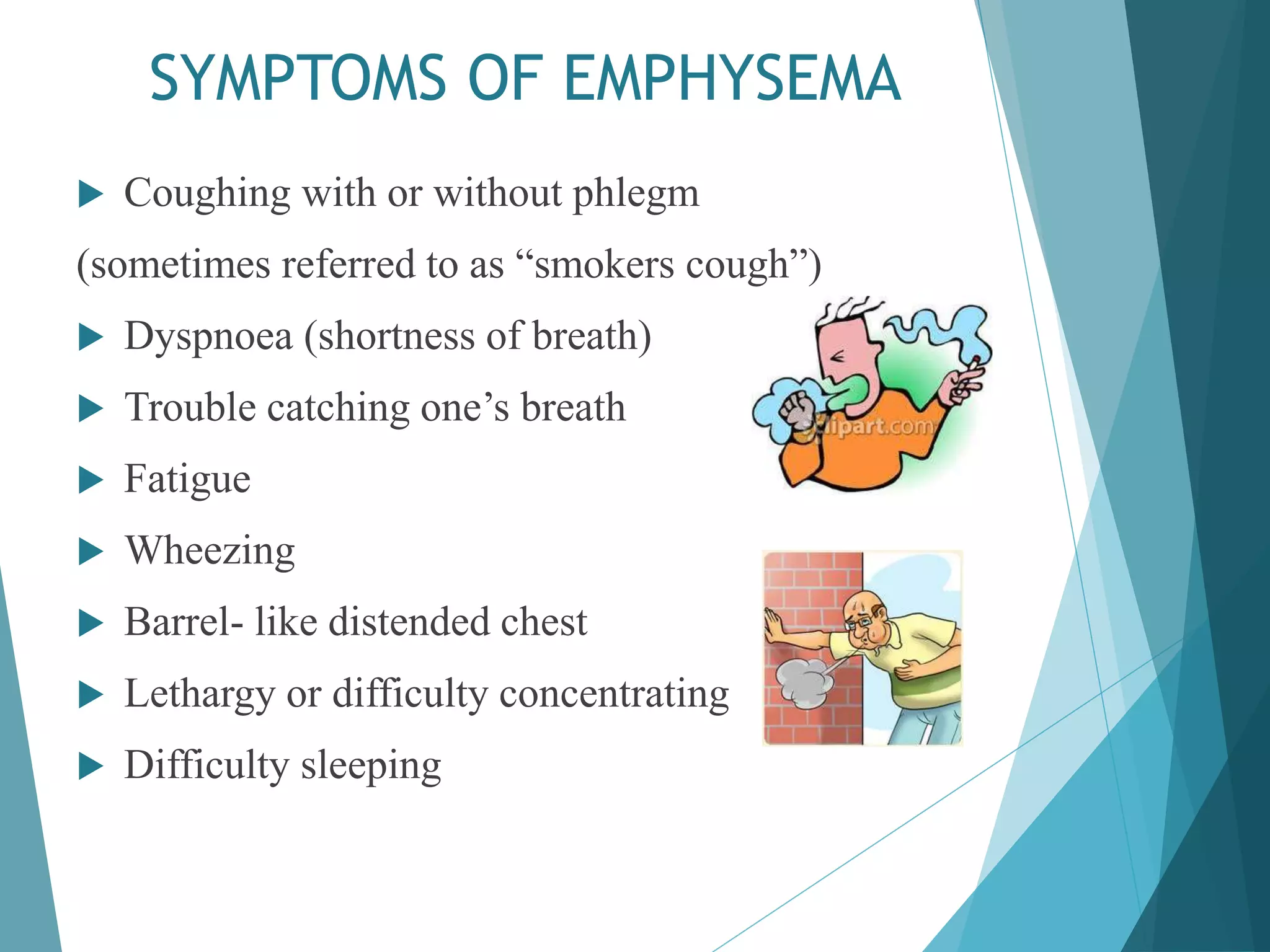
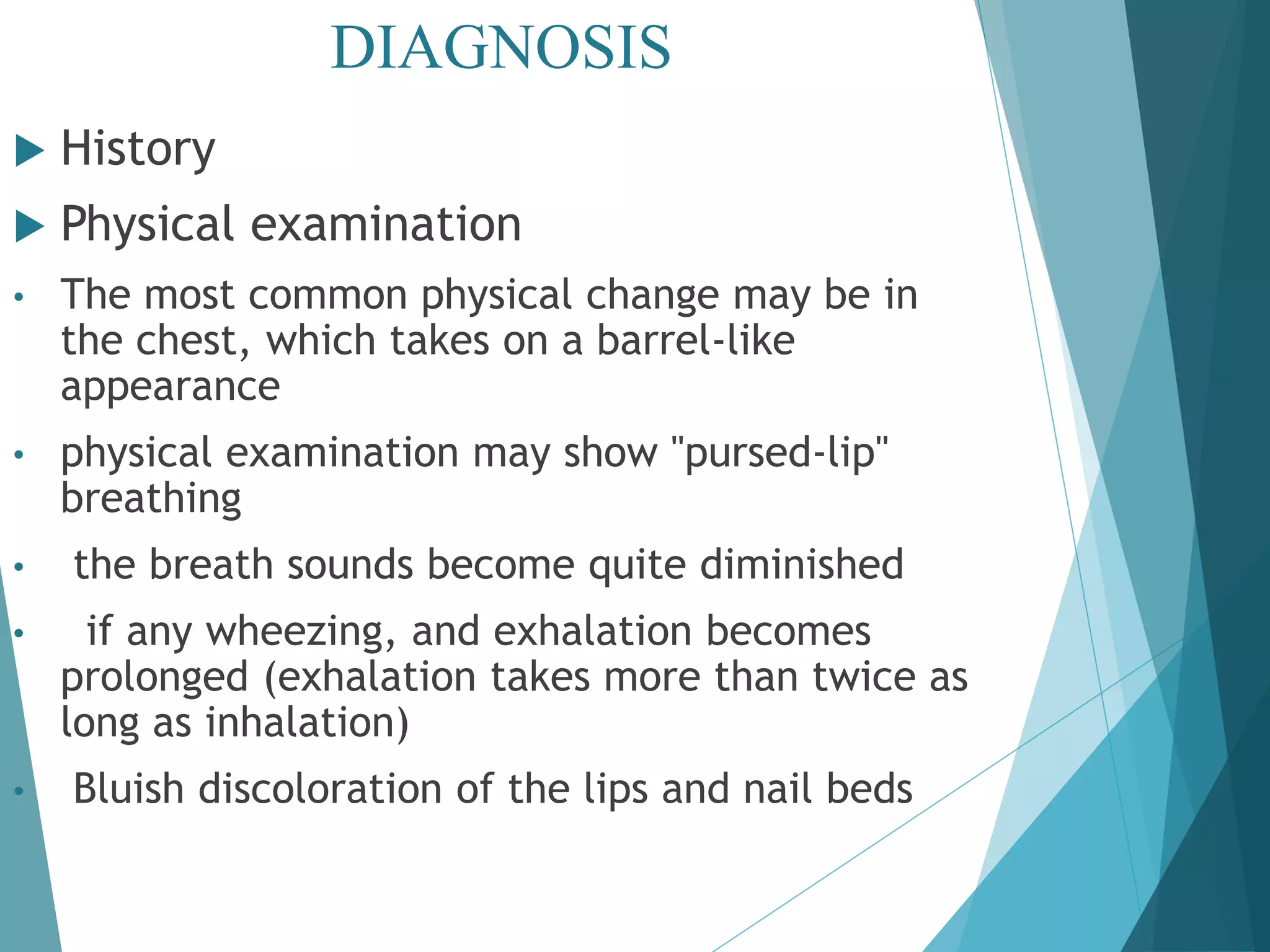
 Coughing with or without phlegm
(sometimes referred to as “smokers cough”)
 Dyspnoea (shortness of breath)
 Trouble catching one’s breath
 Fatigue
 Wheezing
 Barrel- like distended chest
 Lethargy or difficulty concentrating
 Difficulty sleeping
DIAGNOSIS
 History
 Physical examination
• The most common physical change may be in
the chest, which takes on a barrel-like
appearance
• physical examination may show "pursed-lip"
breathing
• the breath sounds become quite diminished
• if any wheezing, and exhalation becomes
prolonged (exhalation takes more than twice as
long as inhalation)
• Bluish discoloration of the lips and nail beds
Investigation
• Chest x-ray
 A plain chest x-ray may show lungs that
have become too inflated and too lucent,
signs that lung tissue destruction has
occurred.
 Radiologic Findings
Chest radiograph
 Translucent (dark) lung fields
 Depressed or flattened diaphragms
 Long and narrow heart
 Enlarged heart
 Increased retrosternal air space (lateral
radiograph)
• Blood test
Arterial Blood Gas (ABG)
• Lung Function Test also called Pulmonary
Function Test or PFT (most common)
cont…
 A variety of lung functions can be
measured and may include how much
air the lungs can hold and empty with
each breath, the degree of airflow
obstruction, the available surface for
exchange of carbon dioxide and oxygen,
the amount of trapped gases, and how
elastic the lungs are with inspiration
and expiration.
 Oximetry
 Oxygenated blood is a brighter red and becomes purple in color
when oxygen is removed. The dosimeter is a device usually placed
on a finger and detects the pulse of blood. A light is transmitted
through the tissue, and the amount of the brighter red color is
determined, enabling a measure of oxygen saturation, a measure
of hemoglobin oxygen content. This value is usually greater than
90%.
Breath sound in emphysema
Diminished breath sound
with prolong expiration.
Wheeze (in severe cases).
Treatment
 STOP smoking (if you smoke)
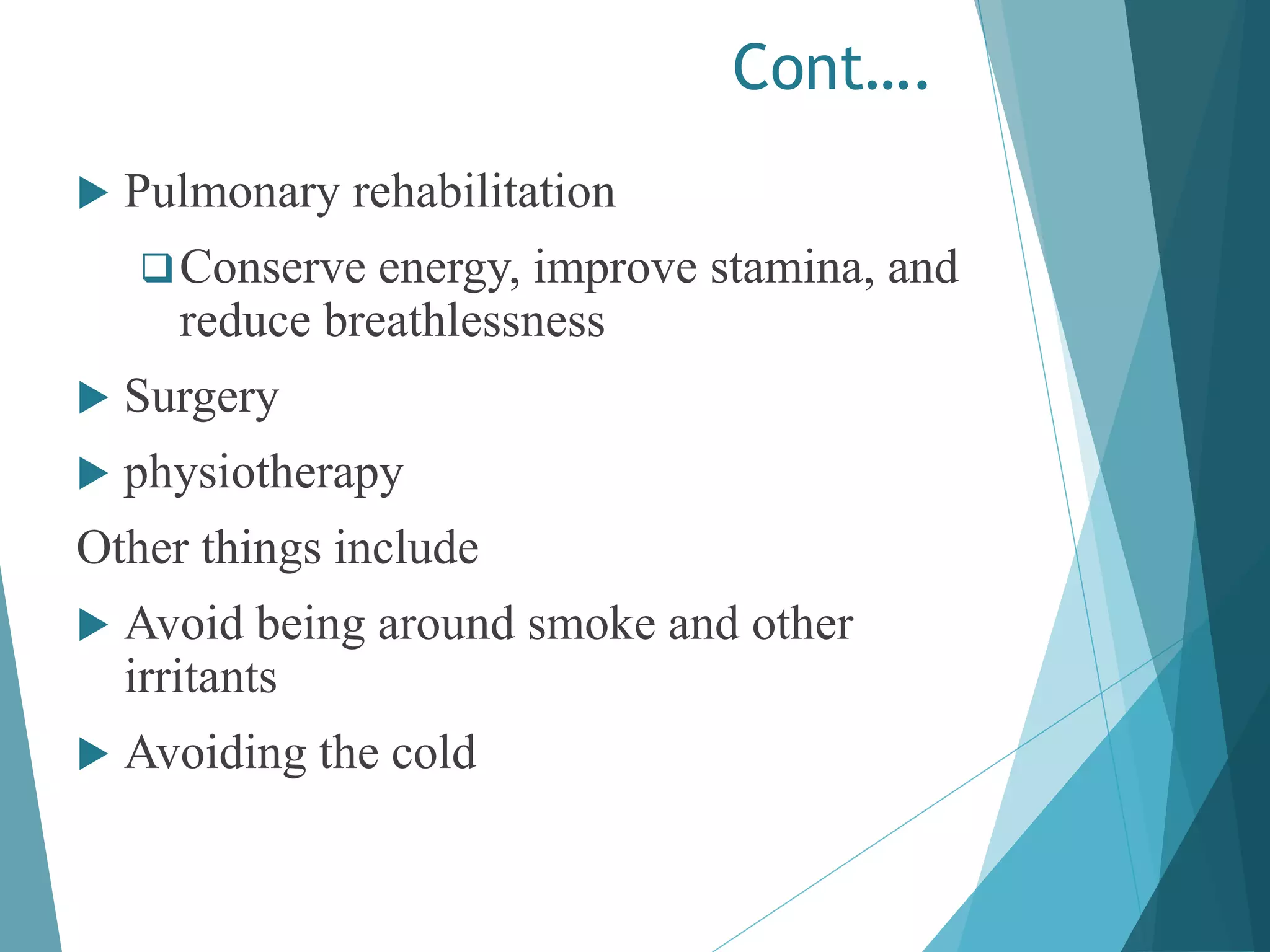
 Bronchodilators (inhalers)
Ex. Atrovent, Spiriva, Serevent,
Foradil, and Albuterol
 Anti-inflammatory medication
Ex. Singulair and Roflimulast
 Antibiotics
 Oxygen therapy
Cont….
 Pulmonary rehabilitation
Conserve energy, improve stamina, and
reduce breathlessness
 Surgery
 physiotherapy
Other things include
 Avoid being around smoke and other
irritants
 Avoiding the cold
Physiotherapy management
 To minimize dyspnoea
 positioning-supported sitting or
huffing
 Diaphragmatic breathing
 To establish a coordinated pattern of
breathing
 Shorten expiratory phase and being
inspiration before the airways have a
chance to close down
 To assist in the removal of secretions
 Manual chest therapy-shaking, vibration
or clapping
 Postural drainage
 To increase the range of movement of the
joints of the thoracic cage
 Free active exercise of the whole spine
 Shoulder girdle retraction and lateral
rotation of arms followed by breathing
control exercise
 To increase exercise tolerance
 Breathing control exercise in relation to
activities of daily livings, eg.walking and
stair climbing
prognosis
 Mild emphysema- 80% of patients are
alive after 4 years
 Moderate emphysema- 60-70% are alive
after 4 years
 Severe emphysema- 50% are alive after
4 years
 Very severe emphysema- short life
expectancy
Rehabilitation
 Pulmonary rehabilitation combines exercise training and
behavioral and educational programs designed to help
individuals with emphysema control symptoms and improve day-
to-day activities. It is a team approach. Individuals work closely
with their doctors, nurses, respiratory, physical,
and occupational therapists, psychologists and exercise
specialists. The main goals of pulmonary rehabilitation are to
help individuals improve their day-to-day lives and to restore
their ability to function independently. Pulmonary rehabilitation
can help reduce the number and length of hospital stays and
increase the chances of living longer.
Pulmonary rehabilitation involves exercise training and
ventilator muscle training. It also includes psychosocial support
and educational programs.
Since smoking is well known to be the primary risk factor for the
onset and progression of emphysema, many pulmonary
rehabilitation programs provide educational sessions and
counseling to help individuals stop smoking.
complication
 Enlargement and strain on the right
side of the heart (cur pulmonale)
may occur, resulting in swelling of
the feet and legs.
 Respiratory infections are frequent
 may often result in hospitalization
 Other possible complications
collapsed lung (are pneumothorax)
and giant bulla.
Ability to Work (Return to Work
Considerations)
 Individuals need to stay away from inhaled irritants
and extremes of air temperatures in the work
environment. The amount of physical work they can
do depends on their lung function. Individuals wearing
continuous oxygen must work in areas where there is
no danger of explosion from the gas or open flames or
sparks. Individuals must not work in areas that require
respirator use.
The ideal work environment for individuals with
emphysema is a dry atmosphere, free of pollution.
Maximum Medical
Improvement
 60 days.
Failure to Recover
 If an individual fails to recover within
the expected maximum duration
period, the reader may wish to
consider the following questions to
better understand the specifics of an
individual's medical case.
Prevention
 Live away from
polluted urban
areas
 1 prevention is to
STOP SMOKING
Incidence and Prevalence
 In 2011, 4.7 million Americans
reported ever being diagnosed
with emphysema, a lifetime
prevalence rate of 20.2 per
1,000 persons. Over 90% of the
cases were among people over
45 years old (NCHS).
Worldwide Mortality Rate
36.60%
16.40%
10.40%
5.80%
4.80%
2.90%
2.90%
2%
1.90%
1.80%
1.50%
1.50% 1.40%
1.40%
0.80%
0.70%
0.70% 0.70%
0.60% 0.60%
United States
Japan
Brazil
Mexico
Germany
Netherlands
South Africa
Hungary
Romania
Canada
Thailand
Australia
Austria
Spain
Kyrgyzstan
Argentina
Sweden
Colombia
Poland
Venezuela

Emphysema

  • 1.
  • 2.
  • 3.
    Content:  What isemphysema  Lung anatomy and physiology  Lung comparism  Incidence and prevalence  Type  Cause  Pathology  Risk factor  Symptom  Diagnosis  Breath sound  Treatment  Prevention  conclusion
  • 4.
    Introduction:  Affects 2out of 1,000 people  1.8 million Americans in the United States have emphysema.  Emphysema is ranked 15th among chronic conditions or diseases which limit people’s daily activity  More common in men vs. women  Studies show that the amount of women with the disease is gradually increasing
  • 5.
    What is Emphysema Acondition in our body in which the air sacs of the lungs, called alveolus are damaged and enlarge, causing breathlessness.
  • 6.
    LUNG ANATOMY &PHYSIOLOGY The function of the lungs is to Oxygenate our blood by removing Carbon Dioxide and replacing it with Oxygen.
  • 7.
  • 8.
  • 9.
    Type of emphysema There are four type: 1. Centriacinar 2. Panacinar 3. Paraseptal [Distal acinar] 4. Mixed and unclassified [Irregular]
  • 10.
     Centriacinar : [centrilobular, Proximal acinar ] • Dilatation of Respiratory Bronchiole • Upper lobes - severely involved • Can coexist with chronic bronchitis • Invariably occurs in smokers • Coal mine workers [carbon, dust]
  • 11.
     Panacinar Emphysema: •Whole of Acinus uniformly affected • Lower lobes severely involved • Association: … A1AT deficiency … Cigarette smokers
  • 12.
     Paraseptal (DistalAcinar) • Localized along pleura - peripheral part of the acinus • Predisposes to spontaneous peumothorax • Adjacent to foci of fibrosis • Least common
  • 13.
     Mixed –IRREGULAR EMPHYSEMA: • MOST COMMON • LEAST SIGNIFICANT • COMMON AROUND SCAR TISSUE • COMBINATION OF TYPES
  • 14.
    What Are TheCauses MOST COMMON  Smoking SMOKING FACTS ON EMPHYSEM 80 percent of emphysema causes result from the long term effects of smoking cigarettes About 90 percent of emphysema causes are heavy smokers
  • 16.
    Cont… Prolonged exposure tosecond hand smoke Chemical fumes Dust Air pollution
  • 17.
    IN RARE CASES Deficiency of the Alpha-1 Antitrypsin  A protein made by the liver that protects the lungs.  That is inherited MM: normal level MS: 80% of normal MZ: 60% of normal SZ: 40% of normal ZZ: 10% of normal level
  • 18.
  • 19.
  • 21.
    What are theEffects to Our Body?  People with emphysema will not oxygenated their blood well.  They can’t remove carbon dioxide from their blood and lungs.  They have a rapid breathing rate.
  • 22.
    WHO IS ATRISK  Emphysema effects both men and women.  Usually does not appear until the sixties.  But the disease can appear as early as forty depending on certain factors.  Any ethnic group can develop emphysema.  One exception is the inherited form that mainly effects European.
  • 23.
    Occurrence among Maleand Female  Occur more in male than females due to percentage of male smokers.  As the number of female smokers increase, emphysema also develops in them rapidly.  Death rate increase rapidly.
  • 24.
    THE PERCENTAGE OFEMPHYSEMA DEATHS IN MEN AND WOMEN 0% 10% 20% 30% 40% 50% 60% 70% 80% 90% 100% non smoker smoker
  • 25.
    SYMPTOMS OF EMPHYSEMA Coughing with or without phlegm (sometimes referred to as “smokers cough”)  Dyspnoea (shortness of breath)  Trouble catching one’s breath  Fatigue  Wheezing  Barrel- like distended chest  Lethargy or difficulty concentrating  Difficulty sleeping
  • 26.
    DIAGNOSIS  History  Physicalexamination • The most common physical change may be in the chest, which takes on a barrel-like appearance • physical examination may show "pursed-lip" breathing • the breath sounds become quite diminished • if any wheezing, and exhalation becomes prolonged (exhalation takes more than twice as long as inhalation) • Bluish discoloration of the lips and nail beds
  • 27.
    Investigation • Chest x-ray A plain chest x-ray may show lungs that have become too inflated and too lucent, signs that lung tissue destruction has occurred.  Radiologic Findings Chest radiograph  Translucent (dark) lung fields  Depressed or flattened diaphragms  Long and narrow heart  Enlarged heart  Increased retrosternal air space (lateral radiograph)
  • 29.
    • Blood test ArterialBlood Gas (ABG) • Lung Function Test also called Pulmonary Function Test or PFT (most common)
  • 30.
    cont…  A varietyof lung functions can be measured and may include how much air the lungs can hold and empty with each breath, the degree of airflow obstruction, the available surface for exchange of carbon dioxide and oxygen, the amount of trapped gases, and how elastic the lungs are with inspiration and expiration.
  • 31.
     Oximetry  Oxygenatedblood is a brighter red and becomes purple in color when oxygen is removed. The dosimeter is a device usually placed on a finger and detects the pulse of blood. A light is transmitted through the tissue, and the amount of the brighter red color is determined, enabling a measure of oxygen saturation, a measure of hemoglobin oxygen content. This value is usually greater than 90%.
  • 32.
    Breath sound inemphysema Diminished breath sound with prolong expiration. Wheeze (in severe cases).
  • 33.
    Treatment  STOP smoking(if you smoke)  Bronchodilators (inhalers) Ex. Atrovent, Spiriva, Serevent, Foradil, and Albuterol  Anti-inflammatory medication Ex. Singulair and Roflimulast  Antibiotics  Oxygen therapy
  • 34.
    Cont….  Pulmonary rehabilitation Conserveenergy, improve stamina, and reduce breathlessness  Surgery  physiotherapy Other things include  Avoid being around smoke and other irritants  Avoiding the cold
  • 35.
    Physiotherapy management  Tominimize dyspnoea  positioning-supported sitting or huffing  Diaphragmatic breathing  To establish a coordinated pattern of breathing  Shorten expiratory phase and being inspiration before the airways have a chance to close down
  • 36.
     To assistin the removal of secretions  Manual chest therapy-shaking, vibration or clapping  Postural drainage  To increase the range of movement of the joints of the thoracic cage  Free active exercise of the whole spine  Shoulder girdle retraction and lateral rotation of arms followed by breathing control exercise  To increase exercise tolerance  Breathing control exercise in relation to activities of daily livings, eg.walking and stair climbing
  • 37.
    prognosis  Mild emphysema-80% of patients are alive after 4 years  Moderate emphysema- 60-70% are alive after 4 years  Severe emphysema- 50% are alive after 4 years  Very severe emphysema- short life expectancy
  • 38.
    Rehabilitation  Pulmonary rehabilitationcombines exercise training and behavioral and educational programs designed to help individuals with emphysema control symptoms and improve day- to-day activities. It is a team approach. Individuals work closely with their doctors, nurses, respiratory, physical, and occupational therapists, psychologists and exercise specialists. The main goals of pulmonary rehabilitation are to help individuals improve their day-to-day lives and to restore their ability to function independently. Pulmonary rehabilitation can help reduce the number and length of hospital stays and increase the chances of living longer. Pulmonary rehabilitation involves exercise training and ventilator muscle training. It also includes psychosocial support and educational programs. Since smoking is well known to be the primary risk factor for the onset and progression of emphysema, many pulmonary rehabilitation programs provide educational sessions and counseling to help individuals stop smoking.
  • 39.
    complication  Enlargement andstrain on the right side of the heart (cur pulmonale) may occur, resulting in swelling of the feet and legs.  Respiratory infections are frequent  may often result in hospitalization  Other possible complications collapsed lung (are pneumothorax) and giant bulla.
  • 40.
    Ability to Work(Return to Work Considerations)  Individuals need to stay away from inhaled irritants and extremes of air temperatures in the work environment. The amount of physical work they can do depends on their lung function. Individuals wearing continuous oxygen must work in areas where there is no danger of explosion from the gas or open flames or sparks. Individuals must not work in areas that require respirator use. The ideal work environment for individuals with emphysema is a dry atmosphere, free of pollution.
  • 41.
    Maximum Medical Improvement  60days. Failure to Recover  If an individual fails to recover within the expected maximum duration period, the reader may wish to consider the following questions to better understand the specifics of an individual's medical case.
  • 42.
    Prevention  Live awayfrom polluted urban areas  1 prevention is to STOP SMOKING
  • 43.
    Incidence and Prevalence In 2011, 4.7 million Americans reported ever being diagnosed with emphysema, a lifetime prevalence rate of 20.2 per 1,000 persons. Over 90% of the cases were among people over 45 years old (NCHS).
  • 44.
    Worldwide Mortality Rate 36.60% 16.40% 10.40% 5.80% 4.80% 2.90% 2.90% 2% 1.90% 1.80% 1.50% 1.50%1.40% 1.40% 0.80% 0.70% 0.70% 0.70% 0.60% 0.60% United States Japan Brazil Mexico Germany Netherlands South Africa Hungary Romania Canada Thailand Australia Austria Spain Kyrgyzstan Argentina Sweden Colombia Poland Venezuela