Bronchiectasis
Pratap Sagar Tiwari, MD, Internal Medicine
Note: This is a lecture class slide for MBBS students
Introduction
• Bronchiectasis :defined by the presence of permanent and abnormal
dilation of the bronchi.[1,2]
• Bronchiectasis is an uncommon disease, most often secondary to an
infectious process, that results in the abnormal and permanent distortion
of one or more of the conducting bronchi or airways.
• Bronchiectasis shares many clinical features with COPD, including inflamed and easily collapsible
airways, obstruction to airflow, and frequent office visits and hospitalizations.
• The diagnosis is usually established clinically on the basis of chronic daily
cough with viscid sputum production, and radiographically by the presence
of bronchial wall thickening and luminal dilatation on chest CT scans [ 3].
1. Barker AF. Bronchiectasis. N Engl J Med. 2002;346:1383–1393.
2. King PT, Holdsworth SR, Freezer NJ, Villanueva E, Holmes PW. Characterisation of the onset and presenting clinical features of adult bronchiectasis. Respir Med.
2006;100:2183–2189.
3. Barker AF. Bronchiectasis. N Engl J Med 2002; 346:1383.
Types
In 1950, Reid categorized bronchiectasis as having three main phenotypes:[1]
• 1) tubular(cylindrical) :characterized by smooth dilation of the bronchi;
• 2) varicose (bulbous):in which the bronchi are dilated with multiple indentations;
• 3) cystic (saccular/balloon appearance):in which dilated bronchi terminate in blind ending sacs.
Whitwell classified bronchiectasis into three different types:
• Follicular, Saccular, and Atelectatic. Follicular bronchiectasis was the dominant form and this
corresponded to tubular bronchiectasis (the main form commonly seen).
• Bronchiectasis has been described as being localized (ie, confined to one lobe) or generalized.
Most commonly it is generalized and seems to be most common in the lower lobes.[2,3] The
involvement of the lower lobes may reflect gravity dependent retention of infected secretions.
1. Reid LM. Reduction in bronchial subdivision in bronchiectasis. Thorax. 1950 Sep. 5(3):233-47.
2. King PT, Holdsworth SR, Freezer NJ, Villanueva E, Holmes PW. Characterisation of the onset and presenting clinical features of adult bronchiectasis. Respir Med. 2006;100:2183–2189.
3. Field E. Bronchiectasis: a long-term follow-up of medical and surgical cases from childhood. Arch Dis Child. 1961;36:587–603.
• Can also be differentiated as :Congenital & Acquired or Cystic fibrosis associated and Non CF Bronchiectasis.
• If Associated with Post fibrosis: Traction Bronchiectasis
• Without Must expectorant: Dry Bronchiectasis
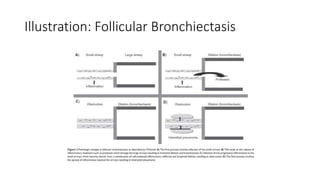
Illustration: Follicular Bronchiectasis
Cole’s “vicious cycle hypothesis”[1]
• Cole proposed that an environmental insult often on a background of
genetic susceptibility (impaired mucociliary clearance) resulting in
persistence of microbes in the sinobronchial tree and microbial
colonization.
• The microbial infection caused chronic inflammation resulting in
tissue damage and impaired mucociliary motility.
• In turn this led to more infection with a cycle of progressive
inflammation causing lung damage.
• The current view is that the two factors required for the development
of this condition are persistent infection and a defect in host defense.
1. Cole PJ. Inflammation: a two-edged sword – the model of bronchiectasis.Eur J Respir Dis Suppl. 1986;147:6–15.
Path….continue
• The dominant cell types involved in the inflammatory process in
bronchiectasis are neutrophils, lymphocytes, and macrophages.[1]
Neutrophils are the most prominent cell type in the bronchial lumen [2],
and release mediators, particularly proteases/elastase which cause
bronchial dilation (ie, bronchiectasis).[3]
• The infiltrate in the cell wall is predominantly composed of macrophages
and lymphocytes.[2]
• Studies have reported that the main lymphocyte is the T cell [4] and these
are cells that are likely to produce the lymphoid follicles described by
Whitwell.
1. Fuschillo S, De Felice A, Balzano G. Mucosal inflammation in idiopathic bronchiectasis: cellular and molecular mechanisms. Eur Respir J. 2008;31:396–406.
2. Eller J, Lapa e Silva JR, Poulter LW, Lode H, Cole PJ. Cells and cytokines in chronic bronchial infection. Ann N Y Acad Sci. 1994;725:331–345.
3. Khair OA, Davies RJ, Devalia JL. Bacterial-induced release of inflammatory mediators by bronchial epithelial cells. Eur Respir J. 1996;9:1913–1922.
4. Lapa e Silva JR, Guerreiro D, Noble B, Poulter LW, Cole PJ. Immunopathology of experimental bronchiectasis. Am J Respir Cell Mol Biol. 1989;1:297–304.
Etiologic/risk factors associated with
bronchiectasis
• Postinfective (postpneumonia, whooping cough, measles, mycobacterial infection)
• Mucociliary disorder (immotile cilia, Kartagener’s syndrome, Young’s syndrome)
• Obstructive (foreign body, mycobacterial infection, obstructing cancer)
• Immune disorder (hypogammaglobulinemia, HIV infection, cancer, allergic
bronchopulmonary aspergillosis, transplant rejection)
• Rheumatic/inflammatory disease (rheumatoid arthritis, inflammatory bowel disease)
• Extremes of age
• Malnutrition/socioeconomic disadvantage
• Chronic obstructive pulmonary disease
• Aspiration
• Alpha1-antitrypsin deficiency
• Miscellaneous (yellow nail syndrome)
Etiologic factors: Post infectious
• The most common cause of bronchiectasis is the literature is post
infectious.
• A possible mechanism for post infectious bronchiectasis is a
significant infection in early childhood which causes structural
damage to the developing lung and permits bacterial infection which
is over time persistent infection may then result in bronchiectasis.
Etiologic factors: Post infectious….continue
• One well characterized form of bronchiectasis occurs in the context of
mycobacterial infection and this form is particularly prevalent in the
right middle lobe with nontuberculous mycobacterium.[1,2,3] The
mechanism of this form of bronchiectasis appears to arise from lymph
node obstruction.
• The acute infection causes enlargement of peribronchial nodes which
obstruct the bronchus and result in secondary bronchiectasis. This
bronchial dilation persists when the mycobacterial infection resolves
and the nodes return to normal size.
1. Whitwell F. A study of the pathology and pathogenesis of bronchiectasis. Thorax. 1952;7:213–219.
2. Lynch DA, Simone PM, Fox MA, Bucher BL, Heinig MJ. CT features of pulmonary Mycobacterium avium complex infection. J Comput Assist Tomogr. 1995;19:353–360.
3. Fujita J. Radiological findings of non-tuberculous mycobacteria respiratory infection. Kekkaku. 2003;78:557–561.
Etiologic factors: Muco-ciliary clearance
• Muco-ciliary clearance is a key defence mechanism against pulmonary infection.
Its compromise is important in the development of the vicious cycle of
bronchiectasis as proposed by Cole.[1]
• Cystic fibrosis is associated with defective muco-ciliary clearance .
• The most prominent cilial disorder is primary ciliary dyskinesia (PCD) which
combines upper and lower respiratory tract infection, male infertility and in
approximately 50%, situs inversus. PCD arises primarily from a defect in the
dynein arms which are necessary for normal cilial beating. [2]
• Bronchiectasis is a prominent manifestation of PCD.
• Young’s syndrome is another condition in which the primary defect is thought to
be defective mucous function.[3]
1. Cole PJ. Inflammation: a two-edged sword – the model of bronchiectasis. Eur J Respir Dis Suppl. 1986;147:6–15.
2. Omran H, Kobayashi D, Olbrich H, et al. Ktu/PF13 is required for cytoplasmic pre-assembly of axonemal dyneins. Nature. 2008;456: 611–616.
3. Friedman KJ, Teichtahl H, De Kretser DM, et al. Screening Young syndrome patients for CFTR mutations. Am J Respir Crit Care Med. 1995;152:1353–1357.
Chronic obstructive pulmonary disease
• There is also some overlap in the pathology of COPD and
bronchiectasis. Both conditions have neutrophils and T lymphocytes
as the predominant inflammatory cell,[1,2] protease release causes
pulmonary damage and lymphoid follicles have a role in airflow
obstruction.[3,4]
1. Fuschillo S, De Felice A, Balzano G. Mucosal inflammation in idiopathic bronchiectasis: cellular and molecular mechanisms. Eur Respir J. 2008;31:396–406.
2. Barnes PJ. Chronic obstructive pulmonary disease. N Engl J Med. 2000;343:269–280.
3. Whitwell F. A study of the pathology and pathogenesis of bronchiectasis. Thorax. 1952;7:213–219.
4. Hogg JC, Chu F, Utokaparch S, et al. The nature of small-airway obstruction in chronic obstructive pulmonary disease. N Engl J Med. 2004;350:2645–2653.
Etiologic factors:
Rheumatological/inflammatory conditions
• There is a well described association between bronchiectasis and rheumatoid arthritis.
• In rheumatoid arthritis the incidence of bronchiectasis has been described to be 1%–3%.
• Recent studies of patients with RA have described the prevalence of bronchiectasis on
HRCT in such patients as being up to 30%.[1]
• Bronchiectasis may also occur in association with Sjogren’s syndrome63 and Churg–
Strauss syndrome.[2]
• It is possible that immune suppression may predispose to chronic airway infection.[3]
• Bronchiectasis also occurs in subjects with inflammatory bowel disease.[4]
1. Cortet B, Flipo RM, Remy-Jardin M, et al. Use of high resolution computed tomography of the lungs in patients with rheumatoid arthritis.Ann Rheum Dis. 1995;54:815–819.
2. Larche MJ. A short review of the pathogenesis of Sjogren’s syndrome. Autoimmun Rev. 2006;5:132–135.
3. King P. Churgh-Strauss syndrome and bronchiectasis. Respir Med Extra.2007;3:26–28.
4. Black H, Mendoza M, Murin S. Thoracic manifestations of inflammatory bowel disease. Chest. 2007;131:524–532.
Etiologic factors: Alpha1-antitrypsin deficiency
• Alpha1-antitrypsin deficiency is associated with increased risk of
COPD and bronchiectasis.
• Parr and colleagues studied the prevalence of airways disease in AAT
deficient subjects and found that 70 of 74 subjects had radiological
evidence of bronchiectasis and 20 subjects were classified as having
clinically significant bronchiectasis.[1]
1. Parr DG, Guest PG, Reynolds JH, Dowson LJ, Stockley RA. Prevalence and impact of bronchiectasis in alpha1-antitrypsin deficiency. Am J Respir Crit Care Med. 2007;176:1215–1221.
Microbiology
• A large number of different pathogens have been isolated in studies of
microbiologic flora in bronchiectasis. The main findings from recent studies have
been that Haemophilus influenza is the most common pathogen (range 29%–
70%) followed by Pseudomonas aeruginosa (range 12%–31%).[1,2] and others
include Moxarella.
• The role of viral infection in bronchiectasis is not well defined. Becroft[3]
identified adenovirus as a risk factor for the development of bronchiectasis in
young children.
• Viral infections have a role in exacerbations of COPD but this has not been
defined for bronchiectasis.[4]
1. Nicotra MB, Rivera M, Dale AM, Shepherd R, Carter R. Clinical, pathophysiologic, and microbiologic characterization of bronchiectasis in an aging cohort. Chest.
1995;108:955–961.
2. Pasteur MC, Helliwell SM, Houghton SJ, et al. An investigation into causative factors in patients with bronchiectasis. Am J Respir Crit Care Med. 2000;162:1277–1284.
3. Becroft DM. Bronchiolitis obliterans, bronchiectasis, and other sequelae of adenovirus type 21 infection in young children. J Clin Pathol. 1971;24:72–82.
4. Seemungal T, Harper-Owen R, Bhowmik A, et al. Respiratory viruses, symptoms, and inflammatory markers in acute exacerbations and stable chronic obstructive pulmonary
disease. Am J Respir Crit Care Med.2001;164:1618–1623.
Cigarette smoking
• A causal role for cigarette smoking in bronchiectasis has not been
demonstrated conclusively. However, smoking and repeated
infections may worsen pulmonary function and accelerate the
progression of disease that is already present [ 1 ].
1. Popa V. Airway obstruction in adults with recurrent respiratory infections and IgG deficiency. Chest 1994; 105:1066.
Clinical manifestations
• The classic clinical manifestations of bronchiectasis are cough and the daily
production of mucopurulent and tenacious sputum lasting months to
years.
• The older literature also described "dry bronchiectasis" with episodic
hemoptysis and no sputum production, but this presentation is less
common.
• Other, less specific complaints include dyspnea, wheezing, and pleuritic
chest pain.
• There is generally a past history of repeated respiratory tract infections
over several years, although a single episode of severe bacterial
pneumonia, pertussis, tuberculosis, and Mycoplasma infection can also
result in bronchiectasis.
DIAGNOSIS
• The purpose of a diagnostic evaluation is radiographic confirmation of
the diagnosis, identification of potentially treatable causes, and
functional assessment
• The evaluation consists of laboratory testing, radiographic imaging,
and pulmonary function testing.
Investigations
• Bacteriological and mycological examination of sputum
Radiological examination
• Bronchiectasis, unless very gross, is not usually apparent on a chest X-
ray. In advanced disease, thickened airway walls, cystic bronchiectatic
spaces, and associated areas of pneumonic consolidation or collapse
may be visible.
• CT is much more sensitive, and shows thickened dilated airways .
CT Findings [1]
The main diagnostic features are:
1) internal diameter of a bronchus is wider than its adjacent pulmonary
artery;
2) failure of the bronchi to taper; and
3) visualization of bronchi in the outer 1–2 cm of the lung fields
1. McGuinness G, Naidich DP. CT of airways disease and bronchiectasis.Radiol Clin North Am. 2002;40:1–19.
Investigation: Assessment of ciliary function
• A screening test can be performed in patients suspected of having a
ciliary dysfunction syndrome by measuring the time taken for a small
pellet of saccharin placed in the anterior chamber of the nose to
reach the pharynx, when the patient can taste it.
• This time should not exceed 20 minutes but is greatly prolonged in
patients with ciliary dysfunction.
• Structural abnormalities of cilia can be detected by electron
microscopy.
Lung function tests
• Pulmonary function testing is used for functional assessment of
impairment due to bronchiectasis.
• Spirometry before and after the administration of a bronchodilator is
satisfactory in most patients.
• Obstructive impairment (ie, reduced or normal forced vital capacity
[FVC], low forced expiratory volume [FEV1], and low FEV1/FVC)is the
most frequent finding.
Management
• In patients with airflow obstruction, inhaled bronchodilators and
corticosteroids should be used to enhance airway patency.
Physiotherapy
• Patients should be instructed on how to perform regular daily
physiotherapy to assist the drainage of excess bronchial secretions.
Antibiotic therapy
• For most patients with bronchiectasis, the appropriate antibiotics are
the same as those used in COPD; however, in general, larger doses
and longer courses are required, while resolution of symptoms is
often incomplete.
• For Pseudomonas, oral ciprofloxacin (250-750 mg 12-hourly) or
ceftazidime iv (1-2 g 8-hourly).
• Haemoptysis in bronchiectasis often responds to treating the
underlying infection, although in severe cases percutaneous
embolisation of the bronchial circulation may be necessary.
Surgical treatment
• Excision of bronchiectatic areas is only indicated in a small proportion
of cases. These are usually young patients in whom the bronchiectasis
is unilateral and confined to a single lobe or segment on CT.
• Unfortunately, many of the patients in whom medical treatment
proves unsuccessful are also unsuitable for surgery because of either
extensive bronchiectasis or coexisting chronic lung disease.
• In progressive forms of bronchiectasis, resection of destroyed areas of
lung which are acting as a reservoir of infection should only be
considered as a last resort.
Major indications & Goals for Surgery
• Removal of destroyed lung partially obstructed by a tumor or the
residue of a foreign body
• Reduction in acute infective episodes
• Reduction in overwhelming purulent and viscid sputum production
• Elimination of bronchiectatic airways subject to uncontrolled
hemorrhage
• Removal of an area suspected of harboring resistant organisms such
as MAC or multidrug resistant tuberculosis .
Prevention
• Less clear and not well studied is the role of so-called preemptive,
suppressive, or preventive antibiotic regimens. Examples of such regimens
are listed in order of increasing complexity and expense.
• Strategy 1 – Daily oral antibiotic Rx, such as ciprofloxacin (500-
1500 mg/day in 2-3divided doses) [ 1 ]. Alternatively, a similar antibiotic
given for 7-14 d/mnth.
• Strategy 2 – Daily or 3X wkly use of a macrolide antibiotic, a modification
of Strategy 1 that is efficacious in the management of cystic fibrosis [ 2 ]. The
benefit of this approach was demonstrated in a double-blind trial that randomly assigned 19 patients with
bronchiectasis to receive erythromycin (500 mg, twice per day) or placebo for eight weeks [ 3 ].
1. Rayner CF, Tillotson G, Cole PJ, Wilson R. Efficacy and safety of long-term ciprofloxacin in the management of severe bronchiectasis. J Antimicrob Chemother 1994; 34:149.
2. Saiman L, Marshall BC, Mayer-Hamblett N, et al. Azithromycin in patients with cystic fibrosis chronically infected with Pseudomonas aeruginosa: a randomized controlled trial. JAMA 2003;
290:1749.
3. Tsang KW, Ho PI, Chan KN, et al. A pilot study of low-dose erythromycin in bronchiectasis. Eur Respir J 1999; 13:361.
Prognosis
• The disease is progressive when A/W ciliary dysfunction and cystic
fibrosis, and eventually causes respiratory failure.
• In other patients the prognosis can be relatively good if physiotherapy
is performed regularly and antibiotics are used aggressively.
SUMMARY AND RECOMMENDATIONS
• Bronchiectasis is a syndrome of chronic cough and daily viscid sputum production
associated with airway dilatation and bronchial wall thickening. Exacerbations are usually
caused by acute bacterial infections.
• For outpatients with an acute exacerbation and no history of recurrent exacerbations, we
suggest initiation of a fluoroquinolone antibiotic, rather than an alternative oral
antibiotic ( Grade 2B ).
• For hospitalized patients with an acute exacerbation, we suggest initiation of two
intravenous antibiotics with efficacy for Pseudomonas ( Grade 2B ). The antibiotics
should have different mechanisms of killing.
• For all patients (outpatients and inpatients) with an acute exacerbation and a history of
recurrent exacerbations, we suggest the initial antibiotic choice be tailored to prior
sputum cultures and sensitivities, rather than chosen empirically ( Grade 2C ).
• For patients with an acute exacerbation, we suggest at least seven to ten days of
antibiotic therapy ( Grade 2C ).
Source: uptodate 21.6
SUMMARY AND RECOMMENDATIONS
• For patients who have recurrent exacerbations, we suggest preventive antibiotics, rather than
waiting until an exacerbation occurs to initiate antibiotic therapy ( Grade 2B ). Our threshold for
the initiation of preventive antibiotics is three or more exacerbations within one year.
• We suggest that all patients with bronchiectasis receive chest physiotherapy ( Grade 2B ).
• We suggest not using inhaled glucocorticoids for patients with bronchiectasis except in the
presence of distressing wheeze and cough ( Grade 2C ). Systemic glucocorticoids should be
reserved for acute exacerbations and should accompany antibacterial therapy.
• For patients with non-cystic fibrosis-related bronchiectasis, we recommend NOT using dornase
( DNAse ) as a mucolytic agent ( Grade 1A ).
• There are insufficient data to advocate routine use of bronchodilators or pulmonary rehabilitation
in patients with bronchiectasis.
• For patients with life-threatening hemoptysis due to bronchiectasis, we suggest bronchial artery
embolization rather than surgery, if an interventional radiology service is available ( Grade 2C ).
Surgical therapy is appropriate if bronchial artery embolization fails or cannot be attempted in a
timely fashion.
• Surgical extirpation and lung transplantation should be considered on a case-by-case basis.
Source: uptodate 21.6
Extra notes
Grades
Recommendation grades
1. Strong recommendation: Benefits clearly outweigh the risks and burdens
(or vice versa) for most, if not all, patients
2. Weak recommendation: Benefits and risks closely balanced and/or
uncertain
Evidence grades
A. High-quality evidence: Consistent evidence from randomized trials, or
overwhelming evidence of some other form
B. Moderate-quality evidence: Evidence from randomized trials with
important limitations, or very strong evidence of some other form
C. Low-quality evidence: Evidence from observational studies, unsystematic
clinical observations, or from randomized trials with serious flaws
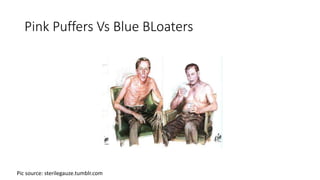
Pink Puffers Vs Blue BLoaters
Pic source: sterilegauze.tumblr.com
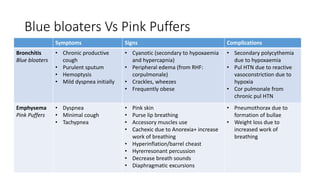
Blue bloaters Vs Pink Puffers
Symptoms Signs Complications
Bronchitis
Blue bloaters
• Chronic productive
cough
• Purulent sputum
• Hemoptysis
• Mild dyspnea initially
• Cyanotic (secondary to hypoxaemia
and hypercapnia)
• Peripheral edema (from RHF:
corpulmonale)
• Crackles, wheezes
• Frequently obese
• Secondary polycythemia
due to hypoxaemia
• Pul HTN due to reactive
vasoconstriction due to
hypoxia
• Cor pulmonale from
chronic pul HTN
Emphysema
Pink Puffers
• Dyspnea
• Minimal cough
• Tachypnea
• Pink skin
• Purse lip breathing
• Accessory muscles use
• Cachexic due to Anorexia+ increase
work of breathing
• Hyperinflation/barrel cheast
• Hyrerresonant percussion
• Decrease breath sounds
• Diaphragmatic excursions
• Pneumothorax due to
formation of bullae
• Weight loss due to
increased work of
breathing
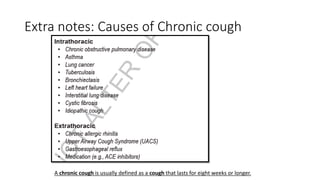
Extra notes: Causes of Chronic cough
A chronic cough is usually defined as a cough that lasts for eight weeks or longer.
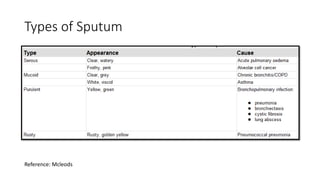
Types of Sputum
Reference: Mcleods
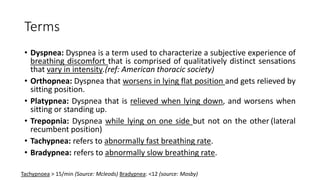
Terms
• Dyspnea: Dyspnea is a term used to characterize a subjective experience of
breathing discomfort that is comprised of qualitatively distinct sensations
that vary in intensity.(ref: American thoracic society)
• Orthopnea: Dyspnea that worsens in lying flat position and gets relieved by
sitting position.
• Platypnea: Dyspnea that is relieved when lying down, and worsens when
sitting or standing up.
• Trepopnia: Dyspnea while lying on one side but not on the other (lateral
recumbent position)
• Tachypnea: refers to abnormally fast breathing rate.
• Bradypnea: refers to abnormally slow breathing rate.
Tachypnoea > 15/min (Source: Mcleods) Bradypnea: <12 (source: Mosby)
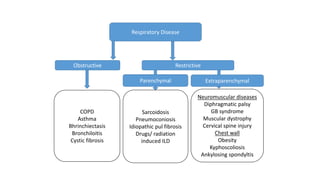
Respiratory Disease
Restrictive
Parenchymal Extraparenchymal
COPD
Asthma
Bhrinchiectasis
Bronchiloitis
Cystic fibrosis
Neuromuscular diseases
Diphragmatic palsy
GB syndrome
Muscular dystrophy
Cervical spine injury
Chest wall
Obesity
Kyphoscoliosis
Ankylosing spondyltis
Sarcoidosis
Pneumoconiosis
Idiopathic pul fibrosis
Drugs/ radiation
induced ILD
Obstructive
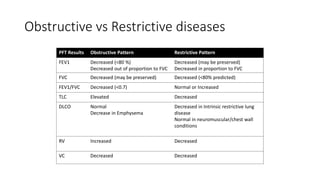
Obstructive vs Restrictive diseases
PFT Results Obstructive Pattern Restrictive Pattern
FEV1 Decreased (<80 %)
Decreased out of proportion to FVC
Decreased (may be preserved)
Decreased in proportion to FVC
FVC Decreased (may be preserved) Decreased (<80% predicted)
FEV1/FVC Decreased (<0.7) Normal or Increased
TLC Elevated Decreased
DLCO Normal
Decrease in Emphysema
Decreased in Intrinsic restrictive lung
disease
Normal in neuromuscular/chest wall
conditions
RV Increased Decreased
VC Decreased Decreased
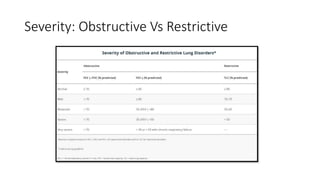
Severity: Obstructive Vs Restrictive
Extra Notes
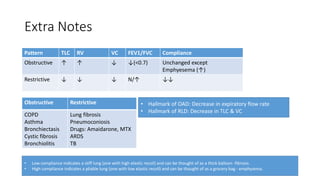
Pattern TLC RV VC FEV1/FVC Compliance
Obstructive ↑ ↑ ↓ ↓(<0.7) Unchanged except
Emphyesema (↑)
Restrictive ↓ ↓ ↓ N/↑ ↓↓
Obstructive Restrictive
COPD
Asthma
Bronchiectasis
Cystic fibrosis
Bronchiolitis
Lung fibrosis
Pneumoconiosis
Drugs: Amaidarone, MTX
ARDS
TB
• Low compliance indicates a stiff lung (one with high elastic recoil) and can be thought of as a thick balloon -fibrosis.
• High compliance indicates a pliable lung (one with low elastic recoil) and can be thought of as a grocery bag - emphysema.
• Hallmark of OAD: Decrease in expiratory flow rate
• Hallmark of RLD: Decrease in TLC & VC
End of Extra notes
End of slides
References:
• Davidsons
• Uptodate 21.6
• Medscape
• Other literature references included in slides

Bronchiectasis

  • 1.
    Bronchiectasis Pratap Sagar Tiwari,MD, Internal Medicine Note: This is a lecture class slide for MBBS students
  • 2.
    Introduction • Bronchiectasis :definedby the presence of permanent and abnormal dilation of the bronchi.[1,2] • Bronchiectasis is an uncommon disease, most often secondary to an infectious process, that results in the abnormal and permanent distortion of one or more of the conducting bronchi or airways. • Bronchiectasis shares many clinical features with COPD, including inflamed and easily collapsible airways, obstruction to airflow, and frequent office visits and hospitalizations. • The diagnosis is usually established clinically on the basis of chronic daily cough with viscid sputum production, and radiographically by the presence of bronchial wall thickening and luminal dilatation on chest CT scans [ 3]. 1. Barker AF. Bronchiectasis. N Engl J Med. 2002;346:1383–1393. 2. King PT, Holdsworth SR, Freezer NJ, Villanueva E, Holmes PW. Characterisation of the onset and presenting clinical features of adult bronchiectasis. Respir Med. 2006;100:2183–2189. 3. Barker AF. Bronchiectasis. N Engl J Med 2002; 346:1383.
  • 3.
    Types In 1950, Reidcategorized bronchiectasis as having three main phenotypes:[1] • 1) tubular(cylindrical) :characterized by smooth dilation of the bronchi; • 2) varicose (bulbous):in which the bronchi are dilated with multiple indentations; • 3) cystic (saccular/balloon appearance):in which dilated bronchi terminate in blind ending sacs. Whitwell classified bronchiectasis into three different types: • Follicular, Saccular, and Atelectatic. Follicular bronchiectasis was the dominant form and this corresponded to tubular bronchiectasis (the main form commonly seen). • Bronchiectasis has been described as being localized (ie, confined to one lobe) or generalized. Most commonly it is generalized and seems to be most common in the lower lobes.[2,3] The involvement of the lower lobes may reflect gravity dependent retention of infected secretions. 1. Reid LM. Reduction in bronchial subdivision in bronchiectasis. Thorax. 1950 Sep. 5(3):233-47. 2. King PT, Holdsworth SR, Freezer NJ, Villanueva E, Holmes PW. Characterisation of the onset and presenting clinical features of adult bronchiectasis. Respir Med. 2006;100:2183–2189. 3. Field E. Bronchiectasis: a long-term follow-up of medical and surgical cases from childhood. Arch Dis Child. 1961;36:587–603. • Can also be differentiated as :Congenital & Acquired or Cystic fibrosis associated and Non CF Bronchiectasis. • If Associated with Post fibrosis: Traction Bronchiectasis • Without Must expectorant: Dry Bronchiectasis
  • 4.
  • 5.
    Cole’s “vicious cyclehypothesis”[1] • Cole proposed that an environmental insult often on a background of genetic susceptibility (impaired mucociliary clearance) resulting in persistence of microbes in the sinobronchial tree and microbial colonization. • The microbial infection caused chronic inflammation resulting in tissue damage and impaired mucociliary motility. • In turn this led to more infection with a cycle of progressive inflammation causing lung damage. • The current view is that the two factors required for the development of this condition are persistent infection and a defect in host defense. 1. Cole PJ. Inflammation: a two-edged sword – the model of bronchiectasis.Eur J Respir Dis Suppl. 1986;147:6–15.
  • 6.
    Path….continue • The dominantcell types involved in the inflammatory process in bronchiectasis are neutrophils, lymphocytes, and macrophages.[1] Neutrophils are the most prominent cell type in the bronchial lumen [2], and release mediators, particularly proteases/elastase which cause bronchial dilation (ie, bronchiectasis).[3] • The infiltrate in the cell wall is predominantly composed of macrophages and lymphocytes.[2] • Studies have reported that the main lymphocyte is the T cell [4] and these are cells that are likely to produce the lymphoid follicles described by Whitwell. 1. Fuschillo S, De Felice A, Balzano G. Mucosal inflammation in idiopathic bronchiectasis: cellular and molecular mechanisms. Eur Respir J. 2008;31:396–406. 2. Eller J, Lapa e Silva JR, Poulter LW, Lode H, Cole PJ. Cells and cytokines in chronic bronchial infection. Ann N Y Acad Sci. 1994;725:331–345. 3. Khair OA, Davies RJ, Devalia JL. Bacterial-induced release of inflammatory mediators by bronchial epithelial cells. Eur Respir J. 1996;9:1913–1922. 4. Lapa e Silva JR, Guerreiro D, Noble B, Poulter LW, Cole PJ. Immunopathology of experimental bronchiectasis. Am J Respir Cell Mol Biol. 1989;1:297–304.
  • 7.
    Etiologic/risk factors associatedwith bronchiectasis • Postinfective (postpneumonia, whooping cough, measles, mycobacterial infection) • Mucociliary disorder (immotile cilia, Kartagener’s syndrome, Young’s syndrome) • Obstructive (foreign body, mycobacterial infection, obstructing cancer) • Immune disorder (hypogammaglobulinemia, HIV infection, cancer, allergic bronchopulmonary aspergillosis, transplant rejection) • Rheumatic/inflammatory disease (rheumatoid arthritis, inflammatory bowel disease) • Extremes of age • Malnutrition/socioeconomic disadvantage • Chronic obstructive pulmonary disease • Aspiration • Alpha1-antitrypsin deficiency • Miscellaneous (yellow nail syndrome)
  • 8.
    Etiologic factors: Postinfectious • The most common cause of bronchiectasis is the literature is post infectious. • A possible mechanism for post infectious bronchiectasis is a significant infection in early childhood which causes structural damage to the developing lung and permits bacterial infection which is over time persistent infection may then result in bronchiectasis.
  • 9.
    Etiologic factors: Postinfectious….continue • One well characterized form of bronchiectasis occurs in the context of mycobacterial infection and this form is particularly prevalent in the right middle lobe with nontuberculous mycobacterium.[1,2,3] The mechanism of this form of bronchiectasis appears to arise from lymph node obstruction. • The acute infection causes enlargement of peribronchial nodes which obstruct the bronchus and result in secondary bronchiectasis. This bronchial dilation persists when the mycobacterial infection resolves and the nodes return to normal size. 1. Whitwell F. A study of the pathology and pathogenesis of bronchiectasis. Thorax. 1952;7:213–219. 2. Lynch DA, Simone PM, Fox MA, Bucher BL, Heinig MJ. CT features of pulmonary Mycobacterium avium complex infection. J Comput Assist Tomogr. 1995;19:353–360. 3. Fujita J. Radiological findings of non-tuberculous mycobacteria respiratory infection. Kekkaku. 2003;78:557–561.
  • 10.
    Etiologic factors: Muco-ciliaryclearance • Muco-ciliary clearance is a key defence mechanism against pulmonary infection. Its compromise is important in the development of the vicious cycle of bronchiectasis as proposed by Cole.[1] • Cystic fibrosis is associated with defective muco-ciliary clearance . • The most prominent cilial disorder is primary ciliary dyskinesia (PCD) which combines upper and lower respiratory tract infection, male infertility and in approximately 50%, situs inversus. PCD arises primarily from a defect in the dynein arms which are necessary for normal cilial beating. [2] • Bronchiectasis is a prominent manifestation of PCD. • Young’s syndrome is another condition in which the primary defect is thought to be defective mucous function.[3] 1. Cole PJ. Inflammation: a two-edged sword – the model of bronchiectasis. Eur J Respir Dis Suppl. 1986;147:6–15. 2. Omran H, Kobayashi D, Olbrich H, et al. Ktu/PF13 is required for cytoplasmic pre-assembly of axonemal dyneins. Nature. 2008;456: 611–616. 3. Friedman KJ, Teichtahl H, De Kretser DM, et al. Screening Young syndrome patients for CFTR mutations. Am J Respir Crit Care Med. 1995;152:1353–1357.
  • 11.
    Chronic obstructive pulmonarydisease • There is also some overlap in the pathology of COPD and bronchiectasis. Both conditions have neutrophils and T lymphocytes as the predominant inflammatory cell,[1,2] protease release causes pulmonary damage and lymphoid follicles have a role in airflow obstruction.[3,4] 1. Fuschillo S, De Felice A, Balzano G. Mucosal inflammation in idiopathic bronchiectasis: cellular and molecular mechanisms. Eur Respir J. 2008;31:396–406. 2. Barnes PJ. Chronic obstructive pulmonary disease. N Engl J Med. 2000;343:269–280. 3. Whitwell F. A study of the pathology and pathogenesis of bronchiectasis. Thorax. 1952;7:213–219. 4. Hogg JC, Chu F, Utokaparch S, et al. The nature of small-airway obstruction in chronic obstructive pulmonary disease. N Engl J Med. 2004;350:2645–2653.
  • 12.
    Etiologic factors: Rheumatological/inflammatory conditions •There is a well described association between bronchiectasis and rheumatoid arthritis. • In rheumatoid arthritis the incidence of bronchiectasis has been described to be 1%–3%. • Recent studies of patients with RA have described the prevalence of bronchiectasis on HRCT in such patients as being up to 30%.[1] • Bronchiectasis may also occur in association with Sjogren’s syndrome63 and Churg– Strauss syndrome.[2] • It is possible that immune suppression may predispose to chronic airway infection.[3] • Bronchiectasis also occurs in subjects with inflammatory bowel disease.[4] 1. Cortet B, Flipo RM, Remy-Jardin M, et al. Use of high resolution computed tomography of the lungs in patients with rheumatoid arthritis.Ann Rheum Dis. 1995;54:815–819. 2. Larche MJ. A short review of the pathogenesis of Sjogren’s syndrome. Autoimmun Rev. 2006;5:132–135. 3. King P. Churgh-Strauss syndrome and bronchiectasis. Respir Med Extra.2007;3:26–28. 4. Black H, Mendoza M, Murin S. Thoracic manifestations of inflammatory bowel disease. Chest. 2007;131:524–532.
  • 13.
    Etiologic factors: Alpha1-antitrypsindeficiency • Alpha1-antitrypsin deficiency is associated with increased risk of COPD and bronchiectasis. • Parr and colleagues studied the prevalence of airways disease in AAT deficient subjects and found that 70 of 74 subjects had radiological evidence of bronchiectasis and 20 subjects were classified as having clinically significant bronchiectasis.[1] 1. Parr DG, Guest PG, Reynolds JH, Dowson LJ, Stockley RA. Prevalence and impact of bronchiectasis in alpha1-antitrypsin deficiency. Am J Respir Crit Care Med. 2007;176:1215–1221.
  • 14.
    Microbiology • A largenumber of different pathogens have been isolated in studies of microbiologic flora in bronchiectasis. The main findings from recent studies have been that Haemophilus influenza is the most common pathogen (range 29%– 70%) followed by Pseudomonas aeruginosa (range 12%–31%).[1,2] and others include Moxarella. • The role of viral infection in bronchiectasis is not well defined. Becroft[3] identified adenovirus as a risk factor for the development of bronchiectasis in young children. • Viral infections have a role in exacerbations of COPD but this has not been defined for bronchiectasis.[4] 1. Nicotra MB, Rivera M, Dale AM, Shepherd R, Carter R. Clinical, pathophysiologic, and microbiologic characterization of bronchiectasis in an aging cohort. Chest. 1995;108:955–961. 2. Pasteur MC, Helliwell SM, Houghton SJ, et al. An investigation into causative factors in patients with bronchiectasis. Am J Respir Crit Care Med. 2000;162:1277–1284. 3. Becroft DM. Bronchiolitis obliterans, bronchiectasis, and other sequelae of adenovirus type 21 infection in young children. J Clin Pathol. 1971;24:72–82. 4. Seemungal T, Harper-Owen R, Bhowmik A, et al. Respiratory viruses, symptoms, and inflammatory markers in acute exacerbations and stable chronic obstructive pulmonary disease. Am J Respir Crit Care Med.2001;164:1618–1623.
  • 15.
    Cigarette smoking • Acausal role for cigarette smoking in bronchiectasis has not been demonstrated conclusively. However, smoking and repeated infections may worsen pulmonary function and accelerate the progression of disease that is already present [ 1 ]. 1. Popa V. Airway obstruction in adults with recurrent respiratory infections and IgG deficiency. Chest 1994; 105:1066.
  • 16.
    Clinical manifestations • Theclassic clinical manifestations of bronchiectasis are cough and the daily production of mucopurulent and tenacious sputum lasting months to years. • The older literature also described "dry bronchiectasis" with episodic hemoptysis and no sputum production, but this presentation is less common. • Other, less specific complaints include dyspnea, wheezing, and pleuritic chest pain. • There is generally a past history of repeated respiratory tract infections over several years, although a single episode of severe bacterial pneumonia, pertussis, tuberculosis, and Mycoplasma infection can also result in bronchiectasis.
  • 17.
    DIAGNOSIS • The purposeof a diagnostic evaluation is radiographic confirmation of the diagnosis, identification of potentially treatable causes, and functional assessment • The evaluation consists of laboratory testing, radiographic imaging, and pulmonary function testing.
  • 18.
    Investigations • Bacteriological andmycological examination of sputum Radiological examination • Bronchiectasis, unless very gross, is not usually apparent on a chest X- ray. In advanced disease, thickened airway walls, cystic bronchiectatic spaces, and associated areas of pneumonic consolidation or collapse may be visible. • CT is much more sensitive, and shows thickened dilated airways .
  • 19.
    CT Findings [1] Themain diagnostic features are: 1) internal diameter of a bronchus is wider than its adjacent pulmonary artery; 2) failure of the bronchi to taper; and 3) visualization of bronchi in the outer 1–2 cm of the lung fields 1. McGuinness G, Naidich DP. CT of airways disease and bronchiectasis.Radiol Clin North Am. 2002;40:1–19.
  • 20.
    Investigation: Assessment ofciliary function • A screening test can be performed in patients suspected of having a ciliary dysfunction syndrome by measuring the time taken for a small pellet of saccharin placed in the anterior chamber of the nose to reach the pharynx, when the patient can taste it. • This time should not exceed 20 minutes but is greatly prolonged in patients with ciliary dysfunction. • Structural abnormalities of cilia can be detected by electron microscopy.
  • 21.
    Lung function tests •Pulmonary function testing is used for functional assessment of impairment due to bronchiectasis. • Spirometry before and after the administration of a bronchodilator is satisfactory in most patients. • Obstructive impairment (ie, reduced or normal forced vital capacity [FVC], low forced expiratory volume [FEV1], and low FEV1/FVC)is the most frequent finding.
  • 22.
    Management • In patientswith airflow obstruction, inhaled bronchodilators and corticosteroids should be used to enhance airway patency. Physiotherapy • Patients should be instructed on how to perform regular daily physiotherapy to assist the drainage of excess bronchial secretions.
  • 23.
    Antibiotic therapy • Formost patients with bronchiectasis, the appropriate antibiotics are the same as those used in COPD; however, in general, larger doses and longer courses are required, while resolution of symptoms is often incomplete. • For Pseudomonas, oral ciprofloxacin (250-750 mg 12-hourly) or ceftazidime iv (1-2 g 8-hourly). • Haemoptysis in bronchiectasis often responds to treating the underlying infection, although in severe cases percutaneous embolisation of the bronchial circulation may be necessary.
  • 24.
    Surgical treatment • Excisionof bronchiectatic areas is only indicated in a small proportion of cases. These are usually young patients in whom the bronchiectasis is unilateral and confined to a single lobe or segment on CT. • Unfortunately, many of the patients in whom medical treatment proves unsuccessful are also unsuitable for surgery because of either extensive bronchiectasis or coexisting chronic lung disease. • In progressive forms of bronchiectasis, resection of destroyed areas of lung which are acting as a reservoir of infection should only be considered as a last resort.
  • 25.
    Major indications &Goals for Surgery • Removal of destroyed lung partially obstructed by a tumor or the residue of a foreign body • Reduction in acute infective episodes • Reduction in overwhelming purulent and viscid sputum production • Elimination of bronchiectatic airways subject to uncontrolled hemorrhage • Removal of an area suspected of harboring resistant organisms such as MAC or multidrug resistant tuberculosis .
  • 26.
    Prevention • Less clearand not well studied is the role of so-called preemptive, suppressive, or preventive antibiotic regimens. Examples of such regimens are listed in order of increasing complexity and expense. • Strategy 1 – Daily oral antibiotic Rx, such as ciprofloxacin (500- 1500 mg/day in 2-3divided doses) [ 1 ]. Alternatively, a similar antibiotic given for 7-14 d/mnth. • Strategy 2 – Daily or 3X wkly use of a macrolide antibiotic, a modification of Strategy 1 that is efficacious in the management of cystic fibrosis [ 2 ]. The benefit of this approach was demonstrated in a double-blind trial that randomly assigned 19 patients with bronchiectasis to receive erythromycin (500 mg, twice per day) or placebo for eight weeks [ 3 ]. 1. Rayner CF, Tillotson G, Cole PJ, Wilson R. Efficacy and safety of long-term ciprofloxacin in the management of severe bronchiectasis. J Antimicrob Chemother 1994; 34:149. 2. Saiman L, Marshall BC, Mayer-Hamblett N, et al. Azithromycin in patients with cystic fibrosis chronically infected with Pseudomonas aeruginosa: a randomized controlled trial. JAMA 2003; 290:1749. 3. Tsang KW, Ho PI, Chan KN, et al. A pilot study of low-dose erythromycin in bronchiectasis. Eur Respir J 1999; 13:361.
  • 27.
    Prognosis • The diseaseis progressive when A/W ciliary dysfunction and cystic fibrosis, and eventually causes respiratory failure. • In other patients the prognosis can be relatively good if physiotherapy is performed regularly and antibiotics are used aggressively.
  • 28.
    SUMMARY AND RECOMMENDATIONS •Bronchiectasis is a syndrome of chronic cough and daily viscid sputum production associated with airway dilatation and bronchial wall thickening. Exacerbations are usually caused by acute bacterial infections. • For outpatients with an acute exacerbation and no history of recurrent exacerbations, we suggest initiation of a fluoroquinolone antibiotic, rather than an alternative oral antibiotic ( Grade 2B ). • For hospitalized patients with an acute exacerbation, we suggest initiation of two intravenous antibiotics with efficacy for Pseudomonas ( Grade 2B ). The antibiotics should have different mechanisms of killing. • For all patients (outpatients and inpatients) with an acute exacerbation and a history of recurrent exacerbations, we suggest the initial antibiotic choice be tailored to prior sputum cultures and sensitivities, rather than chosen empirically ( Grade 2C ). • For patients with an acute exacerbation, we suggest at least seven to ten days of antibiotic therapy ( Grade 2C ). Source: uptodate 21.6
  • 29.
    SUMMARY AND RECOMMENDATIONS •For patients who have recurrent exacerbations, we suggest preventive antibiotics, rather than waiting until an exacerbation occurs to initiate antibiotic therapy ( Grade 2B ). Our threshold for the initiation of preventive antibiotics is three or more exacerbations within one year. • We suggest that all patients with bronchiectasis receive chest physiotherapy ( Grade 2B ). • We suggest not using inhaled glucocorticoids for patients with bronchiectasis except in the presence of distressing wheeze and cough ( Grade 2C ). Systemic glucocorticoids should be reserved for acute exacerbations and should accompany antibacterial therapy. • For patients with non-cystic fibrosis-related bronchiectasis, we recommend NOT using dornase ( DNAse ) as a mucolytic agent ( Grade 1A ). • There are insufficient data to advocate routine use of bronchodilators or pulmonary rehabilitation in patients with bronchiectasis. • For patients with life-threatening hemoptysis due to bronchiectasis, we suggest bronchial artery embolization rather than surgery, if an interventional radiology service is available ( Grade 2C ). Surgical therapy is appropriate if bronchial artery embolization fails or cannot be attempted in a timely fashion. • Surgical extirpation and lung transplantation should be considered on a case-by-case basis. Source: uptodate 21.6
  • 30.
  • 31.
    Grades Recommendation grades 1. Strongrecommendation: Benefits clearly outweigh the risks and burdens (or vice versa) for most, if not all, patients 2. Weak recommendation: Benefits and risks closely balanced and/or uncertain Evidence grades A. High-quality evidence: Consistent evidence from randomized trials, or overwhelming evidence of some other form B. Moderate-quality evidence: Evidence from randomized trials with important limitations, or very strong evidence of some other form C. Low-quality evidence: Evidence from observational studies, unsystematic clinical observations, or from randomized trials with serious flaws
  • 32.
    Pink Puffers VsBlue BLoaters Pic source: sterilegauze.tumblr.com
  • 33.
    Blue bloaters VsPink Puffers Symptoms Signs Complications Bronchitis Blue bloaters • Chronic productive cough • Purulent sputum • Hemoptysis • Mild dyspnea initially • Cyanotic (secondary to hypoxaemia and hypercapnia) • Peripheral edema (from RHF: corpulmonale) • Crackles, wheezes • Frequently obese • Secondary polycythemia due to hypoxaemia • Pul HTN due to reactive vasoconstriction due to hypoxia • Cor pulmonale from chronic pul HTN Emphysema Pink Puffers • Dyspnea • Minimal cough • Tachypnea • Pink skin • Purse lip breathing • Accessory muscles use • Cachexic due to Anorexia+ increase work of breathing • Hyperinflation/barrel cheast • Hyrerresonant percussion • Decrease breath sounds • Diaphragmatic excursions • Pneumothorax due to formation of bullae • Weight loss due to increased work of breathing
  • 34.
    Extra notes: Causesof Chronic cough A chronic cough is usually defined as a cough that lasts for eight weeks or longer.
  • 35.
  • 36.
    Terms • Dyspnea: Dyspneais a term used to characterize a subjective experience of breathing discomfort that is comprised of qualitatively distinct sensations that vary in intensity.(ref: American thoracic society) • Orthopnea: Dyspnea that worsens in lying flat position and gets relieved by sitting position. • Platypnea: Dyspnea that is relieved when lying down, and worsens when sitting or standing up. • Trepopnia: Dyspnea while lying on one side but not on the other (lateral recumbent position) • Tachypnea: refers to abnormally fast breathing rate. • Bradypnea: refers to abnormally slow breathing rate. Tachypnoea > 15/min (Source: Mcleods) Bradypnea: <12 (source: Mosby)
  • 37.
    Respiratory Disease Restrictive Parenchymal Extraparenchymal COPD Asthma Bhrinchiectasis Bronchiloitis Cysticfibrosis Neuromuscular diseases Diphragmatic palsy GB syndrome Muscular dystrophy Cervical spine injury Chest wall Obesity Kyphoscoliosis Ankylosing spondyltis Sarcoidosis Pneumoconiosis Idiopathic pul fibrosis Drugs/ radiation induced ILD Obstructive
  • 38.
    Obstructive vs Restrictivediseases PFT Results Obstructive Pattern Restrictive Pattern FEV1 Decreased (<80 %) Decreased out of proportion to FVC Decreased (may be preserved) Decreased in proportion to FVC FVC Decreased (may be preserved) Decreased (<80% predicted) FEV1/FVC Decreased (<0.7) Normal or Increased TLC Elevated Decreased DLCO Normal Decrease in Emphysema Decreased in Intrinsic restrictive lung disease Normal in neuromuscular/chest wall conditions RV Increased Decreased VC Decreased Decreased
  • 39.
  • 40.
    Extra Notes Pattern TLCRV VC FEV1/FVC Compliance Obstructive ↑ ↑ ↓ ↓(<0.7) Unchanged except Emphyesema (↑) Restrictive ↓ ↓ ↓ N/↑ ↓↓ Obstructive Restrictive COPD Asthma Bronchiectasis Cystic fibrosis Bronchiolitis Lung fibrosis Pneumoconiosis Drugs: Amaidarone, MTX ARDS TB • Low compliance indicates a stiff lung (one with high elastic recoil) and can be thought of as a thick balloon -fibrosis. • High compliance indicates a pliable lung (one with low elastic recoil) and can be thought of as a grocery bag - emphysema. • Hallmark of OAD: Decrease in expiratory flow rate • Hallmark of RLD: Decrease in TLC & VC
  • 41.
  • 42.
    End of slides References: •Davidsons • Uptodate 21.6 • Medscape • Other literature references included in slides

Editor's Notes

  • #3 Bronchiectasis is a syndrome of chronic cough and daily viscid sputum production associated with airway dilatation and bronchial wall thickening. Multiple conditions are associated with the development of bronchiectasis, but all require an infectious insult plus impairment of drainage, airway obstruction, and/or a defect in host defense.
  • #15 Bronchiectasis is characterized by airway inflammation. The inflammation appears to arise as a combination of immune deficiency and persistent infection. As proposed by Cole this inflammatory process is progressive and results in a cycle of worsening pulmonary damage. Patients develop progressive obstructive lung disease. The airflow obstruction appears to arise predominantly from involvement of the small airways in which the bronchial wall is infiltrated by inflammatory cells particularly lymphocytes which may form lymphoid follicles. Bronchiectasis is a heterogeneous condition and there are a large number of etiologic factors have been described. Because of the long-term nature of the disease it is often hard to be clear about the exact role of such factors in the pathogenesis. It may be more appropriate to consider them as being risk factors rather than the single cause of longstanding airway infection. The microbiology of bronchiectasis is complex and varies significantly between different studies. An important finding is that despite purulent sputum and optimal collection techniques (eg, bronchoscopy) there is often failure to isolate a pathogenic microorganism. The role of viruses is not well understood. A better understanding of the microbiology of bronchiectasis would have direct implications for patient treatment. Bronchiectasis is a complex condition and the pathophysiology is still not well understood. Defining the inflammatory process particularly before there is significant lung disease may be helpful in developing better strategies of treatment.
  • #17 Chronic productive cough due to accumulation of pus in dilated bronchi; usually worse in mornings and often brought on by changes of posture. Sputum often copious and persistently purulent in advanced disease. Halitosis is a common accompanying feature Due to inflammatory changes in lung and pleura surrounding dilated bronchi when spread of infection occurs: fever, malaise and increased cough and sputum volume, which may be associated with pleurisy. Recurrent pleurisy in the same site often occurs in bronchiectasis When disease is extensive and sputum persistently purulent, there may be associated weight loss, anorexia, lassitude, low-grade fever, and failure to thrive in children. In these patients, digital clubbing is common