Dr. Yasser Morsy. PhD, MSc, BCACP, FCCP
Clinical Pharmacy Specialist
Senior Clinical Instructor
WFDT
1
Disclosure of Conflict of Interest
I Dr. Yasser Morsy
DO NOT have a financial interest/arrangement or
affiliation with anyone in relation to this
program/presentation/organization that could be
perceived as a real or apparent conflict of
interest in the context of the subject of this
presentation.
2
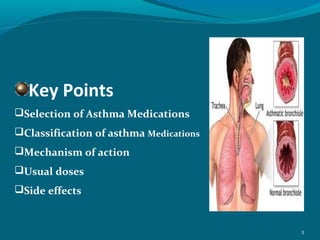
Key Points
Selection of Asthma Medications
Classification of asthma Medications
Mechanism of action
Usual doses
Side effects
3
1. Wenzel SE. Nat Med 2012;18:716–25;
2. Holgate ST. Asthma Pathogenesis. In: Adkinson NF, et al. (eds) Middleton's Allergy: Principles and Practice. 8th ed. Saunders Elsevier, PA: 2014. p812
3. Walford HH, Doherty TA. J Asthma Allergy 2014;7:53–65.
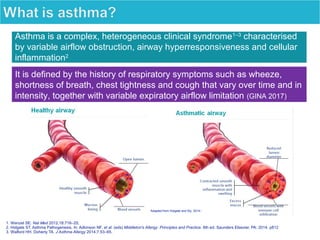
Asthma is a complex, heterogeneous clinical syndrome1 3‒
characterised
by variable airflow obstruction, airway hyperresponsiveness and cellular
inflammation2
It is defined by the history of respiratory symptoms such as wheeze,
shortness of breath, chest tightness and cough that vary over time and in
intensity, together with variable expiratory airflow limitation (GINA 2017)
Adapted from Holgate and Sly, 2014.2
GINA Guidelines 2017
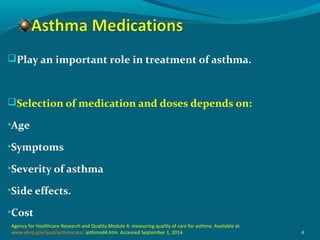
Play an important role in treatment of asthma.
Selection of medication and doses depends on:
•Age
•Symptoms
•Severity of asthma
•Side effects.
•Cost
4
Agency for Healthcare Research and Quality.Module 4: measuring quality of care for asthma. Available at
www.ahrq.gov/qual/asthmacare/ asthmod4.htm. Accessed September 1, 2014
5
Agency for Healthcare Research and Quality.Module 4: measuring quality of care for asthma. Available at
www.ahrq.gov/qual/asthmacare/ asthmod4.htm. Accessed September 1, 2014
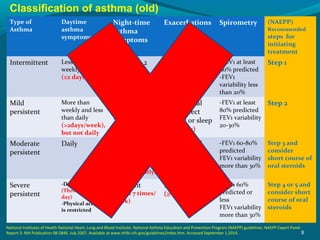
Classification of asthma (old)
Type of
Asthma
Daytime
asthma
symptoms
Night-time
asthma
symptoms
Exacerbations Spirometry (NAEPP)
Recommended
steps for
initiating
treatment
Intermittent Less than
weekly
(≤2 days/week)
Less than 2
per month
(≤2 times/month)
- Infrequent
- Brief
(0 or 1/year)
-FEV1 at least
80% predicted
-FEV1
variability less
than 20%
Step 1
Mild
persistent
More than
weekly and less
than daily
(>2days/week),
but not daily
More than 2 per
month but not
weekly
(3 or 4
times/month)
- Occasional
- May affect
activity or sleep
(≥ 2/year)
-FEV1 at least
80% predicted
FEV1 variability
20-30%
Step 2
Moderate
persistent
Daily Weekly or more
often
(more than
once weekly,
but not nightly)
- Occasional
- May affect
activity or sleep
(≥ 2/year)
-FEV1 60-80%
predicted
FEV1 variability
more than 30%
Step 3 and
consider
short course of
oral steroids
Severe
persistent
-Daily
(Throughout the
day)
-Physical activity
is restricted
Frequent
(often 7 times/
week)
Frequent
(≥ 2/year)
-FEV1 60%
predicted or
less
FEV1 variability
more than 30%
Step 4 or 5 and
consider short
course of oral
steroids
8
National Institutes of Health National Heart, Lung and Blood Institute. National Asthma Education and Prevention Program (NAEPP) guidelines. NAEPP Expert Panel
Report 3. NIH Publication 08-5846. July 2007. Available at www.nhlbi.nih.gov/guidelines/index.htm. Accessed September 1,2014.
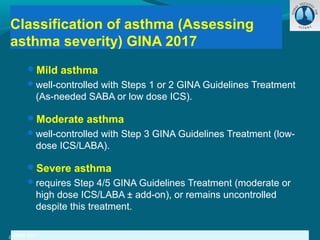
Mild asthma
well-controlled with Steps 1 or 2 GINA Guidelines Treatment
(As-needed SABA or low dose ICS).
Moderate asthma
well-controlled with Step 3 GINA Guidelines Treatment (low-
dose ICS/LABA).
Severe asthma
requires Step 4/5 GINA Guidelines Treatment (moderate or
high dose ICS/LABA ± add-on), or remains uncontrolled
despite this treatment.
Classification of asthma (Assessing
asthma severity) GINA 2017
GINA 2017GINA 2017
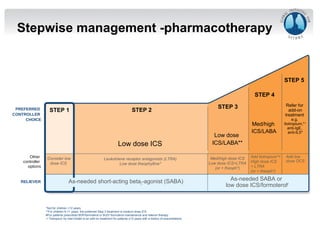
Stepwise management -pharmacotherapy
GINA 2017, Box 3-5, Step 1 (4/8)
PREFERRED
CONTROLLER
CHOICE
Other
controller
options
RELIEVER
STEP 1 STEP 2
STEP 3
STEP 4
STEP 5
Low dose ICS
Consider low
dose ICS
Leukotriene receptor antagonists (LTRA)
Low dose theophylline*
Med/high dose ICS
Low dose ICS+LTRA
(or + theoph*)
As-needed short-acting beta2-agonist (SABA) As-needed SABA or
low dose ICS/formoterol#
Low dose
ICS/LABA**
Med/high
ICS/LABA
*Not for children <12 years
**For children 6-11 years, the preferred Step 3 treatment is medium dose ICS
#For patients prescribed BDP/formoterol or BUD/ formoterol maintenance and reliever therapy
 Tiotropium by mist inhaler is an add-on treatment for patients ≥12 years with a history of exacerbations
Add tiotropium*
High dose ICS
+ LTRA
(or + theoph*)
Add low
dose OCS
Refer for
add-on
treatment
e.g.
tiotropium,*
anti-IgE,
anti-IL5*
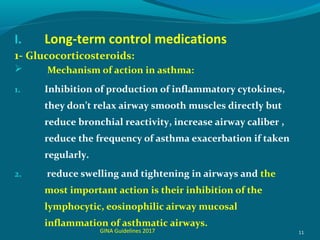
I. Long-term control medications
1- Glucocorticosteroids:
 Mechanism of action in asthma:
1. Inhibition of production of inflammatory cytokines,
they don’t relax airway smooth muscles directly but
reduce bronchial reactivity, increase airway caliber ,
reduce the frequency of asthma exacerbation if taken
regularly.
2. reduce swelling and tightening in airways and the
most important action is their inhibition of the
lymphocytic, eosinophilic airway mucosal
inflammation of asthmatic airways.
11GINA Guidelines 2017
Inhaled corticosteroids(ICS)
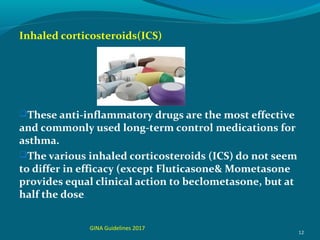
These anti-inflammatory drugs are the most effective
and commonly used long-term control medications for
asthma.
The various inhaled corticosteroids (ICS) do not seem
to differ in efficacy (except Fluticasone& Mometasone
provides equal clinical action to beclometasone, but at
half the dose.
12
GINA Guidelines 2017
• Beclomethasone Dipropionate [BDP]( Becotide®).
Budesonide (Pulmicort Turbohaler® ),
Fluticasone (flixotide Evohaler® 50 , 125 mcg).
Mometasone (Asmanex®).
Ciclesonide (Alvesco®)
Usual doses:
Beginning dose depends on asthma control then titrated down
over 2-3 months to lowest effective dose once control is
achieved.
The British Guideline says 100-400μg daily of Beclometasone
Bipropionate [BDP], or equivalent, is appropriate for most
adults
The recommended “standard dose” in children is 100-200
μg/day of [BDP], or equivalent.
13
Leuppi JD, Schuetz P, Bingisser R, et al. Shortterm vs conventional glucocorticoid therapy in acute exacerbations of chronic obstructive pulmonary disease: the
REDUCE randomized clinical trial. JAMA 2013;309:2223-31.
Inhaled corticosteroids(ICS) continue…
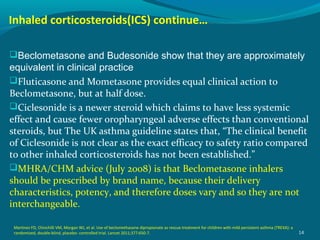
Beclometasone and Budesonide show that they are approximately
equivalent in clinical practice
Fluticasone and Mometasone provides equal clinical action to
Beclometasone, but at half dose.
Ciclesonide is a newer steroid which claims to have less systemic
effect and cause fewer oropharyngeal adverse effects than conventional
steroids, but The UK asthma guideline states that, “The clinical benefit
of Ciclesonide is not clear as the exact efficacy to safety ratio compared
to other inhaled corticosteroids has not been established.”
MHRA/CHM advice (July 2008) is that Beclometasone inhalers
should be prescribed by brand name, because their delivery
characteristics, potency, and therefore doses vary and so they are not
interchangeable.
14
Martinez FD, Chinchilli VM, Morgan WJ, et al. Use of beclomethasone dipropionate as rescue treatment for children with mild persistent asthma (TREXA): a
randomized, double-blind, placebo- controlled trial. Lancet 2011;377:650-7.
Inhaled corticosteroid Total daily dose(mcg)
Low Medium High
Beclomethasone dipropionate (HFA)

(Beclozone, Clenil) { 50, 250}
100-200 >200-400 >400
Budesonide(DPI)
Pulmicort{80}
200-400 >400-800 >800
Budesonide(Nebules)
Pulmicort{250}
250-500 >500-1000 >1000
Fluticasone propionate (HFA)
Flexotide{50,125}
100-250 >250-500 >500
Combined medications:
Budesonide and Formetrol ( Symbicort) 160/4.5 , 320/9.
Fluticasone and Salmetrol ( Seretide) 50/25 , 125/25, 250/50 , 500/50
Fluticasone and Formetrol (flutiform®) 250/10, 125/5, 50/5
Low, medium and high dose inhaled corticosteroids Adults and
adolescents (≥12 years)
GINA Guidelines 2017
[HydroFluoroAlkane ]
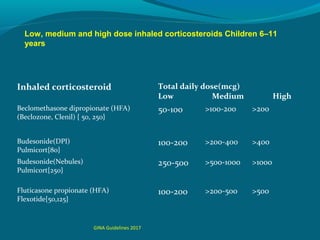
Inhaled corticosteroid Total daily dose(mcg)
Low Medium High
Beclomethasone dipropionate (HFA)
(Beclozone, Clenil) { 50, 250}
50-100 >100-200 >200
Budesonide(DPI)
Pulmicort{80}
100-200 >200-400 >400
Budesonide(Nebules)
Pulmicort{250}
250-500 >500-1000 >1000
Fluticasone propionate (HFA)
Flexotide{50,125}
100-200 >200-500 >500
Low, medium and high dose inhaled corticosteroids Children 6–11
years
GINA Guidelines 2017
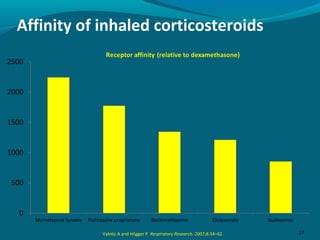
Affinity of inhaled corticosteroids
17Valotis A and Högger P. Respiratory Research. 2007;8:54–62
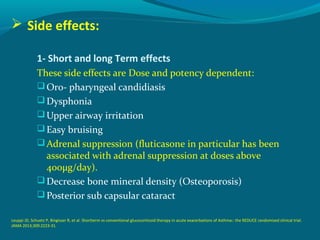
 Side effects:
1- Short and long Term effects
These side effects are Dose and potency dependent:
Oro- pharyngeal candidiasis
Dysphonia
Upper airway irritation
Easy bruising
Adrenal suppression (fluticasone in particular has been
associated with adrenal suppression at doses above
400μg/day).
Decrease bone mineral density (Osteoporosis)
Posterior sub capsular cataract
Leuppi JD, Schuetz P, Bingisser R, et al. Shortterm vs conventional glucocorticoid therapy in acute exacerbations of Asthma:: the REDUCE randomized clinical trial.
JAMA 2013;309:2223-31.
2- Corticosteroids and osteoporosis
CXR
Patients on high dose inhaled or any dose oral steroids
for long period of time should have CXR view for
vertebral fractures, wedging, compression of vertebral
bodies
18
Leuppi JD, Schuetz P, Bingisser R, et al. Shortterm vs conventional glucocorticoid therapy in acute exacerbations of Asthma: the REDUCE randomized clinical trial.
JAMA 2013;309:2223-31.
Corticosteroids and osteoporosis continue…
Dual energy x ray absorption (DXA) scan
Should be done for :
Any patient on oral Corticosteroids for more than 6 month at
dose of 7.5 mg prednisolone or above
Post-menopausal women taking over 5 mg prednisolone for
more than 3 month
Post-menopausal women on more than 2 mg (2000 μg/day)
inhaled BDP (Beclometasone dipropionate) or equivalent
Any patient receiving frequent short courses of high dose
steroids
Leuppi JD, Schuetz P, Bingisser R, et al. Shortterm vs conventional glucocorticoid therapy in acute exacerbations of Asthma:: the REDUCE randomized clinical trial.
JAMA 2013;309:2223-31.
3- Glucocorticosteroids and growth retardation in children
Uncontrolled asthma adversely affect growth and final
adult height
No statistically significant effect on growth was found
with doses < 200μg daily
Different age groups differ in their susceptibility , age 4-
10 years are more susceptible
Children with asthma treated with steroids attain normal
height at later age
2- Long-acting β2 agonists (LABAs)
Mechanism of action :
They act on beta2 adrenergic receptor thereby causing smooth
muscle relaxation , resulting in dilatation of bronchial passages
and reduce swelling.
Their effects last at least 12 hours and they're used to control
moderate to severe asthma and to prevent nighttime symptoms.
LABAs are used on a regular schedule along with inhaled
corticosteroids.
21
Nelson HS, Weiss ST, Bleecker ER, et al. The Salmeterol Multicenter Asthma Research Trial (SMART): a comparison of usual pharmacotherapy for asthma or usual
pharmacotherapy plus salmeterol. Chest 2006;129:15-26.
Long-acting β2 agonists (LABAs) continue ….
The British Guideline recommends that standard-dose inhaled
corticosteroid plus long-acting beta-2-agonists (LABAs) are
preferred alternative to the use of high dose inhaled corticosteroid at
Step 3 of treatment, in adults, and in children over 5 years.
This recommendation is based on studies which show that adding
Salmeterol to a low or moderate dose of ICS produces comparable
control to monotherapy with a high dose of steroid. Similar results
have been found in studies on Formoterol.
22
Nelson HS, Weiss ST, Bleecker ER, et al. The Salmeterol Multicenter Asthma Research Trial (SMART): a comparison of usual pharmacotherapy for asthma or usual
pharmacotherapy plus salmeterol. Chest 2006;129:15-26.
Long-acting β2 agonists (LABAs) continue ….
They should be used in combination with inhaled
corticosteroid, if used a lone they may induce sever asthma
attacks and increase the mortality rate. “the British
Guideline recommends that LABAs should only be started in
patients who are already on an ICS, and the steroid should be
continued”.
24
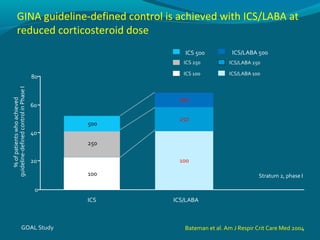
0
%ofpatientswhoachieved
guideline-definedcontrolinPhaseI
ICS/LABA 500
ICS/LABA 250
ICS 500
ICS 250
ICS/LABA 100ICS 100
20
80
40
60
500
250
100
100
250
500
GOAL Study
Stratum 2, phase I
ICS ICS/LABA
GINA guideline-defined control is achieved with ICS/LABA at
reduced corticosteroid dose
Bateman et al. Am J Respir Crit Care Med 2004
Long-acting β2 agonists (LABAs) continue ….
25
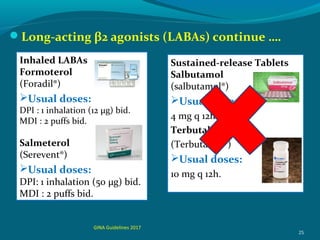
Inhaled LABAs
Formoterol
(Foradil®)
Usual doses:
DPI : 1 inhalation (12 μg) bid.
MDI : 2 puffs bid.
Salmeterol
(Serevent®)
Usual doses:
DPI: 1 inhalation (50 μg) bid.
MDI : 2 puffs bid.
Sustained-release Tablets
Salbutamol
(salbutamol®)
Usual doses:
4 mg q 12h.
Terbutaline
(Terbutaline®)
Usual doses:
10 mg q 12h.
GINA Guidelines 2017
 Side effects of inhaled LABAs:
Fewer, and less significant, side effects than tablets.
Using Salmeterol more than the recommended dosage of 50 μg
(two puffs of a standard MDI) twice daily can cause adverse
effects such as:
 Nausea
 Headache
 Muscle cramps
These minor adverse effects do not usually seem to be such a
problem with formoterol and this is part of the reason why the
‘as needed’ SMART regime for Symbicort® was approved.
26
GINA Guidelines 2017
 Side effects of inhaled LABAs Continue:
 Have been associated with an increased risk of severe
exacerbations and asthma deaths when added to usual therapy a
lone without corticosteroids.
Side effects of Sustained-release Tablets LABAs:
 Nausea and vomiting are most common, tachycardia, anxiety,
skeletal muscle tremor , headache and hypokalemia.
Serious effects occurring at higher serum concentrations include
seizures, tachycardia and arrhythmias.
26
GINA Guidelines 2017
27
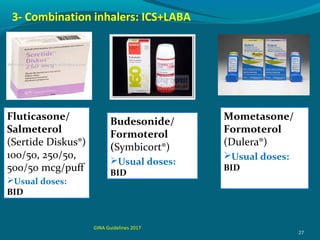
Budesonide/
Formoterol
(Symbicort®)
Usual doses:
BID
Fluticasone/
Salmeterol
(Sertide Diskus®)
100/50, 250/50,
500/50 mcg/puff
Usual doses:
BID
Mometasone/
Formoterol
(Dulera®)
Usual doses:
BID
3- Combination inhalers: ICS+LABA
GINA Guidelines 2017
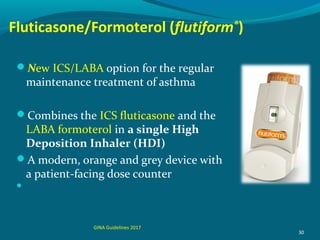
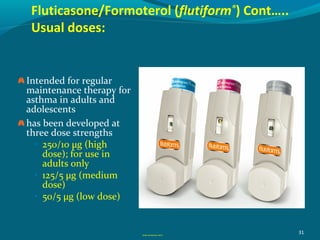
Fluticasone/Formoterol (flutiform®
)
New ICS/LABA option for the regular
maintenance treatment of asthma
Combines the ICS fluticasone and the
LABA formoterol in a single High
Deposition Inhaler (HDI)
A modern, orange and grey device with
a patient-facing dose counter

30
GINA Guidelines 2017
Fluticasone/Formoterol (flutiform®
) Cont…..
Usual doses:
31
Intended for regular
maintenance therapy for
asthma in adults and
adolescents
has been developed at
three dose strengths
• 250/10 µg (high
dose); for use in
adults only
• 125/5 µg (medium
dose)
• 50/5 µg (low dose)
GINA Guidelines 2017
4- Leukotriene modifiers:
(Leukotriene Receptor Antagonist)
Role of Leukotriene in asthma:
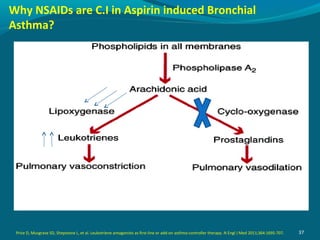
Leukotrienes are substances released when a trigger such as cat
hair , dust or NSAIDs starts a series of chemical reactions in the
body.
Leukotrienes cause airflow obstruction, increased secretion of
mucus, mucosal accumulation, bronchoconstriction, infiltration
of inflammatory cells in the airway wall.
Mechanism of action of Leukotriene modifiers :
1. Inhibition of 5- lipoxygenase enzyme synthesis.
2. Inhibition of the binding of Leukotriene D4 to its receptors on
target tissues thereby preventing its action.
28Price D, Musgrave SD, Shepstone L, et al. Leukotriene antagonists as first-line or add-on asthma-controller therapy. N Engl J Med 2011;364:1695-707.
30
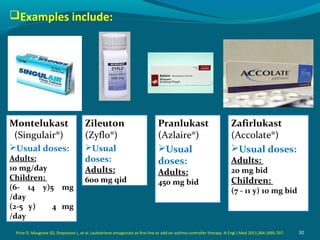
Zileuton
(Zyflo®)
Usual
doses:
Adults:
600 mg qid
Montelukast
(Singulair®)
Usual doses:
Adults:
10 mg/day
Children:
(6- 14 y)5 mg
/day
(2-5 y) 4 mg
/day
Pranlukast
(Azlaire®)
Usual
doses:
Adults:
450 mg bid
Zafirlukast
(Accolate®)
Usual doses:
Adults:
20 mg bid
Children:
(7 - 11 y) 10 mg bid
Examples include:
Price D, Musgrave SD, Shepstone L, et al. Leukotriene antagonists as first-line or add-on asthma-controller therapy. N Engl J Med 2011;364:1695-707.
Leukotriene modifiers continue ….
 They have been shown to provide:
1. An improvement in lung function.
2. A decrease in exacerbations.
3. An improvement in symptoms.
 These drugs are not suitable for relieving an acute attack of asthma and do
not necessarily allow a reduction in the dose of regular ICS.
 The problem with deciding the place of these drugs is that they clearly are
less effective than ICS in preventing asthma symptoms in the long-term
and also less effective than the addition of a LABA.
 Montelukast is currently indicated for the prophylaxis of asthma and it has
also been licensed for symptomatic relief of seasonal allergic rhinitis in
asthmatic patients for whom the drug is indicated for asthma.
 Zafirlukast is licensed for the prophylaxis of asthma.
29Price D, Musgrave SD, Shepstone L, et al. Leukotriene antagonists as first-line or add-on asthma-controller therapy. N Engl J Med 2011;364:1695-707.
Side effects of Leukotriene modifiers :
No specific adverse effects up to date at recommended doses.
Elevation of liver enzymes may occur with Zafirlukast and
Zileuton.
Limited case reports of reversible hepatitis and
hyperbilirubinemia with Zileuton.
In rare cases, these medications have been linked to
psychological reactions such as agitation, aggression,
hallucinations, depression and suicidal thinking.
31Price D, Musgrave SD, Shepstone L, et al. Leukotriene antagonists as first-line or add-on asthma-controller therapy. N Engl J Med 2011;364:1695-707.
Are NSAIDs contraindicated
in Asthma???
31
Why NSAIDs are C.I in Aspirin induced Bronchial
Asthma?
37Price D, Musgrave SD, Shepstone L, et al. Leukotriene antagonists as first-line or add-on asthma-controller therapy. N Engl J Med 2011;364:1695-707.
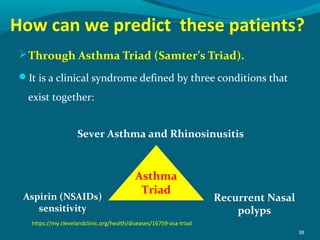
How can we predict these patients?
Through Asthma Triad (Samter’s Triad).
It is a clinical syndrome defined by three conditions that
exist together:
38
https://my.clevelandclinic.org/health/diseases/16759-asa-triad
Asthma
Triad
Aspirin (NSAIDs)
sensitivity
Recurrent Nasal
polyps
Sever Asthma and Rhinosinusitis
5- Methylxanthine (e.g. Theophylline)
Mechanism of action
competitive non selective phosphodiesterase enzyme inhibitor,
which raises intracellular cAMP thereby relaxes the airways and
decreases the lungs' response to irritants.
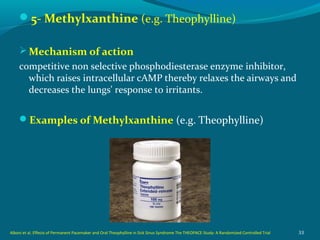
Examples of Methylxanthine (e.g. Theophylline)
33Alboni et al. Effects of Permanent Pacemaker and Oral Theophylline in Sick Sinus Syndrome The THEOPACE Study: A Randomized Controlled Trial
5- Methylxanthine (e.g. Theophylline)
Usual doses:
Starting dose 10 mg/kg/day.
Maximum dose 800 mg /day divided into 1-2doses.
Side effects of theophylline
 At high levels:
 Nausea , vomiting,
 CNS stimulant, Headache
 Tachycardia,
 Seizures,
 Hypokalemia
 Hematemesis
 hyperglycemia.
33Alboni et al. Effects of Permanent Pacemaker and Oral Theophylline in Sick Sinus Syndrome The THEOPACE Study: A Randomized Controlled Trial
41
II. Quick-relief medications:
 These asthma medications open the lungs by relaxing airway
muscles.
 They're often called rescue medications because they can
improve worsening symptoms or stop an asthma attack rapidly.
 They begin working within minutes and are effective for 4 to 6
hours.
 For some people, using a quick-relief inhaler before exercise
helps prevent shortness of breath and other asthma symptoms.
35
1- Short-acting β2 agonists (SABAs)
Mechanism of action :
They act on beta2 adrenergic receptor thereby causing smooth
muscle relaxation , resulting in dilatation of bronchial passages and
reduce swelling.
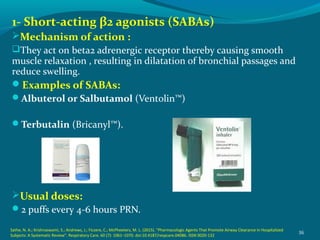
Examples of SABAs:
Albuterol or Salbutamol (Ventolin™)
Terbutalin (Bricanyl™).
Usual doses:
2 puffs every 4-6 hours PRN.
36
Sathe, N. A.; Krishnaswami, S.; Andrews, J.; Ficzere, C.; McPheeters, M. L. (2015). "Pharmacologic Agents That Promote Airway Clearance in Hospitalized
Subjects: A Systematic Review". Respiratory Care. 60 (7): 1061–1070. doi:10.4187/respcare.04086. ISSN 0020-132
Side effects of SABAs
 Tachycardia, skeletal muscle tremor, headache and irritability.
 At very high dose hyperglycemia and hypokalemia.
Remarks on SABAs
Short-acting asthma medications are often used to treat asthma
attacks and exercise-induced asthma but shouldn't be used on a
regular, daily basis as it is toxic in high concentration.
 If the patient need to use inhaler more often than the doctor
recommendations, this means that the asthma is not under control
and the patient may be in increasing risk of a serious asthma attack
and should be referred to the doctor for reassessment.
37
Sathe, N. A.; Krishnaswami, S.; Andrews, J.; Ficzere, C.; McPheeters, M. L. (2015). "Pharmacologic Agents That Promote Airway Clearance in Hospitalized
Subjects: A Systematic Review". Respiratory Care. 60 (7): 1061–1070. doi:10.4187/respcare.04086. ISSN 0020-132
2- Anticholinergics
Mechanism of action :
Competitive muscarinic antagonists that inhibit the effect of
acetylcholine at muscarinic receptors producing
bronchodilatation in the airways.
e.g. Ipratropium bromide (Atrovent®) (SAMA)
Usual doses:
38
MDI: 4-6 puffs q6h or q20 min in the
emergency department.
Nebulizer: 500 μg q20min x 3 times
then q2-4hrs for adults and 250-500 μg
for children.
Peters SP, Kunselman SJ, Icitovic N, et al. Tiotropium bromide step-up therapy for adults with uncontrolled asthma (TALC study). N Engl J Med 2010;363:1715-
26.
2- Anticholinergics Continue…..
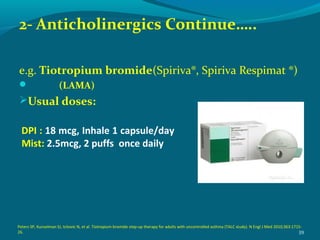
e.g. Tiotropium bromide(Spiriva®, Spiriva Respimat ®)
 (LAMA)
Usual doses:
39
DPI : 18 mcg, Inhale 1 capsule/day
Mist: 2.5mcg, 2 puffs once daily
Peters SP, Kunselman SJ, Icitovic N, et al. Tiotropium bromide step-up therapy for adults with uncontrolled asthma (TALC study). N Engl J Med 2010;363:1715-
26.
2- Anticholinergics Continue…..
Side effects of Anticholinergics:
Minimal mouth dryness or bad taste in the mouth
Headache
Flushed skin
Blurred vision
Tachycardia and palpitations.
39
Peters SP, Kunselman SJ, Icitovic N, et al. Tiotropium bromide step-up therapy for adults with uncontrolled asthma (TALC study). N Engl J Med 2010;363:1715-
26.
3- Oral corticosteroids for serious asthma attacks
Mechanism of action:
As ICS, Decreases inflammation and reduces airway hyper-
responsiveness
Examples include:
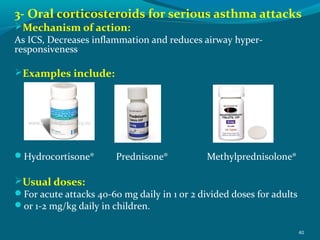
Hydrocortisone® Prednisone® Methylprednisolone®
Usual doses:
For acute attacks 40-60 mg daily in 1 or 2 divided doses for adults
or 1-2 mg/kg daily in children.
40
Side effects of Oral corticosteroids :
Long-term use of these medications can cause side effects
including osteoporosis, hypertension, diabetes, cataracts,
adrenal suppression, growth suppression, obesity, skin thinning
or muscle weakness.
Consider coexisting conditions that could be worsened by oral
glucocorticosteroids, e.g. herpes virus infections, Varicella,
tuberculosis, hypertension, diabetes and osteoporosis
41
Leuppi JD, Schuetz P, Bingisser R, et al. Shortterm vs conventional glucocorticoid therapy in acute exacerbations of Asthma:: the REDUCE randomized clinical trial.
JAMA 2013;309:2223-31.
III.Medications for allergy-induced asthma
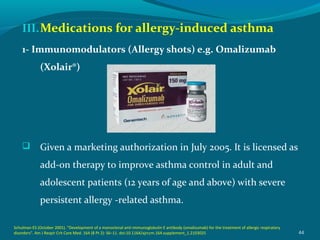
1- Immunomodulators (Allergy shots) e.g. Omalizumab
(Xolair®)
 Given a marketing authorization in July 2005. It is licensed as
add-on therapy to improve asthma control in adult and
adolescent patients (12 years of age and above) with severe
persistent allergy -related asthma.
44
Schulman ES (October 2001). "Development of a monoclonal anti-immunoglobulin E antibody (omalizumab) for the treatment of allergic respiratory
disorders". Am J Respir Crit Care Med. 164 (8 Pt 2): S6–11. doi:10.1164/ajrccm.164.supplement_1.2103025
Omalizumab (Xolair®) contin……
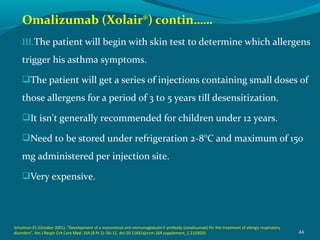
III.The patient will begin with skin test to determine which allergens
trigger his asthma symptoms.
The patient will get a series of injections containing small doses of
those allergens for a period of 3 to 5 years till desensitization.
It isn't generally recommended for children under 12 years.
Need to be stored under refrigeration 2-8°C and maximum of 150
mg administered per injection site.
Very expensive.
44
Schulman ES (October 2001). "Development of a monoclonal anti-immunoglobulin E antibody (omalizumab) for the treatment of allergic respiratory
disorders". Am J Respir Crit Care Med. 164 (8 Pt 2): S6–11. doi:10.1164/ajrccm.164.supplement_1.2103025
Omalizumab (Xolair®) contin……
 Mechanism of action:
Inhibits free serum IgE binding to high affinity IgE receptors on
mast cells and basophils, thereby inhibiting the release of
various inflammatory mediators responsible for symptoms in
allergic asthma.
45
Schulman ES (October 2001). "Development of a monoclonal anti-immunoglobulin E antibody (omalizumab) for the treatment of allergic respiratory
disorders". Am J Respir Crit Care Med. 164 (8 Pt 2): S6–11. doi:10.1164/ajrccm.164.supplement_1.2103025
Usual doses:
Side effects of Omalizumab
Pain and bruising at injection site(5-20%).
Thrombocytopenia (transient).
very rarely anaphylaxis (0.1%).
46
Adults: 150-375 mg
administered subcutaneously
every 2-4 weeks depending on
weight and IgE Concentration.
Don’t inject > 150 mg per
injection site.
Schulman ES (October 2001). "Development of a monoclonal anti-immunoglobulin E antibody (omalizumab) for the treatment of allergic respiratory
disorders". Am J Respir Crit Care Med. 164 (8 Pt 2): S6–11. doi:10.1164/ajrccm.164.supplement_1.2103025
References Agency for Healthcare Research and Quality.Module 4: measuring quality of care for asthma. Available at
www.ahrq.gov/qual/asthmacare/ asthmod4.htm. Accessed September 1, 2014
 Alboni et al. Effects of Permanent Pacemaker and Oral Theophylline in Sick Sinus Syndrome The
THEOPACE Study: A Randomized Controlled Trial
 National Institutes of Health National Heart, Lung and Blood Institute. National Asthma Education and
Prevention Program (NAEPP) guidelines. NAEPP Expert Panel Report 3. NIH Publication 08-5846. July 2007.
Available at www.nhlbi.nih.gov/guidelines/index.htm. Accessed September 1,2014.
 GINA guidelines 2015
 Leuppi JD, Schuetz P, Bingisser R, et al. Shortterm vs conventional glucocorticoid therapy in acute
exacerbations of chronic obstructive pulmonary disease: the REDUCE randomized clinical trial. JAMA
2013;309:2223-31.
 Martinez FD, Chinchilli VM, Morgan WJ, et al. Use of beclomethasone dipropionate as rescue treatment for
children with mild persistent asthma (TREXA): a randomized, double-blind, placebo- controlled trial.
Lancet 2011;377:650-7.
 Nelson HS, Weiss ST, Bleecker ER, et al. The Salmeterol Multicenter Asthma Research Trial (SMART): a
comparison of usual pharmacotherapy for asthma or usual pharmacotherapy plus salmeterol. Chest
2006;129:15-26.
 Bateman et al. Am J Respir Crit Care Med 2004
 Price D, Musgrave SD, Shepstone L, et al. Leukotriene antagonists as first-line or add-on asthma-controller
therapy. N Engl J Med 2011;364:1695-707.
 Sathe, N. A.; Krishnaswami, S.; Andrews, J.; Ficzere, C.; McPheeters, M. L. (2015). "Pharmacologic Agents That
Promote Airway Clearance in Hospitalized Subjects: A Systematic Review". Respiratory Care. 60 (7): 1061–
1070. doi:10.4187/respcare.04086. ISSN 0020-132
 Peters SP, Kunselman SJ, Icitovic N, et al. Tiotropium bromide step-up therapy for adults with uncontrolled
asthma (TALC study). N Engl J Med 2010;363:1715-26.
 Schulman ES (October 2001). "Development of a monoclonal anti-immunoglobulin E antibody
(omalizumab) for the treatment of allergic respiratory disorders". Am J Respir Crit Care Med. 164 (8 Pt 2):
S6–11. doi:10.1164/ajrccm.164.supplement_1.2103025
 Schwartz HJ, Blumenthal M, Brady R, et al. (April 1996). "A comparative study of the clinical efficacy of nedocromil sodium and
placebo. How does cromolyn sodium compare as an active control treatment?". Chest. 109 (4): 945–52. doi:10.1378/chest.109.4.945.
PMID 8635375
62
Questions???
55
Thank
you
63

Asthma medications 9

  • 1.
    Dr. Yasser Morsy.PhD, MSc, BCACP, FCCP Clinical Pharmacy Specialist Senior Clinical Instructor WFDT 1
  • 2.
    Disclosure of Conflictof Interest I Dr. Yasser Morsy DO NOT have a financial interest/arrangement or affiliation with anyone in relation to this program/presentation/organization that could be perceived as a real or apparent conflict of interest in the context of the subject of this presentation. 2
  • 3.
    Key Points Selection ofAsthma Medications Classification of asthma Medications Mechanism of action Usual doses Side effects 3
  • 4.
    1. Wenzel SE.Nat Med 2012;18:716–25; 2. Holgate ST. Asthma Pathogenesis. In: Adkinson NF, et al. (eds) Middleton's Allergy: Principles and Practice. 8th ed. Saunders Elsevier, PA: 2014. p812 3. Walford HH, Doherty TA. J Asthma Allergy 2014;7:53–65. Asthma is a complex, heterogeneous clinical syndrome1 3‒ characterised by variable airflow obstruction, airway hyperresponsiveness and cellular inflammation2 It is defined by the history of respiratory symptoms such as wheeze, shortness of breath, chest tightness and cough that vary over time and in intensity, together with variable expiratory airflow limitation (GINA 2017) Adapted from Holgate and Sly, 2014.2
  • 5.
  • 6.
    Play an importantrole in treatment of asthma. Selection of medication and doses depends on: •Age •Symptoms •Severity of asthma •Side effects. •Cost 4 Agency for Healthcare Research and Quality.Module 4: measuring quality of care for asthma. Available at www.ahrq.gov/qual/asthmacare/ asthmod4.htm. Accessed September 1, 2014
  • 7.
    5 Agency for HealthcareResearch and Quality.Module 4: measuring quality of care for asthma. Available at www.ahrq.gov/qual/asthmacare/ asthmod4.htm. Accessed September 1, 2014
  • 8.
    Classification of asthma(old) Type of Asthma Daytime asthma symptoms Night-time asthma symptoms Exacerbations Spirometry (NAEPP) Recommended steps for initiating treatment Intermittent Less than weekly (≤2 days/week) Less than 2 per month (≤2 times/month) - Infrequent - Brief (0 or 1/year) -FEV1 at least 80% predicted -FEV1 variability less than 20% Step 1 Mild persistent More than weekly and less than daily (>2days/week), but not daily More than 2 per month but not weekly (3 or 4 times/month) - Occasional - May affect activity or sleep (≥ 2/year) -FEV1 at least 80% predicted FEV1 variability 20-30% Step 2 Moderate persistent Daily Weekly or more often (more than once weekly, but not nightly) - Occasional - May affect activity or sleep (≥ 2/year) -FEV1 60-80% predicted FEV1 variability more than 30% Step 3 and consider short course of oral steroids Severe persistent -Daily (Throughout the day) -Physical activity is restricted Frequent (often 7 times/ week) Frequent (≥ 2/year) -FEV1 60% predicted or less FEV1 variability more than 30% Step 4 or 5 and consider short course of oral steroids 8 National Institutes of Health National Heart, Lung and Blood Institute. National Asthma Education and Prevention Program (NAEPP) guidelines. NAEPP Expert Panel Report 3. NIH Publication 08-5846. July 2007. Available at www.nhlbi.nih.gov/guidelines/index.htm. Accessed September 1,2014.
  • 9.
    Mild asthma well-controlled withSteps 1 or 2 GINA Guidelines Treatment (As-needed SABA or low dose ICS). Moderate asthma well-controlled with Step 3 GINA Guidelines Treatment (low- dose ICS/LABA). Severe asthma requires Step 4/5 GINA Guidelines Treatment (moderate or high dose ICS/LABA ± add-on), or remains uncontrolled despite this treatment. Classification of asthma (Assessing asthma severity) GINA 2017 GINA 2017GINA 2017
  • 10.
    Stepwise management -pharmacotherapy GINA2017, Box 3-5, Step 1 (4/8) PREFERRED CONTROLLER CHOICE Other controller options RELIEVER STEP 1 STEP 2 STEP 3 STEP 4 STEP 5 Low dose ICS Consider low dose ICS Leukotriene receptor antagonists (LTRA) Low dose theophylline* Med/high dose ICS Low dose ICS+LTRA (or + theoph*) As-needed short-acting beta2-agonist (SABA) As-needed SABA or low dose ICS/formoterol# Low dose ICS/LABA** Med/high ICS/LABA *Not for children <12 years **For children 6-11 years, the preferred Step 3 treatment is medium dose ICS #For patients prescribed BDP/formoterol or BUD/ formoterol maintenance and reliever therapy  Tiotropium by mist inhaler is an add-on treatment for patients ≥12 years with a history of exacerbations Add tiotropium* High dose ICS + LTRA (or + theoph*) Add low dose OCS Refer for add-on treatment e.g. tiotropium,* anti-IgE, anti-IL5*
  • 11.
    I. Long-term controlmedications 1- Glucocorticosteroids:  Mechanism of action in asthma: 1. Inhibition of production of inflammatory cytokines, they don’t relax airway smooth muscles directly but reduce bronchial reactivity, increase airway caliber , reduce the frequency of asthma exacerbation if taken regularly. 2. reduce swelling and tightening in airways and the most important action is their inhibition of the lymphocytic, eosinophilic airway mucosal inflammation of asthmatic airways. 11GINA Guidelines 2017
  • 12.
    Inhaled corticosteroids(ICS) These anti-inflammatorydrugs are the most effective and commonly used long-term control medications for asthma. The various inhaled corticosteroids (ICS) do not seem to differ in efficacy (except Fluticasone& Mometasone provides equal clinical action to beclometasone, but at half the dose. 12 GINA Guidelines 2017
  • 13.
    • Beclomethasone Dipropionate[BDP]( Becotide®). Budesonide (Pulmicort Turbohaler® ), Fluticasone (flixotide Evohaler® 50 , 125 mcg). Mometasone (Asmanex®). Ciclesonide (Alvesco®) Usual doses: Beginning dose depends on asthma control then titrated down over 2-3 months to lowest effective dose once control is achieved. The British Guideline says 100-400μg daily of Beclometasone Bipropionate [BDP], or equivalent, is appropriate for most adults The recommended “standard dose” in children is 100-200 μg/day of [BDP], or equivalent. 13 Leuppi JD, Schuetz P, Bingisser R, et al. Shortterm vs conventional glucocorticoid therapy in acute exacerbations of chronic obstructive pulmonary disease: the REDUCE randomized clinical trial. JAMA 2013;309:2223-31.
  • 14.
    Inhaled corticosteroids(ICS) continue… Beclometasoneand Budesonide show that they are approximately equivalent in clinical practice Fluticasone and Mometasone provides equal clinical action to Beclometasone, but at half dose. Ciclesonide is a newer steroid which claims to have less systemic effect and cause fewer oropharyngeal adverse effects than conventional steroids, but The UK asthma guideline states that, “The clinical benefit of Ciclesonide is not clear as the exact efficacy to safety ratio compared to other inhaled corticosteroids has not been established.” MHRA/CHM advice (July 2008) is that Beclometasone inhalers should be prescribed by brand name, because their delivery characteristics, potency, and therefore doses vary and so they are not interchangeable. 14 Martinez FD, Chinchilli VM, Morgan WJ, et al. Use of beclomethasone dipropionate as rescue treatment for children with mild persistent asthma (TREXA): a randomized, double-blind, placebo- controlled trial. Lancet 2011;377:650-7.
  • 15.
    Inhaled corticosteroid Totaldaily dose(mcg) Low Medium High Beclomethasone dipropionate (HFA) (Beclozone, Clenil) { 50, 250} 100-200 >200-400 >400 Budesonide(DPI) Pulmicort{80} 200-400 >400-800 >800 Budesonide(Nebules) Pulmicort{250} 250-500 >500-1000 >1000 Fluticasone propionate (HFA) Flexotide{50,125} 100-250 >250-500 >500 Combined medications: Budesonide and Formetrol ( Symbicort) 160/4.5 , 320/9. Fluticasone and Salmetrol ( Seretide) 50/25 , 125/25, 250/50 , 500/50 Fluticasone and Formetrol (flutiform®) 250/10, 125/5, 50/5 Low, medium and high dose inhaled corticosteroids Adults and adolescents (≥12 years) GINA Guidelines 2017 [HydroFluoroAlkane ]
  • 16.
    Inhaled corticosteroid Totaldaily dose(mcg) Low Medium High Beclomethasone dipropionate (HFA) (Beclozone, Clenil) { 50, 250} 50-100 >100-200 >200 Budesonide(DPI) Pulmicort{80} 100-200 >200-400 >400 Budesonide(Nebules) Pulmicort{250} 250-500 >500-1000 >1000 Fluticasone propionate (HFA) Flexotide{50,125} 100-200 >200-500 >500 Low, medium and high dose inhaled corticosteroids Children 6–11 years GINA Guidelines 2017
  • 17.
    Affinity of inhaledcorticosteroids 17Valotis A and Högger P. Respiratory Research. 2007;8:54–62
  • 18.
     Side effects: 1-Short and long Term effects These side effects are Dose and potency dependent: Oro- pharyngeal candidiasis Dysphonia Upper airway irritation Easy bruising Adrenal suppression (fluticasone in particular has been associated with adrenal suppression at doses above 400μg/day). Decrease bone mineral density (Osteoporosis) Posterior sub capsular cataract Leuppi JD, Schuetz P, Bingisser R, et al. Shortterm vs conventional glucocorticoid therapy in acute exacerbations of Asthma:: the REDUCE randomized clinical trial. JAMA 2013;309:2223-31.
  • 19.
    2- Corticosteroids andosteoporosis CXR Patients on high dose inhaled or any dose oral steroids for long period of time should have CXR view for vertebral fractures, wedging, compression of vertebral bodies 18 Leuppi JD, Schuetz P, Bingisser R, et al. Shortterm vs conventional glucocorticoid therapy in acute exacerbations of Asthma: the REDUCE randomized clinical trial. JAMA 2013;309:2223-31.
  • 20.
    Corticosteroids and osteoporosiscontinue… Dual energy x ray absorption (DXA) scan Should be done for : Any patient on oral Corticosteroids for more than 6 month at dose of 7.5 mg prednisolone or above Post-menopausal women taking over 5 mg prednisolone for more than 3 month Post-menopausal women on more than 2 mg (2000 μg/day) inhaled BDP (Beclometasone dipropionate) or equivalent Any patient receiving frequent short courses of high dose steroids Leuppi JD, Schuetz P, Bingisser R, et al. Shortterm vs conventional glucocorticoid therapy in acute exacerbations of Asthma:: the REDUCE randomized clinical trial. JAMA 2013;309:2223-31.
  • 21.
    3- Glucocorticosteroids andgrowth retardation in children Uncontrolled asthma adversely affect growth and final adult height No statistically significant effect on growth was found with doses < 200μg daily Different age groups differ in their susceptibility , age 4- 10 years are more susceptible Children with asthma treated with steroids attain normal height at later age
  • 22.
    2- Long-acting β2agonists (LABAs) Mechanism of action : They act on beta2 adrenergic receptor thereby causing smooth muscle relaxation , resulting in dilatation of bronchial passages and reduce swelling. Their effects last at least 12 hours and they're used to control moderate to severe asthma and to prevent nighttime symptoms. LABAs are used on a regular schedule along with inhaled corticosteroids. 21 Nelson HS, Weiss ST, Bleecker ER, et al. The Salmeterol Multicenter Asthma Research Trial (SMART): a comparison of usual pharmacotherapy for asthma or usual pharmacotherapy plus salmeterol. Chest 2006;129:15-26.
  • 23.
    Long-acting β2 agonists(LABAs) continue …. The British Guideline recommends that standard-dose inhaled corticosteroid plus long-acting beta-2-agonists (LABAs) are preferred alternative to the use of high dose inhaled corticosteroid at Step 3 of treatment, in adults, and in children over 5 years. This recommendation is based on studies which show that adding Salmeterol to a low or moderate dose of ICS produces comparable control to monotherapy with a high dose of steroid. Similar results have been found in studies on Formoterol. 22 Nelson HS, Weiss ST, Bleecker ER, et al. The Salmeterol Multicenter Asthma Research Trial (SMART): a comparison of usual pharmacotherapy for asthma or usual pharmacotherapy plus salmeterol. Chest 2006;129:15-26.
  • 24.
    Long-acting β2 agonists(LABAs) continue …. They should be used in combination with inhaled corticosteroid, if used a lone they may induce sever asthma attacks and increase the mortality rate. “the British Guideline recommends that LABAs should only be started in patients who are already on an ICS, and the steroid should be continued”. 24
  • 25.
    0 %ofpatientswhoachieved guideline-definedcontrolinPhaseI ICS/LABA 500 ICS/LABA 250 ICS500 ICS 250 ICS/LABA 100ICS 100 20 80 40 60 500 250 100 100 250 500 GOAL Study Stratum 2, phase I ICS ICS/LABA GINA guideline-defined control is achieved with ICS/LABA at reduced corticosteroid dose Bateman et al. Am J Respir Crit Care Med 2004
  • 26.
    Long-acting β2 agonists(LABAs) continue …. 25 Inhaled LABAs Formoterol (Foradil®) Usual doses: DPI : 1 inhalation (12 μg) bid. MDI : 2 puffs bid. Salmeterol (Serevent®) Usual doses: DPI: 1 inhalation (50 μg) bid. MDI : 2 puffs bid. Sustained-release Tablets Salbutamol (salbutamol®) Usual doses: 4 mg q 12h. Terbutaline (Terbutaline®) Usual doses: 10 mg q 12h. GINA Guidelines 2017
  • 27.
     Side effectsof inhaled LABAs: Fewer, and less significant, side effects than tablets. Using Salmeterol more than the recommended dosage of 50 μg (two puffs of a standard MDI) twice daily can cause adverse effects such as:  Nausea  Headache  Muscle cramps These minor adverse effects do not usually seem to be such a problem with formoterol and this is part of the reason why the ‘as needed’ SMART regime for Symbicort® was approved. 26 GINA Guidelines 2017
  • 28.
     Side effectsof inhaled LABAs Continue:  Have been associated with an increased risk of severe exacerbations and asthma deaths when added to usual therapy a lone without corticosteroids. Side effects of Sustained-release Tablets LABAs:  Nausea and vomiting are most common, tachycardia, anxiety, skeletal muscle tremor , headache and hypokalemia. Serious effects occurring at higher serum concentrations include seizures, tachycardia and arrhythmias. 26 GINA Guidelines 2017
  • 29.
    27 Budesonide/ Formoterol (Symbicort®) Usual doses: BID Fluticasone/ Salmeterol (Sertide Diskus®) 100/50,250/50, 500/50 mcg/puff Usual doses: BID Mometasone/ Formoterol (Dulera®) Usual doses: BID 3- Combination inhalers: ICS+LABA GINA Guidelines 2017
  • 30.
    Fluticasone/Formoterol (flutiform® ) New ICS/LABAoption for the regular maintenance treatment of asthma Combines the ICS fluticasone and the LABA formoterol in a single High Deposition Inhaler (HDI) A modern, orange and grey device with a patient-facing dose counter  30 GINA Guidelines 2017
  • 31.
    Fluticasone/Formoterol (flutiform® ) Cont….. Usualdoses: 31 Intended for regular maintenance therapy for asthma in adults and adolescents has been developed at three dose strengths • 250/10 µg (high dose); for use in adults only • 125/5 µg (medium dose) • 50/5 µg (low dose) GINA Guidelines 2017
  • 32.
    4- Leukotriene modifiers: (LeukotrieneReceptor Antagonist) Role of Leukotriene in asthma: Leukotrienes are substances released when a trigger such as cat hair , dust or NSAIDs starts a series of chemical reactions in the body. Leukotrienes cause airflow obstruction, increased secretion of mucus, mucosal accumulation, bronchoconstriction, infiltration of inflammatory cells in the airway wall. Mechanism of action of Leukotriene modifiers : 1. Inhibition of 5- lipoxygenase enzyme synthesis. 2. Inhibition of the binding of Leukotriene D4 to its receptors on target tissues thereby preventing its action. 28Price D, Musgrave SD, Shepstone L, et al. Leukotriene antagonists as first-line or add-on asthma-controller therapy. N Engl J Med 2011;364:1695-707.
  • 33.
    30 Zileuton (Zyflo®) Usual doses: Adults: 600 mg qid Montelukast (Singulair®) Usualdoses: Adults: 10 mg/day Children: (6- 14 y)5 mg /day (2-5 y) 4 mg /day Pranlukast (Azlaire®) Usual doses: Adults: 450 mg bid Zafirlukast (Accolate®) Usual doses: Adults: 20 mg bid Children: (7 - 11 y) 10 mg bid Examples include: Price D, Musgrave SD, Shepstone L, et al. Leukotriene antagonists as first-line or add-on asthma-controller therapy. N Engl J Med 2011;364:1695-707.
  • 34.
    Leukotriene modifiers continue….  They have been shown to provide: 1. An improvement in lung function. 2. A decrease in exacerbations. 3. An improvement in symptoms.  These drugs are not suitable for relieving an acute attack of asthma and do not necessarily allow a reduction in the dose of regular ICS.  The problem with deciding the place of these drugs is that they clearly are less effective than ICS in preventing asthma symptoms in the long-term and also less effective than the addition of a LABA.  Montelukast is currently indicated for the prophylaxis of asthma and it has also been licensed for symptomatic relief of seasonal allergic rhinitis in asthmatic patients for whom the drug is indicated for asthma.  Zafirlukast is licensed for the prophylaxis of asthma. 29Price D, Musgrave SD, Shepstone L, et al. Leukotriene antagonists as first-line or add-on asthma-controller therapy. N Engl J Med 2011;364:1695-707.
  • 35.
    Side effects ofLeukotriene modifiers : No specific adverse effects up to date at recommended doses. Elevation of liver enzymes may occur with Zafirlukast and Zileuton. Limited case reports of reversible hepatitis and hyperbilirubinemia with Zileuton. In rare cases, these medications have been linked to psychological reactions such as agitation, aggression, hallucinations, depression and suicidal thinking. 31Price D, Musgrave SD, Shepstone L, et al. Leukotriene antagonists as first-line or add-on asthma-controller therapy. N Engl J Med 2011;364:1695-707.
  • 36.
  • 37.
    Why NSAIDs areC.I in Aspirin induced Bronchial Asthma? 37Price D, Musgrave SD, Shepstone L, et al. Leukotriene antagonists as first-line or add-on asthma-controller therapy. N Engl J Med 2011;364:1695-707.
  • 38.
    How can wepredict these patients? Through Asthma Triad (Samter’s Triad). It is a clinical syndrome defined by three conditions that exist together: 38 https://my.clevelandclinic.org/health/diseases/16759-asa-triad Asthma Triad Aspirin (NSAIDs) sensitivity Recurrent Nasal polyps Sever Asthma and Rhinosinusitis
  • 39.
    5- Methylxanthine (e.g.Theophylline) Mechanism of action competitive non selective phosphodiesterase enzyme inhibitor, which raises intracellular cAMP thereby relaxes the airways and decreases the lungs' response to irritants. Examples of Methylxanthine (e.g. Theophylline) 33Alboni et al. Effects of Permanent Pacemaker and Oral Theophylline in Sick Sinus Syndrome The THEOPACE Study: A Randomized Controlled Trial
  • 40.
    5- Methylxanthine (e.g.Theophylline) Usual doses: Starting dose 10 mg/kg/day. Maximum dose 800 mg /day divided into 1-2doses. Side effects of theophylline  At high levels:  Nausea , vomiting,  CNS stimulant, Headache  Tachycardia,  Seizures,  Hypokalemia  Hematemesis  hyperglycemia. 33Alboni et al. Effects of Permanent Pacemaker and Oral Theophylline in Sick Sinus Syndrome The THEOPACE Study: A Randomized Controlled Trial
  • 41.
  • 42.
    II. Quick-relief medications: These asthma medications open the lungs by relaxing airway muscles.  They're often called rescue medications because they can improve worsening symptoms or stop an asthma attack rapidly.  They begin working within minutes and are effective for 4 to 6 hours.  For some people, using a quick-relief inhaler before exercise helps prevent shortness of breath and other asthma symptoms. 35
  • 43.
    1- Short-acting β2agonists (SABAs) Mechanism of action : They act on beta2 adrenergic receptor thereby causing smooth muscle relaxation , resulting in dilatation of bronchial passages and reduce swelling. Examples of SABAs: Albuterol or Salbutamol (Ventolin™) Terbutalin (Bricanyl™). Usual doses: 2 puffs every 4-6 hours PRN. 36 Sathe, N. A.; Krishnaswami, S.; Andrews, J.; Ficzere, C.; McPheeters, M. L. (2015). "Pharmacologic Agents That Promote Airway Clearance in Hospitalized Subjects: A Systematic Review". Respiratory Care. 60 (7): 1061–1070. doi:10.4187/respcare.04086. ISSN 0020-132
  • 44.
    Side effects ofSABAs  Tachycardia, skeletal muscle tremor, headache and irritability.  At very high dose hyperglycemia and hypokalemia. Remarks on SABAs Short-acting asthma medications are often used to treat asthma attacks and exercise-induced asthma but shouldn't be used on a regular, daily basis as it is toxic in high concentration.  If the patient need to use inhaler more often than the doctor recommendations, this means that the asthma is not under control and the patient may be in increasing risk of a serious asthma attack and should be referred to the doctor for reassessment. 37 Sathe, N. A.; Krishnaswami, S.; Andrews, J.; Ficzere, C.; McPheeters, M. L. (2015). "Pharmacologic Agents That Promote Airway Clearance in Hospitalized Subjects: A Systematic Review". Respiratory Care. 60 (7): 1061–1070. doi:10.4187/respcare.04086. ISSN 0020-132
  • 45.
    2- Anticholinergics Mechanism ofaction : Competitive muscarinic antagonists that inhibit the effect of acetylcholine at muscarinic receptors producing bronchodilatation in the airways. e.g. Ipratropium bromide (Atrovent®) (SAMA) Usual doses: 38 MDI: 4-6 puffs q6h or q20 min in the emergency department. Nebulizer: 500 μg q20min x 3 times then q2-4hrs for adults and 250-500 μg for children. Peters SP, Kunselman SJ, Icitovic N, et al. Tiotropium bromide step-up therapy for adults with uncontrolled asthma (TALC study). N Engl J Med 2010;363:1715- 26.
  • 46.
    2- Anticholinergics Continue….. e.g.Tiotropium bromide(Spiriva®, Spiriva Respimat ®)  (LAMA) Usual doses: 39 DPI : 18 mcg, Inhale 1 capsule/day Mist: 2.5mcg, 2 puffs once daily Peters SP, Kunselman SJ, Icitovic N, et al. Tiotropium bromide step-up therapy for adults with uncontrolled asthma (TALC study). N Engl J Med 2010;363:1715- 26.
  • 47.
    2- Anticholinergics Continue….. Sideeffects of Anticholinergics: Minimal mouth dryness or bad taste in the mouth Headache Flushed skin Blurred vision Tachycardia and palpitations. 39 Peters SP, Kunselman SJ, Icitovic N, et al. Tiotropium bromide step-up therapy for adults with uncontrolled asthma (TALC study). N Engl J Med 2010;363:1715- 26.
  • 48.
    3- Oral corticosteroidsfor serious asthma attacks Mechanism of action: As ICS, Decreases inflammation and reduces airway hyper- responsiveness Examples include: Hydrocortisone® Prednisone® Methylprednisolone® Usual doses: For acute attacks 40-60 mg daily in 1 or 2 divided doses for adults or 1-2 mg/kg daily in children. 40
  • 49.
    Side effects ofOral corticosteroids : Long-term use of these medications can cause side effects including osteoporosis, hypertension, diabetes, cataracts, adrenal suppression, growth suppression, obesity, skin thinning or muscle weakness. Consider coexisting conditions that could be worsened by oral glucocorticosteroids, e.g. herpes virus infections, Varicella, tuberculosis, hypertension, diabetes and osteoporosis 41 Leuppi JD, Schuetz P, Bingisser R, et al. Shortterm vs conventional glucocorticoid therapy in acute exacerbations of Asthma:: the REDUCE randomized clinical trial. JAMA 2013;309:2223-31.
  • 50.
    III.Medications for allergy-inducedasthma 1- Immunomodulators (Allergy shots) e.g. Omalizumab (Xolair®)  Given a marketing authorization in July 2005. It is licensed as add-on therapy to improve asthma control in adult and adolescent patients (12 years of age and above) with severe persistent allergy -related asthma. 44 Schulman ES (October 2001). "Development of a monoclonal anti-immunoglobulin E antibody (omalizumab) for the treatment of allergic respiratory disorders". Am J Respir Crit Care Med. 164 (8 Pt 2): S6–11. doi:10.1164/ajrccm.164.supplement_1.2103025
  • 51.
    Omalizumab (Xolair®) contin…… III.Thepatient will begin with skin test to determine which allergens trigger his asthma symptoms. The patient will get a series of injections containing small doses of those allergens for a period of 3 to 5 years till desensitization. It isn't generally recommended for children under 12 years. Need to be stored under refrigeration 2-8°C and maximum of 150 mg administered per injection site. Very expensive. 44 Schulman ES (October 2001). "Development of a monoclonal anti-immunoglobulin E antibody (omalizumab) for the treatment of allergic respiratory disorders". Am J Respir Crit Care Med. 164 (8 Pt 2): S6–11. doi:10.1164/ajrccm.164.supplement_1.2103025
  • 52.
    Omalizumab (Xolair®) contin…… Mechanism of action: Inhibits free serum IgE binding to high affinity IgE receptors on mast cells and basophils, thereby inhibiting the release of various inflammatory mediators responsible for symptoms in allergic asthma. 45 Schulman ES (October 2001). "Development of a monoclonal anti-immunoglobulin E antibody (omalizumab) for the treatment of allergic respiratory disorders". Am J Respir Crit Care Med. 164 (8 Pt 2): S6–11. doi:10.1164/ajrccm.164.supplement_1.2103025
  • 53.
    Usual doses: Side effectsof Omalizumab Pain and bruising at injection site(5-20%). Thrombocytopenia (transient). very rarely anaphylaxis (0.1%). 46 Adults: 150-375 mg administered subcutaneously every 2-4 weeks depending on weight and IgE Concentration. Don’t inject > 150 mg per injection site. Schulman ES (October 2001). "Development of a monoclonal anti-immunoglobulin E antibody (omalizumab) for the treatment of allergic respiratory disorders". Am J Respir Crit Care Med. 164 (8 Pt 2): S6–11. doi:10.1164/ajrccm.164.supplement_1.2103025
  • 54.
    References Agency forHealthcare Research and Quality.Module 4: measuring quality of care for asthma. Available at www.ahrq.gov/qual/asthmacare/ asthmod4.htm. Accessed September 1, 2014  Alboni et al. Effects of Permanent Pacemaker and Oral Theophylline in Sick Sinus Syndrome The THEOPACE Study: A Randomized Controlled Trial  National Institutes of Health National Heart, Lung and Blood Institute. National Asthma Education and Prevention Program (NAEPP) guidelines. NAEPP Expert Panel Report 3. NIH Publication 08-5846. July 2007. Available at www.nhlbi.nih.gov/guidelines/index.htm. Accessed September 1,2014.  GINA guidelines 2015  Leuppi JD, Schuetz P, Bingisser R, et al. Shortterm vs conventional glucocorticoid therapy in acute exacerbations of chronic obstructive pulmonary disease: the REDUCE randomized clinical trial. JAMA 2013;309:2223-31.  Martinez FD, Chinchilli VM, Morgan WJ, et al. Use of beclomethasone dipropionate as rescue treatment for children with mild persistent asthma (TREXA): a randomized, double-blind, placebo- controlled trial. Lancet 2011;377:650-7.  Nelson HS, Weiss ST, Bleecker ER, et al. The Salmeterol Multicenter Asthma Research Trial (SMART): a comparison of usual pharmacotherapy for asthma or usual pharmacotherapy plus salmeterol. Chest 2006;129:15-26.  Bateman et al. Am J Respir Crit Care Med 2004  Price D, Musgrave SD, Shepstone L, et al. Leukotriene antagonists as first-line or add-on asthma-controller therapy. N Engl J Med 2011;364:1695-707.  Sathe, N. A.; Krishnaswami, S.; Andrews, J.; Ficzere, C.; McPheeters, M. L. (2015). "Pharmacologic Agents That Promote Airway Clearance in Hospitalized Subjects: A Systematic Review". Respiratory Care. 60 (7): 1061– 1070. doi:10.4187/respcare.04086. ISSN 0020-132  Peters SP, Kunselman SJ, Icitovic N, et al. Tiotropium bromide step-up therapy for adults with uncontrolled asthma (TALC study). N Engl J Med 2010;363:1715-26.  Schulman ES (October 2001). "Development of a monoclonal anti-immunoglobulin E antibody (omalizumab) for the treatment of allergic respiratory disorders". Am J Respir Crit Care Med. 164 (8 Pt 2): S6–11. doi:10.1164/ajrccm.164.supplement_1.2103025  Schwartz HJ, Blumenthal M, Brady R, et al. (April 1996). "A comparative study of the clinical efficacy of nedocromil sodium and placebo. How does cromolyn sodium compare as an active control treatment?". Chest. 109 (4): 945–52. doi:10.1378/chest.109.4.945. PMID 8635375 62
  • 55.
  • 56.

Editor's Notes

  • #5 1. Wenzel SE. Nat Med 2012;18:716–25; 2. Holgate ST. Asthma Pathogenesis. In: Adkinson NF, et al. (eds) Middleton&amp;apos;s Allergy: Principles and Practice. 8th ed. Saunders Elsevier, PA: 2014. p812 3. Walford HH, Doherty TA. J Asthma Allergy 2014;7:53–65.
  • #27 DPI= Dry Powder Inhaler MDI= Metered Dose Inhaler
  • #31 Introduction to flutiform HDI This slide builds on the characteristics of formoterol and fluticasone discussed in Module 3 and explains the rationale for combining these agents into flutiform HDI. flutiform HDI is an additional ICS/LABA option for the regular maintenance treatment of asthma. flutiform HDI combines the ICS fluticasone and the LABA formoterol in a single hydrofluoroalkane-based inhaler. Fluticasone has potent anti-inflammatory activity in the lungs when given by inhalation.1 Formoterol provides an onset of bronchodilation (1–3 minutes) that is significantly more rapid than that of salmeterol and comparable to that of the short-acting β2-agonist (SABA) salbutamol.2–4 The flutiform HDI inhaler is a modern, orange and grey device with a patient-facing dose counter. An ICS/LABA therapy with a rapid onset of bronchodilatory action is important in maintenance therapy for asthma, and may encourage patient adherence to a treatment regimen.5,6 References : flutiform HDI SmPC Draft. Accessed January 28, 2015. Palmqvist M, Persson G et al. Inhaled dry-powder formoterol and salmeterol in asthmatic patients: onset of action, duration of effect and potency. Eur Respir J 1997;10:2484–9. van Noord JA, Smeets JJ et al. Salmeterol versus formoterol in patients with moderately severe asthma: onset and duration of action .Eur Respir J 1996;9:1684–8. Politiek MJ, Boorsma M et al. Comparison of formoterol, salbutamol and salmeterol in methacholine-induced severe bronchoconstriction Eur Respir J 1999;13:988–92. Murphy K, Bender B. Treatment of moderate to severe asthma: patient perspectives on combination inhaler therapy and implications for adherence. J Asthma Aller 2009;2:63–72. Hauber AB, Mohamed AF et al. Quantifying asthma patient preferences for onset of effect of combination inhaled corticosteroids and long-acting beta2-agonist maintenance medications. Allergy Asthma Proc 2009;30(2):139–47.
  • #32 flutiform HDI is indicated for the maintenance treatment of asthma. This slide describes the indication for flutiform HDI and the doses at which it has been developed. flutiform HDI is indicated in the treatment of asthma when the use of a combination of an ICS and a LABA is appropriate. In patients not adequately controlled with an ICS plus an ‘as-needed’ SABA. In patients already adequately controlled on both an ICS and a LABA flutiform HDI is intended for regular, twice-daily (b.i.d.), maintenance therapy for asthma in adults and adolescents (≥ 12 years old). flutiform HDI has been developed at three different dose strengths. Two actuations are taken, twice daily: 250/10 μg (high dose; for use in adults only) l 125/5 μg (medium dose) 50/5 μg (low dose) Typically, the flutiform HDI treatment doses are stated; these assume two actuations of the canister dose strength are taken twice daily, and are presented as: 500/20 μg b.i.d. 250/10 μg b.i.d. 100/10 μg b.i.d. Reference : flutiform HDI SmPC Draft. Accessed January 28, 2015.
  • #40 Theophylline level monitoring is often required. Absorption and metabolism may be affected by many factors, including febrile illness.
  • #41 Theophylline level monitoring is often required. Absorption and metabolism may be affected by many factors, including febrile illness.
  • #54 Some references indicate Malignancy as SE.