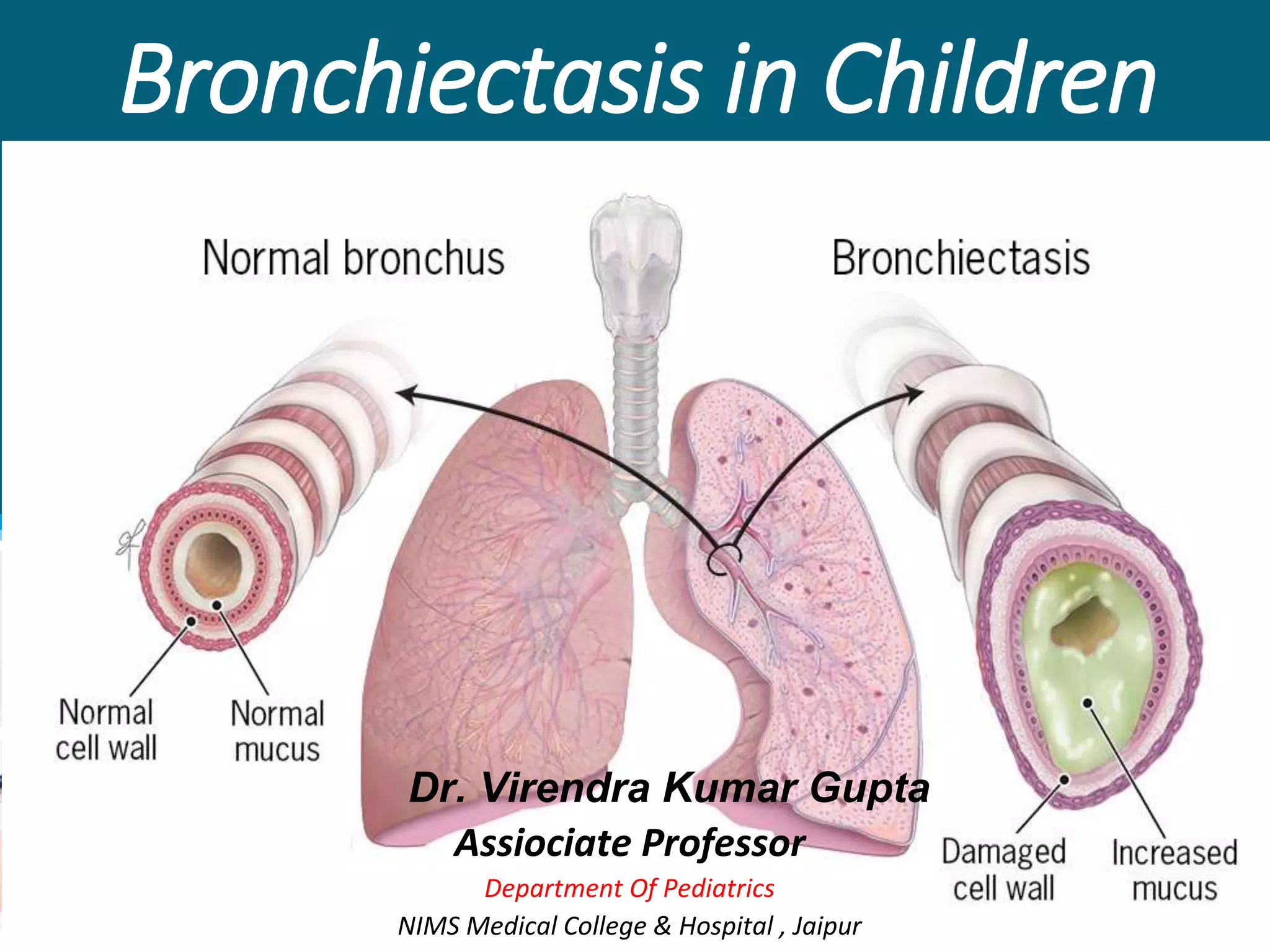
Bronchiectasis in Children
Dr. Virendra Kumar Gupta
Assiociate Professor
Department Of Pediatrics
NIMS Medical College & Hospital , Jaipur
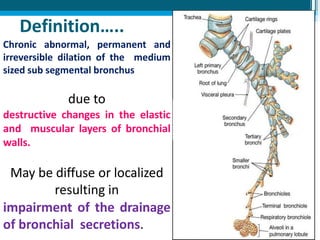
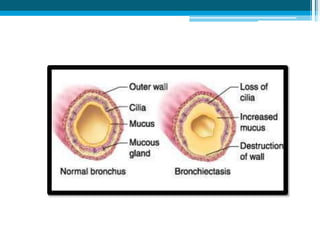
Definition…..
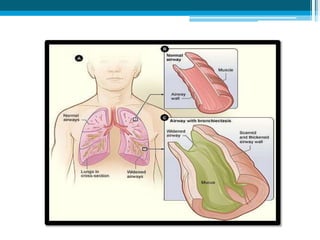
Chronic abnormal, permanent and
irreversible dilation of the medium
sized sub segmental bronchus
due to
destructive changes in the elastic
and muscular layers of bronchial
walls.
May be diffuse or localized
resulting in
impairment of the drainage
of bronchial secretions.
Etiology
Congenital
• Cystic Fibrosis (Most common cause)
• Primary hypogammaglobinemia leading to recurrent
infection
• Ciliary dysfunction syndrome
Acquired (In children)
• Secondary to pneumonia which occurs often as
complication of whooping cough and measles
1. Childhood
Cystic Fibrosis, Pertussis, measles,
Necrotizing pneumonia
2. Primary infections
Pseudomonas
klebsiella species
staphylococcal species
Mycoplasma pneumoniae
Mycobacterium tuberculosis
Measlesvirus
Influenza virus
Herpes simplexvirus
Adenovirus
Pertusisvirus
3. Obstruction
Foreign body
4. Tumor
Laryngeal papillomatosis,adenoma,
bronchogenic , carcinoma
5. Lymphadenopathy
Tuberculosis, histoplasmosis
6. Mucoid impaction
Allergic bronchopulmonary aspergillosis,
bronchocentric granulomatosis, fibrinous bronchitis
7.Congenital anatomicdefect
• Williams-Campbell syndrome (congenital cartilage
deficiency)
• Mounier-Kuhn syndrome (tracheo-bronchomegaly)
• Swyer-James syndrome(unilateral hyperlucent lung),
pulmonary sequestration, pulmonaryartery aneurysm
• yellow nail syndrome(Hypoplastic lymphatics, pleural
effusion, yellow nails )
8.Immunodeficiency state
IgG subclass deficiency, X-linked,
agammaglobulinemia, selective IgA, IgM, or IgE
deficiency, bare lymphocyte syndrome, chronic
granulomatous disease, Nezelof syndrome (Thymic
dysplasia with normal immunoglobulins)
9.Hereditaryabnormality
Dyskinetic cilia syndrome,
Kartagener’s syndrome (situs inversus,
nasal polyposis and bronchiectasis)
α 1-antitrypsin deficiency
cystic fibrosis, ADPKDK
Pathogenesis
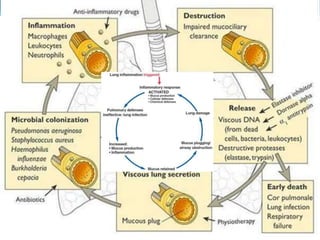
The common thread in the pathogenesis of
bronchiectasis
consists of difficulty clearing secretions & recurrent
infections with a
“vicious circle”
of infection and inflammation
resulting in airway injury and remodelling.
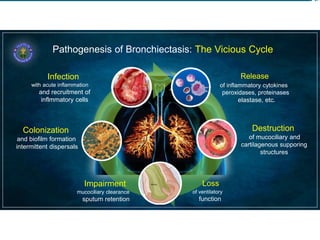
Pathogenesis of Bronchiectasis: The Vicious Cycle
Destruction
of mucociliary and
cartilagenous supporing
structures
Release
of inflammatory cytokines
peroxidases, proteinases
elastase, etc.
Colonization
and biofilm formation
intermittent dispersals
Infection
with acute inflammation
and recruitment of
inflmmatory cells
Impairment
mucociliary clearance
sputum retention
Loss
of ventilatory
function
3 mechanisms:
1.Obstruction- can occur because of tumour, foreign
body, impacted mucus due to poor muco-ciliary
clearance, external compression, bronchial webs, and
atresia.
2.Infections d/t Bordetella pertusis, measles, rubella,
adenovirus, and mycobacterium tuberculosis induce
chronic inflammation.
3. Chronic inflammation contributes to the mechanism
by which obstruction leads to bronchiectasis.
• Inflammatory mediators such as neutrophil elastase,
interleukin-6, interleukin-8, and Tumor necrosis factor-
α (TNF-α) have been found to be elevated in the
airways of patients with bronchiectasis
Pathological forms of Bronchiectasis
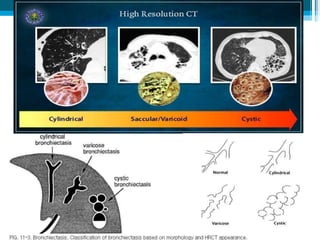
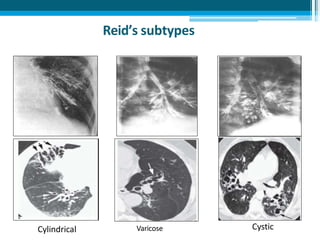
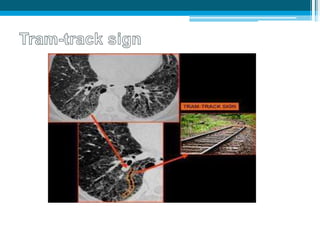
• Cylindrical bronchiectasis- bronchial outlines are
regular, but there’s diffuse dilatation of the bronchial
unit. Bronchial lumen ends abruptly because of mucous
plugging.
• Tramline appearance on CT scan.
• Varicose bronchiectasis- degree of dilatation is greater,
local constrictions cause irregularity of outline
resembling that of varicose veins.
• Beaded contour on CT scan.
Cont..
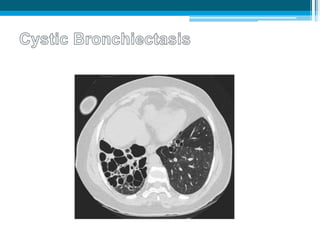
• Saccular (Cystic) bronchiectasis- bronchial dilatation
progresses and results in ballooning of bronchi that
end in fluid or mucous filled sacs.
• Most severe form of Bronchiectasis.
• Prebronchiectasis- chronic or recurrent
endobronchial infection with non specific HRCT
changes – may be reversible.
Reid’s subtypes
CysticCylindrical Varicose
• Cough with mucopurulent expectoration(copious amount,
foul smelling)
• Haemoptysis
• Breathlessness
• Fever
• Postural variation of symptoms
• Chest pain
• Poor general condition
• Tachypnea
• Dyspnea - Use of accesory muscle of respiration
• Clubbing
• BS – harsh with prolonged expiration
• Coarse leathery crackles
• wheeze
Diagnosis
• Thin-section HRCT scanning- Gold standard
excellent sensitivity and specificity
• CT - Disease location, presence of mediastinal lesions, and
the extent of segmental involvement.
• Chest X-ray- increase in size and loss of bronchovascular
markings, crowding of bronchi, and loss of lung volume.
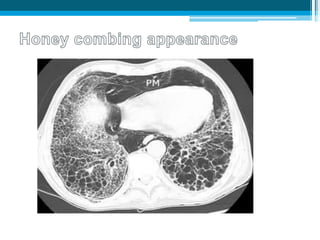
Severe case: Honeycombing
• Sputum culture
• Bronchoscopy
• Local
• Haemoptysis
• Secondary bacterial infections
• Fungal infections
• Tuberculosis
• Lung abscess
• Frequent exaceberations
• Systemic
• Respiratory failure
• Cor pulmonale
• Pulmonary artery hypertension
• Sinusitis
• Allergic broncho pulmonary
aspergillosis
• (ABPA)
• Aspergilloma
• Brain abscess
• Secondary amyloidosis
Treatment
• Aims at decreasing airway obstruction and controlling infection.
• Postural drainage and control Infection.
• 2 to 4 wk of parenteral antibiotics is often necessary to manage acute
exacerbations adequately.
• Amoxicillin/ Clavulanic acid (22.5mg/kg/dose twice daily) has been
successful at treating the exacerbations.
• Long-term prophylactic oral (macrolide) or nebulized antibiotics (e.g.,
tobramycin, colistin, aztreonam) may be beneficial.
• Airway hydration (inhaled hypertonic saline or mannitol) also improves
quality of life in adults with bronchiectasis.
• Any underlying disorder (immunodeficiency, aspiration) that may be
contributing must be addressed.
Supportive Treatment
Cessation of smoking
Avoidance of second-handsmoking
Adequate nutritional intake
Immunizations for influenza andpneumococcal
pneumonia
Conformation of immunizations for measles,rubella
and pertusis
Oxygen therapy is reserved for patients with
hypoxemiaand end stagecomplicationssuch as cor-
pulmonale
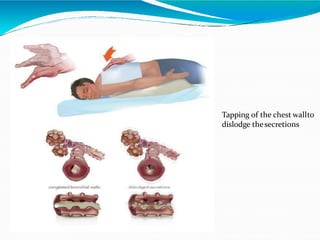
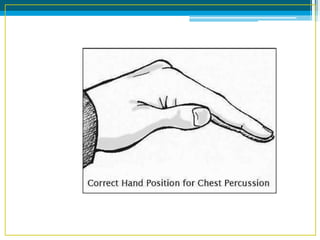
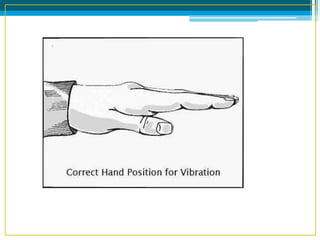
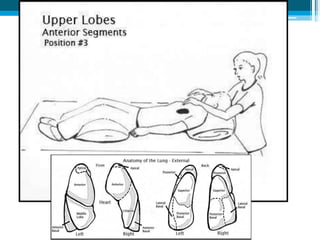
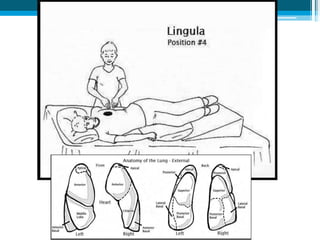
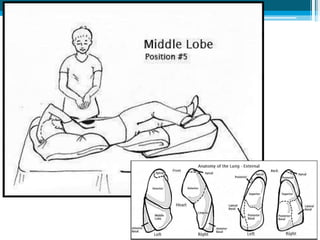
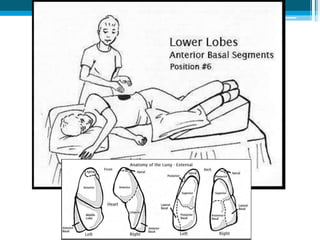
Tapping of the chest wallto
dislodge thesecretions
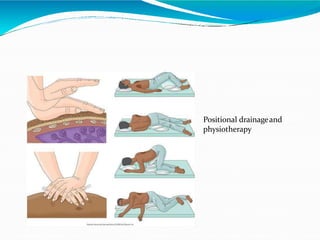
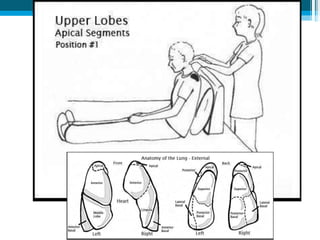
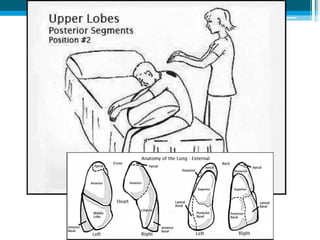
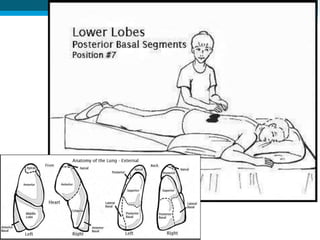
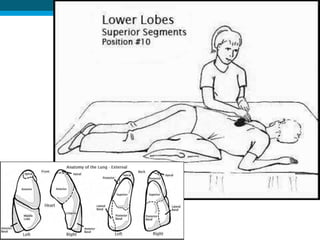
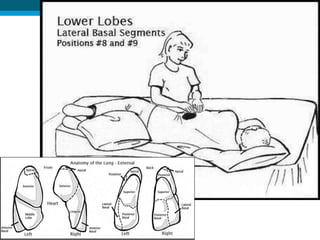
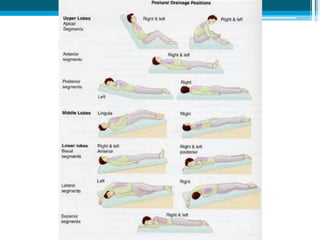
Positional drainageand
physiotherapy
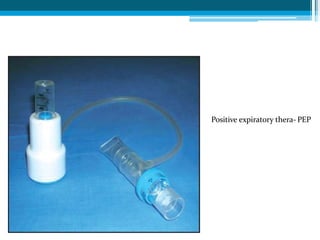
Positive expiratory thera- PEP
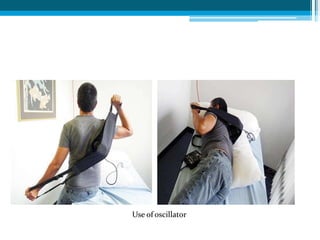
Use of oscillator
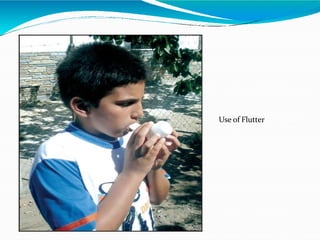
Use of Flutter
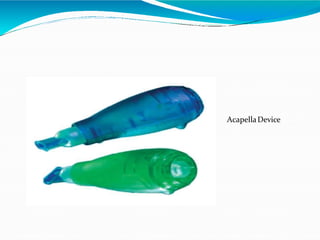
AcapellaDevice
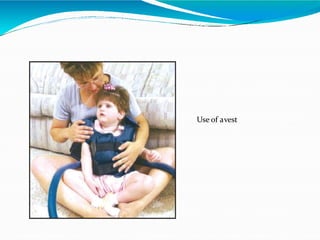
Use of avest
• EQUIPMENT:
• 1) Oxygen mask
• 2 ) Emesis basin or sputum cup .
• 3 ) Pulse oximeter .
• 4 ) Tissues
• 5) Pillows
• CONTRA INDICATIONS TO CHEST PT:
• Unstabilized head and/or neck injury
• Active hemorrhage with hemodynamic instability or
significant possibility of occurrence.
• Osteogenesis imperfecta or other bone disease associated
with brittle or extremely fragile bones/ Fracture of ribs
• OTHER CONTRA INDICATIONS:
• Intracranial pressure > 20 mm Hg
• Active hemoptysis
• Acute spinal injury/ Spine surgery
• Pulmonary embolism
• Worsening bronchospasm etc
Helpful in advanced or complicateddisease.
Indications :
1. Patientswho have focal disease that is poorly
controlled by anti-biotics.
2.Reduction of acute infectiveepisodes
3. Massive haemoptysis(Alternatively bronchial artery
embolization may beattempted)
4. Foreign body or tumorremoval
5. Consideration in the treatment of MACor
Aspergillus specific infections
Surgical resection
Lung transplantation
Single or double lung transplantation for severe
bronchiectasis, predominantly related to CF. FEV1 < 30
and in youngerpatients it may beconsidered.
Prognosis
• Children with bronchiectasis often suffer from
recurrent pulmonary illnesses.
Bronchiectasis: Summary
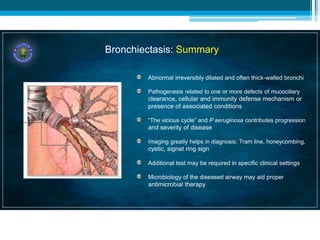
Abnormal irreversibly dilated and often thick-walled bronchi
Pathogenesis related to one or more defects of mucociliary
clearance, cellular and immunity defense mechanism or
presence of associated conditions
“The vicious cycle” and P aeruginosa contributes progression
and severity of disease
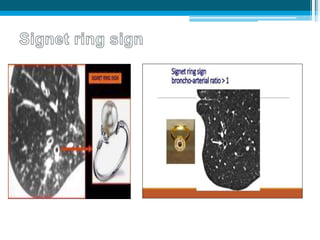
Imaging greatly helps in diagnosis: Tram line, honeycombing,
cystic, signet ring sign
Additional test may be required in specific clinical settings
Microbiology of the diseased airway may aid proper
antimicrobial therapy
THANK YOU
Dr. Virendra Kumar Gupta
Assiociate Professor
Department Of Pediatrics
NIMS Medical College & Hospital , Jaipur

Bronchiectasis

  • 1.
    Bronchiectasis in Children Dr.Virendra Kumar Gupta Assiociate Professor Department Of Pediatrics NIMS Medical College & Hospital , Jaipur
  • 2.
    Definition….. Chronic abnormal, permanentand irreversible dilation of the medium sized sub segmental bronchus due to destructive changes in the elastic and muscular layers of bronchial walls. May be diffuse or localized resulting in impairment of the drainage of bronchial secretions.
  • 5.
    Etiology Congenital • Cystic Fibrosis(Most common cause) • Primary hypogammaglobinemia leading to recurrent infection • Ciliary dysfunction syndrome Acquired (In children) • Secondary to pneumonia which occurs often as complication of whooping cough and measles
  • 6.
    1. Childhood Cystic Fibrosis,Pertussis, measles, Necrotizing pneumonia 2. Primary infections Pseudomonas klebsiella species staphylococcal species Mycoplasma pneumoniae Mycobacterium tuberculosis Measlesvirus Influenza virus Herpes simplexvirus Adenovirus Pertusisvirus
  • 7.
    3. Obstruction Foreign body 4.Tumor Laryngeal papillomatosis,adenoma, bronchogenic , carcinoma 5. Lymphadenopathy Tuberculosis, histoplasmosis 6. Mucoid impaction Allergic bronchopulmonary aspergillosis, bronchocentric granulomatosis, fibrinous bronchitis
  • 8.
    7.Congenital anatomicdefect • Williams-Campbellsyndrome (congenital cartilage deficiency) • Mounier-Kuhn syndrome (tracheo-bronchomegaly) • Swyer-James syndrome(unilateral hyperlucent lung), pulmonary sequestration, pulmonaryartery aneurysm • yellow nail syndrome(Hypoplastic lymphatics, pleural effusion, yellow nails )
  • 9.
    8.Immunodeficiency state IgG subclassdeficiency, X-linked, agammaglobulinemia, selective IgA, IgM, or IgE deficiency, bare lymphocyte syndrome, chronic granulomatous disease, Nezelof syndrome (Thymic dysplasia with normal immunoglobulins) 9.Hereditaryabnormality Dyskinetic cilia syndrome, Kartagener’s syndrome (situs inversus, nasal polyposis and bronchiectasis) α 1-antitrypsin deficiency cystic fibrosis, ADPKDK
  • 10.
    Pathogenesis The common threadin the pathogenesis of bronchiectasis consists of difficulty clearing secretions & recurrent infections with a “vicious circle” of infection and inflammation resulting in airway injury and remodelling.
  • 11.
    Pathogenesis of Bronchiectasis:The Vicious Cycle Destruction of mucociliary and cartilagenous supporing structures Release of inflammatory cytokines peroxidases, proteinases elastase, etc. Colonization and biofilm formation intermittent dispersals Infection with acute inflammation and recruitment of inflmmatory cells Impairment mucociliary clearance sputum retention Loss of ventilatory function
  • 13.
    3 mechanisms: 1.Obstruction- canoccur because of tumour, foreign body, impacted mucus due to poor muco-ciliary clearance, external compression, bronchial webs, and atresia. 2.Infections d/t Bordetella pertusis, measles, rubella, adenovirus, and mycobacterium tuberculosis induce chronic inflammation.
  • 14.
    3. Chronic inflammationcontributes to the mechanism by which obstruction leads to bronchiectasis. • Inflammatory mediators such as neutrophil elastase, interleukin-6, interleukin-8, and Tumor necrosis factor- α (TNF-α) have been found to be elevated in the airways of patients with bronchiectasis
  • 15.
    Pathological forms ofBronchiectasis • Cylindrical bronchiectasis- bronchial outlines are regular, but there’s diffuse dilatation of the bronchial unit. Bronchial lumen ends abruptly because of mucous plugging. • Tramline appearance on CT scan. • Varicose bronchiectasis- degree of dilatation is greater, local constrictions cause irregularity of outline resembling that of varicose veins. • Beaded contour on CT scan.
  • 16.
    Cont.. • Saccular (Cystic)bronchiectasis- bronchial dilatation progresses and results in ballooning of bronchi that end in fluid or mucous filled sacs. • Most severe form of Bronchiectasis. • Prebronchiectasis- chronic or recurrent endobronchial infection with non specific HRCT changes – may be reversible.
  • 18.
  • 19.
    • Cough withmucopurulent expectoration(copious amount, foul smelling) • Haemoptysis • Breathlessness • Fever • Postural variation of symptoms • Chest pain
  • 20.
    • Poor generalcondition • Tachypnea • Dyspnea - Use of accesory muscle of respiration • Clubbing • BS – harsh with prolonged expiration • Coarse leathery crackles • wheeze
  • 21.
    Diagnosis • Thin-section HRCTscanning- Gold standard excellent sensitivity and specificity • CT - Disease location, presence of mediastinal lesions, and the extent of segmental involvement. • Chest X-ray- increase in size and loss of bronchovascular markings, crowding of bronchi, and loss of lung volume. Severe case: Honeycombing • Sputum culture • Bronchoscopy
  • 27.
    • Local • Haemoptysis •Secondary bacterial infections • Fungal infections • Tuberculosis • Lung abscess • Frequent exaceberations • Systemic • Respiratory failure • Cor pulmonale • Pulmonary artery hypertension • Sinusitis • Allergic broncho pulmonary aspergillosis • (ABPA) • Aspergilloma • Brain abscess • Secondary amyloidosis
  • 28.
    Treatment • Aims atdecreasing airway obstruction and controlling infection. • Postural drainage and control Infection. • 2 to 4 wk of parenteral antibiotics is often necessary to manage acute exacerbations adequately. • Amoxicillin/ Clavulanic acid (22.5mg/kg/dose twice daily) has been successful at treating the exacerbations. • Long-term prophylactic oral (macrolide) or nebulized antibiotics (e.g., tobramycin, colistin, aztreonam) may be beneficial. • Airway hydration (inhaled hypertonic saline or mannitol) also improves quality of life in adults with bronchiectasis. • Any underlying disorder (immunodeficiency, aspiration) that may be contributing must be addressed.
  • 29.
    Supportive Treatment Cessation ofsmoking Avoidance of second-handsmoking Adequate nutritional intake Immunizations for influenza andpneumococcal pneumonia Conformation of immunizations for measles,rubella and pertusis Oxygen therapy is reserved for patients with hypoxemiaand end stagecomplicationssuch as cor- pulmonale
  • 30.
    Tapping of thechest wallto dislodge thesecretions
  • 31.
  • 32.
  • 33.
  • 34.
  • 35.
  • 36.
  • 37.
    • EQUIPMENT: • 1)Oxygen mask • 2 ) Emesis basin or sputum cup . • 3 ) Pulse oximeter . • 4 ) Tissues • 5) Pillows
  • 51.
    • CONTRA INDICATIONSTO CHEST PT: • Unstabilized head and/or neck injury • Active hemorrhage with hemodynamic instability or significant possibility of occurrence. • Osteogenesis imperfecta or other bone disease associated with brittle or extremely fragile bones/ Fracture of ribs • OTHER CONTRA INDICATIONS: • Intracranial pressure > 20 mm Hg • Active hemoptysis • Acute spinal injury/ Spine surgery • Pulmonary embolism • Worsening bronchospasm etc
  • 52.
    Helpful in advancedor complicateddisease. Indications : 1. Patientswho have focal disease that is poorly controlled by anti-biotics. 2.Reduction of acute infectiveepisodes 3. Massive haemoptysis(Alternatively bronchial artery embolization may beattempted) 4. Foreign body or tumorremoval 5. Consideration in the treatment of MACor Aspergillus specific infections Surgical resection
  • 53.
    Lung transplantation Single ordouble lung transplantation for severe bronchiectasis, predominantly related to CF. FEV1 < 30 and in youngerpatients it may beconsidered.
  • 54.
    Prognosis • Children withbronchiectasis often suffer from recurrent pulmonary illnesses.
  • 55.
    Bronchiectasis: Summary Abnormal irreversiblydilated and often thick-walled bronchi Pathogenesis related to one or more defects of mucociliary clearance, cellular and immunity defense mechanism or presence of associated conditions “The vicious cycle” and P aeruginosa contributes progression and severity of disease Imaging greatly helps in diagnosis: Tram line, honeycombing, cystic, signet ring sign Additional test may be required in specific clinical settings Microbiology of the diseased airway may aid proper antimicrobial therapy
  • 56.
    THANK YOU Dr. VirendraKumar Gupta Assiociate Professor Department Of Pediatrics NIMS Medical College & Hospital , Jaipur