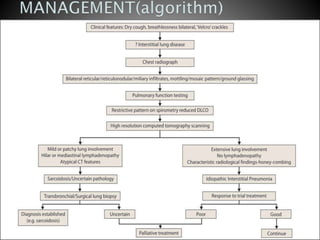
DR BASITH
 ILDs represent a large number of
conditions that involve the
parenchyma of the lung- the
alveoli, the alveolar epithelium,
the capillary endothelium, and the
spaces between those structures
as well as the perivascular and
lymphatic tissues.
King TE (August 2005). "Clinical advances in the diagnosis
and therapy of the interstitial lung diseases". Am. J. Respire. Crit.
Care Med. 172 (3): 268–79.
Patients with interstitial lung diseases (ILDs)
come to medical attention mainly because of
 progressive excertional dyspnea or
 persistent nonproductive cough.
 Hemoptysis, wheezing, and chest pain .
 Often, the identification of interstitial
opacities on chest x-ray focuses the
diagnostic approach on one of the ILDs.
* Harrisons principles of internal medicine 19th
end
 Interstitial lung disease in India was considered
to be rare in the past but not now.
 ILDs constitute about 10% to 15% of the patients
with respiratory diseases.
 About 50%of the ILDs are idiopathic in origin
while others are associate with identifiable
diseases, most commonly connective tissue
disorders
 UIP, also known as IPF is the most common form
of ILD.
* API TEXTBOOK OF MEDICINE 10 EDN
KNOWN CAUSE
 Fumes, gases
 Drugs (antibiotics, amiodarone, gold) and
chemotherapy drugs
 Asbestos
 Radiation
 Aspiration pneumonia
 Residual of acute respiratory distress syndrome
 Smoking-related
 Desquamative interstitial pneumonia
 Respiratory bronchiolitis–associated interstitial
lung disease
 Pulmonary Langerhans cell granulomatosis
*Harrisons principles of internal medicine 19th edn
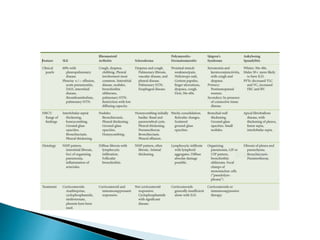
 Idiopathic interstitial pneumonias
 Idiopathic pulmonary fibrosis
 Acute interstitial pneumonia (diffuse alveolar
damage)
 Cryptogenic organizing Pneumonia
 Nonspecific interstitial Pneumonia
 Idiopathic lymphocytic interstitial pneumonia
 Pulmonary alveolar proteinosis
 Lymphocytic infiltrative disorders
(lymphocytic interstitial pneumonitis
associated with connective tissue disease)
 Eosinophilic pneumonias
 Lymphangioleiomyomatosis
 Inherited diseases
 Tuberous sclerosis, neurofibromatosis,
 Niemann-Pick disease, Gaucher disease,
Hermansky pudlak syndrome
 Idiopathic pleuro parenchymal fibroelastosis
 Acute fibrinous and organizing pneumonia
 Bronchiolo centric patterns of interstitial
pneumonia
 Systemic lupus erythematosus,
 Rheumatoid arthritis,
 Ankylosing spondylitis,
 Systemic sclerosis,
 Sjogren syndrome
 Polymyositis
 Dermatomyositis
 Pulmonary hemorrhage syndromes
 Goodpasture syndrome,
 Idiopathic pulmonary hemosiderosis,
 Isolated pulmonary capillaritis
 Amyloidosis
 Gastrointestinal or liver diseases (Crohn
disease, primary biliary cirrhosis, chronic active
hepatitis, ulcerative colitis)
 Graft-versus-host disease (bone marrow
transplantation; solid organ transplantation)
KNOWN CAUSE
 Hypersensitivity pneumonitis (organic dusts)
UNKOWN CAUSE
 Sarcoidosis
 Bronchocentric granulomatosis
 Granulomatous vasculitides
 Lymphomatoid granulomatosis
 Granulomatosis with polyangiitis (Wegener )
 Eosinophilic granulomatosis with polyangiitis
(Churg Strauss)
1. Progressive dyspnea
2. Restrictive physiology on pulmonary function
tests
3. Diffuse reticular infiltrates or ground-glass
opacities
 on chest radiographs or thoracic CT imaging studies
*Harrisons principles of internal medicine 19th edn
 Symptoms
◦ Dyspnea on exertion
◦ Nonproductive cough
◦ Constitutional symptoms - low-grade fever and malaise may also be
present at the onset of disease
◦ Fatigue ,weight loss .
 Physical exam
◦ Bibasilar inspiratory crackles
◦ Clubbing
 Clubbing -indicates advanced fibrotic lung disease and is present in
25 – 50% patients at initial presentation
 Not seen in drug induced induced ILD
 New onset of clubbing may indicate the concomitant development of
lung cancer
◦ Cyanosis -severe hypoxemia
 A thorough medical history with a special focus on
◦ environmental and occupational history
◦ evaluation of all the patient’s current medications and their
duration of use
◦ determining the tempo of progression of respiratory
symptoms
◦ For example
 Acute -alveolar hemorrhage syndromes
 Chronic - Idiopathic Pulmonary Fibrosis (IPF) or
sarcoidosis
 Peripheral blood eosinophilia
◦ eosinophilic lung disorder or drug-induced pulmonary
reaction
 Serological blood testing
◦ for specific connective tissue disorders
◦ anti-neutrophil cystoplasmic antibody (ANCA)
 Wegener granulomatosis
 microscopic polyangitis
◦ anti-glomerular basement membrane antibody
 Goodpasture syndrome
 The classic findings of ILD
◦ restrictive ventilatory pattern
 a reduction in the FEV1 and FVC with a correspondingly normal or
elevated FEV1/FVC ratio
 total lung capacity (TLC) finding  80% of predicted values
◦ decrease in the DLCO
 Chest wall and neuromuscular disorders
◦ Associated with a reduced TLC but a normal DLCO
 Arterial blood gases and specifically the PaO2 or SaO2 may be normal at
rest in patients with ILD
 In patients who have normal gas exchange at rest
◦ cardiopulmonary exercise tests (CPET) unmasks the gas exchange
abnormalities
Respiration. 2004 May-Jun;71(3):209-13
Pulmonary function testing in interstitial lung diseases.
.
 One of the main features of ILD is an abnormal
chest radiograph
◦ showing reticular, nodular, or reticulonodular patterns
◦ standard chest radiograph may appear normal in up to
10% of patients with symptomatic ILD
◦ High Resolution CT scan is the imaging modality of choice
in patients with suspected ILD
The geographic regional distribution and type of radiographic
abnormalities yield useful clues for diagnosis of specific forms of ILD
 Predominant abnormal radiographical involvement of the mid-
upper lung zones
◦ sarcoidosis, pulmonary Langerhans' cell histiocytosis, silicosis, and
hypersensitivity pneumonitis
 Pleural-based reticular infiltrates in the lung bases
◦ Idiopathic Pulmonary Fibrosis (IPF)
 Intrathoracic lymphadenopathy
◦ sarcoidosis, lymphangitic spread of lung cancer, lymphocytic
interstitial pneumonia, berylliosis, and amyloidosis
 Spontaneous pneumothorax associated with a cystic ILD
◦ Lymhangioleiomyomatosis (LAM) and Pulmonary Langerhans’ cell
histiocytosis
Harrisons principles of internal medicine 19th edn
Respiration. 2004 May-Jun;71(3):209-13.Pulmonary function testing in interstitial lung diseases
 Bronchoalveolar lavage is useful -
◦ Confirm diffuse alveolar hemorrhage syndromes
◦ eosinophilic pneumonia
◦ excluding pulmonary infections associated with diffuse
infiltrates such as Pneumocystis jiroveci pneumonia
 Bronchoscopy with transbronchial lung biopsy is
useful-
 in selected patients suspected of having infections
 for granulomatous disorders such as sarcoidosis and
berylliosis
 lymphangitic spread of lung cancer
 Transbronchial lung biopsy is not useful -
◦ different types of idiopathic interstitial pneumonia
 The procedure of choice in establishing a diagnosis in
patients with ILD secondary to suspected idiopathic
interstitial pneumonia (IIP)
 The location of the surgical lung biopsy is guided by the
distribution of disease on HRCT images
 Video-assisted thoracoscopic surgery (VATS) biopsy
causes
◦ less morbidity than open thoracotomy
◦ better tolerated
 In certain instances of idiopathic interstitial
pneumonia suspected of being IPF-
◦ a confident clinical diagnosis may be made without
subjecting the patient to surgical lung biopsy, when both
clinical findings and the HRCT features are supportive
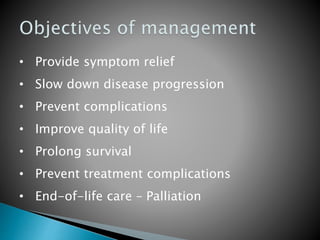
• Provide symptom relief
• Slow down disease progression
• Prevent complications
• Improve quality of life
• Prolong survival
• Prevent treatment complications
• End-of-life care – Palliation
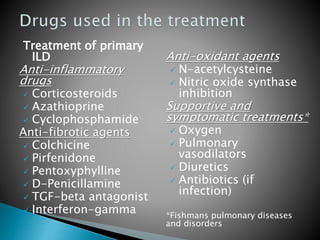
Treatment of primary
ILD
Anti-inflammatory
drugs
 Corticosteroids
 Azathioprine
 Cyclophosphamide
Anti-fibrotic agents
 Colchicine
 Pirfenidone
 Pentoxyphylline
 D-Penicillamine
 TGF-beta antagonist
 Interferon-gamma
Anti-oxidant agents
 N-acetylcysteine
 Nitric oxide synthase
inhibition
Supportive and
symptomatic treatments*
 Oxygen
 Pulmonary
vasodilators
 Diuretics
 Antibiotics (if
infection)
*Fishmans pulmonary diseases
and disorders
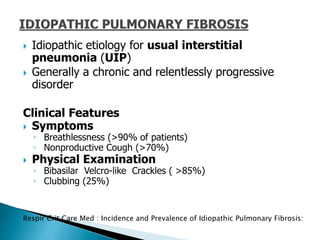
 Idiopathic etiology for usual interstitial
pneumonia (UIP)
 Generally a chronic and relentlessly progressive
disorder
Clinical Features
 Symptoms
◦ Breathlessness (>90% of patients)
◦ Nonproductive Cough (>70%)
 Physical Examination
◦ Bibasilar Velcro-like Crackles ( >85%)
◦ Clubbing (25%)
Respir Crit Care Med : Incidence and Prevalence of Idiopathic Pulmonary Fibrosis:
 Most common idiopathic interstitial pneumonia (IIP)
 Affects at least 200,000 persons in the U.S.
 Common age group = 50- 70 years
 Median survival = 3 – 5 years from diagnosis
 The exact cause = not known
◦ 0.5 - 3.7% of cases of IPF are familial
◦ 60% of patients have a positive history smoking.
Harrisons principles of internal medicine 19th edn
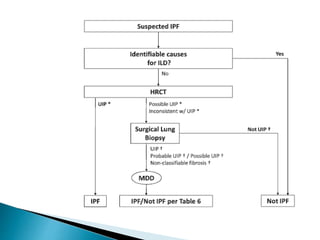
1. Exclusion of other known causes of ILD (e.g.,
domestic and occupational environmental
exposures, connective tissue disease, and
drug toxicity).
2. The presence of a UIP pattern on HRCT in
patients not subjected to surgical lung
biopsy
3. Specific combinations of HRCT and surgical
lung biopsy pattern in patients subjected to
surgical lung biopsy
Am J Respir Crit Care Med Vol 183. pp 788–824, 2011
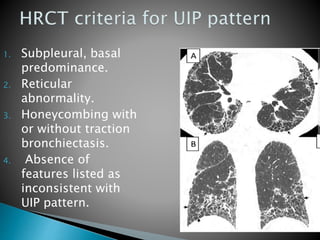
1. Subpleural, basal
predominance.
2. Reticular
abnormality.
3. Honeycombing with
or without traction
bronchiectasis.
4. Absence of
features listed as
inconsistent with
UIP pattern.
 Evidence of marked fibrosis/ architectural
distortion, +/- honeycombing in a
predominantly subpleural/ paraseptal
distribution
 Presence of patchy involvement of lung
parenchyma by fibrosis
 Presence of fibroblast foci
 Absence of features against a diagnosis of
UIP suggesting an alternate diagnosis
 Restrictive ventilatory limitation
◦ Normal or increased FEV1/FVC ratio
◦ TLC that is < 80% of predicted or the
lower limit of normal (LLN)
 Single breath DLCO is reduced
 Mild to moderate arterial hypoxemia or decreasing
SaO2 during exertion
Should BAL cellular analysis be performed in the
diagnostic evaluation of suspected IPF?
NO
Should transbronchial lung biopsy be used in the
evaluation of suspected IPF?
NO
Should serologic testing for connective tissues
disease be used in the evaluation of suspected IPF?
YES
Should a multi-disciplinary discussion be used in
the evaluation of suspected IPF?
YES
 Co-existing emphysema
 Presence of pulmonary hypertension
 Physiological predictors
◦ Reduced FVC, TLC, and DLCO at the time of diagnosis
◦ Further declines in FVC and DLCO over the succeeding 6 –
12 months
◦ Significantly reduced distance during the six-minute
walk test (6-MWT)
◦ Exertional hypoxia
Ley B., Collard HR., King Jr TE. Clinical course and prediction of survival in idiopathic pulmonary fibrosis. Am. J. Respir. Crit.
Care Med. 2010 Oct 8.
 Coronary artery disease
 Lung cancer
 Infection
 Pulmonary embolism
 Acute exacerbation of IPF
 Characterized by
◦ worsening of dyspnea within a few weeks (< 1 month)
◦ newly developing diffuse radiographic opacities
◦ worsening hypoxemia
◦ absence of infectious pneumonia, heart failure,
pulmonary thromoembolism, and sepsis
 The rate of these acute exacerbations ranges
from 10 to 15%
Proceedings of the ATS, January 1, 2006; 3(4):330 - 338.
The risk factors for acute exacerbations of IPF are
 Infections
 pulmonary embolism
 pneumothorax.
 Histopathology -Diffuse alveolar damage(DAD)
is often found on the background of UIP
 In patients who survive, a recurrence of acute
exacerbation is common and usually results in
death
Proceedings of the ATS, January 1, 2006; 3(4):330 - 338.
 A chronic, progressive disorder
 A death rate worse than that of many
cancers
◦ 3-year survival- 50%.
 Lung transplant is the only therapy
shown to prolong survival in
advanced IPF
 Enroll in pulmonary rehabilitation
 O2 supplementation at rest or during
exercise & sleep
 Symptomatic relief for cough with Antitussive
agents.
◦ Thalidomide improves cough.
◦ GER therapy may be beneficial
 The INPULSIS trials were two randomized, double-blind,
placebo-controlled, phase 3 trials that were conducted
simultaneously to evaluate the role of nintedanib, as
compared with placebo, in patients with IPF
◦ Nintedanib (formerly called BIBF-1120)
 Antifibrotic properties that are mediated through the
inhibition of tyrosine kinase receptors
◦ platelet-derived growth factor
◦ fibroblast growth factor
◦ Vascular endothelial growth factor
N Engl J Med 2014; 370:2142-2143
 The ASCEND trial was the fourth in a series of
randomized, double-blind, placebo-controlled, phase 3
trials that had been conducted in Japan and at
multinational sites in which pirfenidone was compared
with placebo in patients with IPF
 The results of the first three trials were mixed, leading
to approval by many governing bodies worldwide but
not by the FDA
 Although the precise actions are not clear
◦ its primary antifibrotic mechanism is felt to be, at least in part,
mediated through its inhibition of the expression of
transforming growth factor β1
 For patients with ILD exhibiting progressive
physiological deterioration who meet established
criteria
 Current criteria for referral of patients with IPF for single
lung transplantation are
◦ age < 70 years,
◦ histological or radiographic evidence of UIP
and any of the following:
◦ DLCO <39% predicted,
◦ 10% or greater decrement in the FVC during 6 months
of follow-up,
◦ a decrease in pulse oximetry to < 88% during a 6-
minute walk test, and
◦ honeycombing on HRCT scan
The usual age of onset –
 Around 50 years (lower than in IPF),
 Femlaes(who have never smoked)
 Most common symptoms : breathlessness and
cough
 The majority of the patients have a restrictive
ventilatory limitation
 HRCT
◦ predominant involvement of lower lobes with volume
loss.
◦ reticular pattern
◦ ground glass appearance.
 Histological characteristics
◦ temporal homogeneity and uniform thickening of
alveolar walls
◦ with a spectrum of cellular to fibrosing patterns .
PROGNOSIS :
 Cellular NSIP which has excellent prognosis
 Fibrotic NSIP which has a less favorable outcome.
 The response to steroids is good as opposed to
IPF
 The five-year survival is above 80%.
Harrisons principles of internal medicine 19th edn
 CT image through
lower lungs shows
predominantly
peribronchovascular
ground-glass opacity
with associated
reticular pattern.
Radiology 2005; 236:10–21
 The majority of patients with NSIP have a
good prognosis (5-year mortality rate
estimated at <15%)
 With most showing improvement after
treatment with glucocorticoids, often used in
combination with azathioprine or
mycophenolate mofetil.
* Harrisons principles of internal medicine 19th edn
 Acute abrupt onset
 Age >40 years
 Prodormal fever, cough, dyspnea preceeds AIP
 High mortality rate (>60%)
 Hypoxic respiratory failure like in ARDS (acute
respiratory distress syndrome)
 Histological features –
◦ diffuse alveolar damage include uniform
temporal appearance, airspace organization and
hyaline membranes.
Case Reports in Medicine Volume 2011, Article ID 628743
 Most patients have moderate to severe
hypoxemia and develop respiratory failure.
 Mechanical ventilation is often required.
 Recurrences have been reported
 The main treatment is supportive.
 It is not clear that glucocorticoid therapy is
effective.
 Rare disease
 Unknown eitiology
 Seen in 5th or 6th decade
 Presents with cough, fever and dyspnea,weight
loss
 may be mistaken for the community acquired pneumonia.
 The histological features of organizing pneumonia
(OP)
 includes patchy distribution of intraluminal organizing
fibrosis in distal airspaces
 preservation of the lung architecture
 uniform temporal appearance and
 mild chronic inflammation.
Thorax 2000;55:318-
328 doi:10.1136/thorax.55.4.318
X RAY
 The radiological studies show consolidation
with the basal predominance.
HRCT:
 Area of air space consolidation
 Ground glass opacities
 Broncial wall thickening and,dilation
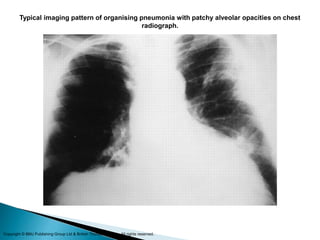
Typical imaging pattern of organising pneumonia with patchy alveolar opacities on chest
radiograph.
Copyright © BMJ Publishing Group Ltd & British Thoracic Society. All rights reserved.
 Glucocorticoid therapy induces clinical
recovery in two thirds of patients.
 A few patients have rapidly progressive
courses with fatal outcomes despite
glucocorticoids
1. Desquamative interstitial pneumonia
2. Respiratory bronchiolitis associated ILD.
3. Pulmonary Langerhans cell histiocytosis.
Thorax.bmj.com/ on
September 20, 2015
 Clinical manifestations DIP is
 Rare
 Exclusively seen in smokers
 peak in 4 th or 5 th decade
 Presents as cough and dyspnea
 Histologic findings A diffuse and uniform
accumulation of macrophages in the alveolar spaces
is the hallmark of DIP.
 Treatment: Clinical recognition of DIP is important
because the process is associated with a better
prognosis (10-year survival rate is ~70%) in response
to smoking cessation.
 There are no clear data showing that systemic
glucocorticoids are effective in DIP.
Its considered to be a subset of DIP.
 The clinical presentation is similar to that of
DIP.
 Crackles are often heard on chest
examination and occur throughout
inspiration sometimes they continue into
expiration.
 Histology :
include alveolar macrophage accumulation in
respiratory bronchioles, with a variable
chronic inflammatory cell infiltrate in
bronchiolar and surrounding alveolar walls
and occasional per bronchial alveolar septal
fibrosis.
 The pulmonary parenchyma may show
presence of smoking-related emphysema.
Treatment RB-ILD appears to resolve in most
patients after smoking cessation alone.
Thorax.bmj.com/ on September 20, 2015
Harrisons priciples of inernal medicine 19th edn
It is a rare, smoking-related, diffuse lung
disease that primarily affects
 Men between the ages of 20 and 40 years.
 Varies from an asymptomatic state to a
rapidly progressive condition
 Dyspnea, chest pain, weight loss, and fever.
 Pneumothorax occurs in ~25% of patients.
 Hemoptysis and diabetes insipidus are rare
manifestations.
 HRCT : A combination of nodules and thin-
walled cysts is virtually diagnostic of PLCH.
 The most common pulmonary function
abnormality is a markedly reduced DLCO
Histopathology : presence of nodular
sclerosing lesions that contain Langerhans
cells accompanied by mixed cellular
infiltrates
TREATMENT
 Discontinuance of smoking is the key
treatment(1/3 improve)
 Most patients with PLCH experience
persistent or progressive disease
 Clinical findings suggestive of a CTD
(musculoskeletal pain, weakness, fatigue, fever,
joint pain or swelling, photosensitivity, Raynaud’s
phenomenon, pleuritis, dry eyes, dry mouth)
should be sought in any patient with ILD.
 The most common form of pulmonary involvement
is the nonspecific interstitial pneumonia
 For the majority of CTDs, recommended initial
treatment for ILD includes oral glucocorticoids
often in association with
oral or intravenous cyclophosphamide or
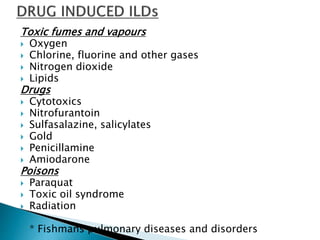
Toxic fumes and vapours
 Oxygen
 Chlorine, fluorine and other gases
 Nitrogen dioxide
 Lipids
Drugs
 Cytotoxics
 Nitrofurantoin
 Sulfasalazine, salicylates
 Gold
 Penicillamine
 Amiodarone
Poisons
 Paraquat
 Toxic oil syndrome
 Radiation
* Fishmans pulmonary diseases and disorders
 The drug may have been taken for several
years before a reaction develops (eg:
amiodarone)
 The lung disease may occur weeks to years
after the drug has been discontinued (e.g.,
carmustine).
 Histology : The patterns of lung injury vary
widely and depend on the agent.
 Treatment : discontinuation of any possible
offending drug and supportive care.
Clinical Manifestations
 cough
 fever,
 dyspnea.
 Severe respiratory distress requiring ventilatory
support.
 Although hemoptysis is expected, it can be
absent at the time of presentation.
 An elevated white blood cell count and falling
hematocrit are common.
 Focal segmental necrotizing glomerulonephritis
may be present
*Fishmans pulmonary diseases and disorders
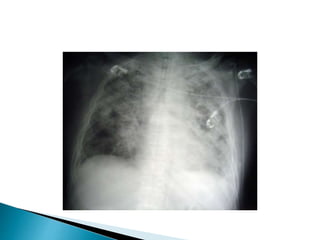
 Histology :
Injury to arterioles, venules, and the alveolar
septal (alveolar wall or interstitial) capillaries
secondary to disruption of the alveolar-
capillary basement membrane.
 This results in bleeding into the alveolar
spaces.
 Treatment
IV methylprednisolone, 0.5–2 g daily in
divided doses for up to 5 days, followed by a
gradual tapering, and then maintenance on
an oral preparation.
2014-07-11 65
AD tuberous sclerosis indistinguishable from LAM
both radiographically & histopathologically
neurofibromatosis bilateral lower lobe fibrosis
& bullae or cystic changes
AR Gaucher’s disease interstitial infiltration
w/ fibrosis, alveolar consolidation,
& filling of alveolar spaces
Niemann-Pick
disease
infiltration of the characteristic "foam cell"
throughout the pulmonary lymphatics,
the pulmonary arteries,
& the pulmonary alveoli
Hermansky-Pudlak
syndrome
Pulmonary fibrosis;
onset in the 30th~ 40th
slowly progressive
interstitial lung diseases

interstitial lung diseases

  • 1.
  • 2.
     ILDs representa large number of conditions that involve the parenchyma of the lung- the alveoli, the alveolar epithelium, the capillary endothelium, and the spaces between those structures as well as the perivascular and lymphatic tissues. King TE (August 2005). "Clinical advances in the diagnosis and therapy of the interstitial lung diseases". Am. J. Respire. Crit. Care Med. 172 (3): 268–79.
  • 3.
    Patients with interstitiallung diseases (ILDs) come to medical attention mainly because of  progressive excertional dyspnea or  persistent nonproductive cough.  Hemoptysis, wheezing, and chest pain .  Often, the identification of interstitial opacities on chest x-ray focuses the diagnostic approach on one of the ILDs. * Harrisons principles of internal medicine 19th end
  • 4.
     Interstitial lungdisease in India was considered to be rare in the past but not now.  ILDs constitute about 10% to 15% of the patients with respiratory diseases.  About 50%of the ILDs are idiopathic in origin while others are associate with identifiable diseases, most commonly connective tissue disorders  UIP, also known as IPF is the most common form of ILD. * API TEXTBOOK OF MEDICINE 10 EDN
  • 5.
    KNOWN CAUSE  Fumes,gases  Drugs (antibiotics, amiodarone, gold) and chemotherapy drugs  Asbestos  Radiation  Aspiration pneumonia  Residual of acute respiratory distress syndrome  Smoking-related  Desquamative interstitial pneumonia  Respiratory bronchiolitis–associated interstitial lung disease  Pulmonary Langerhans cell granulomatosis *Harrisons principles of internal medicine 19th edn
  • 6.
     Idiopathic interstitialpneumonias  Idiopathic pulmonary fibrosis  Acute interstitial pneumonia (diffuse alveolar damage)  Cryptogenic organizing Pneumonia  Nonspecific interstitial Pneumonia  Idiopathic lymphocytic interstitial pneumonia
  • 7.
     Pulmonary alveolarproteinosis  Lymphocytic infiltrative disorders (lymphocytic interstitial pneumonitis associated with connective tissue disease)  Eosinophilic pneumonias  Lymphangioleiomyomatosis  Inherited diseases  Tuberous sclerosis, neurofibromatosis,  Niemann-Pick disease, Gaucher disease, Hermansky pudlak syndrome
  • 8.
     Idiopathic pleuroparenchymal fibroelastosis  Acute fibrinous and organizing pneumonia  Bronchiolo centric patterns of interstitial pneumonia
  • 9.
     Systemic lupuserythematosus,  Rheumatoid arthritis,  Ankylosing spondylitis,  Systemic sclerosis,  Sjogren syndrome  Polymyositis  Dermatomyositis
  • 10.
     Pulmonary hemorrhagesyndromes  Goodpasture syndrome,  Idiopathic pulmonary hemosiderosis,  Isolated pulmonary capillaritis  Amyloidosis  Gastrointestinal or liver diseases (Crohn disease, primary biliary cirrhosis, chronic active hepatitis, ulcerative colitis)  Graft-versus-host disease (bone marrow transplantation; solid organ transplantation)
  • 11.
    KNOWN CAUSE  Hypersensitivitypneumonitis (organic dusts) UNKOWN CAUSE  Sarcoidosis  Bronchocentric granulomatosis  Granulomatous vasculitides  Lymphomatoid granulomatosis  Granulomatosis with polyangiitis (Wegener )  Eosinophilic granulomatosis with polyangiitis (Churg Strauss)
  • 13.
    1. Progressive dyspnea 2.Restrictive physiology on pulmonary function tests 3. Diffuse reticular infiltrates or ground-glass opacities  on chest radiographs or thoracic CT imaging studies *Harrisons principles of internal medicine 19th edn
  • 14.
     Symptoms ◦ Dyspneaon exertion ◦ Nonproductive cough ◦ Constitutional symptoms - low-grade fever and malaise may also be present at the onset of disease ◦ Fatigue ,weight loss .  Physical exam ◦ Bibasilar inspiratory crackles ◦ Clubbing  Clubbing -indicates advanced fibrotic lung disease and is present in 25 – 50% patients at initial presentation  Not seen in drug induced induced ILD  New onset of clubbing may indicate the concomitant development of lung cancer ◦ Cyanosis -severe hypoxemia
  • 15.
     A thoroughmedical history with a special focus on ◦ environmental and occupational history ◦ evaluation of all the patient’s current medications and their duration of use ◦ determining the tempo of progression of respiratory symptoms ◦ For example  Acute -alveolar hemorrhage syndromes  Chronic - Idiopathic Pulmonary Fibrosis (IPF) or sarcoidosis
  • 16.
     Peripheral bloodeosinophilia ◦ eosinophilic lung disorder or drug-induced pulmonary reaction  Serological blood testing ◦ for specific connective tissue disorders ◦ anti-neutrophil cystoplasmic antibody (ANCA)  Wegener granulomatosis  microscopic polyangitis ◦ anti-glomerular basement membrane antibody  Goodpasture syndrome
  • 17.
     The classicfindings of ILD ◦ restrictive ventilatory pattern  a reduction in the FEV1 and FVC with a correspondingly normal or elevated FEV1/FVC ratio  total lung capacity (TLC) finding  80% of predicted values ◦ decrease in the DLCO  Chest wall and neuromuscular disorders ◦ Associated with a reduced TLC but a normal DLCO  Arterial blood gases and specifically the PaO2 or SaO2 may be normal at rest in patients with ILD  In patients who have normal gas exchange at rest ◦ cardiopulmonary exercise tests (CPET) unmasks the gas exchange abnormalities Respiration. 2004 May-Jun;71(3):209-13 Pulmonary function testing in interstitial lung diseases. .
  • 18.
     One ofthe main features of ILD is an abnormal chest radiograph ◦ showing reticular, nodular, or reticulonodular patterns ◦ standard chest radiograph may appear normal in up to 10% of patients with symptomatic ILD ◦ High Resolution CT scan is the imaging modality of choice in patients with suspected ILD
  • 19.
    The geographic regionaldistribution and type of radiographic abnormalities yield useful clues for diagnosis of specific forms of ILD  Predominant abnormal radiographical involvement of the mid- upper lung zones ◦ sarcoidosis, pulmonary Langerhans' cell histiocytosis, silicosis, and hypersensitivity pneumonitis  Pleural-based reticular infiltrates in the lung bases ◦ Idiopathic Pulmonary Fibrosis (IPF)  Intrathoracic lymphadenopathy ◦ sarcoidosis, lymphangitic spread of lung cancer, lymphocytic interstitial pneumonia, berylliosis, and amyloidosis  Spontaneous pneumothorax associated with a cystic ILD ◦ Lymhangioleiomyomatosis (LAM) and Pulmonary Langerhans’ cell histiocytosis Harrisons principles of internal medicine 19th edn Respiration. 2004 May-Jun;71(3):209-13.Pulmonary function testing in interstitial lung diseases
  • 20.
     Bronchoalveolar lavageis useful - ◦ Confirm diffuse alveolar hemorrhage syndromes ◦ eosinophilic pneumonia ◦ excluding pulmonary infections associated with diffuse infiltrates such as Pneumocystis jiroveci pneumonia  Bronchoscopy with transbronchial lung biopsy is useful-  in selected patients suspected of having infections  for granulomatous disorders such as sarcoidosis and berylliosis  lymphangitic spread of lung cancer  Transbronchial lung biopsy is not useful - ◦ different types of idiopathic interstitial pneumonia
  • 21.
     The procedureof choice in establishing a diagnosis in patients with ILD secondary to suspected idiopathic interstitial pneumonia (IIP)  The location of the surgical lung biopsy is guided by the distribution of disease on HRCT images  Video-assisted thoracoscopic surgery (VATS) biopsy causes ◦ less morbidity than open thoracotomy ◦ better tolerated  In certain instances of idiopathic interstitial pneumonia suspected of being IPF- ◦ a confident clinical diagnosis may be made without subjecting the patient to surgical lung biopsy, when both clinical findings and the HRCT features are supportive
  • 23.
    • Provide symptomrelief • Slow down disease progression • Prevent complications • Improve quality of life • Prolong survival • Prevent treatment complications • End-of-life care – Palliation
  • 24.
    Treatment of primary ILD Anti-inflammatory drugs Corticosteroids  Azathioprine  Cyclophosphamide Anti-fibrotic agents  Colchicine  Pirfenidone  Pentoxyphylline  D-Penicillamine  TGF-beta antagonist  Interferon-gamma Anti-oxidant agents  N-acetylcysteine  Nitric oxide synthase inhibition Supportive and symptomatic treatments*  Oxygen  Pulmonary vasodilators  Diuretics  Antibiotics (if infection) *Fishmans pulmonary diseases and disorders
  • 25.
     Idiopathic etiologyfor usual interstitial pneumonia (UIP)  Generally a chronic and relentlessly progressive disorder Clinical Features  Symptoms ◦ Breathlessness (>90% of patients) ◦ Nonproductive Cough (>70%)  Physical Examination ◦ Bibasilar Velcro-like Crackles ( >85%) ◦ Clubbing (25%) Respir Crit Care Med : Incidence and Prevalence of Idiopathic Pulmonary Fibrosis:
  • 26.
     Most commonidiopathic interstitial pneumonia (IIP)  Affects at least 200,000 persons in the U.S.  Common age group = 50- 70 years  Median survival = 3 – 5 years from diagnosis  The exact cause = not known ◦ 0.5 - 3.7% of cases of IPF are familial ◦ 60% of patients have a positive history smoking. Harrisons principles of internal medicine 19th edn
  • 27.
    1. Exclusion ofother known causes of ILD (e.g., domestic and occupational environmental exposures, connective tissue disease, and drug toxicity). 2. The presence of a UIP pattern on HRCT in patients not subjected to surgical lung biopsy 3. Specific combinations of HRCT and surgical lung biopsy pattern in patients subjected to surgical lung biopsy Am J Respir Crit Care Med Vol 183. pp 788–824, 2011
  • 28.
    1. Subpleural, basal predominance. 2.Reticular abnormality. 3. Honeycombing with or without traction bronchiectasis. 4. Absence of features listed as inconsistent with UIP pattern.
  • 29.
     Evidence ofmarked fibrosis/ architectural distortion, +/- honeycombing in a predominantly subpleural/ paraseptal distribution  Presence of patchy involvement of lung parenchyma by fibrosis  Presence of fibroblast foci  Absence of features against a diagnosis of UIP suggesting an alternate diagnosis
  • 30.
     Restrictive ventilatorylimitation ◦ Normal or increased FEV1/FVC ratio ◦ TLC that is < 80% of predicted or the lower limit of normal (LLN)  Single breath DLCO is reduced  Mild to moderate arterial hypoxemia or decreasing SaO2 during exertion
  • 32.
    Should BAL cellularanalysis be performed in the diagnostic evaluation of suspected IPF? NO Should transbronchial lung biopsy be used in the evaluation of suspected IPF? NO Should serologic testing for connective tissues disease be used in the evaluation of suspected IPF? YES Should a multi-disciplinary discussion be used in the evaluation of suspected IPF? YES
  • 33.
     Co-existing emphysema Presence of pulmonary hypertension  Physiological predictors ◦ Reduced FVC, TLC, and DLCO at the time of diagnosis ◦ Further declines in FVC and DLCO over the succeeding 6 – 12 months ◦ Significantly reduced distance during the six-minute walk test (6-MWT) ◦ Exertional hypoxia Ley B., Collard HR., King Jr TE. Clinical course and prediction of survival in idiopathic pulmonary fibrosis. Am. J. Respir. Crit. Care Med. 2010 Oct 8.
  • 34.
     Coronary arterydisease  Lung cancer  Infection  Pulmonary embolism  Acute exacerbation of IPF
  • 35.
     Characterized by ◦worsening of dyspnea within a few weeks (< 1 month) ◦ newly developing diffuse radiographic opacities ◦ worsening hypoxemia ◦ absence of infectious pneumonia, heart failure, pulmonary thromoembolism, and sepsis  The rate of these acute exacerbations ranges from 10 to 15% Proceedings of the ATS, January 1, 2006; 3(4):330 - 338.
  • 36.
    The risk factorsfor acute exacerbations of IPF are  Infections  pulmonary embolism  pneumothorax.  Histopathology -Diffuse alveolar damage(DAD) is often found on the background of UIP  In patients who survive, a recurrence of acute exacerbation is common and usually results in death Proceedings of the ATS, January 1, 2006; 3(4):330 - 338.
  • 37.
     A chronic,progressive disorder  A death rate worse than that of many cancers ◦ 3-year survival- 50%.  Lung transplant is the only therapy shown to prolong survival in advanced IPF
  • 38.
     Enroll inpulmonary rehabilitation  O2 supplementation at rest or during exercise & sleep  Symptomatic relief for cough with Antitussive agents. ◦ Thalidomide improves cough. ◦ GER therapy may be beneficial
  • 39.
     The INPULSIStrials were two randomized, double-blind, placebo-controlled, phase 3 trials that were conducted simultaneously to evaluate the role of nintedanib, as compared with placebo, in patients with IPF ◦ Nintedanib (formerly called BIBF-1120)  Antifibrotic properties that are mediated through the inhibition of tyrosine kinase receptors ◦ platelet-derived growth factor ◦ fibroblast growth factor ◦ Vascular endothelial growth factor N Engl J Med 2014; 370:2142-2143
  • 40.
     The ASCENDtrial was the fourth in a series of randomized, double-blind, placebo-controlled, phase 3 trials that had been conducted in Japan and at multinational sites in which pirfenidone was compared with placebo in patients with IPF  The results of the first three trials were mixed, leading to approval by many governing bodies worldwide but not by the FDA  Although the precise actions are not clear ◦ its primary antifibrotic mechanism is felt to be, at least in part, mediated through its inhibition of the expression of transforming growth factor β1
  • 41.
     For patientswith ILD exhibiting progressive physiological deterioration who meet established criteria  Current criteria for referral of patients with IPF for single lung transplantation are ◦ age < 70 years, ◦ histological or radiographic evidence of UIP and any of the following: ◦ DLCO <39% predicted, ◦ 10% or greater decrement in the FVC during 6 months of follow-up, ◦ a decrease in pulse oximetry to < 88% during a 6- minute walk test, and ◦ honeycombing on HRCT scan
  • 42.
    The usual ageof onset –  Around 50 years (lower than in IPF),  Femlaes(who have never smoked)  Most common symptoms : breathlessness and cough  The majority of the patients have a restrictive ventilatory limitation  HRCT ◦ predominant involvement of lower lobes with volume loss. ◦ reticular pattern ◦ ground glass appearance.
  • 43.
     Histological characteristics ◦temporal homogeneity and uniform thickening of alveolar walls ◦ with a spectrum of cellular to fibrosing patterns . PROGNOSIS :  Cellular NSIP which has excellent prognosis  Fibrotic NSIP which has a less favorable outcome.  The response to steroids is good as opposed to IPF  The five-year survival is above 80%. Harrisons principles of internal medicine 19th edn
  • 44.
     CT imagethrough lower lungs shows predominantly peribronchovascular ground-glass opacity with associated reticular pattern. Radiology 2005; 236:10–21
  • 45.
     The majorityof patients with NSIP have a good prognosis (5-year mortality rate estimated at <15%)  With most showing improvement after treatment with glucocorticoids, often used in combination with azathioprine or mycophenolate mofetil. * Harrisons principles of internal medicine 19th edn
  • 46.
     Acute abruptonset  Age >40 years  Prodormal fever, cough, dyspnea preceeds AIP  High mortality rate (>60%)  Hypoxic respiratory failure like in ARDS (acute respiratory distress syndrome)  Histological features – ◦ diffuse alveolar damage include uniform temporal appearance, airspace organization and hyaline membranes. Case Reports in Medicine Volume 2011, Article ID 628743
  • 47.
     Most patientshave moderate to severe hypoxemia and develop respiratory failure.  Mechanical ventilation is often required.  Recurrences have been reported  The main treatment is supportive.  It is not clear that glucocorticoid therapy is effective.
  • 48.
     Rare disease Unknown eitiology  Seen in 5th or 6th decade  Presents with cough, fever and dyspnea,weight loss  may be mistaken for the community acquired pneumonia.  The histological features of organizing pneumonia (OP)  includes patchy distribution of intraluminal organizing fibrosis in distal airspaces  preservation of the lung architecture  uniform temporal appearance and  mild chronic inflammation. Thorax 2000;55:318- 328 doi:10.1136/thorax.55.4.318
  • 49.
    X RAY  Theradiological studies show consolidation with the basal predominance. HRCT:  Area of air space consolidation  Ground glass opacities  Broncial wall thickening and,dilation
  • 50.
    Typical imaging patternof organising pneumonia with patchy alveolar opacities on chest radiograph. Copyright © BMJ Publishing Group Ltd & British Thoracic Society. All rights reserved.
  • 51.
     Glucocorticoid therapyinduces clinical recovery in two thirds of patients.  A few patients have rapidly progressive courses with fatal outcomes despite glucocorticoids
  • 52.
    1. Desquamative interstitialpneumonia 2. Respiratory bronchiolitis associated ILD. 3. Pulmonary Langerhans cell histiocytosis. Thorax.bmj.com/ on September 20, 2015
  • 53.
     Clinical manifestationsDIP is  Rare  Exclusively seen in smokers  peak in 4 th or 5 th decade  Presents as cough and dyspnea  Histologic findings A diffuse and uniform accumulation of macrophages in the alveolar spaces is the hallmark of DIP.  Treatment: Clinical recognition of DIP is important because the process is associated with a better prognosis (10-year survival rate is ~70%) in response to smoking cessation.  There are no clear data showing that systemic glucocorticoids are effective in DIP.
  • 54.
    Its considered tobe a subset of DIP.  The clinical presentation is similar to that of DIP.  Crackles are often heard on chest examination and occur throughout inspiration sometimes they continue into expiration.
  • 55.
     Histology : includealveolar macrophage accumulation in respiratory bronchioles, with a variable chronic inflammatory cell infiltrate in bronchiolar and surrounding alveolar walls and occasional per bronchial alveolar septal fibrosis.  The pulmonary parenchyma may show presence of smoking-related emphysema. Treatment RB-ILD appears to resolve in most patients after smoking cessation alone. Thorax.bmj.com/ on September 20, 2015 Harrisons priciples of inernal medicine 19th edn
  • 56.
    It is arare, smoking-related, diffuse lung disease that primarily affects  Men between the ages of 20 and 40 years.  Varies from an asymptomatic state to a rapidly progressive condition  Dyspnea, chest pain, weight loss, and fever.  Pneumothorax occurs in ~25% of patients.  Hemoptysis and diabetes insipidus are rare manifestations.
  • 57.
     HRCT :A combination of nodules and thin- walled cysts is virtually diagnostic of PLCH.  The most common pulmonary function abnormality is a markedly reduced DLCO Histopathology : presence of nodular sclerosing lesions that contain Langerhans cells accompanied by mixed cellular infiltrates TREATMENT  Discontinuance of smoking is the key treatment(1/3 improve)  Most patients with PLCH experience persistent or progressive disease
  • 58.
     Clinical findingssuggestive of a CTD (musculoskeletal pain, weakness, fatigue, fever, joint pain or swelling, photosensitivity, Raynaud’s phenomenon, pleuritis, dry eyes, dry mouth) should be sought in any patient with ILD.  The most common form of pulmonary involvement is the nonspecific interstitial pneumonia  For the majority of CTDs, recommended initial treatment for ILD includes oral glucocorticoids often in association with oral or intravenous cyclophosphamide or
  • 60.
    Toxic fumes andvapours  Oxygen  Chlorine, fluorine and other gases  Nitrogen dioxide  Lipids Drugs  Cytotoxics  Nitrofurantoin  Sulfasalazine, salicylates  Gold  Penicillamine  Amiodarone Poisons  Paraquat  Toxic oil syndrome  Radiation * Fishmans pulmonary diseases and disorders
  • 61.
     The drugmay have been taken for several years before a reaction develops (eg: amiodarone)  The lung disease may occur weeks to years after the drug has been discontinued (e.g., carmustine).  Histology : The patterns of lung injury vary widely and depend on the agent.  Treatment : discontinuation of any possible offending drug and supportive care.
  • 62.
    Clinical Manifestations  cough fever,  dyspnea.  Severe respiratory distress requiring ventilatory support.  Although hemoptysis is expected, it can be absent at the time of presentation.  An elevated white blood cell count and falling hematocrit are common.  Focal segmental necrotizing glomerulonephritis may be present *Fishmans pulmonary diseases and disorders
  • 64.
     Histology : Injuryto arterioles, venules, and the alveolar septal (alveolar wall or interstitial) capillaries secondary to disruption of the alveolar- capillary basement membrane.  This results in bleeding into the alveolar spaces.  Treatment IV methylprednisolone, 0.5–2 g daily in divided doses for up to 5 days, followed by a gradual tapering, and then maintenance on an oral preparation.
  • 65.
    2014-07-11 65 AD tuberoussclerosis indistinguishable from LAM both radiographically & histopathologically neurofibromatosis bilateral lower lobe fibrosis & bullae or cystic changes AR Gaucher’s disease interstitial infiltration w/ fibrosis, alveolar consolidation, & filling of alveolar spaces Niemann-Pick disease infiltration of the characteristic "foam cell" throughout the pulmonary lymphatics, the pulmonary arteries, & the pulmonary alveoli Hermansky-Pudlak syndrome Pulmonary fibrosis; onset in the 30th~ 40th slowly progressive

Editor's Notes

  • #51 Typical imaging pattern of organising pneumonia with patchy alveolar opacities on chest radiograph.